"c14ff6bd758dadb1"{"id":"1001766","slug":"the-aftermath-environment-medieval-village-medieval-village-witcher","title":"The Aftermath Environment ( Medieval Village Medieval Village Witcher )","category":"Medieval","engine":"5.3+","assetVersion":"","engineVersion":"Engine Version: 5.3+","tag":"Medieval","accent":"blue","visual":"city","summary":"Build dark fantasy settlements with The Aftermath Environment, featuring 294 unique meshes, ULAT modular building tools, and UE5 Nanite and Lumen support.","platform":"Unreal Engine","publishedAt":"2026-10-20T03:11:51.807Z","updatedAt":"2026-10-20T03:11:51.807Z","sourceNotes":[],"fileContents":[],"compatibility":["Unreal Engine","Engine Version: 5.3+"],"featuredImage":{"alt":"The Aftermath Environment ( Medieval Village Medieval Village Witcher )","src":"/wp-content/uploads/published/2026/10/cc22e5df7667-aaf1ddd9-19f6-40f9-b46c-eddd0e71033e-331c6ab70b.webp"},"hasDownloadLink":true,"downloads":0,"terms":[{"taxonomy":"category","slug":"medieval","name":"Medieval"}],"galleryImages":[{"src":"/wp-content/uploads/published/2026/10/c7c848204882-7ad68eb5-0af8-4e05-b462-077b768e127e-90683954c0.webp","alt":"The Aftermath Environment ( Medieval Village Medieval Village Witcher )"},{"src":"/wp-content/uploads/published/2026/10/58461f4ad665-f33baec2-6ba0-4d78-874a-691b6201522c-4e31c61ec7.webp","alt":"The Aftermath Environment ( Medieval Village Medieval Village Witcher )"},{"src":"/wp-content/uploads/published/2026/10/7253d8a00c9a-74e25111-6943-4af1-a1e2-5a6784f5ed3e-856ef33bc3.webp","alt":"The Aftermath Environment ( Medieval Village Medieval Village Witcher )"},{"src":"/wp-content/uploads/published/2026/10/7bb1796776d0-2e773bb0-a8a9-4f54-92cf-e068112ff6c6-4606ea0e04.webp","alt":"The Aftermath Environment ( Medieval Village Medieval Village Witcher )"},{"src":"/wp-content/uploads/published/2026/10/bf9f5cb0f29c-61b8e4f0-4752-46e1-8bc0-07024f5a7668-11e6e9d468.webp","alt":"The Aftermath Environment ( Medieval Village Medieval Village Witcher )"},{"src":"/wp-content/uploads/published/2026/10/550e8edacadb-1c2ad755-f904-457b-895d-6b32090e7785-fc17fd954b.webp","alt":"The Aftermath Environment ( Medieval Village Medieval Village Witcher )"},{"src":"/wp-content/uploads/published/2026/10/bd2c60353d12-995d5892-0441-4d7c-aa69-120c1bcd8ccd-f1e0658857.webp","alt":"The Aftermath Environment ( Medieval Village Medieval Village Witcher )"},{"src":"/wp-content/uploads/published/2026/10/5c55747ba257-e426b735-a818-4eb2-8e2f-179de1cc6d68-61f71038fa.webp","alt":"The Aftermath Environment ( Medieval Village Medieval Village Witcher )"},{"src":"/wp-content/uploads/published/2026/10/ca9b7c9f45f1-cf091a05-f4ae-462c-bb77-62c8b863e941-fa2d258197.webp","alt":"The Aftermath Environment ( Medieval Village Medieval Village Witcher )"}],"accessPanel":{"kind":"resource","title":"Download this resource","eyebrow":"Free Download","message":"Log in or create a free account to start your download.","fileName":"The Aftermath Environment.7z","safetyNote":"Resources are manually reviewed before listing to improve quality and reduce obvious risks.","actionLabel":"Download Free","resourceType":"Resource archive"},"contentHtml":"\u003ch2\u003eOvercoming Level Dressing Bottlenecks in Dark Fantasy Projects\u003c/h2\u003e\u003cp\u003eConstructing expansive, atmospheric settlements ravaged by conflict frequently stalls environmental art teams who must balance sheer asset variety against real-time frame budgets.\u003c/p\u003e\u003cp\u003eWhen a production demands a war-torn, abandoned village setting reminiscent of dark fantasy landscapes, hand-crafting hundreds of decayed structural variations creates massive production overhead. The Aftermath Environment tackles this exact bottleneck by delivering an extensive collection of 294 unique meshes configured directly for high-fidelity real-time staging, enabling level designers and virtual production teams to establish desolate, evocative hamlets without modeling every shattered rafter from scratch. Teams working on grim fantasy worlds, haunted battlegrounds, or ruined historical outposts gain access to a unified architectural ecosystem that removes weeks of foundational asset generation while maintaining consistent aesthetic cohesion across every structure.\u003c/p\u003e\u003ch2\u003eArchitecture and Dressing Across The Aftermath Environment\u003c/h2\u003e\u003cp\u003eEvery asset within the collection reflects the grim narrative of an abandoned settlement caught in the wake of catastrophic conflict.\u003c/p\u003e\u003cp\u003eThe library supplies components necessary to construct hollow houses, skeletal rooftops, and shattered windowpanes where structural integrity has completely eroded. Designers can scatter overgrown thresholds, decayed timber floorboards, and weathered stonework to evoke forgotten settlements where wind and drifting dust dominate the streets. Because the package includes the fully assembled showcase scene, teams can immediately inspect the intended distribution of architectural shells, street-level clutter, and atmospheric set dressings before adapting individual elements into custom map layouts. The high-quality assets feature a balanced level of detail specifically optimized for game-ready projects, allowing artists to populate exterior village centers, muddy thoroughfares, and hollow domestic interiors without facing immediate polygon bottlenecks.\u003c/p\u003e\u003ch2\u003eRapid Construction via the Ultimate Level Art Tool\u003c/h2\u003e\u003cp\u003eManual placement of individual modular walls, posts, and debris piles can quickly consume valuable iteration time during level greyboxing.\u003c/p\u003e\u003cp\u003eIncluded directly with the environment is the Ultimate Level Art Tool, designated as ULAT. Originally titled as a modular design development tool for mobile and web-based systems, this built-in utility integrates with the environment assets to accelerate the creation of custom modular buildings. Level artists use the tool to combine structural pieces rapidly, generating bespoke buildings suited to specific gameplay layouts or camera angles. Beyond structural assembly, the tool offers a seamless and distinctive way to populate scenes naturally, scattering environment props across interiors and exteriors to create believable clutter without requiring hours of hand-placed micro-adjustments.\u003c/p\u003e\u003ch2\u003eTechnical Pipeline: Unreal Engine 5 Nanite and Lumen Integration\u003c/h2\u003e\u003cp\u003eModern real-time pipelines require asset geometry and lighting behavior to hold up across both cinematic virtual stages and interactive gameplay perspectives.\u003c/p\u003e\u003cp\u003eThe package features dedicated support for Nanite in Unreal Engine 5.0 and newer versions, allowing the 294 unique meshes to preserve dense surface definition, chipped stone edges, and splintered woodwork without relying on traditional level-of-detail compromises. Full support for Lumen dynamic global illumination ensures that harsh moonlight bleeding through skeletal roofs and cracked window openings bounces realistically across hollowed interiors and overgrown floors. These built-in engine features give environment artists the freedom to stage dramatic lighting scenarios—from pitch-black midnight settings with icy luminescence to dense volumetric mists—knowing the geometric assets will cast precise ray-traced shadows and maintain clean ambient light distribution throughout the entire village complex.\u003c/p\u003e\u003ch2\u003ePractical Placement in Real-Time Production and Virtual Stages\u003c/h2\u003e\u003cp\u003eDark medieval villages serve as pivotal focal points for encounter arenas, atmospheric story moments, and virtual filmmaking backgrounds.\u003c/p\u003e\u003cp\u003eWhether establishing a cursed settlement, an apocalyptic battlefield aftermath, or a gothic warzone, these modular assets integrate cleanly into real-time pipelines alongside production tools such as the NWIRO AI Integration Kit with Unreal Copilot, MCP, IK, and Ultimate AI Bridge MCP. Art directors can utilize the pre-built village scene directly as a reference for mood, scale, and lighting passes, or dismantle the 294 meshes to construct custom fortress perimeters, destroyed trading hubs, and eerie pathways across varied terrain types. The combination of optimized game-ready performance and high visual fidelity ensures that backgrounds hold up under close-up cinematic inspection while running efficiently within demanding interactive game builds.\u003c/p\u003e\n\n\u003ch2\u003eRelated Resources Worth Checking\u003c/h2\u003e\n\u003cul\u003e\n\u003cli\u003e\u003ca href=\"https://3dcghub.com/medieval-italian-village-environment/\" title=\"Medieval Italian Village Environment\"\u003eMedieval Italian Village Environment\u003c/a\u003e\u003c/li\u003e\n\u003cli\u003e\u003ca href=\"https://3dcghub.com/medieval-village-megapack/\" title=\"Medieval Village Megapack\"\u003eMedieval Village Megapack\u003c/a\u003e\u003c/li\u003e\n\u003cli\u003e\u003ca href=\"https://3dcghub.com/modular-medieval-town-docks-medieval-town-medieval-village-town-village/\" title=\"Modular Medieval Town, Docks (Medieval Town, Medieval Village, Town, Village)\"\u003eModular Medieval Town, Docks (Medieval Town, Medieval Village, Town, Village)\u003c/a\u003e\u003c/li\u003e\n\u003cli\u003e\u003ca href=\"https://3dcghub.com/medieval-nordic-village-environment-medieval-exterior-interior-modular-pbr/\" title=\"Medieval Nordic Village Environment (Medieval, Exterior, Interior, Modular, PBR)\"\u003eMedieval Nordic Village Environment (Medieval, Exterior, Interior, Modular, PBR)\u003c/a\u003e\u003c/li\u003e\n\u003cli\u003e\u003ca href=\"https://3dcghub.com/stylized-village-village-stylized-village-stylized-town-medieval-village/\" title=\"Stylized Village (Village, Stylized Village, Stylized Town, Medieval Village)\"\u003eStylized Village (Village, Stylized Village, Stylized Town, Medieval Village)\u003c/a\u003e\u003c/li\u003e\n\u003c/ul\u003e","contentTextLength":5295,"navigation":{"current":17,"total":3719,"previous":{"id":"1001767","slug":"the-big-mansion","title":"The Big Mansion","category":"Interior","platform":"Unreal Engine","updatedAt":"2026-10-20T03:13:15.790Z"},"next":{"id":"1001765","slug":"survivor-s-safe-house","title":"Survivor's Safe House","category":"Apocalyptic / Post-apocalyptic","platform":"Unreal Engine","updatedAt":"2026-10-20T03:10:21.705Z"}},"relatedResources":[{"id":"1000634","slug":"medieval-italian-village-environment","title":"Medieval Italian Village Environment","category":"Medieval","engine":"5.5+","assetVersion":"","engineVersion":"Engine Version: 5.5+","tag":"Medieval","accent":"blue","visual":"city","summary":"Medieval Italian Village Environment delivers modular houses, props, vertex painting, Lumen lighting, Nanite support, and a detailed sample map for Unreal Engin","platform":"Unreal Engine","publishedAt":"2026-07-21T15:28:08.126Z","updatedAt":"2026-07-21T15:28:08.126Z","sourceNotes":[],"fileContents":[],"compatibility":["Unreal Engine","Engine Version: 5.5+"],"featuredImage":{"alt":"Medieval Italian Village Environment","src":"/wp-content/uploads/published/2026/07/d7659ac5d811-57c5277f-8c56-4adc-a39f-1e5237d2682c-527089ab1b.webp"},"hasDownloadLink":true,"downloads":3},{"id":"1000523","slug":"medieval-village-megapack","title":"Medieval Village Megapack","category":"Medieval","engine":"5.0+","assetVersion":"","engineVersion":"Engine Version: 5.0+","tag":"Medieval","accent":"blue","visual":"mech","summary":"Over 550 Romanesque medieval assets with Nanite and Lumen support, weather control tools, modular grid-snapping prefabs, and a customizable NPC for Unreal Engin","platform":"Unreal Engine","publishedAt":"2026-07-14T15:32:22.101Z","updatedAt":"2026-07-14T15:32:22.101Z","sourceNotes":[],"fileContents":[],"compatibility":["Unreal Engine","Engine Version: 5.0+"],"featuredImage":{"alt":"Medieval Village Megapack","src":"/wp-content/uploads/published/2026/07/3321eb710ab4-a5853349-cb6b-4ee3-ad3d-f21d65b1c17b-6a78748e95.webp"},"hasDownloadLink":true,"downloads":3},{"id":"1000721","slug":"modular-medieval-town-docks-medieval-town-medieval-village-town-village","title":"Modular Medieval Town, Docks (Medieval Town, Medieval Village, Town, Village)","category":"Medieval","engine":"5.3+","assetVersion":"","engineVersion":"Engine Version: 5.3+","tag":"Medieval","accent":"blue","visual":"mech","summary":"A modular medieval town and docks environment for Unreal Engine 5.3 with 323 meshes, enterable furnished buildings, Nanite foliage, VFX, and Lumen support.","platform":"Unreal Engine","publishedAt":"2026-07-26T12:57:47.702Z","updatedAt":"2026-07-26T12:57:47.702Z","sourceNotes":[],"fileContents":[],"compatibility":["Unreal Engine","Engine Version: 5.3+"],"featuredImage":{"alt":"Modular Medieval Town, Docks (Medieval Town, Medieval Village, Town, Village)","src":"/wp-content/uploads/published/2026/07/067f38254eaf-8a9d01b4-c6a8-4614-aca4-315e195a5b12-22f24b8584.webp"},"hasDownloadLink":true,"downloads":1}]}
Medieval
The Aftermath Environment ( Medieval Village Medieval Village Witcher )
Build dark fantasy settlements with The Aftermath Environment, featuring 294 unique meshes, ULAT modular building tools, and UE5 Nanite and Lumen support.
Category:Unreal Engine,MedievalPlatform: Unreal EngineEngine Version: 5.3+Published: Oct 20, 2026
Medieval
Resource overview
Overcoming Level Dressing Bottlenecks in Dark Fantasy Projects
Constructing expansive, atmospheric settlements ravaged by conflict frequently stalls environmental art teams who must balance sheer asset variety against real-time frame budgets.
When a production demands a war-torn, abandoned village setting reminiscent of dark fantasy landscapes, hand-crafting hundreds of decayed structural variations creates massive production overhead. The Aftermath Environment tackles this exact bottleneck by delivering an extensive collection of 294 unique meshes configured directly for high-fidelity real-time staging, enabling level designers and virtual production teams to establish desolate, evocative hamlets without modeling every shattered rafter from scratch. Teams working on grim fantasy worlds, haunted battlegrounds, or ruined historical outposts gain access to a unified architectural ecosystem that removes weeks of foundational asset generation while maintaining consistent aesthetic cohesion across every structure.
Architecture and Dressing Across The Aftermath Environment
Every asset within the collection reflects the grim narrative of an abandoned settlement caught in the wake of catastrophic conflict.
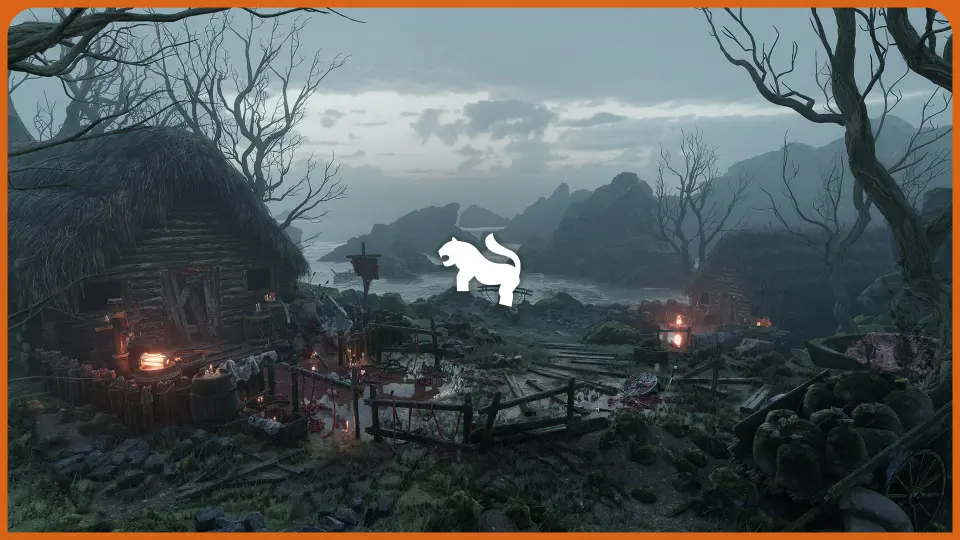
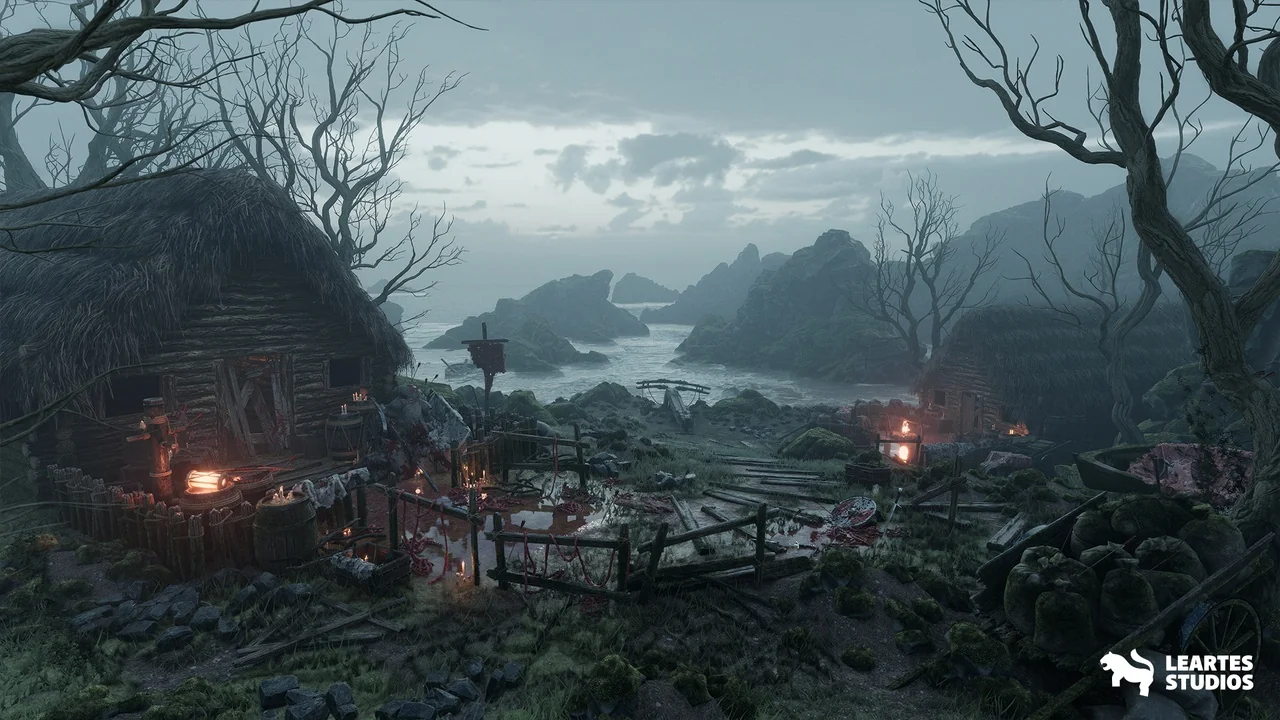
The library supplies components necessary to construct hollow houses, skeletal rooftops, and shattered windowpanes where structural integrity has completely eroded. Designers can scatter overgrown thresholds, decayed timber floorboards, and weathered stonework to evoke forgotten settlements where wind and drifting dust dominate the streets. Because the package includes the fully assembled showcase scene, teams can immediately inspect the intended distribution of architectural shells, street-level clutter, and atmospheric set dressings before adapting individual elements into custom map layouts. The high-quality assets feature a balanced level of detail specifically optimized for game-ready projects, allowing artists to populate exterior village centers, muddy thoroughfares, and hollow domestic interiors without facing immediate polygon bottlenecks.
Rapid Construction via the Ultimate Level Art Tool
Manual placement of individual modular walls, posts, and debris piles can quickly consume valuable iteration time during level greyboxing.
Included directly with the environment is the Ultimate Level Art Tool, designated as ULAT. Originally titled as a modular design development tool for mobile and web-based systems, this built-in utility integrates with the environment assets to accelerate the creation of custom modular buildings. Level artists use the tool to combine structural pieces rapidly, generating bespoke buildings suited to specific gameplay layouts or camera angles. Beyond structural assembly, the tool offers a seamless and distinctive way to populate scenes naturally, scattering environment props across interiors and exteriors to create believable clutter without requiring hours of hand-placed micro-adjustments.
Technical Pipeline: Unreal Engine 5 Nanite and Lumen Integration
Modern real-time pipelines require asset geometry and lighting behavior to hold up across both cinematic virtual stages and interactive gameplay perspectives.
The package features dedicated support for Nanite in Unreal Engine 5.0 and newer versions, allowing the 294 unique meshes to preserve dense surface definition, chipped stone edges, and splintered woodwork without relying on traditional level-of-detail compromises. Full support for Lumen dynamic global illumination ensures that harsh moonlight bleeding through skeletal roofs and cracked window openings bounces realistically across hollowed interiors and overgrown floors. These built-in engine features give environment artists the freedom to stage dramatic lighting scenarios—from pitch-black midnight settings with icy luminescence to dense volumetric mists—knowing the geometric assets will cast precise ray-traced shadows and maintain clean ambient light distribution throughout the entire village complex.
Practical Placement in Real-Time Production and Virtual Stages
Dark medieval villages serve as pivotal focal points for encounter arenas, atmospheric story moments, and virtual filmmaking backgrounds.
Whether establishing a cursed settlement, an apocalyptic battlefield aftermath, or a gothic warzone, these modular assets integrate cleanly into real-time pipelines alongside production tools such as the NWIRO AI Integration Kit with Unreal Copilot, MCP, IK, and Ultimate AI Bridge MCP. Art directors can utilize the pre-built village scene directly as a reference for mood, scale, and lighting passes, or dismantle the 294 meshes to construct custom fortress perimeters, destroyed trading hubs, and eerie pathways across varied terrain types. The combination of optimized game-ready performance and high visual fidelity ensures that backgrounds hold up under close-up cinematic inspection while running efficiently within demanding interactive game builds.
 Medieval
 Medieval
 Medieval
 Medieval