"1c2c8b66743036b4"{"id":"1001708","slug":"swimming-animation-set","title":"Swimming Animation Set","category":"Locomotion / Gaits","engine":"4.26+,5.0+","assetVersion":"","engineVersion":"Engine Version: 4.26+,5.0+","tag":"Locomotion / Gaits","accent":"blue","visual":"animation","summary":"Technical review of the Swimming Animation Set: 18 hand-crafted, in-place surface and underwater animations with example BlendSpaces and source FBX files.","platform":"Unreal Engine","publishedAt":"2026-10-14T17:13:26.147Z","updatedAt":"2026-10-14T17:13:26.147Z","sourceNotes":[],"fileContents":[],"compatibility":["Unreal Engine","Engine Version: 4.26+,5.0+"],"featuredImage":{"alt":"Swimming Animation Set","src":"/wp-content/uploads/published/2026/10/da76d3a92f66-62579e2f-4aa1-46b1-b296-1dea4441f041-093db39ec8.webp"},"hasDownloadLink":true,"downloads":0,"terms":[{"taxonomy":"category","slug":"locomotion-gaits","name":"Locomotion / Gaits"}],"galleryImages":[{"src":"/wp-content/uploads/published/2026/10/709d723897f8-53e0929d-42d5-4875-88a5-efcfcf034979-adda95e47c.webp","alt":"Swimming Animation Set"},{"src":"/wp-content/uploads/published/2026/10/62ac8bba013f-6524add3-fc97-4a32-bd85-821e6abcbc5e-ae47e9e851.webp","alt":"Swimming Animation Set"},{"src":"/wp-content/uploads/published/2026/10/fb854397ddda-44d82263-094e-4045-9dc4-feec7a12e3ac-6b4ea77327.webp","alt":"Swimming Animation Set"},{"src":"/wp-content/uploads/published/2026/10/64267acbddce-8b695cfb-0c74-453a-9f24-46cc90c444c9-1a8f90f861.webp","alt":"Swimming Animation Set"},{"src":"/wp-content/uploads/published/2026/10/334c3c3d9095-7e237041-7c86-42fc-b8be-d489f06f3a0a-f2eccebae2.webp","alt":"Swimming Animation Set"}],"accessPanel":{"kind":"resource","title":"Download this resource","eyebrow":"Free Download","message":"Log in or create a free account to start your download.","fileName":"Content.7z","safetyNote":"Resources are manually reviewed before listing to improve quality and reduce obvious risks.","actionLabel":"Download Free","resourceType":"Resource archive"},"contentHtml":"\u003ch2\u003eSurface and Underwater Locomotion for Third-Person Characters\u003c/h2\u003e\u003cp\u003eTraversing water bodies in third-person character games poses distinct animation challenges. Characters must seamlessly handle two completely different physical layers: floating atop water surfaces where yaw steering dominates movement, and navigating fully submerged volumes requiring 3D pitch and yaw control. The Swimming Animation Set addresses both contexts through 18 hand-crafted, non-motion-capture animations anchored in a humanoid character framework.\u003c/p\u003e\u003cp\u003eInstead of relying on motion capture, every frame in this collection was hand-animated. Hand-crafted keyframing ensures clean poses, rhythmic cycles, and controlled drag silhouettes that can sometimes get muddy in raw underwater performance capture. The collection uses the standard Epic mannequin for preview display, making its bone hierarchy directly familiar to developers structuring third-person locomotion graphs.\u003c/p\u003e\u003ch2\u003eSurface Locomotion and Directional Strokes\u003c/h2\u003e\u003cp\u003eMoving across the water's surface requires steady buoyancy, a balanced resting posture, and stroke variants that shift realistically when a player changes swimming speed or attempts to turn. The package accounts for this by providing a dedicated surface idle alongside two distinct forward swimming cadences: standard forward and slow forward.\u003c/p\u003e\u003cp\u003eSurface mobility features seven specific clips:\u003c/p\u003e\u003cul\u003e\u003cli\u003e\u003ccode\u003eSwim_Surface_Idle\u003c/code\u003e\u003c/li\u003e\u003cli\u003e\u003ccode\u003eSwim_Surface_Forward\u003c/code\u003e\u003c/li\u003e\u003cli\u003e\u003ccode\u003eSwim_Surface_Forward_Left\u003c/code\u003e\u003c/li\u003e\u003cli\u003e\u003ccode\u003eSwim_Surface_Forward_Right\u003c/code\u003e\u003c/li\u003e\u003cli\u003e\u003ccode\u003eSwim_Surface_Slow_Forward\u003c/code\u003e\u003c/li\u003e\u003cli\u003e\u003ccode\u003eSwim_Surface_Slow_Forward_Left\u003c/code\u003e\u003c/li\u003e\u003cli\u003e\u003ccode\u003eSwim_Surface_Slow_Forward_Right\u003c/code\u003e\u003c/li\u003e\u003c/ul\u003e\u003cp\u003eSplitting surface movement between standard and slow strokes lets gameplay systems reflect different energy states, such as a casual paddle versus an active traversal stroke. To prevent rigid steering where a character rotates purely through game-engine capsule rotation, each speed tier includes left and right forward directional variants. Blending into these banking clips provides natural lean and limb displacement when steering along water surfaces.\u003c/p\u003e\u003ch2\u003eThree-Dimensional Navigation in Underwater Volumes\u003c/h2\u003e\u003cp\u003eOnce a humanoid character submerges completely, locomotion expands from planar surface movement to full volumetric traversal. Deep-water swimming must accommodate upward surfacing climbs and downward dives alongside lateral banking. Eleven specific animations handle underwater states:\u003c/p\u003e\u003cul\u003e\u003cli\u003e\u003ccode\u003eSwim_Underwater_Idle\u003c/code\u003e\u003c/li\u003e\u003cli\u003e\u003ccode\u003eSwim_Underwater_Forward\u003c/code\u003e\u003c/li\u003e\u003cli\u003e\u003ccode\u003eSwim_Underwater_Forward_Left\u003c/code\u003e\u003c/li\u003e\u003cli\u003e\u003ccode\u003eSwim_Underwater_Forward_Right\u003c/code\u003e\u003c/li\u003e\u003cli\u003e\u003ccode\u003eSwim_Underwater_Forward_Up\u003c/code\u003e\u003c/li\u003e\u003cli\u003e\u003ccode\u003eSwim_Underwater_Forward_Down\u003c/code\u003e\u003c/li\u003e\u003cli\u003e\u003ccode\u003eSwim_Underwater_Slow_Forward\u003c/code\u003e\u003c/li\u003e\u003cli\u003e\u003ccode\u003eSwim_Underwater_Slow_Forward_Left\u003c/code\u003e\u003c/li\u003e\u003cli\u003e\u003ccode\u003eSwim_Underwater_Slow_Forward_Right\u003c/code\u003e\u003c/li\u003e\u003cli\u003e\u003ccode\u003eSwim_Underwater_Slow_Forward_Up\u003c/code\u003e\u003c/li\u003e\u003cli\u003e\u003ccode\u003eSwim_Underwater_Slow_Forward_Down\u003c/code\u003e\u003c/li\u003e\u003c/ul\u003e\u003cp\u003eThe core underwater mechanics match the surface logic by offering both normal and slow forward stroke speeds. Each speed tier features dedicated \u003ccode\u003eForward_Up\u003c/code\u003e And \u003ccode\u003eForward_Down\u003c/code\u003e Variations in addition to \u003ccode\u003eForward_Left\u003c/code\u003e And \u003ccode\u003eForward_Right\u003c/code\u003e. This allows directional inputs to drive vertical ascent toward the surface or descent into deep underwater trenches while maintaining coherent arm and leg swimming rhythms.\u003c/p\u003e\u003ch2\u003eIn-Place Animation Mechanics and BlendSpace Integration\u003c/h2\u003e\u003cp\u003eEvery animation in the Swimming Animation Set is authored exclusively in-place. Root motion is excluded entirely, keeping locomotion velocity decoupled from the raw animation curves. In water movement implementations, this is often a significant practical advantage: water physics volumes, buoyancy simulations, and drag calculations in engine components function most reliably when code or physics systems dictate character displacement directly.\u003c/p\u003e\u003cp\u003eBecause the directional turns and vertical climbs are authored in-place, the transitions between straight, angled, and vertical strokes depend on smooth float-parameter blending. The package includes four example BlendSpaces demonstrating how to arrange the directional variants across operational axes. These BlendSpaces serve as operational templates, showing how yaw and pitch inputs interpolate cleanly between straight forward strokes, banking left or right, and driving the body upward or downward without visible pop or cycle desynchronization.\u003c/p\u003e\u003ch2\u003eAsset Pipeline and Integration Scope\u003c/h2\u003e\u003cp\u003eFor technical animators who need to inspect joint curves, alter keyframes, or adjust hand placements, the package supplies source FBX files directly inside the \u003ccode\u003eSourceFiles\u003c/code\u003e Folder. Having clean access to the FBX data allows retargeting outside the engine or exporting straight into digital content creation software for custom adjustments.\u003c/p\u003e\u003cp\u003eThe package maintains a strict asset boundary: it is exclusively an animation collection. It does not include character Blueprints, water materials, post-process underwater shaders, or splash and bubble particle effects. Those elements remain entirely the responsibility of the project's rendering and gameplay engineering pipelines. For projects that also incorporate vertical environment navigation, this package shares natural compatibility with the Climbing Animation Set, allowing developers to align locomotion asset styles across varied environmental states.\u003c/p\u003e\u003ch2\u003eImplementation Context\u003c/h2\u003e\u003cp\u003eTechnical designers and character animators who already possess water physics volumes, swimming character state machines, or swimming logic components benefit most from this collection. Because the package provides cleanly separated standard and slow movement tiers, full directional banking, vertical pitch variants, and unconstrained in-place FBX sources, it delivers the raw visual locomotion layer needed to complete third-person water traversal systems.\u003c/p\u003e\n\n\u003ch2\u003eRelated Resources Worth Checking\u003c/h2\u003e\n\u003cul\u003e\n\u003cli\u003e\u003ca href=\"https://3dcghub.com/stealth-locomotion-animation-set/\" title=\"Stealth Locomotion Animation Set\"\u003eStealth Locomotion Animation Set\u003c/a\u003e\u003c/li\u003e\n\u003cli\u003e\u003ca href=\"https://3dcghub.com/ledge-animation-set/\" title=\"Ledge Animation Set\"\u003eLedge Animation Set\u003c/a\u003e\u003c/li\u003e\n\u003cli\u003e\u003ca href=\"https://3dcghub.com/climbing-animation-set/\" title=\"Climbing Animation Set\"\u003eClimbing Animation Set\u003c/a\u003e\u003c/li\u003e\n\u003cli\u003e\u003ca href=\"https://3dcghub.com/swim-component-150-animations-blueprints/\" title=\"Swim Component : 150 Animations + Blueprints\"\u003eSwim Component : 150 Animations + Blueprints\u003c/a\u003e\u003c/li\u003e\n\u003cli\u003e\u003ca href=\"https://3dcghub.com/stairs-set/\" title=\"Stairs Set\"\u003eStairs Set\u003c/a\u003e\u003c/li\u003e\n\u003c/ul\u003e","contentTextLength":5727,"navigation":{"current":7,"total":3651,"previous":{"id":"1001709","slug":"tactical-grenades","title":"Tactical Grenades","category":"Weapons \u0026 Combat","platform":"Unreal Engine","updatedAt":"2026-10-14T17:14:02.022Z"},"next":{"id":"1001707","slug":"suburbs-vol-25-knick-knacks-nanite-and-low-poly","title":"Suburbs VOL.25 - Knick Knacks (Nanite and Low Poly)","category":"Home","platform":"Unreal Engine","updatedAt":"2026-10-14T17:12:38.321Z"}},"relatedResources":[{"id":"1001367","slug":"stealth-locomotion-animation-set","title":"Stealth Locomotion Animation Set","category":"Locomotion / Gaits","engine":"4.19+,5.0+","assetVersion":"","engineVersion":"Engine Version: 4.19+,5.0+","tag":"Locomotion / Gaits","accent":"blue","visual":"animation","summary":"Explore the Stealth Locomotion Animation Set, featuring 62 hand-crafted stealth animations with 8-directional movement, wall traversal, and root motion options.","platform":"Unreal Engine","publishedAt":"2026-10-04T10:35:12.064Z","updatedAt":"2026-10-04T10:35:12.064Z","sourceNotes":[],"fileContents":[],"compatibility":["Unreal Engine","Engine Version: 4.19+,5.0+"],"featuredImage":{"alt":"Stealth Locomotion Animation Set","src":"/wp-content/uploads/published/2026/10/f48d25779ce2-d065d130-816c-4a5d-991a-1fb4bb4103ba-63732443bd.webp"},"hasDownloadLink":true,"downloads":0},{"id":"28356","slug":"ledge-animation-set","title":"Ledge Animation Set","category":"Locomotion / Gaits","engine":"4.26+,5.0+","assetVersion":"Engine version: 4.26+,5.0+","engineVersion":"","tag":"Locomotion / Gaits","accent":"blue","visual":"animation","summary":"Ledge Animation Set focuses on the kind of movement that shapes climbing routes, narrow escapes, and suspended traversal in third-person scenes. Its 38 hand-crafted animations cover ledge runs, grabs, jumps, corners, and transitions, with both in-place and...","platform":"Unreal Engine","publishedAt":"2026-05-07T10:03:31.000Z","updatedAt":"2026-05-07T10:03:32.000Z","sourceNotes":[],"fileContents":[],"compatibility":["Unreal Engine","Engine version: 4.26+,5.0+"],"featuredImage":{"alt":"Ledge Animation Set","src":"https://3dcghub.com/wp-content/uploads/2026/05/9a645c93da4a_f3d3efdb-cbbd-4a8a-91e6-b48e79dafdc4.webp"},"hasDownloadLink":true,"downloads":2},{"id":"6099","slug":"climbing-animation-set","title":"Climbing Animation Set","category":"Locomotion / Gaits","engine":"4.26+,5.0+","assetVersion":"Engine version: 4.26+,5.0+","engineVersion":"4.17","tag":"Locomotion / Gaits","accent":"blue","visual":"animation","summary":"Boost your game's realism with this 29-piece climbing animation set. Includes root motion and in-place variants for fluid third-person character movement.","platform":"Unreal Engine","publishedAt":"2026-02-18T16:51:49.000Z","updatedAt":"2026-04-19T15:56:31.000Z","sourceNotes":[],"fileContents":[],"compatibility":["Unreal Engine","Engine version: 4.26+,5.0+"],"featuredImage":{"alt":"Climbing Animation Set","src":"https://3dcghub.com/wp-content/uploads/2026/02/350995d0-35aa-4dba-9cf0-4aa6ba0f56c2.webp"},"hasDownloadLink":true,"downloads":4}]}
Locomotion / Gaits
Swimming Animation Set
Technical review of the Swimming Animation Set: 18 hand-crafted, in-place surface and underwater animations with example BlendSpaces and source FBX files.
Surface and Underwater Locomotion for Third-Person Characters
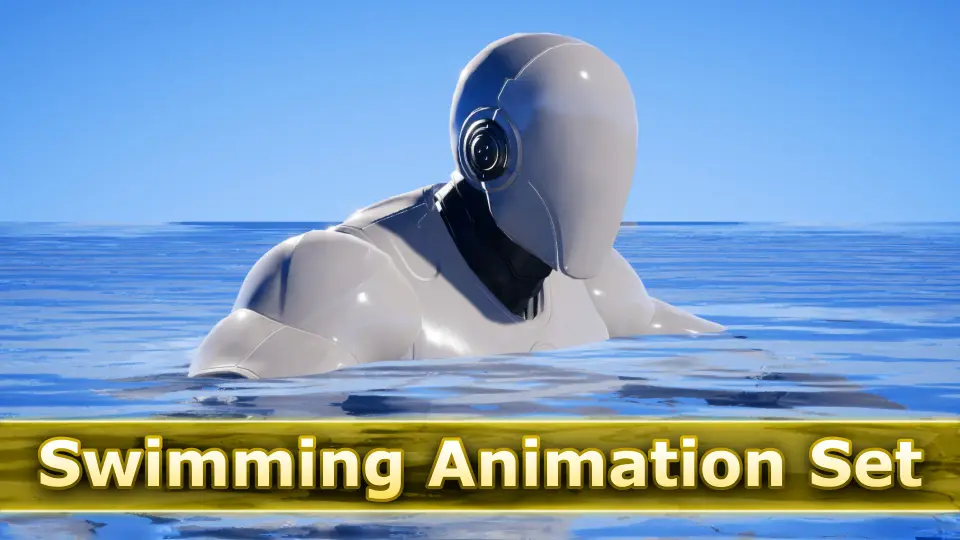
Traversing water bodies in third-person character games poses distinct animation challenges. Characters must seamlessly handle two completely different physical layers: floating atop water surfaces where yaw steering dominates movement, and navigating fully submerged volumes requiring 3D pitch and yaw control. The Swimming Animation Set addresses both contexts through 18 hand-crafted, non-motion-capture animations anchored in a humanoid character framework.
Instead of relying on motion capture, every frame in this collection was hand-animated. Hand-crafted keyframing ensures clean poses, rhythmic cycles, and controlled drag silhouettes that can sometimes get muddy in raw underwater performance capture. The collection uses the standard Epic mannequin for preview display, making its bone hierarchy directly familiar to developers structuring third-person locomotion graphs.
Surface Locomotion and Directional Strokes
Moving across the water's surface requires steady buoyancy, a balanced resting posture, and stroke variants that shift realistically when a player changes swimming speed or attempts to turn. The package accounts for this by providing a dedicated surface idle alongside two distinct forward swimming cadences: standard forward and slow forward.
Surface mobility features seven specific clips:
Swim_Surface_Idle
Swim_Surface_Forward
Swim_Surface_Forward_Left
Swim_Surface_Forward_Right
Swim_Surface_Slow_Forward
Swim_Surface_Slow_Forward_Left
Swim_Surface_Slow_Forward_Right
Splitting surface movement between standard and slow strokes lets gameplay systems reflect different energy states, such as a casual paddle versus an active traversal stroke. To prevent rigid steering where a character rotates purely through game-engine capsule rotation, each speed tier includes left and right forward directional variants. Blending into these banking clips provides natural lean and limb displacement when steering along water surfaces.
Three-Dimensional Navigation in Underwater Volumes
Once a humanoid character submerges completely, locomotion expands from planar surface movement to full volumetric traversal. Deep-water swimming must accommodate upward surfacing climbs and downward dives alongside lateral banking. Eleven specific animations handle underwater states:
Swim_Underwater_Idle
Swim_Underwater_Forward
Swim_Underwater_Forward_Left
Swim_Underwater_Forward_Right
Swim_Underwater_Forward_Up
Swim_Underwater_Forward_Down
Swim_Underwater_Slow_Forward
Swim_Underwater_Slow_Forward_Left
Swim_Underwater_Slow_Forward_Right
Swim_Underwater_Slow_Forward_Up
Swim_Underwater_Slow_Forward_Down
The core underwater mechanics match the surface logic by offering both normal and slow forward stroke speeds. Each speed tier features dedicated Forward_Up And Forward_Down Variations in addition to Forward_Left And Forward_Right. This allows directional inputs to drive vertical ascent toward the surface or descent into deep underwater trenches while maintaining coherent arm and leg swimming rhythms.
In-Place Animation Mechanics and BlendSpace Integration
Every animation in the Swimming Animation Set is authored exclusively in-place. Root motion is excluded entirely, keeping locomotion velocity decoupled from the raw animation curves. In water movement implementations, this is often a significant practical advantage: water physics volumes, buoyancy simulations, and drag calculations in engine components function most reliably when code or physics systems dictate character displacement directly.
Because the directional turns and vertical climbs are authored in-place, the transitions between straight, angled, and vertical strokes depend on smooth float-parameter blending. The package includes four example BlendSpaces demonstrating how to arrange the directional variants across operational axes. These BlendSpaces serve as operational templates, showing how yaw and pitch inputs interpolate cleanly between straight forward strokes, banking left or right, and driving the body upward or downward without visible pop or cycle desynchronization.
Asset Pipeline and Integration Scope
For technical animators who need to inspect joint curves, alter keyframes, or adjust hand placements, the package supplies source FBX files directly inside the SourceFiles Folder. Having clean access to the FBX data allows retargeting outside the engine or exporting straight into digital content creation software for custom adjustments.
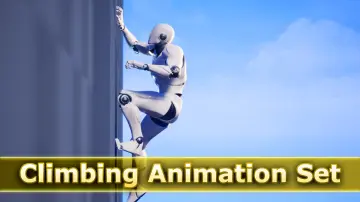
The package maintains a strict asset boundary: it is exclusively an animation collection. It does not include character Blueprints, water materials, post-process underwater shaders, or splash and bubble particle effects. Those elements remain entirely the responsibility of the project's rendering and gameplay engineering pipelines. For projects that also incorporate vertical environment navigation, this package shares natural compatibility with the Climbing Animation Set, allowing developers to align locomotion asset styles across varied environmental states.
Implementation Context
Technical designers and character animators who already possess water physics volumes, swimming character state machines, or swimming logic components benefit most from this collection. Because the package provides cleanly separated standard and slow movement tiers, full directional banking, vertical pitch variants, and unconstrained in-place FBX sources, it delivers the raw visual locomotion layer needed to complete third-person water traversal systems.
 Locomotion / Gaits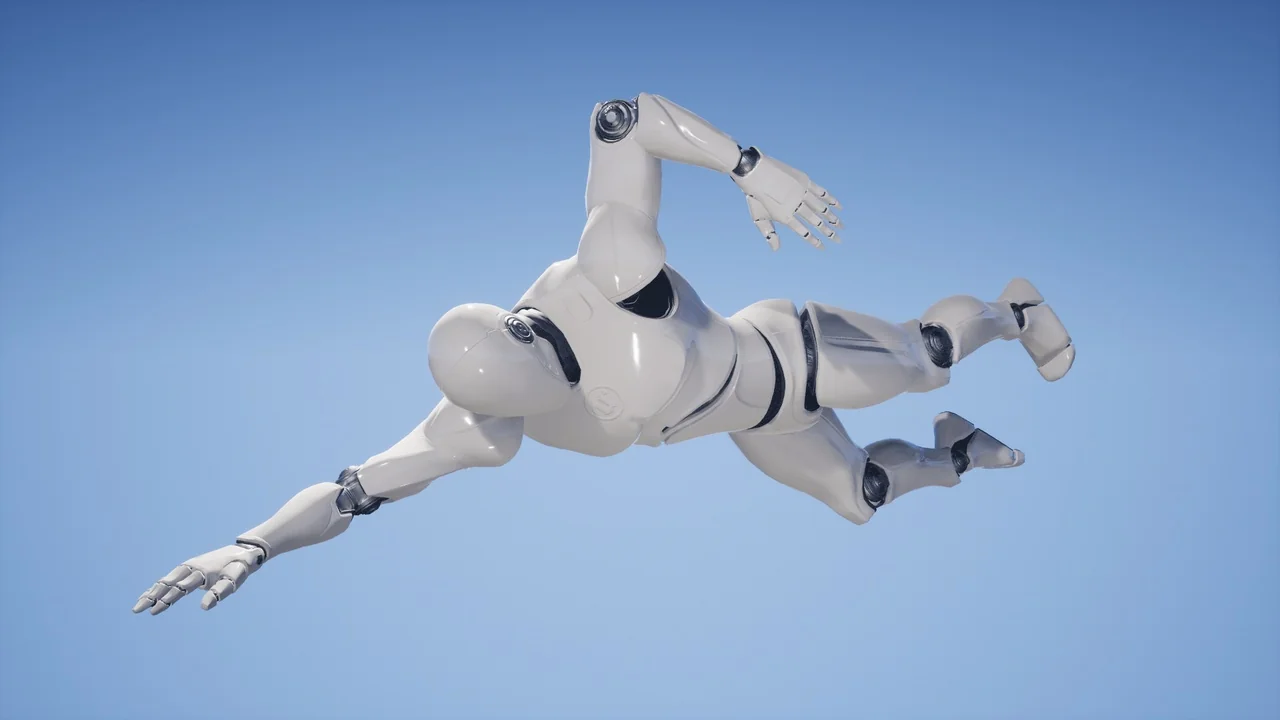
 Locomotion / Gaits
 Locomotion / Gaits
 Locomotion / Gaits