"efaa631e936fd3ee"{"id":"1002209","slug":"spray-painting-animations","title":"Spray Painting Animations","category":"Combat","engine":"4.26+,5.0+","assetVersion":"","engineVersion":"Engine Version: 4.26+,5.0+","tag":"Combat","accent":"blue","visual":"animation","summary":"Explore character motion for graffiti with the Spray Painting Animations pack, featuring a demo spray-can and StickFIG character compatibility.","platform":"Unreal Engine","publishedAt":"2026-10-29T14:52:43.545Z","updatedAt":"2026-10-29T14:52:43.545Z","sourceNotes":[],"fileContents":[],"compatibility":["Unreal Engine","Engine Version: 4.26+,5.0+"],"featuredImage":{"alt":"Spray Painting Animations","src":"/wp-content/uploads/published/2026/10/53daa3860d98-bc430ea4-a087-48dc-ac59-b4015475340a-b4982965c6.webp"},"hasDownloadLink":true,"downloads":0,"terms":[{"taxonomy":"category","slug":"combat","name":"Combat"}],"galleryImages":[{"src":"/wp-content/uploads/published/2026/10/f2855e4cb567-41d445d7-3054-449f-b6b9-11503bc4ee59-15eee5220a.webp","alt":"Spray Painting Animations"},{"src":"/wp-content/uploads/published/2026/10/a33ca9cae9dd-3d161096-7c43-4f8c-8d3f-7317b63f1935-9bff404fe5.webp","alt":"Spray Painting Animations"},{"src":"/wp-content/uploads/published/2026/10/5e483043a442-7704bb4e-9d7e-4300-b7db-c8d1daaa59ba-4d0d86e889.webp","alt":"Spray Painting Animations"}],"accessPanel":{"kind":"resource","title":"Download this resource","eyebrow":"Free Download","message":"Log in or create a free account to start your download.","fileName":"Content.7z","safetyNote":"Resources are manually reviewed before listing to improve quality and reduce obvious risks.","actionLabel":"Download Free","resourceType":"Resource archive"},"contentHtml":"\u003ch2\u003eTagging Surfaces and Staging Graffiti Actions\u003c/h2\u003e\n\u003cp\u003eRecreating the act of urban street art requires character motion that looks deliberate, steady, and physically connected to an environment. Spray painting is not a static gesture; it involves weight shifting, arm extensions, wrist control, and constant adjustment relative to the vertical surface being painted. The Spray Painting Animations pack zeroes in on these specific mechanics, delivering character movement built directly around the process of painting graffiti.\u003c/p\u003e\n\u003cp\u003eWhen characters engage with a wall, their movement must communicate intent. The sweeping arcs of tagging, the short rhythmic bursts used for detail work, and the physical stance required to maintain balance while working at varying wall heights all demand dedicated animation passes. Rather than repurposing generic pointing or tool-use gestures, this set provides character cycles that directly reflect how an artist approaches, covers, and steps back from a surface during a graffiti session.\u003c/p\u003e \u003ch2\u003eThe Included Demo Spray-Can Prop in Character Hand Rigging\u003c/h2\u003e\n\u003cp\u003eHand-held animation sequences depend heavily on accurate grip points and prop alignment. The inclusion of a demo spray-can ensures that character hands, fingers, and wrist orientations are visually anchored from the moment the animations are previewed. Without a reference prop, checking whether fingers curl correctly around a pressurized cylinder or whether the index finger aligns with an aerosol nozzle requires manual guesswork.\u003c/p\u003e\n\u003cp\u003eBy supplying the demo spray-can directly within the asset, the package establishes the exact contact points needed for believable execution. Animators and technical directors can inspect how the prop rests in the palm, test socket attachment points on skeletal meshes, and verify whether the nozzle points toward the targeted surface cleanly throughout each stroke. This eliminates the trial-and-error cycle of adjusting grip offsets against mismatched third-party props during initial layout passes.\u003c/p\u003e \u003ch2\u003eMale and Female Character Application Across Urban Environments\u003c/h2\u003e\n\u003cp\u003eGraffiti scenes in modern interactive projects rarely center on a single character archetype. With tagging designated for both male and female characters, the movement profiles support diverse character setups across urban streets, rail yards, back alleys, and industrial zones. Motion that transfers cleanly between different character builds allows teams to populate an entire scene with varied artists without generating conflicting kinematic behaviors.\u003c/p\u003e\n\u003cp\u003eMale and female character meshes often differ in shoulder width, arm length, and resting centers of gravity. Effective spray painting animations must account for these structural variances so that strokes do not clip through the character's own torso or overextend joint limits during wider horizontal sweeps. The motions maintain clean silhouettes regardless of the character model applied, preserving readability even when the action is viewed from wide camera angles or shadowed street corners.\u003c/p\u003e \u003ch2\u003ePairing Motion with the StickFIG Complete Stickfigure Character Pack\u003c/h2\u003e\n\u003cp\u003eA notable technical aspect of this animation release is its compatibility with the StickFIG - Complete Stickfigure Character Pack. Stylized stick figure characters rely entirely on clear joint angles and unmistakable silhouettes to communicate what action is taking place. Because stick figures lack facial expressions, detailed clothing folds, or surface texturing, their bodily motion must carry the entire weight of the performance.\u003c/p\u003e\n\u003cp\u003eApplying spray painting animations to a minimalist stick figure rig serves two distinct production roles:\u003c/p\u003e\n\u003cul\u003e\n\u003cli\u003eRapid prototyping: Designers can block out urban tagging missions, vandalism mechanics, or stealth-and-spray mini-games using lightweight figures before committing to final high-polygon character pipelines.\u003c/li\u003e\n\u003cli\u003eStylized projects: Games and cinematic sequences built entirely around stick figure aesthetics gain nuanced, expressive street-art motions that elevate the character rig beyond simple combat or running cycles.\u003c/li\u003e\n\u003c/ul\u003e\n\u003cp\u003eThe clean lines of the StickFIG characters highlight the rhythm of each spray stroke, proving that the underlying keyframing and timing are strong enough to read clearly even on the simplest anatomical structures.\u003c/p\u003e \u003ch2\u003eIncorporating Spray Painting Animations into Street-Level Gameplay\u003c/h2\u003e\n\u003cp\u003eUrban open-world titles, narrative adventures, and stealth games frequently use graffiti as an active mechanic, whether for marking faction territory, expressing character rebellion, or unlocking environmental objectives. Integrating authentic spray painting motions transforms tagging from an instant button press into an active, readable event within the game world.\u003c/p\u003e\n\u003cp\u003eThese animations also serve a distinct purpose in environmental storytelling through non-playable characters. Background NPCs working on murals, tagging shop shutters, or hastily sketching symbols before fleeing patrol routes give urban environments a lived-in texture. Having dedicated graffiti animations ensures these background interactions look natural from every approach angle, grounding the visual culture of the scene in realistic physical performance.\u003c/p\u003e\n\n\u003ch2\u003eExplore Similar Assets\u003c/h2\u003e\n\u003cul\u003e\n\u003cli\u003e\u003ca href=\"https://3dcghub.com/hit-reaction-animation-pack-ue4-ue5-mannequin/\" title=\"Hit Reaction Animation Pack - UE4/UE5 Mannequin\"\u003eHit Reaction Animation Pack - UE4/UE5 Mannequin\u003c/a\u003e\u003c/li\u003e\n\u003cli\u003e\u003ca href=\"https://3dcghub.com/essential-great-sword-animation-pack/\" title=\"Essential Great Sword Animation Pack\"\u003eEssential Great Sword Animation Pack\u003c/a\u003e\u003c/li\u003e\n\u003cli\u003e\u003ca href=\"https://3dcghub.com/launcher-animations/\" title=\"Launcher Animations\"\u003eLauncher Animations\u003c/a\u003e\u003c/li\u003e\n\u003cli\u003e\u003ca href=\"https://3dcghub.com/92-animations-for-warrior/\" title=\"92 Animations For Warrior\"\u003e92 Animations For Warrior\u003c/a\u003e\u003c/li\u003e\n\u003cli\u003e\u003ca href=\"https://3dcghub.com/rogue-volume-2/\" title=\"Rogue Volume 2\"\u003eRogue Volume 2\u003c/a\u003e\u003c/li\u003e\n\u003c/ul\u003e","contentTextLength":5334,"navigation":{"current":76,"total":4209,"previous":{"id":"1002210","slug":"starry-sky","title":"Starry Sky","category":"Sky \u0026 Space","platform":"Unreal Engine","updatedAt":"2026-10-29T14:54:09.713Z"},"next":{"id":"1002208","slug":"spline-grind-rail-builder-v2-grinding-and-zipline-movement-system","title":"Spline Grind Rail Builder v2 - Grinding \u0026 Zipline Movement System","category":"Game Mechanics","platform":"Unreal Engine","updatedAt":"2026-10-29T14:51:31.163Z"}},"relatedResources":[{"id":"1002053","slug":"hit-reaction-animation-pack-ue4-ue5-mannequin","title":"Hit Reaction Animation Pack - UE4/UE5 Mannequin","category":"Combat","engine":"4.26+,5.0+","assetVersion":"","engineVersion":"Engine Version: 4.26+,5.0+","tag":"Combat","accent":"blue","visual":"animation","summary":"Examine the Hit Reaction Animation Pack for UE4 and UE5 Mannequin, featuring 96 motion capture hit reactions, knockbacks, and MetaHuman retargeting support.","platform":"Unreal Engine","publishedAt":"2026-10-26T15:10:42.737Z","updatedAt":"2026-10-26T15:10:42.737Z","sourceNotes":[],"fileContents":[],"compatibility":["Unreal Engine","Engine Version: 4.26+,5.0+"],"featuredImage":{"alt":"Hit Reaction Animation Pack - UE4/UE5 Mannequin","src":"/wp-content/uploads/published/2026/10/e5be54a9f742-1737668c-bd74-4534-9ed3-46933c1b6a33-57428968a6.webp"},"hasDownloadLink":true,"downloads":3},{"id":"1000598","slug":"essential-great-sword-animation-pack","title":"Essential Great Sword Animation Pack","category":"Combat","engine":"4.26+,5.0+","assetVersion":"","engineVersion":"Engine Version: 4.26+,5.0+","tag":"Combat","accent":"blue","visual":"animation","summary":"Unreal Engine animation pack with one-handed and two-handed great sword combat stances, locomotion, attacks, and a playable character blueprint for action RPGs.","platform":"Unreal Engine","publishedAt":"2026-07-18T13:52:05.447Z","updatedAt":"2026-07-18T13:52:05.447Z","sourceNotes":[],"fileContents":[],"compatibility":["Unreal Engine","Engine Version: 4.26+,5.0+"],"featuredImage":{"alt":"Essential Great Sword Animation Pack","src":"/wp-content/uploads/published/2026/07/825b1d12899d-c4bf9404-41fd-4b60-a7a2-0ffc173b037f-2674bc9bbb.webp"},"hasDownloadLink":true,"downloads":22},{"id":"1001531","slug":"launcher-animations","title":"Launcher Animations","category":"Combat","engine":"4.18+,5.0+","assetVersion":"","engineVersion":"Engine Version: 4.18+,5.0+","tag":"Combat","accent":"blue","visual":"animation","summary":"Launcher Animations delivers combat-ready motion sets tailored for third-person soldiers, first-person setups, accompanying weapons, and creature rigs.","platform":"Unreal Engine","publishedAt":"2026-10-09T17:25:01.227Z","updatedAt":"2026-10-09T17:25:01.227Z","sourceNotes":[],"fileContents":[],"compatibility":["Unreal Engine","Engine Version: 4.18+,5.0+"],"featuredImage":{"alt":"Launcher Animations","src":"/wp-content/uploads/published/2026/10/d7eff0ce4c65-33774e35-d19b-42e6-a38e-7a4410f89f28-5b5bef0b37.webp"},"hasDownloadLink":true,"downloads":0}]}
Combat
Spray Painting Animations
Explore character motion for graffiti with the Spray Painting Animations pack, featuring a demo spray-can and StickFIG character compatibility.
Category:Unreal Engine,CombatPlatform: Unreal EngineEngine Version: 4.26+,5.0+Published: Oct 29, 2026
Combat
Resource overview
Tagging Surfaces and Staging Graffiti Actions
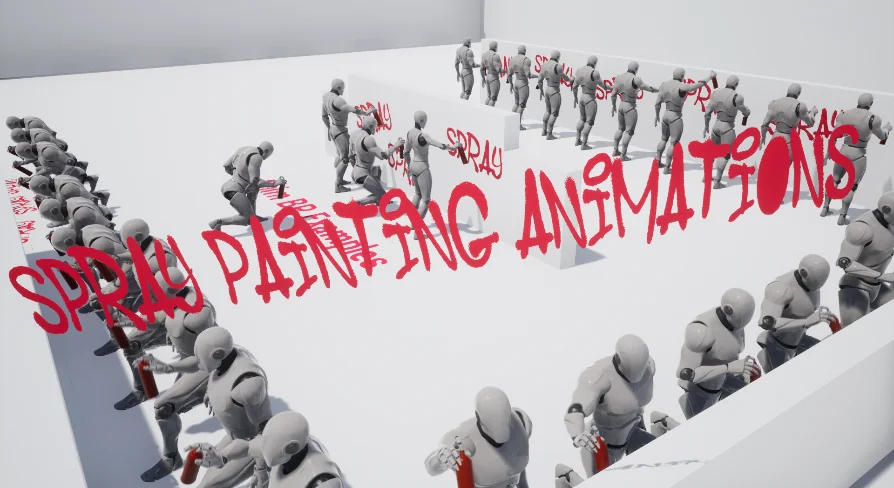
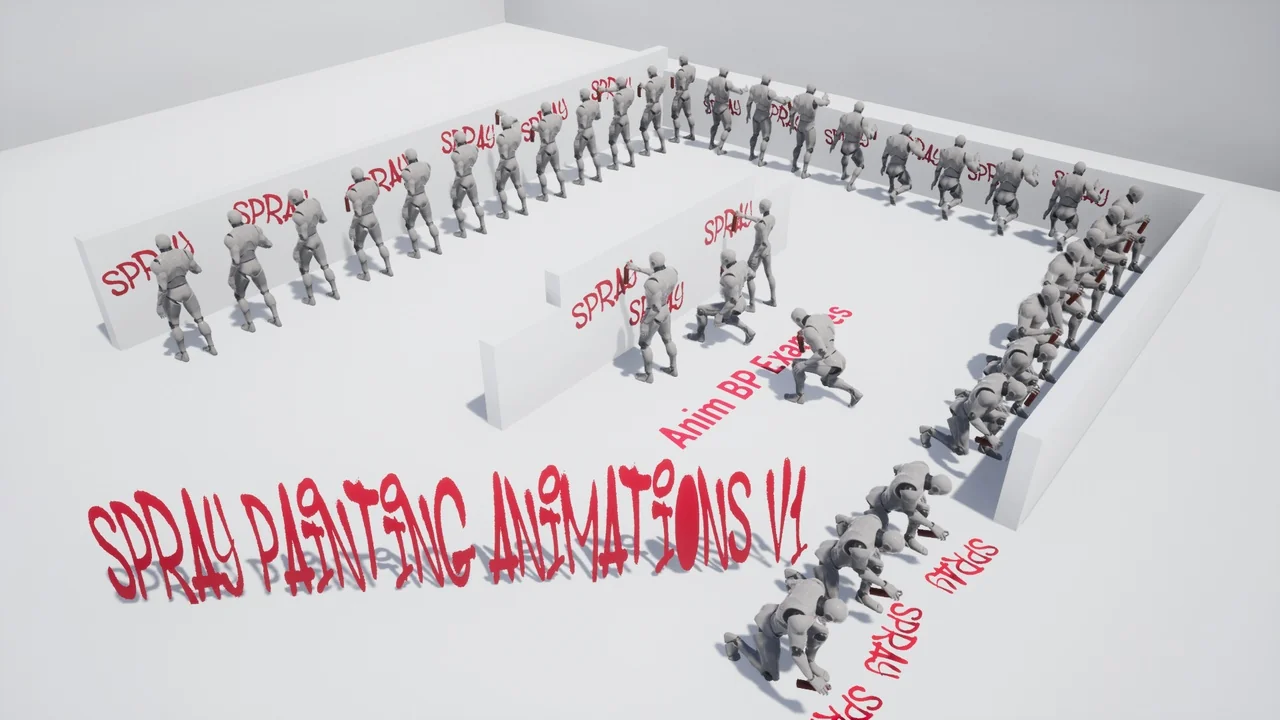
Recreating the act of urban street art requires character motion that looks deliberate, steady, and physically connected to an environment. Spray painting is not a static gesture; it involves weight shifting, arm extensions, wrist control, and constant adjustment relative to the vertical surface being painted. The Spray Painting Animations pack zeroes in on these specific mechanics, delivering character movement built directly around the process of painting graffiti.
When characters engage with a wall, their movement must communicate intent. The sweeping arcs of tagging, the short rhythmic bursts used for detail work, and the physical stance required to maintain balance while working at varying wall heights all demand dedicated animation passes. Rather than repurposing generic pointing or tool-use gestures, this set provides character cycles that directly reflect how an artist approaches, covers, and steps back from a surface during a graffiti session.
The Included Demo Spray-Can Prop in Character Hand Rigging
Hand-held animation sequences depend heavily on accurate grip points and prop alignment. The inclusion of a demo spray-can ensures that character hands, fingers, and wrist orientations are visually anchored from the moment the animations are previewed. Without a reference prop, checking whether fingers curl correctly around a pressurized cylinder or whether the index finger aligns with an aerosol nozzle requires manual guesswork.
By supplying the demo spray-can directly within the asset, the package establishes the exact contact points needed for believable execution. Animators and technical directors can inspect how the prop rests in the palm, test socket attachment points on skeletal meshes, and verify whether the nozzle points toward the targeted surface cleanly throughout each stroke. This eliminates the trial-and-error cycle of adjusting grip offsets against mismatched third-party props during initial layout passes.
Male and Female Character Application Across Urban Environments
Graffiti scenes in modern interactive projects rarely center on a single character archetype. With tagging designated for both male and female characters, the movement profiles support diverse character setups across urban streets, rail yards, back alleys, and industrial zones. Motion that transfers cleanly between different character builds allows teams to populate an entire scene with varied artists without generating conflicting kinematic behaviors.
Male and female character meshes often differ in shoulder width, arm length, and resting centers of gravity. Effective spray painting animations must account for these structural variances so that strokes do not clip through the character's own torso or overextend joint limits during wider horizontal sweeps. The motions maintain clean silhouettes regardless of the character model applied, preserving readability even when the action is viewed from wide camera angles or shadowed street corners.
Pairing Motion with the StickFIG Complete Stickfigure Character Pack
A notable technical aspect of this animation release is its compatibility with the StickFIG - Complete Stickfigure Character Pack. Stylized stick figure characters rely entirely on clear joint angles and unmistakable silhouettes to communicate what action is taking place. Because stick figures lack facial expressions, detailed clothing folds, or surface texturing, their bodily motion must carry the entire weight of the performance.
Applying spray painting animations to a minimalist stick figure rig serves two distinct production roles:
Rapid prototyping: Designers can block out urban tagging missions, vandalism mechanics, or stealth-and-spray mini-games using lightweight figures before committing to final high-polygon character pipelines.
Stylized projects: Games and cinematic sequences built entirely around stick figure aesthetics gain nuanced, expressive street-art motions that elevate the character rig beyond simple combat or running cycles.
The clean lines of the StickFIG characters highlight the rhythm of each spray stroke, proving that the underlying keyframing and timing are strong enough to read clearly even on the simplest anatomical structures.
Incorporating Spray Painting Animations into Street-Level Gameplay
Urban open-world titles, narrative adventures, and stealth games frequently use graffiti as an active mechanic, whether for marking faction territory, expressing character rebellion, or unlocking environmental objectives. Integrating authentic spray painting motions transforms tagging from an instant button press into an active, readable event within the game world.
These animations also serve a distinct purpose in environmental storytelling through non-playable characters. Background NPCs working on murals, tagging shop shutters, or hastily sketching symbols before fleeing patrol routes give urban environments a lived-in texture. Having dedicated graffiti animations ensures these background interactions look natural from every approach angle, grounding the visual culture of the scene in realistic physical performance.
 Combat
 Combat
 Combat
 Combat