"6c6413bef81af556"{"id":"1000783","slug":"92-animations-for-warrior","title":"92 Animations For Warrior","category":"Combat","engine":"4.26+,5.0+","assetVersion":"","engineVersion":"Engine Version: 4.26+,5.0+","tag":"Combat","accent":"blue","visual":"animation","summary":"92 Animations For Warrior delivers directional movement and root animation for fantasy warriors and barbarians, built for combat-heavy character work.","platform":"Unreal Engine","publishedAt":"2026-07-30T11:37:20.237Z","updatedAt":"2026-07-30T11:37:20.237Z","sourceNotes":[],"fileContents":[],"compatibility":["Unreal Engine","Engine Version: 4.26+,5.0+"],"featuredImage":{"alt":"92 Animations For Warrior","src":"/wp-content/uploads/published/2026/07/8cce50755180-a3b1db25-cb8a-41fc-bc3b-88043f3d0b0a-1e56065b4b.webp"},"hasDownloadLink":true,"downloads":1,"terms":[{"taxonomy":"category","slug":"combat","name":"Combat"}],"galleryImages":[{"src":"/wp-content/uploads/published/2026/07/48a5577961c5-852dec32-66e5-4df2-bf4d-522674a6354b-1857666e86.webp","alt":"92 Animations For Warrior"},{"src":"/wp-content/uploads/published/2026/07/f33620632ba4-b2969492-617b-4554-8fed-b1dea74ca3f0-1cd35e8e21.webp","alt":"92 Animations For Warrior"}],"accessPanel":{"kind":"resource","title":"Download this resource","eyebrow":"Free Download","message":"Log in or create a free account to start your download.","fileName":"Content.7z","safetyNote":"Resources are manually reviewed before listing to improve quality and reduce obvious risks.","actionLabel":"Download Free","resourceType":"Resource archive"},"contentHtml":"\u003cp\u003eWhen a barbarian or warrior character needs to cross a battlefield, the motion has to read clearly across every angle the player or camera might occupy. 92 animation clips give developers a broad set of options for exactly those moments, letting combatants lunge, retreat, strafe, and shift position without forcing an animator to author every directional variant from scratch. The package keeps its scope tight: fantasy fighters moving through space, with Root Motion baked in so characters translate through the world in a way a runtime engine can interpret cleanly.\u003c/p\u003e\n\n\u003ch2\u003eHow the Warrior and Barbarian Clips Behave in a Scene\u003c/h2\u003e\n\u003cp\u003eThe first thing to understand about this collection is where it sits in a character pipeline. Every clip is built for warrior and barbarian archetypes, which means the motion priorities skew toward weight, aggression, and grounded combat stances rather than light, agile, or acrobatic movement. A barbarian swinging through a directional step carries momentum differently than a rogue pivoting on a dodge, and these animations are tuned for that heavier silhouette. Characters move in all directions the camera or player input might demand, and Root Motion ensures that motion is driven from the rig's root rather than purely from in-place posing that a game engine later has to offset.\u003c/p\u003e\n\n\u003cp\u003eRoot Motion matters most when characters need to cover distance as part of an attack, a retreat, or a repositioning beat. Instead of the character sliding across the floor because the translation does not match the footwork, the root carries the body forward in sync with the step. This makes the clips directly useful for melee combat systems where a warrior closes distance on a swing or a barbarian shoves forward through a charge. 92 clips spread across directional movement and root-driven motion give developers a substantial library to draw from when prototyping or refining a fantasy fighter's behavior.\u003c/p\u003e\n\n\u003ch2\u003eDirectional Movement Across All Axes\u003c/h2\u003e\n\u003cp\u003eThe package emphasizes that the character moves in all directions. For a warrior or barbarian, this translates into forward advances, backward presses, and lateral strafing that keep the fighter oriented toward a threat. Combat-oriented rigs rarely stand still, and directional motion clips are what stop a character from feeling pinned to a single spot when the player circles an enemy or repositions to avoid an attack. With 92 clips available, the set can cover combinations of forward, backward, left, right, and diagonal translation without requiring the developer to blend or mirror a smaller set manually.\u003c/p\u003e\n\n\u003cp\u003eBecause the animations are focused on warriors and barbarians, the directional movement carries the physicality those archetypes demand. A step backward is not a light hop; it is a grounded recovery that keeps the fighter balanced and ready to swing. Forward movement leans into the weapon's reach, letting the body commit to the space it is claiming. Root Motion underpins every one of these translations, so the clips feed naturally into a Locomotion State Machine or a combat tree that expects the rig to travel through world space on its own root rather than being pushed by code alone.\u003c/p\u003e\n\n\u003ch2\u003eRoot Animation and Engine Integration\u003c/h2\u003e\n\u003cp\u003eRoot Motion is a specific technical choice that shapes how these clips integrate into a project. The root of the character acts as the driver for position, meaning the translation is embedded in the animation data itself. For combat designers, this removes the need to script artificial movement deltas on top of in-place clips. A warrior executing a forward attack step travels the exact distance baked into the root motion, and a barbarian retreating pulls back precisely as far as the animation dictates. This keeps hitboxes, spacing, and visual footwork locked together.\u003c/p\u003e\n\n\u003cp\u003eIn state machines that blend between locomotion and combat actions, root-driven clips help maintain continuity when a character transitions from an idle stance into a directional move or from a move into an attack. The 92 clips give animators and programmers a shared vocabulary: the runtime requests a direction, the matching clip plays, and the root carries the fighter through the expected path. Fantasy projects that rely on melee spacing, where a few units of distance decide whether a sword connects or whiffs, benefit from this setup because the motion and the gameplay logic stay in sync.\u003c/p\u003e\n\n\u003ch2\u003eFantasy Warrior and Barbarian Project Fit\u003c/h2\u003e\n\u003cp\u003eThe package is tagged for \u003cem\u003eFantasy\u003c/em\u003e, and its content is shaped by warrior and barbarian archetypes. This makes it a direct fit for projects featuring melee combatants in fantasy settings, sword-and-board fighters, two-handed weapon wielders, or aggressive front-line characters who need to close distance and strike. The broader \u003cem\u003eFantasy\u003c/em\u003e tag opens the door for dark fantasy, high fantasy, or any setting where a heavily armored or muscular fighter archetype appears. It is not positioned as a general-purpose locomotion set; it is a combat-adjacent movement library tuned for characters whose role is to engage up close.\u003c/p\u003e\n\n\u003cp\u003eFor teams building Action RPGs, hack-and-slash titles, or fantasy brawlers, the directional coverage and root-driven motion can slot into a Locomotion BlendSpace, a combat state tree, or an Animation Montage system. The 92-clip count provides enough variation that a warrior can cycle through directional steps and repositioning moves without obvious repetition during sustained combat encounters. The barbarian focus also means the clips can serve bestial or oversized humanoid fighters, as long as the rig's proportions and hierarchy can accept the motion data.\u003c/p\u003e\n\n\u003ch2\u003eCompatibility with Creature Animation Sets\u003c/h2\u003e\n\u003cp\u003eEditor notes flag a compatibility detail worth parsing carefully. The package is noted alongside a referenced set called \u003cem\u003e56 Animations for Creatures\u003c/em\u003e, which signals that the warrior and barbarian clips can share a pipeline or structure with creature animation workflows. This does not mean the warrior clips \u003cem\u003eare\u003c/em\u003e creature animations, but it does suggest that teams already working with creature locomotion or bestial movement sets can integrate these humanoid fighter clips into a broader animation system without a completely separate toolchain. For a fantasy project that fields both humanoid combatants and creature enemies, having compatible animation packs streamlines the way motion data is imported, organized, and played back at runtime.\u003c/p\u003e\n\n\u003ch2\u003eWho Benefits Most from 92 Warrior Clips\u003c/h2\u003e\n\u003cp\u003eThis package lands best with combat designers and animators working on fantasy titles where melee fighters need to move with intent. The 92-clip count and the emphasis on all-direction movement mean a developer can populate a warrior's locomotion and combat transition states with purpose-built motion rather than stretching a smaller set across too many contexts. The barbarian and warrior focus ensures the clips carry the weight and aggression those archetypes require, and Root Motion keeps the translation grounded in the rig's own motion data.\u003c/p\u003e\n\n\u003cp\u003eFor a team evaluating this asset, the clearest takeaway is that the 92 clips are not generic locomotion. They are tuned for fighters who step into range, press forward through attacks, and retreat with a weapon ready, and the root-driven motion means those movements can drive gameplay positioning directly. If a project needs a fantasy combatant that owns the space it moves through, this set provides the directional coverage and technical foundation to make that happen without building every step by hand.\u003c/p\u003e\n\n\u003ch2\u003eContinue Browsing Similar Packs\u003c/h2\u003e\n\u003cul\u003e\n\u003cli\u003e\u003ca href=\"https://3dcghub.com/2handed-hammer-animset/\" title=\"2Handed Hammer AnimSet\"\u003e2Handed Hammer AnimSet\u003c/a\u003e\u003c/li\u003e\n\u003cli\u003e\u003ca href=\"https://3dcghub.com/lizard-warrior/\" title=\"Lizard Warrior\"\u003eLizard Warrior\u003c/a\u003e\u003c/li\u003e\n\u003cli\u003e\u003ca href=\"https://3dcghub.com/sci-fi-alien-warrior/\" title=\"SCI FI ALIEN WARRIOR\"\u003eSCI FI ALIEN WARRIOR\u003c/a\u003e\u003c/li\u003e\n\u003cli\u003e\u003ca href=\"https://3dcghub.com/rogue-volume-2/\" title=\"Rogue Volume 2\"\u003eRogue Volume 2\u003c/a\u003e\u003c/li\u003e\n\u003cli\u003e\u003ca href=\"https://3dcghub.com/animals-warrior-pack/\" title=\"Animals Warrior Pack\"\u003eAnimals Warrior Pack\u003c/a\u003e\u003c/li\u003e\n\u003c/ul\u003e","contentTextLength":7612,"navigation":{"current":441,"total":3140,"previous":{"id":"1000784","slug":"action-adventure-ledge-climbing-animation-pack","title":"Action Adventure Ledge Climbing Animation Pack","category":"Variety","platform":"Unreal Engine","updatedAt":"2026-07-30T11:47:10.437Z"},"next":{"id":"1000782","slug":"advanced-riding-locomotion-system-riding-system","title":"Advanced Riding Locomotion System (Riding System)","category":"Gameplay Features","platform":"Unreal Engine","updatedAt":"2026-07-30T11:16:41.169Z"}},"relatedResources":[{"id":"27226","slug":"2handed-hammer-animset","title":"2Handed Hammer AnimSet","category":"Combat","engine":"4.26+,5.0+","assetVersion":"Engine version: 4.26+,5.0+","engineVersion":"","tag":"Combat","accent":"blue","visual":"animation","summary":"2Handed Hammer AnimSet focuses on heavy combat motion for action RPG warriors, barbarians, boss monsters, and giant monsters. It includes 81 animations and 9 poses, with movement, attack, reaction, and equipment states that support a full melee encounter.","platform":"Unreal Engine","publishedAt":"2026-04-22T14:10:33.000Z","updatedAt":"2026-04-22T14:10:35.000Z","sourceNotes":[],"fileContents":[],"compatibility":["Unreal Engine","Engine version: 4.26+,5.0+"],"featuredImage":{"alt":"2Handed Hammer AnimSet","src":"https://3dcghub.com/wp-content/uploads/2026/04/84840b81921d_de01ea22-c1a3-4726-8f47-8760cef1f727.webp"},"hasDownloadLink":true,"downloads":6},{"id":"2910","slug":"lizard-warrior","title":"Lizard Warrior","category":"Characters \u0026 Creatures","engine":"4.26+,5.0+","assetVersion":"Engine version: 4.26+,5.0+","engineVersion":"4.13","tag":"Characters","accent":"blue","visual":"character","summary":"Enhance your game with this detailed Lizard Warrior 3D model. Featuring 30 animations, 4K textures, and blend shapes, it is perfect for RPG and fantasy projects","platform":"Unreal Engine","publishedAt":"2026-02-07T16:02:20.000Z","updatedAt":"2026-04-19T15:57:44.000Z","sourceNotes":[],"fileContents":[],"compatibility":["Unreal Engine","Engine version: 4.26+,5.0+"],"featuredImage":{"alt":"Lizard Warrior","src":"https://3dcghub.com/wp-content/uploads/2026/02/65bc87aa-b19e-43da-89cf-863d0624a12f.webp"},"hasDownloadLink":true,"downloads":0},{"id":"1001005","slug":"orc-warrior","title":"Orc Warrior","category":"Creatures \u0026 Monsters","engine":"4.26+,5.0+","assetVersion":"","engineVersion":"Engine Version: 4.26+,5.0+","tag":"Creatures","accent":"blue","visual":"character","summary":"A rigged low-poly orc with a weapon, 11 animations, a control rig, plus 4096x4096 Color, Normal, and AORM textures for real-time fantasy work.","platform":"Unreal Engine","publishedAt":"2026-08-22T10:59:41.214Z","updatedAt":"2026-08-22T10:59:41.214Z","sourceNotes":[],"fileContents":[],"compatibility":["Unreal Engine","Engine Version: 4.26+,5.0+"],"featuredImage":{"alt":"Orc Warrior","src":"/wp-content/uploads/published/2026/08/07a81bcdb165-a721db55-38ea-4d04-a1d7-b62b48c726b0-dc71636e7b.webp"},"hasDownloadLink":true,"downloads":1}]}
Combat
92 Animations For Warrior
92 Animations For Warrior delivers directional movement and root animation for fantasy warriors and barbarians, built for combat-heavy character work.
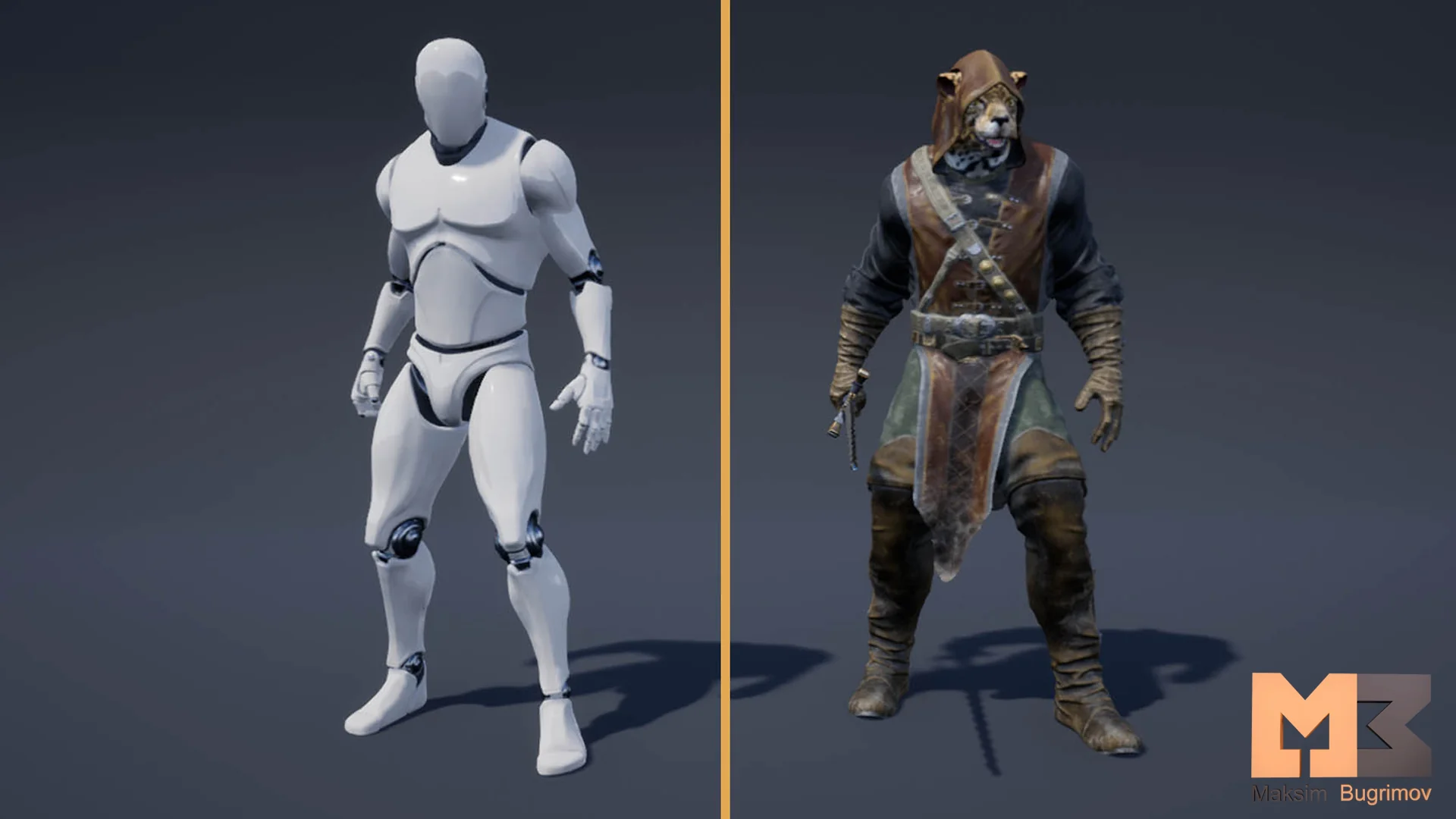
When a barbarian or warrior character needs to cross a battlefield, the motion has to read clearly across every angle the player or camera might occupy. 92 animation clips give developers a broad set of options for exactly those moments, letting combatants lunge, retreat, strafe, and shift position without forcing an animator to author every directional variant from scratch. The package keeps its scope tight: fantasy fighters moving through space, with Root Motion baked in so characters translate through the world in a way a runtime engine can interpret cleanly.
How the Warrior and Barbarian Clips Behave in a Scene
The first thing to understand about this collection is where it sits in a character pipeline. Every clip is built for warrior and barbarian archetypes, which means the motion priorities skew toward weight, aggression, and grounded combat stances rather than light, agile, or acrobatic movement. A barbarian swinging through a directional step carries momentum differently than a rogue pivoting on a dodge, and these animations are tuned for that heavier silhouette. Characters move in all directions the camera or player input might demand, and Root Motion ensures that motion is driven from the rig's root rather than purely from in-place posing that a game engine later has to offset.
Root Motion matters most when characters need to cover distance as part of an attack, a retreat, or a repositioning beat. Instead of the character sliding across the floor because the translation does not match the footwork, the root carries the body forward in sync with the step. This makes the clips directly useful for melee combat systems where a warrior closes distance on a swing or a barbarian shoves forward through a charge. 92 clips spread across directional movement and root-driven motion give developers a substantial library to draw from when prototyping or refining a fantasy fighter's behavior.
Directional Movement Across All Axes
The package emphasizes that the character moves in all directions. For a warrior or barbarian, this translates into forward advances, backward presses, and lateral strafing that keep the fighter oriented toward a threat. Combat-oriented rigs rarely stand still, and directional motion clips are what stop a character from feeling pinned to a single spot when the player circles an enemy or repositions to avoid an attack. With 92 clips available, the set can cover combinations of forward, backward, left, right, and diagonal translation without requiring the developer to blend or mirror a smaller set manually.
Because the animations are focused on warriors and barbarians, the directional movement carries the physicality those archetypes demand. A step backward is not a light hop; it is a grounded recovery that keeps the fighter balanced and ready to swing. Forward movement leans into the weapon's reach, letting the body commit to the space it is claiming. Root Motion underpins every one of these translations, so the clips feed naturally into a Locomotion State Machine or a combat tree that expects the rig to travel through world space on its own root rather than being pushed by code alone.
Root Animation and Engine Integration
Root Motion is a specific technical choice that shapes how these clips integrate into a project. The root of the character acts as the driver for position, meaning the translation is embedded in the animation data itself. For combat designers, this removes the need to script artificial movement deltas on top of in-place clips. A warrior executing a forward attack step travels the exact distance baked into the root motion, and a barbarian retreating pulls back precisely as far as the animation dictates. This keeps hitboxes, spacing, and visual footwork locked together.
In state machines that blend between locomotion and combat actions, root-driven clips help maintain continuity when a character transitions from an idle stance into a directional move or from a move into an attack. The 92 clips give animators and programmers a shared vocabulary: the runtime requests a direction, the matching clip plays, and the root carries the fighter through the expected path. Fantasy projects that rely on melee spacing, where a few units of distance decide whether a sword connects or whiffs, benefit from this setup because the motion and the gameplay logic stay in sync.
Fantasy Warrior and Barbarian Project Fit
The package is tagged for Fantasy, and its content is shaped by warrior and barbarian archetypes. This makes it a direct fit for projects featuring melee combatants in fantasy settings, sword-and-board fighters, two-handed weapon wielders, or aggressive front-line characters who need to close distance and strike. The broader Fantasy tag opens the door for dark fantasy, high fantasy, or any setting where a heavily armored or muscular fighter archetype appears. It is not positioned as a general-purpose locomotion set; it is a combat-adjacent movement library tuned for characters whose role is to engage up close.
For teams building Action RPGs, hack-and-slash titles, or fantasy brawlers, the directional coverage and root-driven motion can slot into a Locomotion BlendSpace, a combat state tree, or an Animation Montage system. The 92-clip count provides enough variation that a warrior can cycle through directional steps and repositioning moves without obvious repetition during sustained combat encounters. The barbarian focus also means the clips can serve bestial or oversized humanoid fighters, as long as the rig's proportions and hierarchy can accept the motion data.
Compatibility with Creature Animation Sets
Editor notes flag a compatibility detail worth parsing carefully. The package is noted alongside a referenced set called 56 Animations for Creatures, which signals that the warrior and barbarian clips can share a pipeline or structure with creature animation workflows. This does not mean the warrior clips are creature animations, but it does suggest that teams already working with creature locomotion or bestial movement sets can integrate these humanoid fighter clips into a broader animation system without a completely separate toolchain. For a fantasy project that fields both humanoid combatants and creature enemies, having compatible animation packs streamlines the way motion data is imported, organized, and played back at runtime.
Who Benefits Most from 92 Warrior Clips
This package lands best with combat designers and animators working on fantasy titles where melee fighters need to move with intent. The 92-clip count and the emphasis on all-direction movement mean a developer can populate a warrior's locomotion and combat transition states with purpose-built motion rather than stretching a smaller set across too many contexts. The barbarian and warrior focus ensures the clips carry the weight and aggression those archetypes require, and Root Motion keeps the translation grounded in the rig's own motion data.
For a team evaluating this asset, the clearest takeaway is that the 92 clips are not generic locomotion. They are tuned for fighters who step into range, press forward through attacks, and retreat with a weapon ready, and the root-driven motion means those movements can drive gameplay positioning directly. If a project needs a fantasy combatant that owns the space it moves through, this set provides the directional coverage and technical foundation to make that happen without building every step by hand.
 Combat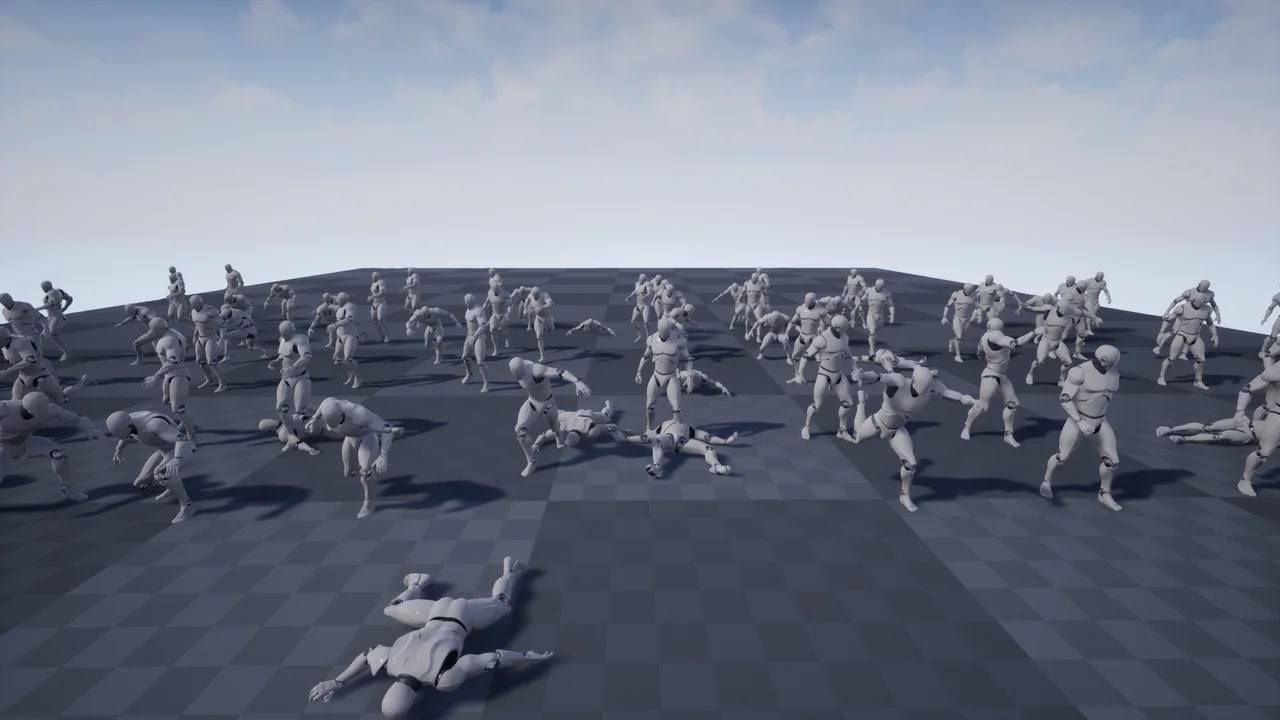
 Combat
 Characters
 Creatures