"fb5ea1e7d1b41445"{"id":"1002411","slug":"spaceknight","title":"SpaceKnight","category":"Characters \u0026 Creatures","engine":"4.26+,5.0+","assetVersion":"","engineVersion":"Engine Version: 4.26+,5.0+","tag":"Characters","accent":"blue","visual":"character","summary":"Detailed breakdown of the SpaceKnight low-poly character model, featuring Human and Cyborg variants, Unreal Engine skeleton setups, and tissue physics.","platform":"Unreal Engine","indexPolicy":"index","publishedAt":"2026-11-10T12:08:58.510Z","updatedAt":"2026-11-10T12:08:58.510Z","sourceNotes":[],"fileContents":[],"compatibility":["Unreal Engine","Engine Version: 4.26+,5.0+"],"featuredImage":{"alt":"SpaceKnight","src":"/wp-content/uploads/published/2026/11/5b2c2c797648-d8cf97ae-0fd7-44fd-95e1-23027a7ae1c7-799f0a1d54.webp"},"hasDownloadLink":true,"downloads":0,"terms":[{"taxonomy":"category","slug":"characters-and-creatures","name":"Characters \u0026 Creatures"}],"galleryImages":[{"src":"/wp-content/uploads/published/2026/11/13dac9ad1c20-7d873daa-5463-4ef0-8758-fb29291b12c5-14b3fe9d5f.webp","alt":"SpaceKnight"},{"src":"/wp-content/uploads/published/2026/11/b20625eaf552-abd24b9f-b1d9-4315-86ec-e0208dc2cba6-efad44b65f.webp","alt":"SpaceKnight"},{"src":"/wp-content/uploads/published/2026/11/3eecc054d725-704a4662-6cfb-43db-8f91-534206de69ed-0cd9ba2ab2.webp","alt":"SpaceKnight"},{"src":"/wp-content/uploads/published/2026/11/03852f52e1b9-9bf913e7-3e18-4867-a22f-9194f1c99329-bc037b4af6.webp","alt":"SpaceKnight"},{"src":"/wp-content/uploads/published/2026/11/61ecda920270-b1782ce6-1183-4a39-8dac-53df4c283999-6c436897f4.webp","alt":"SpaceKnight"},{"src":"/wp-content/uploads/published/2026/11/e8e0d434e941-e6c3ffc4-92c4-4f54-9e5a-ce0d1b125b62-849af7cba3.webp","alt":"SpaceKnight"},{"src":"/wp-content/uploads/published/2026/11/795b34aeb2e0-d4bc2c2a-5508-4269-8352-79aee34df390-f58af1d06d.webp","alt":"SpaceKnight"},{"src":"/wp-content/uploads/published/2026/11/1d3e257d4343-21fc0dad-0d90-4005-97df-9599e5a5200e-8eff83e672.webp","alt":"SpaceKnight"},{"src":"/wp-content/uploads/published/2026/11/da26e2919df0-8c5498c5-7270-40b3-a15b-58ea19085cf7-660129c21e.webp","alt":"SpaceKnight"},{"src":"/wp-content/uploads/published/2026/11/0a9840403a56-1f220ce3-1930-4cd9-9d6f-b9e565f3ae8b-3d3b436ea9.webp","alt":"SpaceKnight"}],"accessPanel":{"kind":"resource","title":"Get this resource","eyebrow":"Free resource","message":"Download this resource in your browser.","fileName":"SpaceKnight.7z","safetyNote":"Resources are manually reviewed before listing to improve quality and reduce obvious risks.","actionLabel":"Get this resource","resourceType":"Resource archive","versions":[]},"contentHtml":"\u003cp\u003eThe SpaceKnight character asset delivers two distinct humanoid configurations designed around low-poly construction: a biological Human archetype and a mechanized Cyborg variant. Both configurations merge futuristic spacesuit aesthetics with medieval and ninja-inspired visual themes, creating a versatile asset suited for role-playing games, strategy titles, and first-person shooters. Built for modularity and immediate animation pipeline use, the characters feature dedicated mesh variants, physics setups, and multi-tier PBR texture resolutions.\u003c/p\u003e\u003ch2\u003eThe SpaceKnight Human Variant and Mesh Options\u003c/h2\u003e\u003cp\u003eThe human configuration of the SpaceKnight provides direct versatility through multiple mesh foundations and appearance styles. Based on two distinct base meshes, the character allows developers to switch core silhouette lines without redesigning the entire character pipeline. Alongside these mesh bases, two distinct skin configurations provide variations in appearance, allowing projects to deploy different ranks, factions, or character states using the same structural data.\u003c/p\u003e\u003cp\u003eGeometrically, the human form sits at a lightweight polygon budget suited for scenes requiring multiple active actors or expansive environments. The topology consists of 22,412 faces, 19,320 vertices, and 31,375 triangles. This polygon distribution allows clean deformation around articulation joints such as knees, elbows, and the shoulder girdle while keeping rendering overhead minimal. Because the character wears stylized equipment combining elements of a spacesuit, medieval plate, and ninja styling, maintaining clean mesh flow prevents clipping across moving plates and soft undersuits.\u003c/p\u003e\u003cp\u003eTexturing for the human variant is handled through seven distinct texture packs. These sets are authored at high-resolution 4096x4096 grids and can be stepped down through 2048x2048 to 1024x1024 dimensions depending on target hardware constraints and memory budgets. This range lets productions retain crisp physical surface detail in close-up third-person or first-person camera perspectives, or scale assets down to keep video memory lean in top-down strategy projects.\u003c/p\u003e\u003ch2\u003eThe SpaceKnight Cyborg Construction\u003c/h2\u003e\u003cp\u003eThe Cyborg variant presents a denser mechanical profile designed to emphasize robotic and machine characteristics. Rather than sharing the exact mesh footprint of the human configuration, the cyborg model features distinct geometric detail suited to armored robotic joints, mechanical housing, and specialized chassis elements. This focus translates into an expanded polygon budget of 32,691 faces, 34,981 vertices, and 61,600 triangles.\u003c/p\u003e\u003cp\u003eThe higher triangle count reflects the intricate hard-surface panels, mechanical contours, and layered armor pieces that distinguish the cyborg silhouette. Even with nearly double the triangle density of the human model, the mesh remains within practical bounds for modern real-time rendering, whether functioning as an elite enemy type, a playable protagonist, or an allied unit in high-intensity action sequences.\u003c/p\u003e\u003cp\u003eSurface rendering for the cyborg variant relies on three specialized texture packs. Like the human counterpart, these packs support 4096x4096 textures down through 2048x2048 and 1024x1024 variants. The PBR material pipeline captures the distinct metallic properties, synthetic composite sheens, and specialized wear patterns expected of a combat-ready robotic operative across futuristic or space fantasy settings.\u003c/p\u003e\u003ch2\u003eSkeleton Architecture and Unreal Engine Rigging\u003c/h2\u003e\u003cp\u003eBoth versions of the character are fully rigged using the Epic skeleton standard, making them compatible with standard humanoid animation libraries, motion capture data, and Animation Blueprints. However, developers working in newer engine environments need to observe a specific technical consideration: while the model loads cleanly and functions directly inside Unreal Engine 5, the underlying bone hierarchy and joint structure follow the Unreal Engine 4 Epic skeleton convention.\u003c/p\u003e\u003cp\u003eBecause the rigging uses the UE4 skeletal layout, retargeting animation sequences originally authored for the UE5 Mannequin or integrating specific UE5 control rigs will require standard retargeting workflows. The setup remains immediately compatible with existing UE4 animation packs, blend spaces, and procedural aiming nodes without restructuring bone orientations or rename passes.\u003c/p\u003e\u003cp\u003eIn addition to standard skeletal joint weighting, the Unreal Engine integration features tuned tissue physics. Soft-surface attachments, structural cloth, or drapery elements respond to movement and acceleration through active physics calculation, avoiding stiff or static character movement. This dynamic physics setup enhances physical realism during aggressive actions like sprinting, jumping, dodging, or combat maneuvers common to action RPGs and shooters.\u003c/p\u003e\u003ch2\u003eTexture Scaling and Shading Requirements\u003c/h2\u003e\u003cp\u003eMaterial rendering for the SpaceKnight models requires specific shader settings to render correctly in real-time viewports. Material setups require a shader configured with two-sided polygon display enabled. Certain equipment pieces, such as thin collar guards, trim, or overlapping cloth layers, rely on double-sided polygon visibility to prevent backface culling from creating transparent gaps when viewed from acute angles.\u003c/p\u003e\u003cp\u003eTexture delivery across both archetypes is structured to give artists control over runtime performance. Texture sizes step down from 4096x4096 to 2048x2048 down to 1024x1024:\u003c/p\u003e\u003cul\u003e\u003cli\u003e4096x4096: Best suited for hero characters, cutscenes, and close-quarters camera placements where fine material detailing is visible.\u003c/li\u003e\u003cli\u003e2048x2048: Ideal for standard gameplay cameras in third-person action games or squad-based shooters.\u003c/li\u003e\u003cli\u003e1024x1024: Optimized for isometric strategy titles, distant level-of-detail tiers, or performance-critical multiplayer environments.\u003c/li\u003e\u003c/ul\u003e\u003ch2\u003eGameplay Roles Across Multiple Genres\u003c/h2\u003e\u003cp\u003eThe combination of realistic PBR surfaces with futuristic armor, robotic limbs, and medieval silhouettes gives SpaceKnight flexibility across contrasting game styles. Within a tactical sci-fi shooter, the human variant serves as an armored planetary marine, while the cyborg fills the role of an augmented specialist or robotic adversary. In an action RPG or fantasy hybrid setting, the blend of knightly armor shapes and space suit elements accommodates classes such as tech-knights, futuristic paladins, or ninja-styled cyber operatives.\u003c/p\u003e\u003cp\u003eBecause the model is part of the broader SCI-FI SUPER BUNDLE ecosystem, developers can integrate the character alongside matching futuristic props and environments without stylistic friction. Whether deployed as a baseline soldier, customized squad member, or robotic boss, the asset provides clean skeletal logic, tunable resolution targets, and distinct silhouette options ready for active production pipelines.\u003c/p\u003e\n\n\u003ch2\u003eRelated Resources Worth Checking\u003c/h2\u003e\n\u003cul\u003e\n\u003cli\u003e\u003ca href=\"https://3dcghub.com/super-pack-of-skeletons/\" rel=\"noopener noreferrer\"\u003eSuper pack of skeletons\u003c/a\u003e\u003c/li\u003e\n\u003cli\u003e\u003ca href=\"https://3dcghub.com/horror-villains-pack/\" rel=\"noopener noreferrer\"\u003eHorror Villains Pack\u003c/a\u003e\u003c/li\u003e\n\u003cli\u003e\u003ca href=\"https://3dcghub.com/valkyrie/\" rel=\"noopener noreferrer\"\u003eValkyrie\u003c/a\u003e\u003c/li\u003e\n\u003cli\u003e\u003ca href=\"https://3dcghub.com/sci-fi-cyborg-03/\" rel=\"noopener noreferrer\"\u003eSci Fi Cyborg 03\u003c/a\u003e\u003c/li\u003e\n\u003cli\u003e\u003ca href=\"https://3dcghub.com/scifi-beast01-ghoul/\" rel=\"noopener noreferrer\"\u003eSciFi Beast01 Ghoul\u003c/a\u003e\u003c/li\u003e\n\u003c/ul\u003e","contentTextLength":6956,"navigation":{"current":8,"total":4340,"previous":{"id":"1002412","slug":"western-characters-series-2025-adventure-survival-shooter-action-cowboy-man","title":"Western Characters Series 2025 - Adventure Survival Shooter Action Cowboy Man","category":"Humans","platform":"Unreal Engine","updatedAt":"2026-11-10T12:10:14.228Z"},"next":{"id":"1002410","slug":"orc-warlock-modular","title":"Orc Warlock (Modular)","category":"Creatures \u0026 Monsters","platform":"Unreal Engine","updatedAt":"2026-11-10T12:07:32.680Z"}},"relatedResources":[{"id":"1000106","slug":"super-pack-of-skeletons","title":"Super pack of skeletons","category":"Characters \u0026 Creatures","engine":"Engine Version: 4.26+,5.0+","assetVersion":"Engine Version: 4.26+,5.0+","engineVersion":"","tag":"Characters","accent":"blue","visual":"character","summary":"A skeleton character collection for Unreal workflows, featuring multiple undead variants, Epic Skeleton rigging, custom tissue physics, and detailed texture set","platform":"Unreal Engine","indexPolicy":"index","publishedAt":"2026-06-07T16:30:49.830Z","updatedAt":"2026-06-07T16:30:49.830Z","sourceNotes":[],"fileContents":[],"compatibility":["Unreal Engine","Engine Version: 4.26+,5.0+"],"featuredImage":{"alt":"Super pack of skeletons","src":"/wp-content/uploads/published/2026/06/450b7a609c00-eee2705a-70e9-473d-bfff-921ba59aead6-6ea6af8489.webp"},"hasDownloadLink":true,"downloads":3},{"id":"1002416","slug":"native-american","title":"Native American","category":"Characters \u0026 Creatures","engine":"4.18+,5.0+","assetVersion":"","engineVersion":"Engine Version: 4.18+,5.0+","tag":"Characters","accent":"blue","visual":"character","summary":"Technical breakdown of the Native American lowpoly character model, featuring Epic Skeleton rigging, 44 animations, SSS materials, and physics setups.","platform":"Unreal Engine","indexPolicy":"index","publishedAt":"2026-11-10T13:36:44.305Z","updatedAt":"2026-11-10T13:36:44.305Z","sourceNotes":[],"fileContents":[],"compatibility":["Unreal Engine","Engine Version: 4.18+,5.0+"],"featuredImage":{"alt":"Native American","src":"/wp-content/uploads/published/2026/11/edbc47aac0c7-a2e36e55-bd1f-45fc-8037-7d656ac1de87-2613efbab3.webp"},"hasDownloadLink":true,"downloads":0},{"id":"1001637","slug":"horror-villains-pack","title":"Horror Villains Pack","category":"Characters \u0026 Creatures","engine":"4.25+,5.0+","assetVersion":"","engineVersion":"Engine Version: 4.25+,5.0+","tag":"Characters","accent":"blue","visual":"character","summary":"Detailed breakdown of the Horror Villains Pack characters, animation setups, Epic Skeleton compatibility, and revision 3.0 migration requirements.","platform":"Unreal Engine","indexPolicy":"index","publishedAt":"2026-10-13T02:15:47.532Z","updatedAt":"2026-10-13T02:15:47.532Z","sourceNotes":[],"fileContents":[],"compatibility":["Unreal Engine","Engine Version: 4.25+,5.0+"],"featuredImage":{"alt":"Horror Villains Pack","src":"/wp-content/uploads/published/2026/10/79707c106635-865a0ec2-24c7-44af-9a1a-53741edc2e46-b90b0fb2aa.webp"},"hasDownloadLink":true,"downloads":1}]}
Characters
SpaceKnight
Detailed breakdown of the SpaceKnight low-poly character model, featuring Human and Cyborg variants, Unreal Engine skeleton setups, and tissue physics.
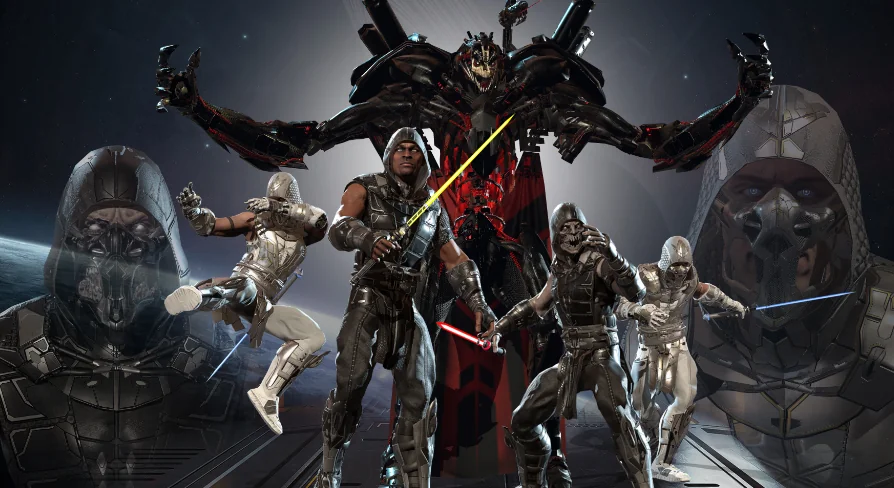
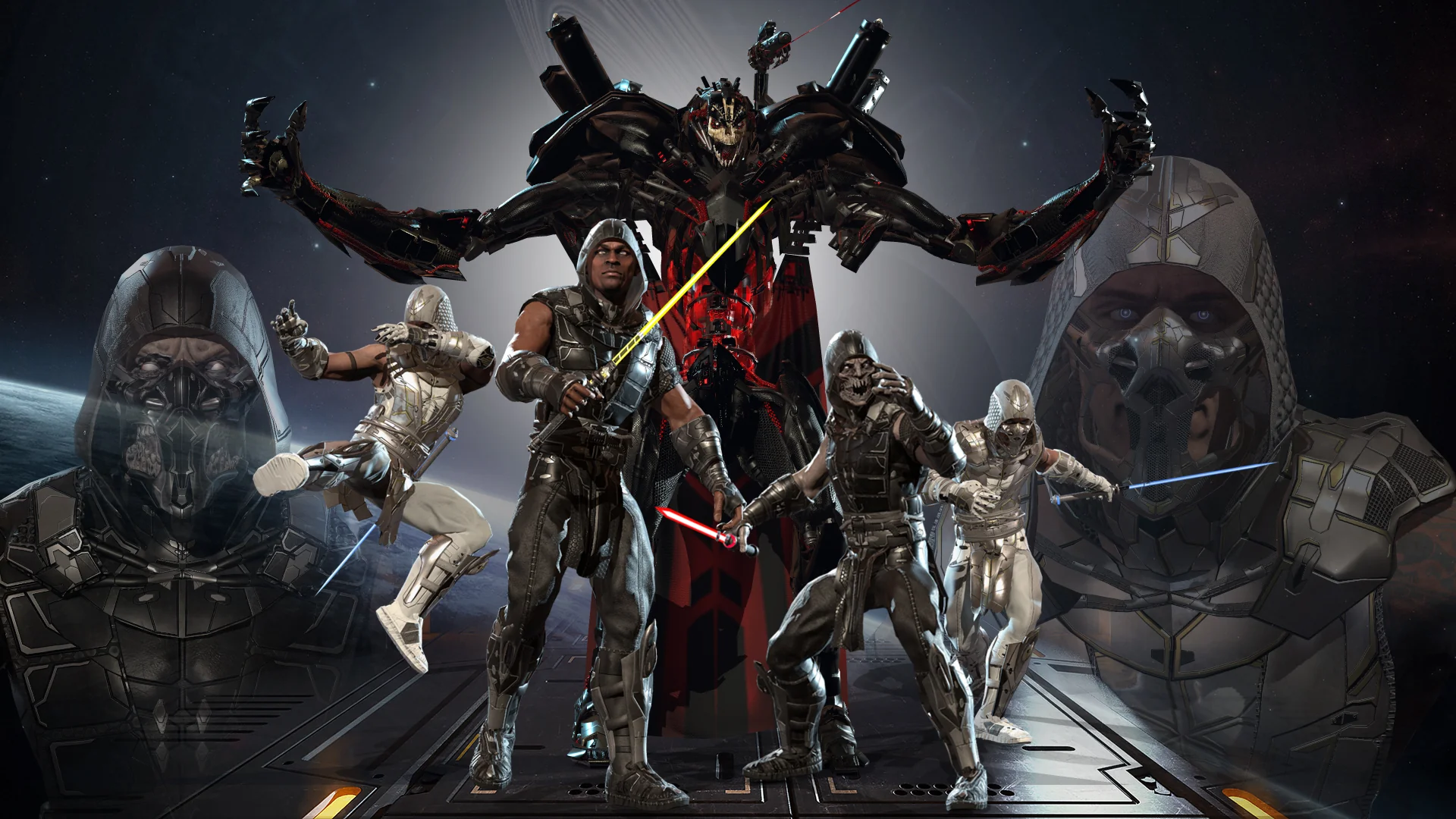
The SpaceKnight character asset delivers two distinct humanoid configurations designed around low-poly construction: a biological Human archetype and a mechanized Cyborg variant. Both configurations merge futuristic spacesuit aesthetics with medieval and ninja-inspired visual themes, creating a versatile asset suited for role-playing games, strategy titles, and first-person shooters. Built for modularity and immediate animation pipeline use, the characters feature dedicated mesh variants, physics setups, and multi-tier PBR texture resolutions.
The SpaceKnight Human Variant and Mesh Options
The human configuration of the SpaceKnight provides direct versatility through multiple mesh foundations and appearance styles. Based on two distinct base meshes, the character allows developers to switch core silhouette lines without redesigning the entire character pipeline. Alongside these mesh bases, two distinct skin configurations provide variations in appearance, allowing projects to deploy different ranks, factions, or character states using the same structural data.
Geometrically, the human form sits at a lightweight polygon budget suited for scenes requiring multiple active actors or expansive environments. The topology consists of 22,412 faces, 19,320 vertices, and 31,375 triangles. This polygon distribution allows clean deformation around articulation joints such as knees, elbows, and the shoulder girdle while keeping rendering overhead minimal. Because the character wears stylized equipment combining elements of a spacesuit, medieval plate, and ninja styling, maintaining clean mesh flow prevents clipping across moving plates and soft undersuits.
Texturing for the human variant is handled through seven distinct texture packs. These sets are authored at high-resolution 4096x4096 grids and can be stepped down through 2048x2048 to 1024x1024 dimensions depending on target hardware constraints and memory budgets. This range lets productions retain crisp physical surface detail in close-up third-person or first-person camera perspectives, or scale assets down to keep video memory lean in top-down strategy projects.
The SpaceKnight Cyborg Construction
The Cyborg variant presents a denser mechanical profile designed to emphasize robotic and machine characteristics. Rather than sharing the exact mesh footprint of the human configuration, the cyborg model features distinct geometric detail suited to armored robotic joints, mechanical housing, and specialized chassis elements. This focus translates into an expanded polygon budget of 32,691 faces, 34,981 vertices, and 61,600 triangles.
The higher triangle count reflects the intricate hard-surface panels, mechanical contours, and layered armor pieces that distinguish the cyborg silhouette. Even with nearly double the triangle density of the human model, the mesh remains within practical bounds for modern real-time rendering, whether functioning as an elite enemy type, a playable protagonist, or an allied unit in high-intensity action sequences.
Surface rendering for the cyborg variant relies on three specialized texture packs. Like the human counterpart, these packs support 4096x4096 textures down through 2048x2048 and 1024x1024 variants. The PBR material pipeline captures the distinct metallic properties, synthetic composite sheens, and specialized wear patterns expected of a combat-ready robotic operative across futuristic or space fantasy settings.
Skeleton Architecture and Unreal Engine Rigging
Both versions of the character are fully rigged using the Epic skeleton standard, making them compatible with standard humanoid animation libraries, motion capture data, and Animation Blueprints. However, developers working in newer engine environments need to observe a specific technical consideration: while the model loads cleanly and functions directly inside Unreal Engine 5, the underlying bone hierarchy and joint structure follow the Unreal Engine 4 Epic skeleton convention.
Because the rigging uses the UE4 skeletal layout, retargeting animation sequences originally authored for the UE5 Mannequin or integrating specific UE5 control rigs will require standard retargeting workflows. The setup remains immediately compatible with existing UE4 animation packs, blend spaces, and procedural aiming nodes without restructuring bone orientations or rename passes.
In addition to standard skeletal joint weighting, the Unreal Engine integration features tuned tissue physics. Soft-surface attachments, structural cloth, or drapery elements respond to movement and acceleration through active physics calculation, avoiding stiff or static character movement. This dynamic physics setup enhances physical realism during aggressive actions like sprinting, jumping, dodging, or combat maneuvers common to action RPGs and shooters.
Texture Scaling and Shading Requirements
Material rendering for the SpaceKnight models requires specific shader settings to render correctly in real-time viewports. Material setups require a shader configured with two-sided polygon display enabled. Certain equipment pieces, such as thin collar guards, trim, or overlapping cloth layers, rely on double-sided polygon visibility to prevent backface culling from creating transparent gaps when viewed from acute angles.
Texture delivery across both archetypes is structured to give artists control over runtime performance. Texture sizes step down from 4096x4096 to 2048x2048 down to 1024x1024:
4096x4096: Best suited for hero characters, cutscenes, and close-quarters camera placements where fine material detailing is visible.
2048x2048: Ideal for standard gameplay cameras in third-person action games or squad-based shooters.
1024x1024: Optimized for isometric strategy titles, distant level-of-detail tiers, or performance-critical multiplayer environments.
Gameplay Roles Across Multiple Genres
The combination of realistic PBR surfaces with futuristic armor, robotic limbs, and medieval silhouettes gives SpaceKnight flexibility across contrasting game styles. Within a tactical sci-fi shooter, the human variant serves as an armored planetary marine, while the cyborg fills the role of an augmented specialist or robotic adversary. In an action RPG or fantasy hybrid setting, the blend of knightly armor shapes and space suit elements accommodates classes such as tech-knights, futuristic paladins, or ninja-styled cyber operatives.
Because the model is part of the broader SCI-FI SUPER BUNDLE ecosystem, developers can integrate the character alongside matching futuristic props and environments without stylistic friction. Whether deployed as a baseline soldier, customized squad member, or robotic boss, the asset provides clean skeletal logic, tunable resolution targets, and distinct silhouette options ready for active production pipelines.
 Characters
 Characters
 Characters
 Characters