"fb5ea1e7d1b41445"{"id":"1002397","slug":"skeleton-archer","title":"Skeleton Archer","category":"Characters \u0026 Creatures","engine":"4.20+,5.0+","assetVersion":"","engineVersion":"Engine Version: 4.20+,5.0+","tag":"Characters","accent":"blue","visual":"character","summary":"A detailed technical look at the Skeleton Archer humanoid character, featuring animation blueprint support, scripting, and Cave Troll Medium compatibility.","platform":"Unreal Engine","indexPolicy":"index","publishedAt":"2026-11-10T04:25:54.909Z","updatedAt":"2026-11-10T04:25:54.909Z","sourceNotes":[],"fileContents":[],"compatibility":["Unreal Engine","Engine Version: 4.20+,5.0+"],"featuredImage":{"alt":"Skeleton Archer","src":"/wp-content/uploads/published/2026/11/6e71ac5feb1b-a79535a7-daf5-45fd-a091-a1fe41292b00-d4eab61ae1.webp"},"hasDownloadLink":true,"downloads":0,"terms":[{"taxonomy":"category","slug":"characters-and-creatures","name":"Characters \u0026 Creatures"}],"galleryImages":[{"src":"/wp-content/uploads/published/2026/11/099ad617381a-844f3bee-fa70-4df0-860f-fb70cfdcc83f-f4f2204365.webp","alt":"Skeleton Archer"},{"src":"/wp-content/uploads/published/2026/11/125011814de3-58f825e0-9226-4d28-95fc-90c64bf63e80-b2acb30474.webp","alt":"Skeleton Archer"},{"src":"/wp-content/uploads/published/2026/11/1f87b17e0fb2-a1b3a12d-c8d4-44bf-90b0-b6d0bd742448-f066d3da0b.webp","alt":"Skeleton Archer"},{"src":"/wp-content/uploads/published/2026/11/225d07702a32-e496d68c-579a-4738-9617-19d1b0e52e67-dafad4a071.webp","alt":"Skeleton Archer"},{"src":"/wp-content/uploads/published/2026/11/10cd735f7f49-505f047a-5529-4ba5-b8c2-bb4a9ea249db-d96abdb495.webp","alt":"Skeleton Archer"},{"src":"/wp-content/uploads/published/2026/11/ec2b66959ade-b442bcb2-dabb-4a63-bc45-1d724b12229e-38f8ef53a0.webp","alt":"Skeleton Archer"},{"src":"/wp-content/uploads/published/2026/11/80f88838be92-b85e5981-0084-477e-b6cd-6c027bb52f9a-aacbcc12a7.webp","alt":"Skeleton Archer"},{"src":"/wp-content/uploads/published/2026/11/b3f1f0ed2c6e-e302d5d3-7abe-4735-9396-a7181140e40c-dd5a1fc239.webp","alt":"Skeleton Archer"}],"accessPanel":{"kind":"resource","title":"Get this resource","eyebrow":"Free resource","message":"Download this resource in your browser.","fileName":"Content.7z","safetyNote":"Resources are manually reviewed before listing to improve quality and reduce obvious risks.","actionLabel":"Get this resource","resourceType":"Resource archive","versions":[]},"contentHtml":"\u003cp\u003eArrows loose from the darkness as an animated lattice of human bone draws tension against a bowstring, holding its station without mortal fatigue. In an active scene, this ranged combatant does not rush headlong into the fray. It maintains distance, finding vantage points across ruins or crypt corridors to deliver continuous bow fire while frontline forces absorb incoming strikes. The figure stands as an empty vessel raised from human death by Lord Necromancer, defined by the total absence of flesh and soul, functioning solely as an instrument of ranged destruction for the undead world.\u003c/p\u003e \u003ch2\u003eRanged Combat Behaviors of the Skeleton Archer\u003c/h2\u003e\n\u003cp\u003eOperating as an archer in skeletal form alters the physical logic of combat. Without flesh, muscles, or internal organs, the entity possesses no physical stamina to deplete. It draws, notches, and releases with uniform precision, acting as a tireless sentry within fortified crypts, catacombs, or blighted wilderness camps. The stranding death with a bow indicates a creature locked into its military purpose, lingering at the perimeter of conflicts to pick off targets from afar.\u003c/p\u003e \u003cp\u003eHumanoid proportions govern how the model holds and fires its weapon. Because the skeleton retains the recognizable frame of a deceased human, its shooting postures, aiming arcs, and movement silhouettes reflect disciplined marksmanship translated through bare bone. In gameplay scenarios, ranged units of this type establish immediate suppression zones. Encounter areas benefit from placing these archers on elevated platforms, crumbling battlements, or recessed alcoves where their skeletal geometry blends into stone environments until arrows begin to fly.\u003c/p\u003e \u003ch2\u003eAnatomy of a Servant: Humanoid Bones Without Flesh or Soul\u003c/h2\u003e\n\u003cp\u003eThe visual identity relies entirely on exposed structure. Stripped clean of soft tissue, the character presents a high-detail humanoid skeleton where every rib, vertebra, and joint remains visible during movement. This skeletal openness provides a distinct read on the battlefield. Players instantly identify the creature as an undead combatant, yet the presence of the bow immediately differentiates it from standard sword-wielding or shambling bone minions.\u003c/p\u003e \u003cp\u003eThe lore underpinning the asset directly informs its presence. Having once lived as a mortal before being resurrected into servitude under Lord Necromancer, the figure carries the cold discipline of a reanimated thrall. There are no signs of life, pain responses, or conscious hesitation. The design reflects an absolute economy of death, focusing purely on bare skeletal anatomy engineered to support weapon handling and long-range engagement without decorative distractions.\u003c/p\u003e \u003ch2\u003eAnimation Blueprint Logic and Character Script Systems\u003c/h2\u003e\n\u003cp\u003eBringing a skeletal archer to life requires careful control over bone movement, draw strength, and transitional stances. The inclusion of an Animation Blueprint provides the structural framework necessary to manage dynamic character locomotion alongside weapon actions. Ranged characters depend heavily on smooth blending between aiming offsets, draw-and-release cycles, and directional movement states so that tracking targets feels responsive rather than mechanical.\u003c/p\u003e \u003cp\u003eScript integration works directly with the character pipeline to govern combat actions and state logic. Humanoid skeletons require precise socket attachments for weapons, ensuring the bow aligns accurately with the hands while arrows notch correctly against the string during draw animations. Through the provided script and blueprint setup, the asset processes movement vectors, combat states, and hit responses without detaching visual mechanics from game logic. The humanoid character rig accommodates standard movement patterns, allowing transitions from stationary guard duty to tactical repositioning when threats close the distance.\u003c/p\u003e \u003ch2\u003eEncounter Synergy Between the Archer and Cave Troll Medium\u003c/h2\u003e\n\u003cp\u003eUndead forces rarely operate in isolation, and the documented compatibility with Cave Troll Medium creates a natural dynamic for encounter design. A lone skeletal archer serves as an agile, fragile threat, but pairing it with a heavy brute completely alters tactical priority. While a medium-sized cave troll occupies the center of an engagement space with sweeping melee attacks and high physical resistance, archers can remain positioned in the backfield, forcing players to divide their focus between immediate melee pressure and persistent ranged fire.\u003c/p\u003e \u003cp\u003eThis pairing establishes clear encounter mechanics across subterranean layers, cavern networks, or necromantic fortresses:\u003c/p\u003e\n\u003cul\u003e\n\u003cli\u003eFrontline distraction provided by Cave Troll Medium to tie up player positioning.\u003c/li\u003e\n\u003cli\u003eSustained ranged suppression maintained by the skeletal archer from secure angles.\u003c/li\u003e\n\u003cli\u003eDistinct threat layers combining brute-force collisions with precise, incoming projectile tracking.\u003c/li\u003e\n\u003cli\u003eVaried physical scales within an undead retinue, contrasting massive troll mass against narrow bone silhouettes.\u003c/li\u003e\n\u003c/ul\u003e \u003cp\u003eBecause both entities share operational compatibility within the same environment, building multi-tier skirmishes becomes straightforward. Dungeon chambers can deploy cave trolls as gatekeepers while multiple skeleton archers line perimeter ledges, turning simple arenas into complex combat puzzles where cover and target prioritization dictate survival.\u003c/p\u003e \u003ch2\u003eRole in Necromantic World Building\u003c/h2\u003e\n\u003cp\u003eBeyond isolated combat encounters, the asset fulfills an essential niche in broader world design. Necromancer strongholds, haunted ruins, and cursed battlefields require specialized unit roles to feel like genuine military factions rather than disorganised mobs. By incorporating a dedicated humanoid archer raised from human remains, a game world demonstrates that its necromantic factions repurpose fallen armies based on specialized battlefield duties.\u003c/p\u003e \u003cp\u003eThe complete package functions as a ready-to-deploy combatant equipped with the character logic, skeletal definition, and animation framework needed to bring immediate pressure to ranged combat encounters.\u003c/p\u003e\n\n\u003ch2\u003eContinue Browsing Similar Packs\u003c/h2\u003e\n\u003cul\u003e\n\u003cli\u003e\u003ca href=\"https://3dcghub.com/rk-fantasy-archer/\" rel=\"noopener noreferrer\"\u003eRK Fantasy Archer\u003c/a\u003e\u003c/li\u003e\n\u003cli\u003e\u003ca href=\"https://3dcghub.com/super-pack-of-skeletons/\" rel=\"noopener noreferrer\"\u003eSuper pack of skeletons\u003c/a\u003e\u003c/li\u003e\n\u003cli\u003e\u003ca href=\"https://3dcghub.com/adam-horseman-archer/\" rel=\"noopener noreferrer\"\u003eAdam Horseman Archer\u003c/a\u003e\u003c/li\u003e\n\u003cli\u003e\u003ca href=\"https://3dcghub.com/modular-human-skeleton/\" rel=\"noopener noreferrer\"\u003eModular Human Skeleton\u003c/a\u003e\u003c/li\u003e\n\u003cli\u003e\u003ca href=\"https://3dcghub.com/modular-skeleton-mage/\" rel=\"noopener noreferrer\"\u003eModular Skeleton Mage\u003c/a\u003e\u003c/li\u003e\n\u003c/ul\u003e","contentTextLength":6150,"navigation":{"current":22,"total":4340,"previous":{"id":"1002398","slug":"skeleton-army","title":"Skeleton Army","category":"Creatures \u0026 Monsters","platform":"Unreal Engine","updatedAt":"2026-11-10T04:26:44.584Z"},"next":{"id":"1002396","slug":"rebel","title":"Rebel","category":"Characters \u0026 Creatures","platform":"Unreal Engine","updatedAt":"2026-11-10T04:25:09.218Z"}},"relatedResources":[{"id":"1000875","slug":"rk-fantasy-archer","title":"RK Fantasy Archer","category":"Characters \u0026 Creatures","engine":"4.26+,5.0+","assetVersion":"","engineVersion":"Engine Version: 4.26+,5.0+","tag":"Characters","accent":"blue","visual":"character","summary":"RK Fantasy Archer is a ready-to-use archer character with CharacterBP, AnimBP, and Attack commands for realistic medieval fantasy games. Includes planned free u","platform":"Unreal Engine","indexPolicy":"index","publishedAt":"2026-08-05T15:08:23.949Z","updatedAt":"2026-08-05T15:08:23.949Z","sourceNotes":[],"fileContents":[],"compatibility":["Unreal Engine","Engine Version: 4.26+,5.0+"],"featuredImage":{"alt":"RK Fantasy Archer","src":"/wp-content/uploads/published/2026/08/0c2e85565464-dc47c95e-ff6c-4692-aa9a-17f1db95ce4e-4cfe18670b.webp"},"hasDownloadLink":true,"downloads":0},{"id":"1000106","slug":"super-pack-of-skeletons","title":"Super pack of skeletons","category":"Characters \u0026 Creatures","engine":"Engine Version: 4.26+,5.0+","assetVersion":"Engine Version: 4.26+,5.0+","engineVersion":"","tag":"Characters","accent":"blue","visual":"character","summary":"A skeleton character collection for Unreal workflows, featuring multiple undead variants, Epic Skeleton rigging, custom tissue physics, and detailed texture set","platform":"Unreal Engine","indexPolicy":"index","publishedAt":"2026-06-07T16:30:49.830Z","updatedAt":"2026-06-07T16:30:49.830Z","sourceNotes":[],"fileContents":[],"compatibility":["Unreal Engine","Engine Version: 4.26+,5.0+"],"featuredImage":{"alt":"Super pack of skeletons","src":"/wp-content/uploads/published/2026/06/450b7a609c00-eee2705a-70e9-473d-bfff-921ba59aead6-6ea6af8489.webp"},"hasDownloadLink":true,"downloads":3},{"id":"1469","slug":"adam-horseman-archer","title":"Adam Horseman Archer","category":"Characters \u0026 Creatures","engine":"4.26+5.0+","assetVersion":"Engine version: 4.26+5.0+","engineVersion":"4.12","tag":"Characters","accent":"blue","visual":"character","summary":"Enhance your game with this high-quality Medieval Archer and Horse Mount set. Featuring modular armor, weapons, and rigs for seamless integration.","platform":"Unreal Engine","indexPolicy":"index","publishedAt":"2026-02-06T18:34:13.000Z","updatedAt":"2026-04-19T15:58:10.000Z","sourceNotes":[],"fileContents":[],"compatibility":["Unreal Engine","Engine version: 4.26+5.0+"],"featuredImage":{"alt":"Adam Horseman Archer","src":"https://3dcghub.com/wp-content/uploads/2026/02/22324814-feda-45ca-8732-4043340279d4.webp"},"hasDownloadLink":true,"downloads":2}]}
Characters
Skeleton Archer
A detailed technical look at the Skeleton Archer humanoid character, featuring animation blueprint support, scripting, and Cave Troll Medium compatibility.
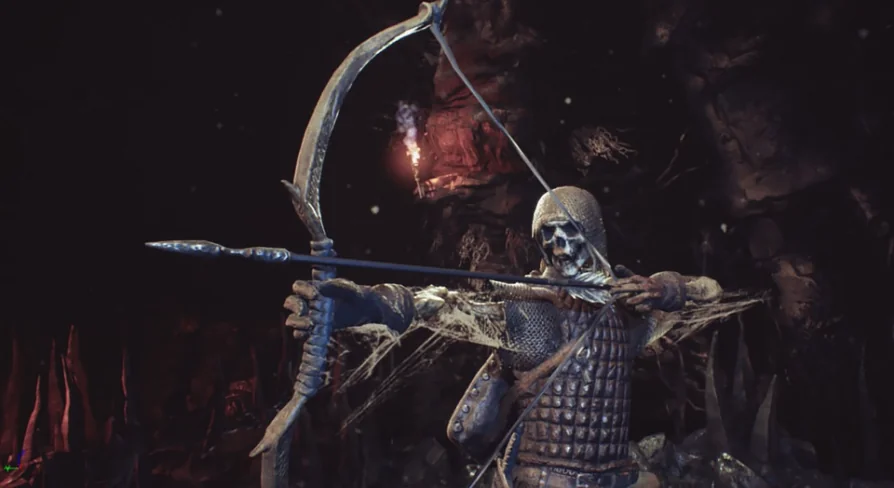
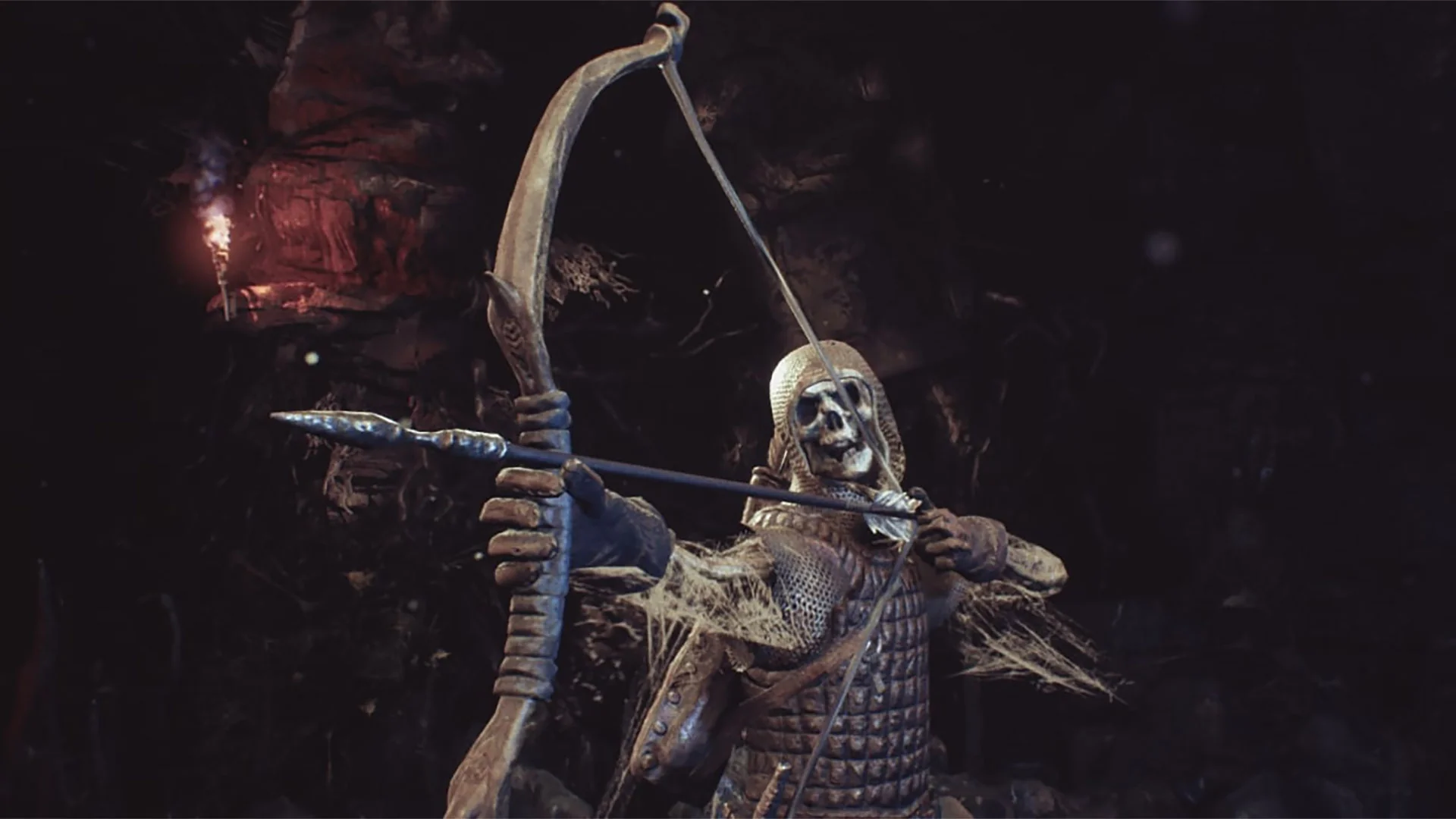
Arrows loose from the darkness as an animated lattice of human bone draws tension against a bowstring, holding its station without mortal fatigue. In an active scene, this ranged combatant does not rush headlong into the fray. It maintains distance, finding vantage points across ruins or crypt corridors to deliver continuous bow fire while frontline forces absorb incoming strikes. The figure stands as an empty vessel raised from human death by Lord Necromancer, defined by the total absence of flesh and soul, functioning solely as an instrument of ranged destruction for the undead world.
Ranged Combat Behaviors of the Skeleton Archer
Operating as an archer in skeletal form alters the physical logic of combat. Without flesh, muscles, or internal organs, the entity possesses no physical stamina to deplete. It draws, notches, and releases with uniform precision, acting as a tireless sentry within fortified crypts, catacombs, or blighted wilderness camps. The stranding death with a bow indicates a creature locked into its military purpose, lingering at the perimeter of conflicts to pick off targets from afar.
Humanoid proportions govern how the model holds and fires its weapon. Because the skeleton retains the recognizable frame of a deceased human, its shooting postures, aiming arcs, and movement silhouettes reflect disciplined marksmanship translated through bare bone. In gameplay scenarios, ranged units of this type establish immediate suppression zones. Encounter areas benefit from placing these archers on elevated platforms, crumbling battlements, or recessed alcoves where their skeletal geometry blends into stone environments until arrows begin to fly.
Anatomy of a Servant: Humanoid Bones Without Flesh or Soul
The visual identity relies entirely on exposed structure. Stripped clean of soft tissue, the character presents a high-detail humanoid skeleton where every rib, vertebra, and joint remains visible during movement. This skeletal openness provides a distinct read on the battlefield. Players instantly identify the creature as an undead combatant, yet the presence of the bow immediately differentiates it from standard sword-wielding or shambling bone minions.
The lore underpinning the asset directly informs its presence. Having once lived as a mortal before being resurrected into servitude under Lord Necromancer, the figure carries the cold discipline of a reanimated thrall. There are no signs of life, pain responses, or conscious hesitation. The design reflects an absolute economy of death, focusing purely on bare skeletal anatomy engineered to support weapon handling and long-range engagement without decorative distractions.
Animation Blueprint Logic and Character Script Systems
Bringing a skeletal archer to life requires careful control over bone movement, draw strength, and transitional stances. The inclusion of an Animation Blueprint provides the structural framework necessary to manage dynamic character locomotion alongside weapon actions. Ranged characters depend heavily on smooth blending between aiming offsets, draw-and-release cycles, and directional movement states so that tracking targets feels responsive rather than mechanical.
Script integration works directly with the character pipeline to govern combat actions and state logic. Humanoid skeletons require precise socket attachments for weapons, ensuring the bow aligns accurately with the hands while arrows notch correctly against the string during draw animations. Through the provided script and blueprint setup, the asset processes movement vectors, combat states, and hit responses without detaching visual mechanics from game logic. The humanoid character rig accommodates standard movement patterns, allowing transitions from stationary guard duty to tactical repositioning when threats close the distance.
Encounter Synergy Between the Archer and Cave Troll Medium
Undead forces rarely operate in isolation, and the documented compatibility with Cave Troll Medium creates a natural dynamic for encounter design. A lone skeletal archer serves as an agile, fragile threat, but pairing it with a heavy brute completely alters tactical priority. While a medium-sized cave troll occupies the center of an engagement space with sweeping melee attacks and high physical resistance, archers can remain positioned in the backfield, forcing players to divide their focus between immediate melee pressure and persistent ranged fire.
This pairing establishes clear encounter mechanics across subterranean layers, cavern networks, or necromantic fortresses:
Frontline distraction provided by Cave Troll Medium to tie up player positioning.
Sustained ranged suppression maintained by the skeletal archer from secure angles.
Varied physical scales within an undead retinue, contrasting massive troll mass against narrow bone silhouettes.
Because both entities share operational compatibility within the same environment, building multi-tier skirmishes becomes straightforward. Dungeon chambers can deploy cave trolls as gatekeepers while multiple skeleton archers line perimeter ledges, turning simple arenas into complex combat puzzles where cover and target prioritization dictate survival.
Role in Necromantic World Building
Beyond isolated combat encounters, the asset fulfills an essential niche in broader world design. Necromancer strongholds, haunted ruins, and cursed battlefields require specialized unit roles to feel like genuine military factions rather than disorganised mobs. By incorporating a dedicated humanoid archer raised from human remains, a game world demonstrates that its necromantic factions repurpose fallen armies based on specialized battlefield duties.
The complete package functions as a ready-to-deploy combatant equipped with the character logic, skeletal definition, and animation framework needed to bring immediate pressure to ranged combat encounters.
 Characters
 Characters
 Characters
 Characters