"a338a1d501976271"{"id":"1000016","slug":"modular-human-skeleton","title":"Modular Human Skeleton","category":"Characters \u0026 Creatures","engine":"4.26+,5.0+","assetVersion":"","engineVersion":"4.26+,5.0+","tag":"Characters","accent":"blue","visual":"character","summary":"A modular human skeleton with 114 Blueprint bones, per-bone visibility, individual parts, 5 skins, and ready-made poses for flexible setup.","platform":"Unreal Engine","publishedAt":"2026-05-20T05:09:24.230Z","updatedAt":"2026-05-20T05:09:24.230Z","sourceNotes":[],"fileContents":[],"compatibility":["Unreal Engine","Engine version: 4.26+,5.0+"],"featuredImage":{"alt":"Modular Human Skeleton","src":"/wp-content/uploads/published/2026/05/623df88334fb-5772a04c-7a89-431c-84d2-160013991804-12c3c414c9.webp"},"hasDownloadLink":true,"downloads":0,"terms":[{"taxonomy":"category","slug":"characters-and-creatures","name":"Characters \u0026 Creatures"}],"galleryImages":[{"src":"/wp-content/uploads/published/2026/05/0f13380f1f87-3c3c7706-bdac-41ed-b787-a34b5c9983cc-f7f3119625.webp","alt":"Modular Human Skeleton"},{"src":"/wp-content/uploads/published/2026/05/e942fc642b79-ac6e192e-04f0-4e88-93c9-e3eab6f441df-ecb5afc361.webp","alt":"Modular Human Skeleton"},{"src":"/wp-content/uploads/published/2026/05/9c562a43f18d-d738634a-faf8-4344-852e-788876c778e2-6c581d73d1.webp","alt":"Modular Human Skeleton"},{"src":"/wp-content/uploads/published/2026/05/40b9c33e4069-2d3db274-0902-413d-b550-9c076c9ab776-6b4ff2f9b6.webp","alt":"Modular Human Skeleton"},{"src":"/wp-content/uploads/published/2026/05/e1a53ffc97c3-a13c229e-b3b8-44a9-8c59-79df4b69dd9b-5c036c5928.webp","alt":"Modular Human Skeleton"},{"src":"/wp-content/uploads/published/2026/05/aeb9012e5bd8-fff9b919-1ca3-41b0-9ba1-37b974cd46a9-72116b8bfb.webp","alt":"Modular Human Skeleton"},{"src":"/wp-content/uploads/published/2026/05/4945d4d199aa-de4b97ff-3cdc-4038-8c94-50529a80ddb8-cfe28c5b3a.webp","alt":"Modular Human Skeleton"},{"src":"/wp-content/uploads/published/2026/05/c9addd599032-716861d0-f943-4a7f-82df-89fd3d9ca33c-8c5fecbb9f.webp","alt":"Modular Human Skeleton"},{"src":"/wp-content/uploads/published/2026/05/ca086ad8b445-5a5cf508-cec5-4e65-9d7b-4e0c0d687364-ebe4f935d1.webp","alt":"Modular Human Skeleton"},{"src":"/wp-content/uploads/published/2026/05/691790eaf413-f1e119b6-3ffb-4b3e-b684-a0b67636250f-de35637391.webp","alt":"Modular Human Skeleton"}],"accessPanel":{"kind":"resource","title":"Access this resource","eyebrow":"Free Download","message":"Log in or create a free account to start your download.","fileName":"Content.7z","safetyNote":"Resources are manually reviewed before listing to improve quality and reduce obvious risks.","actionLabel":"Download Free","resourceType":"Resource archive"},"contentHtml":"\u003cp\u003eModular Human Skeleton focuses on a very specific setup: a human skeleton assembled through 114 Blueprint elements, with every bone able to be hidden on its own. That combination makes the package less about a single fixed character and more about controlled skeletal arrangement, where visibility and pose variation are part of the core workflow rather than an extra feature.\u003c/p\u003e\u003cp\u003eAlongside the main modular structure, the package also includes individual parts, 5 skins, and done poses. Those pieces give it several ways to be used. It can serve as a complete skeleton, as a collection of separate skeletal components, or as a posed figure that can be adjusted further. The overall emphasis stays on flexibility inside a human skeleton framework, with both realistic and fantasy-adjacent project tags pointing to a wide visual range.\u003c/p\u003e\u003ch2\u003e114 Blueprint bones with per-bone visibility\u003c/h2\u003e\u003cp\u003eThe most concrete part of the package is the 114-element Blueprint structure. Each of those bones can be hidden individually, which changes how the skeleton can be presented. Instead of treating the figure as one locked object, the package allows selective display of its parts. That gives room for anything from a full intact skeleton to partial anatomical arrangements where only certain bones remain visible.\u003c/p\u003e\u003cp\u003eThis kind of control matters because the skeleton is not limited to a single look. A creator can isolate specific areas, remove others from view, and build different visual states from the same set of elements. The package is focused on that modularity. The word modular here is not decorative; it describes a system where the skeleton is broken into manageable parts that can be shown or hidden depending on the scene.\u003c/p\u003e\u003cp\u003eBecause the bones are handled as Blueprint elements, the skeleton is presented as something configurable rather than static from the outset. The package supports variation at the bone level, which is a much more granular approach than simply swapping between a few preset whole-body versions. Whether the aim is a clean full-body display or a more fragmented setup, the visibility control is one of the clearest practical strengths in the package.\u003c/p\u003e\u003ch2\u003eAny pose variation and translation to static mesh\u003c/h2\u003e\u003cp\u003ePose control is another central feature. The package states that any poses can be created, and that these can be translated to static mesh. That places the skeleton in a useful middle ground between a poseable structure and a finalized posed result. It is not restricted to the done poses that are included. Those finished poses are part of the package, but the broader purpose is that the skeleton can be rearranged into new positions as needed.\u003c/p\u003e\u003cp\u003eThe ability to create any variation of poses works closely with the modular bone visibility system. A pose is not the only thing being adjusted; visibility can change at the same time. That means a creator is not only deciding how the skeleton stands, twists, or leans, but also which bones remain visible in that chosen pose. The package supports combinations of posture and presentation rather than one isolated form of customization.\u003c/p\u003e\u003cp\u003eTranslation to static mesh adds another practical layer. Once a pose has been arranged, it can move into a static form. For creators who need a posed skeletal figure rather than an always-adjustable setup, that makes the package easier to adapt to scenes that call for a fixed result. The source text does not present this as a minor extra. It is part of the stated workflow, linking the poseable blueprint-based structure to a static outcome.\u003c/p\u003e\u003ch2\u003eIndividual parts, 5 skins, and done poses\u003c/h2\u003e\u003cp\u003eBeyond the full modular skeleton, the package includes individual parts. This is important because it extends the usefulness of the resource beyond whole-character placement. Separate skeletal elements can support more focused compositions, partial displays, or scene dressing where a complete standing skeleton is not the only need. Since those parts are included directly, the package is not locked into one complete assembled presentation.\u003c/p\u003e\u003cp\u003eThe 5 skins add visual variation on top of the structural flexibility. The source does not define the exact look of each skin, so the safest takeaway is that there are five appearance options included in the package. In practice, that means the same skeletal structure can be presented in several visual treatments without stepping outside the provided content. The modular setup handles the form, while the skins broaden the visible range.\u003c/p\u003e\u003cp\u003eDone poses round out the included material. They give immediate posed setups alongside the option to create new ones. That balance helps the package work in two directions. One user may start from an existing pose and adjust visibility or details. Another may ignore the ready-made poses and build a different posture from scratch. The finished poses do not replace the custom posing side of the package; they complement it.\u003c/p\u003e\u003cp\u003eTaken together, the individual parts, skins, and done poses make the resource feel less like a single asset and more like a small skeletal toolkit. Everything still revolves around the human skeleton, but the included material offers multiple entry points depending on whether the need is whole-body posing, isolated bone presentation, visual variation, or quick setup from prepared poses.\u003c/p\u003e\u003ch2\u003eWhere Modular Human Skeleton fits best\u003c/h2\u003e\u003cp\u003eThe tags attached to the package point clearly toward several project moods and themes: fantasy, realistic, horror, human, character, and skeleton. Those tags help frame where the asset is most naturally at home. A human skeleton with modular visibility and pose variation can slot into grounded anatomical scenes just as easily as darker or more stylized character work. The realistic and fantasy tags together suggest it is not limited to only one tone.\u003c/p\u003e\u003cp\u003eHorror is an especially direct fit because skeletal imagery often depends on silhouette, exposure, and selective emphasis. A package where each bone can be hidden individually naturally supports different levels of reveal. A creator can keep the full form visible or reduce it to specific skeletal areas for a more controlled image. Since the package also includes done poses, it can support scenes that need immediate dramatic placement as well as scenes that require a custom arrangement.\u003c/p\u003e\u003cp\u003eThe human and character tags matter too. This is not presented as a generic bone collection detached from a figure. It remains a human skeleton resource, which gives it a clear role in character-centered setups. The package is suited to scenes where the skeleton itself is the subject, and also to scenes where the skeleton functions as a specific visual element within a broader fantasy, realistic, or horror context.\u003c/p\u003e\u003cp\u003eIts modular nature also makes it relevant when one project needs different skeletal states instead of one fixed presentation. A full figure, a partially visible structure, and a custom pose can all come from the same package. That is the most concrete way to understand its likely use: not as a one-look skeleton, but as a system for producing multiple skeletal presentations from the same set of included elements.\u003c/p\u003e\u003ch2\u003eWho benefits most from this skeleton setup\u003c/h2\u003e\u003cp\u003eModular Human Skeleton is set up for creators who need control over both structure and pose. The strongest match is someone who wants a human skeleton that can be rearranged, partially hidden, and presented in different visual versions without leaving the package's own included content. The 114 Blueprint bones define the level of structural control, while the individual parts, 5 skins, and done poses make the package usable from several starting points.\u003c/p\u003e\u003cp\u003eFor projects touching realistic anatomy, fantasy imagery, horror scenes, or character-focused skeletal presentation, the resource is prepared to handle full-body display, selective bone visibility, custom posing, and static posed output. Its most practical strength is not one isolated feature, but the way modular bones, visibility control, pose freedom, and included variations work together in the same human skeleton package.\u003c/p\u003e\n\n\u003ch2\u003eRelated Resources Worth Checking\u003c/h2\u003e\n\u003cul\u003e\n\u003cli\u003e\u003ca href=\"https://3dcghub.com/modular-skeleton-mage/\" title=\"Modular Skeleton Mage\"\u003eModular Skeleton Mage\u003c/a\u003e\u003c/li\u003e\n\u003cli\u003e\u003ca href=\"https://3dcghub.com/realistic-base-skeleton/\" title=\"Realistic Base Skeleton\"\u003eRealistic Base Skeleton\u003c/a\u003e\u003c/li\u003e\n\u003cli\u003e\u003ca href=\"https://3dcghub.com/eggo-the-talking-egg-face-morphs-epic-skeleton-skins-and-ultimate-material/\" title=\"Eggo the Talking Egg, face morphs, epic skeleton, skins and ultimate material\"\u003eEggo the Talking Egg, face morphs, epic skeleton, skins and ultimate material\u003c/a\u003e\u003c/li\u003e\n\u003cli\u003e\u003ca href=\"https://3dcghub.com/blind-creature/\" title=\"Blind Creature\"\u003eBlind Creature\u003c/a\u003e\u003c/li\u003e\n\u003cli\u003e\u003ca href=\"https://3dcghub.com/human-internal-organs/\" title=\"Human Internal Organs\"\u003eHuman Internal Organs\u003c/a\u003e\u003c/li\u003e\n\u003c/ul\u003e","contentTextLength":8220,"navigation":{"current":1458,"total":3338,"previous":{"id":"1000017","slug":"multiplayer-top-down-shooter-template","title":"Multiplayer Top Down Shooter Template","category":"Shooter","platform":"Unreal Engine","updatedAt":"2026-05-20T05:16:19.037Z"},"next":{"id":"1000015","slug":"medieval-fruits-and-vegetables","title":"Medieval Fruits And Vegetables","category":"Fruits \u0026 Vegetables","platform":"Unreal Engine","updatedAt":"2026-05-20T04:45:34.585Z"}},"relatedResources":[{"id":"1000106","slug":"super-pack-of-skeletons","title":"Super pack of skeletons","category":"Characters \u0026 Creatures","engine":"Engine Version: 4.26+,5.0+","assetVersion":"Engine Version: 4.26+,5.0+","engineVersion":"","tag":"Characters","accent":"blue","visual":"character","summary":"A skeleton character collection for Unreal workflows, featuring multiple undead variants, Epic Skeleton rigging, custom tissue physics, and detailed texture set","platform":"Unreal Engine","publishedAt":"2026-06-07T16:30:49.830Z","updatedAt":"2026-06-07T16:30:49.830Z","sourceNotes":[],"fileContents":[],"compatibility":["Unreal Engine","Engine Version: 4.26+,5.0+"],"featuredImage":{"alt":"Super pack of skeletons","src":"/wp-content/uploads/published/2026/06/450b7a609c00-eee2705a-70e9-473d-bfff-921ba59aead6-6ea6af8489.webp"},"hasDownloadLink":true,"downloads":3},{"id":"1791","slug":"blind-creature","title":"Blind Creature","category":"Characters \u0026 Creatures","engine":"4.26+,5.0+","assetVersion":"Engine version: 4.26+,5.0+","engineVersion":"4.26","tag":"Characters","accent":"blue","visual":"character","summary":"Discover the Blind Creature, a low-poly 3D model rigged for Epic Skeleton. Perfect for horror and RPG games with modular parts and color variations.","platform":"Unreal Engine","publishedAt":"2026-02-06T21:53:52.000Z","updatedAt":"2026-05-31T13:04:44.461Z","sourceNotes":[],"fileContents":[],"compatibility":["Unreal Engine","Engine version: 4.26+,5.0+"],"featuredImage":{"alt":"Blind Creature","src":"https://3dcghub.com/wp-content/uploads/2026/02/5e3af5c4-e2fa-4258-945f-dc477b5c65cb.webp"},"hasDownloadLink":true,"downloads":0},{"id":"2296","slug":"etasphera17","title":"Etasphera17","category":"Characters \u0026 Creatures","engine":"4.26+,5.0+","assetVersion":"Engine version: 4.26+,5.0+","engineVersion":"4.18","tag":"Characters","accent":"blue","visual":"character","summary":"Discover Etasphera17, a versatile low poly android character for RPG, FPS, and strategy games. Features 4K textures, rigging, and modular design for developers.","platform":"Unreal Engine","publishedAt":"2026-02-07T08:58:13.000Z","updatedAt":"2026-04-19T15:58:03.000Z","sourceNotes":[],"fileContents":[],"compatibility":["Unreal Engine","Engine version: 4.26+,5.0+"],"featuredImage":{"alt":"Etasphera17","src":"https://3dcghub.com/wp-content/uploads/2026/02/3f0cab86-b767-43af-b749-b371aefa5f92.webp"},"hasDownloadLink":true,"downloads":1}]}
Characters
Modular Human Skeleton
A modular human skeleton with 114 Blueprint bones, per-bone visibility, individual parts, 5 skins, and ready-made poses for flexible setup.
Modular Human Skeleton focuses on a very specific setup: a human skeleton assembled through 114 Blueprint elements, with every bone able to be hidden on its own. That combination makes the package less about a single fixed character and more about controlled skeletal arrangement, where visibility and pose variation are part of the core workflow rather than an extra feature.
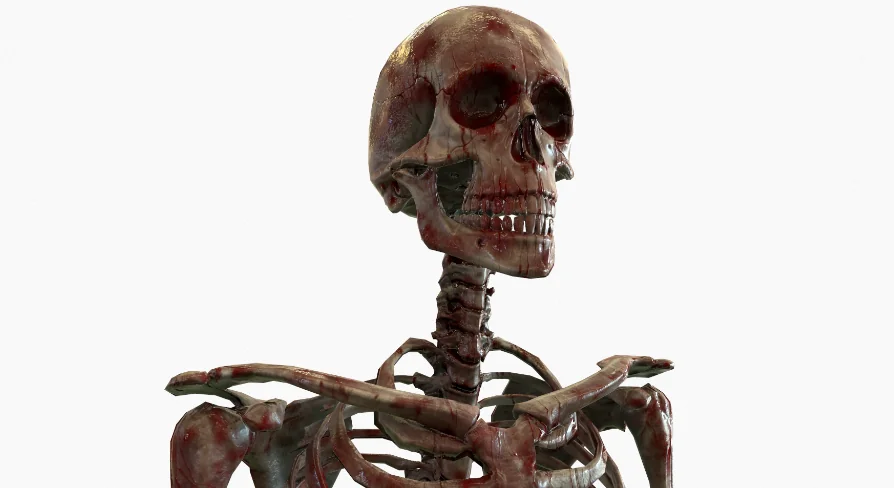
Alongside the main modular structure, the package also includes individual parts, 5 skins, and done poses. Those pieces give it several ways to be used. It can serve as a complete skeleton, as a collection of separate skeletal components, or as a posed figure that can be adjusted further. The overall emphasis stays on flexibility inside a human skeleton framework, with both realistic and fantasy-adjacent project tags pointing to a wide visual range.
114 Blueprint bones with per-bone visibility
The most concrete part of the package is the 114-element Blueprint structure. Each of those bones can be hidden individually, which changes how the skeleton can be presented. Instead of treating the figure as one locked object, the package allows selective display of its parts. That gives room for anything from a full intact skeleton to partial anatomical arrangements where only certain bones remain visible.
This kind of control matters because the skeleton is not limited to a single look. A creator can isolate specific areas, remove others from view, and build different visual states from the same set of elements. The package is focused on that modularity. The word modular here is not decorative; it describes a system where the skeleton is broken into manageable parts that can be shown or hidden depending on the scene.
Because the bones are handled as Blueprint elements, the skeleton is presented as something configurable rather than static from the outset. The package supports variation at the bone level, which is a much more granular approach than simply swapping between a few preset whole-body versions. Whether the aim is a clean full-body display or a more fragmented setup, the visibility control is one of the clearest practical strengths in the package.
Any pose variation and translation to static mesh
Pose control is another central feature. The package states that any poses can be created, and that these can be translated to static mesh. That places the skeleton in a useful middle ground between a poseable structure and a finalized posed result. It is not restricted to the done poses that are included. Those finished poses are part of the package, but the broader purpose is that the skeleton can be rearranged into new positions as needed.
The ability to create any variation of poses works closely with the modular bone visibility system. A pose is not the only thing being adjusted; visibility can change at the same time. That means a creator is not only deciding how the skeleton stands, twists, or leans, but also which bones remain visible in that chosen pose. The package supports combinations of posture and presentation rather than one isolated form of customization.
Translation to static mesh adds another practical layer. Once a pose has been arranged, it can move into a static form. For creators who need a posed skeletal figure rather than an always-adjustable setup, that makes the package easier to adapt to scenes that call for a fixed result. The source text does not present this as a minor extra. It is part of the stated workflow, linking the poseable blueprint-based structure to a static outcome.
Individual parts, 5 skins, and done poses
Beyond the full modular skeleton, the package includes individual parts. This is important because it extends the usefulness of the resource beyond whole-character placement. Separate skeletal elements can support more focused compositions, partial displays, or scene dressing where a complete standing skeleton is not the only need. Since those parts are included directly, the package is not locked into one complete assembled presentation.
The 5 skins add visual variation on top of the structural flexibility. The source does not define the exact look of each skin, so the safest takeaway is that there are five appearance options included in the package. In practice, that means the same skeletal structure can be presented in several visual treatments without stepping outside the provided content. The modular setup handles the form, while the skins broaden the visible range.
Done poses round out the included material. They give immediate posed setups alongside the option to create new ones. That balance helps the package work in two directions. One user may start from an existing pose and adjust visibility or details. Another may ignore the ready-made poses and build a different posture from scratch. The finished poses do not replace the custom posing side of the package; they complement it.
Taken together, the individual parts, skins, and done poses make the resource feel less like a single asset and more like a small skeletal toolkit. Everything still revolves around the human skeleton, but the included material offers multiple entry points depending on whether the need is whole-body posing, isolated bone presentation, visual variation, or quick setup from prepared poses.
Where Modular Human Skeleton fits best
The tags attached to the package point clearly toward several project moods and themes: fantasy, realistic, horror, human, character, and skeleton. Those tags help frame where the asset is most naturally at home. A human skeleton with modular visibility and pose variation can slot into grounded anatomical scenes just as easily as darker or more stylized character work. The realistic and fantasy tags together suggest it is not limited to only one tone.
Horror is an especially direct fit because skeletal imagery often depends on silhouette, exposure, and selective emphasis. A package where each bone can be hidden individually naturally supports different levels of reveal. A creator can keep the full form visible or reduce it to specific skeletal areas for a more controlled image. Since the package also includes done poses, it can support scenes that need immediate dramatic placement as well as scenes that require a custom arrangement.
The human and character tags matter too. This is not presented as a generic bone collection detached from a figure. It remains a human skeleton resource, which gives it a clear role in character-centered setups. The package is suited to scenes where the skeleton itself is the subject, and also to scenes where the skeleton functions as a specific visual element within a broader fantasy, realistic, or horror context.
Its modular nature also makes it relevant when one project needs different skeletal states instead of one fixed presentation. A full figure, a partially visible structure, and a custom pose can all come from the same package. That is the most concrete way to understand its likely use: not as a one-look skeleton, but as a system for producing multiple skeletal presentations from the same set of included elements.
Who benefits most from this skeleton setup
Modular Human Skeleton is set up for creators who need control over both structure and pose. The strongest match is someone who wants a human skeleton that can be rearranged, partially hidden, and presented in different visual versions without leaving the package's own included content. The 114 Blueprint bones define the level of structural control, while the individual parts, 5 skins, and done poses make the package usable from several starting points.
For projects touching realistic anatomy, fantasy imagery, horror scenes, or character-focused skeletal presentation, the resource is prepared to handle full-body display, selective bone visibility, custom posing, and static posed output. Its most practical strength is not one isolated feature, but the way modular bones, visibility control, pose freedom, and included variations work together in the same human skeleton package.
 Characters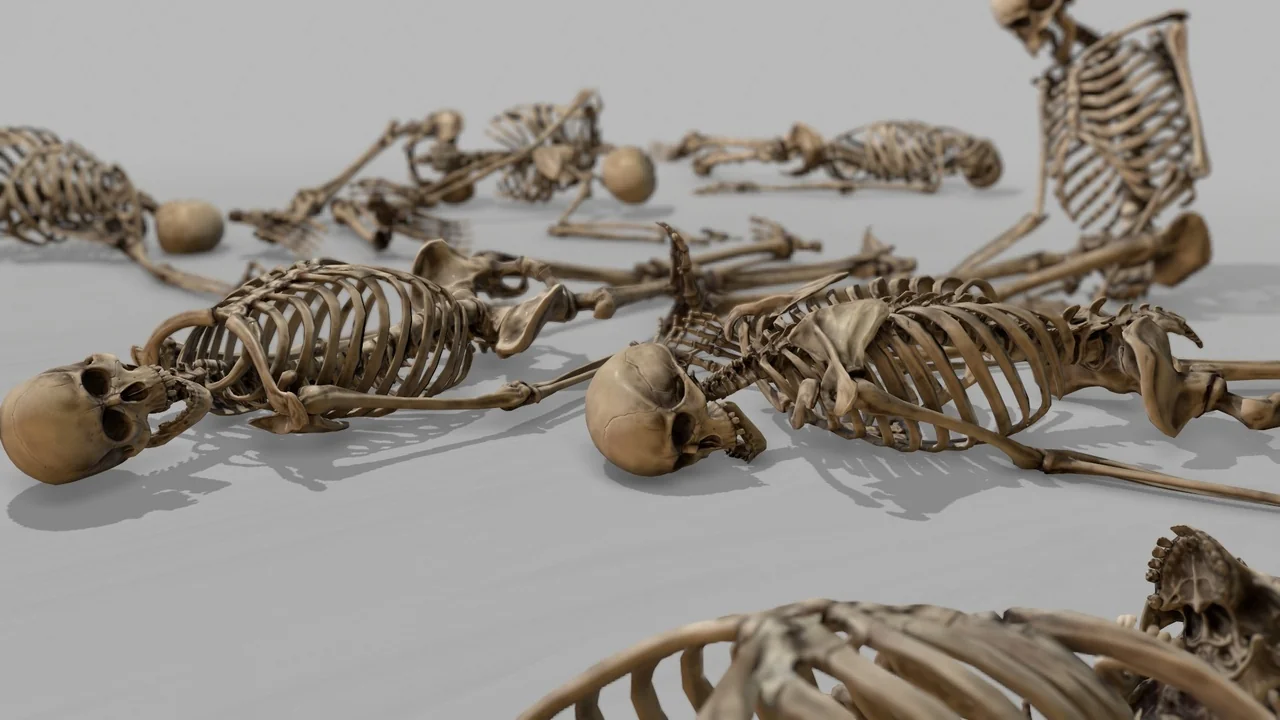
 Characters
 Characters
 Characters