"ddd0e3fb95b0aec2"{"id":"1001557","slug":"showroom-level-kit-11","title":"Showroom Level Kit 11","category":"Historical","engine":"5.2+","assetVersion":"","engineVersion":"Engine Version: 5.2+","tag":"Historical","accent":"blue","visual":"mech","summary":"Showroom Level Kit 11 delivers a modular classic Baroque museum and gallery interior system optimized for Unreal Engine 5.2+ across PC, VR, and mobile.","platform":"Unreal Engine","publishedAt":"2026-10-10T03:48:40.285Z","updatedAt":"2026-10-10T03:48:40.285Z","sourceNotes":[],"fileContents":[],"compatibility":["Unreal Engine","Engine Version: 5.2+"],"featuredImage":{"alt":"Showroom Level Kit 11","src":"/wp-content/uploads/published/2026/10/911302bbfa14-a86e7205-78f7-4c3d-ae30-220831882929-8073f4ac2f.webp"},"hasDownloadLink":true,"downloads":0,"terms":[{"taxonomy":"category","slug":"historical","name":"Historical"}],"galleryImages":[{"src":"/wp-content/uploads/published/2026/10/496260cbc1ea-a5018309-8094-400c-90f4-ed5522876d87-5a6d051c1d.webp","alt":"Showroom Level Kit 11"},{"src":"/wp-content/uploads/published/2026/10/bebea8b04f0d-e56551db-0ed1-447a-8dd6-fb9ceece01e3-93bfc48862.webp","alt":"Showroom Level Kit 11"},{"src":"/wp-content/uploads/published/2026/10/d495528c2d3e-2ee3841a-b937-4acb-af25-6a0edab973f5-892a06a57b.webp","alt":"Showroom Level Kit 11"},{"src":"/wp-content/uploads/published/2026/10/623c1837d09f-f88f9fac-7e8d-4886-81de-324ddf2d9ec5-f137f41b54.webp","alt":"Showroom Level Kit 11"},{"src":"/wp-content/uploads/published/2026/10/e1b08cd4b335-b2757129-b9c0-42a6-a09e-6fe2d7738967-1d199cd246.webp","alt":"Showroom Level Kit 11"},{"src":"/wp-content/uploads/published/2026/10/3cfc205b6e2e-3c31e85c-e96b-4409-9803-9db5aea83aff-f5eeb6c387.webp","alt":"Showroom Level Kit 11"},{"src":"/wp-content/uploads/published/2026/10/4d0839d68786-e151cacd-31ec-4e19-b50a-544776e7dfea-7f3bc5e081.webp","alt":"Showroom Level Kit 11"},{"src":"/wp-content/uploads/published/2026/10/725c316cb681-d856ce88-d79f-4658-b43b-fd78fd5bec70-0eb33becb8.webp","alt":"Showroom Level Kit 11"}],"accessPanel":{"kind":"resource","title":"Download this resource","eyebrow":"Free Download","message":"Log in or create a free account to start your download.","fileName":"Content.7z","safetyNote":"Resources are manually reviewed before listing to improve quality and reduce obvious risks.","actionLabel":"Download Free","resourceType":"Resource archive"},"contentHtml":"\u003cp\u003eDeep, quiet gallery halls framed by ornate moldings and deliberate pools of light establish an immediate sense of scale and atmosphere. Showroom Level Kit 11 provides a modular architectural kit modeled on classic Baroque interior sensibilities, designed to shift easily between historical exhibition spaces, luxury presentations, and speculative architectural environments. Rather than locking creators into fixed room configurations, the collection breaks space into individual structural and decorative components that snap together along a standardized grid.\u003c/p\u003e \u003ch2\u003eConstructing Classic Baroque Museum and Gallery Spaces\u003c/h2\u003e\n\u003cp\u003eThe core identity of Showroom Level Kit 11 revolves around classic, mysterious interior architecture. Classical architectural detailing—characterized by heavy moldings, decorative wall dividers, and framed display zones—lends itself naturally to fine art installations, artifact exhibitions, and heritage walk-throughs. The pack supplies structural room surfaces alongside specialized presentation props, including dedicated display stands, seating units, and ornate lighting fixtures.\u003c/p\u003e \u003cp\u003eBecause the environment is delivered as a modular kit beyond one monolithic mesh, developers can assemble expansive museum wings or intimate viewing chambers. Placed in sequence, the wall sections, doors, and windows form coherent corridors, central rotundas, or segmented display alcoves. The included display stands allow props, art pieces, or industrial items to sit cleanly within the historical context, while coordinated bench and seat models provide natural staging anchors across open floor areas.\u003c/p\u003e \u003cp\u003eFor immediate testing and level evaluation, a ready-to-run example scene comes pre-assembled. This staging functions as a drag-and-drop template where lighting, room boundaries, and prop placements are already established, offering a working demonstration of how the pieces interface before building custom room layouts from scratch.\u003c/p\u003e \u003ch2\u003eGrid-Aligned Modular Architecture and Layout Flexibility\u003c/h2\u003e\n\u003cp\u003ePrecision alignment forms the mechanical baseline of Showroom Level Kit 11. Every wall section, doorway, ceiling panel, and window component operates on a unified grid. This snap-to-grid structure eliminates alignment errors, seam gaps, and light bleed between adjoining modular panels during level assembly.\u003c/p\u003e \u003cp\u003eAdding or removing rooms takes minimal effort because the perimeter dimensions match across modular pieces. A developer can extend a single corridor into a quad-wing gallery by duplicating wall segments along standard grid intervals. If an open floor plan needs subdivision, interior partition walls and matching door assemblies drop into place without requiring custom booleans or collision adjustments. The same structural rules apply to furnishing the environment: display pedestals and seating elements align along the floor modules, keeping sightlines and navigation paths tidy for third-person, first-person, or fixed-camera perspectives.\u003c/p\u003e \u003ch2\u003eSingle-Click Color Customization for Emissive Lighting and Materials\u003c/h2\u003e\n\u003cp\u003eAtmosphere in a museum or showroom depends heavily on how illumination accents the architecture. Showroom Level Kit 11 integrates material parameter controls that permit immediate adjustments to both surface finishes and emissive lighting fixtures. Emissive components across the lighting fixtures can be retinted in a single click, allowing artists to swap between the warm cast of historic gallery lamps, cool ambient tones for contemporary product displays, or vibrant hues for stylized scenes.\u003c/p\u003e \u003cp\u003eThis color control extends across the material setup to help match custom brand identities or specific art directions. Instead of manually editing texture files in external software, teams can dial in contrast, hue, and brightness directly within the engine. When combined with physically based rendering (PBR) workflows, the materials reflect environmental light accurately across painted panels, polished exhibition floors, and structural trims, keeping the Baroque look grounded under varied lighting conditions.\u003c/p\u003e \u003ch2\u003eCross-Platform Performance Across PC, Mobile, VR, and WebGL\u003c/h2\u003e\n\u003cp\u003eMaintaining high visual fidelity in rich architectural spaces often strains runtime memory and draw calls. Showroom Level Kit 11 addresses this through low-poly base geometry combined with atlas-mapped texture layouts. By condensing multiple surface definitions into unified atlas sheets, the kit reduces unique material instances and draw calls during rendering passes.\u003c/p\u003e \u003cp\u003eThis lightweight technical footprint allows the kit to maintain steady framerates across a broad spectrum of hardware configurations:\u003c/p\u003e\n\u003cul\u003e\n\u003cli\u003eDesktop environments on PC and Mac operating systems\u003c/li\u003e\n\u003cli\u003eImmersive head-mounted displays, covering standalone Meta Quest hardware alongside dedicated PC VR setups\u003c/li\u003e\n\u003cli\u003eMobile operating systems across iOS and Android builds\u003c/li\u003e\n\u003cli\u003eBrowser-based runtimes utilizing WebGL pipelines\u003c/li\u003e\n\u003c/ul\u003e \u003cp\u003eIn virtual reality workflows, steady framerates and reliable geometric snapping prevent visual instability and movement discomfort. The low-poly geometry keeps mesh processing overhead small enough that standalone mobile VR chipsets can draw the Baroque halls without aggressive level-of-detail pop-in. Compatibility begins with Unreal Engine 5.2 and extends through newer engine releases, providing direct integration into modern Unreal pipelines.\u003c/p\u003e \u003ch2\u003eFrom Historical Galleries to Research Facilities and Space Station Interiors\u003c/h2\u003e\n\u003cp\u003eWhile the architectural language draws directly from classic Baroque design, the underlying structural rhythm makes the kit adaptable far beyond conventional museum scenes. The combination of clean display surfaces, rhythmic structural ribs, and customizable emissive highlights allows the kit to double as a futuristic research facility, an experimental observation deck, or an opulent interior wing inside a deep-space station. When paired with pieces from complementary collections like SciFi Base Kit Vol 1, the classic ornamentation yields an intriguing neoclassical science-fiction aesthetic.\u003c/p\u003e \u003cp\u003eIn commercial visualization, the environment works as an interactive digital showroom for luxury goods, vehicle showcases, or virtual gallery tours. Architectural visualization artists can rapidly prototype indoor spaces to assess flow, lighting balance, and focal zones before committing to bespoke geometry. The modular system supplies both the decorative refinement needed for high-end presentation and the systemic flexibility required for active game development.\u003c/p\u003e\n\n\u003ch2\u003eMore From The Same Workflow\u003c/h2\u003e\n\u003cul\u003e\n\u003cli\u003e\u003ca href=\"https://3dcghub.com/gladiator-arena-environment-kit/\" title=\"Gladiator Arena Environment Kit\"\u003eGladiator Arena Environment Kit\u003c/a\u003e\u003c/li\u003e\n\u003cli\u003e\u003ca href=\"https://3dcghub.com/japanese-village-kit/\" title=\"Japanese Village Kit\"\u003eJapanese Village Kit\u003c/a\u003e\u003c/li\u003e\n\u003cli\u003e\u003ca href=\"https://3dcghub.com/middle-eastern-town-gigapack-w-level-pcg-met-palace-bazaar-city/\" title=\"Middle Eastern Town Gigapack w/ Level PCG ( MET, Palace, Bazaar, City)\"\u003eMiddle Eastern Town Gigapack w/ Level PCG ( MET, Palace, Bazaar, City)\u003c/a\u003e\u003c/li\u003e\n\u003cli\u003e\u003ca href=\"https://3dcghub.com/showroom-level-kit-8/\" title=\"Showroom Level Kit 8\"\u003eShowroom Level Kit 8\u003c/a\u003e\u003c/li\u003e\n\u003cli\u003e\u003ca href=\"https://3dcghub.com/throne-room-environment-kit/\" title=\"Throne Room Environment Kit\"\u003eThrone Room Environment Kit\u003c/a\u003e\u003c/li\u003e\n\u003c/ul\u003e","contentTextLength":6660,"navigation":{"current":17,"total":3511,"previous":{"id":"1001558","slug":"stone-palace","title":"Stone Palace","category":"Historical","platform":"Unreal Engine","updatedAt":"2026-10-10T03:49:25.404Z"},"next":{"id":"1001556","slug":"showroom-environment-gallery","title":"Showroom Environment - gallery","category":"Interior","platform":"Unreal Engine","updatedAt":"2026-10-10T03:47:43.860Z"}},"relatedResources":[{"id":"1000993","slug":"gladiator-arena-environment-kit","title":"Gladiator Arena Environment Kit","category":"Historical","engine":"5.0+","assetVersion":"","engineVersion":"Engine Version: 5.0+","tag":"Historical","accent":"blue","visual":"city","summary":"A Roman gladiator coliseum environment kit with themed meshes, PBR materials, a demo level, and Dragon Cave compatibility. Pillars, props, flags, and architectu","platform":"Unreal Engine","publishedAt":"2026-08-19T03:38:54.795Z","updatedAt":"2026-08-19T03:38:54.795Z","sourceNotes":[],"fileContents":[],"compatibility":["Unreal Engine","Engine Version: 5.0+"],"featuredImage":{"alt":"Gladiator Arena Environment Kit","src":"/wp-content/uploads/published/2026/08/e1b3dda14df1-273d0cae-e350-4a1a-97cb-4453038dcc7f-425a0b510f.webp"},"hasDownloadLink":true,"downloads":1},{"id":"1000949","slug":"japanese-village-kit","title":"Japanese Village Kit","category":"Historical","engine":"4.27,5.0+","assetVersion":"","engineVersion":"Engine Version: 4.27,5.0+","tag":"Historical","accent":"blue","visual":"mech","summary":"Modular Japanese village kit with 418 pieces for building interiors and exteriors, featuring PBR materials, a demo level, and onsen compatibility.","platform":"Unreal Engine","publishedAt":"2026-08-14T04:22:22.501Z","updatedAt":"2026-08-14T04:22:22.501Z","sourceNotes":[],"fileContents":[],"compatibility":["Unreal Engine","Engine Version: 4.27,5.0+"],"featuredImage":{"alt":"Japanese Village Kit","src":"/wp-content/uploads/published/2026/08/ac3ce288b198-67f45d06-c41c-48f0-b6b4-1b5a1656c18d-b7002a22a4.webp"},"hasDownloadLink":true,"downloads":0},{"id":"1001558","slug":"stone-palace","title":"Stone Palace","category":"Historical","engine":"5.2+","assetVersion":"","engineVersion":"Engine Version: 5.2+","tag":"Historical","accent":"blue","visual":"mech","summary":"Construct grand historical and fantasy environments using modular stone building components, pillars, statues, and foliage for immersive levels.","platform":"Unreal Engine","publishedAt":"2026-10-10T03:49:25.404Z","updatedAt":"2026-10-10T03:49:25.404Z","sourceNotes":[],"fileContents":[],"compatibility":["Unreal Engine","Engine Version: 5.2+"],"featuredImage":{"alt":"Stone Palace","src":"/wp-content/uploads/published/2026/10/a8d7b05b4ede-b9923cd5-4086-4fd5-9fb8-6364e48407ab-31f98fbf86.webp"},"hasDownloadLink":true,"downloads":0}]}
Historical
Showroom Level Kit 11
Showroom Level Kit 11 delivers a modular classic Baroque museum and gallery interior system optimized for Unreal Engine 5.2+ across PC, VR, and mobile.
Category:Unreal Engine,HistoricalPlatform: Unreal EngineEngine Version: 5.2+Published: Oct 10, 2026
Historical
Resource overview
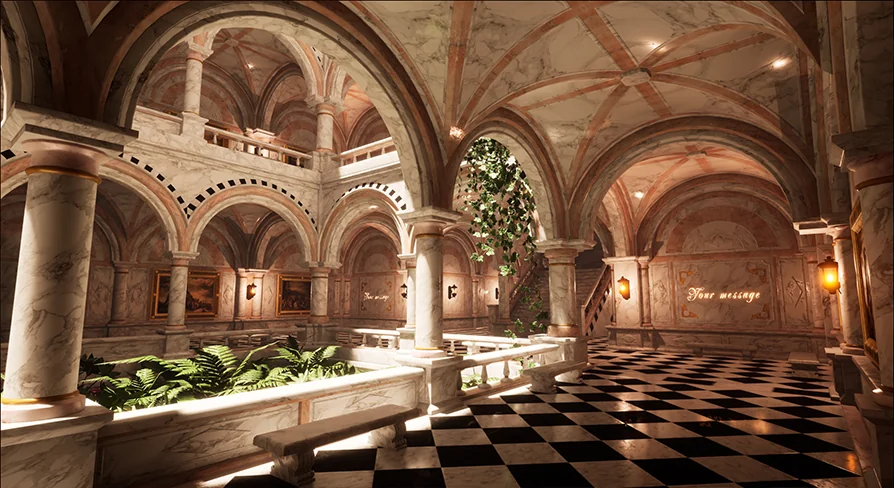
Deep, quiet gallery halls framed by ornate moldings and deliberate pools of light establish an immediate sense of scale and atmosphere. Showroom Level Kit 11 provides a modular architectural kit modeled on classic Baroque interior sensibilities, designed to shift easily between historical exhibition spaces, luxury presentations, and speculative architectural environments. Rather than locking creators into fixed room configurations, the collection breaks space into individual structural and decorative components that snap together along a standardized grid.
Constructing Classic Baroque Museum and Gallery Spaces
The core identity of Showroom Level Kit 11 revolves around classic, mysterious interior architecture. Classical architectural detailing—characterized by heavy moldings, decorative wall dividers, and framed display zones—lends itself naturally to fine art installations, artifact exhibitions, and heritage walk-throughs. The pack supplies structural room surfaces alongside specialized presentation props, including dedicated display stands, seating units, and ornate lighting fixtures.
Because the environment is delivered as a modular kit beyond one monolithic mesh, developers can assemble expansive museum wings or intimate viewing chambers. Placed in sequence, the wall sections, doors, and windows form coherent corridors, central rotundas, or segmented display alcoves. The included display stands allow props, art pieces, or industrial items to sit cleanly within the historical context, while coordinated bench and seat models provide natural staging anchors across open floor areas.
For immediate testing and level evaluation, a ready-to-run example scene comes pre-assembled. This staging functions as a drag-and-drop template where lighting, room boundaries, and prop placements are already established, offering a working demonstration of how the pieces interface before building custom room layouts from scratch.
Grid-Aligned Modular Architecture and Layout Flexibility
Precision alignment forms the mechanical baseline of Showroom Level Kit 11. Every wall section, doorway, ceiling panel, and window component operates on a unified grid. This snap-to-grid structure eliminates alignment errors, seam gaps, and light bleed between adjoining modular panels during level assembly.
Adding or removing rooms takes minimal effort because the perimeter dimensions match across modular pieces. A developer can extend a single corridor into a quad-wing gallery by duplicating wall segments along standard grid intervals. If an open floor plan needs subdivision, interior partition walls and matching door assemblies drop into place without requiring custom booleans or collision adjustments. The same structural rules apply to furnishing the environment: display pedestals and seating elements align along the floor modules, keeping sightlines and navigation paths tidy for third-person, first-person, or fixed-camera perspectives.
Single-Click Color Customization for Emissive Lighting and Materials
Atmosphere in a museum or showroom depends heavily on how illumination accents the architecture. Showroom Level Kit 11 integrates material parameter controls that permit immediate adjustments to both surface finishes and emissive lighting fixtures. Emissive components across the lighting fixtures can be retinted in a single click, allowing artists to swap between the warm cast of historic gallery lamps, cool ambient tones for contemporary product displays, or vibrant hues for stylized scenes.
This color control extends across the material setup to help match custom brand identities or specific art directions. Instead of manually editing texture files in external software, teams can dial in contrast, hue, and brightness directly within the engine. When combined with physically based rendering (PBR) workflows, the materials reflect environmental light accurately across painted panels, polished exhibition floors, and structural trims, keeping the Baroque look grounded under varied lighting conditions.
Cross-Platform Performance Across PC, Mobile, VR, and WebGL
Maintaining high visual fidelity in rich architectural spaces often strains runtime memory and draw calls. Showroom Level Kit 11 addresses this through low-poly base geometry combined with atlas-mapped texture layouts. By condensing multiple surface definitions into unified atlas sheets, the kit reduces unique material instances and draw calls during rendering passes.
This lightweight technical footprint allows the kit to maintain steady framerates across a broad spectrum of hardware configurations:
Desktop environments on PC and Mac operating systems
Immersive head-mounted displays, covering standalone Meta Quest hardware alongside dedicated PC VR setups
Mobile operating systems across iOS and Android builds
Browser-based runtimes utilizing WebGL pipelines
In virtual reality workflows, steady framerates and reliable geometric snapping prevent visual instability and movement discomfort. The low-poly geometry keeps mesh processing overhead small enough that standalone mobile VR chipsets can draw the Baroque halls without aggressive level-of-detail pop-in. Compatibility begins with Unreal Engine 5.2 and extends through newer engine releases, providing direct integration into modern Unreal pipelines.
From Historical Galleries to Research Facilities and Space Station Interiors
While the architectural language draws directly from classic Baroque design, the underlying structural rhythm makes the kit adaptable far beyond conventional museum scenes. The combination of clean display surfaces, rhythmic structural ribs, and customizable emissive highlights allows the kit to double as a futuristic research facility, an experimental observation deck, or an opulent interior wing inside a deep-space station. When paired with pieces from complementary collections like SciFi Base Kit Vol 1, the classic ornamentation yields an intriguing neoclassical science-fiction aesthetic.
In commercial visualization, the environment works as an interactive digital showroom for luxury goods, vehicle showcases, or virtual gallery tours. Architectural visualization artists can rapidly prototype indoor spaces to assess flow, lighting balance, and focal zones before committing to bespoke geometry. The modular system supplies both the decorative refinement needed for high-end presentation and the systemic flexibility required for active game development.
 Historical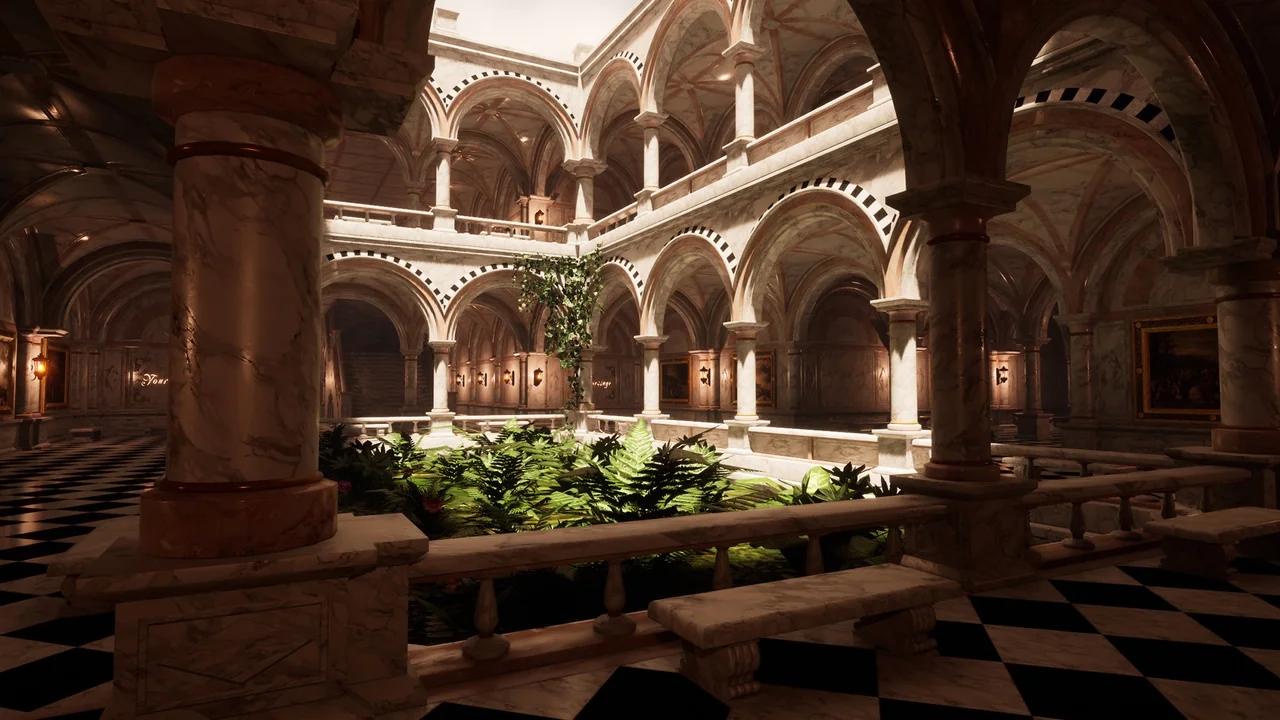
 Historical
 Historical
 Historical