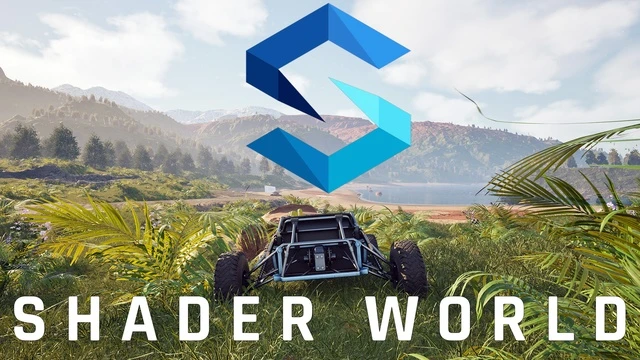
Shader World Plugin is an industry leading terrain solution used by AA Studios and Indies. Built by qualified engineers for scalability and high performance. Using the latest 3D rendering techniques. From smartphones to high-end PCs, from small to several hundred kilometers wide world.
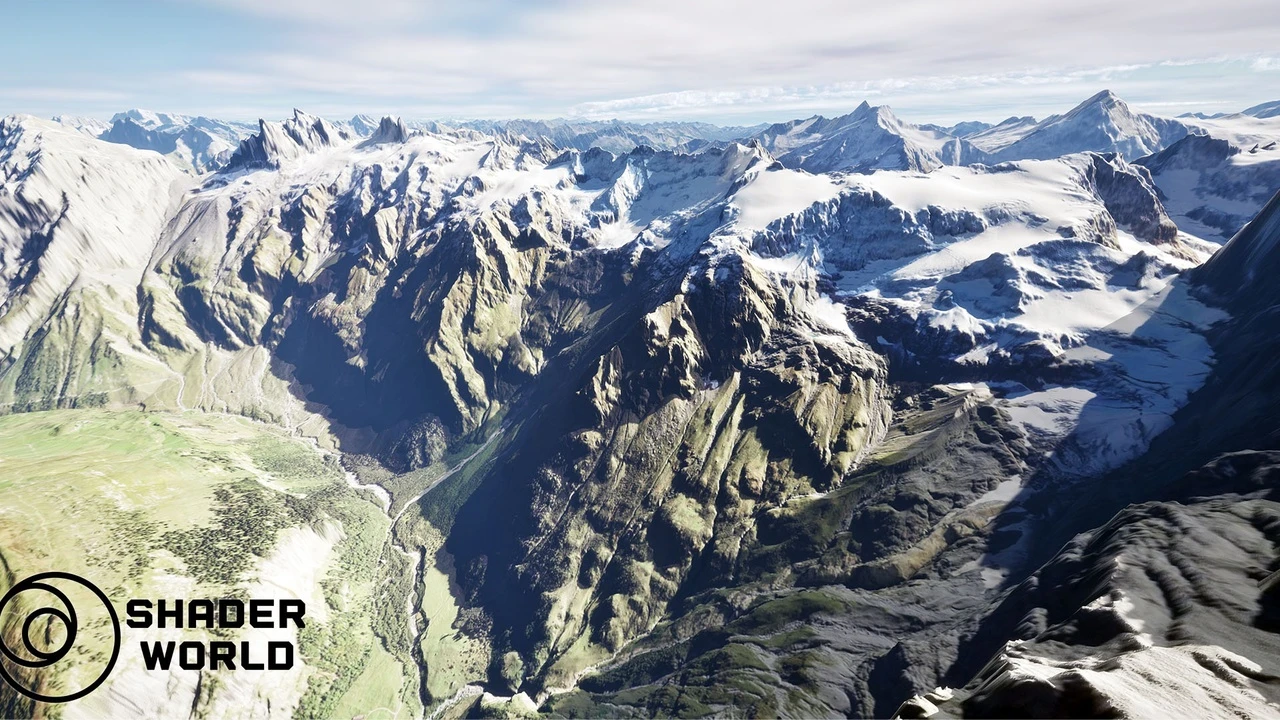
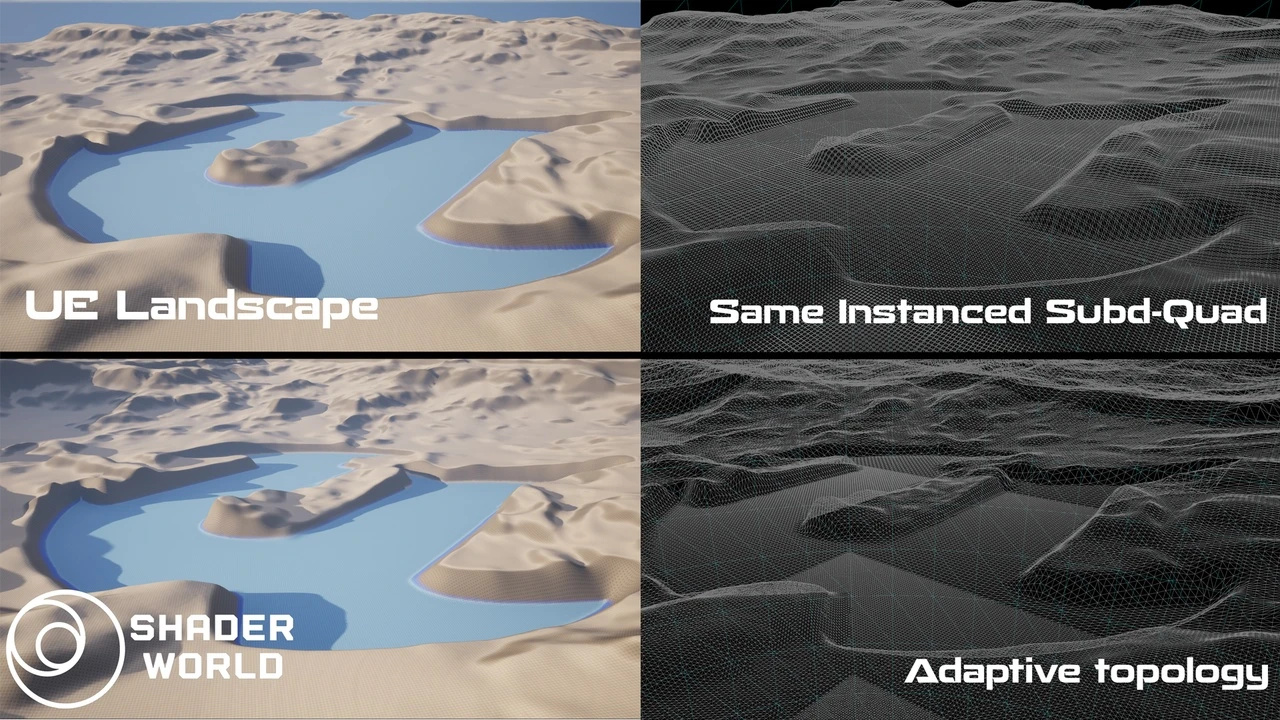
Shader World is an alternative to Unreal Engine Landscape, with a different terrain rendering strategy which better respects the terrain topography thanks to an adaptive terrain topology. It is fully editable at runtime in packaged games, and lightweight enough to build close to planetary size scale worlds. As opposed to Unreal Engine landscapes which cannot be modified once the game is packaged, and legacy oriented to smaller scale.
Surface rendering is coded at the lowest level possible, to be the most lightweight possible (in bytes per vertex notably), following latest industry standards from such games as Call Of Duty warzone. From 1x1km to 100x100km or more, terrains are generated on the fly, without loadings or popping.
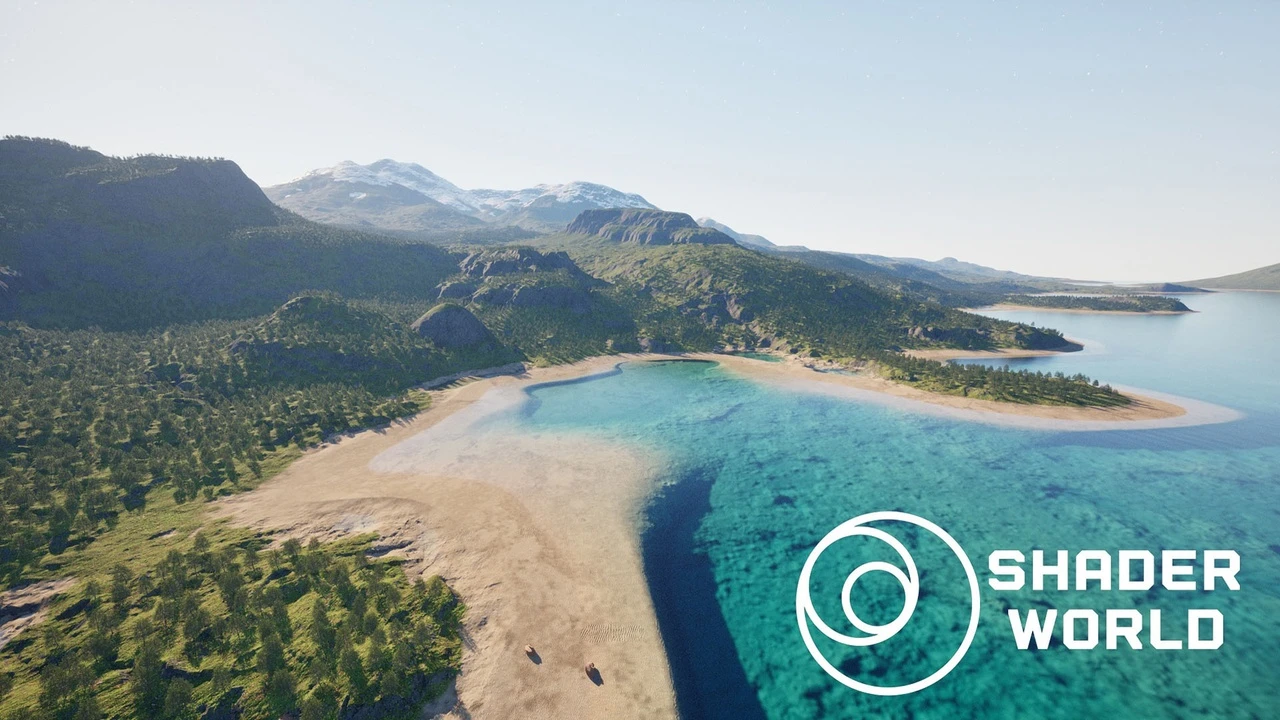
Dynamic surfaces such as Oceans can be efficiently computed and rendered: provided default maps currently use a simple sum of sinus waves as water surface, which can easily be upgraded to FFT based solutions.
Generated surfaces can also be used as canvas for various water based simulations available on the store (see Fluid Ninja integration below).
Shader World relies on GPGPU, General Purpose GPU programming, to generate its surface and place assets. It is currently the only fully GPU accelerated tool for procedural world generation available on the Unreal Engine marketplace.
For a given terrain resolution: World surface, collisions, and asset spawning are all generated on GPU deterministically. The only requirement being compute shaders support. Which, for Smartphones, means at least OpenGL ES 3.1 compatibility, while any desktop GPU from 2013 will do.
Shader World plugin is a high performance modern procedural world toolkit, integrated in the Unreal Engine ecosystem, with fast iteration and instant feedback.
Click here to view the full details of the resource.:URL
Click the button below to download.
Download: