"fa182e0cd0a6ea73"{"id":"1001831","slug":"scorcher-modular-military-buggy","title":"Scorcher – Modular Military Buggy","category":"Military","engine":"5.0+","assetVersion":"","engineVersion":"Engine Version: 5.0+","tag":"Military","accent":"blue","visual":"mech","summary":"Scorcher is a modular military buggy built for Unreal Engine 5+, featuring Chaos vehicle physics, skeletal suspension, and customizable weapon systems.","platform":"Unreal Engine","publishedAt":"2026-10-21T08:23:24.707Z","updatedAt":"2026-10-21T08:23:24.707Z","sourceNotes":[],"fileContents":[],"compatibility":["Unreal Engine","Engine Version: 5.0+"],"featuredImage":{"alt":"Scorcher – Modular Military Buggy","src":"/wp-content/uploads/published/2026/10/8664e5902876-6a5b102f-3247-4ab6-b06d-14b7806d30ad-69c8162efd.webp"},"hasDownloadLink":true,"downloads":0,"terms":[{"taxonomy":"category","slug":"military","name":"Military"}],"galleryImages":[{"src":"/wp-content/uploads/published/2026/10/df3bcff9f994-b0252828-592a-4827-8f45-3e60681b4c9f-b616e3c8e3.webp","alt":"Scorcher – Modular Military Buggy"},{"src":"/wp-content/uploads/published/2026/10/899a5db7e82a-6d65c762-1d5f-4180-9e03-315f6d90f978-0863c9c3b2.webp","alt":"Scorcher – Modular Military Buggy"},{"src":"/wp-content/uploads/published/2026/10/296c3cc8a15d-6f6bb1d5-a4a9-4bae-9a21-bfa4857b126d-1e0efc2cea.webp","alt":"Scorcher – Modular Military Buggy"},{"src":"/wp-content/uploads/published/2026/10/86ac45fcd76f-33beaf8b-c2d6-4b62-b0f4-c5faccf330b6-fe7b8aaec1.webp","alt":"Scorcher – Modular Military Buggy"},{"src":"/wp-content/uploads/published/2026/10/cef643bafbef-464ec7dc-9069-41e7-a18b-8e44e25427f8-8d59f67e0b.webp","alt":"Scorcher – Modular Military Buggy"},{"src":"/wp-content/uploads/published/2026/10/4486ccfe054d-53d34ccb-9b3d-4cfc-9453-6c33b5f40a3a-9791150044.webp","alt":"Scorcher – Modular Military Buggy"},{"src":"/wp-content/uploads/published/2026/10/be1f23a73eef-ab41e6af-69c5-467d-b264-c3f2ee3f7fb9-58943883d4.webp","alt":"Scorcher – Modular Military Buggy"},{"src":"/wp-content/uploads/published/2026/10/f15648723508-f8c03cbd-4a7f-41dd-b55a-4b8784d1541e-e137a0dfaf.webp","alt":"Scorcher – Modular Military Buggy"},{"src":"/wp-content/uploads/published/2026/10/0f674aa320d7-0f0637ec-438a-4cc7-9ef9-9b2f8b179ced-59d1682906.webp","alt":"Scorcher – Modular Military Buggy"},{"src":"/wp-content/uploads/published/2026/10/f804d0a021cc-179d5e7c-d9a6-4cbf-87e5-2cf842c636cd-75fe8f5440.webp","alt":"Scorcher – Modular Military Buggy"}],"accessPanel":{"kind":"resource","title":"Download this resource","eyebrow":"Free Download","message":"Log in or create a free account to start your download.","fileName":"Content.7z","safetyNote":"Resources are manually reviewed before listing to improve quality and reduce obvious risks.","actionLabel":"Download Free","resourceType":"Resource archive"},"contentHtml":"\u003ch2\u003eModular Assembly: Bodykit, Weapon Systems, and Accessories\u003c/h2\u003e\u003cp\u003eScorcher is based on a component-based structure where structural and functional elements exist as individual assets. Rather than delivering a single, immutable vehicle mesh, the package isolates the primary bodykit, lighting arrays, weapon systems, and exterior accessories into separate modular meshes. This physical separation allows developers to strip down or load out the vehicle according to specific gameplay or visual requirements.\u003c/p\u003e\u003cp\u003eBecause the meshes are split logically, the buggy can transition between a stripped-down scout configuration and a heavily equipped military platform. Detachable sections mount directly onto the vehicle frame, governed by a dedicated Modular System Component that defines how each part attaches and behaves. Modifying the silhouette does not require destructive geometry editing; individual meshes can be swapped, attached, or omitted entirely directly inside the Unreal Engine environment.\u003c/p\u003e\u003cp\u003eThe underlying geometry is built with a manually crafted UV layout, ensuring that surface detail remains consistent across all swapped parts. Texture and material fidelity remain uniform regardless of how the panels, roll bars, weapon mounts, or utility racks are arranged across the chassis.\u003c/p\u003e\u003ch2\u003eChaos Physics and Real-Time Skeletal Suspension\u003c/h2\u003e\u003cp\u003eOperating Scorcher in real time requires the Chaos Vehicles plugin enabled within Unreal Engine 5 or later. The mechanical behavior of the vehicle is anchored to an Animation Blueprint configured specifically for dynamic, believable movement over uneven terrain. This setup replaces static wheel movement with a real-time skeletal suspension simulation that reacts directly to surface contours, acceleration forces, and chassis roll.\u003c/p\u003e\u003cp\u003eThe Chaos vehicle implementation operates alongside a custom driveable vehicle setup, translating player or AI throttle, braking, and steering inputs directly into physically driven momentum. As the buggy traverses landscape dips, obstacles, or inclines, the skeletal rig recalculates tire contact and spring compression on each frame. This dynamic calculation prevents visual clipping between the wheels and the wheel wells while transferring the visual impact of rough driving directly to the vehicle chassis.\u003c/p\u003e\u003cp\u003eBecause the suspension is bound to real-time skeletal bones rather than simple wheel rotations, high-speed maneuvers, hard braking, and sudden impacts trigger natural weight transfers. The vehicle pitches forward during abrupt stops, leans into sharp turns, and compresses its shocks under heavy landings, creating a grounded interaction between the vehicle's center of mass and the ground plane.\u003c/p\u003e\u003ch2\u003eThe Vehicle Blueprint and Modular System Component\u003c/h2\u003e\u003cp\u003eAt the center of the vehicle's functionality is an organized Vehicle Blueprint that consolidates mechanical driving controls, detachable asset configurations, and interactive combat features into a single pipeline. The Blueprint system handles several distinct technical tasks without cluttering the project structure:\u003c/p\u003e\u003cul\u003e\u003cli\u003e\u003cstrong\u003eChaos Vehicle Control Implementation:\u003c/strong\u003e Pre-wired inputs and physics parameters configured to deliver a driveable vehicle right out of the box.\u003c/li\u003e\u003cli\u003e\u003cstrong\u003eModular System Component:\u003c/strong\u003e A dedicated logic layer designed to attach, detach, and alter the properties of separate modular meshes such as panels, utility items, and armor.\u003c/li\u003e\u003cli\u003e\u003cstrong\u003eIntegrated Weapon Control System:\u003c/strong\u003e Logic built directly into the vehicle hierarchy to operate and direct onboard weapon systems from the primary driver or vehicle seat.\u003c/li\u003e\u003cli\u003e\u003cstrong\u003eClean Blueprint Architecture:\u003c/strong\u003e An uncluttered hierarchy separating drivetrain logic, dynamic visual responses, and component management for straightforward maintenance and iteration.\u003c/li\u003e\u003c/ul\u003e\u003cp\u003eThe integrated weapon control system ties directly into the vehicular framework, allowing the buggy to fulfill combat roles without requiring developers to author custom firing or targeting hooks from scratch. Combined with the modular component logic, weapons can be added or stripped dynamically, depending on whether an active mission demands reconnaissance speed or front-line firepower.\u003c/p\u003e\u003ch2\u003eSurface Control: Dirt Masks, Lights, and Cockpit Screens\u003c/h2\u003e\u003cp\u003eVisual interaction extends down to the material layer through dynamic material controls embedded within the Blueprint system. Surfaces are not static diffuse textures; they support real-time runtime adjustments for environmental wear, illumination states, and cockpit readouts.\u003c/p\u003e\u003cp\u003eThe dynamic material framework supports adjustable dirt masks, enabling developers to scale mud, grime, and operational grit across the vehicle body over time. This makes it possible to visually transition the vehicle from a pristine depot state to a weathered combat unit as it moves through harsh terrain. The lighting system is equally controllable, tied into dynamic parameters that switch headlights, utility lights, and indicator lamps between active and inactive states on demand.\u003c/p\u003e\u003cp\u003eInside the cabin, Scorcher features functional dashboard displays and digital screens. These cockpit elements are wired with their own dynamic material controls, providing interactive screen surfaces suitable for telemetry, systems diagnostics, or mission parameters. When viewed from a first-person driving camera or a close-up interior cinematic angle, the dashboard retains full operational readouts rather than falling back on flat, non-emissive decals.\u003c/p\u003e\u003ch2\u003eInteractive Gameplay and Cinematic Staging\u003c/h2\u003e\u003cp\u003eThe balance of visual fidelity and lightweight, organized Blueprint architecture positions Scorcher for dual roles in games and cinematic productions. In interactive environments—such as open-world titles, tactical simulators, or desert patrol sequences—the optimized Chaos vehicle physics and ready-to-drive setup reduce setup time to simple project placement and input binding.\u003c/p\u003e\u003cp\u003eFor virtual production, trailers, and showcase cutscenes, the real-time skeletal suspension and high-resolution material setups ensure the buggy holds up under direct, slow-motion scrutiny. The vehicle Blueprint allows directors and level designers to trigger headlight states, swap weapons, adjust dirt levels, and capture accurate suspension bounce without baking static animation loops. Whether used as a hero transport navigating severe off-road environments or as an ambient fleet asset in a military operations base, Scorcher provides an adaptable, mechanically complete framework ready for production use.\u003c/p\u003e\n\n\u003ch2\u003eRelated Resources Worth Checking\u003c/h2\u003e\n\u003cul\u003e\n\u003cli\u003e\u003ca href=\"https://3dcghub.com/apocalypse-bundle/\" title=\"Apocalypse - Bundle\"\u003eApocalypse - Bundle\u003c/a\u003e\u003c/li\u003e\n\u003cli\u003e\u003ca href=\"https://3dcghub.com/light-military-vehicle/\" title=\"Light Military Vehicle\"\u003eLight Military Vehicle\u003c/a\u003e\u003c/li\u003e\n\u003cli\u003e\u003ca href=\"https://3dcghub.com/vehicles-vol-10-military-low-poly/\" title=\"Vehicles VOL.10 - Military (Low Poly)\"\u003eVehicles VOL.10 - Military (Low Poly)\u003c/a\u003e\u003c/li\u003e\n\u003cli\u003e\u003ca href=\"https://3dcghub.com/scifi-military-car/\" title=\"SciFi Military Car\"\u003eSciFi Military Car\u003c/a\u003e\u003c/li\u003e\n\u003cli\u003e\u003ca href=\"https://3dcghub.com/armor-bundle/\" title=\"ARMOR - Bundle\"\u003eARMOR - Bundle\u003c/a\u003e\u003c/li\u003e\n\u003c/ul\u003e","contentTextLength":6565,"navigation":{"current":25,"total":3789,"previous":{"id":"1001832","slug":"sgt-sara-modular-detective","title":"SGT SARA MODULAR DETECTIVE","category":"Humans","platform":"Unreal Engine","updatedAt":"2026-10-21T08:24:28.228Z"},"next":{"id":"1001830","slug":"rpg-7-grenade-launcher","title":"RPG-7 GRENADE LAUNCHER","category":"Weapons \u0026 Combat","platform":"Unreal Engine","updatedAt":"2026-10-21T08:22:39.149Z"}},"relatedResources":[{"id":"1000149","slug":"apocalypse-bundle","title":"Apocalypse - Bundle","category":"Military","engine":"5.1+","assetVersion":"","engineVersion":"Engine Version: 5.1+","tag":"Military","accent":"blue","visual":"mech","summary":"A post-apocalyptic Unreal Engine bundle with 100+ assets, hazmat characters, photo-scanned vehicles, modular buildings, debris, and blueprint controls.","platform":"Unreal Engine","publishedAt":"2026-06-18T07:52:08.720Z","updatedAt":"2026-06-18T07:52:08.720Z","sourceNotes":[],"fileContents":[],"compatibility":["Unreal Engine","Engine Version: 5.1+"],"featuredImage":{"alt":"Apocalypse - Bundle","src":"/wp-content/uploads/published/2026/06/313636db9542-fb80d84c-05b9-4de2-93e5-430151c7302d-8f7f9ca3e5.webp"},"hasDownloadLink":true,"downloads":4},{"id":"1001001","slug":"light-military-vehicle","title":"Light Military Vehicle","category":"Military","engine":"5.0+","assetVersion":"","engineVersion":"Engine Version: 5.0+","tag":"Military","accent":"blue","visual":"mech","summary":"Driveable Light Military Vehicle with changeable body paint, rust amount, and show/hide parts like jerrycans, dump bed seating, and tent. UE5 updates.","platform":"Unreal Engine","publishedAt":"2026-08-20T10:04:53.165Z","updatedAt":"2026-08-20T10:04:53.165Z","sourceNotes":[],"fileContents":[],"compatibility":["Unreal Engine","Engine Version: 5.0+"],"featuredImage":{"alt":"Light Military Vehicle","src":"/wp-content/uploads/published/2026/08/a4e6b774055a-bbd1be1b-31ea-48a1-8b44-9822b8295864-17df1c7baf.webp"},"hasDownloadLink":true,"downloads":3},{"id":"1000710","slug":"vehicles-vol-10-military-low-poly","title":"Vehicles VOL.10 - Military (Low Poly)","category":"Military","engine":"5.1+","assetVersion":"","engineVersion":"Engine Version: 5.1+","tag":"Military","accent":"blue","visual":"mech","summary":"Military low poly vehicle prop pack for Unreal Engine with 5 cars, police variant, 4K textures, channel-packed maps, tintable paint, and Lumen support.","platform":"Unreal Engine","publishedAt":"2026-07-24T02:19:57.675Z","updatedAt":"2026-07-24T02:19:57.675Z","sourceNotes":[],"fileContents":[],"compatibility":["Unreal Engine","Engine Version: 5.1+"],"featuredImage":{"alt":"Vehicles VOL.10 - Military (Low Poly)","src":"/wp-content/uploads/published/2026/07/b31586286c42-5225be35-9f55-4706-8857-5690ae5b91c5-5a4f87ffc6.webp"},"hasDownloadLink":true,"downloads":0}]}
Military
Scorcher – Modular Military Buggy
Scorcher is a modular military buggy built for Unreal Engine 5+, featuring Chaos vehicle physics, skeletal suspension, and customizable weapon systems.
Category:Unreal Engine,MilitaryPlatform: Unreal EngineEngine Version: 5.0+Published: Oct 21, 2026
Military
Resource overview
Modular Assembly: Bodykit, Weapon Systems, and Accessories
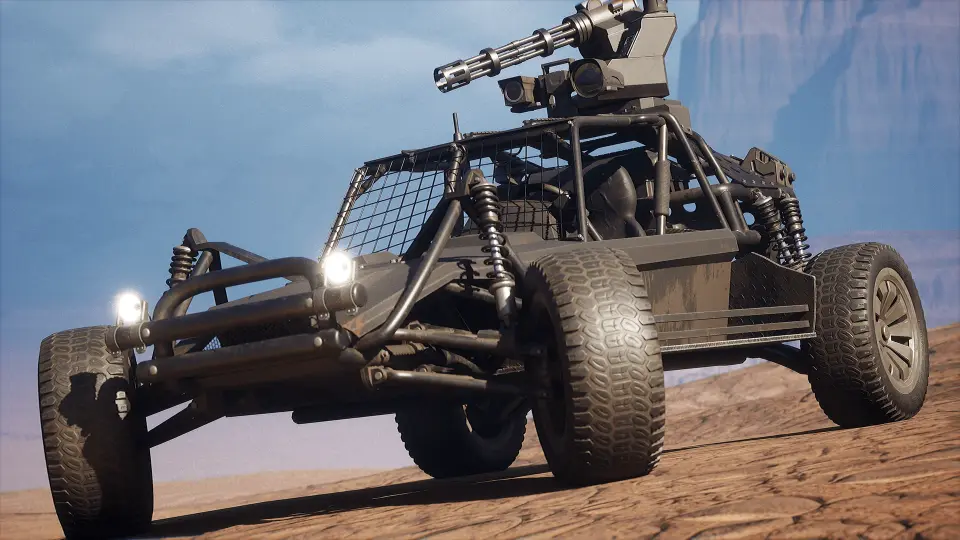
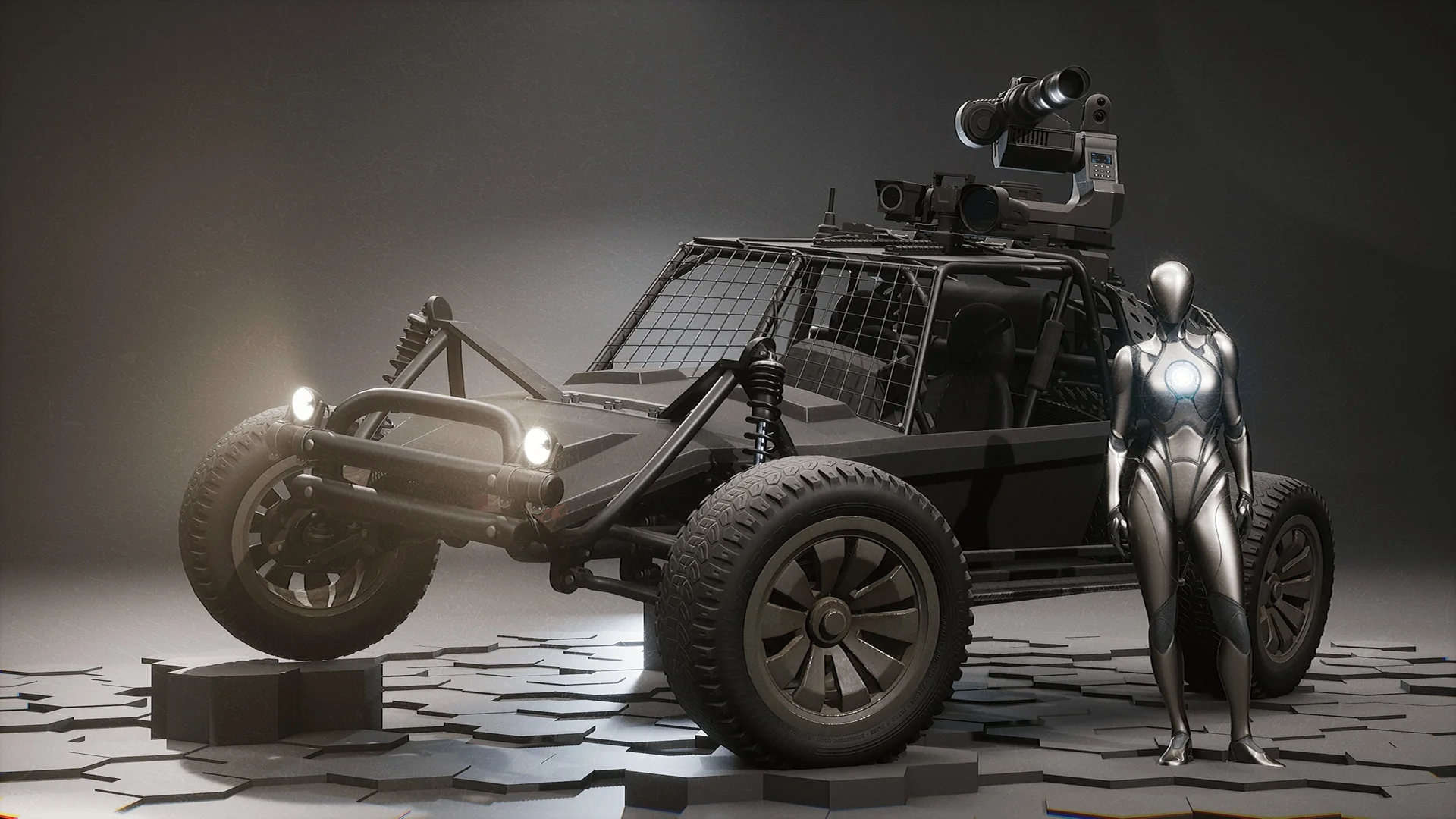
Scorcher is based on a component-based structure where structural and functional elements exist as individual assets. Rather than delivering a single, immutable vehicle mesh, the package isolates the primary bodykit, lighting arrays, weapon systems, and exterior accessories into separate modular meshes. This physical separation allows developers to strip down or load out the vehicle according to specific gameplay or visual requirements.
Because the meshes are split logically, the buggy can transition between a stripped-down scout configuration and a heavily equipped military platform. Detachable sections mount directly onto the vehicle frame, governed by a dedicated Modular System Component that defines how each part attaches and behaves. Modifying the silhouette does not require destructive geometry editing; individual meshes can be swapped, attached, or omitted entirely directly inside the Unreal Engine environment.
The underlying geometry is built with a manually crafted UV layout, ensuring that surface detail remains consistent across all swapped parts. Texture and material fidelity remain uniform regardless of how the panels, roll bars, weapon mounts, or utility racks are arranged across the chassis.
Chaos Physics and Real-Time Skeletal Suspension
Operating Scorcher in real time requires the Chaos Vehicles plugin enabled within Unreal Engine 5 or later. The mechanical behavior of the vehicle is anchored to an Animation Blueprint configured specifically for dynamic, believable movement over uneven terrain. This setup replaces static wheel movement with a real-time skeletal suspension simulation that reacts directly to surface contours, acceleration forces, and chassis roll.
The Chaos vehicle implementation operates alongside a custom driveable vehicle setup, translating player or AI throttle, braking, and steering inputs directly into physically driven momentum. As the buggy traverses landscape dips, obstacles, or inclines, the skeletal rig recalculates tire contact and spring compression on each frame. This dynamic calculation prevents visual clipping between the wheels and the wheel wells while transferring the visual impact of rough driving directly to the vehicle chassis.
Because the suspension is bound to real-time skeletal bones rather than simple wheel rotations, high-speed maneuvers, hard braking, and sudden impacts trigger natural weight transfers. The vehicle pitches forward during abrupt stops, leans into sharp turns, and compresses its shocks under heavy landings, creating a grounded interaction between the vehicle's center of mass and the ground plane.
The Vehicle Blueprint and Modular System Component
At the center of the vehicle's functionality is an organized Vehicle Blueprint that consolidates mechanical driving controls, detachable asset configurations, and interactive combat features into a single pipeline. The Blueprint system handles several distinct technical tasks without cluttering the project structure:
Chaos Vehicle Control Implementation: Pre-wired inputs and physics parameters configured to deliver a driveable vehicle right out of the box.
Modular System Component: A dedicated logic layer designed to attach, detach, and alter the properties of separate modular meshes such as panels, utility items, and armor.
Integrated Weapon Control System: Logic built directly into the vehicle hierarchy to operate and direct onboard weapon systems from the primary driver or vehicle seat.
Clean Blueprint Architecture: An uncluttered hierarchy separating drivetrain logic, dynamic visual responses, and component management for straightforward maintenance and iteration.
The integrated weapon control system ties directly into the vehicular framework, allowing the buggy to fulfill combat roles without requiring developers to author custom firing or targeting hooks from scratch. Combined with the modular component logic, weapons can be added or stripped dynamically, depending on whether an active mission demands reconnaissance speed or front-line firepower.
Surface Control: Dirt Masks, Lights, and Cockpit Screens
Visual interaction extends down to the material layer through dynamic material controls embedded within the Blueprint system. Surfaces are not static diffuse textures; they support real-time runtime adjustments for environmental wear, illumination states, and cockpit readouts.
The dynamic material framework supports adjustable dirt masks, enabling developers to scale mud, grime, and operational grit across the vehicle body over time. This makes it possible to visually transition the vehicle from a pristine depot state to a weathered combat unit as it moves through harsh terrain. The lighting system is equally controllable, tied into dynamic parameters that switch headlights, utility lights, and indicator lamps between active and inactive states on demand.
Inside the cabin, Scorcher features functional dashboard displays and digital screens. These cockpit elements are wired with their own dynamic material controls, providing interactive screen surfaces suitable for telemetry, systems diagnostics, or mission parameters. When viewed from a first-person driving camera or a close-up interior cinematic angle, the dashboard retains full operational readouts rather than falling back on flat, non-emissive decals.
Interactive Gameplay and Cinematic Staging
The balance of visual fidelity and lightweight, organized Blueprint architecture positions Scorcher for dual roles in games and cinematic productions. In interactive environments—such as open-world titles, tactical simulators, or desert patrol sequences—the optimized Chaos vehicle physics and ready-to-drive setup reduce setup time to simple project placement and input binding.
For virtual production, trailers, and showcase cutscenes, the real-time skeletal suspension and high-resolution material setups ensure the buggy holds up under direct, slow-motion scrutiny. The vehicle Blueprint allows directors and level designers to trigger headlight states, swap weapons, adjust dirt levels, and capture accurate suspension bounce without baking static animation loops. Whether used as a hero transport navigating severe off-road environments or as an ambient fleet asset in a military operations base, Scorcher provides an adaptable, mechanically complete framework ready for production use.
 Military
 Military
 Military
 Military