"efaa631e936fd3ee"{"id":"1002279","slug":"samurai","title":"SAMURAI","category":"Characters \u0026 Creatures","engine":"4.26+,5.0+","assetVersion":"","engineVersion":"Engine Version: 4.26+,5.0+","tag":"Characters","accent":"blue","visual":"character","summary":"Explore the SAMURAI character asset featuring fabric simulation, two helmets, face morphing, PBR materials, and animation blueprint integration.","platform":"Unreal Engine","publishedAt":"2026-10-29T16:37:21.426Z","updatedAt":"2026-10-29T16:37:21.426Z","sourceNotes":[],"fileContents":[],"compatibility":["Unreal Engine","Engine Version: 4.26+,5.0+"],"featuredImage":{"alt":"SAMURAI","src":"/wp-content/uploads/published/2026/10/2774666ed7de-030835d0-0371-44da-a539-a45fa7290a7f-0a539c9354.webp"},"hasDownloadLink":true,"downloads":0,"terms":[{"taxonomy":"category","slug":"characters-and-creatures","name":"Characters \u0026 Creatures"}],"galleryImages":[{"src":"/wp-content/uploads/published/2026/10/551952e105bb-678d2a96-b207-4f21-8ee7-e39e9780798d-ce14558679.webp","alt":"SAMURAI"},{"src":"/wp-content/uploads/published/2026/10/f8dcd23055ea-2c61b1c7-781b-4d11-97e3-b3cd4c661b4b-ff1740eee4.webp","alt":"SAMURAI"},{"src":"/wp-content/uploads/published/2026/10/1d67a0309615-c758a546-20d3-4600-8165-9c221ccc44c1-c40ecca2d3.webp","alt":"SAMURAI"}],"accessPanel":{"kind":"resource","title":"Download this resource","eyebrow":"Free Download","message":"Log in or create a free account to start your download.","fileName":"Content.7z","safetyNote":"Resources are manually reviewed before listing to improve quality and reduce obvious risks.","actionLabel":"Download Free","resourceType":"Resource archive"},"contentHtml":"\u003ch2\u003eHistoric Battlefields and the Visual Role of the Samurai\u003c/h2\u003e\u003cp\u003eHistorical battlefields demand an immediate sense of era and presence, whether staging solitary duels between roaming warriors or clashing ranks across open fields. The SAMURAI character asset is built directly around this thematic framework. It provides a foundational figure for historical games, capturing the silhouette of traditional Japanese martial culture while remaining versatile enough for grounded medieval titles and gritty fantasy role-playing games. Rather than existing as an isolated, static showcase piece, the character functions as an active participant in real-time virtual worlds, offering the core armor, weapon association, and gear needed to portray either an elite soldier bound to a lord or an unattached ronin navigating hostile territories.\u003c/p\u003e\u003cp\u003eVisual authenticity in historical and medieval projects relies heavily on silhouette recognition. A warrior's posture, gear weight, and signature accessories tell players immediately who they are facing and what level of threat they represent. By focusing on realistic proportions, traditional armor shapes, and culturally grounded battle attire, the character fits naturally into sprawling outdoor environments, fortified castle yards, and dimly lit village pathways without clashing against realistic environment art.\u003c/p\u003e\u003ch2\u003eBack Flag Dynamics with Real-Time Fabric Simulation\u003c/h2\u003e\u003cp\u003eOne of the primary visual components of the model is the flag mounted directly to the warrior's back, equipped with real-time fabric simulation. In open-field engagements, fortress assaults, and wind-swept wilderness scenes, static cloth often breaks immersion, making rigid attachments look artificial during high-speed locomotion or sudden dodges. With simulated fabric responding naturally to character movement, directional turns, and environmental momentum, the banner ripples and billows as the samurai sprints, attacks, or stands vigilant in formation.\u003c/p\u003e\u003cp\u003eDynamic cloth behavior serves both an artistic purpose and a functional role in gameplay. On a crowded battlefield, banners act as essential visual signifiers, helping players track unit orientation, squad allegiance, and momentum from a distance. The natural movement of the cloth adds weight and kinetic energy to combat animations, ensuring that every sudden cut, evasion, or sprint feels anchored in physical space.\u003c/p\u003e\u003ch2\u003eArmy Variety Through Distinct Helmets and Facial Morphs\u003c/h2\u003e\u003cp\u003ePopulating a convincing battlefield requires visual diversity so that units do not appear as clones marching in lockstep. To prevent visual repetition across squad ranks, two distinct helmets are included. Swapping between these two headpieces changes the crest, protective profile, and overall silhouette of individual fighters, providing a practical way to distinguish squad commanders from frontline troops across an assembled samurai army.\u003c/p\u003e\u003cp\u003eBeyond headgear, individualization extends to the fighter's face. The character model includes an integrated facial morph. Incorporating even a subtle face morph gives creators the ability to shift facial contours, vary expressions, or alter the character's facial structure. This minor adjustment capability proves valuable when deploying multiple samurai NPCs in the same outpost, generating diverse enemy squads, or personalizing a main player character for dialogue encounters and narrative sequences.\u003c/p\u003e\u003ch2\u003eModular Lowpoly Construction and PBR Workflow\u003c/h2\u003e\u003cp\u003eBeneath its armor styling, the character relies on an optimized lowpoly construction paired with a physically based rendering (PBR) pipeline. This combination ensures that the model maintains smooth real-time performance without sacrificing surface fidelity or structural definition. The PBR material treatment guarantees that environmental lighting reacts accurately across differing surfaces, cleanly delineating the gloss of lacquered plating from matte woven fabrics, protective cords, and metallic weapon fittings.\u003c/p\u003e\u003cp\u003eA modular setup broadens how the asset can be implemented across production pipelines. The modular framework allows creators to customize how parts are assembled or stripped back depending on the needs of a scene. Whether configuring a heavily equipped vanguard fighter or stripping the warrior down to a lighter ronin profile, the lowpoly, modular structure simplifies the integration of weapon assets, secondary equipment, and clothing variations while keeping draw calls and computational budgets within strict project limits.\u003c/p\u003e\u003ch2\u003eAnimation Blueprint Setup and Creature Animation Compatibility\u003c/h2\u003e\u003cp\u003eMechanical responsiveness is guided by dedicated script components and an animation blueprint foundation. The character is built to hook directly into interactive gameplay logic, ensuring that basic locomotion, stance transitions, drawing weapons, and combat swings operate seamlessly. Crucially, the model features compatibility with 56 animations for creatures, expanding the potential movement vocabulary and behavioral setups available to developers.\u003c/p\u003e\u003cp\u003eHaving functional script elements and animation blueprint support simplifies the setup required to bring the warrior into playable states. Instead of building animation state machines, transitions, and logic branches entirely from the ground up, developers can utilize the integrated framework to hook combat routines, reactive hit states, and locomotion blending straight into their existing game controllers. This technical foundation allows rapid prototyping of combat systems, patrol routes, and boss encounters.\u003c/p\u003e\u003ch2\u003eProject Fit for Historical and Medieval RPG Productions\u003c/h2\u003e\u003cp\u003eThe SAMURAI asset is suited for third-person action RPGs, tactical historical battle simulations, and medieval fantasy projects that require grounded warrior archetypes. Studios building large-scale battle formations benefit from the lowpoly optimization, modular design, and dual helmet options, which allow diverse regiments to fill the screen without degrading frame rates. At the same time, developers designing narrative-driven experiences can leverage the fabric-simulated back flag, weapon setups, and face morphing to craft a standout ronin protagonist or memorable ally.\u003c/p\u003e\n\n\u003ch2\u003eExplore Similar Assets\u003c/h2\u003e\n\u003cul\u003e\n\u003cli\u003e\u003ca href=\"https://3dcghub.com/samurai-warriors/\" title=\"Samurai Warriors\"\u003eSamurai Warriors\u003c/a\u003e\u003c/li\u003e\n\u003cli\u003e\u003ca href=\"https://3dcghub.com/samurai-girl/\" title=\"Samurai Girl\"\u003eSamurai Girl\u003c/a\u003e\u003c/li\u003e\n\u003cli\u003e\u003ca href=\"https://3dcghub.com/cyberpunk-samurai/\" title=\"Cyberpunk Samurai\"\u003eCyberpunk Samurai\u003c/a\u003e\u003c/li\u003e\n\u003cli\u003e\u003ca href=\"https://3dcghub.com/yokai/\" title=\"Yokai\"\u003eYokai\u003c/a\u003e\u003c/li\u003e\n\u003cli\u003e\u003ca href=\"https://3dcghub.com/samurai-remastered/\" title=\"Samurai Remastered\"\u003eSamurai Remastered\u003c/a\u003e\u003c/li\u003e\n\u003c/ul\u003e","contentTextLength":6247,"navigation":{"current":6,"total":4209,"previous":{"id":"1002280","slug":"shadersource-waterfall-tool","title":"SHADERSOURCE - Waterfall Tool","category":"Procedural Systems","platform":"Unreal Engine","updatedAt":"2026-10-29T16:37:55.038Z"},"next":{"id":"1002278","slug":"niagara-realistic-starter-vfx-pack","title":"Niagara Realistic Starter VFX Pack","category":"Variety","platform":"Unreal Engine","updatedAt":"2026-10-29T16:36:27.991Z"}},"relatedResources":[{"id":"1001658","slug":"samurai-warriors","title":"Samurai Warriors","category":"Characters \u0026 Creatures","engine":"4.19+,5.0+","assetVersion":"","engineVersion":"Engine Version: 4.19+,5.0+","tag":"Characters","accent":"blue","visual":"character","summary":"Integrate Samurai Warriors with UE mannequin compatibility, NvCloth solver cloth dynamics, and modular material controls for medieval combat projects.","platform":"Unreal Engine","publishedAt":"2026-10-13T08:34:57.969Z","updatedAt":"2026-10-13T08:34:57.969Z","sourceNotes":[],"fileContents":[],"compatibility":["Unreal Engine","Engine Version: 4.19+,5.0+"],"featuredImage":{"alt":"Samurai Warriors","src":"/wp-content/uploads/published/2026/10/86ea906ffa4f-d5fb222a-187f-4a65-9e5f-6bf524e306b5-605f393566.webp"},"hasDownloadLink":true,"downloads":0},{"id":"3342","slug":"samurai-girl","title":"Samurai Girl","category":"Characters \u0026 Creatures","engine":"4.26,5.0+","assetVersion":"Engine version: 4.26,5.0+","engineVersion":"4.21","tag":"Characters","accent":"blue","visual":"character","summary":"Enhance your project with this realistic Samurai Girl 3D model. Features 4K PBR textures, Epic Skeleton rigging, and modular meshes for maximum flexibility.","platform":"Unreal Engine","publishedAt":"2026-02-09T06:42:24.000Z","updatedAt":"2026-04-19T15:57:39.000Z","sourceNotes":[],"fileContents":[],"compatibility":["Unreal Engine","Engine version: 4.26,5.0+"],"featuredImage":{"alt":"Samurai Girl","src":"https://3dcghub.com/wp-content/uploads/2026/02/79b7de26-5b71-4d6b-93cc-8ff9cec51529.webp"},"hasDownloadLink":true,"downloads":0},{"id":"2179","slug":"cyberpunk-samurai","title":"Cyberpunk Samurai","category":"Characters \u0026 Creatures","engine":"4.26+,5.0+","assetVersion":"Engine version: 4.26+,5.0+","engineVersion":"4.25","tag":"Characters","accent":"blue","visual":"character","summary":"Enhance your sci-fi game with this modular Cyberpunk Samurai character. Featuring facial morphs, katanas, and assault rifles for high-quality game development.","platform":"Unreal Engine","publishedAt":"2026-02-07T08:11:52.000Z","updatedAt":"2026-04-19T15:58:05.000Z","sourceNotes":[],"fileContents":[],"compatibility":["Unreal Engine","Engine version: 4.26+,5.0+"],"featuredImage":{"alt":"Cyberpunk Samurai","src":"https://3dcghub.com/wp-content/uploads/2026/02/dfea57ba-2947-439f-9271-76af763bba5a.webp"},"hasDownloadLink":true,"downloads":1}]}
Characters
SAMURAI
Explore the SAMURAI character asset featuring fabric simulation, two helmets, face morphing, PBR materials, and animation blueprint integration.
Historic Battlefields and the Visual Role of the Samurai
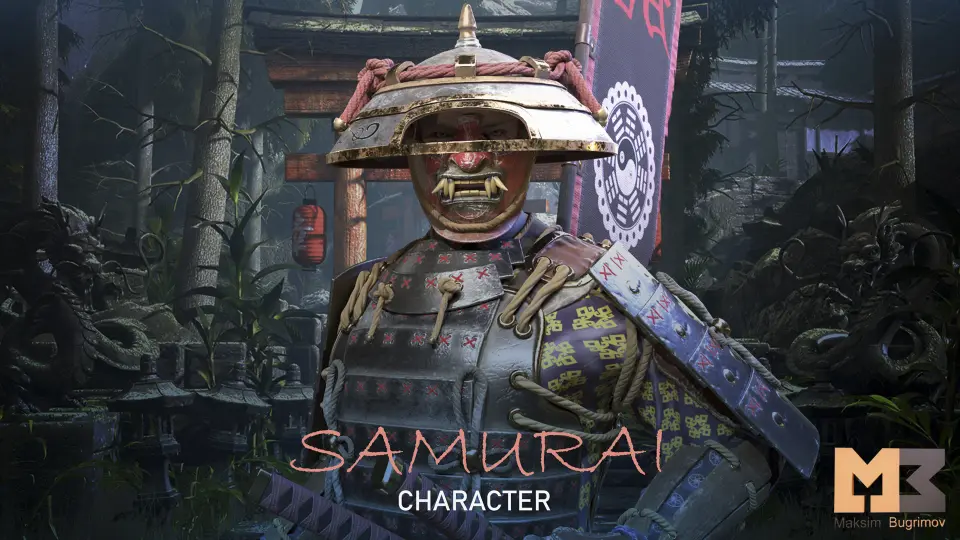
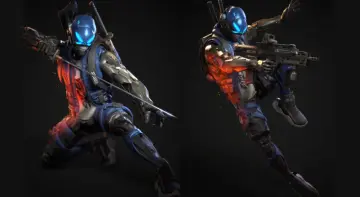
Historical battlefields demand an immediate sense of era and presence, whether staging solitary duels between roaming warriors or clashing ranks across open fields. The SAMURAI character asset is built directly around this thematic framework. It provides a foundational figure for historical games, capturing the silhouette of traditional Japanese martial culture while remaining versatile enough for grounded medieval titles and gritty fantasy role-playing games. Rather than existing as an isolated, static showcase piece, the character functions as an active participant in real-time virtual worlds, offering the core armor, weapon association, and gear needed to portray either an elite soldier bound to a lord or an unattached ronin navigating hostile territories.
Visual authenticity in historical and medieval projects relies heavily on silhouette recognition. A warrior's posture, gear weight, and signature accessories tell players immediately who they are facing and what level of threat they represent. By focusing on realistic proportions, traditional armor shapes, and culturally grounded battle attire, the character fits naturally into sprawling outdoor environments, fortified castle yards, and dimly lit village pathways without clashing against realistic environment art.
Back Flag Dynamics with Real-Time Fabric Simulation
One of the primary visual components of the model is the flag mounted directly to the warrior's back, equipped with real-time fabric simulation. In open-field engagements, fortress assaults, and wind-swept wilderness scenes, static cloth often breaks immersion, making rigid attachments look artificial during high-speed locomotion or sudden dodges. With simulated fabric responding naturally to character movement, directional turns, and environmental momentum, the banner ripples and billows as the samurai sprints, attacks, or stands vigilant in formation.
Dynamic cloth behavior serves both an artistic purpose and a functional role in gameplay. On a crowded battlefield, banners act as essential visual signifiers, helping players track unit orientation, squad allegiance, and momentum from a distance. The natural movement of the cloth adds weight and kinetic energy to combat animations, ensuring that every sudden cut, evasion, or sprint feels anchored in physical space.
Army Variety Through Distinct Helmets and Facial Morphs
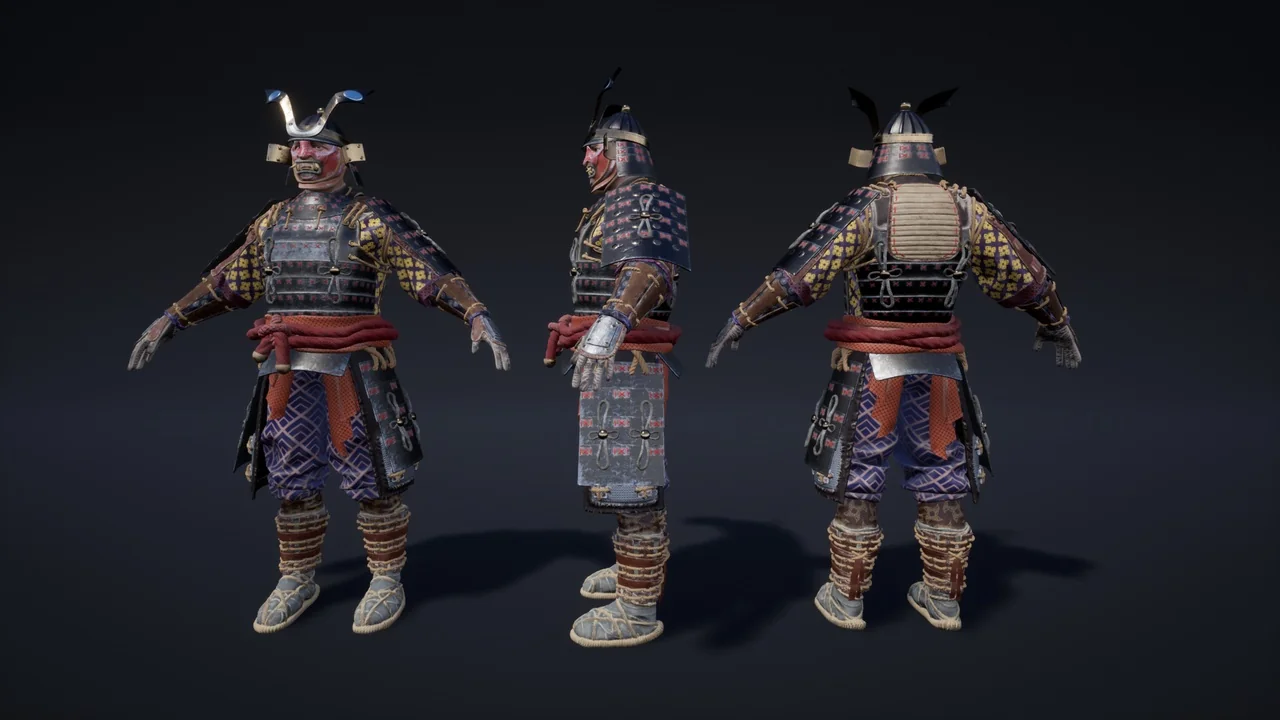
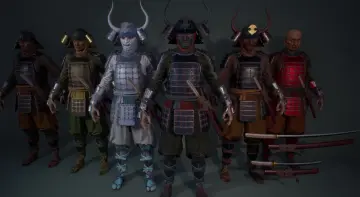
Populating a convincing battlefield requires visual diversity so that units do not appear as clones marching in lockstep. To prevent visual repetition across squad ranks, two distinct helmets are included. Swapping between these two headpieces changes the crest, protective profile, and overall silhouette of individual fighters, providing a practical way to distinguish squad commanders from frontline troops across an assembled samurai army.
Beyond headgear, individualization extends to the fighter's face. The character model includes an integrated facial morph. Incorporating even a subtle face morph gives creators the ability to shift facial contours, vary expressions, or alter the character's facial structure. This minor adjustment capability proves valuable when deploying multiple samurai NPCs in the same outpost, generating diverse enemy squads, or personalizing a main player character for dialogue encounters and narrative sequences.
Modular Lowpoly Construction and PBR Workflow
Beneath its armor styling, the character relies on an optimized lowpoly construction paired with a physically based rendering (PBR) pipeline. This combination ensures that the model maintains smooth real-time performance without sacrificing surface fidelity or structural definition. The PBR material treatment guarantees that environmental lighting reacts accurately across differing surfaces, cleanly delineating the gloss of lacquered plating from matte woven fabrics, protective cords, and metallic weapon fittings.
A modular setup broadens how the asset can be implemented across production pipelines. The modular framework allows creators to customize how parts are assembled or stripped back depending on the needs of a scene. Whether configuring a heavily equipped vanguard fighter or stripping the warrior down to a lighter ronin profile, the lowpoly, modular structure simplifies the integration of weapon assets, secondary equipment, and clothing variations while keeping draw calls and computational budgets within strict project limits.
Animation Blueprint Setup and Creature Animation Compatibility
Mechanical responsiveness is guided by dedicated script components and an animation blueprint foundation. The character is built to hook directly into interactive gameplay logic, ensuring that basic locomotion, stance transitions, drawing weapons, and combat swings operate seamlessly. Crucially, the model features compatibility with 56 animations for creatures, expanding the potential movement vocabulary and behavioral setups available to developers.
Having functional script elements and animation blueprint support simplifies the setup required to bring the warrior into playable states. Instead of building animation state machines, transitions, and logic branches entirely from the ground up, developers can utilize the integrated framework to hook combat routines, reactive hit states, and locomotion blending straight into their existing game controllers. This technical foundation allows rapid prototyping of combat systems, patrol routes, and boss encounters.
Project Fit for Historical and Medieval RPG Productions
The SAMURAI asset is suited for third-person action RPGs, tactical historical battle simulations, and medieval fantasy projects that require grounded warrior archetypes. Studios building large-scale battle formations benefit from the lowpoly optimization, modular design, and dual helmet options, which allow diverse regiments to fill the screen without degrading frame rates. At the same time, developers designing narrative-driven experiences can leverage the fabric-simulated back flag, weapon setups, and face morphing to craft a standout ronin protagonist or memorable ally.
 Characters
 Characters
 Characters
 Characters