"c68a05d5e51405b3"{"id":"1000668","slug":"samurai-remastered","title":"Samurai Remastered","category":"Characters \u0026 Creatures","engine":"5.0+","assetVersion":"","engineVersion":"Engine Version: 5.0+","tag":"Characters","accent":"blue","visual":"character","summary":"Samurai Remastered is a low poly modular 3D asset with multiple meshes, skins, rigged Epic skeleton, katana weapon, and animation blueprint for Unreal Engine pr","platform":"Unreal Engine","publishedAt":"2026-07-22T08:07:12.518Z","updatedAt":"2026-07-22T08:07:12.518Z","sourceNotes":[],"fileContents":[],"compatibility":["Unreal Engine","Engine Version: 5.0+"],"featuredImage":{"alt":"Samurai Remastered","src":"/wp-content/uploads/published/2026/07/759dc3e83478-9e17de12-1611-482e-96d3-764ff2f646b8-591732d38e.webp"},"hasDownloadLink":true,"downloads":1,"terms":[{"taxonomy":"category","slug":"characters-and-creatures","name":"Characters \u0026 Creatures"}],"galleryImages":[{"src":"/wp-content/uploads/published/2026/07/c82ded5f5697-35b2e0ea-57a3-4ca0-9b27-55d4659f1f3e-dae581e4e8.webp","alt":"Samurai Remastered"},{"src":"/wp-content/uploads/published/2026/07/a3ca498fa6d1-60c1413c-9d9e-424d-aeae-c37dddedd113-4b23b1af90.webp","alt":"Samurai Remastered"},{"src":"/wp-content/uploads/published/2026/07/acefc4f2cd64-75f1579a-0d60-4f53-b80f-d2e8904cec1a-979ac19543.webp","alt":"Samurai Remastered"},{"src":"/wp-content/uploads/published/2026/07/8a15c3f8770e-8e272cdc-7098-4457-8dfc-836aece86de4-a9e82ce2e0.webp","alt":"Samurai Remastered"},{"src":"/wp-content/uploads/published/2026/07/7defdecbbca1-4bdc2563-3769-4a46-b0e4-3d14a9cc4b83-c5e1849e1b.webp","alt":"Samurai Remastered"},{"src":"/wp-content/uploads/published/2026/07/7b2d78602bd5-3f369db8-a24a-4013-98bf-f6956ac19a8b-5f65ef7138.webp","alt":"Samurai Remastered"},{"src":"/wp-content/uploads/published/2026/07/573523603a03-5a99847f-1173-45c2-b86a-121e596e2ca5-69aa93e244.webp","alt":"Samurai Remastered"},{"src":"/wp-content/uploads/published/2026/07/915d378b2090-9aa1abf2-b2d5-4e48-867d-f050dab81c61-c6861ed79c.webp","alt":"Samurai Remastered"},{"src":"/wp-content/uploads/published/2026/07/869369cd87d6-94ed42d8-7407-4db1-8468-7da94a8334f2-c7b895a60a.webp","alt":"Samurai Remastered"}],"accessPanel":{"kind":"resource","title":"Download this resource","eyebrow":"Free Download","message":"Log in or create a free account to start your download.","fileName":"Content.7z","safetyNote":"Resources are manually reviewed before listing to improve quality and reduce obvious risks.","actionLabel":"Download Free","resourceType":"Resource archive"},"contentHtml":"\u003ch2\u003eSamurai Remastered: Core Meshes, Skins, and Weapon Parts\u003c/h2\u003e\n\u003cp\u003eSamurai Remastered is built as a low-poly asset that breaks the character down into several basic meshes and accompanying skins. The package centers on a Samurai figure complete with a Katana, positioning it as a modular character ready for assembly within a game engine pipeline. Because the asset is structured around separable components rather than a single locked mesh, artists can swap skins and mix elements to produce distinct visual variations of the same base warrior.\u003c/p\u003e \n\u003cp\u003eThe inclusion of a skull alongside the Samurai, Katana, and broader weapon category suggests that the asset set extends beyond a straightforward humanoid mesh. A skull prop can serve as a trophy, environmental decoration, or narrative prop attached to the character, giving developers a built-in option for darker tonal themes without sourcing additional models.\u003c/p\u003e \n\n\u003ch2\u003eRigged Epic Skeleton and Animation Blueprint Workflows\u003c/h2\u003e \n\u003cp\u003eOne of the defining structural details is that the character is rigged and built on the Epic Skeleton. This rig choice matters substantially for Unreal Engine users, as the Epic Skeleton functions as a shared rigging convention across compatible animation sets. Developers can retarget or apply existing animations to the Samurai figure, and any custom animation built on the same skeleton standard can be applied here without starting from scratch.\u003c/p\u003e \n\u003cp\u003eAlongside the skeleton, the package includes an Animation Blueprint. This means the asset ships with a gameplay-facing animation logic layer already connected. Instead of manually wiring state machines, blendspaces, and locomotion transitions, a developer can plug the Samurai into a project and work from the included blueprint to drive movement states. The blueprint pairs naturally with the rigged skeleton, creating a direct path from visual asset to playable or AI-driven character implementation.\u003c/p\u003e \n\n\u003ch2\u003eModular Character Breakdown for Skin Variations\u003c/h2\u003e \n\u003cp\u003eThe multiple base meshes and skins point to a modular composition. Rather than delivering one fixed warrior appearance, the asset supports variant assembly. A developer building a samurai faction, enemy wave system, or crowd scene can use the mesh and skin combinations to avoid visual repetition across multiple instances. Modularity also helps when teams want to isolate parts such as armor segments or weapon attachments, swap material layers, or recombine pieces to fit distinct character classes within the same production.\u003c/p\u003e \n\u003cp\u003eBecause the asset carries the Lowpoly tag alongside PBR, the intended visual style leans toward clean, performance-conscious geometry paired with physically based surface rendering. This combination suits real-time projects that need to manage scene complexity while still maintaining coherent material response across lighting conditions. For gameplay levels involving multiple samurai characters on screen, a low-poly footprint with modular skins keeps rendering overhead manageable while preserving visual distinctiveness through material and component variation.\u003c/p\u003e \n\n\u003ch2\u003eThematic and Genre Fit: Medieval, Fantasy, and Japanese Settings\u003c/h2\u003e \n\u003cp\u003eThe tagged categories reveal a broad but intentional thematic footprint. Japanese and Samurai tags anchor the asset in Sengoku-era-inspired scenarios, while the Medieval and Knight tags expand its usability into crossover settings where eastern warrior archetypes encounter or coexist with western medieval environments. The Fantasy tag opens placement in stylized or fictional worlds, allowing a developer flexibility if the project blends historical reference with creative worldbuilding.\u003c/p\u003e \n\u003cp\u003eThe Ninja overlap with the Samurai and Knight tags suggests that stealth-oriented or rival faction dynamics could be constructed using this asset as a visible counter, ally, or modular base shared across multiple factions. A single project could use the same asset lineage to populate a samurai faction and adapt the remaining skins for parallel warrior types without redirecting art resources toward entirely new character models.\u003c/p\u003e \n\u003cp\u003eBecause the package is also tagged Animated and Script, a developer could move beyond static scene placement and directly integrate the character into interactive sequences. Cutscene authoring, combat encounters, and scripted enemy behavior can all draw from the included animation infrastructure. This provides an asset set that fits within a production pipeline from visual mockup through to executable gameplay without intermediate software handoffs.\u003c/p\u003e \n\n\u003ch2\u003eCompatibility Notes and Urban Zombie 4 Pipeline\u003c/h2\u003e \n\u003cp\u003eThe asset is compatible with Urban Zombie 4. For teams working on or alongside projects using that framework or codebase, this allows the Samurai Remastered package to slip directly into a known environment setup without additional pipeline conversion. The same Animation Blueprint and Epic Skeleton architecture can align with a project already configured for Urban Zombie 4 character systems, allowing short iteration cycles between asset import and in-engine testing.\u003c/p\u003e \n\u003cp\u003eRealistic, PBR, and Animated tags together indicate that the asset is tuned for projects expecting grounded surface detail and actual motion rather than static hero poses. The realistic designation applies in the context of material behavior and reference proportion, while the low-poly construction keeps frame and vertex counts approachable. This balance broadens the asset's usefulness to both high-fidelity visual targets aiming for photoreal framing and real-time gameplay sequences where performance predictability is needed.\u003c/p\u003e \n\n\u003ch2\u003eA Practical Character Package for Combat and Scene Assembly\u003c/h2\u003e \n\u003cp\u003eSamurai Remastered sits at the intersection of modular character construction and ready-to-animate delivery. The included meshes, skins, katana weapon, skull prop, rigged Epic Skeleton, and Animation Blueprint form a complete unit aimed at letting developers spend less time rebuilding behavior foundations and more time tuning gameplay, cinematics, or scene composition. With compatibility noted for Urban Zombie 4 and a tonal range spanning Japanese, Medieval, Fantasy, Knight, and Ninja themes, the package is set up to handle character integration across real-time projects that demand modular flexibility and animation-ready workflows without requiring extensive additional rigging work.\u003c/p\u003e\n\n\u003ch2\u003eMore From The Same Workflow\u003c/h2\u003e\n\u003cul\u003e\n\u003cli\u003e\u003ca href=\"https://3dcghub.com/asian-armour-metahuman/\" title=\"Asian Armour - Metahuman\"\u003eAsian Armour - Metahuman\u003c/a\u003e\u003c/li\u003e\n\u003cli\u003e\u003ca href=\"https://3dcghub.com/yokai/\" title=\"Yokai\"\u003eYokai\u003c/a\u003e\u003c/li\u003e\n\u003cli\u003e\u003ca href=\"https://3dcghub.com/cyberpunk-samurai/\" title=\"Cyberpunk Samurai\"\u003eCyberpunk Samurai\u003c/a\u003e\u003c/li\u003e\n\u003cli\u003e\u003ca href=\"https://3dcghub.com/samurai-girl/\" title=\"Samurai Girl\"\u003eSamurai Girl\u003c/a\u003e\u003c/li\u003e\n\u003cli\u003e\u003ca href=\"https://3dcghub.com/hydra/\" title=\"Hydra\"\u003eHydra\u003c/a\u003e\u003c/li\u003e\n\u003c/ul\u003e","contentTextLength":6392,"navigation":{"current":1337,"total":3860,"previous":{"id":"1000669","slug":"temple-of-sun","title":"Temple of Sun","category":"Cities","platform":"Unreal Engine","updatedAt":"2026-07-22T09:54:12.678Z"},"next":{"id":"1000667","slug":"rome-empire-character-pack","title":"Rome Empire Character Pack","category":"Characters \u0026 Creatures","platform":"Unreal Engine","updatedAt":"2026-07-22T07:13:03.567Z"}},"relatedResources":[{"id":"1650","slug":"asian-armour-metahuman","title":"Asian Armour - Metahuman","category":"Characters \u0026 Creatures","engine":"5.3+","assetVersion":"Engine version: 5.3+","engineVersion":"5.0","tag":"Characters","accent":"blue","visual":"character","summary":"Enhance your Unreal Engine project with the Asian Armour Pack. Featuring modular Chinese, Mongolian, and Samurai gear compatible with MetaHuman and UE5.","platform":"Unreal Engine","publishedAt":"2026-02-06T20:17:02.000Z","updatedAt":"2026-04-19T15:58:07.000Z","sourceNotes":[],"fileContents":[],"compatibility":["Unreal Engine","Engine version: 5.3+"],"featuredImage":{"alt":"Asian Armour - Metahuman","src":"https://3dcghub.com/wp-content/uploads/2026/02/47250ceb-dbcc-48c4-a64e-85f096544bda.webp"},"hasDownloadLink":true,"downloads":7},{"id":"1001658","slug":"samurai-warriors","title":"Samurai Warriors","category":"Characters \u0026 Creatures","engine":"4.19+,5.0+","assetVersion":"","engineVersion":"Engine Version: 4.19+,5.0+","tag":"Characters","accent":"blue","visual":"character","summary":"Integrate Samurai Warriors with UE mannequin compatibility, NvCloth solver cloth dynamics, and modular material controls for medieval combat projects.","platform":"Unreal Engine","publishedAt":"2026-10-13T08:34:57.969Z","updatedAt":"2026-10-13T08:34:57.969Z","sourceNotes":[],"fileContents":[],"compatibility":["Unreal Engine","Engine Version: 4.19+,5.0+"],"featuredImage":{"alt":"Samurai Warriors","src":"/wp-content/uploads/published/2026/10/86ea906ffa4f-d5fb222a-187f-4a65-9e5f-6bf524e306b5-605f393566.webp"},"hasDownloadLink":true,"downloads":0},{"id":"2179","slug":"cyberpunk-samurai","title":"Cyberpunk Samurai","category":"Characters \u0026 Creatures","engine":"4.26+,5.0+","assetVersion":"Engine version: 4.26+,5.0+","engineVersion":"4.25","tag":"Characters","accent":"blue","visual":"character","summary":"Enhance your sci-fi game with this modular Cyberpunk Samurai character. Featuring facial morphs, katanas, and assault rifles for high-quality game development.","platform":"Unreal Engine","publishedAt":"2026-02-07T08:11:52.000Z","updatedAt":"2026-04-19T15:58:05.000Z","sourceNotes":[],"fileContents":[],"compatibility":["Unreal Engine","Engine version: 4.26+,5.0+"],"featuredImage":{"alt":"Cyberpunk Samurai","src":"https://3dcghub.com/wp-content/uploads/2026/02/dfea57ba-2947-439f-9271-76af763bba5a.webp"},"hasDownloadLink":true,"downloads":1}]}
Characters
Samurai Remastered
Samurai Remastered is a low poly modular 3D asset with multiple meshes, skins, rigged Epic skeleton, katana weapon, and animation blueprint for Unreal Engine pr
Samurai Remastered: Core Meshes, Skins, and Weapon Parts
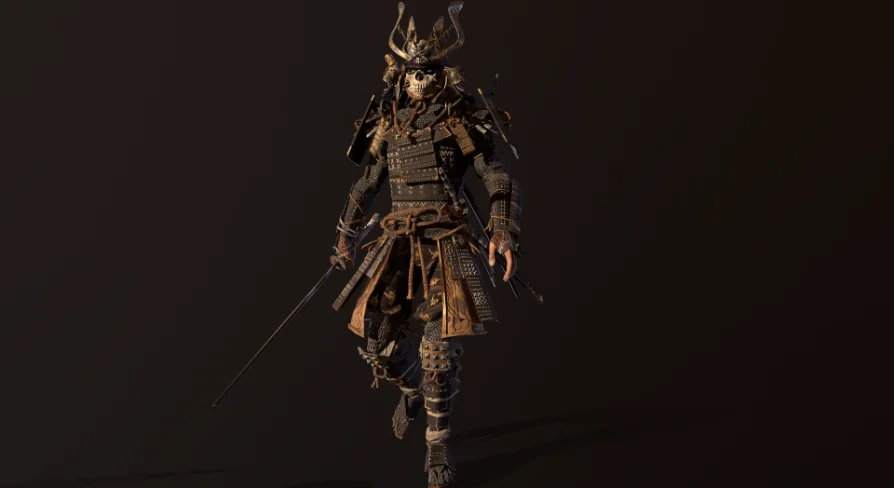
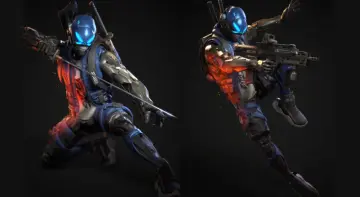
Samurai Remastered is built as a low-poly asset that breaks the character down into several basic meshes and accompanying skins. The package centers on a Samurai figure complete with a Katana, positioning it as a modular character ready for assembly within a game engine pipeline. Because the asset is structured around separable components rather than a single locked mesh, artists can swap skins and mix elements to produce distinct visual variations of the same base warrior.
The inclusion of a skull alongside the Samurai, Katana, and broader weapon category suggests that the asset set extends beyond a straightforward humanoid mesh. A skull prop can serve as a trophy, environmental decoration, or narrative prop attached to the character, giving developers a built-in option for darker tonal themes without sourcing additional models.
Rigged Epic Skeleton and Animation Blueprint Workflows
One of the defining structural details is that the character is rigged and built on the Epic Skeleton. This rig choice matters substantially for Unreal Engine users, as the Epic Skeleton functions as a shared rigging convention across compatible animation sets. Developers can retarget or apply existing animations to the Samurai figure, and any custom animation built on the same skeleton standard can be applied here without starting from scratch.
Alongside the skeleton, the package includes an Animation Blueprint. This means the asset ships with a gameplay-facing animation logic layer already connected. Instead of manually wiring state machines, blendspaces, and locomotion transitions, a developer can plug the Samurai into a project and work from the included blueprint to drive movement states. The blueprint pairs naturally with the rigged skeleton, creating a direct path from visual asset to playable or AI-driven character implementation.
Modular Character Breakdown for Skin Variations
The multiple base meshes and skins point to a modular composition. Rather than delivering one fixed warrior appearance, the asset supports variant assembly. A developer building a samurai faction, enemy wave system, or crowd scene can use the mesh and skin combinations to avoid visual repetition across multiple instances. Modularity also helps when teams want to isolate parts such as armor segments or weapon attachments, swap material layers, or recombine pieces to fit distinct character classes within the same production.
Because the asset carries the Lowpoly tag alongside PBR, the intended visual style leans toward clean, performance-conscious geometry paired with physically based surface rendering. This combination suits real-time projects that need to manage scene complexity while still maintaining coherent material response across lighting conditions. For gameplay levels involving multiple samurai characters on screen, a low-poly footprint with modular skins keeps rendering overhead manageable while preserving visual distinctiveness through material and component variation.
Thematic and Genre Fit: Medieval, Fantasy, and Japanese Settings
The tagged categories reveal a broad but intentional thematic footprint. Japanese and Samurai tags anchor the asset in Sengoku-era-inspired scenarios, while the Medieval and Knight tags expand its usability into crossover settings where eastern warrior archetypes encounter or coexist with western medieval environments. The Fantasy tag opens placement in stylized or fictional worlds, allowing a developer flexibility if the project blends historical reference with creative worldbuilding.
The Ninja overlap with the Samurai and Knight tags suggests that stealth-oriented or rival faction dynamics could be constructed using this asset as a visible counter, ally, or modular base shared across multiple factions. A single project could use the same asset lineage to populate a samurai faction and adapt the remaining skins for parallel warrior types without redirecting art resources toward entirely new character models.
Because the package is also tagged Animated and Script, a developer could move beyond static scene placement and directly integrate the character into interactive sequences. Cutscene authoring, combat encounters, and scripted enemy behavior can all draw from the included animation infrastructure. This provides an asset set that fits within a production pipeline from visual mockup through to executable gameplay without intermediate software handoffs.
Compatibility Notes and Urban Zombie 4 Pipeline
The asset is compatible with Urban Zombie 4. For teams working on or alongside projects using that framework or codebase, this allows the Samurai Remastered package to slip directly into a known environment setup without additional pipeline conversion. The same Animation Blueprint and Epic Skeleton architecture can align with a project already configured for Urban Zombie 4 character systems, allowing short iteration cycles between asset import and in-engine testing.
Realistic, PBR, and Animated tags together indicate that the asset is tuned for projects expecting grounded surface detail and actual motion rather than static hero poses. The realistic designation applies in the context of material behavior and reference proportion, while the low-poly construction keeps frame and vertex counts approachable. This balance broadens the asset's usefulness to both high-fidelity visual targets aiming for photoreal framing and real-time gameplay sequences where performance predictability is needed.
A Practical Character Package for Combat and Scene Assembly
Samurai Remastered sits at the intersection of modular character construction and ready-to-animate delivery. The included meshes, skins, katana weapon, skull prop, rigged Epic Skeleton, and Animation Blueprint form a complete unit aimed at letting developers spend less time rebuilding behavior foundations and more time tuning gameplay, cinematics, or scene composition. With compatibility noted for Urban Zombie 4 and a tonal range spanning Japanese, Medieval, Fantasy, Knight, and Ninja themes, the package is set up to handle character integration across real-time projects that demand modular flexibility and animation-ready workflows without requiring extensive additional rigging work.
 Characters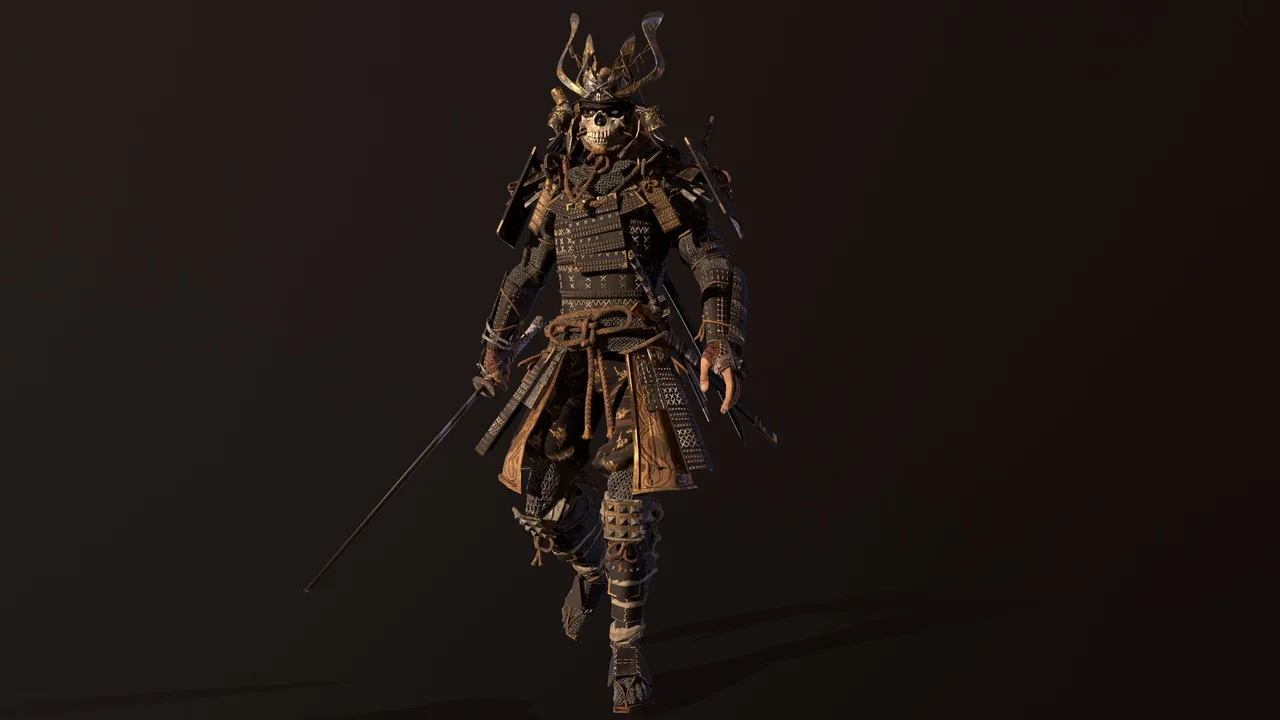
 Characters
 Characters
 Characters