"c68a05d5e51405b3"{"id":"1000667","slug":"rome-empire-character-pack","title":"Rome Empire Character Pack","category":"Characters \u0026 Creatures","engine":"5.0+","assetVersion":"","engineVersion":"Engine Version: 5.0+","tag":"Characters","accent":"blue","visual":"character","summary":"Rome Empire Character Pack delivers rigged Roman soldier characters set in AD 117, an updated arena environment, and skeleton compatibility for real-time produc","platform":"Unreal Engine","publishedAt":"2026-07-22T07:13:03.567Z","updatedAt":"2026-07-22T07:13:03.567Z","sourceNotes":[],"fileContents":[],"compatibility":["Unreal Engine","Engine Version: 5.0+"],"featuredImage":{"alt":"Rome Empire Character Pack","src":"/wp-content/uploads/published/2026/07/6cbedc7b0aae-70310b08-fc01-4fd0-9ed1-96c89f5cecc7-a51097abcc.webp"},"hasDownloadLink":true,"downloads":0,"terms":[{"taxonomy":"category","slug":"characters-and-creatures","name":"Characters \u0026 Creatures"}],"galleryImages":[{"src":"/wp-content/uploads/published/2026/07/3cc1ed17331e-10a4b4a2-39f6-412d-a8e6-8ba0a5e79ba2-edb4908786.webp","alt":"Rome Empire Character Pack"},{"src":"/wp-content/uploads/published/2026/07/1c997aa91ec4-dd8fdbf0-b7e4-47a8-a8dd-4d51f8668f88-5c49cbf7c1.webp","alt":"Rome Empire Character Pack"},{"src":"/wp-content/uploads/published/2026/07/5034171db881-885915d9-0c0e-4057-9439-689f233d6250-a48f91b92a.webp","alt":"Rome Empire Character Pack"},{"src":"/wp-content/uploads/published/2026/07/1d4f11415d6d-bc2cb9cf-926a-4409-93c4-6bac686e8909-3a87d14b54.webp","alt":"Rome Empire Character Pack"},{"src":"/wp-content/uploads/published/2026/07/615d5e3e25e8-d41add52-5637-46a6-bc90-03c39ef638c5-215429d0e0.webp","alt":"Rome Empire Character Pack"},{"src":"/wp-content/uploads/published/2026/07/80285de8f038-079735f8-9dca-48df-a0b1-ce291d4809f1-9104c37613.webp","alt":"Rome Empire Character Pack"}],"accessPanel":{"kind":"resource","title":"Download this resource","eyebrow":"Free Download","message":"Log in or create a free account to start your download.","fileName":"Content.7z","safetyNote":"Resources are manually reviewed before listing to improve quality and reduce obvious risks.","actionLabel":"Download Free","resourceType":"Resource archive"},"contentHtml":"\u003cp\u003eDropping historical soldier characters into an Unreal Engine scene usually means solving two problems before any real art direction can begin: getting the rig compatible with existing motion data, and making sure the mesh holds up when armor pieces move against each other. The Rome Empire Character Pack addresses both from the start. The characters are rigged to the Epic skeleton, which means animation blueprints and locomotion sets built for that standard framework slot in without retargeting overhead. This setup decision matters more than any single visual feature, because it determines how quickly the rest of a production pipeline can take over.\u003c/p\u003e \n\n\u003ch2\u003eRoman Empire Soldiers Set in AD 117\u003c/h2\u003e\n\u003cp\u003eThe pack focuses on soldiers of the Roman Imperial army specifically during the year AD 117. That single date anchors the asset in a concrete historical moment rather than offering a vague antique aesthetic. AD 117 falls within the reign of Trajan, the period when the empire reached its greatest territorial extent. For project leads and art directors, this dating matters because it gives the characters a defined reference point for armor styling, silhouette, and context. Any surrounding environment, cinematic, or gameplay beat calling for Roman military presence can lean on that specific timeframe.\u003c/p\u003e \n\u003cp\u003eEach character functions as a soldier within that army structure. The tags associated with the pack, including Caesar, Rome, Roman, Medieval, and Gladiator, situate the assets across a range of related production needs, from battlefield sequences to arena combat scenes. The presence of the Script and Animation Blueprint tags signals that the pack goes beyond static meshes and includes logic-driven components intended for real-time use.\u003c/p\u003e \n\n\u003ch3\u003eHow the Epic Skeleton Rig Fits the Workflow\u003c/h3\u003e\n\u003cp\u003eRigging a character to the Epic skeleton is the single most production-relevant technical detail in this pack. The Epic skeleton is the standard bipedal rig used across Unreal Engine's animation system. Because the Rome Empire Character Pack ships characters rigged to this skeleton, the models are positioned to consume existing animation content directly. Locomotion sets, combat animations, idle loops, and any motion captured or hand-keyed sequences authored for the Epic rig can be applied to these Roman soldiers without an intermediate retargeting step. The inclusion of an Animation Blueprint tag reinforces that the pack is intended to be a working piece of a real-time character pipeline rather than a collection of posed figures.\u003c/p\u003e \n\u003cp\u003eFor a scene that needs populated battle lines, marching columns, or arena spectators, this means the bottleneck shifts. Instead of spending engineering time on rigging and retargeting, a team can move directly to populating scenes, testing animation states, and layering gameplay or cinematic logic. The characters arrive ready for that stage of work.\u003c/p\u003e \n\n\u003ch2\u003eWhat Version 1.2 Changed Under the Surface\u003c/h2\u003e\n\u003cp\u003eThe pack has been updated to Version 1.2, and three specific changes define the current state of the asset. First, the rigging was confirmed as Epic skeleton compatible, which remained the foundational technical requirement. Second, the update fixed mesh intersections, meaning areas where geometry overlapped or clipped through itself were corrected. Mesh intersections are a common issue with armored characters, where plates, skirts, belts, and underlying body geometry can collide and render incorrectly during movement or even at rest. The fix directly improves visual quality during animation playback and cinematic framing.\u003c/p\u003e \n\u003cp\u003eThird, the update added a new Arena. This addition transforms the pack from a pure character set into something closer to a scene-ready ensemble. An arena environment provides immediate context for the gladiator-tagged content and gives developers a staging ground for combat animations, camera tests, or atmospheric shots without having to build a setting from scratch. The arena is a functional backdrop, justified by the historical and thematic tags the characters already carry.\u003c/p\u003e \n\n\u003ch3\u003eCorrecting Mesh Intersections in Animated Characters\u003c/h3\u003e\n\u003cp\u003eMentioning the mesh intersection fix in the version notes points to a practical concern for anyone using these characters in motion. When armor and body layers intersect, the resulting visual artifacts break immersion in both gameplay and cinematics. Clipping can occur during idle breathing animations, walk cycles, or combat poses where limbs rotate through protective gear. Version 1.2's correction of these intersections means the characters hold up better through a wider range of animation states. The geometry behaves during movement the way a production expects, which reduces the amount of manual cleanup or mesh adjustment needed before a shot is ready for rendering or real-time capture.\u003c/p\u003e \n\u003cp\u003eThis matters especially for armored Roman soldiers, where layered defenses, helmets, and draped fabric elements all have the potential to conflict during dynamic motion. Fixing those intersections at the pack level prevents the problem from recurring across every individual shot or sequence.\u003c/p\u003e \n\n\u003ch2\u003eCompatibility With the Napoleonic Character Pack\u003c/h2\u003e\n\u003cp\u003eThe Rome Empire Character Pack features noted compatibility with the Napoleonic Character Pack. For developers building historical or military-themed projects, this compatibility means the two packs can share a production context. Because both sets of characters are structured through the same Epic skeleton rig framework, animations, control logic, and scene population techniques developed for one can transfer to the other. A project that already uses Napoleonic-era soldiers can introduce Roman soldiers without restructuring its animation pipeline, provided both packs rely on the standard skeleton structure.\u003c/p\u003e \n\u003cp\u003eThis compatibility turns the Rome Empire Character Pack into a natural extension for teams that have already invested in historical character assets. Rather than treating each era as an isolated technical island, the rigging standard creates a bridge. Animation blueprints authored for one can serve as starting points for the other, cutting down the integration effort.\u003c/p\u003e \n\n\u003ch2\u003eProduction Placement\u003c/h2\u003e\n\u003cp\u003eIn a real workflow, this asset occupies the character population and environment staging layer. The soldiers are rigged for animation, the mesh work has been through a correction pass, and the arena provides an immediate testing ground for scenes that need combat or gathering crowds. The tags, including Caesar, Rome, Roman, Medieval, Gladiator, Script, and Animation Blueprint, indicate the intended use cases span populated battlefields, arena combat, and scripted sequences where the characters need to respond to logic rather than stand as static props.\u003c/p\u003e \n\u003cp\u003eThe focus on AD 117 gives the asset a defined historical commitment. The Version 1.2 update, combining rig confirmation, mesh correction, and the new arena, shows the pack has moved past initial release into a maintained state. For a production that needs Roman military characters ready for the Epic animation ecosystem, staged in an environment that matches their context, and corrected for the technical issues that plague layered character meshes, this pack stands as a production-ready option.\u003c/p\u003e\n\n\u003ch2\u003eMore From The Same Workflow\u003c/h2\u003e\n\u003cul\u003e\n\u003cli\u003e\u003ca href=\"https://3dcghub.com/ue5-rigged-npc-creator/\" title=\"UE5 Rigged NPC Creator\"\u003eUE5 Rigged NPC Creator\u003c/a\u003e\u003c/li\u003e\n\u003cli\u003e\u003ca href=\"https://3dcghub.com/male-mega-realistic-character-pack-01/\" title=\"Male Mega Realistic Character Pack 01\"\u003eMale Mega Realistic Character Pack 01\u003c/a\u003e\u003c/li\u003e\n\u003cli\u003e\u003ca href=\"https://3dcghub.com/man-military-outfit-5-modular-rigged-animated/\" title=\"Man - Military Outfit 5 - Modular - Rigged - Animated\"\u003eMan - Military Outfit 5 - Modular - Rigged - Animated\u003c/a\u003e\u003c/li\u003e\n\u003cli\u003e\u003ca href=\"https://3dcghub.com/apache-warrior-1/\" title=\"Apache Warrior 1\"\u003eApache Warrior 1\u003c/a\u003e\u003c/li\u003e\n\u003cli\u003e\u003ca href=\"https://3dcghub.com/dinosaur-utahraptor/\" title=\"Dinosaur UtahRaptor\"\u003eDinosaur UtahRaptor\u003c/a\u003e\u003c/li\u003e\n\u003c/ul\u003e","contentTextLength":7372,"navigation":{"current":1338,"total":3860,"previous":{"id":"1000668","slug":"samurai-remastered","title":"Samurai Remastered","category":"Characters \u0026 Creatures","platform":"Unreal Engine","updatedAt":"2026-07-22T08:07:12.518Z"},"next":{"id":"1000666","slug":"rkva-rigless-kinematic-vehicle-animation","title":"RKVA Rigless Kinematic Vehicle Animation","category":"Animations","platform":"Unreal Engine","updatedAt":"2026-07-22T07:06:32.349Z"}},"relatedResources":[{"id":"1001906","slug":"post-apocalyptic-characters-pack","title":"Post-Apocalyptic Characters (Pack)","category":"Characters \u0026 Creatures","engine":"5.6+","assetVersion":"","engineVersion":"Engine Version: 5.6+","tag":"Characters","accent":"blue","visual":"character","summary":"Explore the Post-Apocalyptic Characters pack featuring 14 low-poly PBR models rigged to the UE4 Epic Skeleton with weapons and FPS Starter Pack compatibility.","platform":"Unreal Engine","publishedAt":"2026-10-22T11:44:21.876Z","updatedAt":"2026-10-22T11:44:21.876Z","sourceNotes":[],"fileContents":[],"compatibility":["Unreal Engine","Engine Version: 5.6+"],"featuredImage":{"alt":"Post-Apocalyptic Characters (Pack)","src":"/wp-content/uploads/published/2026/10/a22c7c35103d-2794a31e-e2eb-47f1-afeb-249405c9c085-f17027c066.webp"},"hasDownloadLink":true,"downloads":0},{"id":"1001795","slug":"blackmoon-boss-pack-2-20-models-characters-weapons-and-items","title":"BlackMoon BOSS PACK 2 - 20+ Models Characters, Weapons and Items","category":"Characters \u0026 Creatures","engine":"5.1+","assetVersion":"","engineVersion":"Engine Version: 5.1+","tag":"Characters","accent":"blue","visual":"character","summary":"Explore the BlackMoon Boss Pack 2 featuring 5 rigged characters, 10 weapons, 10 items with cloth simulation, and UE4 mannequin compatibility.","platform":"Unreal Engine","publishedAt":"2026-10-21T07:47:49.216Z","updatedAt":"2026-10-21T07:47:49.216Z","sourceNotes":[],"fileContents":[],"compatibility":["Unreal Engine","Engine Version: 5.1+"],"featuredImage":{"alt":"BlackMoon BOSS PACK 2 - 20+ Models Characters, Weapons and Items","src":"/wp-content/uploads/published/2026/10/50ec49207b27-50997417-6b0c-455b-8195-8433085ae9e0-53a0979885.webp"},"hasDownloadLink":true,"downloads":0},{"id":"1001008","slug":"polygon-ancient-empire","title":"POLYGON - Ancient Empire","category":"Historical","engine":"4.26+,5.0+","assetVersion":"","engineVersion":"Engine Version: 4.26+,5.0+","tag":"Historical","accent":"blue","visual":"mech","summary":"Explore POLYGON - Ancient Empire, a Greek-Roman fusion pack with over 700 prefabs including modular buildings, characters, props, weapons, FX, and environment a","platform":"Unreal Engine","publishedAt":"2026-08-22T13:02:43.200Z","updatedAt":"2026-08-22T13:02:43.200Z","sourceNotes":[],"fileContents":[],"compatibility":["Unreal Engine","Engine Version: 4.26+,5.0+"],"featuredImage":{"alt":"POLYGON - Ancient Empire","src":"/wp-content/uploads/published/2026/08/3f8cd4387afb-c5898e6e-497d-409c-b499-509aba6363f3-7d0e370e4b.webp"},"hasDownloadLink":true,"downloads":1}]}
Characters
Rome Empire Character Pack
Rome Empire Character Pack delivers rigged Roman soldier characters set in AD 117, an updated arena environment, and skeleton compatibility for real-time produc
Dropping historical soldier characters into an Unreal Engine scene usually means solving two problems before any real art direction can begin: getting the rig compatible with existing motion data, and making sure the mesh holds up when armor pieces move against each other. The Rome Empire Character Pack addresses both from the start. The characters are rigged to the Epic skeleton, which means animation blueprints and locomotion sets built for that standard framework slot in without retargeting overhead. This setup decision matters more than any single visual feature, because it determines how quickly the rest of a production pipeline can take over.
Roman Empire Soldiers Set in AD 117
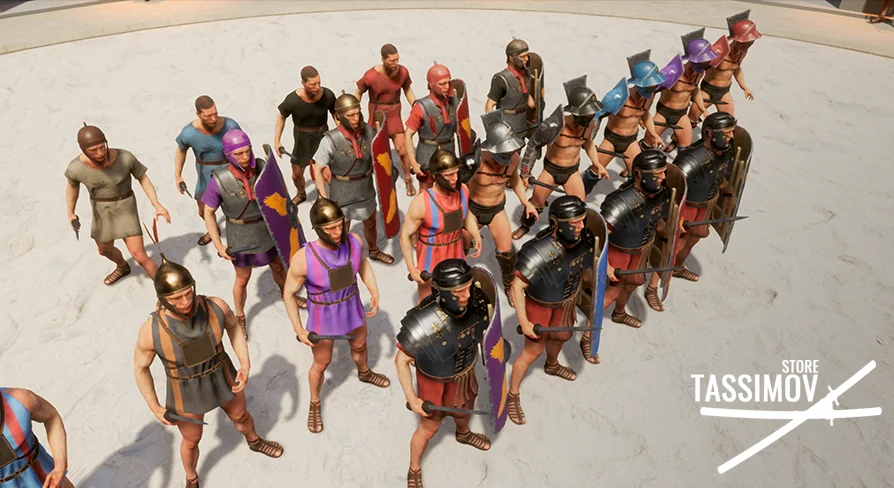
The pack focuses on soldiers of the Roman Imperial army specifically during the year AD 117. That single date anchors the asset in a concrete historical moment rather than offering a vague antique aesthetic. AD 117 falls within the reign of Trajan, the period when the empire reached its greatest territorial extent. For project leads and art directors, this dating matters because it gives the characters a defined reference point for armor styling, silhouette, and context. Any surrounding environment, cinematic, or gameplay beat calling for Roman military presence can lean on that specific timeframe.
Each character functions as a soldier within that army structure. The tags associated with the pack, including Caesar, Rome, Roman, Medieval, and Gladiator, situate the assets across a range of related production needs, from battlefield sequences to arena combat scenes. The presence of the Script and Animation Blueprint tags signals that the pack goes beyond static meshes and includes logic-driven components intended for real-time use.
How the Epic Skeleton Rig Fits the Workflow
Rigging a character to the Epic skeleton is the single most production-relevant technical detail in this pack. The Epic skeleton is the standard bipedal rig used across Unreal Engine's animation system. Because the Rome Empire Character Pack ships characters rigged to this skeleton, the models are positioned to consume existing animation content directly. Locomotion sets, combat animations, idle loops, and any motion captured or hand-keyed sequences authored for the Epic rig can be applied to these Roman soldiers without an intermediate retargeting step. The inclusion of an Animation Blueprint tag reinforces that the pack is intended to be a working piece of a real-time character pipeline rather than a collection of posed figures.
For a scene that needs populated battle lines, marching columns, or arena spectators, this means the bottleneck shifts. Instead of spending engineering time on rigging and retargeting, a team can move directly to populating scenes, testing animation states, and layering gameplay or cinematic logic. The characters arrive ready for that stage of work.
What Version 1.2 Changed Under the Surface
The pack has been updated to Version 1.2, and three specific changes define the current state of the asset. First, the rigging was confirmed as Epic skeleton compatible, which remained the foundational technical requirement. Second, the update fixed mesh intersections, meaning areas where geometry overlapped or clipped through itself were corrected. Mesh intersections are a common issue with armored characters, where plates, skirts, belts, and underlying body geometry can collide and render incorrectly during movement or even at rest. The fix directly improves visual quality during animation playback and cinematic framing.
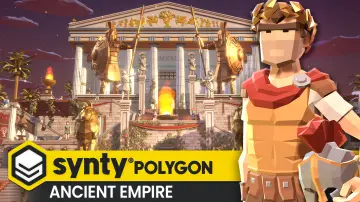
Third, the update added a new Arena. This addition transforms the pack from a pure character set into something closer to a scene-ready ensemble. An arena environment provides immediate context for the gladiator-tagged content and gives developers a staging ground for combat animations, camera tests, or atmospheric shots without having to build a setting from scratch. The arena is a functional backdrop, justified by the historical and thematic tags the characters already carry.
Correcting Mesh Intersections in Animated Characters
Mentioning the mesh intersection fix in the version notes points to a practical concern for anyone using these characters in motion. When armor and body layers intersect, the resulting visual artifacts break immersion in both gameplay and cinematics. Clipping can occur during idle breathing animations, walk cycles, or combat poses where limbs rotate through protective gear. Version 1.2's correction of these intersections means the characters hold up better through a wider range of animation states. The geometry behaves during movement the way a production expects, which reduces the amount of manual cleanup or mesh adjustment needed before a shot is ready for rendering or real-time capture.
This matters especially for armored Roman soldiers, where layered defenses, helmets, and draped fabric elements all have the potential to conflict during dynamic motion. Fixing those intersections at the pack level prevents the problem from recurring across every individual shot or sequence.
Compatibility With the Napoleonic Character Pack
The Rome Empire Character Pack features noted compatibility with the Napoleonic Character Pack. For developers building historical or military-themed projects, this compatibility means the two packs can share a production context. Because both sets of characters are structured through the same Epic skeleton rig framework, animations, control logic, and scene population techniques developed for one can transfer to the other. A project that already uses Napoleonic-era soldiers can introduce Roman soldiers without restructuring its animation pipeline, provided both packs rely on the standard skeleton structure.
This compatibility turns the Rome Empire Character Pack into a natural extension for teams that have already invested in historical character assets. Rather than treating each era as an isolated technical island, the rigging standard creates a bridge. Animation blueprints authored for one can serve as starting points for the other, cutting down the integration effort.
Production Placement
In a real workflow, this asset occupies the character population and environment staging layer. The soldiers are rigged for animation, the mesh work has been through a correction pass, and the arena provides an immediate testing ground for scenes that need combat or gathering crowds. The tags, including Caesar, Rome, Roman, Medieval, Gladiator, Script, and Animation Blueprint, indicate the intended use cases span populated battlefields, arena combat, and scripted sequences where the characters need to respond to logic rather than stand as static props.
The focus on AD 117 gives the asset a defined historical commitment. The Version 1.2 update, combining rig confirmation, mesh correction, and the new arena, shows the pack has moved past initial release into a maintained state. For a production that needs Roman military characters ready for the Epic animation ecosystem, staged in an environment that matches their context, and corrected for the technical issues that plague layered character meshes, this pack stands as a production-ready option.
 Characters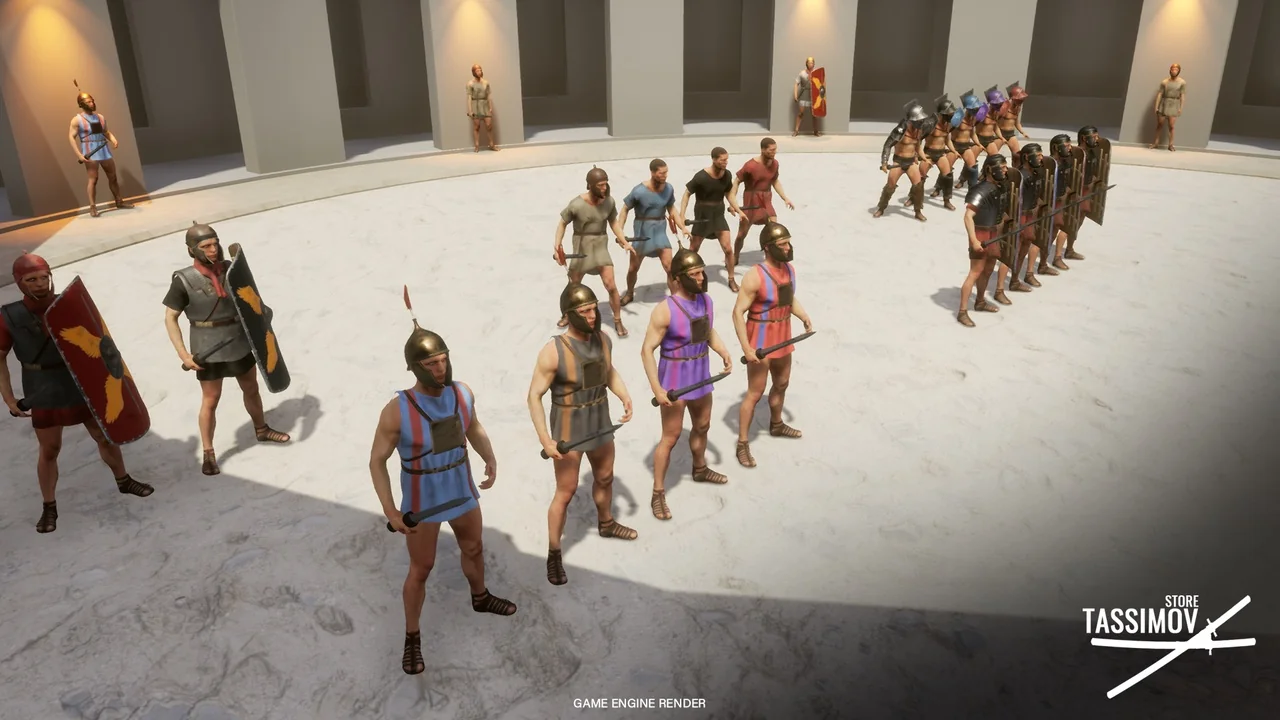
 Characters
 Characters
 Historical