"fa182e0cd0a6ea73"{"id":"1001852","slug":"resident-horror-v2","title":"Resident Horror V2","category":"Shooter","engine":"5.7+","assetVersion":"","engineVersion":"Engine Version: 5.7+","tag":"Shooter","accent":"blue","visual":"mech","summary":"A breakdown of Resident Horror V2, covering its GASP and ALS movement setup, MetaSound audio, AI companions, and 25+ survival horror gameplay mechanics.","platform":"Unreal Engine","publishedAt":"2026-10-21T11:55:39.658Z","updatedAt":"2026-10-21T11:55:39.658Z","sourceNotes":[],"fileContents":[],"compatibility":["Unreal Engine","Engine Version: 5.7+"],"featuredImage":{"alt":"Resident Horror V2","src":"/wp-content/uploads/published/2026/10/1208e08140d2-03a18f95-a356-4147-bbcf-91db342730c9-f7e393148f.webp"},"hasDownloadLink":true,"downloads":1,"terms":[{"taxonomy":"category","slug":"shooter","name":"Shooter"}],"galleryImages":[{"src":"/wp-content/uploads/published/2026/10/0e123b650c93-0e3d294c-ef46-4116-83a7-9ad7dc876877-907aec8c23.webp","alt":"Resident Horror V2"},{"src":"/wp-content/uploads/published/2026/10/326d61c8b436-bc323a7f-97ea-499f-bc0a-6604bc8bfef1-f081ea738d.webp","alt":"Resident Horror V2"},{"src":"/wp-content/uploads/published/2026/10/bd46ef287d16-6dbe1409-8a13-4bad-9947-c6cd7337b60b-e9a74c767f.webp","alt":"Resident Horror V2"},{"src":"/wp-content/uploads/published/2026/10/a8fc18223f2c-c40382c4-54f4-44cd-a12e-51241ffdd7c5-4860d0ba46.webp","alt":"Resident Horror V2"},{"src":"/wp-content/uploads/published/2026/10/c79d52a89c7c-f080e2bb-4a2b-4ec9-8111-a59298297e39-4ca1cfe301.webp","alt":"Resident Horror V2"},{"src":"/wp-content/uploads/published/2026/10/e059b41dbd32-e9d90cac-5df6-46e1-bb6b-3238ec12c4cc-1d25690601.webp","alt":"Resident Horror V2"},{"src":"/wp-content/uploads/published/2026/10/9dc762f63990-b41d8057-681c-42bd-af3d-b89c0231bac1-f43e3b6d70.webp","alt":"Resident Horror V2"},{"src":"/wp-content/uploads/published/2026/10/275541003a46-ef865d04-63c3-46d5-af15-30ba499f5549-f5e6fbf449.webp","alt":"Resident Horror V2"},{"src":"/wp-content/uploads/published/2026/10/374773c4ce0c-886829c9-34ca-4a69-8980-429f6d9e9c9c-510384d758.webp","alt":"Resident Horror V2"},{"src":"/wp-content/uploads/published/2026/10/6d4cf925b3d0-4105ef8b-ae25-45d7-8203-2c950e267551-121ac2e7a5.webp","alt":"Resident Horror V2"}],"accessPanel":{"kind":"resource","title":"Download this resource","eyebrow":"Free Download","message":"Log in or create a free account to start your download.","fileName":"Resident Horror V2.7z","safetyNote":"Resources are manually reviewed before listing to improve quality and reduce obvious risks.","actionLabel":"Download Free","resourceType":"Resource archive"},"contentHtml":"\u003ch2\u003eStaging Narrative Survival Horror in Resident Horror V2\u003c/h2\u003e\u003cp\u003eBuilding an authentic survival horror experience requires tight synchronization between physical space, inventory tension, and deliberate character pacing. Resident Horror V2 functions as a dedicated horror template system built for Unreal Engine, targeting developers assembling post-apocalyptic, atmospheric, and terror-focused titles. Instead of starting from an empty project space, the system includes an example level map to immediately demonstrate how environmental lighting, spatial layout, and player interactions intersect.\u003c/p\u003e\u003cp\u003eThe overall framework is engineered to prioritize cinematic presentation and atmospheric storytelling. It allows level designers and gameplay programmers to establish narrative beats without needing to construct basic survival mechanics—such as item handling, save persistence, or physical barricades—from scratch. By focusing on modularity, individual mechanics can be adapted or rearranged depending on whether a scene emphasizes quiet exploration or aggressive enemy encounters.\u003c/p\u003e\u003ch2\u003eLocomotion and Combat Under the GASP and ALS Framework\u003c/h2\u003e\u003cp\u003eResponsive, grounded character movement serves as the backbone of survival horror, where player vulnerability is directly influenced by weight and maneuvering speed. Resident Horror V2 is built on GASP integrated with ALS (Advanced Locomotion System), utilizing dedicated weapon pose setups and locomotion models to form a flexible movement and combat pipeline. In update 2.1, the template introduces blendspace locomotion alongside updated enemy artificial intelligence, refining how characters shift between idle, walking, and combat states.\u003c/p\u003e\u003cp\u003eInput is mapped natively for keyboard and mouse on Windows development setups. The character framework supports a dedicated vault system, allowing players to scale obstacles during traversal or evasion. This physical traversal model extends beyond the player: the companion AI can also navigate through the same vaulting mechanics, preventing followers from getting stranded when navigating fractured or multi-tiered level geometry.\u003c/p\u003e\u003ch2\u003eEnemy AI, Companions, and Environmental Awareness\u003c/h2\u003e\u003cp\u003eHostile encounters and companion behavior rely on interconnected logic rather than isolated trigger events. The template includes an advanced AI enemy system tailored for tension-heavy encounters, supplemented by specific behavioral routines:\u003c/p\u003e\u003cul\u003e\u003cli\u003e\u003cstrong\u003eAI Companion System:\u003c/strong\u003e Delivers an autonomous partner capable of navigating complex level geometry alongside the player, including synchronized vault interactions.\u003c/li\u003e\u003cli\u003e\u003cstrong\u003eAI Closet System:\u003c/strong\u003e Introduces hiding and concealment dynamics, enabling gameplay where players can break line of sight and take cover inside furniture or utility spaces to evade threats.\u003c/li\u003e\u003cli\u003e\u003cstrong\u003eFootstep Detection System:\u003c/strong\u003e Provides sensory awareness for entities, linking character movement velocity and footstep impacts directly to enemy alertness.\u003c/li\u003e\u003cli\u003e\u003cstrong\u003eCrow System:\u003c/strong\u003e Incorporates environmental animal reactivity that can startle, take flight, or trigger auditory cues that complicate stealth navigation.\u003c/li\u003e\u003cli\u003e\u003cstrong\u003eFinisher System:\u003c/strong\u003e Bridges combat states and cinematic animations when neutralizing incapacitated or vulnerable opponents.\u003c/li\u003e\u003c/ul\u003e\u003ch2\u003eEconomy, Storage, and Weapon Upgrade Mechanics\u003c/h2\u003e\u003cp\u003eResource scarcity defines classical horror, and Resident Horror V2 mirrors this through balanced management loops. The template supplies an advanced inventory system linked directly to an advanced save system, preserving item arrangements, progress markers, and state data across sessions. Players manage defensive vitality through an integrated health system, while environmental discovery is driven by a broken box system that conceals loot behind destructible props.\u003c/p\u003e\u003cp\u003eCombat tools rely on the advanced weapon system, complete with integrated laser aiming functionality and an upgrade weapon system for modifying firearm attributes. Offense extends to an explosive system for area-of-effect hazards and tactical clearing. Progression and resource cycling are reinforced by a coin system tied directly to an advanced merchant system, giving players the ability to trade accumulated currency for vital ammunition, medical supplies, or offensive upgrades throughout their journey.\u003c/p\u003e\u003ch2\u003eInspection Systems, Cinematics, and MetaSound Audio Integration\u003c/h2\u003e\u003cp\u003eImmersion in Resident Horror V2 is heavily anchored in close-up environmental observation. The template incorporates multiple dedicated inspection layers: the fast inspect system V1, a pickup fast inspect system, and a comprehensive inspection system V2. These mechanics enable players to rotate, examine, and read critical narrative documents or puzzle pieces without leaving the flow of play. Navigational clarity is further supported by a local name screen system, which communicates room names or location markers as new chambers are entered.\u003c/p\u003e\u003cp\u003eCinematic transitions are executed via the Acto cutscene module, which provides seamless shifts between live gameplay control and scripted sequence framing. To establish visual dread, level designers can deploy a built-in light flicker system, paired with physical door systems and an operable flashlight system to direct player vision through pitch-black corridors.\u003c/p\u003e\u003cp\u003eAudio design leverages native MetaSound architecture. The template pairs this modern audio framework with a music manager system and a spawn sound ambient system. These modules trigger procedural sound beds, environmental creaks, and dynamic musical shifts based on player location, escalating tension during pursuit phases and dropping to minimalist room tones during quiet investigation.\u003c/p\u003e\u003ch2\u003eTechnical Profile and Project Fit\u003c/h2\u003e\u003cp\u003eResident Horror V2 is a single-player template designed strictly for local gameplay; network replication is not included. It is geared toward developers who possess prior foundational knowledge of Unreal Engine, as fully configuring and extending the GASP, ALS, and MetaSound connections requires an understanding of Blueprints, animation state machines, and audio graphs.\u003c/p\u003e\u003cp\u003eSupport resources packaged alongside the template include technical documentation in English and Portuguese, a playable demo, template video tutorials, and dedicated MetaSound reference documentation. The system is suited for solo developers or small teams targeting Windows-based survival horror, post-apocalyptic shooters, or atmospheric horror narratives that demand interconnected inventory, stealth, and character combat systems right out of the box.\u003c/p\u003e\n\n\u003ch2\u003eExplore Similar Assets\u003c/h2\u003e\n\u003cul\u003e\n\u003cli\u003e\u003ca href=\"https://3dcghub.com/zombie-shooter-kit-v2-12-unreal-engine-5-starter-pack/\" title=\"Zombie Shooter Kit v2.12 - UNREAL ENGINE 5 Starter Pack\"\u003eZombie Shooter Kit v2.12 - UNREAL ENGINE 5 Starter Pack\u003c/a\u003e\u003c/li\u003e\n\u003cli\u003e\u003ca href=\"https://3dcghub.com/cmc-mover-shooter-controller-v2-1/\" title=\"CMC / Mover Shooter Controller v2.1\"\u003eCMC / Mover Shooter Controller v2.1\u003c/a\u003e\u003c/li\u003e\n\u003cli\u003e\u003ca href=\"https://3dcghub.com/third-person-shooter-kit-v2-2/\" title=\"Third Person Shooter Kit v2.2\"\u003eThird Person Shooter Kit v2.2\u003c/a\u003e\u003c/li\u003e\n\u003cli\u003e\u003ca href=\"https://3dcghub.com/fps-animation-blueprint-v2/\" title=\"FPS Animation Blueprint v2\"\u003eFPS Animation Blueprint v2\u003c/a\u003e\u003c/li\u003e\n\u003cli\u003e\u003ca href=\"https://3dcghub.com/classic-survival-horror-framework-v2/\" title=\"Classic Survival Horror Framework V2\"\u003eClassic Survival Horror Framework V2\u003c/a\u003e\u003c/li\u003e\n\u003c/ul\u003e","contentTextLength":6635,"navigation":{"current":3,"total":3789,"previous":{"id":"1001853","slug":"sliding-movement-component","title":"Sliding Movement Component","category":"Game Mechanics","platform":"Unreal Engine","updatedAt":"2026-10-21T11:56:53.859Z"},"next":{"id":"1000084","slug":"ocean-monster-fish-pack-part-2-underwater-creatures-fish-low-poly-11","title":"Ocean Monster Fish Pack - Part 2 - Underwater Creatures - Fish low poly - #11","category":"Creatures \u0026 Monsters","platform":"Unreal Engine","updatedAt":"2026-10-21T09:00:49.338Z"}},"relatedResources":[{"id":"1001097","slug":"zombie-shooter-kit-v2-12-unreal-engine-5-starter-pack","title":"Zombie Shooter Kit v2.12 - UNREAL ENGINE 5 Starter Pack","category":"Shooter","engine":"5.7+","assetVersion":"Asset Version: 2.11","engineVersion":"Engine Version: 5.7+","tag":"Shooter","accent":"blue","visual":"mech","summary":"Blueprint-based UE5 starter for survival shooters: replicated multiplayer, zombies and human AI, jigsaw inventory, crafting, vehicles, weather, and G.A.S.P. Loc","platform":"Unreal Engine","publishedAt":"2026-09-06T02:45:34.766Z","updatedAt":"2026-09-06T02:45:34.766Z","sourceNotes":[],"fileContents":[],"compatibility":["Unreal Engine","Asset Version: 2.11","Engine Version: 5.7+"],"featuredImage":{"alt":"Zombie Shooter Kit v2.12 - UNREAL ENGINE 5 Starter Pack","src":"/wp-content/uploads/published/2026/09/1d7d8e00baab-vqwonz-9f5e01b28f.webp"},"hasDownloadLink":true,"downloads":10},{"id":"1001477","slug":"cmc-mover-shooter-controller-v2-1","title":"CMC / Mover Shooter Controller v2.1","category":"Shooter","engine":"5.7+","assetVersion":"","engineVersion":"Engine Version: 5.7+","tag":"Shooter","accent":"blue","visual":"mech","summary":"Explore the CMC / Mover Shooter Controller v2.1, featuring dual locomotion architecture, GASP compatibility, modular inventory, and authority-based revival.","platform":"Unreal Engine","publishedAt":"2026-10-08T08:34:50.839Z","updatedAt":"2026-10-08T08:34:50.839Z","sourceNotes":[],"fileContents":[],"compatibility":["Unreal Engine","Engine Version: 5.7+"],"featuredImage":{"alt":"CMC / Mover Shooter Controller v2.1","src":"/wp-content/uploads/published/2026/10/10c3e270da90-89bad21e-de41-4655-b551-51533b247c25-8dc25de595.webp"},"hasDownloadLink":true,"downloads":2},{"id":"1000930","slug":"third-person-shooter-kit-v2-2","title":"Third Person Shooter Kit v2.2","category":"Shooter","engine":"5.3+","assetVersion":"Asset Version: 2.1.4","engineVersion":"Engine Version: 5.3+","tag":"Shooter","accent":"blue","visual":"mech","summary":"A 100% blueprint third-person shooter kit for UE 5.7 with motion matching, Metahuman integration, cover system, AI spawner, melee combat, and a v2.3 roadmap.","platform":"Unreal Engine","publishedAt":"2026-08-09T16:46:36.929Z","updatedAt":"2026-08-09T16:46:36.929Z","sourceNotes":[],"fileContents":[],"compatibility":["Unreal Engine","Asset Version: 2.1.4","Engine Version: 5.3+"],"featuredImage":{"alt":"Third Person Shooter Kit v2.2","src":"/wp-content/uploads/published/2026/08/129d7f0905b1-a404f6fb-bc6f-46c6-a1b5-7272f5ba35b7-b64197e5fd.webp"},"hasDownloadLink":true,"downloads":8}]}
Shooter
Resident Horror V2
A breakdown of Resident Horror V2, covering its GASP and ALS movement setup, MetaSound audio, AI companions, and 25+ survival horror gameplay mechanics.
Category:Unreal Engine,ShooterPlatform: Unreal EngineEngine Version: 5.7+Published: Oct 21, 2026
Shooter
Resource overview
Staging Narrative Survival Horror in Resident Horror V2
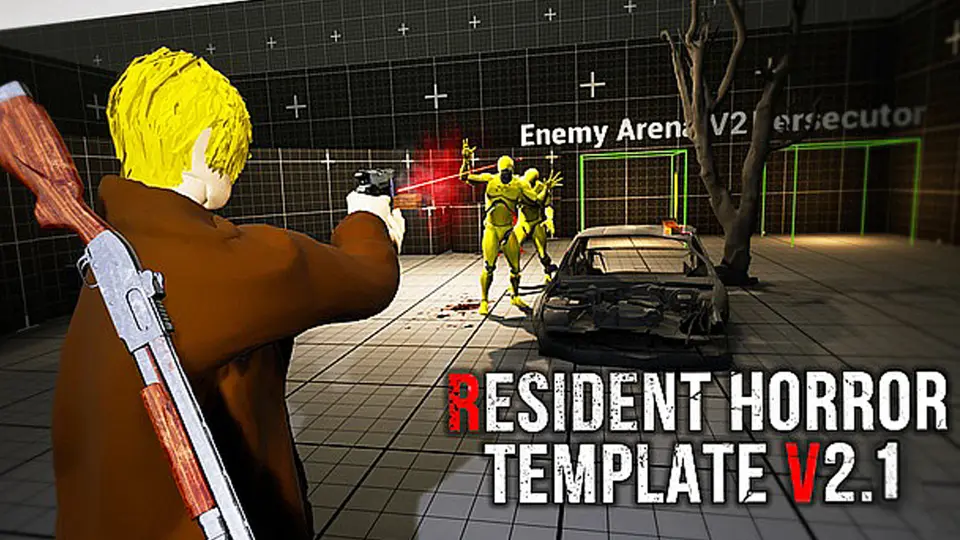
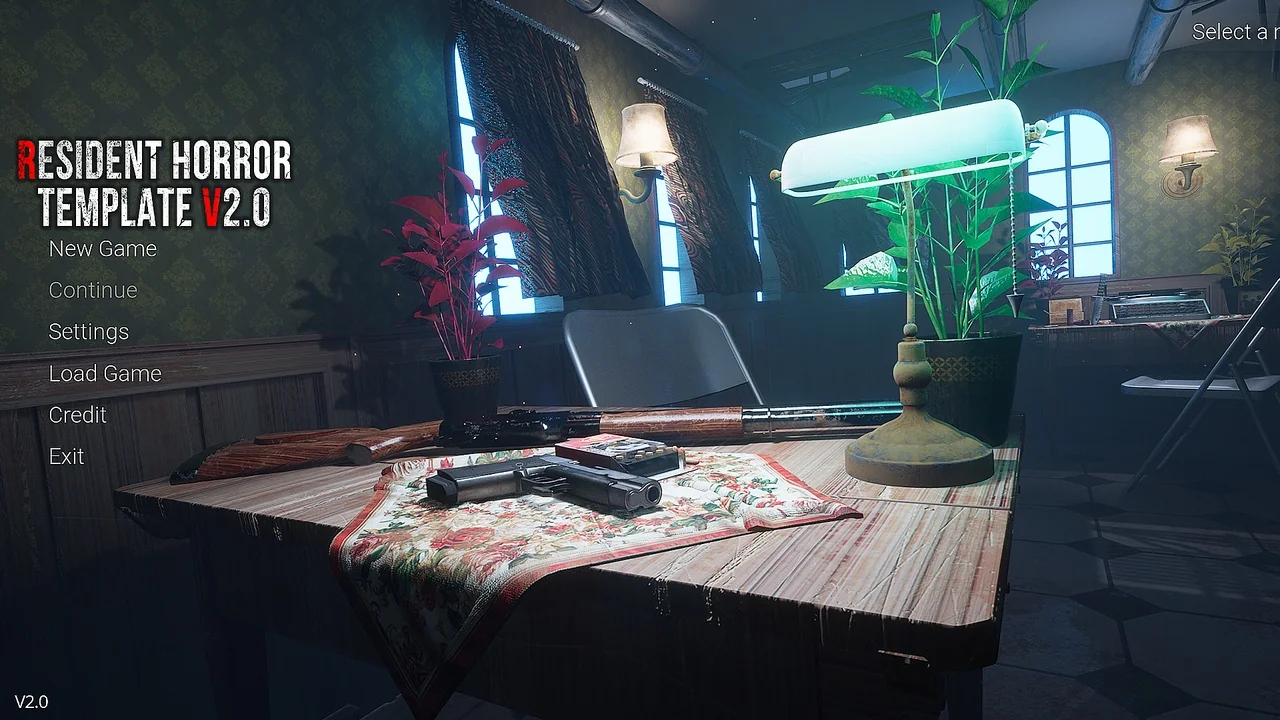
Building an authentic survival horror experience requires tight synchronization between physical space, inventory tension, and deliberate character pacing. Resident Horror V2 functions as a dedicated horror template system built for Unreal Engine, targeting developers assembling post-apocalyptic, atmospheric, and terror-focused titles. Instead of starting from an empty project space, the system includes an example level map to immediately demonstrate how environmental lighting, spatial layout, and player interactions intersect.
The overall framework is engineered to prioritize cinematic presentation and atmospheric storytelling. It allows level designers and gameplay programmers to establish narrative beats without needing to construct basic survival mechanics—such as item handling, save persistence, or physical barricades—from scratch. By focusing on modularity, individual mechanics can be adapted or rearranged depending on whether a scene emphasizes quiet exploration or aggressive enemy encounters.
Locomotion and Combat Under the GASP and ALS Framework
Responsive, grounded character movement serves as the backbone of survival horror, where player vulnerability is directly influenced by weight and maneuvering speed. Resident Horror V2 is built on GASP integrated with ALS (Advanced Locomotion System), utilizing dedicated weapon pose setups and locomotion models to form a flexible movement and combat pipeline. In update 2.1, the template introduces blendspace locomotion alongside updated enemy artificial intelligence, refining how characters shift between idle, walking, and combat states.
Input is mapped natively for keyboard and mouse on Windows development setups. The character framework supports a dedicated vault system, allowing players to scale obstacles during traversal or evasion. This physical traversal model extends beyond the player: the companion AI can also navigate through the same vaulting mechanics, preventing followers from getting stranded when navigating fractured or multi-tiered level geometry.
Enemy AI, Companions, and Environmental Awareness
Hostile encounters and companion behavior rely on interconnected logic rather than isolated trigger events. The template includes an advanced AI enemy system tailored for tension-heavy encounters, supplemented by specific behavioral routines:
AI Companion System: Delivers an autonomous partner capable of navigating complex level geometry alongside the player, including synchronized vault interactions.
AI Closet System: Introduces hiding and concealment dynamics, enabling gameplay where players can break line of sight and take cover inside furniture or utility spaces to evade threats.
Footstep Detection System: Provides sensory awareness for entities, linking character movement velocity and footstep impacts directly to enemy alertness.
Crow System: Incorporates environmental animal reactivity that can startle, take flight, or trigger auditory cues that complicate stealth navigation.
Finisher System: Bridges combat states and cinematic animations when neutralizing incapacitated or vulnerable opponents.
Economy, Storage, and Weapon Upgrade Mechanics
Resource scarcity defines classical horror, and Resident Horror V2 mirrors this through balanced management loops. The template supplies an advanced inventory system linked directly to an advanced save system, preserving item arrangements, progress markers, and state data across sessions. Players manage defensive vitality through an integrated health system, while environmental discovery is driven by a broken box system that conceals loot behind destructible props.
Combat tools rely on the advanced weapon system, complete with integrated laser aiming functionality and an upgrade weapon system for modifying firearm attributes. Offense extends to an explosive system for area-of-effect hazards and tactical clearing. Progression and resource cycling are reinforced by a coin system tied directly to an advanced merchant system, giving players the ability to trade accumulated currency for vital ammunition, medical supplies, or offensive upgrades throughout their journey.
Inspection Systems, Cinematics, and MetaSound Audio Integration
Immersion in Resident Horror V2 is heavily anchored in close-up environmental observation. The template incorporates multiple dedicated inspection layers: the fast inspect system V1, a pickup fast inspect system, and a comprehensive inspection system V2. These mechanics enable players to rotate, examine, and read critical narrative documents or puzzle pieces without leaving the flow of play. Navigational clarity is further supported by a local name screen system, which communicates room names or location markers as new chambers are entered.
Cinematic transitions are executed via the Acto cutscene module, which provides seamless shifts between live gameplay control and scripted sequence framing. To establish visual dread, level designers can deploy a built-in light flicker system, paired with physical door systems and an operable flashlight system to direct player vision through pitch-black corridors.
Audio design leverages native MetaSound architecture. The template pairs this modern audio framework with a music manager system and a spawn sound ambient system. These modules trigger procedural sound beds, environmental creaks, and dynamic musical shifts based on player location, escalating tension during pursuit phases and dropping to minimalist room tones during quiet investigation.
Technical Profile and Project Fit
Resident Horror V2 is a single-player template designed strictly for local gameplay; network replication is not included. It is geared toward developers who possess prior foundational knowledge of Unreal Engine, as fully configuring and extending the GASP, ALS, and MetaSound connections requires an understanding of Blueprints, animation state machines, and audio graphs.
Support resources packaged alongside the template include technical documentation in English and Portuguese, a playable demo, template video tutorials, and dedicated MetaSound reference documentation. The system is suited for solo developers or small teams targeting Windows-based survival horror, post-apocalyptic shooters, or atmospheric horror narratives that demand interconnected inventory, stealth, and character combat systems right out of the box.
 Shooter
 Shooter
 Shooter
 Shooter