"26aaab8a5d5ed4fc"{"id":"1001006","slug":"ork-rogue-2","title":"Ork Rogue","category":"Creatures \u0026 Monsters","engine":"4.26+,5.0+","assetVersion":"","engineVersion":"Engine Version: 4.26+,5.0+","tag":"Creatures","accent":"blue","visual":"character","summary":"Ork Rogue is a ready-made lowpoly orc with a blueprint-connected weapon, 4096 to 512 UV sets, and poly counts suited for game projects.","platform":"Unreal Engine","publishedAt":"2026-08-22T11:04:26.209Z","updatedAt":"2026-08-22T11:04:26.209Z","sourceNotes":[],"fileContents":[],"compatibility":["Unreal Engine","Engine Version: 4.26+,5.0+"],"featuredImage":{"alt":"Ork Rogue","src":"/wp-content/uploads/published/2026/08/e1b3f07042d3-d3ef89db-f3ec-4c73-bddf-edba852e9eb8-e4e0eed622.webp"},"hasDownloadLink":true,"downloads":0,"terms":[{"taxonomy":"category","slug":"creatures-and-monsters","name":"Creatures \u0026 Monsters"}],"galleryImages":[{"src":"/wp-content/uploads/published/2026/08/0ab3510f877d-28476b36-a17f-40e6-b47c-3ef281552975-276988fe5a.webp","alt":"Ork Rogue"},{"src":"/wp-content/uploads/published/2026/08/c73b896fa6fc-9295bd62-3d0c-4ad6-b934-e7c8a0e19ec5-1c948d7bde.webp","alt":"Ork Rogue"},{"src":"/wp-content/uploads/published/2026/08/5cc1180796b3-5071f8a8-1735-4a63-88b4-80c7c81da73d-6b3c6f942a.webp","alt":"Ork Rogue"},{"src":"/wp-content/uploads/published/2026/08/a74686bfcdd1-82988809-67e0-4fa0-8738-0f527038e3a2-baeb7ead9f.webp","alt":"Ork Rogue"},{"src":"/wp-content/uploads/published/2026/08/265b428b82c7-c8947e61-6463-4b3a-b031-522cd9aa3206-f7dd73de84.webp","alt":"Ork Rogue"},{"src":"/wp-content/uploads/published/2026/08/a9f20685cfec-fcfb498f-7138-4ec8-beef-103496df7037-5d9ef5abc0.webp","alt":"Ork Rogue"},{"src":"/wp-content/uploads/published/2026/08/101a9001b122-c828d020-9718-48a0-902a-8f8aeb0ef11a-f85ad01d8f.webp","alt":"Ork Rogue"},{"src":"/wp-content/uploads/published/2026/08/2d2403c109f3-d2e00699-2af4-4f9c-8508-05925f4aa8d9-0074bdc251.webp","alt":"Ork Rogue"},{"src":"/wp-content/uploads/published/2026/08/bccd3d925647-d3872fb6-b791-4796-8448-12ae7d400af1-6fbb35c37b.webp","alt":"Ork Rogue"},{"src":"/wp-content/uploads/published/2026/08/c4db0fe128c8-157f5901-f975-476e-a54f-218fa22f34aa-f792f25f62.webp","alt":"Ork Rogue"}],"accessPanel":{"kind":"resource","title":"Download this resource","eyebrow":"Free Download","message":"Log in or create a free account to start your download.","fileName":"Content.7z","safetyNote":"Resources are manually reviewed before listing to improve quality and reduce obvious risks.","actionLabel":"Download Free","resourceType":"Resource archive"},"contentHtml":"\u003cp\u003eOrk Rogue is a completely ready-made model for any game project. It comes rigged, with a fantasy-medieval look that leans realistic and a touch of horror in its presentation. The orc's weapon is not sculpted into the body as one piece; it is a separate mesh, attached through a blueprint. That makes it simple to add the character to a scene and have the weapon follow the hand as expected.\u003c/p\u003e\u003ch2\u003eA Ready-Made Orc for Any Game\u003c/h2\u003e\u003cp\u003eThe tag set attached to Ork Rogue tells you exactly where it belongs in a production: Lowpoly, Fantasy, Medieval, Realistic, Orc, Rigged, Horror, Character. Each tag has a practical meaning. Lowpoly means the triangle count is kept down for game performance. Fantasy and Medieval set the visual era. Realistic and Horror shape the materials and mood. Rigged means skeletons and animation controls are already present, which cuts down the amount of rigging work in the engine. Orc and Character define what the asset is. Together, these tags describe a unit that can be dropped into a game scene without needing a major art pass. The model is intended to look good in any game, so it is not locked into a single genre or camera style.\u003c/p\u003e\u003ch2\u003eWeapon as a Separate Mesh, Connected by Blueprint\u003c/h2\u003e\u003cp\u003eFrom a setup perspective, the most important structural detail is the weapon. It has its own mesh, separate from the character, and the two are connected through a blueprint. This means the weapon is not permanently merged into the orc's hand. Instead, the blueprint controls the attachment point. This allows the weapon to be modified or replaced without touching the character mesh. The weapon stats are notably light as well: 714 vertices and 1,218 triangles. That keeps the extra load on the scene minimal while still giving the orc a distinct weapon profile.\u003c/p\u003e\u003ch2\u003eUV Sets from 4096 to 512\u003c/h2\u003e\u003cp\u003eTexture coverage on Ork Rogue is structured in a way that gives you control over quality and memory. The complete set, labeled \"With Weapon,\" uses a 4096x4096 UV layout and can be scaled down to 1024x1024. Individual parts follow a similar pattern:\u003c/p\u003e\u003cul\u003e\u003cli\u003eBody: 4096x4096\u003c/li\u003e\u003cli\u003eTop: 4096x4096\u003c/li\u003e\u003cli\u003eBot: 4096x4096\u003c/li\u003e\u003cli\u003eWeapon: 4096x4096\u003c/li\u003e\u003cli\u003eHead: 4096x4096\u003c/li\u003e\u003cli\u003eBeard: 1024x1024\u003c/li\u003e\u003cli\u003eEye: 512x512\u003c/li\u003e\u003c/ul\u003e\u003cp\u003eThis tiered approach means the face and head can have full detail, while the beard and eye use smaller maps. The body, top, and bottom are each at 4096, which keeps the main costume crisp. Scaling options become useful when you need to fit the orc into a tight memory budget or want to keep a uniform texture density across multiple characters.\u003c/p\u003e\u003ch2\u003eVertex and Triangle Counts in the Lowpoly Range\u003c/h2\u003e\u003cp\u003eCounting polygons is a standard first step when bringing any character into a real-time project. Ork Rogue is composed of a character model at 42,634 vertices and 65,665 triangles, plus a weapon that stays small at 714 vertices and 1,218 triangles. For a lowpoly asset, these numbers are expected. The character retains enough geometry to read as a distinct orc silhouette, while the weapon's low count keeps it inexpensive to render. The split between the character and the weapon also makes it easy to budget the overall asset in a scene.\u003c/p\u003e\u003ch2\u003eTwo-Sided Shader for Polygon Display\u003c/h2\u003e\u003cp\u003eThe note about a two-sided shader is the kind of detail that prevents a mid-production headache. The model is set up with a recommendation to use a shader with a two-sided display of polygons. That means some of the surfaces may be authored with single-sided geometry, where the engine will not render the back face. If you forget to set the material to two-sided, thin parts can disappear when the camera goes around them. Applying a two-sided shader, or checking the two-sided flag on the material, keeps the orc solid from every angle. This is a small setup step, but it avoids visible holes in the final game.\u003c/p\u003e\u003ch2\u003eCompatibility with Undead Knight\u003c/h2\u003e\u003cp\u003eOrk Rogue also carries a compatibility note for Undead Knight. That places it in a specific production context. Instead of being an isolated character, it can join a lineup that includes Undead Knight. For teams that already own or use Undead Knight, this saves time during integration because the two assets are expected to work together. It also suggests the orc is part of a broader game-ready set, which is useful when populating a medieval or fantasy world. That makes it a straightforward addition to a character set when both assets are in use.\u003c/p\u003e\n\n\u003ch2\u003eExplore Similar Assets\u003c/h2\u003e\n\u003cul\u003e\n\u003cli\u003e\u003ca href=\"https://3dcghub.com/ork-rogue/\" title=\"Ork Rogue\"\u003eOrk Rogue\u003c/a\u003e\u003c/li\u003e\n\u003cli\u003e\u003ca href=\"https://3dcghub.com/allosaurus-dinosaur-character-rig-and-animations/\" title=\"Allosaurus Dinosaur Character Rig and Animations\"\u003eAllosaurus Dinosaur Character Rig and Animations\u003c/a\u003e\u003c/li\u003e\n\u003cli\u003e\u003ca href=\"https://3dcghub.com/tyrannosaurus-rex/\" title=\"Tyrannosaurus Rex\"\u003eTyrannosaurus Rex\u003c/a\u003e\u003c/li\u003e\n\u003cli\u003e\u003ca href=\"https://3dcghub.com/orc-warrior/\" title=\"Orc Warrior\"\u003eOrc Warrior\u003c/a\u003e\u003c/li\u003e\n\u003cli\u003e\u003ca href=\"https://3dcghub.com/monsters-wraith/\" title=\"Monsters - Wraith\"\u003eMonsters - Wraith\u003c/a\u003e\u003c/li\u003e\n\u003c/ul\u003e","contentTextLength":4452,"navigation":{"current":512,"total":3400,"previous":{"id":"1001007","slug":"pipe-system-pack","title":"Pipe System Pack","category":"Industrial","platform":"Unreal Engine","updatedAt":"2026-08-22T11:07:46.440Z"},"next":{"id":"1001005","slug":"orc-warrior","title":"Orc Warrior","category":"Creatures \u0026 Monsters","platform":"Unreal Engine","updatedAt":"2026-08-22T10:59:41.214Z"}},"relatedResources":[{"id":"1000086","slug":"ork-rogue","title":"Ork Rogue","category":"Creatures \u0026 Monsters","engine":"Engine Version: 4.26+,5.0+","assetVersion":"Engine Version: 4.26+,5.0+","engineVersion":"","tag":"Creatures","accent":"blue","visual":"character","summary":"Ork Rogue is a ready-made rigged fantasy character with a separate weapon mesh, blueprint connection, detailed UV sets, and stated mesh counts.","platform":"Unreal Engine","publishedAt":"2026-06-05T16:40:06.485Z","updatedAt":"2026-06-05T16:40:06.485Z","sourceNotes":[],"fileContents":[],"compatibility":["Unreal Engine","Engine Version: 4.26+,5.0+"],"featuredImage":{"alt":"Ork Rogue","src":"/wp-content/uploads/published/2026/06/f4a8f4e6cd0d-82beb052-39b1-42c2-a7f4-e33b267d5687-dc7de6eabd.webp"},"hasDownloadLink":true,"downloads":1},{"id":"1001005","slug":"orc-warrior","title":"Orc Warrior","category":"Creatures \u0026 Monsters","engine":"4.26+,5.0+","assetVersion":"","engineVersion":"Engine Version: 4.26+,5.0+","tag":"Creatures","accent":"blue","visual":"character","summary":"A rigged low-poly orc with a weapon, 11 animations, a control rig, plus 4096x4096 Color, Normal, and AORM textures for real-time fantasy work.","platform":"Unreal Engine","publishedAt":"2026-08-22T10:59:41.214Z","updatedAt":"2026-08-22T10:59:41.214Z","sourceNotes":[],"fileContents":[],"compatibility":["Unreal Engine","Engine Version: 4.26+,5.0+"],"featuredImage":{"alt":"Orc Warrior","src":"/wp-content/uploads/published/2026/08/07a81bcdb165-a721db55-38ea-4d04-a1d7-b62b48c726b0-dc71636e7b.webp"},"hasDownloadLink":true,"downloads":2},{"id":"1000937","slug":"allosaurus-dinosaur-character-rig-and-animations","title":"Allosaurus Dinosaur Character Rig and Animations","category":"Creatures \u0026 Monsters","engine":"4.26+,5.0+","assetVersion":"","engineVersion":"Engine Version: 4.26+,5.0+","tag":"Creatures","accent":"blue","visual":"animation","summary":"Allosaurus rig with 15 animations: idles, root-motion 360-degree turns, 200cm/sec walks, 500cm/sec run, roar, attack, hits, death. Built for VR.","platform":"Unreal Engine","publishedAt":"2026-08-10T02:52:27.202Z","updatedAt":"2026-08-10T02:52:27.202Z","sourceNotes":[],"fileContents":[],"compatibility":["Unreal Engine","Engine Version: 4.26+,5.0+"],"featuredImage":{"alt":"Allosaurus Dinosaur Character Rig and Animations","src":"/wp-content/uploads/published/2026/08/4a17638d37c8-d30086b0-95fc-484e-bb27-6f8c77633eb3-20dee40414.webp"},"hasDownloadLink":true,"downloads":2}]}
Creatures
Ork Rogue
Ork Rogue is a ready-made lowpoly orc with a blueprint-connected weapon, 4096 to 512 UV sets, and poly counts suited for game projects.
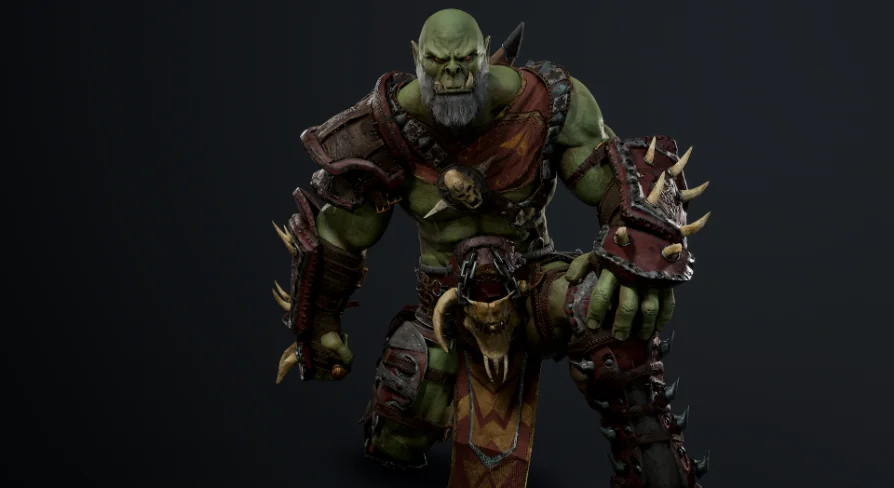
Ork Rogue is a completely ready-made model for any game project. It comes rigged, with a fantasy-medieval look that leans realistic and a touch of horror in its presentation. The orc's weapon is not sculpted into the body as one piece; it is a separate mesh, attached through a blueprint. That makes it simple to add the character to a scene and have the weapon follow the hand as expected.
A Ready-Made Orc for Any Game
The tag set attached to Ork Rogue tells you exactly where it belongs in a production: Lowpoly, Fantasy, Medieval, Realistic, Orc, Rigged, Horror, Character. Each tag has a practical meaning. Lowpoly means the triangle count is kept down for game performance. Fantasy and Medieval set the visual era. Realistic and Horror shape the materials and mood. Rigged means skeletons and animation controls are already present, which cuts down the amount of rigging work in the engine. Orc and Character define what the asset is. Together, these tags describe a unit that can be dropped into a game scene without needing a major art pass. The model is intended to look good in any game, so it is not locked into a single genre or camera style.
Weapon as a Separate Mesh, Connected by Blueprint
From a setup perspective, the most important structural detail is the weapon. It has its own mesh, separate from the character, and the two are connected through a blueprint. This means the weapon is not permanently merged into the orc's hand. Instead, the blueprint controls the attachment point. This allows the weapon to be modified or replaced without touching the character mesh. The weapon stats are notably light as well: 714 vertices and 1,218 triangles. That keeps the extra load on the scene minimal while still giving the orc a distinct weapon profile.
UV Sets from 4096 to 512
Texture coverage on Ork Rogue is structured in a way that gives you control over quality and memory. The complete set, labeled "With Weapon," uses a 4096x4096 UV layout and can be scaled down to 1024x1024. Individual parts follow a similar pattern:
Body: 4096x4096
Top: 4096x4096
Bot: 4096x4096
Weapon: 4096x4096
Head: 4096x4096
Beard: 1024x1024
Eye: 512x512
This tiered approach means the face and head can have full detail, while the beard and eye use smaller maps. The body, top, and bottom are each at 4096, which keeps the main costume crisp. Scaling options become useful when you need to fit the orc into a tight memory budget or want to keep a uniform texture density across multiple characters.
Vertex and Triangle Counts in the Lowpoly Range
Counting polygons is a standard first step when bringing any character into a real-time project. Ork Rogue is composed of a character model at 42,634 vertices and 65,665 triangles, plus a weapon that stays small at 714 vertices and 1,218 triangles. For a lowpoly asset, these numbers are expected. The character retains enough geometry to read as a distinct orc silhouette, while the weapon's low count keeps it inexpensive to render. The split between the character and the weapon also makes it easy to budget the overall asset in a scene.
Two-Sided Shader for Polygon Display
The note about a two-sided shader is the kind of detail that prevents a mid-production headache. The model is set up with a recommendation to use a shader with a two-sided display of polygons. That means some of the surfaces may be authored with single-sided geometry, where the engine will not render the back face. If you forget to set the material to two-sided, thin parts can disappear when the camera goes around them. Applying a two-sided shader, or checking the two-sided flag on the material, keeps the orc solid from every angle. This is a small setup step, but it avoids visible holes in the final game.
Compatibility with Undead Knight
Ork Rogue also carries a compatibility note for Undead Knight. That places it in a specific production context. Instead of being an isolated character, it can join a lineup that includes Undead Knight. For teams that already own or use Undead Knight, this saves time during integration because the two assets are expected to work together. It also suggests the orc is part of a broader game-ready set, which is useful when populating a medieval or fantasy world. That makes it a straightforward addition to a character set when both assets are in use.
 Creatures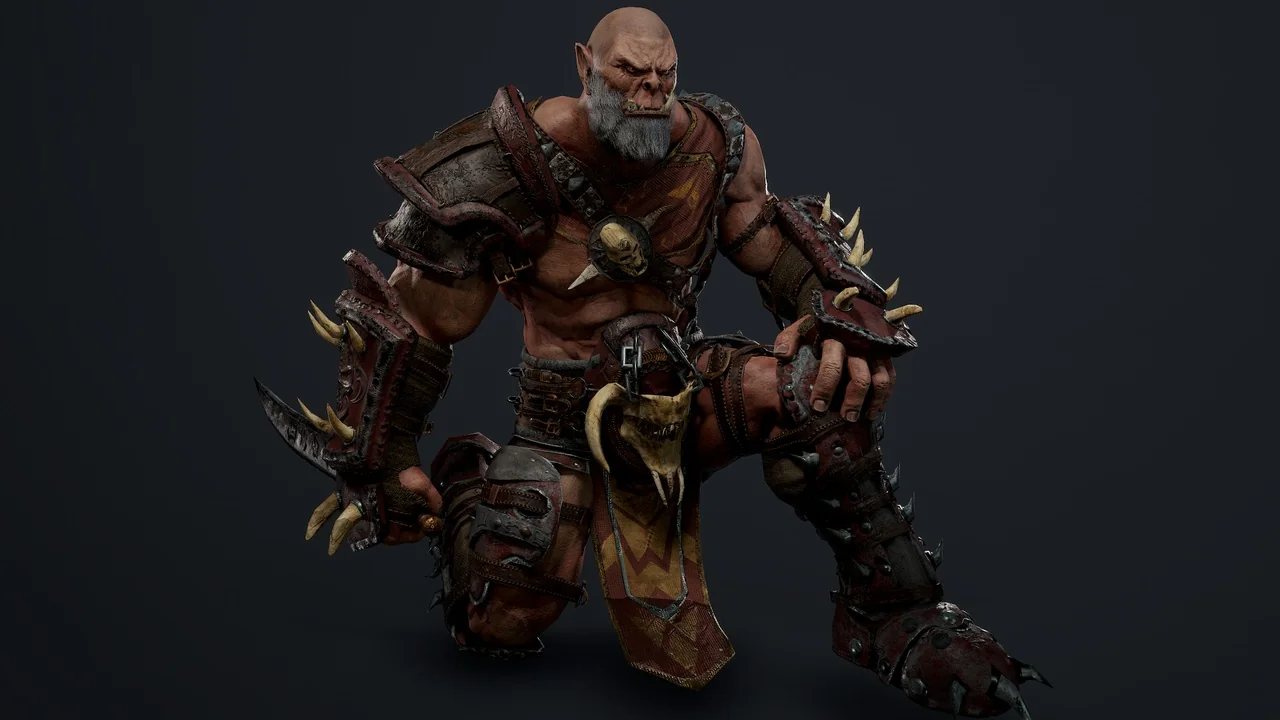
 Creatures
 Creatures
 Creatures