"95fdaf16012263fa"{"id":"1002336","slug":"nuclear-bomb-shelter","title":"Nuclear Bomb Shelter","category":"Apocalyptic / Post-apocalyptic","engine":"4.26+,5.0+","assetVersion":"","engineVersion":"Engine Version: 4.26+,5.0+","tag":"Apocalyptic","accent":"blue","visual":"mech","summary":"Nuclear Bomb Shelter is a complete modular game level with many interactive objects, including openable doors, drawers, and cases, for VR, AAA games, and apps.","platform":"Unreal Engine","indexPolicy":"index","publishedAt":"2026-11-06T06:41:39.157Z","updatedAt":"2026-11-06T06:41:39.157Z","sourceNotes":[],"fileContents":[],"compatibility":["Unreal Engine","Engine Version: 4.26+,5.0+"],"featuredImage":{"alt":"Nuclear Bomb Shelter","src":"/wp-content/uploads/published/2026/11/9b653cbe3cf3-44111f16-89bf-42f7-bcb5-faaf9b5eb7d8-f25607bc7d.webp"},"hasDownloadLink":true,"downloads":0,"terms":[{"taxonomy":"category","slug":"apocalyptic-post-apocalyptic","name":"Apocalyptic / Post-apocalyptic"}],"galleryImages":[{"src":"/wp-content/uploads/published/2026/11/b88d3bf8b7a7-ec247816-11ea-4420-bd96-c1cf64c2b717-701c35d55d.webp","alt":"Nuclear Bomb Shelter"},{"src":"/wp-content/uploads/published/2026/11/5a4934709495-656bca99-1a13-469e-9d4a-c199dc1ec3e9-68cc054b64.webp","alt":"Nuclear Bomb Shelter"},{"src":"/wp-content/uploads/published/2026/11/2a60dca62d35-fc330061-ecbe-4624-8243-d142afaafc05-6d5ef8041f.webp","alt":"Nuclear Bomb Shelter"},{"src":"/wp-content/uploads/published/2026/11/bec5daf02342-561bd4e2-4166-446d-b872-3175b9f9a121-558844a52b.webp","alt":"Nuclear Bomb Shelter"},{"src":"/wp-content/uploads/published/2026/11/b9a44fc57c9f-dceb1738-e503-4990-9a02-27297bdbe57b-6bb402aceb.webp","alt":"Nuclear Bomb Shelter"},{"src":"/wp-content/uploads/published/2026/11/f639864a318b-42e283c2-4010-4d78-bfd6-2f842dae4de7-a0e826d1f1.webp","alt":"Nuclear Bomb Shelter"},{"src":"/wp-content/uploads/published/2026/11/ba9a5dcd2707-28e01f35-8497-4d55-8429-d56d52452738-7545f52fa5.webp","alt":"Nuclear Bomb Shelter"},{"src":"/wp-content/uploads/published/2026/11/069ae1b9c748-36b184a7-1344-4901-91bf-592120ceab94-ee6b2133a7.webp","alt":"Nuclear Bomb Shelter"},{"src":"/wp-content/uploads/published/2026/11/fd438018b766-1e8eea96-edef-4cf4-9a1e-9408ed96c3d9-9075a732b5.webp","alt":"Nuclear Bomb Shelter"}],"accessPanel":{"kind":"resource","title":"Get this resource","eyebrow":"Free resource","message":"3DCGHUB is the service provider for this listing. Access is fulfilled through the official publisher channel.","fileName":"Content.7z","safetyNote":"Resources are manually reviewed before listing to improve quality and reduce obvious risks.","actionLabel":"Get this resource","resourceType":"Resource archive","versions":[]},"contentHtml":"\u003cp\u003eSetting up Nuclear Bomb Shelter starts with its modular structure: the complete level is assembled from modular parts, then populated with the many different objects that are ready for interaction. That order matters for a team planning a bunker scene, because the environment and the interactive objects are both part of the level.\u003c/p\u003e \u003ch2\u003eModular assembly and the complete level\u003c/h2\u003e\n\u003cp\u003eNuclear Bomb Shelter is a complete modular level for a game. “Complete” matters: the level can serve as a full environment not just one prop or a loose collection of walls. The modular side matters just as much. A modular level is built from pieces, which gives level designers a way to work through the bunker as an assembly of parts and then bring those parts together into the finished space.\u003c/p\u003e\n\u003cp\u003eThat makes the initial setup less about placing one sealed scene and more about understanding the level’s component structure. The modular approach is the organizing principle behind the whole level, and it is the first thing a level designer, environment artist, or technical artist needs to account for when bringing Nuclear Bomb Shelter into a project. The level is tagged Modular and Level, which reinforces the two ideas: it is a level, and it is modular.\u003c/p\u003e\n\u003cp\u003eThe environment carries a specific setting rather than a neutral test space. Tags such as Bunker, Apocalyptic, Post, and Horror set the tone. A bed is also tagged, which places domestic survival furniture inside the shelter rather than leaving the space as pure industrial geometry. Those tags do not replace the actual layout, but they give the level a clear identity: a bunker built for a post-apocalyptic or horror-facing scene.\u003c/p\u003e \u003ch2\u003eOpenable doors, drawers, and cases as interaction points\u003c/h2\u003e\n\u003cp\u003eThe most concrete feature in Nuclear Bomb Shelter is the set of objects ready for interactions. Doors, drawers, and cases are named as openable. That detail separates the environment from a static set: the level includes objects that are already prepared to be opened, handled, or triggered within an interactive project. The object set extends beyond those three named examples.\u003c/p\u003e\n\u003cp\u003eFor a game level, those objects create points of contact between the player and the environment. A door can become a transition, a drawer can hold something, and a case can act as a container. The important point is that the level already accounts for this kind of object-level interaction. A team does not have to treat every door, drawer, and case as a static prop first. The interaction-ready objects are part of the level’s identity, and they are the reason it can support more than a walkthrough.\u003c/p\u003e\n\u003cp\u003eVR is a direct fit for Nuclear Bomb Shelter, and the openable objects are the clearest reason why. In VR, an openable door or drawer is not just background detail; it is something the player can approach and interact with. The level gives a VR project a bunker environment with interaction points built into the scene, rather than a purely visual shell.\u003c/p\u003e \u003ch2\u003eVR, AAA games, and interactive apps\u003c/h2\u003e\n\u003cp\u003eThe fit for Nuclear Bomb Shelter spans VR, any kind of AAA game, and interactive apps. Those are different production contexts, but they share a need for an environment that can support interaction without losing its sense of place. A VR experience needs objects that respond to the player. A AAA game may need a bunker level that can carry narrative, exploration, or horror atmosphere. An interactive app may need a themed space where objects can be opened and inspected.\u003c/p\u003e\n\u003cp\u003eThe range of AAA game fits is broad, and the level’s tags explain why. Post-apocalyptic and bunker settings appear in shooters, survival games, horror titles, and narrative-driven projects. The horror tag adds a tone that can be pushed toward tension or dread. The Fallout tag gives the level a recognizable reference point within post-apocalyptic fiction. None of those tags lock the level to a single genre, but they make its intended visual and thematic territory clear.\u003c/p\u003e\n\u003cp\u003eInteractive apps are a separate path. A bunker interior with openable doors, drawers, and cases can work as a themed interactive environment outside a traditional game. The level’s modular construction also matters here: an app team can work with the level as a structured environment not just one fixed set. The complete level provides the context, and the interactive objects provide the points of engagement.\u003c/p\u003e \u003ch2\u003eBunker theme, horror undertones, and the bed tag\u003c/h2\u003e\n\u003cp\u003eNuclear Bomb Shelter is not a generic interior. The tags point to a post-apocalyptic bunker with horror elements, and those tags shape how the modular pieces read when assembled. A bunker suggests enclosure, utility, and survival. Apocalyptic and Post suggest a world after a major collapse. Horror suggests that the space can carry fear or unease. The Fallout tag ties those ideas to a well-known post-apocalyptic reference.\u003c/p\u003e\n\u003cp\u003eThe bed tag is a small but useful detail. It indicates that the level includes domestic survival elements, not just doors and cases. A bed inside a bunker changes the scale of the scene: it suggests people living or sheltering there, rather than a purely functional facility. That detail can support storytelling through environment alone. A level designer can use that kind of object to make the bunker feel occupied, abandoned, or recently used.\u003c/p\u003e\n\u003cp\u003eThose thematic tags also help with scene selection. A team looking for a horror bunker, a post-apocalyptic shelter, or a Fallout-adjacent environment has a clear match. The modular level format means the bunker can be approached as a complete space while still being built from parts. The theme is not an afterthought applied to a neutral kit; it is part of how the level is identified.\u003c/p\u003e \u003ch2\u003eArchviz Interior vol.3 compatibility and who benefits\u003c/h2\u003e\n\u003cp\u003eCompatibility with Archviz Interior vol.3 is part of the level’s practical profile. For teams already working with Archviz Interior vol.3, that compatibility reference is the first thing to check when planning how Nuclear Bomb Shelter will fit into an existing interior workflow. It gives the level a known relationship to another interior package rather than leaving compatibility undefined.\u003c/p\u003e\n\u003cp\u003eThe strongest fit is a team that needs a complete modular bunker level with interaction-ready objects. VR developers get openable doors, drawers, and cases in a setting built for immersive exploration. AAA game teams get a post-apocalyptic bunker level with horror and Fallout-adjacent tags. Interactive app developers get a themed environment that can support object interaction. Environment artists and level designers who want to assemble a bunker from modular parts rather than block out every piece also have a direct use case.\u003c/p\u003e\n\u003cp\u003eThe level is less suited to someone who only needs a single prop or a neutral architectural shell. Its value comes from the combination of a complete modular level, a bunker theme, and many different objects prepared for interaction. Those are the details to check against the project: the modular structure, the openable objects, the VR and AAA use cases, the horror and post-apocalyptic tags, and the Archviz Interior vol.3 compatibility reference. For a team building a bunker scene around interaction, Nuclear Bomb Shelter is aimed squarely at that job.\u003c/p\u003e\n\n\u003ch2\u003eExplore Similar Assets\u003c/h2\u003e\n\u003cul\u003e\n\u003cli\u003e\u003ca href=\"https://3dcghub.com/shelter/\" rel=\"noopener noreferrer\"\u003eShelter\u003c/a\u003e\u003c/li\u003e\n\u003cli\u003e\u003ca href=\"https://3dcghub.com/surroundead-survival-game-assets-bundle/\" rel=\"noopener noreferrer\"\u003eSurrounDead - Survival Game Assets (Bundle)\u003c/a\u003e\u003c/li\u003e\n\u003cli\u003e\u003ca href=\"https://3dcghub.com/survivor-s-safe-house/\" rel=\"noopener noreferrer\"\u003eSurvivor\u0026#039;s Safe House\u003c/a\u003e\u003c/li\u003e\n\u003cli\u003e\u003ca href=\"https://3dcghub.com/train-wreck-refuge/\" rel=\"noopener noreferrer\"\u003eTrain Wreck Refuge\u003c/a\u003e\u003c/li\u003e\n\u003cli\u003e\u003ca href=\"https://3dcghub.com/soviet-post-soviet-abandoned-world/\" rel=\"noopener noreferrer\"\u003eSoviet/Post Soviet Abandoned World.\u003c/a\u003e\u003c/li\u003e\n\u003c/ul\u003e","contentTextLength":7354,"navigation":{"current":32,"total":4291,"previous":{"id":"1002337","slug":"open-world-helper","title":"Open World Helper","category":"Automations","platform":"Unreal Engine","updatedAt":"2026-11-06T06:42:47.191Z"},"next":{"id":"1002335","slug":"npc-zombies","title":"NPC Zombies","category":"Characters \u0026 Creatures","platform":"Unreal Engine","updatedAt":"2026-11-06T06:39:53.860Z"}},"relatedResources":[{"id":"6922","slug":"shelter","title":"Shelter","category":"Apocalyptic / Post-apocalyptic","engine":"5.4+","assetVersion":"Engine version: 5.4+","engineVersion":"5.4","tag":"Apocalyptic","accent":"blue","visual":"city","summary":"The Shelter Environment Pack provides a high-quality collection of assets for Unreal Engine developers. It is perfect for creating realistic underground bunkers or survival zones in post-apocalyptic settings.","platform":"Unreal Engine","indexPolicy":"index","publishedAt":"2026-02-20T16:08:22.000Z","updatedAt":"2026-04-19T15:56:05.000Z","sourceNotes":[],"fileContents":[],"compatibility":["Unreal Engine","Engine version: 5.4+"],"featuredImage":{"alt":"Shelter","src":"https://3dcghub.com/wp-content/uploads/2026/02/982c108d-7514-4449-a708-9340b2a1f2ee.webp"},"hasDownloadLink":true,"downloads":1},{"id":"1001489","slug":"surroundead-survival-game-assets-bundle","title":"SurrounDead - Survival Game Assets (Bundle)","category":"Apocalyptic / Post-apocalyptic","engine":"4.21+,5.0+","assetVersion":"","engineVersion":"Engine Version: 4.21+,5.0+","tag":"Apocalyptic","accent":"blue","visual":"mech","summary":"Explore the SurrounDead bundle featuring over 1500 modular stylized assets, 570 handpainted diffuse textures, and Blueprints for Unreal Engine survival games.","platform":"Unreal Engine","indexPolicy":"index","publishedAt":"2026-10-08T10:04:09.253Z","updatedAt":"2026-10-08T10:04:09.253Z","sourceNotes":[],"fileContents":[],"compatibility":["Unreal Engine","Engine Version: 4.21+,5.0+"],"featuredImage":{"alt":"SurrounDead - Survival Game Assets (Bundle)","src":"/wp-content/uploads/published/2026/10/12e47d0b93c1-2a14e76d-be60-4525-bb61-6612d88c2d6e-68763433b5.webp"},"hasDownloadLink":true,"downloads":3},{"id":"1001765","slug":"survivor-s-safe-house","title":"Survivor's Safe House","category":"Apocalyptic / Post-apocalyptic","engine":"4.22+,5.0+","assetVersion":"","engineVersion":"Engine Version: 4.22+,5.0+","tag":"Apocalyptic","accent":"blue","visual":"mech","summary":"An in-depth look at Survivor's Safe House in Unreal Engine, exploring its 167 modular meshes, master materials, channel packed textures, and scene setup.","platform":"Unreal Engine","indexPolicy":"index","publishedAt":"2026-10-20T03:10:21.705Z","updatedAt":"2026-10-20T03:10:21.705Z","sourceNotes":[],"fileContents":[],"compatibility":["Unreal Engine","Engine Version: 4.22+,5.0+"],"featuredImage":{"alt":"Survivor's Safe House","src":"/wp-content/uploads/published/2026/10/ccd114180bc6-e974da61-62a5-4a94-8a91-1029fa12de74-866d35023a.webp"},"hasDownloadLink":true,"downloads":1}]}
Apocalyptic
Nuclear Bomb Shelter
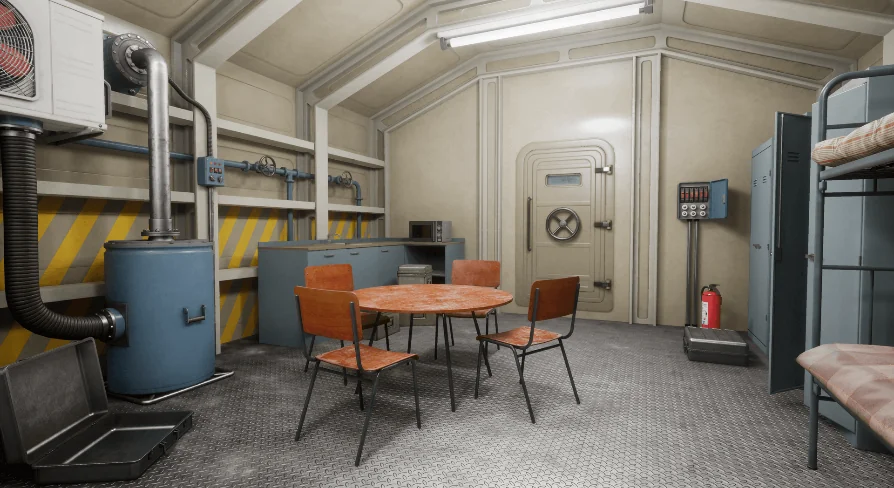
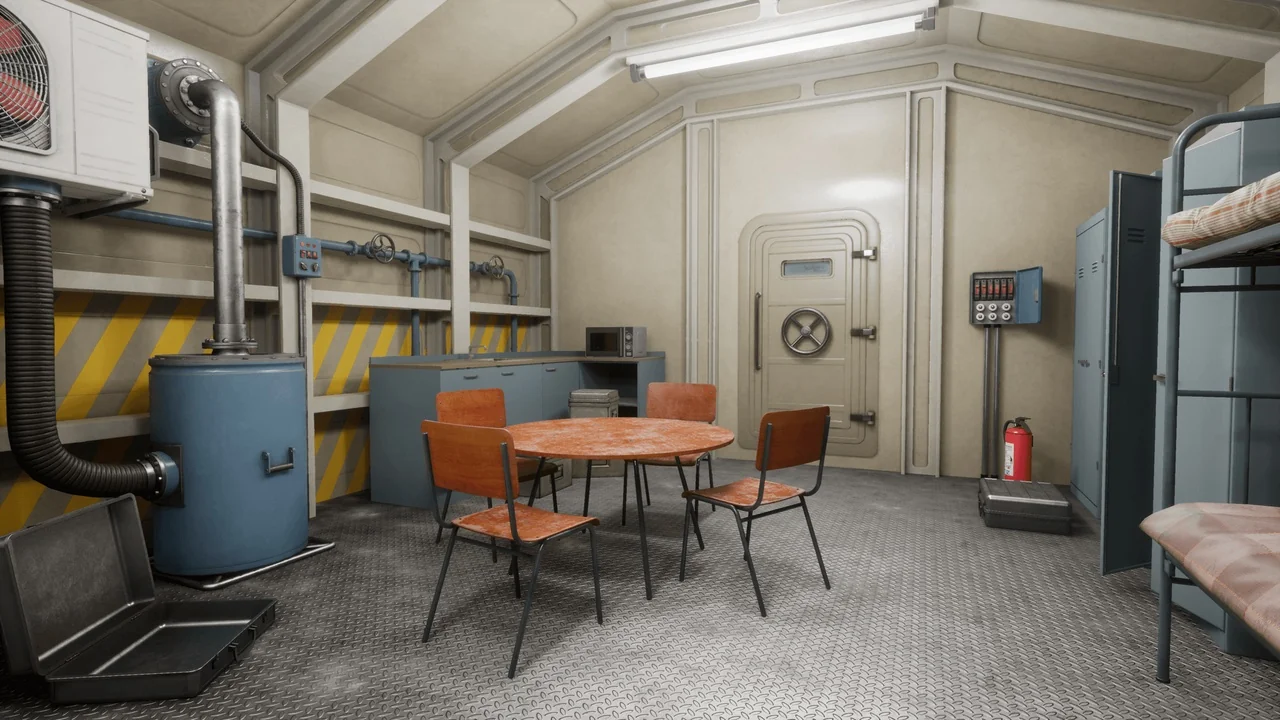
Nuclear Bomb Shelter is a complete modular game level with many interactive objects, including openable doors, drawers, and cases, for VR, AAA games, and apps.
Setting up Nuclear Bomb Shelter starts with its modular structure: the complete level is assembled from modular parts, then populated with the many different objects that are ready for interaction. That order matters for a team planning a bunker scene, because the environment and the interactive objects are both part of the level.
Modular assembly and the complete level
Nuclear Bomb Shelter is a complete modular level for a game. “Complete” matters: the level can serve as a full environment not just one prop or a loose collection of walls. The modular side matters just as much. A modular level is built from pieces, which gives level designers a way to work through the bunker as an assembly of parts and then bring those parts together into the finished space.
That makes the initial setup less about placing one sealed scene and more about understanding the level’s component structure. The modular approach is the organizing principle behind the whole level, and it is the first thing a level designer, environment artist, or technical artist needs to account for when bringing Nuclear Bomb Shelter into a project. The level is tagged Modular and Level, which reinforces the two ideas: it is a level, and it is modular.
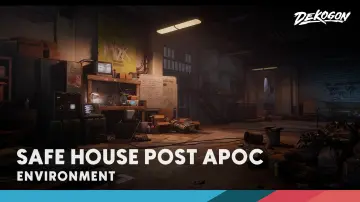
The environment carries a specific setting rather than a neutral test space. Tags such as Bunker, Apocalyptic, Post, and Horror set the tone. A bed is also tagged, which places domestic survival furniture inside the shelter rather than leaving the space as pure industrial geometry. Those tags do not replace the actual layout, but they give the level a clear identity: a bunker built for a post-apocalyptic or horror-facing scene.
Openable doors, drawers, and cases as interaction points
The most concrete feature in Nuclear Bomb Shelter is the set of objects ready for interactions. Doors, drawers, and cases are named as openable. That detail separates the environment from a static set: the level includes objects that are already prepared to be opened, handled, or triggered within an interactive project. The object set extends beyond those three named examples.
For a game level, those objects create points of contact between the player and the environment. A door can become a transition, a drawer can hold something, and a case can act as a container. The important point is that the level already accounts for this kind of object-level interaction. A team does not have to treat every door, drawer, and case as a static prop first. The interaction-ready objects are part of the level’s identity, and they are the reason it can support more than a walkthrough.
VR is a direct fit for Nuclear Bomb Shelter, and the openable objects are the clearest reason why. In VR, an openable door or drawer is not just background detail; it is something the player can approach and interact with. The level gives a VR project a bunker environment with interaction points built into the scene, rather than a purely visual shell.
VR, AAA games, and interactive apps
The fit for Nuclear Bomb Shelter spans VR, any kind of AAA game, and interactive apps. Those are different production contexts, but they share a need for an environment that can support interaction without losing its sense of place. A VR experience needs objects that respond to the player. A AAA game may need a bunker level that can carry narrative, exploration, or horror atmosphere. An interactive app may need a themed space where objects can be opened and inspected.
The range of AAA game fits is broad, and the level’s tags explain why. Post-apocalyptic and bunker settings appear in shooters, survival games, horror titles, and narrative-driven projects. The horror tag adds a tone that can be pushed toward tension or dread. The Fallout tag gives the level a recognizable reference point within post-apocalyptic fiction. None of those tags lock the level to a single genre, but they make its intended visual and thematic territory clear.
Interactive apps are a separate path. A bunker interior with openable doors, drawers, and cases can work as a themed interactive environment outside a traditional game. The level’s modular construction also matters here: an app team can work with the level as a structured environment not just one fixed set. The complete level provides the context, and the interactive objects provide the points of engagement.
Bunker theme, horror undertones, and the bed tag
Nuclear Bomb Shelter is not a generic interior. The tags point to a post-apocalyptic bunker with horror elements, and those tags shape how the modular pieces read when assembled. A bunker suggests enclosure, utility, and survival. Apocalyptic and Post suggest a world after a major collapse. Horror suggests that the space can carry fear or unease. The Fallout tag ties those ideas to a well-known post-apocalyptic reference.
The bed tag is a small but useful detail. It indicates that the level includes domestic survival elements, not just doors and cases. A bed inside a bunker changes the scale of the scene: it suggests people living or sheltering there, rather than a purely functional facility. That detail can support storytelling through environment alone. A level designer can use that kind of object to make the bunker feel occupied, abandoned, or recently used.
Those thematic tags also help with scene selection. A team looking for a horror bunker, a post-apocalyptic shelter, or a Fallout-adjacent environment has a clear match. The modular level format means the bunker can be approached as a complete space while still being built from parts. The theme is not an afterthought applied to a neutral kit; it is part of how the level is identified.
Archviz Interior vol.3 compatibility and who benefits
Compatibility with Archviz Interior vol.3 is part of the level’s practical profile. For teams already working with Archviz Interior vol.3, that compatibility reference is the first thing to check when planning how Nuclear Bomb Shelter will fit into an existing interior workflow. It gives the level a known relationship to another interior package rather than leaving compatibility undefined.
The strongest fit is a team that needs a complete modular bunker level with interaction-ready objects. VR developers get openable doors, drawers, and cases in a setting built for immersive exploration. AAA game teams get a post-apocalyptic bunker level with horror and Fallout-adjacent tags. Interactive app developers get a themed environment that can support object interaction. Environment artists and level designers who want to assemble a bunker from modular parts rather than block out every piece also have a direct use case.
The level is less suited to someone who only needs a single prop or a neutral architectural shell. Its value comes from the combination of a complete modular level, a bunker theme, and many different objects prepared for interaction. Those are the details to check against the project: the modular structure, the openable objects, the VR and AAA use cases, the horror and post-apocalyptic tags, and the Archviz Interior vol.3 compatibility reference. For a team building a bunker scene around interaction, Nuclear Bomb Shelter is aimed squarely at that job.
 Apocalyptic
 Apocalyptic
 Apocalyptic
 Apocalyptic