"7e6fc58c410f2894"{"id":"1000515","slug":"soviet-post-soviet-abandoned-world","title":"Soviet/Post Soviet Abandoned World.","category":"Apocalyptic / Post-apocalyptic","engine":"4.27,5.0+","assetVersion":"","engineVersion":"Engine Version: 4.27,5.0+","tag":"Apocalyptic","accent":"blue","visual":"mech","summary":"Modular Soviet-style urban environment with procedural vegetation, spline-based transport, anomalous zone particles, and dynamic water for Unreal Engine.","platform":"Unreal Engine","publishedAt":"2026-07-14T07:16:34.254Z","updatedAt":"2026-07-14T07:16:34.254Z","sourceNotes":[],"fileContents":[],"compatibility":["Unreal Engine","Engine Version: 4.27,5.0+"],"featuredImage":{"alt":"Soviet/Post Soviet Abandoned World.","src":"/wp-content/uploads/published/2026/07/75f9050315e7-76cc7526-3382-473f-a5e2-bf25e6a84018-d11fd1f52c.webp"},"hasDownloadLink":true,"downloads":6,"terms":[{"taxonomy":"category","slug":"apocalyptic-post-apocalyptic","name":"Apocalyptic / Post-apocalyptic"}],"galleryImages":[{"src":"/wp-content/uploads/published/2026/07/18856a05dcb4-bea5d6c5-a2a7-48d1-8565-807cb61912e7-88d49451e0.webp","alt":"Soviet/Post Soviet Abandoned World."},{"src":"/wp-content/uploads/published/2026/07/4965ad41f7f7-a835d5e3-5f82-49d8-b421-914e16f6fe7a-817f60c17d.webp","alt":"Soviet/Post Soviet Abandoned World."},{"src":"/wp-content/uploads/published/2026/07/b93a43406cc6-939606a6-47ed-4eea-9103-afde2d7925e5-6687f37842.webp","alt":"Soviet/Post Soviet Abandoned World."},{"src":"/wp-content/uploads/published/2026/07/2cd5e587a545-9c5716fe-6acb-461c-956b-9bec461cf082-71a32a3b6d.webp","alt":"Soviet/Post Soviet Abandoned World."},{"src":"/wp-content/uploads/published/2026/07/2da86a5c94d9-e283f935-b530-4cd3-ad9e-41eb2c064b5b-3643501b9b.webp","alt":"Soviet/Post Soviet Abandoned World."},{"src":"/wp-content/uploads/published/2026/07/75ef1d0ccead-ae0767ee-6f57-4bb7-aa23-7d3b1f126ca2-f0dcdf1844.webp","alt":"Soviet/Post Soviet Abandoned World."},{"src":"/wp-content/uploads/published/2026/07/bcd605a9738b-48984b4c-7a93-4df6-b983-ccc0bf3052f2-e5dbaa4b49.webp","alt":"Soviet/Post Soviet Abandoned World."},{"src":"/wp-content/uploads/published/2026/07/294694c24170-32b52efa-b86b-4e8c-a244-a0534fdc0622-828f61e731.webp","alt":"Soviet/Post Soviet Abandoned World."},{"src":"/wp-content/uploads/published/2026/07/18612b2a2751-e3aa2285-cf2e-48c9-9956-1b4aebcc2329-fdac3bb580.webp","alt":"Soviet/Post Soviet Abandoned World."},{"src":"/wp-content/uploads/published/2026/07/ecd0adbf24a6-440c6538-eb59-4457-b703-8e24c66ab34a-877a5e6bd4.webp","alt":"Soviet/Post Soviet Abandoned World."}],"accessPanel":{"kind":"resource","title":"Download this resource","eyebrow":"Free Download","message":"Log in or create a free account to start your download.","fileName":"Content.7z","safetyNote":"Resources are manually reviewed before listing to improve quality and reduce obvious risks.","actionLabel":"Download Free","resourceType":"Resource archive"},"contentHtml":"\u003cp\u003eThe creative workflow behind Soviet/Post Soviet Abandoned World begins with its landscape auto material, a system that handles procedural vegetation generation as part of the terrain painting process. Grass and bushes are distributed across landscape layers, placed as the artist draws them without requiring manual management of instances or performance overhead. The landscape material also incorporates a dedicated layer for puddles, giving level designers a scatter-free method for adding water accumulation directly into the terrain surface. This landscape system functions as the foundation for the scene, pairing terrain painting with object placement workflows found in the Blueprint\\Scatter folder to populate locations with large quantities of small objects randomized across floor positions.\u003c/p\u003e\n\u003ch2\u003eLandscape Auto Material and Procedural Vegetation Layers\u003c/h2\u003e\n\u003cp\u003eThe procedural vegetation system changes how ground cover is introduced into a scene. Rather than manually placing grass meshes or relying on separate foliage tools, a creator paints directly onto the landscape through material layers, and the vegetation generates in response. This extends to bushes as well, giving the terrain a layered distribution of both ground-level grass and mid-height shrubbery. The inclusion of stump and bush models adds further variation to the landscape, letting artists build out natural clutter around buildings, roads, and abandoned infrastructure without relying on a single repeated asset.\u003c/p\u003e\n\u003cp\u003ePuddles are handled as a layer within the same auto material. This means standing water integrates into the terrain material flow, appearing on specific painted regions rather than being placed as separate mesh overlays. The package then offers a streamlined surface texturing process where terrain type, ground vegetation, and water accumulation coexist within a single material workflow.\u003c/p\u003e\n\u003ch2\u003eModular Urban Assembly and Building Variability\u003c/h2\u003e\n\u003cp\u003eHouse models are built as modular parts assembled into Blueprint drawings. These drawings allow a user to adjust the length and height of buildings, which means a single house type can be stretched or compressed to fit different block configurations. The urban environment applies the same modular principle: roads, tram tracks, pedestrian crossings, courtyard elements, park attractions, railway infrastructure, and river port equipment are assembled into Blueprint drawings that are ready for work. The modularity grants control over layout density and street proportions without requiring custom mesh modifications.\u003c/p\u003e\n\u003cp\u003eEight types of buildings form the architectural core. Road infrastructure includes three types of road bridges alongside a railway bridge. Water transport is covered by river equipment consisting of a tugboat and a barge. Rail transport includes both a commuter electric train and a freight train. Street-level transit is represented by two types of trams. Automobile equipment rounds out the vehicle selection, providing urban traffic props for dressing streets and parking areas.\u003c/p\u003e\n\u003ch3\u003eAutomobile Equipment Configuration\u003c/h3\u003e\n\u003cp\u003eVehicle assets are provided in two formats to accommodate different production needs. Separate static models break the automobile into individual components: body, wheels, and doors. This format is suited for scenes requiring static placement or custom assembly. The same vehicles are also available as skeletal models, which allows for rigging-related workflows such as animated doors, wheels, or suspension. The dual-format approach lets a creator choose between static dressing and functional vehicle motion depending on scene requirements.\u003c/p\u003e\n\u003ch2\u003eSpline-Based Train and Tram Setup\u003c/h2\u003e\n\u003cp\u003eThe package includes a tutorial covering the creation of a tram or train moving along a spline. This guides users through the process of setting up rail-based vehicles that follow a predetermined path, connecting the modular track segments to functional transit movement. The railway spar component includes a toggle function for wires, letting creators switch overhead line cables on or off depending on visual preference or scene optimization needs.\u003c/p\u003e\n\u003ch2\u003eAnomalous Zone Particles and Atmosphere Effects\u003c/h2\u003e\n\u003cp\u003eEnvironmental ambience is supported through particle systems covering two categories. Dust and smoke particles provide generalized atmospheric coverage, useful for scenes depicting abandonment, decay, or ongoing activity. A separate particle set simulates a local anomalous zone effect. The creator notes that a raven positioned at the center of the scene demonstrates this anomaly effect, anchoring the environmental hazard visually within the post-apocalyptic setting. These particle systems contribute to the Stalker-inspired tone present in the asset's thematic tags.\u003c/p\u003e\n\u003cp\u003eThe scatter system works in parallel with these atmospheric tools. A Blueprint located in the Blueprint\\Scatter folder handles the randomized placement of many small objects across a location, varying floor positions to avoid identical clustering. This distribution tool integrates with the overall level assembly process, letting artists combine procedural vegetation, particle ambience, and scattered small props within a unified environment construction workflow.\u003c/p\u003e\n\u003ch2\u003ePost-Apocalypse Map Demo and Loading Optimization\u003c/h2\u003e\n\u003cp\u003eA new map created in a post-apocalyptic setting is included as the default loading scene. To prevent extended load times, the map is lightened: trees, extra scatter drawings, and certain details are removed from the default version. The full map shown in screenshots and video demonstrations exists separately. The lightened version is intended to get a creator working quickly without a long initial load, while the full demonstration map can be obtained separately by contacting the developer directly. The creator specifies that the full map example is for demonstration purposes and is not included with the package.\u003c/p\u003e\n\u003ch3\u003eDynamic Water Material and Coastline Behavior\u003c/h3\u003e\n\u003cp\u003eThe set includes a realistic dynamic water material with a coastline system driven by a height map. This material is suited for oceans, seas, lakes, or ponds within the scene. The coastline logic calculates shoreline transitions using height data, which blends water edges with terrain geometry.\u003c/p\u003e\n\u003ch2\u003eVR Compatibility and Engine Version Support\u003c/h2\u003e\n\u003cp\u003eFor VR scenes using these models, the creator advises disabling normal maps and developing projects for PC usage. The set was tested in a scene built for Oculus Quest. This testing context provides a reference point for performance considerations when adapting the modular buildings, vehicles, and environment props into virtual reality projects.\u003c/p\u003e\n\u003cp\u003eEngine compatibility spans versions 4.27 through 5.0 and into 5.5. A package update addressed loading errors that caused incorrect behavior when scenes were loaded in engine versions 5.1 and above. The update ensures the assets function across the specified engine range, from late 4.x through early 5.x releases.\u003c/p\u003e\n\n\u003ch2\u003eMore From The Same Workflow\u003c/h2\u003e\n\u003cul\u003e\n\u003cli\u003e\u003ca href=\"https://3dcghub.com/polygon-apocalypse-wasteland/\" title=\"POLYGON - Apocalypse Wasteland\"\u003ePOLYGON - Apocalypse Wasteland\u003c/a\u003e\u003c/li\u003e\n\u003cli\u003e\u003ca href=\"https://3dcghub.com/future-slums-abandoned-post-apocalyptic-post-apo-district-slum-slums-3d-art/\" title=\"Future Slums Abandoned ( Post Apocalyptic Post Apo District Slum Slums 3d Art )\"\u003eFuture Slums Abandoned ( Post Apocalyptic Post Apo District Slum Slums 3d Art )\u003c/a\u003e\u003c/li\u003e\n\u003cli\u003e\u003ca href=\"https://3dcghub.com/realistic-post-apocalyptic-interior-environment/\" title=\"Realistic Post-Apocalyptic Interior Environment\"\u003eRealistic Post-Apocalyptic Interior Environment\u003c/a\u003e\u003c/li\u003e\n\u003cli\u003e\u003ca href=\"https://3dcghub.com/abandoned-amusement-park/\" title=\"Abandoned Amusement Park\"\u003eAbandoned Amusement Park\u003c/a\u003e\u003c/li\u003e\n\u003cli\u003e\u003ca href=\"https://3dcghub.com/sharurs-apocalyptic-city/\" title=\"Sharur\u0026#039;s Apocalyptic City\"\u003eSharur\u0026#039;s Apocalyptic City\u003c/a\u003e\u003c/li\u003e\n\u003c/ul\u003e","contentTextLength":7136,"navigation":{"current":1243,"total":3618,"previous":{"id":"1000516","slug":"unreal-engine-5-advanced-lobby-system","title":"Unreal Engine 5: Advanced Lobby System","category":"Unreal Engine","platform":"Unreal Engine","updatedAt":"2026-07-14T07:48:05.673Z"},"next":{"id":"1000514","slug":"hand-to-hand-finishers-volume-1","title":"Hand to Hand finishers Volume 1","category":"Combat","platform":"Unreal Engine","updatedAt":"2026-07-13T13:59:47.127Z"}},"relatedResources":[{"id":"1000369","slug":"future-slums-abandoned-post-apocalyptic-post-apo-district-slum-slums-3d-art","title":"Future Slums Abandoned ( Post Apocalyptic Post Apo District Slum Slums 3d Art )","category":"Apocalyptic / Post-apocalyptic","engine":"4.26+,5.0+","assetVersion":"","engineVersion":"Engine Version: 4.26+,5.0+","tag":"Apocalyptic","accent":"blue","visual":"mech","summary":"Explore the award-winning Future Slums Abandoned environment pack featuring 195 unique meshes, a preassembled scene, and the Ultimate Level Art Tool.","platform":"Unreal Engine","publishedAt":"2026-07-06T10:46:33.582Z","updatedAt":"2026-07-06T10:46:33.582Z","sourceNotes":[],"fileContents":[],"compatibility":["Unreal Engine","Engine Version: 4.26+,5.0+"],"featuredImage":{"alt":"Future Slums Abandoned ( Post Apocalyptic Post Apo District Slum Slums 3d Art )","src":"/wp-content/uploads/published/2026/07/0de91a80aaef-76ca6a7b-f0bb-4d88-8524-4bd8abd43125-987610ef5a.webp"},"hasDownloadLink":true,"downloads":0},{"id":"6888","slug":"polygon-apocalypse-wasteland","title":"POLYGON - Apocalypse Wasteland","category":"Apocalyptic / Post-apocalyptic","engine":"4.26+,5.0+","assetVersion":"Engine version: 4.26+,5.0+","engineVersion":"4.26","tag":"Apocalyptic","accent":"blue","visual":"city","summary":"Build a massive, stylized dystopian world with the POLYGON - Apocalypse Wasteland asset pack. Featuring modular weapons, unique vehicles, and rigged characters, it is perfect for any survival or action game.","platform":"Unreal Engine","publishedAt":"2026-02-20T15:54:20.000Z","updatedAt":"2026-04-19T15:56:06.000Z","sourceNotes":[],"fileContents":[],"compatibility":["Unreal Engine","Engine version: 4.26+,5.0+"],"featuredImage":{"alt":"POLYGON - Apocalypse Wasteland","src":"https://3dcghub.com/wp-content/uploads/2026/02/dcf73dc6-d3a9-4bc4-bc6d-026b632a6155.webp"},"hasDownloadLink":true,"downloads":2},{"id":"6793","slug":"abandoned-amusement-park","title":"Abandoned Amusement Park","category":"Apocalyptic / Post-apocalyptic","engine":"4.26+,5.0+","assetVersion":"Engine version: 4.26+,5.0+","engineVersion":"4.17","tag":"Apocalyptic","accent":"blue","visual":"city","summary":"Transform your game world with a hauntingly beautiful Abandoned Amusement Park. This asset pack features authentic USSR-era rides and physics-driven animations for ultimate realism.","platform":"Unreal Engine","publishedAt":"2026-02-20T15:26:41.000Z","updatedAt":"2026-04-19T15:56:07.000Z","sourceNotes":[],"fileContents":[],"compatibility":["Unreal Engine","Engine version: 4.26+,5.0+"],"featuredImage":{"alt":"Abandoned Amusement Park","src":"https://3dcghub.com/wp-content/uploads/2026/02/7c659b72-89da-4894-b3f9-53a2aad2c365.webp"},"hasDownloadLink":true,"downloads":1}]}
Apocalyptic
Soviet/Post Soviet Abandoned World.
Modular Soviet-style urban environment with procedural vegetation, spline-based transport, anomalous zone particles, and dynamic water for Unreal Engine.
The creative workflow behind Soviet/Post Soviet Abandoned World begins with its landscape auto material, a system that handles procedural vegetation generation as part of the terrain painting process. Grass and bushes are distributed across landscape layers, placed as the artist draws them without requiring manual management of instances or performance overhead. The landscape material also incorporates a dedicated layer for puddles, giving level designers a scatter-free method for adding water accumulation directly into the terrain surface. This landscape system functions as the foundation for the scene, pairing terrain painting with object placement workflows found in the Blueprint\Scatter folder to populate locations with large quantities of small objects randomized across floor positions.
Landscape Auto Material and Procedural Vegetation Layers
The procedural vegetation system changes how ground cover is introduced into a scene. Rather than manually placing grass meshes or relying on separate foliage tools, a creator paints directly onto the landscape through material layers, and the vegetation generates in response. This extends to bushes as well, giving the terrain a layered distribution of both ground-level grass and mid-height shrubbery. The inclusion of stump and bush models adds further variation to the landscape, letting artists build out natural clutter around buildings, roads, and abandoned infrastructure without relying on a single repeated asset.
Puddles are handled as a layer within the same auto material. This means standing water integrates into the terrain material flow, appearing on specific painted regions rather than being placed as separate mesh overlays. The package then offers a streamlined surface texturing process where terrain type, ground vegetation, and water accumulation coexist within a single material workflow.
Modular Urban Assembly and Building Variability
House models are built as modular parts assembled into Blueprint drawings. These drawings allow a user to adjust the length and height of buildings, which means a single house type can be stretched or compressed to fit different block configurations. The urban environment applies the same modular principle: roads, tram tracks, pedestrian crossings, courtyard elements, park attractions, railway infrastructure, and river port equipment are assembled into Blueprint drawings that are ready for work. The modularity grants control over layout density and street proportions without requiring custom mesh modifications.
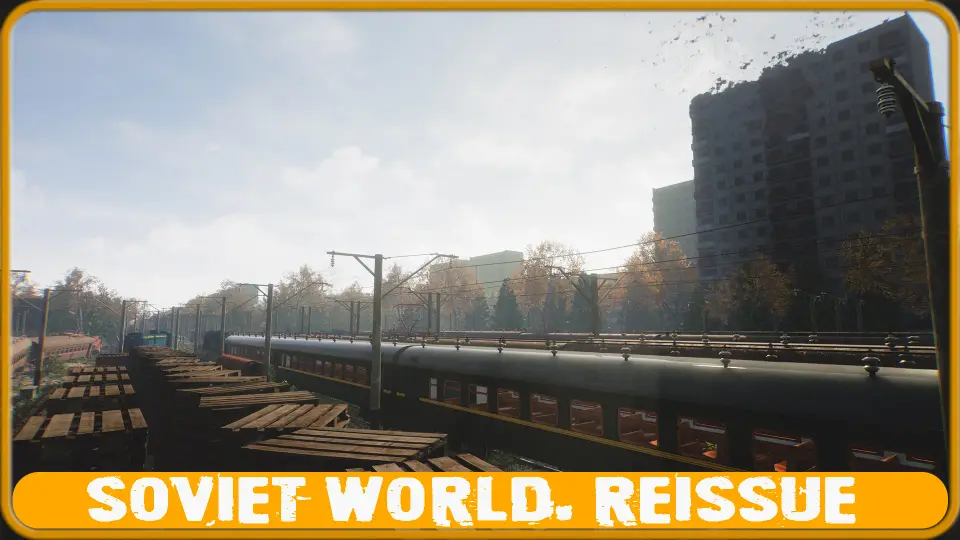
Eight types of buildings form the architectural core. Road infrastructure includes three types of road bridges alongside a railway bridge. Water transport is covered by river equipment consisting of a tugboat and a barge. Rail transport includes both a commuter electric train and a freight train. Street-level transit is represented by two types of trams. Automobile equipment rounds out the vehicle selection, providing urban traffic props for dressing streets and parking areas.
Automobile Equipment Configuration
Vehicle assets are provided in two formats to accommodate different production needs. Separate static models break the automobile into individual components: body, wheels, and doors. This format is suited for scenes requiring static placement or custom assembly. The same vehicles are also available as skeletal models, which allows for rigging-related workflows such as animated doors, wheels, or suspension. The dual-format approach lets a creator choose between static dressing and functional vehicle motion depending on scene requirements.
Spline-Based Train and Tram Setup
The package includes a tutorial covering the creation of a tram or train moving along a spline. This guides users through the process of setting up rail-based vehicles that follow a predetermined path, connecting the modular track segments to functional transit movement. The railway spar component includes a toggle function for wires, letting creators switch overhead line cables on or off depending on visual preference or scene optimization needs.
Anomalous Zone Particles and Atmosphere Effects
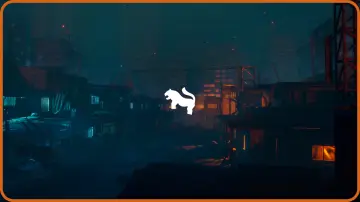
Environmental ambience is supported through particle systems covering two categories. Dust and smoke particles provide generalized atmospheric coverage, useful for scenes depicting abandonment, decay, or ongoing activity. A separate particle set simulates a local anomalous zone effect. The creator notes that a raven positioned at the center of the scene demonstrates this anomaly effect, anchoring the environmental hazard visually within the post-apocalyptic setting. These particle systems contribute to the Stalker-inspired tone present in the asset's thematic tags.
The scatter system works in parallel with these atmospheric tools. A Blueprint located in the Blueprint\Scatter folder handles the randomized placement of many small objects across a location, varying floor positions to avoid identical clustering. This distribution tool integrates with the overall level assembly process, letting artists combine procedural vegetation, particle ambience, and scattered small props within a unified environment construction workflow.
Post-Apocalypse Map Demo and Loading Optimization
A new map created in a post-apocalyptic setting is included as the default loading scene. To prevent extended load times, the map is lightened: trees, extra scatter drawings, and certain details are removed from the default version. The full map shown in screenshots and video demonstrations exists separately. The lightened version is intended to get a creator working quickly without a long initial load, while the full demonstration map can be obtained separately by contacting the developer directly. The creator specifies that the full map example is for demonstration purposes and is not included with the package.
Dynamic Water Material and Coastline Behavior
The set includes a realistic dynamic water material with a coastline system driven by a height map. This material is suited for oceans, seas, lakes, or ponds within the scene. The coastline logic calculates shoreline transitions using height data, which blends water edges with terrain geometry.
VR Compatibility and Engine Version Support
For VR scenes using these models, the creator advises disabling normal maps and developing projects for PC usage. The set was tested in a scene built for Oculus Quest. This testing context provides a reference point for performance considerations when adapting the modular buildings, vehicles, and environment props into virtual reality projects.
Engine compatibility spans versions 4.27 through 5.0 and into 5.5. A package update addressed loading errors that caused incorrect behavior when scenes were loaded in engine versions 5.1 and above. The update ensures the assets function across the specified engine range, from late 4.x through early 5.x releases.
 Apocalyptic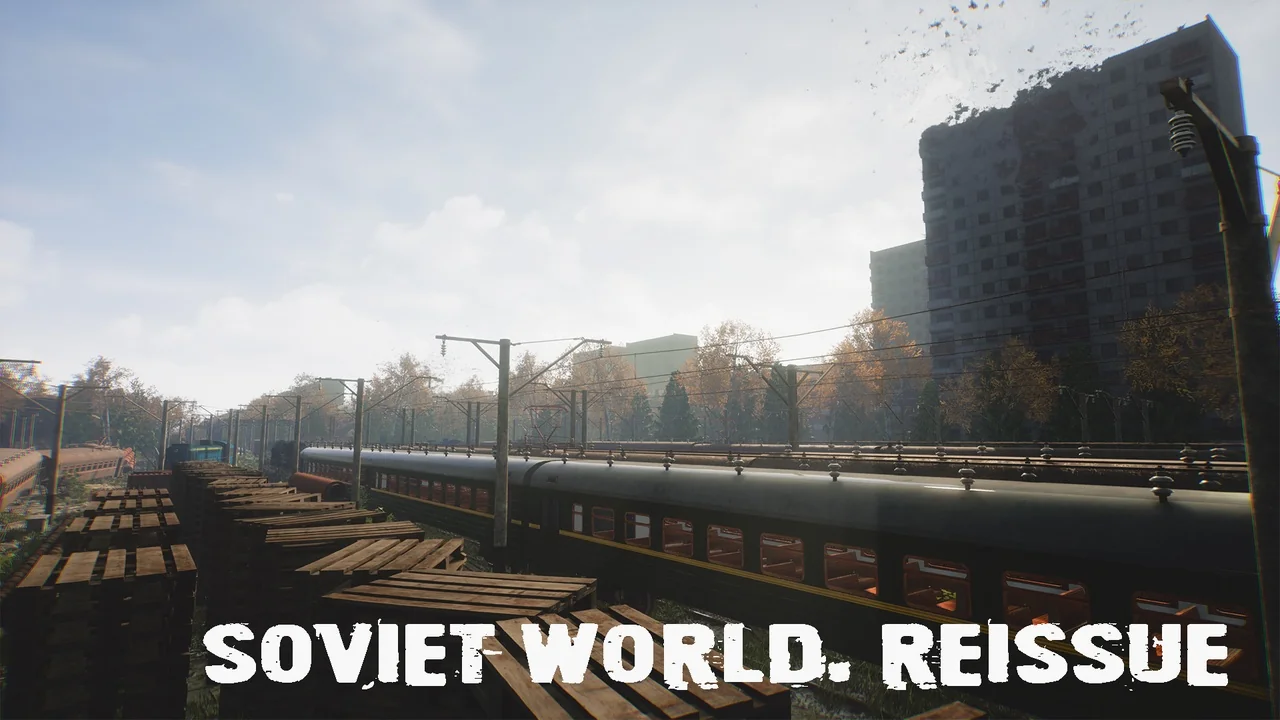
 Apocalyptic
 Apocalyptic
 Apocalyptic