"b00678cacce53329"{"id":"1002862","slug":"neonify-stylized-neon-stages-with-neon-ambience","title":"Neonify - Stylized Neon Stages with Neon Ambience","category":"Sci-Fi","engine":"4.26+,5.0+","assetVersion":"","engineVersion":"Engine Version: 4.26+,5.0+","tag":"Sci-Fi","accent":"blue","visual":"mech","summary":"Explore Neonify: 18 static baked, lowpoly neon stages featuring foggy concrete environments across day and night setups for virtual production and staging.","platform":"Unreal Engine","indexPolicy":"index","publishedAt":"2026-11-20T12:44:26.339Z","updatedAt":"2026-11-20T12:44:26.339Z","sourceNotes":[],"fileContents":[],"compatibility":["Unreal Engine","Engine Version: 4.26+,5.0+"],"featuredImage":{"alt":"Neonify - Stylized Neon Stages with Neon Ambience","src":"/wp-content/uploads/published/2026/11/10fbefa3d15f-e1f3a9b0-e461-4e9f-a958-def2470b88aa-71ee198068.webp"},"fileSizeBytes":484668121,"hasDownloadLink":true,"downloads":0,"terms":[{"taxonomy":"category","slug":"sci-fi","name":"Sci-Fi"}],"galleryImages":[{"src":"/wp-content/uploads/published/2026/11/3a792b2d96a0-569d91e7-5762-48e1-8bde-d8202823c208-28ba5ea56b.webp","alt":"Neonify - Stylized Neon Stages with Neon Ambience"},{"src":"/wp-content/uploads/published/2026/11/5d64ec6ec668-e1661c4e-a6a4-4144-8fb7-6dbc44291721-8f87afa392.webp","alt":"Neonify - Stylized Neon Stages with Neon Ambience"},{"src":"/wp-content/uploads/published/2026/11/6f488d6596be-1a76c989-8584-4e98-bc95-1c4e6e0b8005-4cb85aa750.webp","alt":"Neonify - Stylized Neon Stages with Neon Ambience"},{"src":"/wp-content/uploads/published/2026/11/bf949a50ca40-5ebdfecf-474a-45ef-80d7-d2a8a1c91988-22a98cdc4c.webp","alt":"Neonify - Stylized Neon Stages with Neon Ambience"},{"src":"/wp-content/uploads/published/2026/11/d47e81e2f016-d367ddd0-80a3-4155-ab45-92e5a98cd549-6d3cc3627c.webp","alt":"Neonify - Stylized Neon Stages with Neon Ambience"},{"src":"/wp-content/uploads/published/2026/11/a5406df4cc38-75643888-186e-4371-89ee-696e3812fd80-83da7a5d28.webp","alt":"Neonify - Stylized Neon Stages with Neon Ambience"},{"src":"/wp-content/uploads/published/2026/11/e972e6d1490d-67b0c5d4-8eb4-44c0-8001-1de1b9e93cd6-85022c4e14.webp","alt":"Neonify - Stylized Neon Stages with Neon Ambience"},{"src":"/wp-content/uploads/published/2026/11/dd039209d8b6-7031ef4e-275e-444d-b8b7-b04c68f0ec36-f8f601a168.webp","alt":"Neonify - Stylized Neon Stages with Neon Ambience"},{"src":"/wp-content/uploads/published/2026/11/e63d1209d10c-216362b2-bbaf-4609-b5a2-57410ee1a6c0-f4f57bf2c6.webp","alt":"Neonify - Stylized Neon Stages with Neon Ambience"},{"src":"/wp-content/uploads/published/2026/11/09ae9cc30c25-9f5e19e0-0e3d-4705-8367-a17ea85df53e-85b3129a24.webp","alt":"Neonify - Stylized Neon Stages with Neon Ambience"}],"accessPanel":{"kind":"resource","title":"Get this resource","safetyNote":"Resources are manually reviewed before listing to improve quality and reduce obvious risks.","fileName":"Content.7z","resourceType":"Resource archive","versions":[]},"contentHtml":"\u003cp\u003ePresenting standalone 3D assets, product concepts, or cinematic subjects requires an environment that frames focal geometry without competing for visual dominance. Detailed scenic backdrops often introduce excessive geometric noise, conflicting specular reflections, and chaotic light interactions that distract from the main subject. In virtual production scenarios, portfolio showcases, and stylized level prototypes, the demand shifts toward controlled, uncluttered spatial design where atmospheric depth is achieved through carefully positioned illumination rather than dense background props.\u003c/p\u003e \u003cp\u003eEnvironments structured around deliberate contrast and vacant floor space provide immediate clarity. By stripping away extraneous architectural clutter and establishing clean architectural bounds, artists can isolate props, characters, or mechanical assets under direct light. The combination of industrial ground planes and sharp emissive highlights offers a recognizable visual hierarchy, grounding any placed asset while maintaining an uncluttered boundary.\u003c/p\u003e \u003ch2\u003eNeonify Stages for Virtual Production and Presentation\u003c/h2\u003e \u003cp\u003eNeonify provides eighteen distinct levels configured as minimal, empty staging grounds. The core concept behind each scene is spatial economy: providing enough room to house virtual production subjects, test character animation, or display asset turnarounds without running into visual congestion. Each of the eighteen levels approaches this vacant staging concept with subtle spatial shifts, giving teams a wide selection of room scales and framing layouts.\u003c/p\u003e \u003cp\u003eBecause these environments remain empty, they serve as multipurpose staging zones. A virtual production team shooting a digital sequence can position cameras freely across the broad layout without hitting unintended obstructions. Similarly, technical artists setting up material test spheres or look-development rigs gain an open platform that reacts predictably to light without occluding camera angles or casting erratic background shadows across the viewport.\u003c/p\u003e \u003ch2\u003eStaging Through Foggy Concrete and Minimal Geometry\u003c/h2\u003e \u003cp\u003eThe structural geometry throughout the package relies on lowpoly design principles, keeping spatial elements light, clean, and intentionally reduced. Rather than relying on high-density tessellation or intricate structural paneling, the environments depend on clean floor expanses and atmospheric density to establish mood and scale.\u003c/p\u003e \u003cp\u003eConcrete serves as the foundational surface material across the levels. Its matte, slightly rough physical texture acts as an ideal neutral receptor for colored illumination. When ambient fog is introduced over the concrete floor, light spreads across the ground in soft, gradated falloffs rather than hard, distracting mirror bounces. This foggy concrete treatment generates a balanced aesthetic that balances realistic surface scattering with stylized, graphic neon highlights.\u003c/p\u003e \u003cp\u003eThe lowpoly stage boundaries frame this atmospheric diffusion. Walls, pillars, and framing outlines delineate the playable or viewable volume without encumbering scene memory. As a result, the geometric footprint of each level remains extremely compact, shifting the visual identity of the stage entirely to its atmospheric balance and lighting arrangement.\u003c/p\u003e \u003ch2\u003eStylized Neon Ambience Across Day and Night Levels\u003c/h2\u003e \u003cp\u003eA primary challenge when lighting with neon is avoiding harsh, blown-out values that overwhelm surrounding materials. The package addresses this across both day and night atmospheric conditions, split among the eighteen available levels. Each lighting variation alters the core mood, changing how the neon fixtures interact with the ambient environment and the concrete terrain.\u003c/p\u003e \u003cp\u003eNight levels allow the neon emitters to serve as high-contrast focal lines. Set against deep shadows, foggy darkness, and subtle floor reflections, the emissive elements outline the stage perimeter and project sharp, vivid color washes into the open space. These nighttime variants work exceptionally well for stylized sequences, cyberpunk-inspired vehicle tests, and moody character showcases where silhouettes and rim lights play a central role.\u003c/p\u003e \u003cp\u003eDaytime variants offer an entirely different reading of the same aesthetic. In daylight conditions, the ambient illumination softens the contrast, allowing the neon glow to integrate into a brighter, hazy palette. The concrete surfaces receive clear direct fill light, while the neon fixtures act as decorative accents rather than the sole light sources. This dual-lighting strategy ensures that the stages can accommodate both high-contrast dramatic presentation and subdued, illuminated studio environments.\u003c/p\u003e \u003ch2\u003eStatic Baked Lighting in Real-Time Workflows\u003c/h2\u003e \u003cp\u003eAll eighteen environments are configured with static baked lighting. In modern real-time graphics pipelines, dynamic global illumination can impose a substantial tax on frame rates, requiring substantial compute passes for real-time ray tracing or screen-space irradiance calculations. By precomputing all direct and indirect light bounces into static lightmaps, these levels run with virtually zero runtime lighting overhead.\u003c/p\u003e \u003cp\u003eStatic baking yields distinct visual benefits for neon-heavy stages:\u003c/p\u003e \u003cul\u003e \u003cli\u003e\u003cstrong\u003eSmooth indirect color bleeding:\u003c/strong\u003e Emissive neon strips cast soft, noise-free colored light across nearby concrete panels and foggy air volumes without dynamic temporal artifacts.\u003c/li\u003e \u003cli\u003e\u003cstrong\u003eStable shadow transitions:\u003c/strong\u003e Precalculated occlusion grounds structural boundaries naturally, avoiding dynamic shadow shimmering or detachment around stage corners.\u003c/li\u003e \u003cli\u003e\u003cstrong\u003eConsistent frame pacing:\u003c/strong\u003e Because lighting calculations are fixed into textures, the GPU can dedicate full rendering headroom to whatever high-fidelity character, vehicle, or VFX asset is being staged inside the scene.\u003c/li\u003e\n\u003c/ul\u003e \u003cp\u003eThis technical configuration makes the package instantly usable on low-spec hardware or compute-heavy virtual production setups where frame stability is mandatory. The performance remains constant regardless of camera velocity, viewport resolution, or the complexity of dynamic actors placed on the stage.\u003c/p\u003e \u003ch2\u003eProduction Roles and Practical Deployment\u003c/h2\u003e \u003cp\u003eThe streamlined nature of the package targets artists who need instant, polished presentation environments without spending production cycles building bespoke lighting rigs. 3D modelers and texture artists can drag an untextured sculpt or a final game-ready hero prop directly into one of the eighteen levels, immediately evaluating how the silhouette and surface roughness respond to both high-contrast night neon and softer day lighting.\u003c/p\u003e \u003cp\u003eVirtual production directors and previsualization animators benefit from having zero setup friction. Instead of calibrating light bounce intensities, fog densities, and surface materials from scratch, they can load a pre-baked level, drop in their rigged assets, and begin framing camera tracks immediately. By delivering eighteen pre-configured variations built on lowpoly concrete and static illumination, the collection provides a dependable foundation for clean, modern staging.\u003c/p\u003e\n\n\u003ch2\u003eMore From The Same Workflow\u003c/h2\u003e\n\u003cul\u003e\n\u003cli\u003e\u003ca href=\"https://3dcghub.com/sci-fi-skyscrapers-buildings/\" rel=\"noopener noreferrer\"\u003eSci-Fi Skyscrapers Buildings\u003c/a\u003e\u003c/li\u003e\n\u003cli\u003e\u003ca href=\"https://3dcghub.com/gorgeous-concert-stage/\" rel=\"noopener noreferrer\"\u003eGorgeous Concert Stage\u003c/a\u003e\u003c/li\u003e\n\u003cli\u003e\u003ca href=\"https://3dcghub.com/modular-sci-fi-orion-mars-corridors/\" rel=\"noopener noreferrer\"\u003eModular Sci Fi Orion Mars Corridors\u003c/a\u003e\u003c/li\u003e\n\u003cli\u003e\u003ca href=\"https://3dcghub.com/4-in-1-modular-research-facility-mega-bundle-2025/\" rel=\"noopener noreferrer\"\u003e4 IN 1 Modular Research Facility / Mega Bundle 2025\u003c/a\u003e\u003c/li\u003e\n\u003cli\u003e\u003ca href=\"https://3dcghub.com/modular-sci-fi-interior/\" rel=\"noopener noreferrer\"\u003eModular Sci-Fi Interior\u003c/a\u003e\u003c/li\u003e\n\u003c/ul\u003e","contentTextLength":7209,"navigation":{"current":18,"total":4797,"previous":{"id":"1002863","slug":"magic-circles-and-shields","title":"Magic Circles and Shields","category":"Spells \u0026 Combat","platform":"Unreal Engine","updatedAt":"2026-11-20T12:45:36.364Z"},"next":{"id":"1002861","slug":"living-particles-niagara","title":"Living Particles Niagara","category":"Variety","platform":"Unreal Engine","updatedAt":"2026-11-20T12:42:01.224Z"}},"relatedResources":[{"id":"1000335","slug":"sci-fi-skyscrapers-buildings","title":"Sci-Fi Skyscrapers Buildings","category":"Sci-Fi","engine":"5.6+","assetVersion":"","engineVersion":"Engine Version: 5.6+","tag":"Sci-Fi","accent":"blue","visual":"mech","summary":"Build massive futuristic megacities with 59 modular meshes, glowing blue neon emissives, and reflective metallic surfaces designed for Unreal Engine 5.","platform":"Unreal Engine","indexPolicy":"index","publishedAt":"2026-07-05T07:39:38.036Z","updatedAt":"2026-07-05T07:39:38.036Z","sourceNotes":[],"fileContents":[],"compatibility":["Unreal Engine","Engine Version: 5.6+"],"featuredImage":{"alt":"Sci-Fi Skyscrapers Buildings","src":"/wp-content/uploads/published/2026/07/dd6cc16e2f9c-39cc6274-30dd-4674-a7d9-e77c468bc712-344a565c25.webp"},"fileSizeBytes":1079964292,"hasDownloadLink":true,"downloads":0},{"id":"9819","slug":"gorgeous-concert-stage","title":"Gorgeous Concert Stage","category":"Streets \u0026 Construction","engine":"5.1+","assetVersion":"Engine version: 5.1+","engineVersion":"5.1","tag":"Streets","accent":"blue","visual":"city","summary":"Create vibrant stylized performances with the Gorgeous Concert Stage. This asset pack offers modular meshes and interchangeable materials for a flexible and optimized workflow.","platform":"Unreal Engine","indexPolicy":"noindex","publishedAt":"2026-03-02T15:31:23.000Z","updatedAt":"2026-04-19T15:50:59.000Z","sourceNotes":[],"fileContents":[],"compatibility":["Unreal Engine","Engine version: 5.1+"],"featuredImage":{"alt":"Gorgeous Concert Stage","src":"https://3dcghub.com/wp-content/uploads/2026/03/f24ae396-0f73-44ca-98cd-fb71f5e2aad9.webp"},"fileSizeBytes":292948996,"hasDownloadLink":true,"downloads":2},{"id":"1001821","slug":"modular-sci-fi-orion-mars-corridors","title":"Modular Sci Fi Orion Mars Corridors","category":"Sci-Fi","engine":"4.19+,5.0+","assetVersion":"","engineVersion":"Engine Version: 4.19+,5.0+","tag":"Sci-Fi","accent":"blue","visual":"mech","summary":"Construct modular Martian and orbital hallways with interactive bulkhead doors, throwable cargo cases, spiral stairs, and customizable Material Instances.","platform":"Unreal Engine","indexPolicy":"index","publishedAt":"2026-10-21T08:14:30.326Z","updatedAt":"2026-10-21T08:14:30.326Z","sourceNotes":[],"fileContents":[],"compatibility":["Unreal Engine","Engine Version: 4.19+,5.0+"],"featuredImage":{"alt":"Modular Sci Fi Orion Mars Corridors","src":"/wp-content/uploads/published/2026/10/2d96d5d9549a-b8e8b628-0739-43b1-bb8e-158642ec0e2a-75684d994c.webp"},"fileSizeBytes":2515895737,"hasDownloadLink":true,"downloads":1}]}
Resource screenshots
1 / 10
Join our channel
Follow 3DCGHUB on Telegram for new resource drops, migration updates, and community notices.
Resources are manually reviewed before listing to improve quality and reduce obvious risks.
No account required
Sci-Fi
Neonify - Stylized Neon Stages with Neon Ambience
Explore Neonify: 18 static baked, lowpoly neon stages featuring foggy concrete environments across day and night setups for virtual production and staging.
Presenting standalone 3D assets, product concepts, or cinematic subjects requires an environment that frames focal geometry without competing for visual dominance. Detailed scenic backdrops often introduce excessive geometric noise, conflicting specular reflections, and chaotic light interactions that distract from the main subject. In virtual production scenarios, portfolio showcases, and stylized level prototypes, the demand shifts toward controlled, uncluttered spatial design where atmospheric depth is achieved through carefully positioned illumination rather than dense background props.
Environments structured around deliberate contrast and vacant floor space provide immediate clarity. By stripping away extraneous architectural clutter and establishing clean architectural bounds, artists can isolate props, characters, or mechanical assets under direct light. The combination of industrial ground planes and sharp emissive highlights offers a recognizable visual hierarchy, grounding any placed asset while maintaining an uncluttered boundary.
Neonify Stages for Virtual Production and Presentation
Neonify provides eighteen distinct levels configured as minimal, empty staging grounds. The core concept behind each scene is spatial economy: providing enough room to house virtual production subjects, test character animation, or display asset turnarounds without running into visual congestion. Each of the eighteen levels approaches this vacant staging concept with subtle spatial shifts, giving teams a wide selection of room scales and framing layouts.
Because these environments remain empty, they serve as multipurpose staging zones. A virtual production team shooting a digital sequence can position cameras freely across the broad layout without hitting unintended obstructions. Similarly, technical artists setting up material test spheres or look-development rigs gain an open platform that reacts predictably to light without occluding camera angles or casting erratic background shadows across the viewport.
Staging Through Foggy Concrete and Minimal Geometry
The structural geometry throughout the package relies on lowpoly design principles, keeping spatial elements light, clean, and intentionally reduced. Rather than relying on high-density tessellation or intricate structural paneling, the environments depend on clean floor expanses and atmospheric density to establish mood and scale.
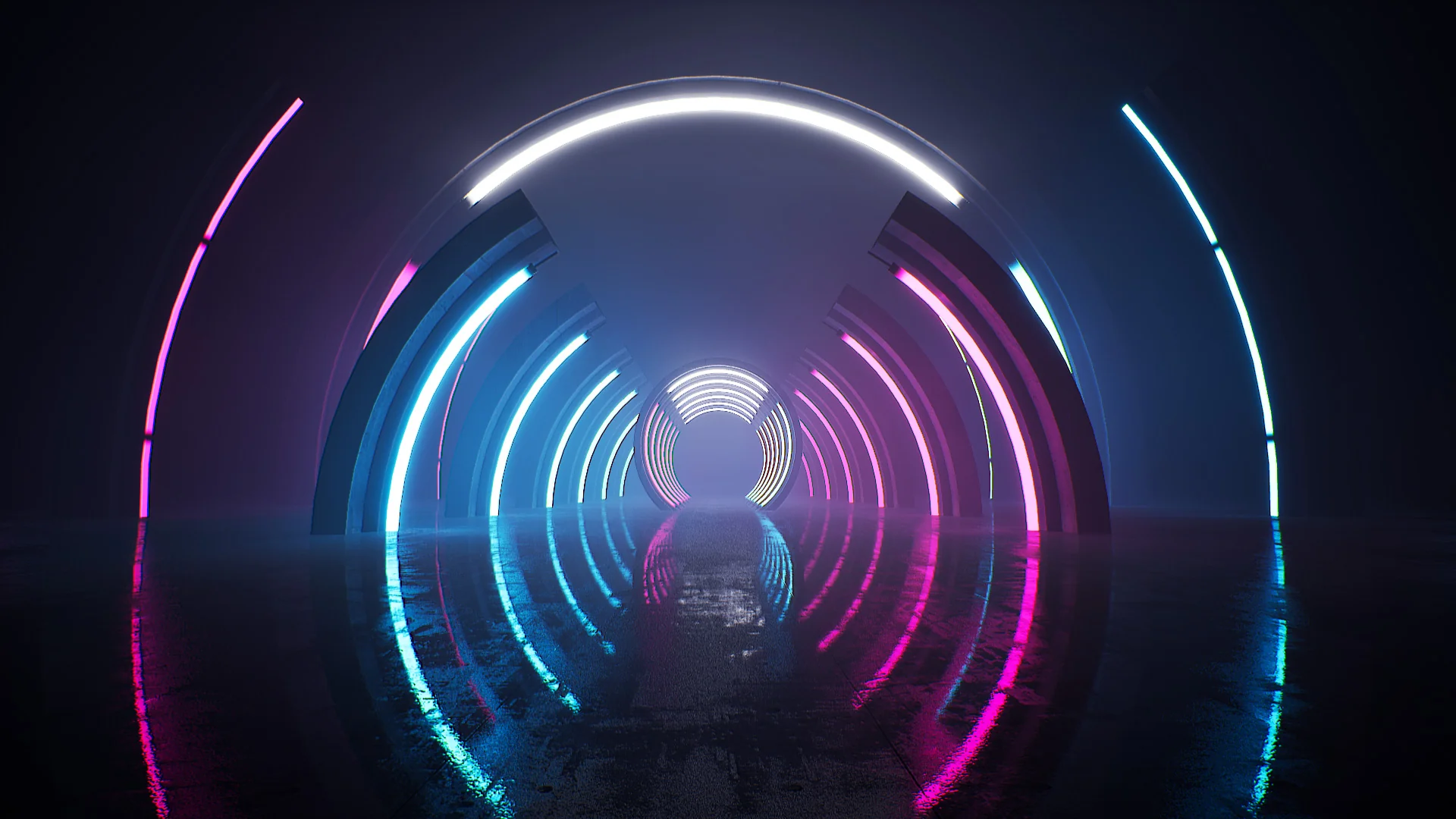
Concrete serves as the foundational surface material across the levels. Its matte, slightly rough physical texture acts as an ideal neutral receptor for colored illumination. When ambient fog is introduced over the concrete floor, light spreads across the ground in soft, gradated falloffs rather than hard, distracting mirror bounces. This foggy concrete treatment generates a balanced aesthetic that balances realistic surface scattering with stylized, graphic neon highlights.
The lowpoly stage boundaries frame this atmospheric diffusion. Walls, pillars, and framing outlines delineate the playable or viewable volume without encumbering scene memory. As a result, the geometric footprint of each level remains extremely compact, shifting the visual identity of the stage entirely to its atmospheric balance and lighting arrangement.
Stylized Neon Ambience Across Day and Night Levels
A primary challenge when lighting with neon is avoiding harsh, blown-out values that overwhelm surrounding materials. The package addresses this across both day and night atmospheric conditions, split among the eighteen available levels. Each lighting variation alters the core mood, changing how the neon fixtures interact with the ambient environment and the concrete terrain.
Night levels allow the neon emitters to serve as high-contrast focal lines. Set against deep shadows, foggy darkness, and subtle floor reflections, the emissive elements outline the stage perimeter and project sharp, vivid color washes into the open space. These nighttime variants work exceptionally well for stylized sequences, cyberpunk-inspired vehicle tests, and moody character showcases where silhouettes and rim lights play a central role.
Daytime variants offer an entirely different reading of the same aesthetic. In daylight conditions, the ambient illumination softens the contrast, allowing the neon glow to integrate into a brighter, hazy palette. The concrete surfaces receive clear direct fill light, while the neon fixtures act as decorative accents rather than the sole light sources. This dual-lighting strategy ensures that the stages can accommodate both high-contrast dramatic presentation and subdued, illuminated studio environments.
Static Baked Lighting in Real-Time Workflows
All eighteen environments are configured with static baked lighting. In modern real-time graphics pipelines, dynamic global illumination can impose a substantial tax on frame rates, requiring substantial compute passes for real-time ray tracing or screen-space irradiance calculations. By precomputing all direct and indirect light bounces into static lightmaps, these levels run with virtually zero runtime lighting overhead.
Static baking yields distinct visual benefits for neon-heavy stages:
Smooth indirect color bleeding: Emissive neon strips cast soft, noise-free colored light across nearby concrete panels and foggy air volumes without dynamic temporal artifacts.
Stable shadow transitions: Precalculated occlusion grounds structural boundaries naturally, avoiding dynamic shadow shimmering or detachment around stage corners.
Consistent frame pacing: Because lighting calculations are fixed into textures, the GPU can dedicate full rendering headroom to whatever high-fidelity character, vehicle, or VFX asset is being staged inside the scene.
This technical configuration makes the package instantly usable on low-spec hardware or compute-heavy virtual production setups where frame stability is mandatory. The performance remains constant regardless of camera velocity, viewport resolution, or the complexity of dynamic actors placed on the stage.
Production Roles and Practical Deployment
The streamlined nature of the package targets artists who need instant, polished presentation environments without spending production cycles building bespoke lighting rigs. 3D modelers and texture artists can drag an untextured sculpt or a final game-ready hero prop directly into one of the eighteen levels, immediately evaluating how the silhouette and surface roughness respond to both high-contrast night neon and softer day lighting.
Virtual production directors and previsualization animators benefit from having zero setup friction. Instead of calibrating light bounce intensities, fog densities, and surface materials from scratch, they can load a pre-baked level, drop in their rigged assets, and begin framing camera tracks immediately. By delivering eighteen pre-configured variations built on lowpoly concrete and static illumination, the collection provides a dependable foundation for clean, modern staging.
 Sci-Fi
 Streets
 Sci-Fi