"efaa631e936fd3ee"{"id":"1002277","slug":"nanite-sand-dunes","title":"NANITE SAND DUNES","category":"Desert","engine":"5.2+","assetVersion":"","engineVersion":"Engine Version: 5.2+","tag":"Desert","accent":"blue","visual":"mech","summary":"Explore Nanite Sand Dunes, featuring 8-million triangle meshes, flattened edges, and Lumen-ready static meshes for film and game terrain backgrounds.","platform":"Unreal Engine","publishedAt":"2026-10-29T16:34:25.435Z","updatedAt":"2026-10-29T16:34:25.435Z","sourceNotes":[],"fileContents":[],"compatibility":["Unreal Engine","Engine Version: 5.2+"],"featuredImage":{"alt":"NANITE SAND DUNES","src":"/wp-content/uploads/published/2026/10/d4f71443adca-fe154fec-8e0e-4c64-b750-a890d79b5e93-c428cb9916.webp"},"hasDownloadLink":true,"downloads":0,"terms":[{"taxonomy":"category","slug":"desert","name":"Desert"}],"galleryImages":[{"src":"/wp-content/uploads/published/2026/10/7f80efbeef4f-6d08a08f-98a5-4903-a124-d149b7e5d3e0-91a3170f6f.webp","alt":"NANITE SAND DUNES"},{"src":"/wp-content/uploads/published/2026/10/8832c737e818-784623cb-ca85-494b-9852-a43564fa1c8e-9b314f6aef.webp","alt":"NANITE SAND DUNES"},{"src":"/wp-content/uploads/published/2026/10/6098e8f6b227-134fffed-ad87-40b9-8b6e-2b08a1dbbc44-b4547fefc5.webp","alt":"NANITE SAND DUNES"},{"src":"/wp-content/uploads/published/2026/10/601cc7c37d90-7e4735ae-636a-4cf5-9d6d-dd17c7a15332-5db035eea8.webp","alt":"NANITE SAND DUNES"},{"src":"/wp-content/uploads/published/2026/10/9cfe20c86e48-be371cee-04da-4e8f-ae8b-4b595fe88096-6fe1582543.webp","alt":"NANITE SAND DUNES"},{"src":"/wp-content/uploads/published/2026/10/391a0f7b1ae9-739c86ba-765d-4180-bd54-ee199c6a9894-175d60cbc3.webp","alt":"NANITE SAND DUNES"},{"src":"/wp-content/uploads/published/2026/10/b33bece481e2-bbb6f84c-d157-436a-b977-1187855666e4-86bc188af7.webp","alt":"NANITE SAND DUNES"}],"accessPanel":{"kind":"resource","title":"Download this resource","eyebrow":"Free Download","message":"Log in or create a free account to start your download.","fileName":"Content.7z","safetyNote":"Resources are manually reviewed before listing to improve quality and reduce obvious risks.","actionLabel":"Download Free","resourceType":"Resource archive"},"contentHtml":"\u003ch2\u003eShaping Barren Vistas and Desert Horizons\u003c/h2\u003e\n\u003cp\u003eVast, arid landscapes present unique challenges when crafting backgrounds for virtual worlds. Natural sand dunes possess sweeping, undulating profiles, razor-sharp windward crests, and broad leeward slopes that reveal flaws immediately when polygon counts are compromised. NANITE SAND DUNES approaches this environment challenge by supplying high-poly static meshes engineered to construct compelling backgrounds across game development and film production.\u003c/p\u003e\n\u003cp\u003eWhether framing a minimalist desert scene, establishing an arid alien planet for a sci-fi sequence, or laying out the desolate expanses of a post-apocalyptic wasteland, these terrain pieces prioritize realistic topography. Rather than relying on heightmap displacement tricks that can blur fine silhouettes at distance, the package provides discrete static meshes configured to populate backgrounds with authentic desert shapes.\u003c/p\u003e \u003ch2\u003eThe Geometry of 8 Million Triangle Meshes\u003c/h2\u003e\n\u003cp\u003eAt the center of the package is an extreme polygon budget. Each individual mesh contains approximately 8 million triangles, generating high-density geometry capable of holding clean, crisp ridges and authentic curvature up close or along the skyline. Meshes of this scale bypass standard low-poly optimization compromises, allowing the natural ripple and sweep of sand dunes to remain completely intact across cinematic frames.\u003c/p\u003e\n\u003cp\u003eHandling such massive polygon counts in real-time environments relies directly on Nanite virtualization. Because the assets are high poly and created specifically to work with Nanite, the engine stream-renders the geometry adaptively without requiring artists to manually create, bake, or balance traditional Level of Detail (LOD) steps. The geometric definition remains sharp against distant horizons, preventing the popping and polygonal faceting that often disrupt sweeping landscape vistas.\u003c/p\u003e \u003ch2\u003eFlattened Edges for Modular Sand Assemblages\u003c/h2\u003e\n\u003cp\u003eA persistent obstacle when arranging individual landscape meshes into a cohesive environment is the perimeter seam. Placing irregular terrain pieces together often forces artists to bury awkward geometric skirts or hide jarring elevation changes beneath extra prop clutter. NANITE SAND DUNES resolves this through deliberate boundary shaping, incorporating flattened edges across its modular assets.\u003c/p\u003e\n\u003cp\u003eThe flattened edges allow individual dune structures to merge naturally into adjoining terrain elements or intersect with neighboring dunes. This modular design helps developers piece together vast, continuous desert chains by layering distinct formations over one another. Because the bases and outer perimeters taper smoothly, the dunes integrate cleanly into broader landscape setups, creating believable topography without sharp clipping boundaries or obvious geometric transitions.\u003c/p\u003e \u003ch2\u003eLighting Dune Formations with Lumen and PBR Materials\u003c/h2\u003e\n\u003cp\u003eDesert terrain is shaped visually by sunlight and cast shadows. The sharp peak of a sand dune creates dramatic contrasts between blazing sunlit faces and deep, self-shadowed declines. The assets in this collection are Lumen ready, allowing full compatibility with modern dynamic global illumination and real-time reflection pipelines.\u003c/p\u003e\n\u003cp\u003ePaired with physically based rendering (PBR) surface properties, the high-poly dunes react naturally to changing sun positions and high-contrast environmental conditions. Dynamic bounce light fills the concave pockets of the sand banks, while grazing light highlights the microscopic shifts in the 8-million triangle topography. The interaction between the dense Nanite geometry and real-time Lumen illumination ensures realistic depth across wide daylight shots, golden hour setups, and harsh mid-day desert scenes.\u003c/p\u003e \u003ch2\u003eProject Layout: Demonstration and Overview Maps\u003c/h2\u003e\n\u003cp\u003eTo assist with immediate inspection and scene assembly, the project files include structured testing environments. An Overview level organizes the assets cleanly in an isolated space, giving artists the ability to evaluate individual static meshes, inspect their contours, review boundary transitions, and gauge their scale before placing them into production scenes.\u003c/p\u003e\n\u003cp\u003eAlongside the asset showcase, a demonstration map is included directly with the project files, reproducing the complete visual configuration shown in the project presentation. This demo environment demonstrates how to arrange the modular high-poly dunes, layer their flattened edges, and configure lighting setups to construct believable background vistas. Initially introduced in Version 1.0 on 2023-06-05, the package delivers a ready-to-use foundation for cinematic terrain generation and large-scale desert level construction.\u003c/p\u003e\n\n\u003ch2\u003eExplore Similar Assets\u003c/h2\u003e\n\u003cul\u003e\n\u003cli\u003e\u003ca href=\"https://3dcghub.com/sand-dunes-landscape/\" title=\"Sand Dunes Landscape\"\u003eSand Dunes Landscape\u003c/a\u003e\u003c/li\u003e\n\u003cli\u003e\u003ca href=\"https://3dcghub.com/brushify-dunes-pack/\" title=\"Brushify - Dunes Pack\"\u003eBrushify - Dunes Pack\u003c/a\u003e\u003c/li\u003e\n\u003cli\u003e\u003ca href=\"https://3dcghub.com/mw-dune-desert-biome/\" title=\"MW Dune Desert Biome\"\u003eMW Dune Desert Biome\u003c/a\u003e\u003c/li\u003e\n\u003cli\u003e\u003ca href=\"https://3dcghub.com/mw-shrubs-bushes-biome/\" title=\"MW Shrubs \u0026amp; Bushes Biome\"\u003eMW Shrubs \u0026amp; Bushes Biome\u003c/a\u003e\u003c/li\u003e\n\u003cli\u003e\u003ca href=\"https://3dcghub.com/modular-battlefield-warzone-battlefield-warzone-desert-desert-town/\" title=\"Modular Battlefield / Warzone (Battlefield, Warzone, Desert, Desert Town)\"\u003eModular Battlefield / Warzone (Battlefield, Warzone, Desert, Desert Town)\u003c/a\u003e\u003c/li\u003e\n\u003c/ul\u003e","contentTextLength":4868,"navigation":{"current":8,"total":4209,"previous":{"id":"1002278","slug":"niagara-realistic-starter-vfx-pack","title":"Niagara Realistic Starter VFX Pack","category":"Variety","platform":"Unreal Engine","updatedAt":"2026-10-29T16:36:27.991Z"},"next":{"id":"1002276","slug":"modular-scifi-interiors","title":"Modular SciFi: Interiors","category":"Sci-Fi","platform":"Unreal Engine","updatedAt":"2026-10-29T16:33:57.054Z"}},"relatedResources":[{"id":"1000093","slug":"sand-dunes-landscape","title":"Sand Dunes Landscape","category":"Desert","engine":"Engine Version: 4.26+,5.0+","assetVersion":"Engine Version: 4.26+,5.0+","engineVersion":"","tag":"Desert","accent":"blue","visual":"city","summary":"A desert landscape resource spanning 64 square kilometers, with 1x1 meter vertex density, paint layers, cloud shadows, and deep material control.","platform":"Unreal Engine","publishedAt":"2026-06-07T11:34:53.650Z","updatedAt":"2026-06-07T11:34:53.650Z","sourceNotes":[],"fileContents":[],"compatibility":["Unreal Engine"],"featuredImage":{"alt":"Sand Dunes Landscape","src":"/wp-content/uploads/published/2026/06/cd7c531cc0b4-3a6502b1-5866-4f3e-ac72-f7b25f7f2246-e446305dba.webp"},"hasDownloadLink":true,"downloads":1},{"id":"1000220","slug":"brushify-dunes-pack","title":"Brushify - Dunes Pack","category":"Desert","engine":"4.26+,5.0+","assetVersion":"","engineVersion":"Engine Version: 4.26+,5.0+","tag":"Desert","accent":"blue","visual":"mech","summary":"Create sweeping sand dune environments using the Brushify - Dunes Pack, featuring an 11-layer landscape auto material, terrain brushes, and procedural spawners.","platform":"Unreal Engine","publishedAt":"2026-06-26T13:43:22.366Z","updatedAt":"2026-06-26T13:43:22.366Z","sourceNotes":[],"fileContents":[],"compatibility":["Unreal Engine","Engine Version: 4.26+,5.0+"],"featuredImage":{"alt":"Brushify - Dunes Pack","src":"/wp-content/uploads/published/2026/06/51ce4acefb03-2dbebea8-218a-43f2-83c0-b68a807a2005-d4cdf87cb9.webp"},"hasDownloadLink":true,"downloads":0},{"id":"7754","slug":"mw-dune-desert-biome","title":"MW Dune Desert Biome","category":"Desert","engine":"4.27,5.0+","assetVersion":"Engine version: 4.27,5.0+","engineVersion":"5.2","tag":"Desert","accent":"blue","visual":"city","summary":"Transform your digital projects with a professional-grade desert environment solution. This comprehensive biome uses photogrammetry and procedural generation to deliver stunning, realistic dunes and oases.","platform":"Unreal Engine","publishedAt":"2026-02-21T17:40:14.000Z","updatedAt":"2026-04-19T15:55:55.000Z","sourceNotes":[],"fileContents":[],"compatibility":["Unreal Engine","Engine version: 4.27,5.0+"],"featuredImage":{"alt":"MW Dune Desert Biome","src":"https://3dcghub.com/wp-content/uploads/2026/02/9157f5aa-d82d-40dc-b2b1-517cafc2983f.webp"},"hasDownloadLink":true,"downloads":3}]}
Desert
NANITE SAND DUNES
Explore Nanite Sand Dunes, featuring 8-million triangle meshes, flattened edges, and Lumen-ready static meshes for film and game terrain backgrounds.
Category:Unreal Engine,DesertPlatform: Unreal EngineEngine Version: 5.2+Published: Oct 29, 2026
Desert
Resource overview
Shaping Barren Vistas and Desert Horizons
Vast, arid landscapes present unique challenges when crafting backgrounds for virtual worlds. Natural sand dunes possess sweeping, undulating profiles, razor-sharp windward crests, and broad leeward slopes that reveal flaws immediately when polygon counts are compromised. NANITE SAND DUNES approaches this environment challenge by supplying high-poly static meshes engineered to construct compelling backgrounds across game development and film production.
Whether framing a minimalist desert scene, establishing an arid alien planet for a sci-fi sequence, or laying out the desolate expanses of a post-apocalyptic wasteland, these terrain pieces prioritize realistic topography. Rather than relying on heightmap displacement tricks that can blur fine silhouettes at distance, the package provides discrete static meshes configured to populate backgrounds with authentic desert shapes.
The Geometry of 8 Million Triangle Meshes
At the center of the package is an extreme polygon budget. Each individual mesh contains approximately 8 million triangles, generating high-density geometry capable of holding clean, crisp ridges and authentic curvature up close or along the skyline. Meshes of this scale bypass standard low-poly optimization compromises, allowing the natural ripple and sweep of sand dunes to remain completely intact across cinematic frames.
Handling such massive polygon counts in real-time environments relies directly on Nanite virtualization. Because the assets are high poly and created specifically to work with Nanite, the engine stream-renders the geometry adaptively without requiring artists to manually create, bake, or balance traditional Level of Detail (LOD) steps. The geometric definition remains sharp against distant horizons, preventing the popping and polygonal faceting that often disrupt sweeping landscape vistas.
Flattened Edges for Modular Sand Assemblages
A persistent obstacle when arranging individual landscape meshes into a cohesive environment is the perimeter seam. Placing irregular terrain pieces together often forces artists to bury awkward geometric skirts or hide jarring elevation changes beneath extra prop clutter. NANITE SAND DUNES resolves this through deliberate boundary shaping, incorporating flattened edges across its modular assets.
The flattened edges allow individual dune structures to merge naturally into adjoining terrain elements or intersect with neighboring dunes. This modular design helps developers piece together vast, continuous desert chains by layering distinct formations over one another. Because the bases and outer perimeters taper smoothly, the dunes integrate cleanly into broader landscape setups, creating believable topography without sharp clipping boundaries or obvious geometric transitions.
Lighting Dune Formations with Lumen and PBR Materials
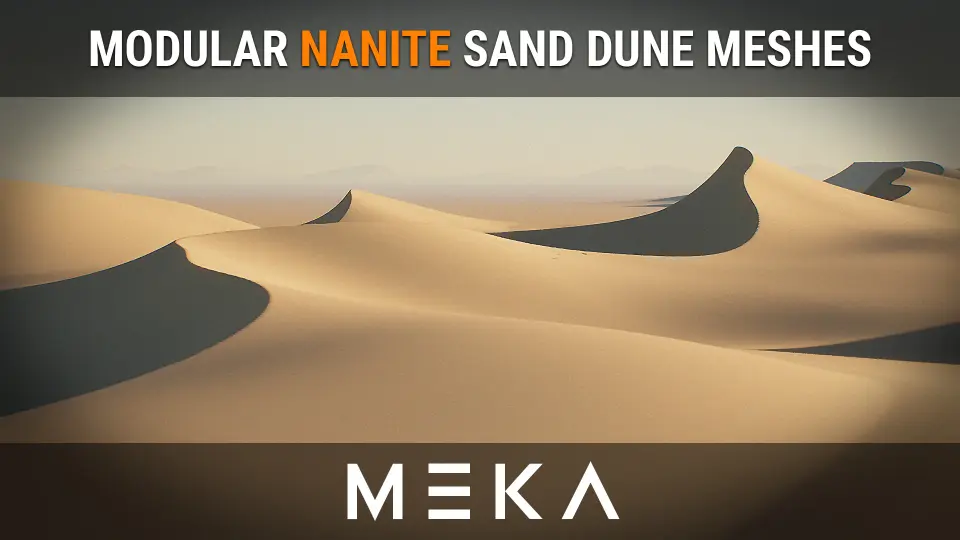
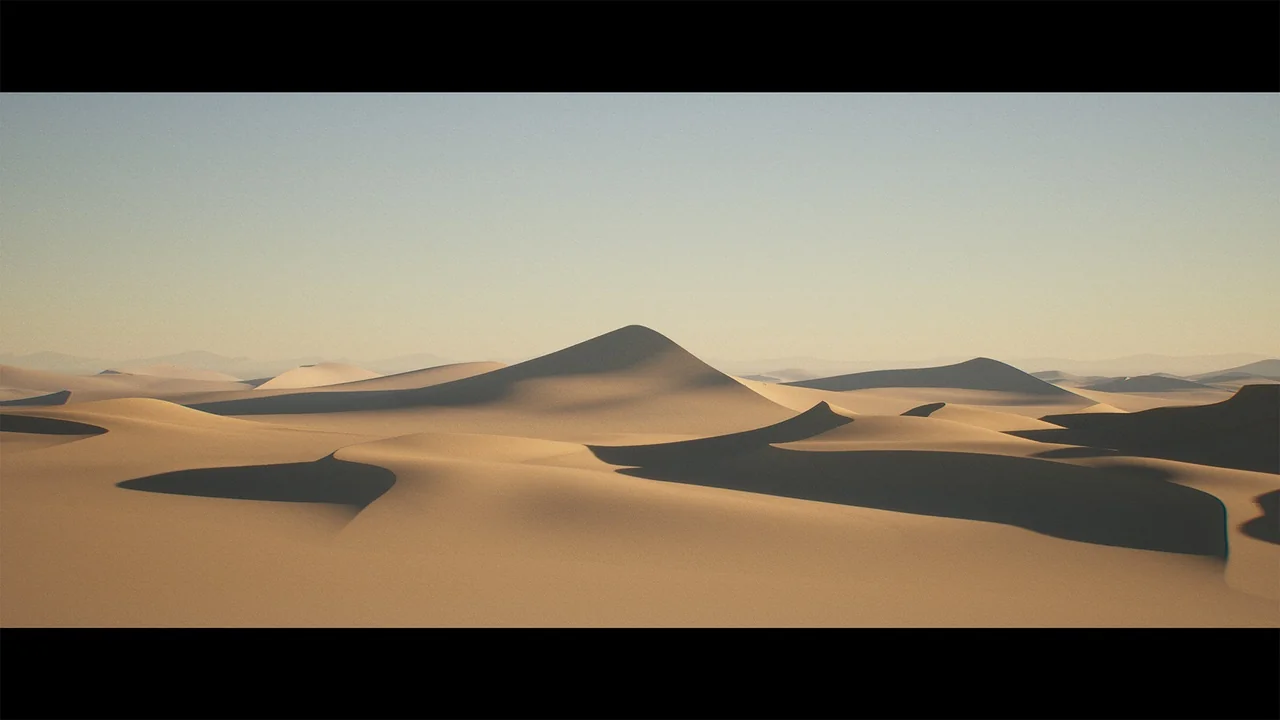
Desert terrain is shaped visually by sunlight and cast shadows. The sharp peak of a sand dune creates dramatic contrasts between blazing sunlit faces and deep, self-shadowed declines. The assets in this collection are Lumen ready, allowing full compatibility with modern dynamic global illumination and real-time reflection pipelines.
Paired with physically based rendering (PBR) surface properties, the high-poly dunes react naturally to changing sun positions and high-contrast environmental conditions. Dynamic bounce light fills the concave pockets of the sand banks, while grazing light highlights the microscopic shifts in the 8-million triangle topography. The interaction between the dense Nanite geometry and real-time Lumen illumination ensures realistic depth across wide daylight shots, golden hour setups, and harsh mid-day desert scenes.
Project Layout: Demonstration and Overview Maps
To assist with immediate inspection and scene assembly, the project files include structured testing environments. An Overview level organizes the assets cleanly in an isolated space, giving artists the ability to evaluate individual static meshes, inspect their contours, review boundary transitions, and gauge their scale before placing them into production scenes.
Alongside the asset showcase, a demonstration map is included directly with the project files, reproducing the complete visual configuration shown in the project presentation. This demo environment demonstrates how to arrange the modular high-poly dunes, layer their flattened edges, and configure lighting setups to construct believable background vistas. Initially introduced in Version 1.0 on 2023-06-05, the package delivers a ready-to-use foundation for cinematic terrain generation and large-scale desert level construction.
 Desert
 Desert
 Desert
 Desert