"7aa4acc705f0d80b"{"id":"1000093","slug":"sand-dunes-landscape","title":"Sand Dunes Landscape","category":"Desert","engine":"Engine Version: 4.26+,5.0+","assetVersion":"Engine Version: 4.26+,5.0+","engineVersion":"","tag":"Desert","accent":"blue","visual":"city","summary":"A desert landscape resource spanning 64 square kilometers, with 1x1 meter vertex density, paint layers, cloud shadows, and deep material control.","platform":"Unreal Engine","publishedAt":"2026-06-07T11:34:53.650Z","updatedAt":"2026-06-07T11:34:53.650Z","sourceNotes":[],"fileContents":[],"compatibility":["Unreal Engine"],"featuredImage":{"alt":"Sand Dunes Landscape","src":"/wp-content/uploads/published/2026/06/cd7c531cc0b4-3a6502b1-5866-4f3e-ac72-f7b25f7f2246-e446305dba.webp"},"hasDownloadLink":true,"downloads":1,"terms":[{"taxonomy":"category","slug":"desert","name":"Desert"}],"galleryImages":[{"src":"/wp-content/uploads/published/2026/06/a3be8de540c1-b396a5ad-3b57-424d-8f81-866843fd9026-76be056506.webp","alt":"Sand Dunes Landscape"},{"src":"/wp-content/uploads/published/2026/06/165e76d9ba4d-e73a3ed2-34cf-43b8-b92e-9f7cf7c90fd5-c37988cbd1.webp","alt":"Sand Dunes Landscape"},{"src":"/wp-content/uploads/published/2026/06/c65780c22eb9-4b5f40e7-665e-4bed-a8ce-41426e76b4a4-394f9b6c26.webp","alt":"Sand Dunes Landscape"},{"src":"/wp-content/uploads/published/2026/06/3c36fb481c65-7762b764-0fc4-450a-bd2d-ae06462a5817-4e39da5768.webp","alt":"Sand Dunes Landscape"},{"src":"/wp-content/uploads/published/2026/06/8c009d1a6f7d-6be39c96-29dd-4aab-85c9-e10c81d95e28-3ba3fc0921.webp","alt":"Sand Dunes Landscape"},{"src":"/wp-content/uploads/published/2026/06/afa0facfe6b9-fec56cd7-fef9-4658-aaf3-6b8db2b37f99-9e16daa77f.webp","alt":"Sand Dunes Landscape"},{"src":"/wp-content/uploads/published/2026/06/16908fe03fa6-ae5fd523-c154-438e-a4dc-fe09127ecec1-24a8b10c63.webp","alt":"Sand Dunes Landscape"},{"src":"/wp-content/uploads/published/2026/06/48955666f959-03f4b292-dfb2-4c11-9fe2-c1f423ce189f-0ebf63dc93.webp","alt":"Sand Dunes Landscape"},{"src":"/wp-content/uploads/published/2026/06/31b8272e5b6e-503bc321-ad92-4836-b867-b75713f43899-57df244b77.webp","alt":"Sand Dunes Landscape"},{"src":"/wp-content/uploads/published/2026/06/57cb5a3ddfee-ecfe44ad-5bcf-42ee-83e7-c1941b574331-fc8f639f19.webp","alt":"Sand Dunes Landscape"}],"accessPanel":{"kind":"resource","title":"Access this resource","eyebrow":"Free Download","message":"Log in or create a free account to start your download.","fileName":"Content.7z","safetyNote":"Resources are manually reviewed before listing to improve quality and reduce obvious risks.","actionLabel":"Download Free","resourceType":"Resource archive"},"contentHtml":"\u003cp\u003eFor scenes that need open desert space, rolling terrain, and a strong sense of dry natural scale, \u003cstrong\u003eSand Dunes Landscape\u003c/strong\u003e Centers its workflow on traversal through dunes rather than on a small contained environment. The resource frames itself around the experience of walking among the sand dunes, and the technical features support that kind of broad outdoor construction with a large landmass, layered surface control, and background elements that help extend the horizon.\u003c/p\u003e \u003cp\u003eThe environment covers \u003cstrong\u003e64 square kilometers\u003c/strong\u003e, which immediately places it in the category of large outdoor terrain rather than a compact showcase level. That size changes how it can be approached in production. It is suited to scenes where distant shapes matter, where the silhouette of dunes needs to carry into the background, and where the terrain cannot rely on a single hero angle. The inclusion of a \u003cstrong\u003eBackground mesh\u003c/strong\u003e Reinforces that wider-world intent, while \u003cstrong\u003eGround cover\u003c/strong\u003e Helps prevent the landscape from feeling overly bare at close range.\u003c/p\u003e \u003ch2\u003e64 Square Kilometers of desert space\u003c/h2\u003e\n\u003cp\u003eScale is one of the clearest defining traits here. A 64 square kilometer landscape gives room for long dune lines, open traversal, and broad lighting reads across a dry environment. In use, that kind of size is useful when a scene needs to feel exposed and continuous rather than segmented into small decorative pockets. The tags around open, outdoor, desert, terrain, mountain, nature, dune, sand, and world all point in the same direction: this is a resource for expansive natural space with a realistic bent.\u003c/p\u003e \u003cp\u003eThe terrain is paired with \u003cstrong\u003e1x1 meters vertex density\u003c/strong\u003e, a detail that matters when shaping the readability of dunes and handling terrain-driven variation at a finer level. For a sandy environment, surface flow and slope transitions are a major part of the look. Dense vertex spacing supports more faithful terrain definition across rises, troughs, and softer transitions, especially in a landscape where the surface itself is the main visual subject.\u003c/p\u003e \u003cp\u003eThis also connects directly to how the environment can be staged. A dune field is not just a backdrop; it is the scene. When the landscape is carrying most of the composition, both the wide silhouette and the near-ground texture changes need enough underlying detail to hold together.\u003c/p\u003e \u003ch2\u003eSurface Customization and Landscape Paint Layers\u003c/h2\u003e\n\u003cp\u003eWhere the asset becomes more flexible is in its surface workflow. \u003cstrong\u003eSurface Customization\u003c/strong\u003e, \u003cstrong\u003eLandscape Paint Layers\u003c/strong\u003e, and \u003cstrong\u003eHeightmap Based Layer Blending\u003c/strong\u003e Work together as the core implementation layer for shaping how the desert reads from one area to another. That makes the resource less about a fixed single-look terrain and more about adjusting how sand, variation, and transitions are distributed across the landscape.\u003c/p\u003e \u003cp\u003eHeightmap-based blending is especially relevant in a terrain-heavy scene because it helps define transitions through data-driven layering rather than relying on flat coverage. In a desert setting, that can support more believable shifts across the landscape surface, especially where dune forms need some separation in tone or material response. Paint layers then give direct control over where those changes appear, which is important in any environment that has to balance broad uniformity with enough breakup to stay readable.\u003c/p\u003e \u003cp\u003eThe presence of \u003cstrong\u003ePowerful material instance parameters\u003c/strong\u003e Further pushes the landscape toward iteration-friendly setup. Instead of treating the terrain as static, the material system is clearly meant to be adjusted. That is a practical benefit when the same dune base needs to serve different scene moods, different times of day, or different levels of dryness and contrast within the same world space.\u003c/p\u003e \u003ch2\u003ePlug and play material functions in Sand Dunes Landscape\u003c/h2\u003e\n\u003cp\u003eThe most densely featured part of the resource is its set of custom plug and play functions. Rather than offering only a terrain shell, it provides a toolkit of material-side controls that can shape how the landscape behaves visually. The named functions include \u003cstrong\u003eDistance Roughness\u003c/strong\u003e, \u003cstrong\u003eRandom Darken\u003c/strong\u003e, \u003cstrong\u003eDistance Fade\u003c/strong\u003e, \u003cstrong\u003eDisplacement\u003c/strong\u003e, \u003cstrong\u003eCloud Panner\u003c/strong\u003e, \u003cstrong\u003eWorld Normal\u003c/strong\u003e, \u003cstrong\u003eTessellation\u003c/strong\u003e, \u003cstrong\u003eMaterial AO\u003c/strong\u003e, \u003cstrong\u003eSpecRough\u003c/strong\u003e, \u003cstrong\u003eWorld UV\u003c/strong\u003e, \u003cstrong\u003eColorizer\u003c/strong\u003e, \u003cstrong\u003eNormalB\u003c/strong\u003e, \u003cstrong\u003eModifier\u003c/strong\u003e, \u003cstrong\u003eParticle\u003c/strong\u003e, \u003cstrong\u003eBreeze\u003c/strong\u003e, \u003cstrong\u003eDetail\u003c/strong\u003e, \u003cstrong\u003eMixer\u003c/strong\u003e, and \u003cstrong\u003eColor\u003c/strong\u003e.\u003c/p\u003e \u003cp\u003eRead together, those functions outline a landscape material setup that aims to be broad rather than narrowly single-purpose. Some controls focus on distance-based behavior, such as Distance Roughness and Distance Fade. Others focus on shaping the material response and look, including Material AO, SpecRough, Colorizer, Detail, Mixer, and Color. World-oriented controls like World Normal and World UV suggest attention to how the terrain material is applied across the landscape space, while Displacement and Tessellation tie back to the physical readability of the ground itself.\u003c/p\u003e \u003cp\u003eFor creative usage, this matters because desert scenes often live or die by restrained variation. Sand can appear simple at first glance, but in practice it needs subtle modulation in color, roughness, depth, and breakup to avoid flattening out. A function such as Random Darken can help introduce unevenness. Color and Colorizer can push the terrain toward different sand tones. Detail can support close-up texture presence. Material AO and SpecRough affect how the surface reacts under light. None of that changes the core theme of the environment, but it does give more control over how austere, clean, weathered, or visually varied the dunes feel.\u003c/p\u003e \u003ch2\u003eDistance Based Landscape Tessellation and dynamic cloud shadows\u003c/h2\u003e\n\u003cp\u003eTwo of the more scene-defining systems are \u003cstrong\u003eDistance Based Landscape Tessellation\u003c/strong\u003e And \u003cstrong\u003eDynamic Cloud Shadows\u003c/strong\u003e. Both speak directly to how a wide outdoor environment is perceived in motion.\u003c/p\u003e \u003cp\u003eDistance-based tessellation is a terrain-focused feature that fits the landscape’s emphasis on scale and surface readability. In a dune environment, the ground is not incidental geometry; it is the central form language of the scene. Giving the terrain a distance-aware tessellation setup supports that role by helping preserve form where it counts most visually.\u003c/p\u003e \u003cp\u003eDynamic cloud shadows add a layer of movement across the open environment. In a large dry landscape, broad shadow drift can dramatically change the way surface relief reads without needing to alter the terrain itself. Dunes are especially sensitive to changing light because so much of their definition comes from slope and soft contrast. Cloud shadow movement can make a very open space feel more active and less static, which is useful for scenes that need natural atmosphere without relying on dense vegetation or heavy architecture.\u003c/p\u003e \u003cp\u003eThe inclusion of \u003cstrong\u003eCloud Panner\u003c/strong\u003e In the custom function set fits naturally beside this. It suggests a material-side path for handling moving cloud-related behavior, complementing the dynamic shadow system in a way that keeps the environment’s atmosphere tied to the terrain presentation.\u003c/p\u003e \u003ch2\u003eWorking with UE5 exposure and where this landscape fits\u003c/h2\u003e\n\u003cp\u003eOne direct implementation note is given for \u003cstrong\u003eUE5\u003c/strong\u003e: the \u003cstrong\u003eExposure Compensation\u003c/strong\u003e Value in the \u003cstrong\u003ePost Processing Volume\u003c/strong\u003e May need to be increased. That is a small but concrete setup point, and it matters because desert scenes often rely on bright values and broad light response. If the exposure is not landing correctly, the readability of sand, slope, and distant forms can shift away from the intended look.\u003c/p\u003e \u003cp\u003eThat note also helps define the best fit for this environment. Sand Dunes Landscape is a strong match for projects that need a realistic outdoor desert terrain with enough scale to support open views and enough material-side control to tune the surface rather than accept a single locked appearance. The background mesh and ground cover help carry the scene across distance and near-ground space. Paint layers and heightmap-based blending support art direction on the terrain itself. The custom function set gives room to adjust how the sand behaves under light, at distance, and across world space.\u003c/p\u003e \u003cp\u003eFor teams or solo creators building dry natural worlds, dune traversal spaces, or large terrain studies anchored in sand and open air, this resource is most useful when the landscape is expected to do the heavy lifting. Its strengths sit in scale, surface control, and the set of landscape-focused material tools that shape how the desert feels from the first wide view to the closer walk across the ground.\u003c/p\u003e\n\n\u003ch2\u003eRelated Resources Worth Checking\u003c/h2\u003e\n\u003cul\u003e\n\u003cli\u003e\u003ca href=\"https://3dcghub.com/sand-vfx/\" title=\"Sand VFX\"\u003eSand VFX\u003c/a\u003e\u003c/li\u003e\n\u003cli\u003e\u003ca href=\"https://3dcghub.com/mw-dune-desert-biome/\" title=\"MW Dune Desert Biome\"\u003eMW Dune Desert Biome\u003c/a\u003e\u003c/li\u003e\n\u003cli\u003e\u003ca href=\"https://3dcghub.com/lidar-desert-landscape/\" title=\"LiDAR DESERT LANDSCAPE\"\u003eLiDAR DESERT LANDSCAPE\u003c/a\u003e\u003c/li\u003e\n\u003cli\u003e\u003ca href=\"https://3dcghub.com/red-desert-pack/\" title=\"Red Desert Pack\"\u003eRed Desert Pack\u003c/a\u003e\u003c/li\u003e\n\u003cli\u003e\u003ca href=\"https://3dcghub.com/elite-landscapes-desert-ii/\" title=\"Elite Landscapes: Desert II\"\u003eElite Landscapes: Desert II\u003c/a\u003e\u003c/li\u003e\n\u003c/ul\u003e","contentTextLength":8516,"navigation":{"current":1977,"total":3925,"previous":{"id":"1000094","slug":"ships-graveyard","title":"Ships Graveyard","category":"Aquatic","platform":"Unreal Engine","updatedAt":"2026-06-07T11:48:32.856Z"},"next":{"id":"1000092","slug":"ruins","title":"Ruins","category":"Rural","platform":"Unreal Engine","updatedAt":"2026-06-07T11:31:08.566Z"}},"relatedResources":[{"id":"1000220","slug":"brushify-dunes-pack","title":"Brushify - Dunes Pack","category":"Desert","engine":"4.26+,5.0+","assetVersion":"","engineVersion":"Engine Version: 4.26+,5.0+","tag":"Desert","accent":"blue","visual":"mech","summary":"Create sweeping sand dune environments using the Brushify - Dunes Pack, featuring an 11-layer landscape auto material, terrain brushes, and procedural spawners.","platform":"Unreal Engine","publishedAt":"2026-06-26T13:43:22.366Z","updatedAt":"2026-06-26T13:43:22.366Z","sourceNotes":[],"fileContents":[],"compatibility":["Unreal Engine","Engine Version: 4.26+,5.0+"],"featuredImage":{"alt":"Brushify - Dunes Pack","src":"/wp-content/uploads/published/2026/06/51ce4acefb03-2dbebea8-218a-43f2-83c0-b68a807a2005-d4cdf87cb9.webp"},"hasDownloadLink":true,"downloads":0},{"id":"17657","slug":"sand-vfx","title":"Sand VFX","category":"Weather","engine":"5.0+","assetVersion":"Engine version: 5.0+","engineVersion":"4.27","tag":"Weather","accent":"blue","visual":"character","summary":"Enhance your game environments with the Sand VFX pack, featuring sandstorms, interactive dunes, and rock eruption effects. This starter kit is perfect for desert landscapes and earth-type RPG attacks.","platform":"Unreal Engine","publishedAt":"2026-03-13T15:05:34.000Z","updatedAt":"2026-04-19T15:43:29.000Z","sourceNotes":[],"fileContents":[],"compatibility":["Unreal Engine","Engine version: 5.0+"],"featuredImage":{"alt":"Sand VFX","src":"https://3dcghub.com/wp-content/uploads/2026/03/89f23f17-446d-4d54-b26c-b2bbc4dfcce6.webp"},"hasDownloadLink":true,"downloads":4},{"id":"7754","slug":"mw-dune-desert-biome","title":"MW Dune Desert Biome","category":"Desert","engine":"4.27,5.0+","assetVersion":"Engine version: 4.27,5.0+","engineVersion":"5.2","tag":"Desert","accent":"blue","visual":"city","summary":"Transform your digital projects with a professional-grade desert environment solution. This comprehensive biome uses photogrammetry and procedural generation to deliver stunning, realistic dunes and oases.","platform":"Unreal Engine","publishedAt":"2026-02-21T17:40:14.000Z","updatedAt":"2026-04-19T15:55:55.000Z","sourceNotes":[],"fileContents":[],"compatibility":["Unreal Engine","Engine version: 4.27,5.0+"],"featuredImage":{"alt":"MW Dune Desert Biome","src":"https://3dcghub.com/wp-content/uploads/2026/02/9157f5aa-d82d-40dc-b2b1-517cafc2983f.webp"},"hasDownloadLink":true,"downloads":3}]}
Desert
Sand Dunes Landscape
A desert landscape resource spanning 64 square kilometers, with 1x1 meter vertex density, paint layers, cloud shadows, and deep material control.
Category:Unreal Engine,DesertPlatform: Unreal EngineEngine: Engine Version: 4.26+,5.0+Published: Jun 7, 2026
Desert
Resource overview
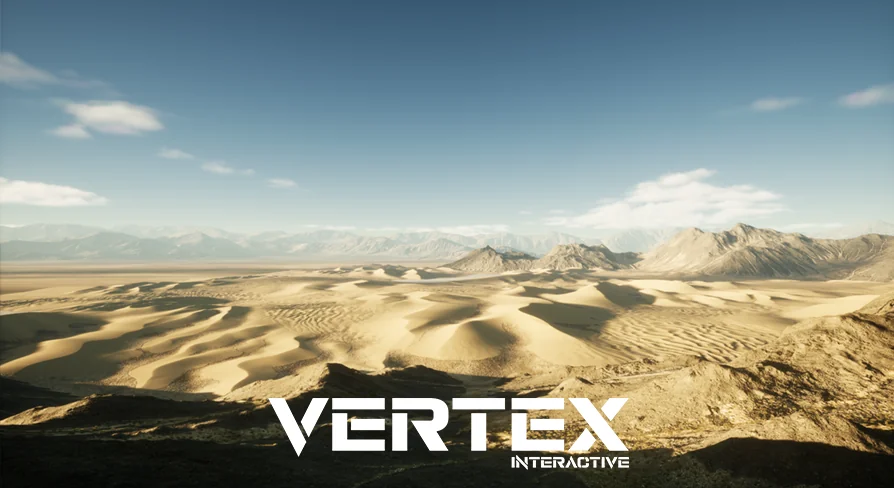
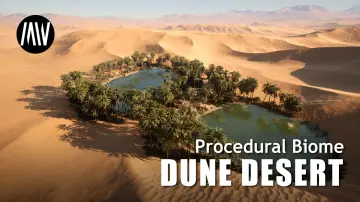
For scenes that need open desert space, rolling terrain, and a strong sense of dry natural scale, Sand Dunes Landscape Centers its workflow on traversal through dunes rather than on a small contained environment. The resource frames itself around the experience of walking among the sand dunes, and the technical features support that kind of broad outdoor construction with a large landmass, layered surface control, and background elements that help extend the horizon.
The environment covers 64 square kilometers, which immediately places it in the category of large outdoor terrain rather than a compact showcase level. That size changes how it can be approached in production. It is suited to scenes where distant shapes matter, where the silhouette of dunes needs to carry into the background, and where the terrain cannot rely on a single hero angle. The inclusion of a Background mesh Reinforces that wider-world intent, while Ground cover Helps prevent the landscape from feeling overly bare at close range.
64 Square Kilometers of desert space
Scale is one of the clearest defining traits here. A 64 square kilometer landscape gives room for long dune lines, open traversal, and broad lighting reads across a dry environment. In use, that kind of size is useful when a scene needs to feel exposed and continuous rather than segmented into small decorative pockets. The tags around open, outdoor, desert, terrain, mountain, nature, dune, sand, and world all point in the same direction: this is a resource for expansive natural space with a realistic bent.
The terrain is paired with 1x1 meters vertex density, a detail that matters when shaping the readability of dunes and handling terrain-driven variation at a finer level. For a sandy environment, surface flow and slope transitions are a major part of the look. Dense vertex spacing supports more faithful terrain definition across rises, troughs, and softer transitions, especially in a landscape where the surface itself is the main visual subject.
This also connects directly to how the environment can be staged. A dune field is not just a backdrop; it is the scene. When the landscape is carrying most of the composition, both the wide silhouette and the near-ground texture changes need enough underlying detail to hold together.
Surface Customization and Landscape Paint Layers
Where the asset becomes more flexible is in its surface workflow. Surface Customization, Landscape Paint Layers, and Heightmap Based Layer Blending Work together as the core implementation layer for shaping how the desert reads from one area to another. That makes the resource less about a fixed single-look terrain and more about adjusting how sand, variation, and transitions are distributed across the landscape.
Heightmap-based blending is especially relevant in a terrain-heavy scene because it helps define transitions through data-driven layering rather than relying on flat coverage. In a desert setting, that can support more believable shifts across the landscape surface, especially where dune forms need some separation in tone or material response. Paint layers then give direct control over where those changes appear, which is important in any environment that has to balance broad uniformity with enough breakup to stay readable.
The presence of Powerful material instance parameters Further pushes the landscape toward iteration-friendly setup. Instead of treating the terrain as static, the material system is clearly meant to be adjusted. That is a practical benefit when the same dune base needs to serve different scene moods, different times of day, or different levels of dryness and contrast within the same world space.
Plug and play material functions in Sand Dunes Landscape
The most densely featured part of the resource is its set of custom plug and play functions. Rather than offering only a terrain shell, it provides a toolkit of material-side controls that can shape how the landscape behaves visually. The named functions include Distance Roughness, Random Darken, Distance Fade, Displacement, Cloud Panner, World Normal, Tessellation, Material AO, SpecRough, World UV, Colorizer, NormalB, Modifier, Particle, Breeze, Detail, Mixer, and Color.
Read together, those functions outline a landscape material setup that aims to be broad rather than narrowly single-purpose. Some controls focus on distance-based behavior, such as Distance Roughness and Distance Fade. Others focus on shaping the material response and look, including Material AO, SpecRough, Colorizer, Detail, Mixer, and Color. World-oriented controls like World Normal and World UV suggest attention to how the terrain material is applied across the landscape space, while Displacement and Tessellation tie back to the physical readability of the ground itself.
For creative usage, this matters because desert scenes often live or die by restrained variation. Sand can appear simple at first glance, but in practice it needs subtle modulation in color, roughness, depth, and breakup to avoid flattening out. A function such as Random Darken can help introduce unevenness. Color and Colorizer can push the terrain toward different sand tones. Detail can support close-up texture presence. Material AO and SpecRough affect how the surface reacts under light. None of that changes the core theme of the environment, but it does give more control over how austere, clean, weathered, or visually varied the dunes feel.
Distance Based Landscape Tessellation and dynamic cloud shadows
Two of the more scene-defining systems are Distance Based Landscape Tessellation And Dynamic Cloud Shadows. Both speak directly to how a wide outdoor environment is perceived in motion.
Distance-based tessellation is a terrain-focused feature that fits the landscape’s emphasis on scale and surface readability. In a dune environment, the ground is not incidental geometry; it is the central form language of the scene. Giving the terrain a distance-aware tessellation setup supports that role by helping preserve form where it counts most visually.
Dynamic cloud shadows add a layer of movement across the open environment. In a large dry landscape, broad shadow drift can dramatically change the way surface relief reads without needing to alter the terrain itself. Dunes are especially sensitive to changing light because so much of their definition comes from slope and soft contrast. Cloud shadow movement can make a very open space feel more active and less static, which is useful for scenes that need natural atmosphere without relying on dense vegetation or heavy architecture.
The inclusion of Cloud Panner In the custom function set fits naturally beside this. It suggests a material-side path for handling moving cloud-related behavior, complementing the dynamic shadow system in a way that keeps the environment’s atmosphere tied to the terrain presentation.
Working with UE5 exposure and where this landscape fits
One direct implementation note is given for UE5: the Exposure Compensation Value in the Post Processing Volume May need to be increased. That is a small but concrete setup point, and it matters because desert scenes often rely on bright values and broad light response. If the exposure is not landing correctly, the readability of sand, slope, and distant forms can shift away from the intended look.
That note also helps define the best fit for this environment. Sand Dunes Landscape is a strong match for projects that need a realistic outdoor desert terrain with enough scale to support open views and enough material-side control to tune the surface rather than accept a single locked appearance. The background mesh and ground cover help carry the scene across distance and near-ground space. Paint layers and heightmap-based blending support art direction on the terrain itself. The custom function set gives room to adjust how the sand behaves under light, at distance, and across world space.
For teams or solo creators building dry natural worlds, dune traversal spaces, or large terrain studies anchored in sand and open air, this resource is most useful when the landscape is expected to do the heavy lifting. Its strengths sit in scale, surface control, and the set of landscape-focused material tools that shape how the desert feels from the first wide view to the closer walk across the ground.
 Desert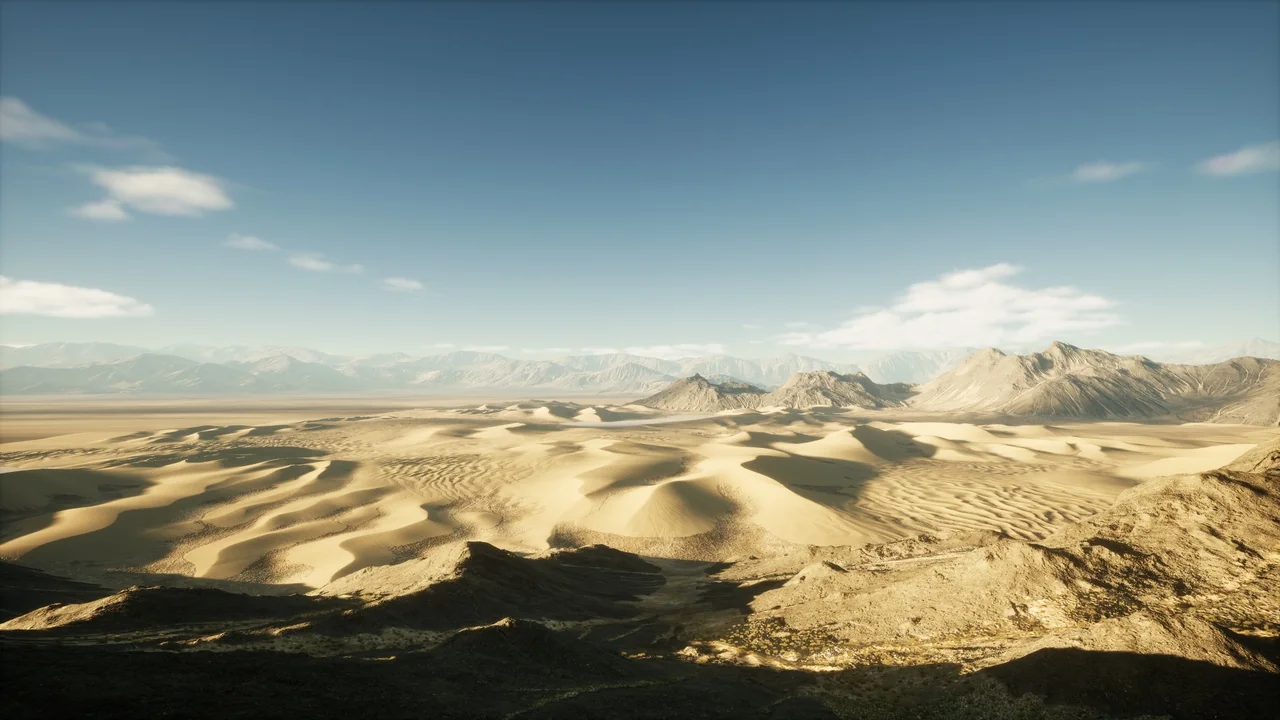
 Desert
 Weather
 Desert