"7aa4acc705f0d80b"{"id":"1000094","slug":"ships-graveyard","title":"Ships Graveyard","category":"Aquatic","engine":"Engine Version: 4.26+,5.0+","assetVersion":"Engine Version: 4.26+,5.0+","engineVersion":"","tag":"Aquatic","accent":"blue","visual":"mech","summary":"Ships Graveyard provides a realistic rusty ship and boat graveyard with a small seaside area, suitable for current generation game scene budgets.","platform":"Unreal Engine","publishedAt":"2026-06-07T11:48:32.856Z","updatedAt":"2026-06-07T11:48:32.856Z","sourceNotes":[],"fileContents":[],"compatibility":["Unreal Engine"],"featuredImage":{"alt":"Ships Graveyard","src":"/wp-content/uploads/published/2026/06/eaf39b331c4e-712a2b24-4715-4cf4-af17-34a630e4e887-a4c2ec053f.webp"},"hasDownloadLink":true,"downloads":0,"terms":[{"taxonomy":"category","slug":"aquatic","name":"Aquatic"}],"galleryImages":[{"src":"/wp-content/uploads/published/2026/06/a2373c4748c8-387d6565-ca75-41f5-8f84-9807163365ba-3b34aaf0c3.webp","alt":"Ships Graveyard"},{"src":"/wp-content/uploads/published/2026/06/207a548536f9-abfb68b7-50c6-46c3-b5ce-cbddbc1b42fc-bb265d20dd.webp","alt":"Ships Graveyard"},{"src":"/wp-content/uploads/published/2026/06/c9462559b6de-ceed9367-46c9-4980-9049-8f59c581d47a-955a4ea548.webp","alt":"Ships Graveyard"},{"src":"/wp-content/uploads/published/2026/06/7c0c9a47dd6a-b5a4ede0-5ad4-4b6f-8b40-3e1b318e377f-a8c8c09353.webp","alt":"Ships Graveyard"},{"src":"/wp-content/uploads/published/2026/06/4de968819f53-5edac677-9bcc-4f68-8371-065b8166c108-38f419cf74.webp","alt":"Ships Graveyard"},{"src":"/wp-content/uploads/published/2026/06/5317c50caf26-1d0188bd-1225-4cde-ab3c-1057c4554630-8b630eab40.webp","alt":"Ships Graveyard"},{"src":"/wp-content/uploads/published/2026/06/1e8fe00b0507-6de6fadc-8ea4-4dd2-97a4-77597eeb7ff9-c9a6e87951.webp","alt":"Ships Graveyard"},{"src":"/wp-content/uploads/published/2026/06/e6b7ab663069-d0db3d7d-fb5a-4abf-b817-cc5f531cc69e-f6787860c4.webp","alt":"Ships Graveyard"},{"src":"/wp-content/uploads/published/2026/06/2d7942f01ba1-bc87087c-8980-4c78-b538-2e6b1668876f-ccf54d4623.webp","alt":"Ships Graveyard"},{"src":"/wp-content/uploads/published/2026/06/9a1d17384239-90fbe6ea-0a6e-40d7-8056-5ff59d6ce29d-f88bb289a3.webp","alt":"Ships Graveyard"}],"accessPanel":{"kind":"resource","title":"Access this resource","eyebrow":"Free Download","message":"Log in or create a free account to start your download.","fileName":"Content.7z","safetyNote":"Resources are manually reviewed before listing to improve quality and reduce obvious risks.","actionLabel":"Download Free","resourceType":"Resource archive"},"contentHtml":"\u003cp\u003eFinding an environment with a strong visual identity usually means balancing atmosphere, scale, and practical scene scope. Ships Graveyard answers that with a graveyard of old rusted ships and boats set beside a small seaside area, giving artists and developers a location that already carries a clear mood before any extra dressing begins.\u003c/p\u003e\n\u003cp\u003eThe setting is realistic and immediately readable. Rust, aging metal, abandoned vessels, and the presence of the ocean point toward scenes of neglect, passage of time, and coastal wear. Instead of spreading across a broad open shoreline, the inclusion of a small seaside area suggests a more contained environment, which can be useful when a project needs a focused level space rather than a massive coastal map.\u003c/p\u003e \u003ch2\u003eStaging a rusty ship graveyard scene\u003c/h2\u003e\n\u003cp\u003eThe core strength of Ships Graveyard is its subject matter. Old rusted ships and boats create large, recognizable forms that can anchor a level visually. Even without heavy modification, a ship graveyard naturally introduces silhouette variety through hulls, decks, broken profiles, and clustered vessel shapes.\u003c/p\u003e\n\u003cp\u003eThat makes the environment well suited to scenes that need a strong backdrop or a primary point of exploration. A rusty ship graveyard can read as abandoned, realistic, and weathered at a glance. For artists, that means less effort spent establishing the basic identity of a place. For developers, it offers a level space with obvious landmarks, which can help orient movement through the environment and support encounter spaces around the boats and shoreline.\u003c/p\u003e \u003ch2\u003eThe small seaside area changes the scale\u003c/h2\u003e\n\u003cp\u003eThe seaside portion matters as much as the ships themselves. A small seaside area frames the ship graveyard as more than a collection of isolated props by giving it a surrounding context tied to the ocean.\u003c/p\u003e\n\u003cp\u003eIn practice, that opens up a few different scene directions while staying within the same environment theme. The shoreline can function as an approach into the wreck area, a quieter edge space beside the larger vessel forms, or a transition between open water mood and grounded play space. Because the area is described as small, it suggests a setup that stays compact and deliberate rather than sprawling. That can help teams looking for a realistic coastal level that feels complete without needing the footprint of a much larger ocean environment.\u003c/p\u003e \u003ch2\u003eRealistic boats, ocean mood, and level atmosphere\u003c/h2\u003e\n\u003cp\u003eThe tags point clearly toward a realistic presentation: rusty, ship, level, realistic, boat, and ocean. Together they define the tone of the environment very directly. This is not an abstract maritime theme or a stylized harbor. It is a realistic level space shaped by old boats, corroded surfaces, and an ocean-side setting.\u003c/p\u003e\n\u003cp\u003eThat combination supports a range of creative uses focused on atmosphere. Rusty ships bring heaviness and visual history. Boats add scale variation, from larger wreck forms to smaller marine elements. The ocean connection reinforces exposure, weathering, and the sense that the location belongs to a lived-in coastline. If a scene needs a place that feels worn down rather than pristine, the environment already leans in that direction through its materials and subject matter. If gameplay needs a memorable zone, the contrast between dense rusted vessels and a seaside edge gives the level a distinct spatial character.\u003c/p\u003e \u003ch2\u003eWhere Ships Graveyard can sit inside a production\u003c/h2\u003e\n\u003cp\u003eBecause the environment is a level-focused resource, it is easy to think of it as a ready-made scene foundation rather than a loose collection of unrelated nautical pieces. That distinction matters when planning production. A graveyard of ships and boats with a small seaside area can serve as a dedicated chapter location, a contained exploration zone, or a visually specific backdrop for cinematic work.\u003c/p\u003e\n\u003cp\u003eIts realistic style also makes it easier to place alongside other grounded environments in a project. A team building coastal, industrial, abandoned, or ocean-adjacent sequences could use Ships Graveyard where a stronger sense of decay is needed. The rust theme gives it a harsher and older appearance than a standard dockside setting, while the level identity keeps it tied to scene construction rather than isolated hero props alone. For artists blocking shots or developers mapping progression, that means the environment already arrives with a recognizable purpose: it is a wreck-strewn coastal place with enough thematic clarity to carry a scene on its own.\u003c/p\u003e \u003ch2\u003eCurrent gen games budgets and practical scope\u003c/h2\u003e\n\u003cp\u003eAll assets are created to correspond to current gen games budgets. That is the main implementation note attached to the environment, and it places the resource in a practical production context rather than treating it as purely decorative work.\u003c/p\u003e\n\u003cp\u003eFor teams, that note signals that the asset creation has been aligned with present-day game scene expectations. It does not define a platform, a file structure, or a specific technical specification, but it does frame the work as intended for contemporary game development use. Combined with the focused subject matter, that makes Ships Graveyard easier to place in projects that need a realistic environment theme without drifting into an oversized or undefined scene concept. It fits best when production calls for a coastal wreck location with immediate mood, recognizable forms, and a contained seaside footprint.\u003c/p\u003e \u003ch2\u003eUsing Ships Graveyard when a scene needs decay fast\u003c/h2\u003e\n\u003cp\u003eSome environments need extensive setup before they communicate anything specific. Ships Graveyard is the opposite. The presence of rusted ships, boats, and a seaside edge tells the story of the place almost immediately.\u003c/p\u003e\n\u003cp\u003eThat makes it a practical fit for productions that need to establish a believable ocean-side ruin with minimal ambiguity. Whether the goal is to frame traversal through wrecks, set action against corroded hulls, or build a realistic abandoned shoreline, the environment already points in that direction. Its strongest use is as a compact, atmospheric level space where rusty marine structures do most of the visual work from the start.\u003c/p\u003e\n\n\u003ch2\u003eMore From The Same Workflow\u003c/h2\u003e\n\u003cul\u003e\n\u003cli\u003e\u003ca href=\"https://3dcghub.com/underwater-sunken-ship-environment-underwater-sunken-ship-ship-underwater/\" title=\"Underwater Sunken Ship Environment ( Underwater Sunken Ship Ship Underwater )\"\u003eUnderwater Sunken Ship Environment ( Underwater Sunken Ship Ship Underwater )\u003c/a\u003e\u003c/li\u003e\n\u003cli\u003e\u003ca href=\"https://3dcghub.com/gothic-cemetery-pack/\" title=\"Gothic Cemetery Pack\"\u003eGothic Cemetery Pack\u003c/a\u003e\u003c/li\u003e\n\u003cli\u003e\u003ca href=\"https://3dcghub.com/pirates-low-poly-3d-models-pack/\" title=\"Pirates - Low Poly 3D Models Pack\"\u003ePirates - Low Poly 3D Models Pack\u003c/a\u003e\u003c/li\u003e\n\u003cli\u003e\u003ca href=\"https://3dcghub.com/underwater-sunken-ship-environment/\" title=\"Underwater Sunken Ship Environment\"\u003eUnderwater Sunken Ship Environment\u003c/a\u003e\u003c/li\u003e\n\u003cli\u003e\u003ca href=\"https://3dcghub.com/landscaping-aquatic-plants/\" title=\"Landscaping Aquatic Plants\"\u003eLandscaping Aquatic Plants\u003c/a\u003e\u003c/li\u003e\n\u003c/ul\u003e","contentTextLength":6318,"navigation":{"current":1976,"total":3925,"previous":{"id":"1000095","slug":"sound-of-nature-and-city-sfx-pack","title":"Sound Of Nature and City SFX Pack","category":"Sound Effects","platform":"Unreal Engine","updatedAt":"2026-06-07T12:12:13.886Z"},"next":{"id":"1000093","slug":"sand-dunes-landscape","title":"Sand Dunes Landscape","category":"Desert","platform":"Unreal Engine","updatedAt":"2026-06-07T11:34:53.650Z"}},"relatedResources":[{"id":"1000336","slug":"ship-frigate","title":"Ship Frigate","category":"Aquatic","engine":"5.3+","assetVersion":"","engineVersion":"Engine Version: 5.3+","tag":"Aquatic","accent":"blue","visual":"mech","summary":"A fully rigged and interactive Ship Frigate featuring dynamic sails, visual damage systems, customizable materials, and integrated naval combat controls.","platform":"Unreal Engine","publishedAt":"2026-07-05T08:02:41.528Z","updatedAt":"2026-07-05T08:02:41.528Z","sourceNotes":[],"fileContents":[],"compatibility":["Unreal Engine","Engine Version: 5.3+"],"featuredImage":{"alt":"Ship Frigate","src":"/wp-content/uploads/published/2026/07/4a7ca810fce9-9aad7754-ee73-448d-9888-97f2da89e13b-de358fcf9a.webp"},"hasDownloadLink":true,"downloads":3},{"id":"6967","slug":"underwater-sunken-ship-environment-underwater-sunken-ship-ship-underwater","title":"Underwater Sunken Ship Environment ( Underwater Sunken Ship Ship Underwater )","category":"Aquatic","engine":"5.0+","assetVersion":"Engine version: 5.0+","engineVersion":"5.0","tag":"Aquatic","accent":"blue","visual":"city","summary":"Discover a comprehensive collection of over 180 unique meshes designed to create stunning deep-sea shipwrecks and aquatic landscapes in Unreal Engine.","platform":"Unreal Engine","publishedAt":"2026-02-20T16:27:06.000Z","updatedAt":"2026-04-19T15:56:05.000Z","sourceNotes":[],"fileContents":[],"compatibility":["Unreal Engine","Engine version: 5.0+"],"featuredImage":{"alt":"Underwater Sunken Ship Environment ( Underwater Sunken Ship Ship Underwater )","src":"https://3dcghub.com/wp-content/uploads/2026/02/b368d4dd-d265-4c54-b07d-0669fe9e71e2.webp"},"hasDownloadLink":true,"downloads":0},{"id":"1001779","slug":"ocean-environment-pack-2-coral-reef","title":"Ocean Environment Pack 2 - Coral Reef","category":"Aquatic","engine":"5.0+","assetVersion":"","engineVersion":"Engine Version: 5.0+","tag":"Aquatic","accent":"blue","visual":"city","summary":"Explore the Ocean Environment Pack 2 - Coral Reef, featuring deep-sea lighting setups, modular wooden shipwreck meshes, diverse coral types, and sunfish.","platform":"Unreal Engine","publishedAt":"2026-10-20T03:26:47.429Z","updatedAt":"2026-10-20T03:26:47.429Z","sourceNotes":[],"fileContents":[],"compatibility":["Unreal Engine","Engine Version: 5.0+"],"featuredImage":{"alt":"Ocean Environment Pack 2 - Coral Reef","src":"/wp-content/uploads/published/2026/10/ebc0507d2b35-c25a422f-f9dd-4675-a49d-0d1e0f92d780-58dd1a054a.webp"},"hasDownloadLink":true,"downloads":0}]}
Aquatic
Ships Graveyard
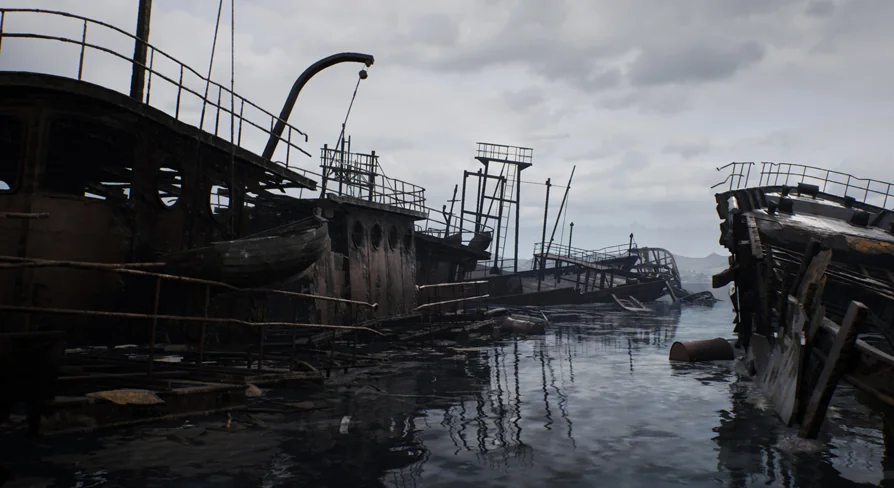
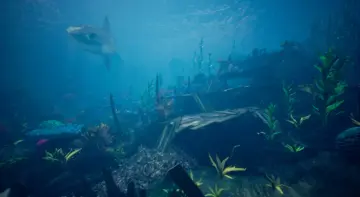
Ships Graveyard provides a realistic rusty ship and boat graveyard with a small seaside area, suitable for current generation game scene budgets.
Category:Unreal Engine,AquaticPlatform: Unreal EngineEngine: Engine Version: 4.26+,5.0+Published: Jun 7, 2026
Aquatic
Resource overview
Finding an environment with a strong visual identity usually means balancing atmosphere, scale, and practical scene scope. Ships Graveyard answers that with a graveyard of old rusted ships and boats set beside a small seaside area, giving artists and developers a location that already carries a clear mood before any extra dressing begins.
The setting is realistic and immediately readable. Rust, aging metal, abandoned vessels, and the presence of the ocean point toward scenes of neglect, passage of time, and coastal wear. Instead of spreading across a broad open shoreline, the inclusion of a small seaside area suggests a more contained environment, which can be useful when a project needs a focused level space rather than a massive coastal map.
Staging a rusty ship graveyard scene
The core strength of Ships Graveyard is its subject matter. Old rusted ships and boats create large, recognizable forms that can anchor a level visually. Even without heavy modification, a ship graveyard naturally introduces silhouette variety through hulls, decks, broken profiles, and clustered vessel shapes.
That makes the environment well suited to scenes that need a strong backdrop or a primary point of exploration. A rusty ship graveyard can read as abandoned, realistic, and weathered at a glance. For artists, that means less effort spent establishing the basic identity of a place. For developers, it offers a level space with obvious landmarks, which can help orient movement through the environment and support encounter spaces around the boats and shoreline.
The small seaside area changes the scale
The seaside portion matters as much as the ships themselves. A small seaside area frames the ship graveyard as more than a collection of isolated props by giving it a surrounding context tied to the ocean.
In practice, that opens up a few different scene directions while staying within the same environment theme. The shoreline can function as an approach into the wreck area, a quieter edge space beside the larger vessel forms, or a transition between open water mood and grounded play space. Because the area is described as small, it suggests a setup that stays compact and deliberate rather than sprawling. That can help teams looking for a realistic coastal level that feels complete without needing the footprint of a much larger ocean environment.
Realistic boats, ocean mood, and level atmosphere
The tags point clearly toward a realistic presentation: rusty, ship, level, realistic, boat, and ocean. Together they define the tone of the environment very directly. This is not an abstract maritime theme or a stylized harbor. It is a realistic level space shaped by old boats, corroded surfaces, and an ocean-side setting.
That combination supports a range of creative uses focused on atmosphere. Rusty ships bring heaviness and visual history. Boats add scale variation, from larger wreck forms to smaller marine elements. The ocean connection reinforces exposure, weathering, and the sense that the location belongs to a lived-in coastline. If a scene needs a place that feels worn down rather than pristine, the environment already leans in that direction through its materials and subject matter. If gameplay needs a memorable zone, the contrast between dense rusted vessels and a seaside edge gives the level a distinct spatial character.
Where Ships Graveyard can sit inside a production
Because the environment is a level-focused resource, it is easy to think of it as a ready-made scene foundation rather than a loose collection of unrelated nautical pieces. That distinction matters when planning production. A graveyard of ships and boats with a small seaside area can serve as a dedicated chapter location, a contained exploration zone, or a visually specific backdrop for cinematic work.
Its realistic style also makes it easier to place alongside other grounded environments in a project. A team building coastal, industrial, abandoned, or ocean-adjacent sequences could use Ships Graveyard where a stronger sense of decay is needed. The rust theme gives it a harsher and older appearance than a standard dockside setting, while the level identity keeps it tied to scene construction rather than isolated hero props alone. For artists blocking shots or developers mapping progression, that means the environment already arrives with a recognizable purpose: it is a wreck-strewn coastal place with enough thematic clarity to carry a scene on its own.
Current gen games budgets and practical scope
All assets are created to correspond to current gen games budgets. That is the main implementation note attached to the environment, and it places the resource in a practical production context rather than treating it as purely decorative work.
For teams, that note signals that the asset creation has been aligned with present-day game scene expectations. It does not define a platform, a file structure, or a specific technical specification, but it does frame the work as intended for contemporary game development use. Combined with the focused subject matter, that makes Ships Graveyard easier to place in projects that need a realistic environment theme without drifting into an oversized or undefined scene concept. It fits best when production calls for a coastal wreck location with immediate mood, recognizable forms, and a contained seaside footprint.
Using Ships Graveyard when a scene needs decay fast
Some environments need extensive setup before they communicate anything specific. Ships Graveyard is the opposite. The presence of rusted ships, boats, and a seaside edge tells the story of the place almost immediately.
That makes it a practical fit for productions that need to establish a believable ocean-side ruin with minimal ambiguity. Whether the goal is to frame traversal through wrecks, set action against corroded hulls, or build a realistic abandoned shoreline, the environment already points in that direction. Its strongest use is as a compact, atmospheric level space where rusty marine structures do most of the visual work from the start.
 Aquatic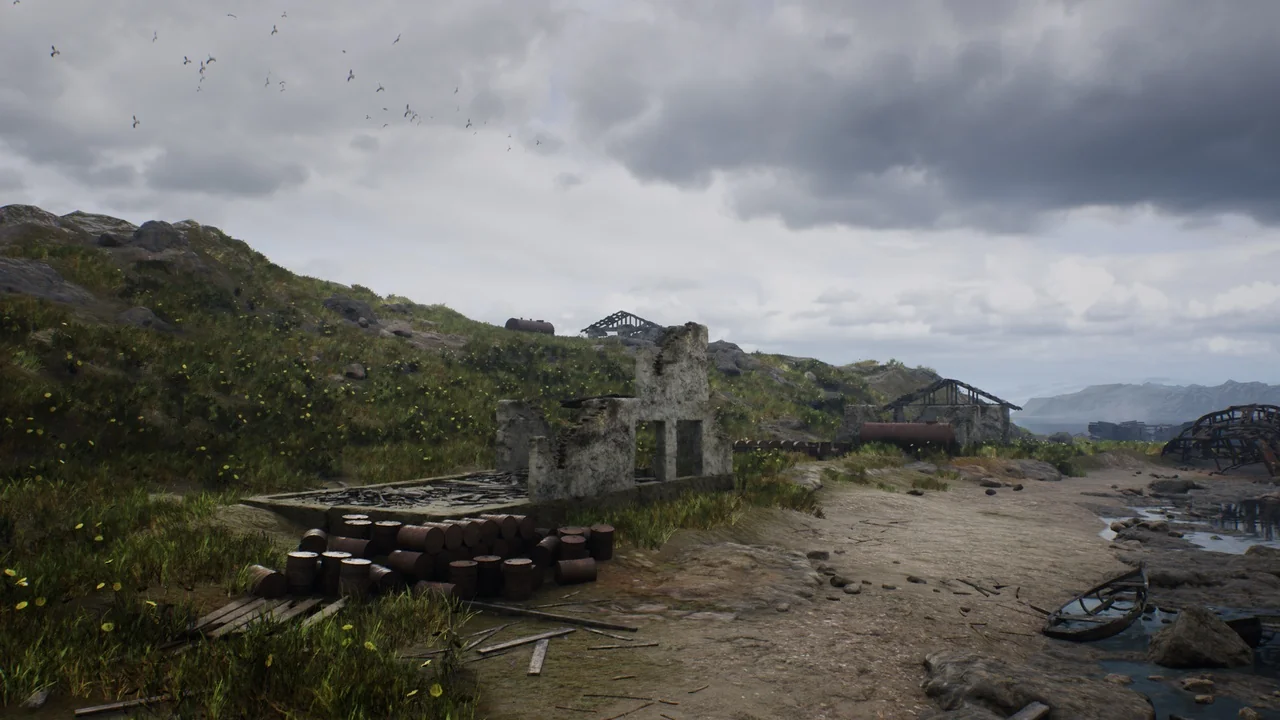
 Aquatic
 Aquatic
 Aquatic