"7aa4acc705f0d80b"{"id":"1000092","slug":"ruins","title":"Ruins","category":"Rural","engine":"Engine Version: 4.26+,5.0+","assetVersion":"Engine Version: 4.26+,5.0+","engineVersion":"","tag":"Rural","accent":"blue","visual":"mech","summary":"Ruins includes building meshes, rubble, photo scanned rocks and logs, and vegetation for fantasy landscape setup, with demo scene visuals improved by distance f","platform":"Unreal Engine","publishedAt":"2026-06-07T11:31:08.566Z","updatedAt":"2026-06-07T11:31:08.566Z","sourceNotes":[],"fileContents":[],"compatibility":["Unreal Engine"],"featuredImage":{"alt":"Ruins","src":"/wp-content/uploads/published/2026/06/48c307014271-42c1ee95-10d5-4c3b-990f-8554de11b7c9-6256fc4a92.webp"},"hasDownloadLink":true,"downloads":0,"terms":[{"taxonomy":"category","slug":"rural","name":"Rural"}],"galleryImages":[{"src":"/wp-content/uploads/published/2026/06/0a58ee1fb926-47c81595-0c8a-48d4-b527-d286f15a5822-7480bfbfdd.webp","alt":"Ruins"},{"src":"/wp-content/uploads/published/2026/06/82511e73f685-fd8257a6-72a4-4496-843b-483259f2f496-194fded48f.webp","alt":"Ruins"},{"src":"/wp-content/uploads/published/2026/06/97a662888dd4-3f1bb57a-e73f-4a1c-9d33-3cc8a5d3737e-ef3b4d72d9.webp","alt":"Ruins"},{"src":"/wp-content/uploads/published/2026/06/b975b800785a-7174615b-ca12-447c-bd41-d334963ba9ee-d7721d9d95.webp","alt":"Ruins"},{"src":"/wp-content/uploads/published/2026/06/d1f3db22e98b-d3df957e-f9e7-440d-bb63-7b8ac8699c14-3e13d77805.webp","alt":"Ruins"},{"src":"/wp-content/uploads/published/2026/06/c5427d41a4a2-1779f677-c201-421e-8699-3d2051de5dba-dfe795c4d1.webp","alt":"Ruins"},{"src":"/wp-content/uploads/published/2026/06/68298c80b76a-d734fa70-a6d7-4307-99b7-de0edb414ebf-39ef8fe051.webp","alt":"Ruins"},{"src":"/wp-content/uploads/published/2026/06/9c72ae448dea-b201b1f4-1341-4ebe-8a70-31375cb2cdda-1bfc5ccedc.webp","alt":"Ruins"},{"src":"/wp-content/uploads/published/2026/06/a245a0525c83-75ae8500-d844-4485-b7b1-8f91adc1e4fc-50c9327c80.webp","alt":"Ruins"},{"src":"/wp-content/uploads/published/2026/06/959ebe734a0b-a43c0a9c-72f1-4396-83d3-7d31342be985-65c0cef8dc.webp","alt":"Ruins"}],"accessPanel":{"kind":"resource","title":"Access this resource","eyebrow":"Free Download","message":"Log in or create a free account to start your download.","fileName":"Ruins.7z","safetyNote":"Resources are manually reviewed before listing to improve quality and reduce obvious risks.","actionLabel":"Download Free","resourceType":"Resource archive"},"contentHtml":"\u003cp\u003eBuilding meshes, rubble, photo scanned rocks and logs, and vegetation are the core of Ruins. The package is anchored in the practical parts needed to begin shaping a fantasy landscape, combining ruined structural pieces with natural ground and set-dressing elements instead of focusing on only one side of the environment.\u003c/p\u003e\u003cp\u003eThat combination gives the resource a clear role in scene assembly. It supports work where broken architecture has to sit naturally within a broader outdoor space, with enough variety in the included element types to move from the remains of a built location into surrounding nature without stepping outside the same package.\u003c/p\u003e\u003ch2\u003eBuilding meshes, rubble, and the ruined foundation\u003c/h2\u003e\u003cp\u003eThe structural side of Ruins starts with easy to use building meshes. That wording matters because it points to straightforward placement and scene construction rather than a complicated or heavily specialized setup. The resource is meant to help establish a ruined location quickly, using meshes that can serve as the visible base of walls, fragments, or other built forms that define a fantasy ruin.\u003c/p\u003e\u003cp\u003eRubble extends that foundation. In a ruined environment, intact surfaces rarely carry the full scene on their own, and rubble is what helps break clean lines and make the location read as damaged, abandoned, or collapsed. Here, rubble sits beside the building meshes as one of the central included parts, which makes the package useful not just for laying out a settlement footprint or isolated ruin, but for giving that space the scattered remains that visually connect destruction to the surrounding ground.\u003c/p\u003e\u003cp\u003eThe tags attached to the resource reinforce this direction: fantasy, town, level, realistic, ruined, and ruin all point toward environment work where man-made spaces have fallen into disrepair. The package does not read as a single hero prop or a narrow architectural study. It is set up for broader level dressing, where structural remnants and debris have to work together inside a landscape.\u003c/p\u003e\u003ch2\u003ePhoto scanned rocks and logs in Ruins\u003c/h2\u003e\u003cp\u003eRuins does not stop at broken construction. It also includes photo scanned rocks and logs, which shifts the package beyond masonry and into natural terrain detail. Rocks and logs are often the pieces that help a ruined place feel settled into a larger world rather than isolated on a flat surface. Their presence here makes the package suitable for scenes where the remains of a town or structure are surrounded by uneven natural forms.\u003c/p\u003e\u003cp\u003eThe phrase photo scanned is one of the strongest style indicators in the resource. It signals a realistic visual direction for those natural elements, and that aligns with the realistic tag attached to the package. In practice, this gives the environment a material contrast: building remains and rubble establish the ruined site, while scanned rocks and logs bring in surface variation and more grounded organic shapes.\u003c/p\u003e\u003cp\u003eThat matters especially in fantasy landscape work. Fantasy settings can range from highly stylized to more naturalistic, and Ruins leans toward the latter through its use of photo scanned natural pieces. The fantasy aspect comes from the setting and scene potential, while the realistic aspect comes through the treatment of nature and the physical remains of built space.\u003c/p\u003e\u003ch2\u003eVegetation and natural coverage for a fantasy landscape\u003c/h2\u003e\u003cp\u003eVegetation completes the package’s environment spread. With building meshes, rubble, rocks, and logs already in place, vegetation is what allows the scene to move from a simple arrangement of objects into something closer to a living or overgrown landscape. It gives the resource coverage across both hard structure and natural fill, which is important for artists assembling a ruin that has to feel integrated into its surroundings.\u003c/p\u003e\u003cp\u003eThe package describes itself as including everything needed to start a fantasy landscape. That does not imply every possible environment asset type, but it does clearly frame the intended use: starting the scene, establishing the main visual language, and getting enough essential parts into one place to begin layout and dressing. Vegetation is central to that promise because it helps bridge the hard edges of ruined architecture and the broader natural setting.\u003c/p\u003e\u003cp\u003eIn a practical workflow, these categories naturally support layered implementation. Building meshes can define the site, rubble can break up and age those forms, rocks and logs can shape the surrounding terrain and edges, and vegetation can soften transitions or suggest reclaiming growth. The resource’s value comes from this mix of categories working together toward one environment type rather than existing as disconnected pieces.\u003c/p\u003e\u003ch2\u003eDistance field ambient occlusions for the demo scene\u003c/h2\u003e\u003cp\u003eRuins includes one direct setup note: for better visuals, enable distance field ambient occlusions for the demo scene from engine settings. That is the only explicit implementation instruction provided, and it is specific enough to be useful. Rather than leaving presentation entirely up to default project settings, the package points to a rendering feature that improves the look of the demo scene.\u003c/p\u003e\u003cp\u003eThis instruction says something important about how the environment is meant to be viewed. Ambient occlusion contributes to the contact, depth, and shadowing relationships between surfaces, which is particularly relevant in a scene built from ruins, rubble, rocks, logs, and vegetation. Those kinds of assets rely heavily on visible creases, overlaps, and grounded intersections. Enabling the noted setting helps the demo scene present those relationships more effectively.\u003c/p\u003e\u003cp\u003eIt also shows that scene setup is not just about dropping meshes into place. Presentation matters, especially for an environment that mixes damaged structures and dense natural detail. The package offers a straightforward reminder that engine settings can materially change how convincingly those parts read together in the sample scene.\u003c/p\u003e\u003ch2\u003eWhere Ruins fits in level and town work\u003c/h2\u003e\u003cp\u003eThe tags natural, fantasy, town, nature, level, realistic, ruined, and ruin place Ruins in a fairly specific creative lane. It suits projects where a level needs a ruined settlement, a damaged built area inside a natural setting, or a fantasy location with a grounded surface treatment. The town tag suggests a wider environment context than a lone fragment of architecture, while level indicates use in broader scene or gameplay spaces rather than only still composition.\u003c/p\u003e\u003cp\u003eAt the same time, the resource name and included contents keep the theme narrow enough to remain coherent. This is not a general-purpose nature collection or a pure architecture set. It is a ruin-focused environment package where structural decay and natural surroundings meet. That focus makes implementation decisions easier, because the elements all support the same visual direction.\u003c/p\u003e\u003cp\u003eThe overall setup is practical: easy to use building meshes for structure, rubble for damage and breakup, photo scanned rocks and logs for grounded natural detail, vegetation for environmental coverage, and a specific ambient occlusion setting to improve the demo scene. Taken together, Ruins is set up to handle the early construction and visual shaping of a fantasy landscape with a ruined, realistic, and natural character.\u003c/p\u003e\n\n\u003ch2\u003eRelated Resources Worth Checking\u003c/h2\u003e\n\u003cul\u003e\n\u003cli\u003e\u003ca href=\"https://3dcghub.com/steppe-environment-4x4km-landscape-landscape-grassland-landscape-rural/\" title=\"Steppe Environment 4x4km Landscape ( Landscape, Grassland Landscape , Rural )\"\u003eSteppe Environment 4x4km Landscape ( Landscape, Grassland Landscape , Rural )\u003c/a\u003e\u003c/li\u003e\n\u003cli\u003e\u003ca href=\"https://3dcghub.com/nanite-foliage-wheat-field/\" title=\"Nanite Foliage - Wheat Field\"\u003eNanite Foliage - Wheat Field\u003c/a\u003e\u003c/li\u003e\n\u003cli\u003e\u003ca href=\"https://3dcghub.com/pure-nature-meadows/\" title=\"Pure Nature : Meadows\"\u003ePure Nature : Meadows\u003c/a\u003e\u003c/li\u003e\n\u003cli\u003e\u003ca href=\"https://3dcghub.com/grass-and-greens-pack/\" title=\"Grass and Greens Pack\"\u003eGrass and Greens Pack\u003c/a\u003e\u003c/li\u003e\n\u003cli\u003e\u003ca href=\"https://3dcghub.com/ancient-cave-ruins-ancient-temple-ruins-ancient-valley/\" title=\"Ancient Cave Ruins (Ancient Temple Ruins, Ancient Valley )\"\u003eAncient Cave Ruins (Ancient Temple Ruins, Ancient Valley )\u003c/a\u003e\u003c/li\u003e\n\u003c/ul\u003e","contentTextLength":7502,"navigation":{"current":1978,"total":3925,"previous":{"id":"1000093","slug":"sand-dunes-landscape","title":"Sand Dunes Landscape","category":"Desert","platform":"Unreal Engine","updatedAt":"2026-06-07T11:34:53.650Z"},"next":{"id":"1000091","slug":"rino-s-diner-environment-rinos-diner-american-american-interior-diner-usa","title":"Rino's Diner Environment ( Rinos Diner American American Interior Diner USA )","category":"Interior","platform":"Unreal Engine","updatedAt":"2026-06-07T11:14:10.600Z"}},"relatedResources":[{"id":"1001537","slug":"modular-rural-cabins","title":"Modular Rural Cabins","category":"Rural","engine":"4.22+,5.0+","assetVersion":"","engineVersion":"Engine Version: 4.22+,5.0+","tag":"Rural","accent":"blue","visual":"mech","summary":"Build realistic forest, lake, and horror scenes with Modular Rural Cabins, featuring enterable interiors, updated trees, and full Nanite and Lumen support.","platform":"Unreal Engine","publishedAt":"2026-10-09T17:30:15.417Z","updatedAt":"2026-10-09T17:30:15.417Z","sourceNotes":[],"fileContents":[],"compatibility":["Unreal Engine","Engine Version: 4.22+,5.0+"],"featuredImage":{"alt":"Modular Rural Cabins","src":"/wp-content/uploads/published/2026/10/10301930da21-88f37006-85c0-4d9a-bcea-47cf7f34dd18-53b78f135a.webp"},"hasDownloadLink":true,"downloads":1},{"id":"1000420","slug":"american-drive-modular-winter-house-with-interior","title":"American Drive | Modular Winter House with Interior","category":"Rural","engine":"5.5+","assetVersion":"","engineVersion":"Engine Version: 5.5+","tag":"Rural","accent":"blue","visual":"mech","summary":"Discover the American Drive modular kit, featuring seamless snapping architecture, fully furnished interiors, and snowy winter PBR materials.","platform":"Unreal Engine","publishedAt":"2026-07-09T17:46:14.043Z","updatedAt":"2026-07-09T17:46:14.043Z","sourceNotes":[],"fileContents":[],"compatibility":["Unreal Engine","Engine Version: 5.5+"],"featuredImage":{"alt":"American Drive | Modular Winter House with Interior","src":"/wp-content/uploads/published/2026/07/e75566b06008-b2f29b5c-7eab-444a-adee-42b3355479b9-e55459e3f5.webp"},"hasDownloadLink":true,"downloads":0},{"id":"9441","slug":"pure-nature-meadows","title":"Pure Nature : Meadows","category":"Rural","engine":"5.1+","assetVersion":"Engine version: 5.1+","engineVersion":"5.1","tag":"Rural","accent":"blue","visual":"city","summary":"Build expansive, stylized landscapes with Pure Nature : Meadows. This environment pack features over 70 unique assets, including fluffy trees and agriculture fields optimized for large worlds.","platform":"Unreal Engine","publishedAt":"2026-03-01T16:55:58.000Z","updatedAt":"2026-04-19T15:51:10.000Z","sourceNotes":[],"fileContents":[],"compatibility":["Unreal Engine","Engine version: 5.1+"],"featuredImage":{"alt":"Pure Nature : Meadows","src":"https://3dcghub.com/wp-content/uploads/2026/03/a13a94f2-4e0c-4030-a146-4323c90a8e85.webp"},"hasDownloadLink":true,"downloads":2}]}
Rural
Ruins
Ruins includes building meshes, rubble, photo scanned rocks and logs, and vegetation for fantasy landscape setup, with demo scene visuals improved by distance f
Category:Unreal Engine,RuralPlatform: Unreal EngineEngine: Engine Version: 4.26+,5.0+Published: Jun 7, 2026
Rural
Resource overview
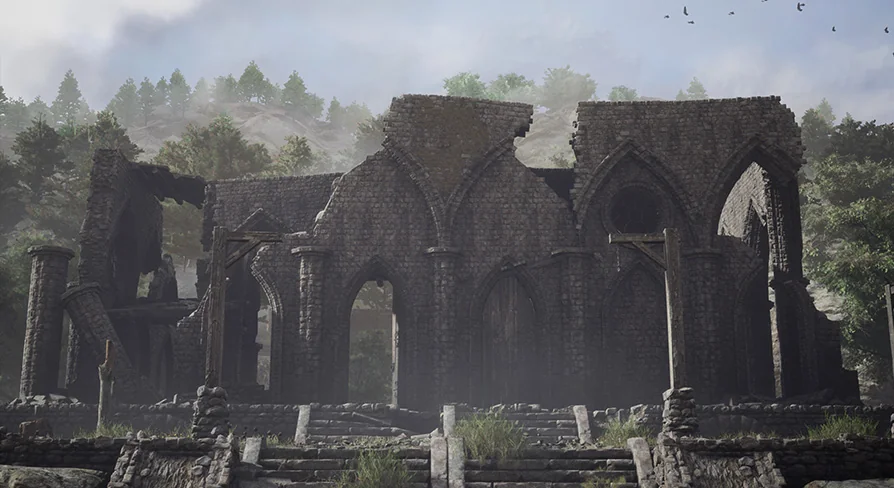
Building meshes, rubble, photo scanned rocks and logs, and vegetation are the core of Ruins. The package is anchored in the practical parts needed to begin shaping a fantasy landscape, combining ruined structural pieces with natural ground and set-dressing elements instead of focusing on only one side of the environment.
That combination gives the resource a clear role in scene assembly. It supports work where broken architecture has to sit naturally within a broader outdoor space, with enough variety in the included element types to move from the remains of a built location into surrounding nature without stepping outside the same package.
Building meshes, rubble, and the ruined foundation
The structural side of Ruins starts with easy to use building meshes. That wording matters because it points to straightforward placement and scene construction rather than a complicated or heavily specialized setup. The resource is meant to help establish a ruined location quickly, using meshes that can serve as the visible base of walls, fragments, or other built forms that define a fantasy ruin.
Rubble extends that foundation. In a ruined environment, intact surfaces rarely carry the full scene on their own, and rubble is what helps break clean lines and make the location read as damaged, abandoned, or collapsed. Here, rubble sits beside the building meshes as one of the central included parts, which makes the package useful not just for laying out a settlement footprint or isolated ruin, but for giving that space the scattered remains that visually connect destruction to the surrounding ground.
The tags attached to the resource reinforce this direction: fantasy, town, level, realistic, ruined, and ruin all point toward environment work where man-made spaces have fallen into disrepair. The package does not read as a single hero prop or a narrow architectural study. It is set up for broader level dressing, where structural remnants and debris have to work together inside a landscape.
Photo scanned rocks and logs in Ruins
Ruins does not stop at broken construction. It also includes photo scanned rocks and logs, which shifts the package beyond masonry and into natural terrain detail. Rocks and logs are often the pieces that help a ruined place feel settled into a larger world rather than isolated on a flat surface. Their presence here makes the package suitable for scenes where the remains of a town or structure are surrounded by uneven natural forms.
The phrase photo scanned is one of the strongest style indicators in the resource. It signals a realistic visual direction for those natural elements, and that aligns with the realistic tag attached to the package. In practice, this gives the environment a material contrast: building remains and rubble establish the ruined site, while scanned rocks and logs bring in surface variation and more grounded organic shapes.
That matters especially in fantasy landscape work. Fantasy settings can range from highly stylized to more naturalistic, and Ruins leans toward the latter through its use of photo scanned natural pieces. The fantasy aspect comes from the setting and scene potential, while the realistic aspect comes through the treatment of nature and the physical remains of built space.
Vegetation and natural coverage for a fantasy landscape
Vegetation completes the package’s environment spread. With building meshes, rubble, rocks, and logs already in place, vegetation is what allows the scene to move from a simple arrangement of objects into something closer to a living or overgrown landscape. It gives the resource coverage across both hard structure and natural fill, which is important for artists assembling a ruin that has to feel integrated into its surroundings.
The package describes itself as including everything needed to start a fantasy landscape. That does not imply every possible environment asset type, but it does clearly frame the intended use: starting the scene, establishing the main visual language, and getting enough essential parts into one place to begin layout and dressing. Vegetation is central to that promise because it helps bridge the hard edges of ruined architecture and the broader natural setting.
In a practical workflow, these categories naturally support layered implementation. Building meshes can define the site, rubble can break up and age those forms, rocks and logs can shape the surrounding terrain and edges, and vegetation can soften transitions or suggest reclaiming growth. The resource’s value comes from this mix of categories working together toward one environment type rather than existing as disconnected pieces.
Distance field ambient occlusions for the demo scene
Ruins includes one direct setup note: for better visuals, enable distance field ambient occlusions for the demo scene from engine settings. That is the only explicit implementation instruction provided, and it is specific enough to be useful. Rather than leaving presentation entirely up to default project settings, the package points to a rendering feature that improves the look of the demo scene.
This instruction says something important about how the environment is meant to be viewed. Ambient occlusion contributes to the contact, depth, and shadowing relationships between surfaces, which is particularly relevant in a scene built from ruins, rubble, rocks, logs, and vegetation. Those kinds of assets rely heavily on visible creases, overlaps, and grounded intersections. Enabling the noted setting helps the demo scene present those relationships more effectively.
It also shows that scene setup is not just about dropping meshes into place. Presentation matters, especially for an environment that mixes damaged structures and dense natural detail. The package offers a straightforward reminder that engine settings can materially change how convincingly those parts read together in the sample scene.
Where Ruins fits in level and town work
The tags natural, fantasy, town, nature, level, realistic, ruined, and ruin place Ruins in a fairly specific creative lane. It suits projects where a level needs a ruined settlement, a damaged built area inside a natural setting, or a fantasy location with a grounded surface treatment. The town tag suggests a wider environment context than a lone fragment of architecture, while level indicates use in broader scene or gameplay spaces rather than only still composition.
At the same time, the resource name and included contents keep the theme narrow enough to remain coherent. This is not a general-purpose nature collection or a pure architecture set. It is a ruin-focused environment package where structural decay and natural surroundings meet. That focus makes implementation decisions easier, because the elements all support the same visual direction.
The overall setup is practical: easy to use building meshes for structure, rubble for damage and breakup, photo scanned rocks and logs for grounded natural detail, vegetation for environmental coverage, and a specific ambient occlusion setting to improve the demo scene. Taken together, Ruins is set up to handle the early construction and visual shaping of a fantasy landscape with a ruined, realistic, and natural character.
 Rural
Rural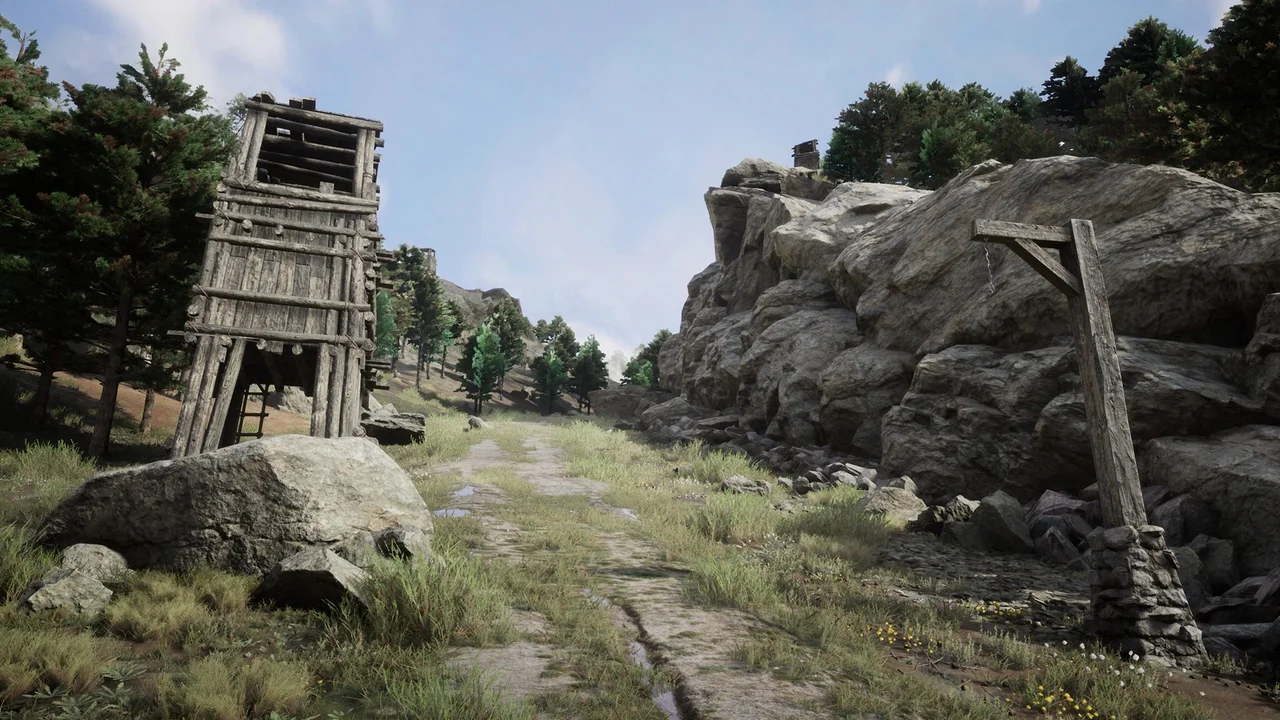
 Rural
Rural Rural
Rural Rural
Rural