"6c6413bef81af556"{"id":"1000853","slug":"multiplayer-ready-wallrunning-third-person-template","title":"Multiplayer ready wallrunning Third person Template","category":"Characters \u0026 Creatures","engine":"4.27,5.0+","assetVersion":"","engineVersion":"Engine Version: 4.27,5.0+","tag":"Characters","accent":"blue","visual":"character","summary":"Third person wallrunning template, multiplayer-ready. Blueprints scan surfaces ahead and beside the character, applying animation and movement impulses.","platform":"Unreal Engine","publishedAt":"2026-08-04T16:50:53.294Z","updatedAt":"2026-08-04T16:50:53.294Z","sourceNotes":[],"fileContents":[],"compatibility":["Unreal Engine","Engine Version: 4.27,5.0+"],"featuredImage":{"alt":"Multiplayer ready wallrunning Third person Template","src":"/wp-content/uploads/published/2026/08/e4a7d50a2561-9b0c8a30-0715-4c39-95ae-c03ab28ba455-0c3465b874.webp"},"hasDownloadLink":true,"downloads":0,"terms":[{"taxonomy":"category","slug":"characters-and-creatures","name":"Characters \u0026 Creatures"}],"galleryImages":[{"src":"/wp-content/uploads/published/2026/08/60a8c0eb62f0-a8050790-54af-49fc-bf29-08056d97544c-e1776832e8.webp","alt":"Multiplayer ready wallrunning Third person Template"},{"src":"/wp-content/uploads/published/2026/08/a1461b82612f-69bd6573-b67d-40b1-8bcb-9ffc99778c3b-58dc1213a0.webp","alt":"Multiplayer ready wallrunning Third person Template"},{"src":"/wp-content/uploads/published/2026/08/87680c118c12-ecc54ffa-9390-4bbb-b788-b6f2dbf74238-92804df386.webp","alt":"Multiplayer ready wallrunning Third person Template"},{"src":"/wp-content/uploads/published/2026/08/a86fc2895438-dc109116-55b6-4486-aee0-41482a5e036e-f14c62656e.webp","alt":"Multiplayer ready wallrunning Third person Template"}],"accessPanel":{"kind":"resource","title":"Download this resource","eyebrow":"Free Download","message":"Log in or create a free account to start your download.","fileName":"MultiWallRunningThirdPer.7z","safetyNote":"Resources are manually reviewed before listing to improve quality and reduce obvious risks.","actionLabel":"Download Free","resourceType":"Resource archive"},"contentHtml":"\u003cp\u003eWallrunning in a Third Person game usually breaks down at the moment of contact. The character has to register the wall before the run can start, and that registration has to feed both the animation and the movement at the same time. This template takes the complete route: it is a Third Person project template with a freeform, multiplayer-compatible wallrunning system, and its Blueprints are constantly looking for any surface in front of or beside the character.\u003c/p\u003e\n\n\u003ch2\u003eBlueprints Scanning the Space Ahead and Beside the Character\u003c/h2\u003e\n\n\u003cp\u003eWhen people picture wallrunning, they picture the run itself. The part that actually decides whether the feature works is the detection that comes before it. Here, the Blueprints look for any surfaces in front of or beside the character on an ongoing basis. Not a specific wall, not a tagged section of geometry—any surface. The freeform label comes from that openness: the Level geometry itself determines where the character can run.\u003c/p\u003e\n\n\u003cp\u003eBecause the check is tied to the character's own forward and side space, the player never has to line up with a designated run path. Approaching a wall head-on and brushing past 1 are both valid situations. The system treats them as the same kind of event. Depending on the angle and position when a surface is detected, the character can run up it or along it, and the impulse system supplies the movement for either case.\u003c/p\u003e\n\n\u003cp\u003eThat read-ahead behavior is the core of the template. Everything else—the animation, the physical push—only happens after the surface check returns a result. Get that ordering wrong and the character reacts late, the animation pops, and the whole effect reads as broken. The template keeps detection as the constant, reliable front end of the system.\u003c/p\u003e\n\n\u003ch2\u003e2 Responses to Every Wall: The Animation and the Impulse\u003c/h2\u003e\n\n\u003cp\u003eFinding a surface is only half of the job. The other half is making the character respond in a way that looks and feels correct. The template applies 2 things when a surface is found: the correct animation and the right impulses.\u003c/p\u003e\n\n\u003cp\u003eThe animation side is handled through the Animation Blueprint. That is where the character's body changes to read as wallrunning—the pose, the leg direction, the upper-body orientation that sells the movement. Without that visual change, the player would be sliding along a wall in a neutral run pose and the effect would collapse on sight.\u003c/p\u003e\n\n\u003cp\u003eThe impulses handle the physical side separately. Running up a wall requires upward momentum, and running along a wall requires lateral force that works against gravity and keeps the character attached to the surface. The template applies these automatically as part of the same response, so the character is not merely posing for the wall—the movement system is actively carrying them along it.\u003c/p\u003e\n\n\u003cp\u003eThe pairing of animation and impulse is where a wallrunning system stands or falls. If the animation says \u003ccode\u003ewallrun left\u003c/code\u003e but the impulse pushes straight, the player sees the disconnect immediately. Here, both are applied together, and that synchronization is what makes the system complete: the character reads as wallrunning and actually does it at the same time.\u003c/p\u003e\n\n\u003ch2\u003eMultiplayer-Ready Movement Without Single-Player Assumptions\u003c/h2\u003e\n\n\u003cp\u003eWallrunning is a movement state, and movement states are the hardest thing to carry across a network. In a single-player project, a Blueprint can set the character's velocity and animation locally and nothing else needs to know. In multiplayer, every other client needs to see that same state, or the character will appear to be running on air for everyone except the local player.\u003c/p\u003e\n\n\u003cp\u003eBeing multiplayer compatible means the wallrunning logic is structured with that requirement from the start. The surface detection has to run consistently, the impulses have to produce the same trajectory on every machine, and the animation states have to line up with what the movement is actually doing. That is a different design problem from bolting wallrunning onto a single-player character, and it is the problem this template already accounts for.\u003c/p\u003e\n\n\u003cp\u003eA developer picking this up for a co-op or competitive project is therefore not starting from a single-player script that needs to be reworked later. The wallrunning layer is ready to coexist with networked characters. For movement-heavy multiplayer games—parkour modes, chase sequences, traversal-focused arenas—that removes a whole category of late-stage fixes.\u003c/p\u003e\n\n\u003ch2\u003eA Third Person Template with the Animation Blueprint in the Chain\u003c/h2\u003e\n\n\u003cp\u003eThe template ships with the standard Third Person setup already in place: the character, the camera and control orientation, and the movement foundation a Third Person project expects. The wallrunning logic sits on top of that base instead of being delivered as a loose script that has to be wired into a fresh project manually.\u003c/p\u003e\n\n\u003cp\u003eThe tags attached to the template describe the parts of that chain: \u003cem\u003eScript\u003c/em\u003e, \u003cem\u003eBlueprint\u003c/em\u003e, \u003cem\u003eCharacter\u003c/em\u003e, and \u003ccode\u003eAnimationBlueprint\u003c/code\u003e. Together they cover the full loop from logic to presentation—the scripted and Blueprint-driven systems controlling the character, and the Animation Blueprint producing the visual side of the wallrunning states. The developer receives the character logic and the animation side as 1 package, so there is no gap between what the character does and what the character shows.\u003c/p\u003e\n\n\u003cp\u003eIn production, that leaves room to focus on the game-specific parts. The detection math, the surface checks, the impulse responses, and the animation transitions are already in place. What remains is bringing in the project's own character visuals, animation style, and Level Design built to make the most of freeform traversal.\u003c/p\u003e\n\n\u003ch2\u003eContinue Browsing Similar Packs\u003c/h2\u003e\n\u003cul\u003e\n\u003cli\u003e\u003ca href=\"https://3dcghub.com/dynamic-flight-with-blueprints/\" title=\"Dynamic Flight with Blueprints\"\u003eDynamic Flight with Blueprints\u003c/a\u003e\u003c/li\u003e\n\u003cli\u003e\u003ca href=\"https://3dcghub.com/stylized-male-and-female-characters-with-assets-and-ui/\" title=\"Stylized Male and Female characters, with assets and UI\"\u003eStylized Male and Female characters, with assets and UI\u003c/a\u003e\u003c/li\u003e\n\u003cli\u003e\u003ca href=\"https://3dcghub.com/black-kit-modular/\" title=\"Black Kit Modular\"\u003eBlack Kit Modular\u003c/a\u003e\u003c/li\u003e\n\u003cli\u003e\u003ca href=\"https://3dcghub.com/first-person-shooter-kit/\" title=\"First Person Shooter Kit\"\u003eFirst Person Shooter Kit\u003c/a\u003e\u003c/li\u003e\n\u003cli\u003e\u003ca href=\"https://3dcghub.com/fps-first-person-shooter-framework-skg-shooter-framework-v2/\" title=\"FPS First Person Shooter Framework (SKG Shooter Framework V2)\"\u003eFPS First Person Shooter Framework (SKG Shooter Framework V2)\u003c/a\u003e\u003c/li\u003e\n\u003c/ul\u003e","contentTextLength":5834,"navigation":{"current":370,"total":3140,"previous":{"id":"1000854","slug":"multiplayer-traps-pack","title":"Multiplayer Traps Pack","category":"Gameplay Features","platform":"Unreal Engine","updatedAt":"2026-08-04T16:58:03.710Z"},"next":{"id":"1000852","slug":"modular-snap-system-2","title":"Modular Snap System","category":"Engine Tools","platform":"Unreal Engine","updatedAt":"2026-08-04T16:44:42.350Z"}},"relatedResources":[{"id":"1000904","slug":"visai-companion-modern-ai-framework","title":"VisAI - Companion - Modern AI Framework","category":"Characters \u0026 Creatures","engine":"4.26+,5.0+","assetVersion":"","engineVersion":"Engine Version: 4.26+,5.0+","tag":"Characters","accent":"blue","visual":"character","summary":"Modern multiplayer-ready AI framework for RPGs with relationship-driven companion behavior, command UI, interaction system, and detailed example map.","platform":"Unreal Engine","publishedAt":"2026-08-06T05:14:19.512Z","updatedAt":"2026-08-06T05:14:19.512Z","sourceNotes":[],"fileContents":[],"compatibility":["Unreal Engine","Engine Version: 4.26+,5.0+"],"featuredImage":{"alt":"VisAI - Companion - Modern AI Framework","src":"/wp-content/uploads/published/2026/08/f36621fe8598-3cb25636-0a21-4666-aa5a-30c1a53d8a4a-1dee5f108d.webp"},"hasDownloadLink":true,"downloads":0},{"id":"1000919","slug":"modular-private-military-contractor","title":"Modular Private Military Contractor","category":"Characters \u0026 Creatures","engine":"4.27,5.0+","assetVersion":"","engineVersion":"Engine Version: 4.27,5.0+","tag":"Characters","accent":"blue","visual":"character","summary":"A third-person character pack with naked base body, military and casual clothes, PBR materials for customization, Epic skeleton support, and Bunker compatibilit","platform":"Unreal Engine","publishedAt":"2026-08-08T04:43:36.260Z","updatedAt":"2026-08-08T04:43:36.260Z","sourceNotes":[],"fileContents":[],"compatibility":["Unreal Engine","Engine Version: 4.27,5.0+"],"featuredImage":{"alt":"Modular Private Military Contractor","src":"/wp-content/uploads/published/2026/08/850cd25aeb7a-4aac98be-ee23-441a-a76c-9bced6a6bd73-f527ab3be0.webp"},"hasDownloadLink":true,"downloads":0},{"id":"10793","slug":"dynamic-flight-with-blueprints","title":"Dynamic Flight with Blueprints","category":"Gameplay Features","engine":"4.26+,5.0+","assetVersion":"Engine version: 4.26+,5.0+","engineVersion":"4.18","tag":"Gameplay Features","accent":"blue","visual":"audio","summary":"Enhance your project with a comprehensive third-person flight system. This set includes animations, additive poses, and Blueprints designed for dynamic motion and easy integration.","platform":"Unreal Engine","publishedAt":"2026-03-03T16:14:20.000Z","updatedAt":"2026-04-19T15:49:56.000Z","sourceNotes":[],"fileContents":[],"compatibility":["Unreal Engine","Engine version: 4.26+,5.0+"],"featuredImage":{"alt":"Dynamic Flight with Blueprints","src":"https://3dcghub.com/wp-content/uploads/2026/03/5d459532-5562-4a4a-b3c6-38bdd3793c27.webp"},"hasDownloadLink":true,"downloads":0}]}
Characters
Multiplayer ready wallrunning Third person Template
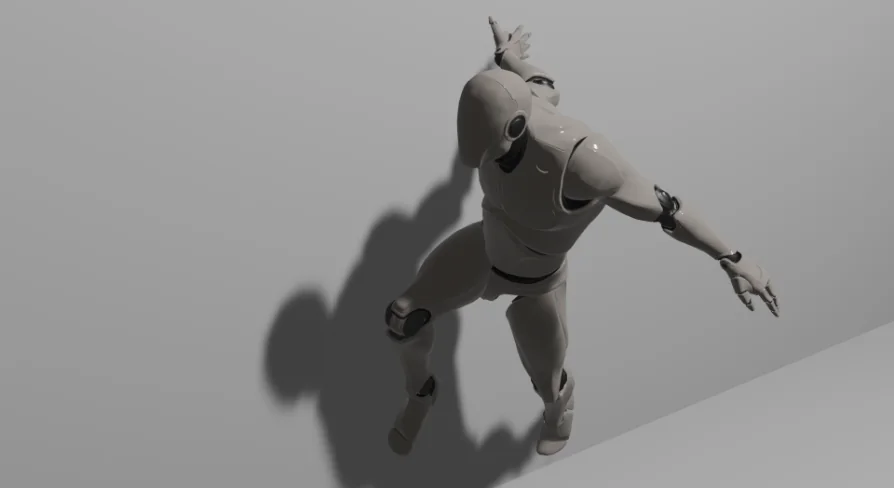
Third person wallrunning template, multiplayer-ready. Blueprints scan surfaces ahead and beside the character, applying animation and movement impulses.
Wallrunning in a Third Person game usually breaks down at the moment of contact. The character has to register the wall before the run can start, and that registration has to feed both the animation and the movement at the same time. This template takes the complete route: it is a Third Person project template with a freeform, multiplayer-compatible wallrunning system, and its Blueprints are constantly looking for any surface in front of or beside the character.
Blueprints Scanning the Space Ahead and Beside the Character
When people picture wallrunning, they picture the run itself. The part that actually decides whether the feature works is the detection that comes before it. Here, the Blueprints look for any surfaces in front of or beside the character on an ongoing basis. Not a specific wall, not a tagged section of geometry—any surface. The freeform label comes from that openness: the Level geometry itself determines where the character can run.
Because the check is tied to the character's own forward and side space, the player never has to line up with a designated run path. Approaching a wall head-on and brushing past 1 are both valid situations. The system treats them as the same kind of event. Depending on the angle and position when a surface is detected, the character can run up it or along it, and the impulse system supplies the movement for either case.
That read-ahead behavior is the core of the template. Everything else—the animation, the physical push—only happens after the surface check returns a result. Get that ordering wrong and the character reacts late, the animation pops, and the whole effect reads as broken. The template keeps detection as the constant, reliable front end of the system.
2 Responses to Every Wall: The Animation and the Impulse
Finding a surface is only half of the job. The other half is making the character respond in a way that looks and feels correct. The template applies 2 things when a surface is found: the correct animation and the right impulses.
The animation side is handled through the Animation Blueprint. That is where the character's body changes to read as wallrunning—the pose, the leg direction, the upper-body orientation that sells the movement. Without that visual change, the player would be sliding along a wall in a neutral run pose and the effect would collapse on sight.
The impulses handle the physical side separately. Running up a wall requires upward momentum, and running along a wall requires lateral force that works against gravity and keeps the character attached to the surface. The template applies these automatically as part of the same response, so the character is not merely posing for the wall—the movement system is actively carrying them along it.
The pairing of animation and impulse is where a wallrunning system stands or falls. If the animation says wallrun left but the impulse pushes straight, the player sees the disconnect immediately. Here, both are applied together, and that synchronization is what makes the system complete: the character reads as wallrunning and actually does it at the same time.
Multiplayer-Ready Movement Without Single-Player Assumptions
Wallrunning is a movement state, and movement states are the hardest thing to carry across a network. In a single-player project, a Blueprint can set the character's velocity and animation locally and nothing else needs to know. In multiplayer, every other client needs to see that same state, or the character will appear to be running on air for everyone except the local player.
Being multiplayer compatible means the wallrunning logic is structured with that requirement from the start. The surface detection has to run consistently, the impulses have to produce the same trajectory on every machine, and the animation states have to line up with what the movement is actually doing. That is a different design problem from bolting wallrunning onto a single-player character, and it is the problem this template already accounts for.
A developer picking this up for a co-op or competitive project is therefore not starting from a single-player script that needs to be reworked later. The wallrunning layer is ready to coexist with networked characters. For movement-heavy multiplayer games—parkour modes, chase sequences, traversal-focused arenas—that removes a whole category of late-stage fixes.
A Third Person Template with the Animation Blueprint in the Chain
The template ships with the standard Third Person setup already in place: the character, the camera and control orientation, and the movement foundation a Third Person project expects. The wallrunning logic sits on top of that base instead of being delivered as a loose script that has to be wired into a fresh project manually.
The tags attached to the template describe the parts of that chain: Script, Blueprint, Character, and AnimationBlueprint. Together they cover the full loop from logic to presentation—the scripted and Blueprint-driven systems controlling the character, and the Animation Blueprint producing the visual side of the wallrunning states. The developer receives the character logic and the animation side as 1 package, so there is no gap between what the character does and what the character shows.
In production, that leaves room to focus on the game-specific parts. The detection math, the surface checks, the impulse responses, and the animation transitions are already in place. What remains is bringing in the project's own character visuals, animation style, and Level Design built to make the most of freeform traversal.
 Characters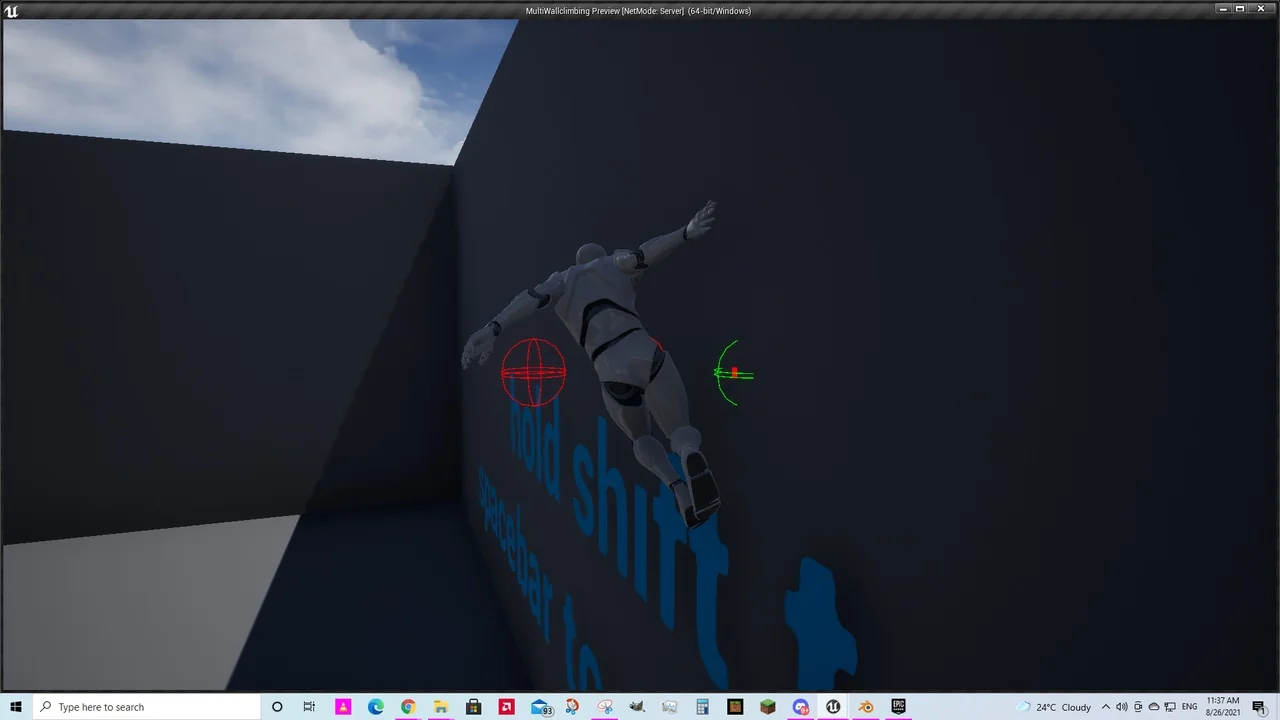
 Characters
 Characters
 Gameplay Features