"1f00f67f9253451b"{"id":"1000164","slug":"black-kit-modular","title":"Black Kit Modular","category":"Characters \u0026 Creatures","engine":"4.26+,5.0+","assetVersion":"","engineVersion":"Engine Version: 4.26+,5.0+","tag":"Characters","accent":"blue","visual":"character","summary":"A realistic modular soldier character for third-person shooter work, with high resolution textures and a detailed mesh, positioned for character setup.","platform":"Unreal Engine","publishedAt":"2026-06-18T23:09:52.033Z","updatedAt":"2026-06-18T23:09:52.033Z","sourceNotes":[],"fileContents":[],"compatibility":["Unreal Engine","Engine Version: 4.26+,5.0+"],"featuredImage":{"alt":"Black Kit Modular","src":"/wp-content/uploads/published/2026/06/b8cc1ce06157-6993d800-4b2b-4c37-ac40-127175434f44-94e9a1f76c.webp"},"hasDownloadLink":true,"downloads":1,"terms":[{"taxonomy":"category","slug":"characters-and-creatures","name":"Characters \u0026 Creatures"}],"galleryImages":[{"src":"/wp-content/uploads/published/2026/06/0903d506b6b9-fe859742-de7c-4a7a-8647-4efc246fb4d5-9484ef5c97.webp","alt":"Black Kit Modular"},{"src":"/wp-content/uploads/published/2026/06/69a9c1ed5400-91ca4861-de48-480b-88ab-e5352a9edd64-c249c08a3e.webp","alt":"Black Kit Modular"},{"src":"/wp-content/uploads/published/2026/06/ef5625713d9c-ed3e896e-0c15-4978-8c12-bd060d565386-02b00d06d9.webp","alt":"Black Kit Modular"},{"src":"/wp-content/uploads/published/2026/06/e3bd89ed43f0-2462292c-37fa-4c1a-a9d1-5ae79fc159ee-46531fb016.webp","alt":"Black Kit Modular"},{"src":"/wp-content/uploads/published/2026/06/461610d997b5-d3f4f8b0-1432-4422-8d42-a2982c871b7f-05c99023a6.webp","alt":"Black Kit Modular"},{"src":"/wp-content/uploads/published/2026/06/d4887b9b4884-d5003101-dd84-46af-8250-3a9fd87d3136-3a472327ac.webp","alt":"Black Kit Modular"},{"src":"/wp-content/uploads/published/2026/06/f70d4a77ec2c-3c8359e0-0516-49a3-b5c0-af24a1bdfece-f5956758af.webp","alt":"Black Kit Modular"},{"src":"/wp-content/uploads/published/2026/06/3c7288c6948e-2e0efbb1-6e3b-4714-8938-3e1572bc05e5-72bf209ea6.webp","alt":"Black Kit Modular"}],"accessPanel":{"kind":"resource","title":"Download this resource","eyebrow":"Free Download","message":"Log in or create a free account to start your download.","fileName":"Content.7z","safetyNote":"Resources are manually reviewed before listing to improve quality and reduce obvious risks.","actionLabel":"Download Free","resourceType":"Resource archive"},"contentHtml":"\u003cp\u003eThird-person shooter production often reaches a point where the character cannot stay as a placeholder any longer. Camera distance, animation readability, and the need for a grounded on-screen presence all push the project toward a more resolved character. Black Kit Modular sits in that part of the workflow. It is a realistic modular character made for a third-person shooter context, with high resolution textures and a detailed mesh.\u003c/p\u003e\n\u003cp\u003eThat combination defines its role immediately. This is not a broad fantasy avatar or a stylized background figure. It is a soldier character with a realistic look, intended for the kind of game camera where the player spends long stretches looking at a full-body character from behind, around the shoulders, and in motion. In that setting, mesh detail and texture quality are not side notes. They are part of whether the character reads convincingly at the distances a third-person shooter uses most.\u003c/p\u003e \u003ch2\u003eWhere Black Kit Modular fits in a shooter character pipeline\u003c/h2\u003e\n\u003cp\u003eThe most practical thing about Black Kit Modular is right in the name: it is modular. In a production workflow, that matters at the setup stage, when a team needs more than a single fixed character presentation. A modular character suggests flexibility in how the character is assembled, which makes it relevant when the goal is not just to place one soldier in a scene, but to work with a character structure that can support variation and assembly.\u003c/p\u003e\n\u003cp\u003eWithin a third-person shooter, that placement is very specific. The character is not just part of the environment dressing. It is close to the camera, central to player attention, and tied to movement, combat stance, and silhouette recognition. A realistic soldier character with a detailed mesh is therefore positioned for scenes where the player will repeatedly read body shape, gear arrangement, and surface detail during traversal and combat. The asset fills the stage where a project moves beyond rough blockout characters and needs something that holds up as a primary on-screen figure.\u003c/p\u003e \u003ch2\u003eRealistic soldier presentation with high resolution textures\u003c/h2\u003e\n\u003cp\u003eBlack Kit Modular is identified as realistic, and that affects how it enters a project. Realistic character work tends to depend on surface information and form clarity more than broad stylization. High resolution textures support that by giving the character stronger close and mid-range visual definition, especially in the kind of camera framing common to third-person shooters.\u003c/p\u003e\n\u003cp\u003eThe detailed mesh works alongside those textures rather than standing apart from them. In practice, that means the character is aimed at productions where the visible construction of the model matters. A detailed mesh gives the asset a stronger foundation for a soldier presentation, where equipment, clothing structure, and body form all contribute to the overall read. Even without expanding into unsupported technical claims, the stated emphasis is enough to place the asset clearly: it is intended to look substantial on screen, not just function as a distant NPC stand-in.\u003c/p\u003e\n\u003cp\u003eThat realistic direction also helps narrow the kinds of scenes where the character makes the most sense. Military and shooter environments benefit from characters that match the seriousness and physicality of the setting. A realistic modular soldier can sit naturally in modern combat spaces, tactical encounters, and player-centered action sequences where the character model carries a large part of the visual tone.\u003c/p\u003e \u003ch2\u003eModular character work when weapons are handled elsewhere\u003c/h2\u003e\n\u003cp\u003eOne detail shapes implementation more than it first appears to: weapons are not included. That keeps the focus on the character itself and separates character setup from weapon selection.\u003c/p\u003e\n\u003cp\u003eIn a real production workflow, that separation can be useful. Shooter projects often treat weapons as their own track of work, with different visual, gameplay, and animation needs than the character body. A character package that does not include weapons leaves that choice open rather than binding the soldier to a fixed armament set. It means Black Kit Modular can be approached as the body and appearance side of the shooter equation, while weapon assets are chosen, built, or managed elsewhere in the project.\u003c/p\u003e\n\u003cp\u003eThis also clarifies expectations when planning a scene or prototype. Black Kit Modular addresses the soldier character layer, not the entire combat loadout. Teams or solo developers looking at it would treat it as the visual and structural foundation for a shooter character, then pair it with whatever separate weapon solution their project already uses. That distinction is practical because it prevents confusion at the point of integration. The asset contributes the character presence; weapon content remains a separate decision.\u003c/p\u003e \u003ch2\u003eAnimationblueprint and script context around Black Kit Modular\u003c/h2\u003e\n\u003cp\u003eThe resource is associated with shooter character work, modular setup, script, and animation blueprint context. Those terms place it near implementation tasks rather than leaving it as a purely static model.\u003c/p\u003e\n\u003cp\u003eThat is useful because a third-person shooter character rarely lives as a still object. The production need is usually broader: movement states, player readability, and the ability to sit inside a gameplay-driven setup. Even when staying strictly within the stated details, the animation blueprint and script associations point toward a character resource that belongs in an active game workflow, not only in a render-only scenario. The most grounded way to read that is simple: Black Kit Modular fits the part of development where character presentation and character behavior need to meet.\u003c/p\u003e\n\u003cp\u003eFor developers working on shooter scenes, that placement keeps the asset close to actual implementation. The realistic soldier theme makes it suitable for action-oriented gameplay contexts, while the modular identity keeps the character adaptable in structure. Together, those points make the character easier to understand in production terms. It is not just meant to be looked at; it belongs in the chain of tasks that takes a shooter character from assembled model to in-game presence.\u003c/p\u003e \u003ch2\u003eUsing Black Kit Modular in player-facing scenes\u003c/h2\u003e\n\u003cp\u003eSome assets are easiest to place in supporting roles. Black Kit Modular reads differently. Because it is made for a third-person shooter and emphasizes realism, texture resolution, and mesh detail, it naturally leans toward player-facing use.\u003c/p\u003e\n\u003cp\u003eA third-person camera places constant pressure on a character to remain visually convincing from a recurring, gameplay-relevant view. The player sees the back, sides, and full-body movement over and over. That gives extra importance to a detailed mesh and high resolution textures, since the character is not a one-shot cinematic figure or a distant background extra. Black Kit Modular fits where a project needs a soldier character that can occupy the center of the frame and carry the visual language of a shooter scene.\u003c/p\u003e\n\u003cp\u003eThe modular aspect strengthens that fit. For production work, it supports character work that needs assembly flexibility not just one locked presentation. For shooter production, that makes the asset easier to place in workflows where character setup is part of a larger system of gameplay, animation, and scene building. The absence of included weapons keeps the boundary clear: this is the character layer, ready to be paired with a separate combat setup.\u003c/p\u003e\n\u003cp\u003eIf the immediate need is a realistic soldier character for a third-person shooter, Black Kit Modular belongs at the point where character fidelity starts to matter on screen and the project needs a modular body-focused solution rather than an all-in-one weapon package.\u003c/p\u003e\n\n\u003ch2\u003eExplore Similar Assets\u003c/h2\u003e\n\u003cul\u003e\n\u003cli\u003e\u003ca href=\"https://3dcghub.com/astronova-bundle/\" title=\"Astronova - Bundle\"\u003eAstronova - Bundle\u003c/a\u003e\u003c/li\u003e\n\u003cli\u003e\u003ca href=\"https://3dcghub.com/character-military-bandit-2/\" title=\"Character Military Bandit 2\"\u003eCharacter Military Bandit 2\u003c/a\u003e\u003c/li\u003e\n\u003cli\u003e\u003ca href=\"https://3dcghub.com/modular-skeleton-mage/\" title=\"Modular Skeleton Mage\"\u003eModular Skeleton Mage\u003c/a\u003e\u003c/li\u003e\n\u003cli\u003e\u003ca href=\"https://3dcghub.com/shaman-girl-modular/\" title=\"Shaman Girl Modular\"\u003eShaman Girl Modular\u003c/a\u003e\u003c/li\u003e\n\u003cli\u003e\u003ca href=\"https://3dcghub.com/big-zombie/\" title=\"Big Zombie\"\u003eBig Zombie\u003c/a\u003e\u003c/li\u003e\n\u003c/ul\u003e","contentTextLength":7794,"navigation":{"current":1185,"total":3222,"previous":{"id":"1000165","slug":"ar-navigation","title":"AR Navigation","category":"Characters \u0026 Creatures","platform":"Unreal Engine","updatedAt":"2026-06-18T23:57:25.352Z"},"next":{"id":"1000163","slug":"customizable-grid","title":"Customizable Grid","category":"Variety","platform":"Unreal Engine","updatedAt":"2026-06-18T23:04:21.782Z"}},"relatedResources":[{"id":"1000912","slug":"animalia-raccoon","title":"Animalia - Raccoon","category":"Characters \u0026 Creatures","engine":"4.26+,5.0+","assetVersion":"","engineVersion":"Engine Version: 4.26+,5.0+","tag":"Characters","accent":"blue","visual":"character","summary":"Realistic raccoon with 60fps animations, 2K textures, gFur support, LODs, ragdoll setup, and a 3ds Max rig. Works with UE 4.24+ and the Animalia Starter Kit.","platform":"Unreal Engine","publishedAt":"2026-08-07T17:04:40.260Z","updatedAt":"2026-08-07T17:04:40.260Z","sourceNotes":[],"fileContents":[],"compatibility":["Unreal Engine","Engine Version: 4.26+,5.0+"],"featuredImage":{"alt":"Animalia - Raccoon","src":"/wp-content/uploads/published/2026/08/2674d40980b0-8799a4c5-7e67-49ed-88a6-836893685cf5-b83809c831.webp"},"hasDownloadLink":true,"downloads":0},{"id":"1001046","slug":"animal-behavior-kit-pro","title":"Animal Behavior Kit Pro","category":"Characters \u0026 Creatures","engine":"4.26+,5.0+","assetVersion":"","engineVersion":"Engine Version: 4.26+,5.0+","tag":"Characters","accent":"blue","visual":"character","summary":"Animal Behavior Kit Pro adds modular AI systems for ecosystems: roaming, needs, breeding, taming, population control, and more for Unreal projects.","platform":"Unreal Engine","publishedAt":"2026-08-27T15:25:42.829Z","updatedAt":"2026-08-27T15:25:42.829Z","sourceNotes":[],"fileContents":[],"compatibility":["Unreal Engine","Engine Version: 4.26+,5.0+"],"featuredImage":{"alt":"Animal Behavior Kit Pro","src":"/wp-content/uploads/published/2026/08/42947157463a-54e40fda-d959-411e-b6bc-4f1d9830c0cc-6897709109.webp"},"hasDownloadLink":true,"downloads":0},{"id":"1000284","slug":"black-girl-zahira-african-female-character-npc-vrhc","title":"Black Girl Zahira African Female Character NPC VRHC","category":"Characters \u0026 Creatures","engine":"4.27,5.0+","assetVersion":"","engineVersion":"Engine Version: 4.27,5.0+","tag":"Characters","accent":"blue","visual":"character","summary":"A high-resolution, realistic African female character model featuring three distinct thematic outfits and an expanded Epic skeleton rig for diverse game scenari","platform":"Unreal Engine","publishedAt":"2026-07-03T07:32:48.813Z","updatedAt":"2026-07-03T07:32:48.813Z","sourceNotes":[],"fileContents":[],"compatibility":["Unreal Engine","Engine Version: 4.27,5.0+"],"featuredImage":{"alt":"Black Girl Zahira African Female Character NPC VRHC","src":"/wp-content/uploads/published/2026/07/a50823bdfcef-90ba1df5-de7c-476b-a09d-069463aceda8-7e28ac4073.webp"},"hasDownloadLink":true,"downloads":0}]}
Characters
Black Kit Modular
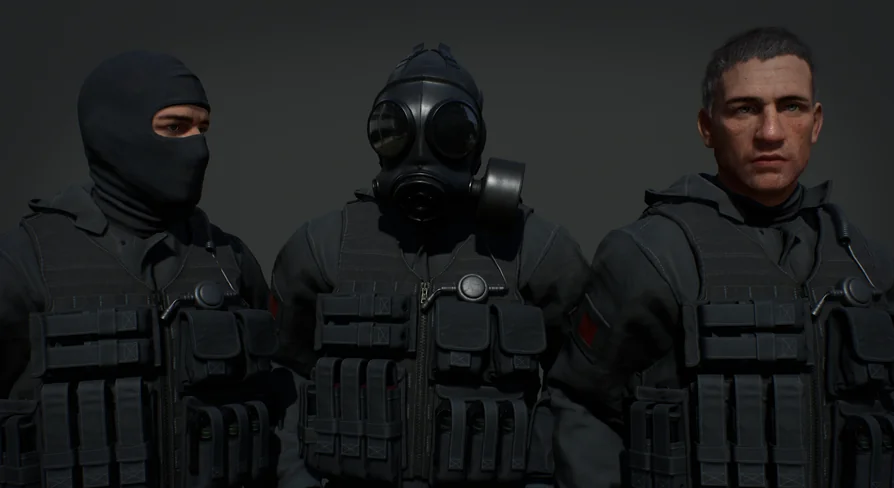
A realistic modular soldier character for third-person shooter work, with high resolution textures and a detailed mesh, positioned for character setup.
Third-person shooter production often reaches a point where the character cannot stay as a placeholder any longer. Camera distance, animation readability, and the need for a grounded on-screen presence all push the project toward a more resolved character. Black Kit Modular sits in that part of the workflow. It is a realistic modular character made for a third-person shooter context, with high resolution textures and a detailed mesh.
That combination defines its role immediately. This is not a broad fantasy avatar or a stylized background figure. It is a soldier character with a realistic look, intended for the kind of game camera where the player spends long stretches looking at a full-body character from behind, around the shoulders, and in motion. In that setting, mesh detail and texture quality are not side notes. They are part of whether the character reads convincingly at the distances a third-person shooter uses most.
Where Black Kit Modular fits in a shooter character pipeline
The most practical thing about Black Kit Modular is right in the name: it is modular. In a production workflow, that matters at the setup stage, when a team needs more than a single fixed character presentation. A modular character suggests flexibility in how the character is assembled, which makes it relevant when the goal is not just to place one soldier in a scene, but to work with a character structure that can support variation and assembly.
Within a third-person shooter, that placement is very specific. The character is not just part of the environment dressing. It is close to the camera, central to player attention, and tied to movement, combat stance, and silhouette recognition. A realistic soldier character with a detailed mesh is therefore positioned for scenes where the player will repeatedly read body shape, gear arrangement, and surface detail during traversal and combat. The asset fills the stage where a project moves beyond rough blockout characters and needs something that holds up as a primary on-screen figure.
Realistic soldier presentation with high resolution textures
Black Kit Modular is identified as realistic, and that affects how it enters a project. Realistic character work tends to depend on surface information and form clarity more than broad stylization. High resolution textures support that by giving the character stronger close and mid-range visual definition, especially in the kind of camera framing common to third-person shooters.
The detailed mesh works alongside those textures rather than standing apart from them. In practice, that means the character is aimed at productions where the visible construction of the model matters. A detailed mesh gives the asset a stronger foundation for a soldier presentation, where equipment, clothing structure, and body form all contribute to the overall read. Even without expanding into unsupported technical claims, the stated emphasis is enough to place the asset clearly: it is intended to look substantial on screen, not just function as a distant NPC stand-in.
That realistic direction also helps narrow the kinds of scenes where the character makes the most sense. Military and shooter environments benefit from characters that match the seriousness and physicality of the setting. A realistic modular soldier can sit naturally in modern combat spaces, tactical encounters, and player-centered action sequences where the character model carries a large part of the visual tone.
Modular character work when weapons are handled elsewhere
One detail shapes implementation more than it first appears to: weapons are not included. That keeps the focus on the character itself and separates character setup from weapon selection.
In a real production workflow, that separation can be useful. Shooter projects often treat weapons as their own track of work, with different visual, gameplay, and animation needs than the character body. A character package that does not include weapons leaves that choice open rather than binding the soldier to a fixed armament set. It means Black Kit Modular can be approached as the body and appearance side of the shooter equation, while weapon assets are chosen, built, or managed elsewhere in the project.
This also clarifies expectations when planning a scene or prototype. Black Kit Modular addresses the soldier character layer, not the entire combat loadout. Teams or solo developers looking at it would treat it as the visual and structural foundation for a shooter character, then pair it with whatever separate weapon solution their project already uses. That distinction is practical because it prevents confusion at the point of integration. The asset contributes the character presence; weapon content remains a separate decision.
Animationblueprint and script context around Black Kit Modular
The resource is associated with shooter character work, modular setup, script, and animation blueprint context. Those terms place it near implementation tasks rather than leaving it as a purely static model.
That is useful because a third-person shooter character rarely lives as a still object. The production need is usually broader: movement states, player readability, and the ability to sit inside a gameplay-driven setup. Even when staying strictly within the stated details, the animation blueprint and script associations point toward a character resource that belongs in an active game workflow, not only in a render-only scenario. The most grounded way to read that is simple: Black Kit Modular fits the part of development where character presentation and character behavior need to meet.
For developers working on shooter scenes, that placement keeps the asset close to actual implementation. The realistic soldier theme makes it suitable for action-oriented gameplay contexts, while the modular identity keeps the character adaptable in structure. Together, those points make the character easier to understand in production terms. It is not just meant to be looked at; it belongs in the chain of tasks that takes a shooter character from assembled model to in-game presence.
Using Black Kit Modular in player-facing scenes
Some assets are easiest to place in supporting roles. Black Kit Modular reads differently. Because it is made for a third-person shooter and emphasizes realism, texture resolution, and mesh detail, it naturally leans toward player-facing use.
A third-person camera places constant pressure on a character to remain visually convincing from a recurring, gameplay-relevant view. The player sees the back, sides, and full-body movement over and over. That gives extra importance to a detailed mesh and high resolution textures, since the character is not a one-shot cinematic figure or a distant background extra. Black Kit Modular fits where a project needs a soldier character that can occupy the center of the frame and carry the visual language of a shooter scene.
The modular aspect strengthens that fit. For production work, it supports character work that needs assembly flexibility not just one locked presentation. For shooter production, that makes the asset easier to place in workflows where character setup is part of a larger system of gameplay, animation, and scene building. The absence of included weapons keeps the boundary clear: this is the character layer, ready to be paired with a separate combat setup.
If the immediate need is a realistic soldier character for a third-person shooter, Black Kit Modular belongs at the point where character fidelity starts to matter on screen and the project needs a modular body-focused solution rather than an all-in-one weapon package.
 Characters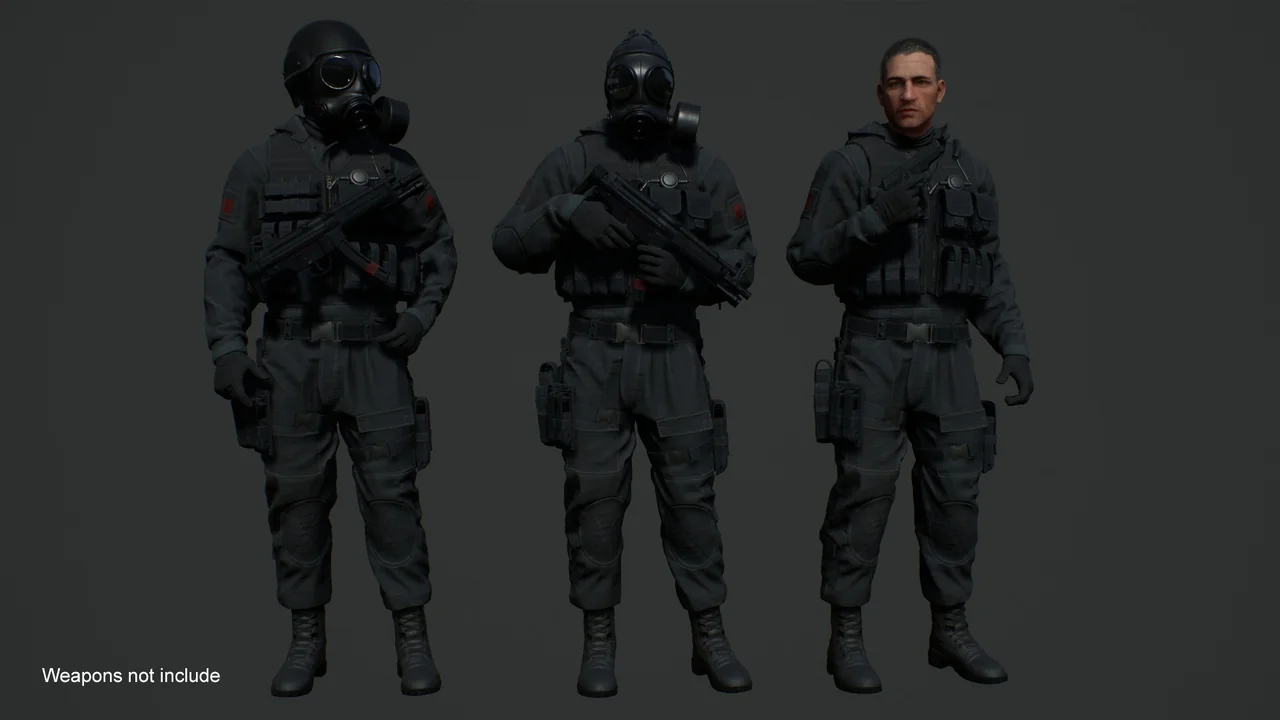
 Characters
 Characters
 Characters