"1f00f67f9253451b"{"id":"1000163","slug":"customizable-grid","title":"Customizable Grid","category":"Variety","engine":"4.26+,5.0+","assetVersion":"","engineVersion":"Engine Version: 4.26+,5.0+","tag":"Variety","accent":"blue","visual":"mech","summary":"Customizable Grid is a highly customizable material for creating fast grid materials, with a UV-free world-position option and added UV control.","platform":"Unreal Engine","publishedAt":"2026-06-18T23:04:21.782Z","updatedAt":"2026-06-18T23:04:21.782Z","sourceNotes":[],"fileContents":[],"compatibility":["Unreal Engine","Engine Version: 4.26+,5.0+"],"featuredImage":{"alt":"Customizable Grid","src":"/wp-content/uploads/published/2026/06/a2b4a9acc08f-f5dcf95b-adce-40e3-9ab0-869c36e99070-24b9a5ba21.webp"},"hasDownloadLink":true,"downloads":1,"terms":[{"taxonomy":"category","slug":"variety","name":"Variety"}],"galleryImages":[{"src":"/wp-content/uploads/published/2026/06/66b557cb3839-3e77d6a1-a95f-4f06-b555-f9f1373eb1ec-9d9e404301.webp","alt":"Customizable Grid"},{"src":"/wp-content/uploads/published/2026/06/38f86511f151-be3ab1bb-fd84-4051-8049-309e5a892dd6-5b354efed0.webp","alt":"Customizable Grid"},{"src":"/wp-content/uploads/published/2026/06/ce7ad60bc678-d4769754-a7bd-4b1f-970d-73f503e65212-c5aca2110d.webp","alt":"Customizable Grid"},{"src":"/wp-content/uploads/published/2026/06/bfe522e2ab9f-eddd86ce-c675-413d-86e8-6ffffade39f3-d53369960b.webp","alt":"Customizable Grid"},{"src":"/wp-content/uploads/published/2026/06/313d3b0bf710-9303ccb5-3801-4836-9cbe-fdbd14e6dde1-e94b9613c9.webp","alt":"Customizable Grid"},{"src":"/wp-content/uploads/published/2026/06/df21d2b8d68d-8ac337aa-9536-4d17-b5a9-ae591579a795-6ce71d6c2b.webp","alt":"Customizable Grid"},{"src":"/wp-content/uploads/published/2026/06/ce16634479eb-c38d738c-adc9-4b3f-ae15-ccff7f909f34-2450a81a20.webp","alt":"Customizable Grid"},{"src":"/wp-content/uploads/published/2026/06/3363b95cac18-9889bf5b-28c3-40a0-9a9c-8752f3b6da68-03eb8b80eb.webp","alt":"Customizable Grid"},{"src":"/wp-content/uploads/published/2026/06/f69321ca8318-5aef7a26-42e3-4618-bcf8-cdcaa9a2545a-a97cab0739.webp","alt":"Customizable Grid"}],"accessPanel":{"kind":"resource","title":"Download this resource","eyebrow":"Free Download","message":"Log in or create a free account to start your download.","fileName":"CustomizableGrid.7z","safetyNote":"Resources are manually reviewed before listing to improve quality and reduce obvious risks.","actionLabel":"Download Free","resourceType":"Resource archive"},"contentHtml":"\u003cp\u003eWhen a scene needs a readable grid fast, the biggest obstacle is often not the grid itself but the setup around it. A material that can be adjusted quickly, reused across different situations, and applied without unnecessary friction can save time early in production and keep iteration moving. Customizable Grid is aimed directly at that need.\u003c/p\u003e\n\u003cp\u003eAt its core, Customizable Grid is a highly customizable material made to create fast grid materials. That makes its role very clear in a production workflow: it is not a general-purpose surface package or a broad collection of unrelated looks. It is anchored in grid creation, with customization as the main strength. The resource also includes a newer material that works without UVs by using world position, alongside more UV control for workflows that still depend on mapped coordinates.\u003c/p\u003e \u003ch2\u003eGetting fast grid materials into a scene\u003c/h2\u003e\n\u003cp\u003eThe most immediate point of Customizable Grid is speed. It is made to do fast grid materials, which places it in the part of production where clear visual structure matters more than elaborate surface detail. A grid can help establish scale, spacing, direction, and rhythm in an environment, and this material is shaped around getting that result without turning the setup process into its own task.\u003c/p\u003e\n\u003cp\u003eThe emphasis on being highly customizable matters because fast does not always mean fixed. A quick grid material is more useful when it can be adjusted rather than treated as a one-note placeholder. That combination gives the material a practical identity: it supports quick deployment, but it also leaves room to adapt the result to the needs of a scene. In workflow terms, that means it can fit situations where a grid needs to appear early and then remain useful instead of being discarded as soon as more control is required.\u003c/p\u003e \u003ch2\u003eCustomizable Grid and the value of control\u003c/h2\u003e\n\u003cp\u003eCustomization is not framed here as an extra feature attached to a simple shader. It is central to what Customizable Grid is. The name and description both point to a material that is intended to be shaped by the user rather than left as a fixed preset.\u003c/p\u003e\n\u003cp\u003eThat matters in real scene work because grid materials are often used for more than one purpose. In one stage, they may act as a quick visual guide. In another, they may help keep surfaces readable while a scene is still in flux. A highly customizable grid material can remain relevant across those moments because it is not locked to a single presentation. The resource stays focused on the same core task throughout, but the stress on customization suggests a workflow where the grid is expected to adapt as production needs change.\u003c/p\u003e\n\u003cp\u003eThe added note about more UV control reinforces that point. A grid material often depends on how it sits on a surface, and more UV control gives extra room to manage that relationship when UVs are part of the setup. Even without a list of specific parameters, the stated improvement is significant because it shows the material is not only about placing a grid quickly. It also recognizes that mapped surfaces can need finer handling.\u003c/p\u003e \u003ch2\u003eA world position material that works without UVs\u003c/h2\u003e\n\u003cp\u003eOne of the clearest additions is a new material that works without UVs and is based on world position. This changes where Customizable Grid can fit most comfortably in production.\u003c/p\u003e\n\u003cp\u003eUV-free application removes one of the common setup dependencies that can slow down basic material testing. Inside a project, a world-position-based grid material can be especially useful when the priority is to see a grid result on geometry without first preparing UVs for that purpose. That does not replace UV-based workflows altogether, but it gives the package a second route: one path for cases where UVs are already part of the plan, and another for cases where a grid needs to appear more immediately.\u003c/p\u003e\n\u003cp\u003eThe world-position approach also broadens how the material can be used across scene elements during earlier production phases. When prototyping, speed and clarity often matter more than polishing a bespoke mapping workflow for every object. A material that can function without UVs aligns well with that pace. It reduces dependency on one preparation step while still keeping the work anchored in the grid itself.\u003c/p\u003e \u003ch2\u003eMore UV control when mapped surfaces matter\u003c/h2\u003e\n\u003cp\u003eThe newer UV-free material does not make UVs irrelevant here. Customizable Grid also now includes more UV control, which means the package speaks to both sides of the workflow rather than forcing one method.\u003c/p\u003e\n\u003cp\u003eThat balance is useful. Some scenes or assets may benefit from the convenience of a world-position grid, while others still call for UV-based control. More UV control suggests that mapped placement remains an active part of the material's design instead of being treated as an older option left behind by the newer addition. This gives the resource a more flexible place in production: it can support quick application without UVs, while also giving extra handling for setups where UVs are already important.\u003c/p\u003e\n\u003cp\u003eSeen together, these two points define the package more clearly than either one alone. The world-position material addresses speed and directness. The increased UV control addresses adjustment and placement when UVs are in use. Both serve the same end goal of making grid materials easier to work with, but they do so from different technical angles. That dual focus is one of the most practical parts of the resource.\u003c/p\u003e \u003ch2\u003eWhere Customizable Grid fits in prototyping\u003c/h2\u003e\n\u003cp\u003eThe prototyping tag gives the strongest clue about where this material belongs in a wider workflow. Customizable Grid fits naturally into stages where scenes, spaces, and surfaces need to communicate structure before final look development takes over.\u003c/p\u003e\n\u003cp\u003eIn that context, a grid material has a straightforward job: make surfaces readable, provide visual order, and support quick iteration. Because this material is both highly customizable and fast to deploy, it suits the kind of work where changes happen often and setup time needs to stay under control. The addition of a world-position-based material that works without UVs pushes it even further toward rapid scene work, while the extra UV control keeps it useful when a more deliberate mapped setup is needed.\u003c/p\u003e\n\u003cp\u003eThe texture and grid tags keep the identity narrow in a good way. This is not trying to cover every surface need in a project. It is a focused material resource for grid work, and that focus is exactly what can make it dependable during prototyping. Instead of asking it to solve unrelated tasks, it makes more sense to see it as a targeted tool for any stage where grid-based surface treatment helps the work move forward.\u003c/p\u003e\n\u003cp\u003eFor teams or creators who need a grid on demand, the practical value is simple: Customizable Grid sits well in workflows that need speed first, but it does not stop at speed. The world-position option covers UV-free use, the added UV control supports mapped surfaces, and the material stays anchored in fast, adjustable grid creation where prototyping needs it most.\u003c/p\u003e\n\n\u003ch2\u003eContinue Browsing Similar Packs\u003c/h2\u003e\n\u003cul\u003e\n\u003cli\u003e\u003ca href=\"https://3dcghub.com/grid-material/\" title=\"Grid material\"\u003eGrid material\u003c/a\u003e\u003c/li\u003e\n\u003cli\u003e\u003ca href=\"https://3dcghub.com/1000-mega-decal-package-ai-sources/\" title=\"1000+ Mega Decal Package / AI SOURCES\"\u003e1000+ Mega Decal Package / AI SOURCES\u003c/a\u003e\u003c/li\u003e\n\u003cli\u003e\u003ca href=\"https://3dcghub.com/advanced-screen-material-3-ai-sources/\" title=\"Advanced Screen Material 3 / AI SOURCES\"\u003eAdvanced Screen Material 3 / AI SOURCES\u003c/a\u003e\u003c/li\u003e\n\u003cli\u003e\u003ca href=\"https://3dcghub.com/grid-based-builder/\" title=\"Grid-Based Builder\"\u003eGrid-Based Builder\u003c/a\u003e\u003c/li\u003e\n\u003cli\u003e\u003ca href=\"https://3dcghub.com/absorption-fx/\" title=\"Absorption FX\"\u003eAbsorption FX\u003c/a\u003e\u003c/li\u003e\n\u003c/ul\u003e","contentTextLength":7161,"navigation":{"current":1186,"total":3222,"previous":{"id":"1000164","slug":"black-kit-modular","title":"Black Kit Modular","category":"Characters \u0026 Creatures","platform":"Unreal Engine","updatedAt":"2026-06-18T23:09:52.033Z"},"next":{"id":"13636","slug":"dialogue-plugin","title":"Dialogue Plugin","category":"Dialog Systems","platform":"Unreal Engine","updatedAt":"2026-06-18T22:58:59.169Z"}},"relatedResources":[{"id":"28235","slug":"grid-material","title":"Grid material","category":"Variety","engine":"5.0+","assetVersion":"Engine version: 5.0+","engineVersion":"","tag":"Variety","accent":"blue","visual":"luts","summary":"Grid Material Preview Pack focuses on one job: helping game environments read clearly before final assets are in place. Its 14 stylized grid materials support lighting tests, color palette checks, scale validation, and faster iteration during blockouts and...","platform":"Unreal Engine","publishedAt":"2026-05-06T15:32:01.000Z","updatedAt":"2026-05-06T15:32:02.000Z","sourceNotes":[],"fileContents":[],"compatibility":["Unreal Engine","Engine version: 5.0+"],"featuredImage":{"alt":"Grid material","src":"https://3dcghub.com/wp-content/uploads/2026/05/6141b6da334e_291611a5-2bf7-4a6e-87aa-8d9a7a2945f2.webp"},"hasDownloadLink":true,"downloads":0},{"id":"1000144","slug":"1000-mega-decal-package-ai-sources","title":"1000+ Mega Decal Package / AI SOURCES","category":"Variety","engine":"4.26+,5.0+","assetVersion":"","engineVersion":"Engine Version: 4.26+,5.0+","tag":"Variety","accent":"blue","visual":"mech","summary":"A high-quality customizable decal pack with texture-driven flexibility, combined or separate use, and access to main vector drawing files.","platform":"Unreal Engine","publishedAt":"2026-06-12T18:37:30.067Z","updatedAt":"2026-06-12T18:37:30.067Z","sourceNotes":[],"fileContents":[],"compatibility":["Unreal Engine","Engine Version: 4.26+,5.0+"],"featuredImage":{"alt":"1000+ Mega Decal Package / AI SOURCES","src":"/wp-content/uploads/published/2026/06/c65003b15164-8cfb9e15-1251-4bec-a5db-4031508b2f53-10a82d485f.webp"},"hasDownloadLink":true,"downloads":1},{"id":"13073","slug":"advanced-screen-material-3-ai-sources","title":"Advanced Screen Material 3 / AI SOURCES","category":"Variety","engine":"4.26+,5.0+","assetVersion":"Engine version: 4.26+,5.0+","engineVersion":"4.23","tag":"Variety","accent":"blue","visual":"luts","summary":"Advanced Screen Material 3 / AI SOURCES provides a comprehensive set of customizable screen and hologram materials. This package includes both version 2 and version 3, offering expanded textures for creative flexibility.","platform":"Unreal Engine","publishedAt":"2026-03-10T15:43:25.000Z","updatedAt":"2026-04-19T15:46:32.000Z","sourceNotes":[],"fileContents":[],"compatibility":["Unreal Engine","Engine version: 4.26+,5.0+"],"featuredImage":{"alt":"Advanced Screen Material 3 / AI SOURCES","src":"https://3dcghub.com/wp-content/uploads/2026/03/7d2f55a0-5d36-4728-86ce-b58ac6f93f5f.webp"},"hasDownloadLink":true,"downloads":0}]}
Variety
Customizable Grid
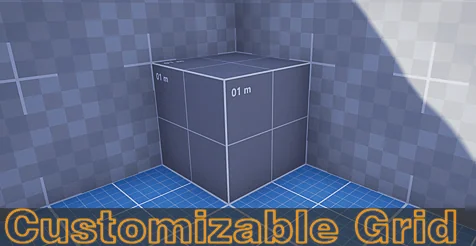
Customizable Grid is a highly customizable material for creating fast grid materials, with a UV-free world-position option and added UV control.
Category:Unreal Engine,VarietyPlatform: Unreal EngineEngine Version: 4.26+,5.0+Published: Jun 18, 2026
Variety
Resource overview
When a scene needs a readable grid fast, the biggest obstacle is often not the grid itself but the setup around it. A material that can be adjusted quickly, reused across different situations, and applied without unnecessary friction can save time early in production and keep iteration moving. Customizable Grid is aimed directly at that need.
At its core, Customizable Grid is a highly customizable material made to create fast grid materials. That makes its role very clear in a production workflow: it is not a general-purpose surface package or a broad collection of unrelated looks. It is anchored in grid creation, with customization as the main strength. The resource also includes a newer material that works without UVs by using world position, alongside more UV control for workflows that still depend on mapped coordinates.
Getting fast grid materials into a scene
The most immediate point of Customizable Grid is speed. It is made to do fast grid materials, which places it in the part of production where clear visual structure matters more than elaborate surface detail. A grid can help establish scale, spacing, direction, and rhythm in an environment, and this material is shaped around getting that result without turning the setup process into its own task.
The emphasis on being highly customizable matters because fast does not always mean fixed. A quick grid material is more useful when it can be adjusted rather than treated as a one-note placeholder. That combination gives the material a practical identity: it supports quick deployment, but it also leaves room to adapt the result to the needs of a scene. In workflow terms, that means it can fit situations where a grid needs to appear early and then remain useful instead of being discarded as soon as more control is required.
Customizable Grid and the value of control
Customization is not framed here as an extra feature attached to a simple shader. It is central to what Customizable Grid is. The name and description both point to a material that is intended to be shaped by the user rather than left as a fixed preset.
That matters in real scene work because grid materials are often used for more than one purpose. In one stage, they may act as a quick visual guide. In another, they may help keep surfaces readable while a scene is still in flux. A highly customizable grid material can remain relevant across those moments because it is not locked to a single presentation. The resource stays focused on the same core task throughout, but the stress on customization suggests a workflow where the grid is expected to adapt as production needs change.
The added note about more UV control reinforces that point. A grid material often depends on how it sits on a surface, and more UV control gives extra room to manage that relationship when UVs are part of the setup. Even without a list of specific parameters, the stated improvement is significant because it shows the material is not only about placing a grid quickly. It also recognizes that mapped surfaces can need finer handling.
A world position material that works without UVs
One of the clearest additions is a new material that works without UVs and is based on world position. This changes where Customizable Grid can fit most comfortably in production.
UV-free application removes one of the common setup dependencies that can slow down basic material testing. Inside a project, a world-position-based grid material can be especially useful when the priority is to see a grid result on geometry without first preparing UVs for that purpose. That does not replace UV-based workflows altogether, but it gives the package a second route: one path for cases where UVs are already part of the plan, and another for cases where a grid needs to appear more immediately.
The world-position approach also broadens how the material can be used across scene elements during earlier production phases. When prototyping, speed and clarity often matter more than polishing a bespoke mapping workflow for every object. A material that can function without UVs aligns well with that pace. It reduces dependency on one preparation step while still keeping the work anchored in the grid itself.
More UV control when mapped surfaces matter
The newer UV-free material does not make UVs irrelevant here. Customizable Grid also now includes more UV control, which means the package speaks to both sides of the workflow rather than forcing one method.
That balance is useful. Some scenes or assets may benefit from the convenience of a world-position grid, while others still call for UV-based control. More UV control suggests that mapped placement remains an active part of the material's design instead of being treated as an older option left behind by the newer addition. This gives the resource a more flexible place in production: it can support quick application without UVs, while also giving extra handling for setups where UVs are already important.
Seen together, these two points define the package more clearly than either one alone. The world-position material addresses speed and directness. The increased UV control addresses adjustment and placement when UVs are in use. Both serve the same end goal of making grid materials easier to work with, but they do so from different technical angles. That dual focus is one of the most practical parts of the resource.
Where Customizable Grid fits in prototyping
The prototyping tag gives the strongest clue about where this material belongs in a wider workflow. Customizable Grid fits naturally into stages where scenes, spaces, and surfaces need to communicate structure before final look development takes over.
In that context, a grid material has a straightforward job: make surfaces readable, provide visual order, and support quick iteration. Because this material is both highly customizable and fast to deploy, it suits the kind of work where changes happen often and setup time needs to stay under control. The addition of a world-position-based material that works without UVs pushes it even further toward rapid scene work, while the extra UV control keeps it useful when a more deliberate mapped setup is needed.
The texture and grid tags keep the identity narrow in a good way. This is not trying to cover every surface need in a project. It is a focused material resource for grid work, and that focus is exactly what can make it dependable during prototyping. Instead of asking it to solve unrelated tasks, it makes more sense to see it as a targeted tool for any stage where grid-based surface treatment helps the work move forward.
For teams or creators who need a grid on demand, the practical value is simple: Customizable Grid sits well in workflows that need speed first, but it does not stop at speed. The world-position option covers UV-free use, the added UV control supports mapped surfaces, and the material stays anchored in fast, adjustable grid creation where prototyping needs it most.
 Variety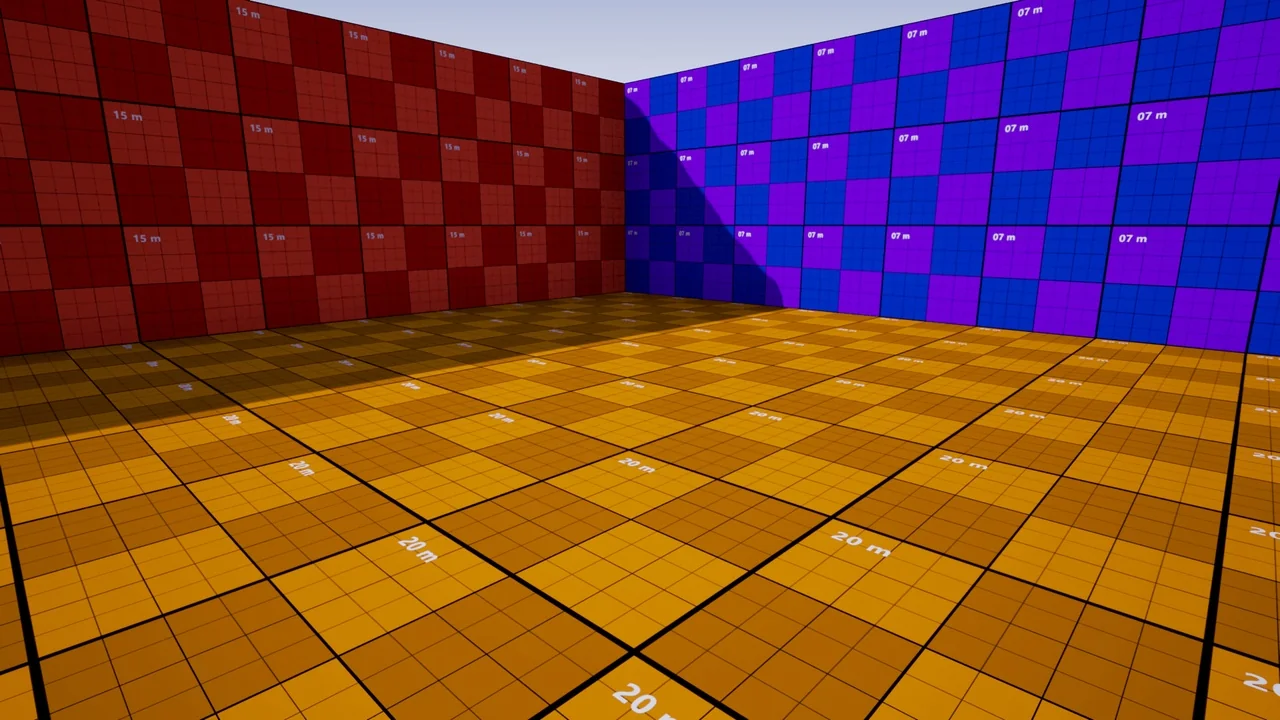
 Variety
 Variety
 Variety