"4481da9c895ef786"{"id":"1000284","slug":"black-girl-zahira-african-female-character-npc-vrhc","title":"Black Girl Zahira African Female Character NPC VRHC","category":"Characters \u0026 Creatures","engine":"4.27,5.0+","assetVersion":"","engineVersion":"Engine Version: 4.27,5.0+","tag":"Characters","accent":"blue","visual":"character","summary":"A high-resolution, realistic African female character model featuring three distinct thematic outfits and an expanded Epic skeleton rig for diverse game scenari","platform":"Unreal Engine","publishedAt":"2026-07-03T07:32:48.813Z","updatedAt":"2026-07-03T07:32:48.813Z","sourceNotes":[],"fileContents":[],"compatibility":["Unreal Engine","Engine Version: 4.27,5.0+"],"featuredImage":{"alt":"Black Girl Zahira African Female Character NPC VRHC","src":"/wp-content/uploads/published/2026/07/a50823bdfcef-90ba1df5-de7c-476b-a09d-069463aceda8-7e28ac4073.webp"},"hasDownloadLink":true,"downloads":0,"terms":[{"taxonomy":"category","slug":"characters-and-creatures","name":"Characters \u0026 Creatures"}],"galleryImages":[{"src":"/wp-content/uploads/published/2026/07/888cd522dca3-b1959e4d-8082-471c-9fc5-da62a61cea63-21cbdf3151.webp","alt":"Black Girl Zahira African Female Character NPC VRHC"},{"src":"/wp-content/uploads/published/2026/07/390022455926-6982b0f2-57b7-4057-93da-bad46b236c1f-0e315c6b9d.webp","alt":"Black Girl Zahira African Female Character NPC VRHC"},{"src":"/wp-content/uploads/published/2026/07/91fa3e53edfe-33be89e9-c8f3-4a0f-a16d-b69d7dc0c516-7fe24b51fe.webp","alt":"Black Girl Zahira African Female Character NPC VRHC"},{"src":"/wp-content/uploads/published/2026/07/386ab52ebcb7-018355e4-efd9-49d7-913d-e9c5ff17ffcf-cb06a0ab04.webp","alt":"Black Girl Zahira African Female Character NPC VRHC"},{"src":"/wp-content/uploads/published/2026/07/edd4eefc86da-184d80ad-8abb-4763-9fdf-956afc225f9c-3f556ddd20.webp","alt":"Black Girl Zahira African Female Character NPC VRHC"},{"src":"/wp-content/uploads/published/2026/07/a332dc7adbe8-fe269510-8034-47bb-aefc-919dd5beb10a-50ae21125a.webp","alt":"Black Girl Zahira African Female Character NPC VRHC"},{"src":"/wp-content/uploads/published/2026/07/8f58ed9ea95d-5db1bedf-2b16-4533-b7d3-bb5d2c07da24-7c7f599b7e.webp","alt":"Black Girl Zahira African Female Character NPC VRHC"},{"src":"/wp-content/uploads/published/2026/07/2f02b74d8d9a-39455cc5-8e33-4d7f-b8ce-6c507a256afb-ec6e296707.webp","alt":"Black Girl Zahira African Female Character NPC VRHC"},{"src":"/wp-content/uploads/published/2026/07/d80fea74705b-db172056-7746-416f-885b-5fea23b9b260-d9c9b0e1db.webp","alt":"Black Girl Zahira African Female Character NPC VRHC"},{"src":"/wp-content/uploads/published/2026/07/411f05eec711-ef3dfd30-658a-4dcc-8320-f6aa30f9df1d-c1a5d0682e.webp","alt":"Black Girl Zahira African Female Character NPC VRHC"}],"accessPanel":{"kind":"resource","title":"Download this resource","eyebrow":"Free Download","message":"Log in or create a free account to start your download.","fileName":"Content.7z","safetyNote":"Resources are manually reviewed before listing to improve quality and reduce obvious risks.","actionLabel":"Download Free","resourceType":"Resource archive"},"contentHtml":"\u003ch2\u003ePopulating Realistic Digital Environments\u003c/h2\u003e\n\u003cp\u003eBuilding immersive digital worlds requires characters that can seamlessly adapt to the narrative tone and the technical demands of a production pipeline. The Black Girl Zahira African Female Character NPC VRHC provides developers with a highly realistic, high-resolution human asset designed to populate diverse project types. Whether an environment is a gritty post-collapse wasteland, a bustling modern cityscape, or a covert tactical facility, this character provides the visual fidelity necessary for close-up interactions, cinematic sequences, and believable in-game encounters.\u003c/p\u003e\n\u003cp\u003eHigh-resolution models are essential for modern rendering environments where camera proximity demands excellent surface details. When functioning as a central character or a key NPC—such as a primary companion, a quest provider, or a pivotal story figure—the realistic nature of the Zahira model ensures that physical proportions hold up under intense lighting and close-up framing. The strict focus on realism allows the character to blend seamlessly into demanding, high-fidelity environments without breaking player immersion.\u003c/p\u003e\n\u003ch2\u003eThe Three-Outfit System: Survival, Casual, and Secret\u003c/h2\u003e\n\u003cp\u003eA character's visual identity must often shift to match the progression of a storyline or the specific biome they inhabit. To address this need for versatility, Zahira is equipped with three distinct thematic images: survival, casual, and secret. By offering these three distinct visual states, developers can utilize the same underlying character model across multiple scenarios.\u003c/p\u003e\n\u003cp\u003eThe survival variation gears the character for harsh, resource-scarce scenarios, making her an ideal fit for wilderness exploration or post-apocalyptic narrative arcs. The casual configuration strips away the extremes, offering an everyday aesthetic that blends easily into urban crowds, architectural visualizations, or standard civilian interactions. The secret configuration introduces a specialized, covert aesthetic suited for espionage mechanics, stealth-based scenarios, or tactical operations.\u003c/p\u003e\n\u003cp\u003eUtilizing a single high-resolution character with multiple visual variations offers distinct advantages in asset management and narrative consistency. Instead of introducing entirely different character meshes for different levels or narrative acts, the survival, casual, and secret variations allow a production to maintain consistent facial recognition and physical identity for the Zahira character across the entire scope of a project.\u003c/p\u003e\n\u003ch2\u003eRigging Architecture and the Epic Skeleton\u003c/h2\u003e\n\u003cp\u003eFor character integration, the underlying skeletal structure dictates how easily an asset can be brought to life within a game engine. Zahira is built upon the standard Epic skeleton architecture, a foundational framework that significantly streamlines the animation process. By adhering to this widely adopted bone hierarchy, the character bypasses the complex and often time-consuming retargeting phase that typically accompanies custom rigs.\u003c/p\u003e\n\u003cp\u003eRapid prototyping relies heavily on the ability to test movement and mechanics immediately. The Epic skeleton architecture facilitates this by allowing developers to drop the character into a scene and assign standard animation blueprints without friction. Because the core of the rig matches this standard, Zahira maintains broad compatibility with most Epic architecture animations. Developers can confidently apply vast libraries of pre-existing animation data—ranging from basic walk cycles and idle breathing to complex combat maneuvers—directly to the model.\u003c/p\u003e\n\u003ch3\u003eThe Addition of 42 Bones for Advanced Articulation\u003c/h3\u003e\n\u003cp\u003eWhile the base Epic skeleton handles primary locomotion and major limb articulation, realistic high-resolution characters often require finer control for secondary movements. To accommodate this need for nuanced motion, the development team has integrated an addition of 42 bones into the character's architecture.\u003c/p\u003e\n\u003cp\u003eThis expanded skeletal structure provides technical artists and animators with a much broader range of articulation points. The addition of these 42 bones does not break the fundamental compatibility with existing Epic animations; rather, it acts as an additive layer of control. Teams can rely on standard animation packs for baseline bipedal movement while dedicating their custom animation efforts exclusively to the 42 additional bones for specialized character quirks, dynamic secondary motion, or highly specific interactive requirements that go beyond a basic rig.\u003c/p\u003e\n\u003ch2\u003eProduction Context and the VRHCharacter Series\u003c/h2\u003e\n\u003cp\u003eCreated by the VRHuman team, Zahira is part of the broader VRHCharacter series, which focuses on providing realistic, high-resolution assets for professional development environments. The asset is structured to function effectively as either a specialized NPC or a primary playable character, adapting easily to the specific scope of the project at hand.\u003c/p\u003e\n\u003cp\u003eWhen integrating this character into a production, developers should note that while promotional materials may showcase the character within fully realized environments to demonstrate her versatility, the actual video scenes and background elements are not included in the product files. The package focuses entirely on delivering the high-resolution character model, her three distinct thematic variations, and the expanded Epic skeleton rig, providing a self-contained asset ready for immediate deployment into an active project.\u003c/p\u003e\n\n\u003ch2\u003eMore From The Same Workflow\u003c/h2\u003e\n\u003cul\u003e\n\u003cli\u003e\u003ca href=\"https://3dcghub.com/pirate-girl/\" title=\"Pirate Girl\"\u003ePirate Girl\u003c/a\u003e\u003c/li\u003e\n\u003cli\u003e\u003ca href=\"https://3dcghub.com/bunny-girl/\" title=\"Bunny Girl\"\u003eBunny Girl\u003c/a\u003e\u003c/li\u003e\n\u003cli\u003e\u003ca href=\"https://3dcghub.com/fantasy-girl/\" title=\"Fantasy girl\"\u003eFantasy girl\u003c/a\u003e\u003c/li\u003e\n\u003cli\u003e\u003ca href=\"https://3dcghub.com/the-cyborg-girl-bella/\" title=\"The cyborg girl : Bella\"\u003eThe cyborg girl : Bella\u003c/a\u003e\u003c/li\u003e\n\u003cli\u003e\u003ca href=\"https://3dcghub.com/cyberpunk-girl/\" title=\"Cyberpunk Girl\"\u003eCyberpunk Girl\u003c/a\u003e\u003c/li\u003e\n\u003c/ul\u003e","contentTextLength":5560,"navigation":{"current":1121,"total":3269,"previous":{"id":"1000285","slug":"middle-eastern-town-gigapack-w-level-pcg-met-palace-bazaar-city","title":"Middle Eastern Town Gigapack w/ Level PCG ( MET, Palace, Bazaar, City)","category":"Historical","platform":"Unreal Engine","updatedAt":"2026-07-03T16:58:55.632Z"},"next":{"id":"1000283","slug":"black-forest-pcg-environment","title":"Black Forest PCG Environment","category":"Forest \u0026 Jungle","platform":"Unreal Engine","updatedAt":"2026-07-03T07:08:47.294Z"}},"relatedResources":[{"id":"1000390","slug":"pirate-girl-2","title":"Pirate Girl","category":"Characters \u0026 Creatures","engine":"4.26+,5.0+","assetVersion":"","engineVersion":"Engine Version: 4.26+,5.0+","tag":"Characters","accent":"blue","visual":"character","summary":"A fully rigged, modular female character featuring 4K PBR textures, dynamic hair and cloth physics, and Apple blendshapes for Live Link Face integration.","platform":"Unreal Engine","publishedAt":"2026-07-07T14:41:04.455Z","updatedAt":"2026-07-07T14:41:04.455Z","sourceNotes":[],"fileContents":[],"compatibility":["Unreal Engine","Engine Version: 4.26+,5.0+"],"featuredImage":{"alt":"Pirate Girl","src":"/wp-content/uploads/published/2026/07/d5b9a4f3b1b4-d2969ffe-54f9-4c47-967c-11944d120c4d-e9f1e81ffc.webp"},"hasDownloadLink":true,"downloads":1},{"id":"1000357","slug":"fantasy-girls-pack","title":"Fantasy Girls Pack","category":"Characters \u0026 Creatures","engine":"4.26+,5.0+","assetVersion":"","engineVersion":"Engine Version: 4.26+,5.0+","tag":"Characters","accent":"blue","visual":"character","summary":"A detailed breakdown of the Fantasy Girls Pack, featuring seven rigged, PBR-textured female character models designed for modular RPG and medieval projects.","platform":"Unreal Engine","publishedAt":"2026-07-05T13:25:36.860Z","updatedAt":"2026-07-05T13:25:36.860Z","sourceNotes":[],"fileContents":[],"compatibility":["Unreal Engine","Engine Version: 4.26+,5.0+"],"featuredImage":{"alt":"Fantasy Girls Pack","src":"/wp-content/uploads/published/2026/07/6abe5b4a79d3-62ff126b-770f-4bcd-a5cf-bd51cab5c853-7dedbbc649.webp"},"hasDownloadLink":true,"downloads":0},{"id":"3681","slug":"techwear-girls","title":"Techwear Girls","category":"Characters \u0026 Creatures","engine":"4.26+,5.0+","assetVersion":"Engine version: 4.26+,5.0+","engineVersion":"4.19","tag":"Characters","accent":"blue","visual":"character","summary":"Enhance your game with modular Techwear Girl 3D models. Featuring 4K textures, ARKit blendshapes, and Epic Skeleton rigging for top performance.","platform":"Unreal Engine","publishedAt":"2026-02-09T09:05:02.000Z","updatedAt":"2026-04-19T15:57:35.000Z","sourceNotes":[],"fileContents":[],"compatibility":["Unreal Engine","Engine version: 4.26+,5.0+"],"featuredImage":{"alt":"Techwear Girls","src":"https://3dcghub.com/wp-content/uploads/2026/02/eda6e6c3-93db-4d92-befa-e9a363a64bf8.webp"},"hasDownloadLink":true,"downloads":3}]}
Characters
Black Girl Zahira African Female Character NPC VRHC
A high-resolution, realistic African female character model featuring three distinct thematic outfits and an expanded Epic skeleton rig for diverse game scenari
Building immersive digital worlds requires characters that can seamlessly adapt to the narrative tone and the technical demands of a production pipeline. The Black Girl Zahira African Female Character NPC VRHC provides developers with a highly realistic, high-resolution human asset designed to populate diverse project types. Whether an environment is a gritty post-collapse wasteland, a bustling modern cityscape, or a covert tactical facility, this character provides the visual fidelity necessary for close-up interactions, cinematic sequences, and believable in-game encounters.
High-resolution models are essential for modern rendering environments where camera proximity demands excellent surface details. When functioning as a central character or a key NPC—such as a primary companion, a quest provider, or a pivotal story figure—the realistic nature of the Zahira model ensures that physical proportions hold up under intense lighting and close-up framing. The strict focus on realism allows the character to blend seamlessly into demanding, high-fidelity environments without breaking player immersion.
The Three-Outfit System: Survival, Casual, and Secret
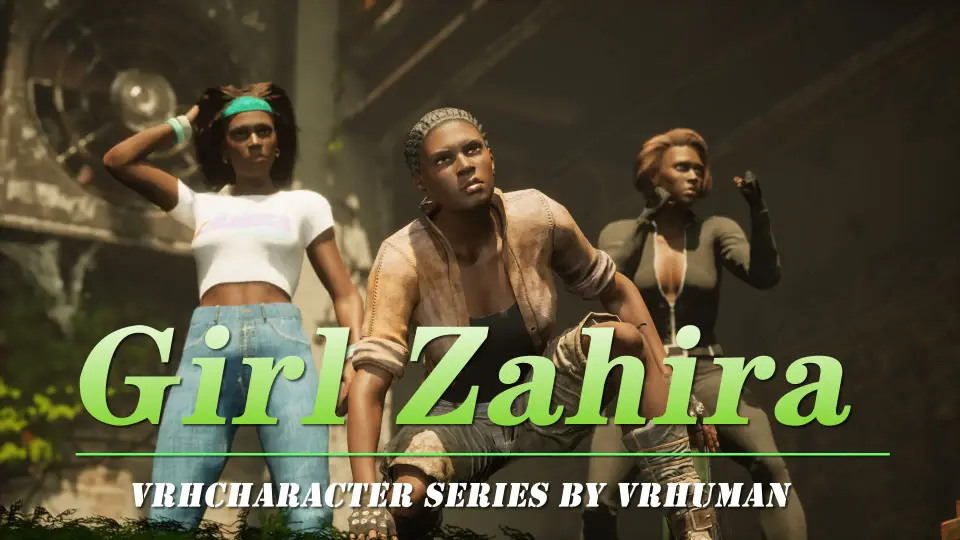
A character's visual identity must often shift to match the progression of a storyline or the specific biome they inhabit. To address this need for versatility, Zahira is equipped with three distinct thematic images: survival, casual, and secret. By offering these three distinct visual states, developers can utilize the same underlying character model across multiple scenarios.
The survival variation gears the character for harsh, resource-scarce scenarios, making her an ideal fit for wilderness exploration or post-apocalyptic narrative arcs. The casual configuration strips away the extremes, offering an everyday aesthetic that blends easily into urban crowds, architectural visualizations, or standard civilian interactions. The secret configuration introduces a specialized, covert aesthetic suited for espionage mechanics, stealth-based scenarios, or tactical operations.
Utilizing a single high-resolution character with multiple visual variations offers distinct advantages in asset management and narrative consistency. Instead of introducing entirely different character meshes for different levels or narrative acts, the survival, casual, and secret variations allow a production to maintain consistent facial recognition and physical identity for the Zahira character across the entire scope of a project.
Rigging Architecture and the Epic Skeleton
For character integration, the underlying skeletal structure dictates how easily an asset can be brought to life within a game engine. Zahira is built upon the standard Epic skeleton architecture, a foundational framework that significantly streamlines the animation process. By adhering to this widely adopted bone hierarchy, the character bypasses the complex and often time-consuming retargeting phase that typically accompanies custom rigs.
Rapid prototyping relies heavily on the ability to test movement and mechanics immediately. The Epic skeleton architecture facilitates this by allowing developers to drop the character into a scene and assign standard animation blueprints without friction. Because the core of the rig matches this standard, Zahira maintains broad compatibility with most Epic architecture animations. Developers can confidently apply vast libraries of pre-existing animation data—ranging from basic walk cycles and idle breathing to complex combat maneuvers—directly to the model.
The Addition of 42 Bones for Advanced Articulation
While the base Epic skeleton handles primary locomotion and major limb articulation, realistic high-resolution characters often require finer control for secondary movements. To accommodate this need for nuanced motion, the development team has integrated an addition of 42 bones into the character's architecture.
This expanded skeletal structure provides technical artists and animators with a much broader range of articulation points. The addition of these 42 bones does not break the fundamental compatibility with existing Epic animations; rather, it acts as an additive layer of control. Teams can rely on standard animation packs for baseline bipedal movement while dedicating their custom animation efforts exclusively to the 42 additional bones for specialized character quirks, dynamic secondary motion, or highly specific interactive requirements that go beyond a basic rig.
Production Context and the VRHCharacter Series
Created by the VRHuman team, Zahira is part of the broader VRHCharacter series, which focuses on providing realistic, high-resolution assets for professional development environments. The asset is structured to function effectively as either a specialized NPC or a primary playable character, adapting easily to the specific scope of the project at hand.
When integrating this character into a production, developers should note that while promotional materials may showcase the character within fully realized environments to demonstrate her versatility, the actual video scenes and background elements are not included in the product files. The package focuses entirely on delivering the high-resolution character model, her three distinct thematic variations, and the expanded Epic skeleton rig, providing a self-contained asset ready for immediate deployment into an active project.
 Characters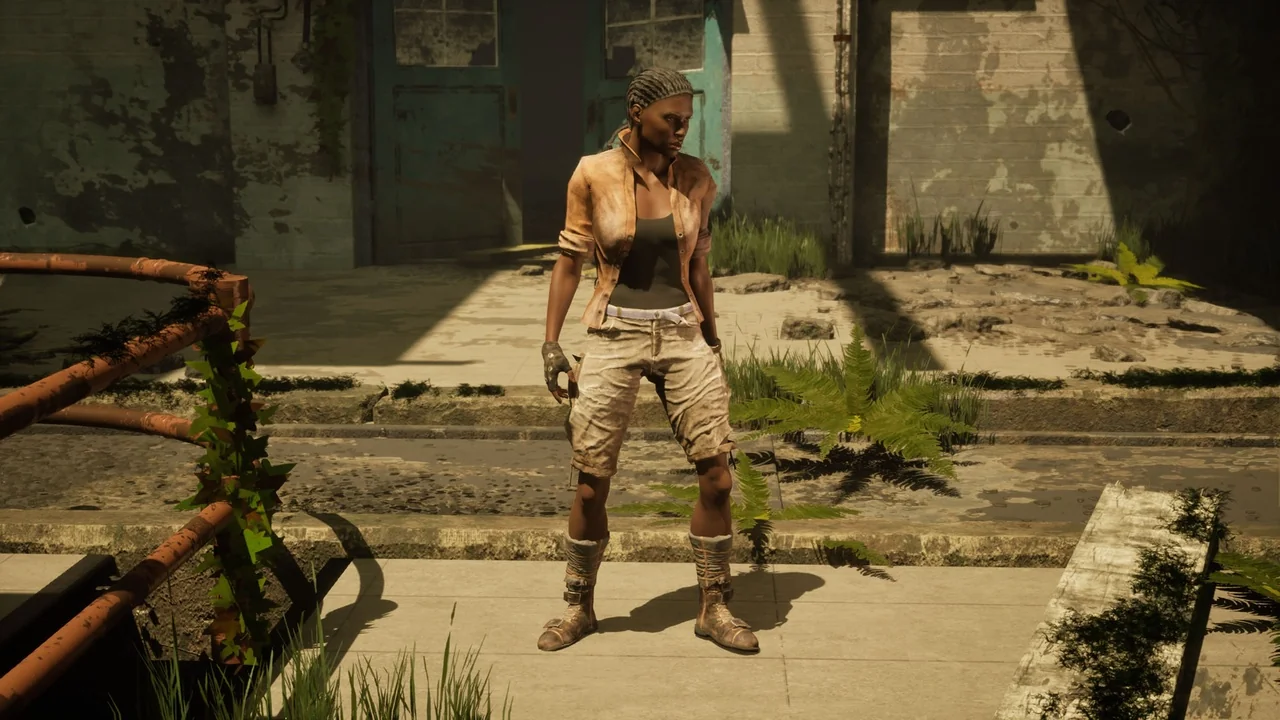
 Characters
 Characters
 Characters