"a1cb3f25942cff0a"{"id":"1002122","slug":"mud-material-pack-4","title":"Mud Material Pack 4","category":"Damage \u0026 Grunge","engine":"4.26+,5.0+","assetVersion":"","engineVersion":"Engine Version: 4.26+,5.0+","tag":"Damage \u0026 Grunge","accent":"blue","visual":"luts","summary":"Explore Mud Material Pack 4, featuring 7 unique 4K realistic mud and water materials with color tint, tiling, and normal map detail level controls.","platform":"Unreal Engine","publishedAt":"2026-10-29T09:03:23.830Z","updatedAt":"2026-10-29T09:03:23.830Z","sourceNotes":[],"fileContents":[],"compatibility":["Unreal Engine","Engine Version: 4.26+,5.0+"],"featuredImage":{"alt":"Mud Material Pack 4","src":"/wp-content/uploads/published/2026/10/bd1f34bd308b-31116ce6-7209-407e-bc5d-ccdd06b935d4-951db9de04.webp"},"hasDownloadLink":true,"downloads":0,"terms":[{"taxonomy":"category","slug":"damage-and-grunge","name":"Damage \u0026 Grunge"}],"galleryImages":[{"src":"/wp-content/uploads/published/2026/10/3e9b57fe1d11-579de959-3ad0-4d29-a78f-1d888c4fc884-9c6697b82e.webp","alt":"Mud Material Pack 4"},{"src":"/wp-content/uploads/published/2026/10/3662419971ed-414e2f74-f716-47f2-9a1f-e5c00625ac5f-569feb2223.webp","alt":"Mud Material Pack 4"},{"src":"/wp-content/uploads/published/2026/10/6d12e68dee48-e2833265-14a6-4fd4-a7bb-a3d5eb758cda-6adde5a84f.webp","alt":"Mud Material Pack 4"},{"src":"/wp-content/uploads/published/2026/10/0294fa246fbf-d230309d-34ad-434c-80d9-a5557e1574bc-793c5a0118.webp","alt":"Mud Material Pack 4"},{"src":"/wp-content/uploads/published/2026/10/2f9ac2522607-cf172ba3-4775-4ad5-8819-e783ab87a383-b195c0f5a0.webp","alt":"Mud Material Pack 4"},{"src":"/wp-content/uploads/published/2026/10/51b794160dc3-fa106c94-8ca5-4e89-a33c-57bd3d7ccecf-94005224a8.webp","alt":"Mud Material Pack 4"},{"src":"/wp-content/uploads/published/2026/10/a2ba4995c473-8d77d9a9-6db9-4fb0-a8e1-df45cbf3bbbf-8051b0be13.webp","alt":"Mud Material Pack 4"}],"accessPanel":{"kind":"resource","title":"Download this resource","eyebrow":"Free Download","message":"Log in or create a free account to start your download.","fileName":"Content.7z","safetyNote":"Resources are manually reviewed before listing to improve quality and reduce obvious risks.","actionLabel":"Download Free","resourceType":"Resource archive"},"contentHtml":"\u003cp\u003eOutdoor environments frequently rely on soil and water interaction to establish atmospheric weight. Wet ground textures communicate weathering, climate, and foot traffic, grounding natural scenes in a tangible sense of place. Mud Material Pack 4 addresses these terrain surfaces through a collection of seven distinct, realistic materials focused on mud and water characteristics.\u003c/p\u003e \u003ch2\u003eVisualizing Wet Ground with 7 Unique Mud Materials\u003c/h2\u003e\n\u003cp\u003eTerrain rarely looks uniform across an entire landscape. Natural outdoor settings display irregular transitions where water settles, soil loosens, and high-traffic zones churn into sludge. Having seven separate material variations allows world builders to populate broad spaces without relying on a single repetitive ground profile.\u003c/p\u003e\n\u003cp\u003eEach material within the set represents an individual take on muddy conditions. Some surface configurations emphasize high water saturation, evoking standing puddles and saturated silt. Others highlight thicker, churned earth with pronounced clods and heavier consistency. By distributing these seven distinct variations across paths, creek edges, ditches, or marsh borders, scene composition gains believable diversity.\u003c/p\u003e\n\u003cp\u003eCombining multiple distinct mud profiles prevents obvious patterns across large ground expanses. Transitioning from drier edges toward deep, waterlogged tracks becomes straightforward when individual materials capture differing states of muddy sediment.\u003c/p\u003e \u003ch2\u003eSurface Fidelity Through 4K Textures\u003c/h2\u003e\n\u003cp\u003eEnvironmental believability depends heavily on close-range clarity. When player perspectives or cinematic cameras drop near the ground, low-resolution surfaces break immersion quickly. Mud Material Pack 4 relies on 4K textures across its surfaces, maintaining sharpness across microscopic mud ripples, small water pockets, and particulate debris.\u003c/p\u003e\n\u003cp\u003eAt 4K resolution, fine details remain crisp regardless of camera proximity. The individual texture layers deliver visible distinction between glistening wet areas, soft sediment, and rougher aggregate mixed into the mud. This density ensures that scenes framed at eye level, low angles, or high top-down views preserve clean fidelity without showing blurred pixelation.\u003c/p\u003e\n\u003cp\u003eThe high texture resolution pairs directly with realistic lighting conditions. When light hits the surface, the defined 4K maps guide specular reflections across wet patches while keeping rough, unsoaked earthen patches visually matte and coarse.\u003c/p\u003e \u003ch2\u003eControlling Relief with the Normal Map Detail Level\u003c/h2\u003e\n\u003cp\u003eDepth perception on ground planes relies fundamentally on accurate surface tangents. Mud Material Pack 4 includes adjustable normal map detail levels, giving creators direct command over how intensely surface bumps and depressions register under scene lighting.\u003c/p\u003e\n\u003cp\u003eTuning the normal map detail level changes how deeply tracks, ruts, and clumps carve into the landscape. Raising the intensity brings out aggressive surface relief, making the mud appear deeply gouged by heavy machinery, footsteps, or natural erosion. Lowering the detail level flattens the response, smoothing out the ground into soft, semi-settled mud where water forms wide, uniform films.\u003c/p\u003e\n\u003cp\u003eThis adjustment helps match the ground surface to specific narrative situations. A freshly trodden forest trail benefits from heightened relief that catches low-angle sunlight, while an undisturbed lake bank might call for a subdued normal profile that accentuates smooth, slick mud.\u003c/p\u003e \u003ch2\u003eTiling and Color Tint Adjustments Across Landscapes\u003c/h2\u003e\n\u003cp\u003eScaling materials over expansive geometry requires precise handling to avoid unnatural repeats. The pack provides tiling controls to help configure how frequently surface features repeat across small props, narrow paths, or wide terrain meshes.\u003c/p\u003e\n\u003cp\u003eAdjusting the tiling parameter allows a single material to serve multiple roles within a layout. Increasing tiling frequency tightens the texture footprint, rendering the mud as finely textured silt or packed wet dirt across long roads. Setting a lower tiling frequency expands the scale, emphasizing large footprints, expansive pools, and wide mud fractures across open courtyards or riverbeds.\u003c/p\u003e\n\u003cp\u003eIn tandem with tiling, the color tint controls allow fast adaptation to distinct geographical settings. Mud varies significantly depending on local mineral content, moisture levels, and underlying rock types:\u003c/p\u003e\n\u003cul\u003e\n\u003cli\u003eDark brown and near-black tints mimic rich forest loam and swamp peat.\u003c/li\u003e\n\u003cli\u003eReddish and ochre hues suggest iron-heavy clay soils or temperate river valleys.\u003c/li\u003e\n\u003cli\u003ePale, yellowish-grey tones represent silt, drying mud, or quarry runoff.\u003c/li\u003e\n\u003c/ul\u003e\n\u003cp\u003eBy shifting the color tint, artists can harmonize the mud materials with surrounding rock faces, foliage, and structural assets without modifying core texture files externally.\u003c/p\u003e \u003ch2\u003eSuitability for Realistic Environmental Layouts\u003c/h2\u003e\n\u003cp\u003eMud Material Pack 4 fits workflows requiring dependable ground coverage for wilderness, combat zones, and weather-beaten urban edges. Its seven unique 4K materials combine fine physical realism with practical adjustments for normal map detail, tiling, and color tinting, providing environment artists with the foundational elements needed to build varied, convincing wet ground.\u003c/p\u003e\n\n\u003ch2\u003eMore From The Same Workflow\u003c/h2\u003e\n\u003cul\u003e\n\u003cli\u003e\u003ca href=\"https://3dcghub.com/horror-and-decay-vol-5-urban-surfaces/\" title=\"Horror and Decay VOL.5 - Urban Surfaces\"\u003eHorror and Decay VOL.5 - Urban Surfaces\u003c/a\u003e\u003c/li\u003e\n\u003cli\u003e\u003ca href=\"https://3dcghub.com/blood/\" title=\"Blood\"\u003eBlood\u003c/a\u003e\u003c/li\u003e\n\u003cli\u003e\u003ca href=\"https://3dcghub.com/battle-damaged-decals-1/\" title=\"Battle Damaged Decals 1\"\u003eBattle Damaged Decals 1\u003c/a\u003e\u003c/li\u003e\n\u003cli\u003e\u003ca href=\"https://3dcghub.com/mud-surfaces-material-pack-3/\" title=\"Mud Surfaces Material Pack 3\"\u003eMud Surfaces Material Pack 3\u003c/a\u003e\u003c/li\u003e\n\u003cli\u003e\u003ca href=\"https://3dcghub.com/concrete-damage-decals/\" title=\"Concrete Damage Decals\"\u003eConcrete Damage Decals\u003c/a\u003e\u003c/li\u003e\n\u003c/ul\u003e","contentTextLength":5312,"navigation":{"current":155,"total":4202,"previous":{"id":"1002123","slug":"multi-seated-vehicles-multiplayer-ready","title":"Multi-Seated Vehicles (Multiplayer Ready)","category":"Vehicles \u0026 Transportation","platform":"Unreal Engine","updatedAt":"2026-10-29T09:03:54.419Z"},"next":{"id":"1002121","slug":"motorcycles","title":"Motorcycles","category":"Bicycles \u0026 Motorcycles","platform":"Unreal Engine","updatedAt":"2026-10-29T09:02:39.320Z"}},"relatedResources":[{"id":"28275","slug":"horror-and-decay-vol-5-urban-surfaces","title":"Horror and Decay VOL.5 - Urban Surfaces","category":"Damage \u0026 Grunge","engine":"4.26+,5.0+","assetVersion":"Engine version: 4.26+,5.0+","engineVersion":"","tag":"Damage \u0026 Grunge","accent":"blue","visual":"luts","summary":"Horror and Decay VOL.5 - Urban Surfaces focuses on the messy, broken side of city environments. Its tileable texture sets, master material setup, and vertex paint blending make it useful for building grimy roads, walls, dirt, mud, and cracked concrete with...","platform":"Unreal Engine","publishedAt":"2026-05-06T15:45:04.000Z","updatedAt":"2026-05-06T15:45:05.000Z","sourceNotes":[],"fileContents":[],"compatibility":["Unreal Engine","Engine version: 4.26+,5.0+"],"featuredImage":{"alt":"Horror and Decay VOL.5 - Urban Surfaces","src":"https://3dcghub.com/wp-content/uploads/2026/05/9037e3dd3b26_a62630b0-0965-4e52-b1eb-593d490fe082.webp"},"hasDownloadLink":true,"downloads":0},{"id":"1001722","slug":"blood","title":"Blood","category":"Damage \u0026 Grunge","engine":"4.26+,5.0+","assetVersion":"","engineVersion":"Engine Version: 4.26+,5.0+","tag":"Damage \u0026 Grunge","accent":"blue","visual":"mech","summary":"Over 120 horror decals deliver 4K and 2K blood smears, demonic symbols, and text with a performance-first single-texture setup and Decal Blueprint control.","platform":"Unreal Engine","publishedAt":"2026-10-19T16:20:31.409Z","updatedAt":"2026-10-19T16:20:31.409Z","sourceNotes":[],"fileContents":[],"compatibility":["Unreal Engine","Engine Version: 4.26+,5.0+"],"featuredImage":{"alt":"Blood","src":"/wp-content/uploads/published/2026/10/c8e02bd2344b-ac47f0d8-8e82-4163-b6b7-d83fe1867fbb-065bd8a46c.webp"},"hasDownloadLink":true,"downloads":1},{"id":"12450","slug":"battle-damaged-decals-1","title":"Battle Damaged Decals 1","category":"Damage \u0026 Grunge","engine":"4.26+,5.0+","assetVersion":"Engine version: 4.26+,5.0+","engineVersion":"4.18","tag":"Damage \u0026 Grunge","accent":"blue","visual":"luts","summary":"Enhance your digital environments with Battle Damaged Decals 1. This collection features 80 specialized decals designed to simulate realistic wear and destruction on eight different surface types.","platform":"Unreal Engine","publishedAt":"2026-03-07T12:28:34.000Z","updatedAt":"2026-04-19T15:47:57.000Z","sourceNotes":[],"fileContents":[],"compatibility":["Unreal Engine","Engine version: 4.26+,5.0+"],"featuredImage":{"alt":"Battle Damaged Decals 1","src":"https://3dcghub.com/wp-content/uploads/2026/03/60cd68e3-c46d-4895-b8c3-46718c6056dd.webp"},"hasDownloadLink":true,"downloads":0}]}
Damage & Grunge
Mud Material Pack 4
Explore Mud Material Pack 4, featuring 7 unique 4K realistic mud and water materials with color tint, tiling, and normal map detail level controls.
Outdoor environments frequently rely on soil and water interaction to establish atmospheric weight. Wet ground textures communicate weathering, climate, and foot traffic, grounding natural scenes in a tangible sense of place. Mud Material Pack 4 addresses these terrain surfaces through a collection of seven distinct, realistic materials focused on mud and water characteristics.
Visualizing Wet Ground with 7 Unique Mud Materials
Terrain rarely looks uniform across an entire landscape. Natural outdoor settings display irregular transitions where water settles, soil loosens, and high-traffic zones churn into sludge. Having seven separate material variations allows world builders to populate broad spaces without relying on a single repetitive ground profile.
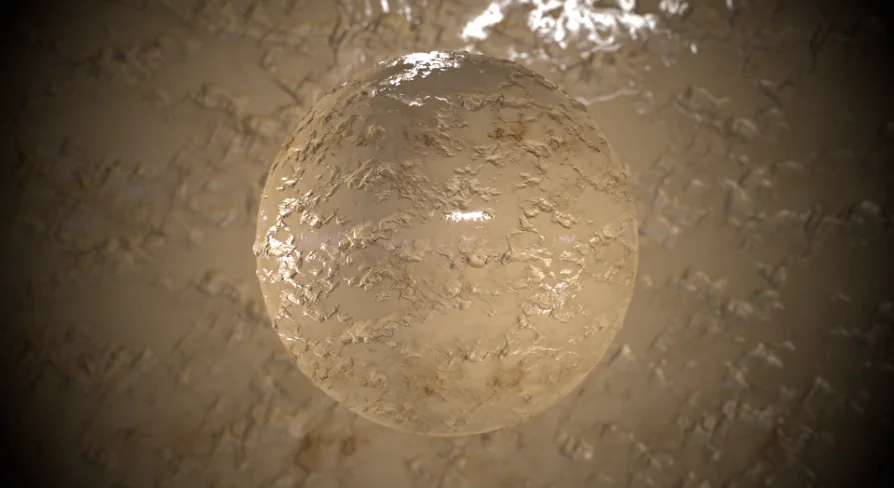
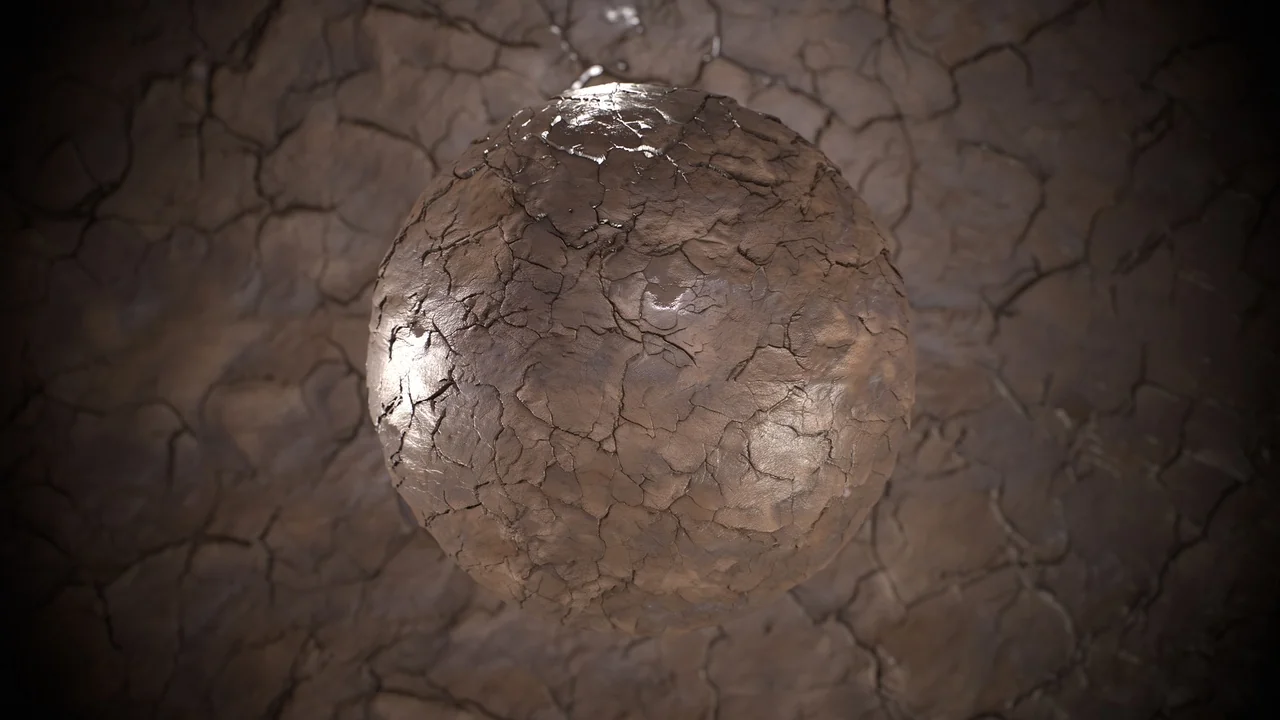
Each material within the set represents an individual take on muddy conditions. Some surface configurations emphasize high water saturation, evoking standing puddles and saturated silt. Others highlight thicker, churned earth with pronounced clods and heavier consistency. By distributing these seven distinct variations across paths, creek edges, ditches, or marsh borders, scene composition gains believable diversity.
Combining multiple distinct mud profiles prevents obvious patterns across large ground expanses. Transitioning from drier edges toward deep, waterlogged tracks becomes straightforward when individual materials capture differing states of muddy sediment.
Surface Fidelity Through 4K Textures
Environmental believability depends heavily on close-range clarity. When player perspectives or cinematic cameras drop near the ground, low-resolution surfaces break immersion quickly. Mud Material Pack 4 relies on 4K textures across its surfaces, maintaining sharpness across microscopic mud ripples, small water pockets, and particulate debris.
At 4K resolution, fine details remain crisp regardless of camera proximity. The individual texture layers deliver visible distinction between glistening wet areas, soft sediment, and rougher aggregate mixed into the mud. This density ensures that scenes framed at eye level, low angles, or high top-down views preserve clean fidelity without showing blurred pixelation.
The high texture resolution pairs directly with realistic lighting conditions. When light hits the surface, the defined 4K maps guide specular reflections across wet patches while keeping rough, unsoaked earthen patches visually matte and coarse.
Controlling Relief with the Normal Map Detail Level
Depth perception on ground planes relies fundamentally on accurate surface tangents. Mud Material Pack 4 includes adjustable normal map detail levels, giving creators direct command over how intensely surface bumps and depressions register under scene lighting.
Tuning the normal map detail level changes how deeply tracks, ruts, and clumps carve into the landscape. Raising the intensity brings out aggressive surface relief, making the mud appear deeply gouged by heavy machinery, footsteps, or natural erosion. Lowering the detail level flattens the response, smoothing out the ground into soft, semi-settled mud where water forms wide, uniform films.
This adjustment helps match the ground surface to specific narrative situations. A freshly trodden forest trail benefits from heightened relief that catches low-angle sunlight, while an undisturbed lake bank might call for a subdued normal profile that accentuates smooth, slick mud.
Tiling and Color Tint Adjustments Across Landscapes
Scaling materials over expansive geometry requires precise handling to avoid unnatural repeats. The pack provides tiling controls to help configure how frequently surface features repeat across small props, narrow paths, or wide terrain meshes.
Adjusting the tiling parameter allows a single material to serve multiple roles within a layout. Increasing tiling frequency tightens the texture footprint, rendering the mud as finely textured silt or packed wet dirt across long roads. Setting a lower tiling frequency expands the scale, emphasizing large footprints, expansive pools, and wide mud fractures across open courtyards or riverbeds.
In tandem with tiling, the color tint controls allow fast adaptation to distinct geographical settings. Mud varies significantly depending on local mineral content, moisture levels, and underlying rock types:
Dark brown and near-black tints mimic rich forest loam and swamp peat.
Reddish and ochre hues suggest iron-heavy clay soils or temperate river valleys.
Pale, yellowish-grey tones represent silt, drying mud, or quarry runoff.
By shifting the color tint, artists can harmonize the mud materials with surrounding rock faces, foliage, and structural assets without modifying core texture files externally.
Suitability for Realistic Environmental Layouts
Mud Material Pack 4 fits workflows requiring dependable ground coverage for wilderness, combat zones, and weather-beaten urban edges. Its seven unique 4K materials combine fine physical realism with practical adjustments for normal map detail, tiling, and color tinting, providing environment artists with the foundational elements needed to build varied, convincing wet ground.
 Damage & Grunge
 Damage & Grunge
 Damage & Grunge
 Damage & Grunge