"e2bfa951a54f5cbd"{"id":"1002121","slug":"motorcycles","title":"Motorcycles","category":"Bicycles \u0026 Motorcycles","engine":"4.21+,5.0+","assetVersion":"","engineVersion":"Engine Version: 4.21+,5.0+","tag":"Bicycles","accent":"blue","visual":"mech","summary":"Examine the dynamic capabilities of the Motorcycles package, featuring sport, off-road, and scooter models with dedicated rider animations and stunt mechanics.","platform":"Unreal Engine","publishedAt":"2026-10-29T09:02:39.320Z","updatedAt":"2026-10-29T09:02:39.320Z","sourceNotes":[],"fileContents":[],"compatibility":["Unreal Engine","Engine Version: 4.21+,5.0+"],"featuredImage":{"alt":"Motorcycles","src":"/wp-content/uploads/published/2026/10/47eec70232fe-fdf569d4-bb6c-4c11-8ff0-47248db8881a-7b254259f0.webp"},"hasDownloadLink":true,"downloads":0,"terms":[{"taxonomy":"category","slug":"bicycles-and-motorcycles","name":"Bicycles \u0026 Motorcycles"}],"galleryImages":[{"src":"/wp-content/uploads/published/2026/10/a928f6d52e38-daee25e5-1daa-4128-956d-7e7ed6ca9f5a-1841c7c830.webp","alt":"Motorcycles"},{"src":"/wp-content/uploads/published/2026/10/81e4a3b4e4fb-1e2d2bfd-6e7a-4afb-8679-362584b503bb-b66c2b6cb2.webp","alt":"Motorcycles"},{"src":"/wp-content/uploads/published/2026/10/5b0e7d82ae41-8088da92-7404-4bf0-9248-773ccc946420-bba78444e5.webp","alt":"Motorcycles"},{"src":"/wp-content/uploads/published/2026/10/b8d061312d7f-1ccb73a8-0b2c-4000-abac-f8e88abdda0c-05a2b2a671.webp","alt":"Motorcycles"},{"src":"/wp-content/uploads/published/2026/10/6b1c64e20f9c-1d43d513-1f3c-4540-869c-64b4c8f6e381-43d9ab7fae.webp","alt":"Motorcycles"},{"src":"/wp-content/uploads/published/2026/10/dd62a837f94c-ccd3fb7c-f7e2-48e6-9494-b0ce188404d6-595c78b67e.webp","alt":"Motorcycles"},{"src":"/wp-content/uploads/published/2026/10/4967ac5e49f7-785b4b20-5c0e-4437-a1de-f685564dfa02-8b86423955.webp","alt":"Motorcycles"},{"src":"/wp-content/uploads/published/2026/10/0aed5a06894e-ef796983-edf1-4586-90c5-d70177b2ec66-9346fb07ab.webp","alt":"Motorcycles"}],"accessPanel":{"kind":"resource","title":"Download this resource","eyebrow":"Free Download","message":"Log in or create a free account to start your download.","fileName":"Motorcycles.7z","safetyNote":"Resources are manually reviewed before listing to improve quality and reduce obvious risks.","actionLabel":"Download Free","resourceType":"Resource archive"},"contentHtml":"\u003ch2\u003eHandling Two-Wheel Dynamics Across Sport, Off Road, and Scooter Frames\u003c/h2\u003e\u003cp\u003eRigging and scripting two-wheeled vehicles requires balancing specialized balance behaviors, suspension response, and rider posture. Setting up these interactions from empty meshes often stalls prototyping when projects require multiple vehicle classes with contrasting handling styles.\u003c/p\u003e\u003cp\u003eThe package addresses this division by providing three distinct vehicle classifications: a Sport bike, an Off Road bike, and a Scooter. Each machine reflects a different scale, frame structure, and intended operational environment. The sport variant targets high-speed road surfaces where aerodynamic crouching and quick directional adjustments define the riding experience. The off-road model focuses on loose terrain, dirt tracks, and irregular obstacles where high ground clearance and aggressive suspension movement come into play. The scooter provides an alternate urban option, catering to commuter transit speeds, upright seating postures, and lighter maneuverability requirements within industrial or city layouts.\u003c/p\u003e\u003ch2\u003eExecuting Front and Back Lifting Stunts on Road and Dirt\u003c/h2\u003e\u003cp\u003eStandard vehicle rigs rarely account for mid-ride pitch alterations without extensive manual configuration. Controlled elevation of either wheel requires dedicated mechanical inputs that alter the center of gravity while keeping collision checks reliable.\u003c/p\u003e\u003cp\u003eEach of the three bikes contains built-in logic for jumping and lifting the chassis from either the front or the back. Triggering a front lift shifts the primary pivot to the rear wheel, allowing the bike to execute wheelies during acceleration. Raising the back shifts vehicle mass onto the front tire for abrupt stops or staged technical maneuvers. In addition to tilt manipulation, integrated jump behaviors provide vertical lift for navigating uneven terrain or clearing obstacles. Because these stunt capabilities function across the sport, off-road, and scooter options, interactive driving sequences can easily incorporate elevated technical maneuvers rather than basic forward rolling.\u003c/p\u003e\u003ch2\u003eRider Animations and Mannequin 4.22 Support\u003c/h2\u003e\u003cp\u003eDriver motion on a motorcycle cannot remain static without breaking visual credibility. The physical interaction between the pilot and the handlebars demands specific body alignment matching the chassis geometry of each machine.\u003c/p\u003e\u003cp\u003eTo maintain consistent contact points across different frame layouts, distinct rider animations are supplied for every individual vehicle. The sport bike positions the rider in an aggressive, forward-leaning tuck, whereas the off-road setup stabilizes the character against sudden bumps, and the scooter utilizes a centered, upright riding stance. Integration updates ensure compatibility with the standard Mannequin in version 4.22 and newer releases, simplifying the process of aligning character skeletons directly to vehicle seats, handlebars, and foot pegs without requiring manual retargeting from scratch.\u003c/p\u003e\u003ch2\u003eColor Customization for Bikes and Rider Gear\u003c/h2\u003e\u003cp\u003ePopulating a scene with varied traffic or distinct player loadouts requires quick visual differentiation across duplicate models. Fixed texture maps frequently limit variety unless multiple material variants are hand-authored outside the engine.\u003c/p\u003e\u003cp\u003eIndependent color parameters are integrated directly into the setup for both the vehicles and the rider. Adjusting these values allows artists to alter bike body panels, frame surfaces, and rider apparel on the fly. This flexibility makes it simple to establish separate racing teams, distinctive stunt riders, or diversified background traffic streams across city streets and rural tracks using the existing mesh collection without altering underlying texture maps.\u003c/p\u003e\u003ch2\u003eSound Updates and Vehicle Simulation Architecture\u003c/h2\u003e\u003cp\u003eTwo-wheel simulation demands acoustic feedback that correlates directly to engine acceleration, surface traction, and stunt execution. Audio systems that lack direct responsiveness disconnect the player from the kinetic weight of the machine.\u003c/p\u003e\u003cp\u003eSound updates implemented for version 4.22 and subsequent engine iterations ensure audio assets align smoothly with throttle inputs and vehicle behavior. Built using a blueprint structure geared toward simulation and stunt sequences, the framework also maintains pipeline compatibility alongside the Car-Truck-Motorcycles-Cycling-Bundle. This modular design permits the sport bike, off-road model, and scooter to function alongside larger multi-axle vehicles inside a shared road simulation without introducing conflicting control mechanics.\u003c/p\u003e\n\n\u003ch2\u003eExplore Similar Assets\u003c/h2\u003e\n\u003cul\u003e\n\u003cli\u003e\u003ca href=\"https://3dcghub.com/classic-motorbike-driveable-functional-classic-motorbike-vehicle-3d-model/\" title=\"Classic MotorBike / Driveable / Functional (Classic MotorBike Vehicle 3D Model)\"\u003eClassic MotorBike / Driveable / Functional (Classic MotorBike Vehicle 3D Model)\u003c/a\u003e\u003c/li\u003e\n\u003cli\u003e\u003ca href=\"https://3dcghub.com/bicycle-with-animations/\" title=\"Bicycle With Animations\"\u003eBicycle With Animations\u003c/a\u003e\u003c/li\u003e\n\u003cli\u003e\u003ca href=\"https://3dcghub.com/bicycle-repair-shop/\" title=\"Bicycle Repair Shop\"\u003eBicycle Repair Shop\u003c/a\u003e\u003c/li\u003e\n\u003cli\u003e\u003ca href=\"https://3dcghub.com/buggy-vehicles-pack/\" title=\"Buggy Vehicles Pack\"\u003eBuggy Vehicles Pack\u003c/a\u003e\u003c/li\u003e\n\u003cli\u003e\u003ca href=\"https://3dcghub.com/city-props/\" title=\"City props\"\u003eCity props\u003c/a\u003e\u003c/li\u003e\n\u003c/ul\u003e","contentTextLength":4744,"navigation":{"current":112,"total":4158,"previous":{"id":"1002122","slug":"mud-material-pack-4","title":"Mud Material Pack 4","category":"Damage \u0026 Grunge","platform":"Unreal Engine","updatedAt":"2026-10-29T09:03:23.830Z"},"next":{"id":"1002120","slug":"motion-scanner-lidar-detection-and-radar-system-with-audio-feedback","title":"Motion Scanner - LiDAR Detection \u0026 Radar System with Audio Feedback","category":"Gameplay Features","platform":"Unreal Engine","updatedAt":"2026-10-29T09:01:49.298Z"}},"relatedResources":[{"id":"1000983","slug":"classic-motorbike-driveable-functional-classic-motorbike-vehicle-3d-model","title":"Classic MotorBike / Driveable / Functional (Classic MotorBike Vehicle 3D Model)","category":"Bicycles \u0026 Motorcycles","engine":"5.1+","assetVersion":"","engineVersion":"Engine Version: 5.1+","tag":"Bicycles","accent":"blue","visual":"mech","summary":"A driveable, animated, realistic classic motorbike with one blueprint, three separate meshes, customizable material instances, and a built-in radio system for g","platform":"Unreal Engine","publishedAt":"2026-08-18T06:09:19.637Z","updatedAt":"2026-08-18T06:09:19.637Z","sourceNotes":[],"fileContents":[],"compatibility":["Unreal Engine","Engine Version: 5.1+"],"featuredImage":{"alt":"Classic MotorBike / Driveable / Functional (Classic MotorBike Vehicle 3D Model)","src":"/wp-content/uploads/published/2026/08/a7593c6d9122-96fbb296-3646-4810-a19b-c04a829c0f39-9604688afe.webp"},"hasDownloadLink":true,"downloads":1},{"id":"1001178","slug":"bicycle-with-animations","title":"Bicycle With Animations","category":"Variety","engine":"5.0+","assetVersion":"","engineVersion":"Engine Version: 5.0+","tag":"Variety","accent":"blue","visual":"animation","summary":"Explore the Bicycle With Animations asset, featuring a rigged, animated city bicycle model paired with 11 mannequin animation clips for realistic biker setups.","platform":"Unreal Engine","publishedAt":"2026-09-17T03:55:41.692Z","updatedAt":"2026-09-17T03:55:41.692Z","sourceNotes":[],"fileContents":[],"compatibility":["Unreal Engine","Engine Version: 5.0+"],"featuredImage":{"alt":"Bicycle With Animations","src":"/wp-content/uploads/published/2026/09/946a50b1f86d-9807998f-d274-435c-8fb2-c6c117545b3f-92ee1436e2.webp"},"hasDownloadLink":true,"downloads":0},{"id":"8793","slug":"bicycle-repair-shop","title":"Bicycle Repair Shop","category":"Interior","engine":"5.2+","assetVersion":"Engine version: 5.2+","engineVersion":"5.2","tag":"Interior","accent":"blue","visual":"city","summary":"Add authenticity to your game world with this detailed Bicycle Repair Shop environment. It features modular interiors, realistic props, and full optimization for Unreal Engine 5.","platform":"Unreal Engine","publishedAt":"2026-02-25T17:55:30.000Z","updatedAt":"2026-04-19T15:51:22.000Z","sourceNotes":[],"fileContents":[],"compatibility":["Unreal Engine","Engine version: 5.2+"],"featuredImage":{"alt":"Bicycle Repair Shop","src":"https://3dcghub.com/wp-content/uploads/2026/02/1aba79f9-b002-484a-954f-967cd78d1ef7.webp"},"hasDownloadLink":true,"downloads":0}]}
Bicycles
Motorcycles
Examine the dynamic capabilities of the Motorcycles package, featuring sport, off-road, and scooter models with dedicated rider animations and stunt mechanics.
Handling Two-Wheel Dynamics Across Sport, Off Road, and Scooter Frames
Rigging and scripting two-wheeled vehicles requires balancing specialized balance behaviors, suspension response, and rider posture. Setting up these interactions from empty meshes often stalls prototyping when projects require multiple vehicle classes with contrasting handling styles.
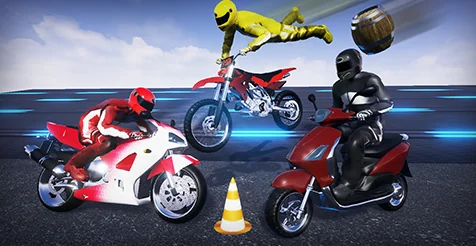
The package addresses this division by providing three distinct vehicle classifications: a Sport bike, an Off Road bike, and a Scooter. Each machine reflects a different scale, frame structure, and intended operational environment. The sport variant targets high-speed road surfaces where aerodynamic crouching and quick directional adjustments define the riding experience. The off-road model focuses on loose terrain, dirt tracks, and irregular obstacles where high ground clearance and aggressive suspension movement come into play. The scooter provides an alternate urban option, catering to commuter transit speeds, upright seating postures, and lighter maneuverability requirements within industrial or city layouts.
Executing Front and Back Lifting Stunts on Road and Dirt
Standard vehicle rigs rarely account for mid-ride pitch alterations without extensive manual configuration. Controlled elevation of either wheel requires dedicated mechanical inputs that alter the center of gravity while keeping collision checks reliable.
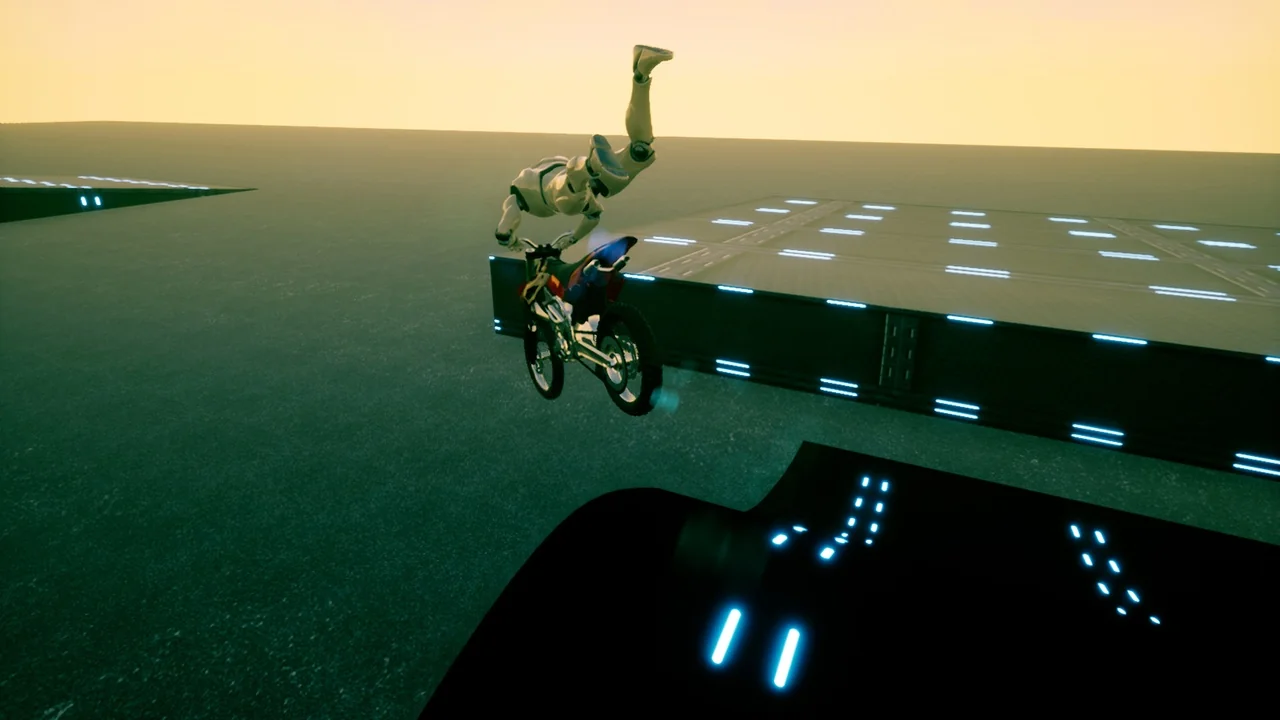
Each of the three bikes contains built-in logic for jumping and lifting the chassis from either the front or the back. Triggering a front lift shifts the primary pivot to the rear wheel, allowing the bike to execute wheelies during acceleration. Raising the back shifts vehicle mass onto the front tire for abrupt stops or staged technical maneuvers. In addition to tilt manipulation, integrated jump behaviors provide vertical lift for navigating uneven terrain or clearing obstacles. Because these stunt capabilities function across the sport, off-road, and scooter options, interactive driving sequences can easily incorporate elevated technical maneuvers rather than basic forward rolling.
Rider Animations and Mannequin 4.22 Support
Driver motion on a motorcycle cannot remain static without breaking visual credibility. The physical interaction between the pilot and the handlebars demands specific body alignment matching the chassis geometry of each machine.
To maintain consistent contact points across different frame layouts, distinct rider animations are supplied for every individual vehicle. The sport bike positions the rider in an aggressive, forward-leaning tuck, whereas the off-road setup stabilizes the character against sudden bumps, and the scooter utilizes a centered, upright riding stance. Integration updates ensure compatibility with the standard Mannequin in version 4.22 and newer releases, simplifying the process of aligning character skeletons directly to vehicle seats, handlebars, and foot pegs without requiring manual retargeting from scratch.
Color Customization for Bikes and Rider Gear
Populating a scene with varied traffic or distinct player loadouts requires quick visual differentiation across duplicate models. Fixed texture maps frequently limit variety unless multiple material variants are hand-authored outside the engine.
Independent color parameters are integrated directly into the setup for both the vehicles and the rider. Adjusting these values allows artists to alter bike body panels, frame surfaces, and rider apparel on the fly. This flexibility makes it simple to establish separate racing teams, distinctive stunt riders, or diversified background traffic streams across city streets and rural tracks using the existing mesh collection without altering underlying texture maps.
Sound Updates and Vehicle Simulation Architecture
Two-wheel simulation demands acoustic feedback that correlates directly to engine acceleration, surface traction, and stunt execution. Audio systems that lack direct responsiveness disconnect the player from the kinetic weight of the machine.
Sound updates implemented for version 4.22 and subsequent engine iterations ensure audio assets align smoothly with throttle inputs and vehicle behavior. Built using a blueprint structure geared toward simulation and stunt sequences, the framework also maintains pipeline compatibility alongside the Car-Truck-Motorcycles-Cycling-Bundle. This modular design permits the sport bike, off-road model, and scooter to function alongside larger multi-axle vehicles inside a shared road simulation without introducing conflicting control mechanics.
 Bicycles
 Bicycles
 Variety
 Interior