"7066dd76da796369"{"id":"12807","slug":"mud-surfaces-material-pack-3","title":"Mud Surfaces Material Pack 3","category":"Ground","engine":"4.26+,5.0+","assetVersion":"Engine version: 4.26+,5.0+","engineVersion":"4.26","tag":"Ground","accent":"blue","visual":"luts","summary":"The Mud Surfaces Material Pack 3 provides seven unique, high-quality materials designed for realistic ground rendering. These 4K textures feature tiling capabilities and adjustable normal map details for various environment types.","platform":"Unreal Engine","publishedAt":"2026-03-09T17:35:52.000Z","updatedAt":"2026-08-20T14:03:43.127Z","sourceNotes":[],"fileContents":[],"compatibility":["Unreal Engine","Engine version: 4.26+,5.0+"],"featuredImage":{"alt":"Mud Surfaces Material Pack 3","src":"https://3dcghub.com/wp-content/uploads/2026/03/93af1c80-8885-4557-b9ee-94c618f780ae.webp"},"hasDownloadLink":true,"downloads":1,"terms":[{"taxonomy":"category","slug":"ground","name":"Ground"},{"taxonomy":"post_tag","slug":"environment","name":"Environment"},{"taxonomy":"post_tag","slug":"ground-surfaces","name":"Ground Surfaces"},{"taxonomy":"post_tag","slug":"materials","name":"Materials"},{"taxonomy":"post_tag","slug":"pbr","name":"PBR"},{"taxonomy":"post_tag","slug":"realistic","name":"Realistic"},{"taxonomy":"post_tag","slug":"textures","name":"Textures"}],"galleryImages":[{"src":"https://3dcghub.com/wp-content/uploads/2026/03/f74aeeaf68b2_e493806a-3927-429f-9cfa-414d8e31c909.webp","alt":"Mud Surfaces Material Pack 3"},{"src":"https://3dcghub.com/wp-content/uploads/2026/03/5227eb06588c_e4db3f3d-e472-4c70-aee5-52bbbeb923b4.webp","alt":"Mud Surfaces Material Pack 3"},{"src":"https://3dcghub.com/wp-content/uploads/2026/03/19a4b0aa2cd6_d47f34d6-7679-4077-b390-85a8daf51d23.webp","alt":"Mud Surfaces Material Pack 3"},{"src":"https://3dcghub.com/wp-content/uploads/2026/03/8f0140526b21_f88b2f03-a35f-4874-9b22-e4f2d63e7691.webp","alt":"Mud Surfaces Material Pack 3"},{"src":"https://3dcghub.com/wp-content/uploads/2026/03/9852a634f415_951cce8b-3849-47a4-b2ac-e92bfa7a1dad.webp","alt":"Mud Surfaces Material Pack 3"},{"src":"https://3dcghub.com/wp-content/uploads/2026/03/deccdcdeed5e_8464b10d-e920-4d56-9563-4dd16366908b.webp","alt":"Mud Surfaces Material Pack 3"},{"src":"https://3dcghub.com/wp-content/uploads/2026/03/c3dc62b599ef_f4e27419-464b-4bf5-a73d-3c4690a962d8.webp","alt":"Mud Surfaces Material Pack 3"}],"accessPanel":{"kind":"resource","title":"Download this resource","eyebrow":"Free Download","message":"Log in or create a free account to start your download.","fileName":"Content.7z","safetyNote":"Resources are manually reviewed before listing to improve quality and reduce obvious risks.","actionLabel":"Download Free","resourceType":"Resource archive"},"contentHtml":"\u003cp\u003eMud Surfaces Material Pack 3 opens with a practical lineup: seven different unique materials, each delivered as a 4K texture set. The contents are all oriented around mud and soil, with a clear emphasis on wet, messy, ground-level surfaces. Not just one generic preset, the pack gives art teams a working palette of distinct muddy looks that can be spread across an environment, matched to different lighting conditions, and adjusted to fit a scene's visual tone.\u003c/p\u003e\u003cp\u003eEach material follows PBR principles, which means the 4K color data is paired with surface definition from a normal map. The pack includes a normal map detail level control, allowing artists to decide how much bump and texture the material should read in the final render. That combination is what turns a flat albedo into a convincing stretch of muddy ground, especially when the camera is low and the terrain fills the frame.\u003c/p\u003e\u003ch2\u003eSeven Materials, Four 4K-Texture Sets Each\u003c/h2\u003e\u003cp\u003eThe core of the pack is the range. Seven different unique materials means seven standalone surface treatments, not just seven variations of the same texture. Each one brings its own character to the ground, whether it is the heavy saturation of a damp trail, the pale crust of drying soil, or the dark bulk of a rain-soaked lowland. Since they are delivered as 4K textures, there is enough resolution to keep the materials sharp during close-ups and mid-range shots alike.\u003c/p\u003e\u003cp\u003eArtists often need variation when they build an outdoor scene. A mud path through a forest looks wrong if every patch of dirt is identical. Having seven distinct materials in one pack makes it easier to layer the ground, alternating between darker and lighter areas, rougher and smoother stretches, and spots where the soil has been churned up by foot traffic. The differences may come through in the color, the surface detail, or both, but the set provides the raw range needed to break up a monotonous floor.\u003c/p\u003e\u003ch2\u003eColor Tint and Normal Map Detail Level as Practical Controls\u003c/h2\u003e\u003cp\u003eColor tint is one of the first controls an artist reaches for when a texture needs to fit a specific environment. In Mud Surfaces Material Pack 3, the tint can shift the appearance of each material without replacing the whole texture. A muddy field under a cloudy sky can be pushed toward a colder, darker gray, while the same material used in a warm sunset scene can take on a reddish or brownish tint. This makes the pack flexible across different times of day and different art directions.\u003c/p\u003e\u003cp\u003eThe normal map detail level is just as important. Mud is rarely completely flat; it holds footprints, tire tracks, cracks, and the uneven settlement of soil after rain. The normal map in each material captures that microgeometry in shading, and the detail level control lets artists turn it up or down to match the intended surface response. For a relatively smooth, worn-down path, the detail can be lowered. For a chaotic battlefield or a swampy morass, the detail can be raised to emphasize every lump and depression. Being able to adjust that in the material itself means the same base texture can be reused for very different surfaces.\u003c/p\u003e\u003ch2\u003eWhy Tiling Matters for Muddy Terrain\u003c/h2\u003e\u003cp\u003eGround materials have a different job from prop materials. They need to cover large continuous surfaces, sometimes stretching all the way to the horizon. The tiling support in Mud Surfaces Material Pack 3 allows these 4K textures to repeat across a surface in a way that is practical for terrain. Instead of being locked to a single plane that ends abruptly, the material can be applied to broad areas and still maintain the same mud detail wherever it repeats.\u003c/p\u003e\u003cp\u003eFor independent developers and small teams, tiling materials are a efficient way to give a scene a consistent ground surface without generating a massive set of unique maps for every stretch of soil. Because the textures are already 4K, even a repeated pattern can carry enough fine detail to hold up under scrutiny. The tiling also matters when the camera moves quickly across a landscape; the material stays coherent from one area to the next.\u003c/p\u003e\u003cp\u003eIt is not just an outdoor staple, either. A muddy floor can be a feature in a cave, a ruin, or a basement level, and having a tileable material that keeps its shape across a wider ground plane is useful in those enclosed spaces too. The same material that reads as a forest floor can be angled into a dungeon corridor or a flooded courtyard without losing its muddy character.\u003c/p\u003e\u003ch2\u003eRealistic Soil and Fantasy Mud From One Set\u003c/h2\u003e\u003cp\u003eThe tags attached to this pack point in several directions at once: PBR, mud, ground, fantasy, nature, realistic, soil, surface, muddy. That mix is not accidental. Mud is one of those materials that works across genres. In a realistic nature scene, these textures can be the dirt path through a temperate woodland or the shoreline of a rain-swollen river. In a fantasy setting, the same muddy surfaces can be a cursed bog, a witch's stomping ground, or a battlefield where the ground has churned into dark slop.\u003c/p\u003e\u003cp\u003eThe heavy presence of fantasy in the tags is worth noting. Mud carries atmosphere; it makes a place feel damp, forgotten, or inhospitable. When a fantasy environment needs to communicate decay or hardship, a well-tinted muddy material does a lot of the work. The normal map detail level helps sell the uneven, treacherous footing that players or characters would experience in a location like that.\u003c/p\u003e\u003cp\u003eThe pack also sits comfortably in a realistic workflow. The PBR foundation means the materials react to light in the same way other physically based surfaces do, so they do not look glued on top of the scene. Whether the goal is a documentary-style outdoor shot or a stylized dark fantasy level, the seven materials give artists a starting point that can be pushed in either direction through tint, normal detail, and surface placement.\u003c/p\u003e\u003ch2\u003eWho Benefits Most From Mud Surfaces Material Pack 3\u003c/h2\u003e\u003cp\u003eEnvironment artists are the most direct audience. The pack gives them a ready supply of muddy ground textures with the controls needed to fit multiple scenes. Technical artists also get a useful setup because the materials include both color tint and normal map detail level, which makes them easier to integrate into a larger material-parameter system. The tiling behavior is especially useful for anyone building terrain splats or painting large ground areas inside a level editor.\u003c/p\u003e\u003cp\u003eIndependent developers who work alone or in small teams will appreciate that the pack supplies seven different looks in one package, so they are not forced to buy or create several separate mud textures. But the set is not limited to large outdoor levels. It is equally useful for any project where the ground is a visible, tangible part of the scene — a horror game with a sodden basement, a survival game with muddy riverbanks, or a fantasy role-playing game with a swamp region that occupies an entire map.\u003c/p\u003e\u003cp\u003eThe practical takeaway is that Mud Surfaces Material Pack 3 is set up to cover the full cycle of muddy ground work: pick a material, tint it to match the environment, adjust the normal map detail to the desired surface roughness, and let the tiling carry it across the scene. With seven distinct 4K materials, there is enough variety to keep the ground believable without ever dipping into a generic, one-texture-fits-all approach.\u003c/p\u003e","contentTextLength":7305,"navigation":{"current":1151,"total":4016,"previous":{"id":"1001003","slug":"nanite-foliage-v2","title":"Nanite Foliage V2","category":"Nature \u0026 Plants","platform":"Unreal Engine","updatedAt":"2026-08-21T15:56:24.205Z"},"next":{"id":"1001002","slug":"medieval-castle-interior-medieval-castle-interior-medieval-throne-realistic","title":"Medieval Castle Interior ( Medieval Castle Interior Medieval Throne Realistic )","category":"Interior","platform":"Unreal Engine","updatedAt":"2026-08-20T10:12:02.696Z"}},"relatedResources":[{"id":"12797","slug":"ground-material-pack-v1","title":"Ground Material Pack v1","category":"Ground","engine":"5.2+","assetVersion":"Engine version: 5.2+","engineVersion":"5.2","tag":"Ground","accent":"blue","visual":"luts","summary":"Ground Material Pack v1 provides 11 ultra-high-resolution, real-life nature surfaces optimized for game engines and architectural visualizations. This collection features photogrammetry-based materials including snow, stone, and sand with optimized texture...","platform":"Unreal Engine","publishedAt":"2026-03-09T17:35:13.000Z","updatedAt":"2026-04-19T15:46:36.000Z","sourceNotes":[],"fileContents":[],"compatibility":["Unreal Engine","Engine version: 5.2+"],"featuredImage":{"alt":"Ground Material Pack v1","src":"https://3dcghub.com/wp-content/uploads/2026/03/38c2e724-7e02-4595-b626-fdb5c279b3e0.webp"},"hasDownloadLink":true,"downloads":0},{"id":"28275","slug":"horror-and-decay-vol-5-urban-surfaces","title":"Horror and Decay VOL.5 - Urban Surfaces","category":"Damage \u0026 Grunge","engine":"4.26+,5.0+","assetVersion":"Engine version: 4.26+,5.0+","engineVersion":"","tag":"Damage \u0026 Grunge","accent":"blue","visual":"luts","summary":"Horror and Decay VOL.5 - Urban Surfaces focuses on the messy, broken side of city environments. Its tileable texture sets, master material setup, and vertex paint blending make it useful for building grimy roads, walls, dirt, mud, and cracked concrete with...","platform":"Unreal Engine","publishedAt":"2026-05-06T15:45:04.000Z","updatedAt":"2026-05-06T15:45:05.000Z","sourceNotes":[],"fileContents":[],"compatibility":["Unreal Engine","Engine version: 4.26+,5.0+"],"featuredImage":{"alt":"Horror and Decay VOL.5 - Urban Surfaces","src":"https://3dcghub.com/wp-content/uploads/2026/05/9037e3dd3b26_a62630b0-0965-4e52-b1eb-593d490fe082.webp"},"hasDownloadLink":true,"downloads":0},{"id":"13156","slug":"ground-vol-48-hand-painted-textures","title":"Ground Vol.48 - Hand Painted Textures","category":"Variety","engine":"4.26+,5.0+","assetVersion":"Engine version: 4.26+,5.0+","engineVersion":"4.0","tag":"Variety","accent":"blue","visual":"luts","summary":"Enhance your game environments with Ground Vol.48 - Hand Painted Textures. This collection offers five unique, tillable surfaces designed for stylized fantasy landscapes and mobile-ready projects.","platform":"Unreal Engine","publishedAt":"2026-03-10T16:09:41.000Z","updatedAt":"2026-04-19T15:46:31.000Z","sourceNotes":[],"fileContents":[],"compatibility":["Unreal Engine","Engine version: 4.26+,5.0+"],"featuredImage":{"alt":"Ground Vol.48 - Hand Painted Textures","src":"https://3dcghub.com/wp-content/uploads/2026/03/bf7f5d1a-b507-4cf3-bc05-edbef6e25004.webp"},"hasDownloadLink":true,"downloads":1}]}
Ground
Mud Surfaces Material Pack 3
The Mud Surfaces Material Pack 3 provides seven unique, high-quality materials designed for realistic ground rendering. These 4K textures feature tiling capabilities and adjustable normal map details for various environment types.
Category:Unreal Engine,GroundPlatform: Unreal EngineEngine version: 4.26+,5.0+Published: Mar 9, 2026Updated: Aug 20, 2026
Ground
Resource overview
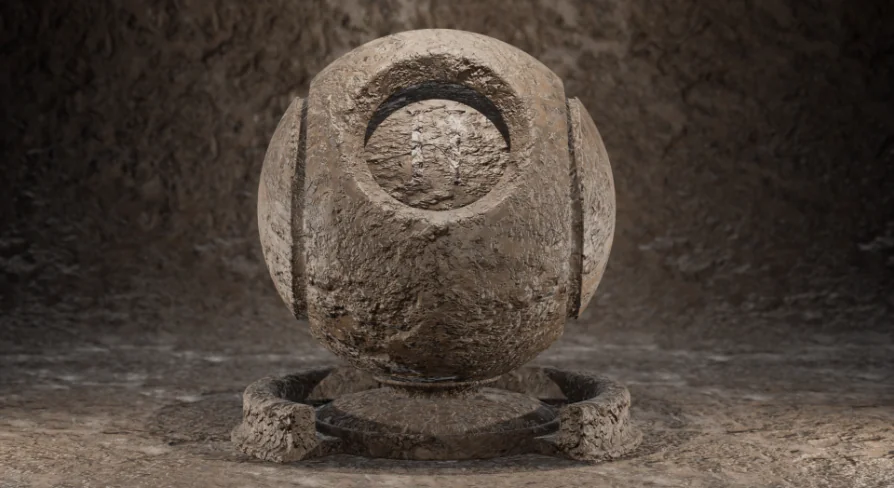
Mud Surfaces Material Pack 3 opens with a practical lineup: seven different unique materials, each delivered as a 4K texture set. The contents are all oriented around mud and soil, with a clear emphasis on wet, messy, ground-level surfaces. Not just one generic preset, the pack gives art teams a working palette of distinct muddy looks that can be spread across an environment, matched to different lighting conditions, and adjusted to fit a scene's visual tone.
Each material follows PBR principles, which means the 4K color data is paired with surface definition from a normal map. The pack includes a normal map detail level control, allowing artists to decide how much bump and texture the material should read in the final render. That combination is what turns a flat albedo into a convincing stretch of muddy ground, especially when the camera is low and the terrain fills the frame.
Seven Materials, Four 4K-Texture Sets Each
The core of the pack is the range. Seven different unique materials means seven standalone surface treatments, not just seven variations of the same texture. Each one brings its own character to the ground, whether it is the heavy saturation of a damp trail, the pale crust of drying soil, or the dark bulk of a rain-soaked lowland. Since they are delivered as 4K textures, there is enough resolution to keep the materials sharp during close-ups and mid-range shots alike.
Artists often need variation when they build an outdoor scene. A mud path through a forest looks wrong if every patch of dirt is identical. Having seven distinct materials in one pack makes it easier to layer the ground, alternating between darker and lighter areas, rougher and smoother stretches, and spots where the soil has been churned up by foot traffic. The differences may come through in the color, the surface detail, or both, but the set provides the raw range needed to break up a monotonous floor.
Color Tint and Normal Map Detail Level as Practical Controls
Color tint is one of the first controls an artist reaches for when a texture needs to fit a specific environment. In Mud Surfaces Material Pack 3, the tint can shift the appearance of each material without replacing the whole texture. A muddy field under a cloudy sky can be pushed toward a colder, darker gray, while the same material used in a warm sunset scene can take on a reddish or brownish tint. This makes the pack flexible across different times of day and different art directions.
The normal map detail level is just as important. Mud is rarely completely flat; it holds footprints, tire tracks, cracks, and the uneven settlement of soil after rain. The normal map in each material captures that microgeometry in shading, and the detail level control lets artists turn it up or down to match the intended surface response. For a relatively smooth, worn-down path, the detail can be lowered. For a chaotic battlefield or a swampy morass, the detail can be raised to emphasize every lump and depression. Being able to adjust that in the material itself means the same base texture can be reused for very different surfaces.
Why Tiling Matters for Muddy Terrain
Ground materials have a different job from prop materials. They need to cover large continuous surfaces, sometimes stretching all the way to the horizon. The tiling support in Mud Surfaces Material Pack 3 allows these 4K textures to repeat across a surface in a way that is practical for terrain. Instead of being locked to a single plane that ends abruptly, the material can be applied to broad areas and still maintain the same mud detail wherever it repeats.
For independent developers and small teams, tiling materials are a efficient way to give a scene a consistent ground surface without generating a massive set of unique maps for every stretch of soil. Because the textures are already 4K, even a repeated pattern can carry enough fine detail to hold up under scrutiny. The tiling also matters when the camera moves quickly across a landscape; the material stays coherent from one area to the next.
It is not just an outdoor staple, either. A muddy floor can be a feature in a cave, a ruin, or a basement level, and having a tileable material that keeps its shape across a wider ground plane is useful in those enclosed spaces too. The same material that reads as a forest floor can be angled into a dungeon corridor or a flooded courtyard without losing its muddy character.
Realistic Soil and Fantasy Mud From One Set
The tags attached to this pack point in several directions at once: PBR, mud, ground, fantasy, nature, realistic, soil, surface, muddy. That mix is not accidental. Mud is one of those materials that works across genres. In a realistic nature scene, these textures can be the dirt path through a temperate woodland or the shoreline of a rain-swollen river. In a fantasy setting, the same muddy surfaces can be a cursed bog, a witch's stomping ground, or a battlefield where the ground has churned into dark slop.
The heavy presence of fantasy in the tags is worth noting. Mud carries atmosphere; it makes a place feel damp, forgotten, or inhospitable. When a fantasy environment needs to communicate decay or hardship, a well-tinted muddy material does a lot of the work. The normal map detail level helps sell the uneven, treacherous footing that players or characters would experience in a location like that.
The pack also sits comfortably in a realistic workflow. The PBR foundation means the materials react to light in the same way other physically based surfaces do, so they do not look glued on top of the scene. Whether the goal is a documentary-style outdoor shot or a stylized dark fantasy level, the seven materials give artists a starting point that can be pushed in either direction through tint, normal detail, and surface placement.
Who Benefits Most From Mud Surfaces Material Pack 3
Environment artists are the most direct audience. The pack gives them a ready supply of muddy ground textures with the controls needed to fit multiple scenes. Technical artists also get a useful setup because the materials include both color tint and normal map detail level, which makes them easier to integrate into a larger material-parameter system. The tiling behavior is especially useful for anyone building terrain splats or painting large ground areas inside a level editor.
Independent developers who work alone or in small teams will appreciate that the pack supplies seven different looks in one package, so they are not forced to buy or create several separate mud textures. But the set is not limited to large outdoor levels. It is equally useful for any project where the ground is a visible, tangible part of the scene — a horror game with a sodden basement, a survival game with muddy riverbanks, or a fantasy role-playing game with a swamp region that occupies an entire map.
The practical takeaway is that Mud Surfaces Material Pack 3 is set up to cover the full cycle of muddy ground work: pick a material, tint it to match the environment, adjust the normal map detail to the desired surface roughness, and let the tiling carry it across the scene. With seven distinct 4K materials, there is enough variety to keep the ground believable without ever dipping into a generic, one-texture-fits-all approach.
Preview Gallery
Resource screenshots
7 curated preview images
1 / 7
Free Download
Download this resource
Log in or create a free account to start your download.
Resources are manually reviewed before listing to improve quality and reduce obvious risks.
 Ground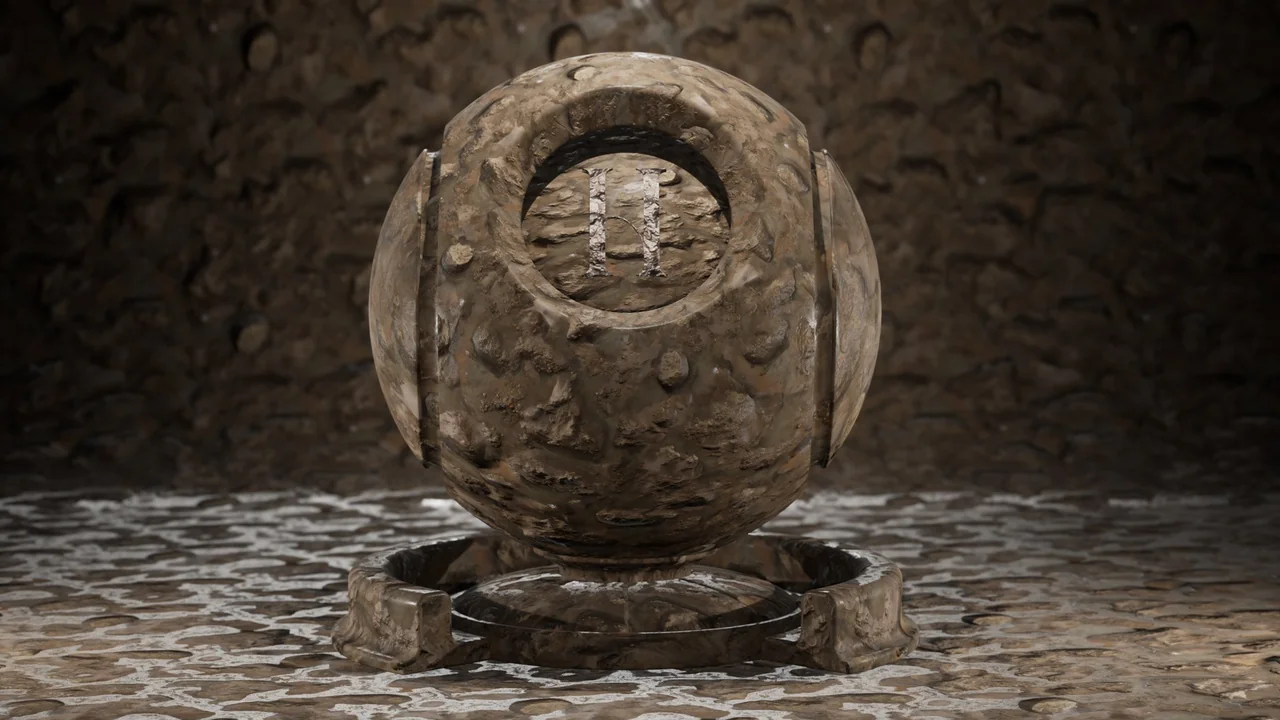
 Ground
 Damage & Grunge
 Variety