"fa182e0cd0a6ea73"{"id":"1001818","slug":"modular-gladiator-arena-gladiator-arena-arena-colosseum-arena","title":"Modular Gladiator Arena (Gladiator Arena, Arena, Colosseum Arena)","category":"Historical","engine":"5.3+","assetVersion":"","engineVersion":"Engine Version: 5.3+","tag":"Historical","accent":"blue","visual":"mech","summary":"Explore the Modular Gladiator Arena environment pack, featuring walkable Colosseum structures, modular stone assets, Lumen, and Nanite for Unreal Engine 5.","platform":"Unreal Engine","publishedAt":"2026-10-21T08:11:51.234Z","updatedAt":"2026-10-21T08:11:51.234Z","sourceNotes":[],"fileContents":[],"compatibility":["Unreal Engine","Engine Version: 5.3+"],"featuredImage":{"alt":"Modular Gladiator Arena (Gladiator Arena, Arena, Colosseum Arena)","src":"/wp-content/uploads/published/2026/10/6851f96c8f91-4a38ba23-144a-4698-8c93-11568bb881cf-141fff99b0.webp"},"hasDownloadLink":true,"downloads":0,"terms":[{"taxonomy":"category","slug":"historical","name":"Historical"}],"galleryImages":[{"src":"/wp-content/uploads/published/2026/10/785390765ba3-159723f5-554f-4129-ad2a-193c2b86c73e-2f73c82b69.webp","alt":"Modular Gladiator Arena (Gladiator Arena, Arena, Colosseum Arena)"},{"src":"/wp-content/uploads/published/2026/10/14898307790d-7840b232-ba99-4208-b951-bf2988774b43-04d9d80799.webp","alt":"Modular Gladiator Arena (Gladiator Arena, Arena, Colosseum Arena)"},{"src":"/wp-content/uploads/published/2026/10/10a0643f6bf4-8d454ac5-39b2-4d87-ac8f-57f273d54dee-8ec0a32685.webp","alt":"Modular Gladiator Arena (Gladiator Arena, Arena, Colosseum Arena)"},{"src":"/wp-content/uploads/published/2026/10/c41d9a00f211-0bf670df-c689-4b62-a5b4-44e6804af1e7-8e5ec6d340.webp","alt":"Modular Gladiator Arena (Gladiator Arena, Arena, Colosseum Arena)"},{"src":"/wp-content/uploads/published/2026/10/09227b947b34-97522d5e-1553-4abc-895e-d866f1fa74c6-d1cc117fe5.webp","alt":"Modular Gladiator Arena (Gladiator Arena, Arena, Colosseum Arena)"},{"src":"/wp-content/uploads/published/2026/10/032b75dbfa65-cd65798d-e2b9-4652-96bb-cb131497d393-a8a37b6e06.webp","alt":"Modular Gladiator Arena (Gladiator Arena, Arena, Colosseum Arena)"},{"src":"/wp-content/uploads/published/2026/10/3b66c58f7ddb-a09cfd31-2bd3-45ff-aae5-e1c91a77e580-8469e8ff3d.webp","alt":"Modular Gladiator Arena (Gladiator Arena, Arena, Colosseum Arena)"},{"src":"/wp-content/uploads/published/2026/10/138a2caec825-ae092fdc-ca65-453b-9bc9-7b6e0cb90402-c3a2dbc9c7.webp","alt":"Modular Gladiator Arena (Gladiator Arena, Arena, Colosseum Arena)"}],"accessPanel":{"kind":"resource","title":"Download this resource","eyebrow":"Free Download","message":"Log in or create a free account to start your download.","fileName":"Content.7z","safetyNote":"Resources are manually reviewed before listing to improve quality and reduce obvious risks.","actionLabel":"Download Free","resourceType":"Resource archive"},"contentHtml":"\u003cp\u003eStepping through an arched tunnel directly onto packed sand reveals an open-air amphitheater engineered for immediate traversal. Rather than restricting action to a flat floor surrounded by static backdrop geometry, the environment operates as a continuous space where players can sprint across the fighting ring, mount the surrounding stands, and exit out into the wider landscape without artificial boundary cuts. This unrestricted pathing shapes how levels are constructed, allowing combat encounters to spill beyond the sand and into external staging areas.\u003c/p\u003e \u003ch2\u003eTraversing the Fully Walkable Gladiator Arena Inside and Out\u003c/h2\u003e\n\u003cp\u003eThe core structure of the arena is built to be explored from every angle. Playable space extends through the sandy pit, along the corridors, beneath the arches, and across elevated seating tiers. Because interior passageways link directly to outer gates and open terrain, level designers can establish continuous journeys where combatants arrive from external staging grounds, file through access tunnels, and emerge into the central ring before an audience.\u003c/p\u003e \u003cp\u003eIntegrated doorways, gates, and subterranean tunnels govern the flow of foot traffic. These entry and exit thresholds support diverse gameplay layouts, from linear gauntlets where champions fight their way out of holding cells to open-world setups where an arena stands naturally within an explorable world. The structural connectivity ensures that encounters do not feel isolated from the surrounding geography, giving combat encounters natural ingress and egress points.\u003c/p\u003e \u003ch2\u003eAssembling Custom Layouts with Modular Arena Components\u003c/h2\u003e\n\u003cp\u003eConstructing distinct battlegrounds relies on a kit of interlocking structural pieces. The pack provides modular components such as standalone walls, gated portals, audience stands, and distinct architectural accents. These assets snap and fit together to yield varied arena silhouettes, ranging from circular fighting pits and rectangular training yards to grand, monumental colosseums.\u003c/p\u003e \u003cp\u003eVarying the scale and arrangement of these modular pieces lets creators tailor sightlines and traversal routes to specific game mechanics:\u003c/p\u003e\n\u003cul\u003e \u003cli\u003eModular wall segments permit flexible perimeter shaping and varied wall heights.\u003c/li\u003e \u003cli\u003eTiered audience stands create vertical layers for spectators, snipers, or patrol routes.\u003c/li\u003e \u003cli\u003eStructural gates and portals establish controlled checkpoints and choke points.\u003c/li\u003e \u003cli\u003eDecorative trims, columns, and architectural dressings break up repetitive surfaces across large structures.\u003c/li\u003e\n\u003c/ul\u003e \u003cp\u003eBecause the pieces can be reorganized into various shapes and footprints, designers can stage progressive challenges where each arena possesses its own distinct layout, elevation changes, and flanking routes.\u003c/p\u003e \u003ch2\u003eCombat-Ready Zones, Dynamic Props, and Interactive Elements\u003c/h2\u003e\n\u003cp\u003eThe arena floor is divided into functional combat areas engineered to accommodate diverse engagement types. Broad open zones allow ample space for close-quarters melee skirmishes, while elevated parapets and tiered stands grant vantage points suited for ranged attackers. Specific sections can also be designated as audience interaction zones, where the crowd overlooks the fray directly above the sand.\u003c/p\u003e \u003cp\u003eInteractive props and dynamic dressings populate the battle floor to keep environments active and responsive. Fire braziers cast shifting illumination across ancient masonry, while functional gates and movable obstacles can be repositioned to alter paths during an encounter. These elements transform the ring from an empty yard into a tactical space where players can use props for cover, control choke points, or navigate dynamic hazards during high-intensity sequences.\u003c/p\u003e \u003ch2\u003eHigh-Resolution Materials and Natural Landscape Integration\u003c/h2\u003e\n\u003cp\u003eTo ground the man-made architecture within its physical setting, the environment incorporates environmental assets designed to blend stone ruins into natural outdoor terrain. Foliage, scattering rocks, and natural props surround the colosseum, establishing a lush, open landscape that frames the heavy masonry. Players can move outside the perimeter walls to find rolling terrain, natural vegetation, and weathered debris that soften the transition between structural stone and untouched wilderness.\u003c/p\u003e \u003cp\u003eSurface authenticity is supported by detailed material setups across three core structural materials:\u003c/p\u003e\n\u003cul\u003e \u003cli\u003eHigh-resolution stone textures capturing chipped masonry, chiseled blocks, and centuries of foot-traffic wear.\u003c/li\u003e \u003cli\u003eAged timber materials applied to arena gates, structural supports, and protective barriers.\u003c/li\u003e \u003cli\u003eDetailed metal surfaces for reinforced fittings, gates, and brazier hardware.\u003c/li\u003e\n\u003c/ul\u003e \u003cp\u003eThese rich texture sets maintain tactile detail whether viewed from a cinematic camera panning down into the fighting pit or during tight third-person skirmishes near perimeter walls.\u003c/p\u003e \u003ch2\u003eRendering Pipeline, Unreal Engine 5 Technologies, and Asset Boundaries\u003c/h2\u003e\n\u003cp\u003eThe asset package leverages core modern graphics features in Unreal Engine 5.0 and newer releases, featuring native support for Nanite virtualized geometry and Lumen dynamic global illumination. Nanite allows intricate geometric relief across heavy stone blocks and towering arches without manual level-of-detail compromises, while Lumen recalculates bouncing light as sun positions shift across the open sky or dynamic firelight flickers against stone tunnels. To render the layered surfaces properly, Virtual Texture Support must be enabled within the project settings.\u003c/p\u003e \u003cp\u003eArtistic collaboration on the environment was conducted alongside artist Rob Ribeiro, with creative direction and render art provided by the Hivemind team. The package centers strictly on environment architecture, props, materials, and surrounding landscape elements. Animated crowds, playable hero gladiators, and opponent beasts are not bundled with the environment assets, ensuring that technical budgets and project setups focus cleanly on modular structural assembly and scenic execution.\u003c/p\u003e\n\n\u003ch2\u003eExplore Similar Assets\u003c/h2\u003e\n\u003cul\u003e\n\u003cli\u003e\u003ca href=\"https://3dcghub.com/gladiator-arena-environment-kit/\" title=\"Gladiator Arena Environment Kit\"\u003eGladiator Arena Environment Kit\u003c/a\u003e\u003c/li\u003e\n\u003cli\u003e\u003ca href=\"https://3dcghub.com/ancient-mountain-temple-nanite/\" title=\"Ancient Mountain Temple (Nanite)\"\u003eAncient Mountain Temple (Nanite)\u003c/a\u003e\u003c/li\u003e\n\u003cli\u003e\u003ca href=\"https://3dcghub.com/the-grand-egyptian-temple-egyptian-temple-ancient-exterior-interior-temple/\" title=\"The Grand Egyptian Temple ( Egyptian Temple Ancient Exterior Interior Temple )\"\u003eThe Grand Egyptian Temple ( Egyptian Temple Ancient Exterior Interior Temple )\u003c/a\u003e\u003c/li\u003e\n\u003cli\u003e\u003ca href=\"https://3dcghub.com/stone-palace/\" title=\"Stone Palace\"\u003eStone Palace\u003c/a\u003e\u003c/li\u003e\n\u003cli\u003e\u003ca href=\"https://3dcghub.com/vp-temples-of-cambodia-ruins-exterior-and-interior/\" title=\"[VP] Temples of Cambodia - Ruins exterior and interior\"\u003e[VP] Temples of Cambodia - Ruins exterior and interior\u003c/a\u003e\u003c/li\u003e\n\u003c/ul\u003e","contentTextLength":6141,"navigation":{"current":38,"total":3789,"previous":{"id":"1001819","slug":"modular-lakeside-village-house","title":"Modular Lakeside Village House","category":"Towns \u0026 Villages","platform":"Unreal Engine","updatedAt":"2026-10-21T08:12:37.263Z"},"next":{"id":"1001817","slug":"mens-room","title":"Mens Room","category":"Interior","platform":"Unreal Engine","updatedAt":"2026-10-21T08:10:58.887Z"}},"relatedResources":[{"id":"1000993","slug":"gladiator-arena-environment-kit","title":"Gladiator Arena Environment Kit","category":"Historical","engine":"5.0+","assetVersion":"","engineVersion":"Engine Version: 5.0+","tag":"Historical","accent":"blue","visual":"city","summary":"A Roman gladiator coliseum environment kit with themed meshes, PBR materials, a demo level, and Dragon Cave compatibility. Pillars, props, flags, and architectu","platform":"Unreal Engine","publishedAt":"2026-08-19T03:38:54.795Z","updatedAt":"2026-08-19T03:38:54.795Z","sourceNotes":[],"fileContents":[],"compatibility":["Unreal Engine","Engine Version: 5.0+"],"featuredImage":{"alt":"Gladiator Arena Environment Kit","src":"/wp-content/uploads/published/2026/08/e1b3dda14df1-273d0cae-e350-4a1a-97cb-4453038dcc7f-425a0b510f.webp"},"hasDownloadLink":true,"downloads":2},{"id":"1001331","slug":"ancient-mountain-temple-nanite","title":"Ancient Mountain Temple (Nanite)","category":"Historical","engine":"5.2+","assetVersion":"","engineVersion":"Engine Version: 5.2+","tag":"Historical","accent":"blue","visual":"mech","summary":"Detailed breakdown of the Ancient Mountain Temple package for Unreal Engine 5.0+, covering Nanite modular meshes, Lumen dynamic lighting, and 4K textures.","platform":"Unreal Engine","publishedAt":"2026-10-03T17:12:02.776Z","updatedAt":"2026-10-03T17:12:02.776Z","sourceNotes":[],"fileContents":[],"compatibility":["Unreal Engine","Engine Version: 5.2+"],"featuredImage":{"alt":"Ancient Mountain Temple (Nanite)","src":"/wp-content/uploads/published/2026/10/2ddd03aba3c6-c5c44e63-c1c3-4c4a-8cc2-42afd2fff140-1a24528ea5.webp"},"hasDownloadLink":true,"downloads":2},{"id":"1001586","slug":"the-grand-egyptian-temple-egyptian-temple-ancient-exterior-interior-temple","title":"The Grand Egyptian Temple ( Egyptian Temple Ancient Exterior Interior Temple )","category":"Historical","engine":"5.1+","assetVersion":"","engineVersion":"Engine Version: 5.1+","tag":"Historical","accent":"blue","visual":"mech","summary":"Explore The Grand Egyptian Temple asset pack featuring 133 unique meshes, Lumen lighting, ULAT modular assembly tools, and game-ready architecture.","platform":"Unreal Engine","publishedAt":"2026-10-10T11:15:22.183Z","updatedAt":"2026-10-10T11:15:22.183Z","sourceNotes":[],"fileContents":[],"compatibility":["Unreal Engine","Engine Version: 5.1+"],"featuredImage":{"alt":"The Grand Egyptian Temple ( Egyptian Temple Ancient Exterior Interior Temple )","src":"/wp-content/uploads/published/2026/10/fd6b44d1be22-4daf6fc7-6f2d-4922-8d5d-95d094b41cb7-a052ba3676.webp"},"hasDownloadLink":true,"downloads":1}]}
Explore the Modular Gladiator Arena environment pack, featuring walkable Colosseum structures, modular stone assets, Lumen, and Nanite for Unreal Engine 5.
Category:Unreal Engine,HistoricalPlatform: Unreal EngineEngine Version: 5.3+Published: Oct 21, 2026
Historical
Resource overview
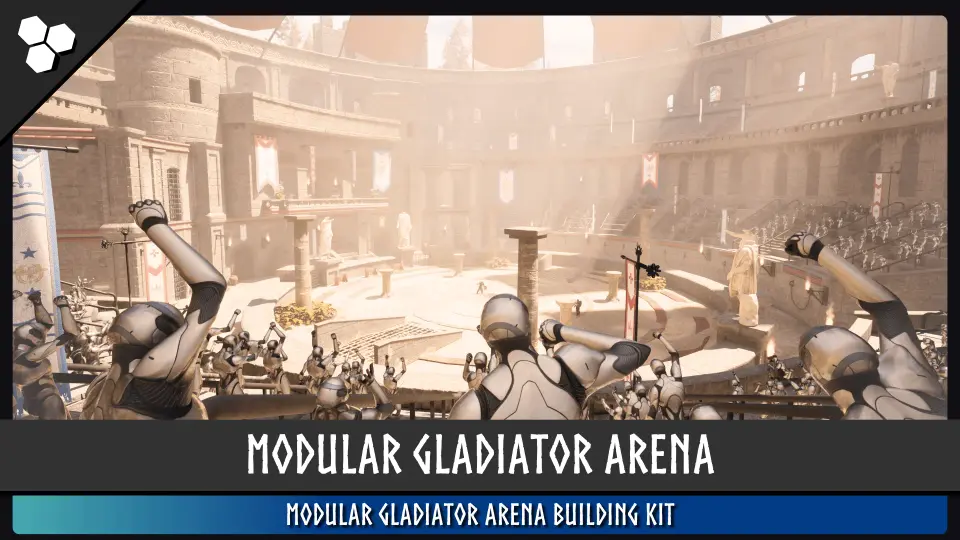
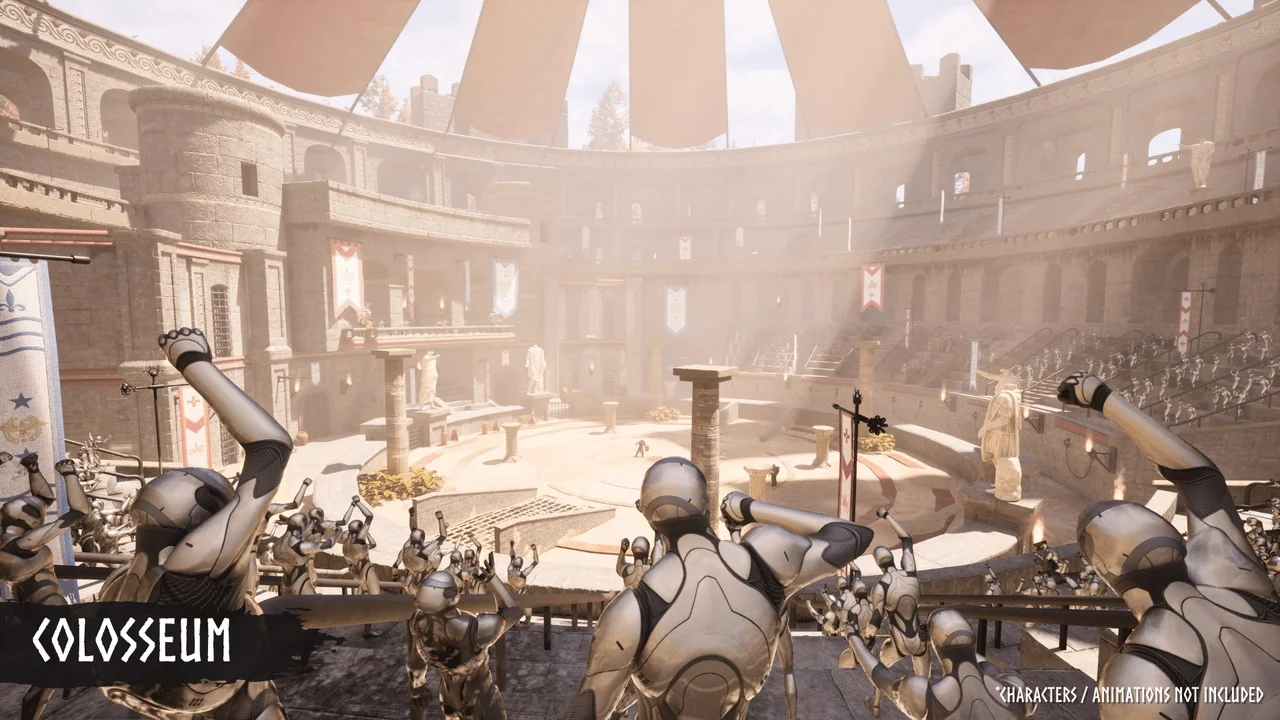
Stepping through an arched tunnel directly onto packed sand reveals an open-air amphitheater engineered for immediate traversal. Rather than restricting action to a flat floor surrounded by static backdrop geometry, the environment operates as a continuous space where players can sprint across the fighting ring, mount the surrounding stands, and exit out into the wider landscape without artificial boundary cuts. This unrestricted pathing shapes how levels are constructed, allowing combat encounters to spill beyond the sand and into external staging areas.
Traversing the Fully Walkable Gladiator Arena Inside and Out
The core structure of the arena is built to be explored from every angle. Playable space extends through the sandy pit, along the corridors, beneath the arches, and across elevated seating tiers. Because interior passageways link directly to outer gates and open terrain, level designers can establish continuous journeys where combatants arrive from external staging grounds, file through access tunnels, and emerge into the central ring before an audience.
Integrated doorways, gates, and subterranean tunnels govern the flow of foot traffic. These entry and exit thresholds support diverse gameplay layouts, from linear gauntlets where champions fight their way out of holding cells to open-world setups where an arena stands naturally within an explorable world. The structural connectivity ensures that encounters do not feel isolated from the surrounding geography, giving combat encounters natural ingress and egress points.
Assembling Custom Layouts with Modular Arena Components
Constructing distinct battlegrounds relies on a kit of interlocking structural pieces. The pack provides modular components such as standalone walls, gated portals, audience stands, and distinct architectural accents. These assets snap and fit together to yield varied arena silhouettes, ranging from circular fighting pits and rectangular training yards to grand, monumental colosseums.
Varying the scale and arrangement of these modular pieces lets creators tailor sightlines and traversal routes to specific game mechanics:
Tiered audience stands create vertical layers for spectators, snipers, or patrol routes.
Structural gates and portals establish controlled checkpoints and choke points.
Decorative trims, columns, and architectural dressings break up repetitive surfaces across large structures.
Because the pieces can be reorganized into various shapes and footprints, designers can stage progressive challenges where each arena possesses its own distinct layout, elevation changes, and flanking routes.
Combat-Ready Zones, Dynamic Props, and Interactive Elements
The arena floor is divided into functional combat areas engineered to accommodate diverse engagement types. Broad open zones allow ample space for close-quarters melee skirmishes, while elevated parapets and tiered stands grant vantage points suited for ranged attackers. Specific sections can also be designated as audience interaction zones, where the crowd overlooks the fray directly above the sand.
Interactive props and dynamic dressings populate the battle floor to keep environments active and responsive. Fire braziers cast shifting illumination across ancient masonry, while functional gates and movable obstacles can be repositioned to alter paths during an encounter. These elements transform the ring from an empty yard into a tactical space where players can use props for cover, control choke points, or navigate dynamic hazards during high-intensity sequences.
High-Resolution Materials and Natural Landscape Integration
To ground the man-made architecture within its physical setting, the environment incorporates environmental assets designed to blend stone ruins into natural outdoor terrain. Foliage, scattering rocks, and natural props surround the colosseum, establishing a lush, open landscape that frames the heavy masonry. Players can move outside the perimeter walls to find rolling terrain, natural vegetation, and weathered debris that soften the transition between structural stone and untouched wilderness.
Surface authenticity is supported by detailed material setups across three core structural materials:
High-resolution stone textures capturing chipped masonry, chiseled blocks, and centuries of foot-traffic wear.
Aged timber materials applied to arena gates, structural supports, and protective barriers.
Detailed metal surfaces for reinforced fittings, gates, and brazier hardware.
These rich texture sets maintain tactile detail whether viewed from a cinematic camera panning down into the fighting pit or during tight third-person skirmishes near perimeter walls.
Rendering Pipeline, Unreal Engine 5 Technologies, and Asset Boundaries
The asset package leverages core modern graphics features in Unreal Engine 5.0 and newer releases, featuring native support for Nanite virtualized geometry and Lumen dynamic global illumination. Nanite allows intricate geometric relief across heavy stone blocks and towering arches without manual level-of-detail compromises, while Lumen recalculates bouncing light as sun positions shift across the open sky or dynamic firelight flickers against stone tunnels. To render the layered surfaces properly, Virtual Texture Support must be enabled within the project settings.
Artistic collaboration on the environment was conducted alongside artist Rob Ribeiro, with creative direction and render art provided by the Hivemind team. The package centers strictly on environment architecture, props, materials, and surrounding landscape elements. Animated crowds, playable hero gladiators, and opponent beasts are not bundled with the environment assets, ensuring that technical budgets and project setups focus cleanly on modular structural assembly and scenic execution.
 Historical
 Historical
 Historical
 Historical