"6ac84fdb0bd06614"{"id":"28369","slug":"maniac-towing-modular-5in1","title":"Maniac Towing Modular 5in1","category":"Characters \u0026 Creatures","engine":"4.26+,5.0+","assetVersion":"Engine version: 4.26+,5.0+","engineVersion":"","tag":"Characters","accent":"blue","visual":"character","summary":"This character package centers on a modular maniac figure that can shift its look through five masks, clothing swaps, and color changes. It also brings Epic Skeleton rigging, in-place animation support, and a bonus pickup that helps frame the character in t...","platform":"Unreal Engine","publishedAt":"2026-05-07T10:11:07.000Z","updatedAt":"2026-05-07T10:11:08.000Z","sourceNotes":[],"fileContents":[],"compatibility":["Unreal Engine","Engine version: 4.26+,5.0+"],"featuredImage":{"alt":"Maniac Towing Modular 5in1","src":"https://3dcghub.com/wp-content/uploads/2026/05/a8a5e2a74bbb_0b98c0f3-0649-4479-bfdd-aa02f6bc0ba7.webp"},"hasDownloadLink":true,"downloads":0,"terms":[{"taxonomy":"category","slug":"characters-and-creatures","name":"Characters \u0026 Creatures"},{"taxonomy":"post_tag","slug":"animation","name":"Animation"},{"taxonomy":"post_tag","slug":"characters","name":"Characters"},{"taxonomy":"post_tag","slug":"unreal-engine-5","name":"Unreal Engine 5"}],"galleryImages":[{"src":"https://3dcghub.com/wp-content/uploads/2026/05/6d2e5dea8961_9e8f2906-8ef1-494d-9b1d-7e16d9b2c2a1.webp","alt":"Maniac Towing Modular 5in1"},{"src":"https://3dcghub.com/wp-content/uploads/2026/05/2f19d72231da_3afaaa5c-e22f-4abb-bd37-341ec4f81479.webp","alt":"Maniac Towing Modular 5in1"},{"src":"https://3dcghub.com/wp-content/uploads/2026/05/316c1c05a46f_db949661-ec2e-4d15-99bf-639e27cfebab.webp","alt":"Maniac Towing Modular 5in1"},{"src":"https://3dcghub.com/wp-content/uploads/2026/05/24ff71e25fb5_696b8849-40d6-4a29-ae0a-d12c4bf2a1b7.webp","alt":"Maniac Towing Modular 5in1"},{"src":"https://3dcghub.com/wp-content/uploads/2026/05/0ad0da7155ce_4e234f4b-0087-49a3-bf6f-bf25e80ba37d.webp","alt":"Maniac Towing Modular 5in1"},{"src":"https://3dcghub.com/wp-content/uploads/2026/05/de8283792873_dcb0b253-0e75-4544-98c6-a21629676810.webp","alt":"Maniac Towing Modular 5in1"},{"src":"https://3dcghub.com/wp-content/uploads/2026/05/2231e104d730_61bd43b1-1b12-434c-8787-30a2e412891c.webp","alt":"Maniac Towing Modular 5in1"},{"src":"https://3dcghub.com/wp-content/uploads/2026/05/fbb92cf7031e_3e5482ee-4bd9-4e04-af1a-c1d1f9e899a8.webp","alt":"Maniac Towing Modular 5in1"},{"src":"https://3dcghub.com/wp-content/uploads/2026/05/6f8af57f6f17_21e6743d-12d5-4b95-8478-ca9f6588c4ff.webp","alt":"Maniac Towing Modular 5in1"},{"src":"https://3dcghub.com/wp-content/uploads/2026/05/2897518c8385_f16d931a-12ae-4392-886c-888c1ee5e04b.webp","alt":"Maniac Towing Modular 5in1"}],"accessPanel":{"kind":"resource","title":"Access this resource","eyebrow":"Free Download","message":"Log in or create a free account to start your download.","fileName":"Content.7z","safetyNote":"All resources are 100% manually reviewed to eliminate all risks.","actionLabel":"Download Free","resourceType":"Resource archive"},"contentHtml":"\u003cp\u003eOn screen, this character reads as a configurable threat rather than a single locked design. The core model is a modular maniac figure that can be pushed toward different moods by changing masks, adjusting clothing, and altering clothing color. A pickup is also included, which gives the package a more grounded scene partner and makes the towing angle feel immediate instead of decorative.\u003c/p\u003e\u003cp\u003eThe setup is aimed at games across different genres, including RPG, strategy, and first-person projects. That broad use comes from the way the character is prepared: it is rigged, animated, and built to let teams vary the look without replacing the whole figure. For developers who need one character to cover several related roles or visual beats, the modular structure is the most important part of the package.\u003c/p\u003e\u003ch2\u003eManiac Towing Modular 5in1 in a scene\u003c/h2\u003e\u003cp\u003eThe character count is listed as one, with a vertex count of 13,171 for the character. Visually, the package leans into tags such as horror, maniac, killer, worker, cowboy, realistic, chainsaw, tow, and fantasy. Those tags point to a character that can sit in a slasher-like setup, a grim roadside encounter, or a rough industrial or rural environment without needing to be treated as a purely fantasy creature.\u003c/p\u003e\u003cp\u003eThe bonus pickup matters because it gives the character an immediate prop-scale counterpart. Instead of placing a standalone figure into an empty level, teams can pair the model with a vehicle that supports towing, worker, and horror scene ideas already suggested by the package. That makes it easier to block out encounters, menu poses, or promotional scene setups with a clearer sense of context.\u003c/p\u003e\u003cp\u003eThe asset archive includes the basic mesh in.fbx and Maya formats. UVs are prepared at 4096x4096, with the note that they can go down to 1024x1024. Texture resolution is listed at 4096x4096.\u003c/p\u003e\u003ch2\u003eModular 5in1 masks, clothes, and color changes\u003c/h2\u003e\u003cp\u003eThe strongest customization feature is the character's fully modular construction. Five different masks are included, letting the same base character present different faces or identities. That kind of swap is useful when one scene needs variation without introducing a completely separate character model, or when a project wants a recognizable silhouette with several altered looks.\u003c/p\u003e\u003cp\u003eClothes can also be changed, and their color can be changed as well. Those options expand the number of practical combinations beyond the mask set alone. A developer could keep the same body and rigging setup while shifting the character's tone from one encounter to another, or use several appearances that still feel tied to the same figure.\u003c/p\u003e\u003cp\u003eMaterial counts are broken down separately for the character and the vehicle. The man uses 9 materials and 4 material instances. The car uses 3 materials and 2 material instances. That split reinforces that the package is not only a single character mesh, but a character-plus-vehicle combination with their own material setups.\u003c/p\u003e\u003ch2\u003eEpic Skeleton rig, IK bones, and animation coverage\u003c/h2\u003e\u003cp\u003eThe character is rigged to the Epic Skeleton, and IK bones are included. It is also fully animated. The package contains 18 animations, listed as in-place, and also includes 6 demo animations alongside the main animation set. For teams working with established Unreal character pipelines, that combination is the practical center of the package: a prepared rig, animation support, and a skeleton setup aligned with Epic's standard structure.\u003c/p\u003e\u003cp\u003eThree additional bones are named as extensions to the Epic Skeleton: jaw1, eye1, and eye2. Those extra bones suggest more direct control over face-related movement points without changing the broader rig identity. The package does not present itself as an elaborate facial system, but it does identify those added bones clearly, which is useful for anyone reviewing how the skeleton differs from the default structure.\u003c/p\u003e\u003cp\u003eBecause the animations are in-place, the set is suited to workflows where movement is handled in engine rather than baked into root motion. That fits many gameplay scenarios, especially where one character may need to be reused in several encounter types or under different navigation systems.\u003c/p\u003e\u003ch2\u003eUnreal Engine 5 use with a Unreal Engine 4 skeleton structure\u003c/h2\u003e\u003cp\u003eThe model is loaded and works in Unreal Engine 5, but there is an important caveat: the skeleton structure is from Unreal Engine 4. That is the main compatibility point teams need to factor into planning. The package also includes a short video on how to do retargeting, which directly addresses the part of the workflow most likely to need attention.\u003c/p\u003e\u003cp\u003eSupported development platforms are listed as Windows and Mac. There is no documentation link provided beyond the retargeting note. For teams already comfortable with Unreal character workflows, that means the package is likely to be judged less by written documentation and more by its prepared rig, animation set, and modular options.\u003c/p\u003e\u003cp\u003eThe combination of an Epic Skeleton rig, included IK bones, and UE5 operation makes this a workable character package for developers who can account for the UE4 skeleton structure during retargeting. If the project needs one horror-leaning towing character that can change appearance through masks, clothes, and color while staying inside a single modular setup, that is the clearest reason to shortlist it.\u003c/p\u003e\n\n\u003ch2\u003eContinue Browsing Similar Packs\u003c/h2\u003e\n\u003cul\u003e\n\u003cli\u003e\u003ca href=\"https://3dcghub.com/1950s-characters-bundle-1950s-characters-bundle-1950-character-gangster-3d/\" title=\"1950s Characters Bundle ( 1950s Characters Bundle 1950 Character Gangster 3D )\"\u003e1950s Characters Bundle ( 1950s Characters Bundle 1950 Character Gangster 3D )\u003c/a\u003e\u003c/li\u003e\n\u003cli\u003e\u003ca href=\"https://3dcghub.com/character-rigged-npc-character-rigged-npc-rig-characters-animated-3d/\" title=\"Character / Rigged / NPC ( Character Rigged NPC Rig Characters Animated 3D )\"\u003eCharacter / Rigged / NPC ( Character Rigged NPC Rig Characters Animated 3D )\u003c/a\u003e\u003c/li\u003e\n\u003cli\u003e\u003ca href=\"https://3dcghub.com/military-animation-pack-i-unarmed/\" title=\"Military Animation Pack I (Unarmed)\"\u003eMilitary Animation Pack I (Unarmed)\u003c/a\u003e\u003c/li\u003e\n\u003cli\u003e\u003ca href=\"https://3dcghub.com/mixamo-animation-retargeting-2/\" title=\"Mixamo Animation Retargeting 2\"\u003eMixamo Animation Retargeting 2\u003c/a\u003e\u003c/li\u003e\n\u003cli\u003e\u003ca href=\"https://3dcghub.com/r-tune-vehicle-physics-2-0-vehicle-system-for-games-animation/\" title=\"R-Tune Vehicle Physics 2.0 – Vehicle System for Games \u0026amp;amp; Animation\"\u003eR-Tune Vehicle Physics 2.0 – Vehicle System for Games \u0026amp; Animation\u003c/a\u003e\u003c/li\u003e\n\u003c/ul\u003e","contentTextLength":5676,"navigation":{"current":1309,"total":3181,"previous":{"id":"28394","slug":"advanced-framework-vr-mobile-desktop","title":"Advanced Framework - VR, Mobile \u0026 Desktop","category":"Gameplay Features","platform":"Unreal Engine","updatedAt":"2026-05-12T09:33:54.000Z"},"next":{"id":"28356","slug":"ledge-animation-set","title":"Ledge Animation Set","category":"Locomotion / Gaits","platform":"Unreal Engine","updatedAt":"2026-05-07T10:03:32.000Z"}},"relatedResources":[{"id":"24789","slug":"swordswoman","title":"Swordswoman","category":"Characters \u0026 Creatures","engine":"4.26+,5.0+","assetVersion":"Engine version: 4.26+,5.0+","engineVersion":"","tag":"Characters","accent":"blue","visual":"character","summary":"Swordswoman is set up as a modular female character with a UE4 skeleton, facial expressions, and separated armor, hair, body, and clothing parts. It also includes a full body without seams plus multiple 4K texture sets for the main components.","platform":"Unreal Engine","publishedAt":"2026-04-17T08:47:00.000Z","updatedAt":"2026-04-20T06:12:38.000Z","sourceNotes":[],"fileContents":[],"compatibility":["Unreal Engine","Engine version: 4.26+,5.0+"],"featuredImage":{"alt":"Swordswoman","src":"https://3dcghub.com/wp-content/uploads/2026/04/ed75dd13c63a_b31ab841-8674-4ec4-a28d-0844fb43f8f2.webp"},"hasDownloadLink":true,"downloads":1},{"id":"25877","slug":"worker","title":"Worker","category":"Characters \u0026 Creatures","engine":"4.26+,5.0+","assetVersion":"Engine version: 4.26+,5.0+","engineVersion":"","tag":"Characters","accent":"blue","visual":"character","summary":"Worker is a game character that can sit in two places in a production: as part of the environment or as the main character. Its tags point to an industrial, machine-linked, lowpoly, PBR workflow with script and animation blueprint labeling.","platform":"Unreal Engine","publishedAt":"2026-04-19T15:58:44.000Z","updatedAt":"2026-04-20T06:12:30.000Z","sourceNotes":[],"fileContents":[],"compatibility":["Unreal Engine","Engine version: 4.26+,5.0+"],"featuredImage":{"alt":"Worker","src":"https://3dcghub.com/wp-content/uploads/2026/04/03d798cba875_11983e54-2305-42c7-a27d-be0884862d6d.webp"},"hasDownloadLink":true,"downloads":0},{"id":"25198","slug":"dinosaur-utahraptor","title":"Dinosaur UtahRaptor","category":"Characters \u0026 Creatures","engine":"5.0+","assetVersion":"Engine version: 5.0+","engineVersion":"4.26","tag":"Characters","accent":"blue","visual":"character","summary":"UtahRaptor is presented as a real-dinosaur creature model with PBR support, a seven-color skin pack, and a full animation set made in Maya. It also includes Unreal Engine texture sets, engine-ready formats, and a bonus control rig for testing and learning.","platform":"Unreal Engine","publishedAt":"2026-04-19T13:16:27.000Z","updatedAt":"2026-04-20T06:12:31.000Z","sourceNotes":[],"fileContents":[],"compatibility":["Unreal Engine","Engine version: 5.0+"],"featuredImage":{"alt":"Dinosaur UtahRaptor","src":"https://3dcghub.com/wp-content/uploads/2026/04/27ae021e2096_d41ea427-064a-4aec-a57a-d9ad49afa282-1.webp"},"hasDownloadLink":true,"downloads":1}]}
Characters
Maniac Towing Modular 5in1
This character package centers on a modular maniac figure that can shift its look through five masks, clothing swaps, and color changes. It also brings Epic Skeleton rigging, in-place animation support, and a bonus pickup that helps frame the character in t...
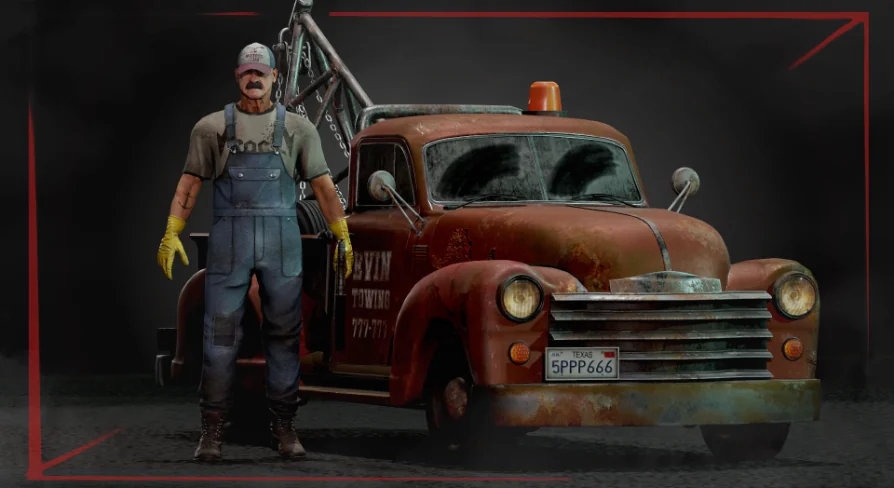
On screen, this character reads as a configurable threat rather than a single locked design. The core model is a modular maniac figure that can be pushed toward different moods by changing masks, adjusting clothing, and altering clothing color. A pickup is also included, which gives the package a more grounded scene partner and makes the towing angle feel immediate instead of decorative.
The setup is aimed at games across different genres, including RPG, strategy, and first-person projects. That broad use comes from the way the character is prepared: it is rigged, animated, and built to let teams vary the look without replacing the whole figure. For developers who need one character to cover several related roles or visual beats, the modular structure is the most important part of the package.
Maniac Towing Modular 5in1 in a scene
The character count is listed as one, with a vertex count of 13,171 for the character. Visually, the package leans into tags such as horror, maniac, killer, worker, cowboy, realistic, chainsaw, tow, and fantasy. Those tags point to a character that can sit in a slasher-like setup, a grim roadside encounter, or a rough industrial or rural environment without needing to be treated as a purely fantasy creature.
The bonus pickup matters because it gives the character an immediate prop-scale counterpart. Instead of placing a standalone figure into an empty level, teams can pair the model with a vehicle that supports towing, worker, and horror scene ideas already suggested by the package. That makes it easier to block out encounters, menu poses, or promotional scene setups with a clearer sense of context.
The asset archive includes the basic mesh in.fbx and Maya formats. UVs are prepared at 4096x4096, with the note that they can go down to 1024x1024. Texture resolution is listed at 4096x4096.
Modular 5in1 masks, clothes, and color changes
The strongest customization feature is the character's fully modular construction. Five different masks are included, letting the same base character present different faces or identities. That kind of swap is useful when one scene needs variation without introducing a completely separate character model, or when a project wants a recognizable silhouette with several altered looks.
Clothes can also be changed, and their color can be changed as well. Those options expand the number of practical combinations beyond the mask set alone. A developer could keep the same body and rigging setup while shifting the character's tone from one encounter to another, or use several appearances that still feel tied to the same figure.
Material counts are broken down separately for the character and the vehicle. The man uses 9 materials and 4 material instances. The car uses 3 materials and 2 material instances. That split reinforces that the package is not only a single character mesh, but a character-plus-vehicle combination with their own material setups.
Epic Skeleton rig, IK bones, and animation coverage
The character is rigged to the Epic Skeleton, and IK bones are included. It is also fully animated. The package contains 18 animations, listed as in-place, and also includes 6 demo animations alongside the main animation set. For teams working with established Unreal character pipelines, that combination is the practical center of the package: a prepared rig, animation support, and a skeleton setup aligned with Epic's standard structure.
Three additional bones are named as extensions to the Epic Skeleton: jaw1, eye1, and eye2. Those extra bones suggest more direct control over face-related movement points without changing the broader rig identity. The package does not present itself as an elaborate facial system, but it does identify those added bones clearly, which is useful for anyone reviewing how the skeleton differs from the default structure.
Because the animations are in-place, the set is suited to workflows where movement is handled in engine rather than baked into root motion. That fits many gameplay scenarios, especially where one character may need to be reused in several encounter types or under different navigation systems.
Unreal Engine 5 use with a Unreal Engine 4 skeleton structure
The model is loaded and works in Unreal Engine 5, but there is an important caveat: the skeleton structure is from Unreal Engine 4. That is the main compatibility point teams need to factor into planning. The package also includes a short video on how to do retargeting, which directly addresses the part of the workflow most likely to need attention.
Supported development platforms are listed as Windows and Mac. There is no documentation link provided beyond the retargeting note. For teams already comfortable with Unreal character workflows, that means the package is likely to be judged less by written documentation and more by its prepared rig, animation set, and modular options.
The combination of an Epic Skeleton rig, included IK bones, and UE5 operation makes this a workable character package for developers who can account for the UE4 skeleton structure during retargeting. If the project needs one horror-leaning towing character that can change appearance through masks, clothes, and color while staying inside a single modular setup, that is the clearest reason to shortlist it.
 Characters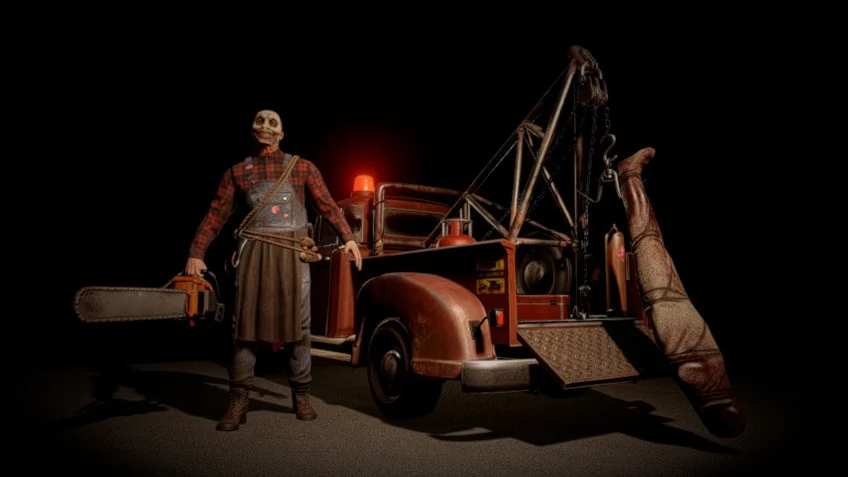
 Characters
 Characters
 Characters