"7ad89cffa44984cf"{"id":"1002545","slug":"lizardman-shaman","title":"Lizardman (Shaman)","category":"Characters \u0026 Creatures","engine":"4.18+,5.0+","assetVersion":"","engineVersion":"Engine Version: 4.18+,5.0+","tag":"Characters","accent":"blue","visual":"character","summary":"Explore the Lizardman (Shaman) asset, featuring 3ds Max CAT rigging, six core animations, totem and weapon props, bonus VFX, and Blueprint support.","platform":"Unreal Engine","indexPolicy":"index","publishedAt":"2026-11-13T09:54:05.454Z","updatedAt":"2026-11-13T09:54:05.454Z","sourceNotes":[],"fileContents":[],"compatibility":["Unreal Engine","Engine Version: 4.18+,5.0+"],"featuredImage":{"alt":"Lizardman (Shaman)","src":"/wp-content/uploads/published/2026/11/de2982bc6bd9-d5052c7f-ed99-4133-8e72-5c548e695c42-b9e81f75f9.webp"},"hasDownloadLink":true,"downloads":0,"terms":[{"taxonomy":"category","slug":"characters-and-creatures","name":"Characters \u0026 Creatures"}],"galleryImages":[{"src":"/wp-content/uploads/published/2026/11/db85f08ad3e1-5bcdc10c-e64c-4b34-8d8f-175cb964f3e3-16c19914f4.webp","alt":"Lizardman (Shaman)"},{"src":"/wp-content/uploads/published/2026/11/913b6ecd2b73-7e1fbb63-ef9d-4dd4-a2d0-6e4339b4d976-cf157fef8b.webp","alt":"Lizardman (Shaman)"},{"src":"/wp-content/uploads/published/2026/11/fc11466245a9-e1bb7e6e-383c-492c-9245-72225d31cea3-b59ea2f3bf.webp","alt":"Lizardman (Shaman)"},{"src":"/wp-content/uploads/published/2026/11/0d1807a66b7a-cc6e2852-7220-4a8a-81d1-d711b97db12c-9315a9f7d4.webp","alt":"Lizardman (Shaman)"},{"src":"/wp-content/uploads/published/2026/11/858496f179e9-1f9921f6-188b-407a-b4f1-21f10e45acd3-d9370d8ac4.webp","alt":"Lizardman (Shaman)"},{"src":"/wp-content/uploads/published/2026/11/6b275f050efc-7d7395b5-ae53-4eeb-877f-acad4bbd2586-830e377f7e.webp","alt":"Lizardman (Shaman)"},{"src":"/wp-content/uploads/published/2026/11/59c43a3ca669-c457e053-a689-4cb5-93c6-3421fea97c59-37944df052.webp","alt":"Lizardman (Shaman)"}],"accessPanel":{"kind":"resource","title":"Get this resource","eyebrow":"Free resource","message":"Download this resource in your browser.","fileName":"Content.7z","safetyNote":"Resources are manually reviewed before listing to improve quality and reduce obvious risks.","actionLabel":"Get this resource","resourceType":"Resource archive","versions":[]},"contentHtml":"\u003ch2\u003eDeploying the Lizardman Shaman in Fantasy Combat Encounters\u003c/h2\u003e\u003cp\u003eStylized fantasy projects often demand distinct enemy archetypes that communicate their combat role the moment they appear on screen. The Lizardman (Shaman) addresses this need directly by providing a dedicated reptilian spellcaster. With its distinct silhouette as a tribal wizard, the character works naturally in swamp environments, subterranean ruins, or wilderness encampments where animalistic or reptilian factions reside.\u003c/p\u003e\u003cp\u003eBecause the character represents a specialized magic wielder rather than a standard frontline brute, its practical role centers on ranged pressure, area denial, and tactical summoning. Game scenarios featuring tribal encampments can station the shaman behind heavier melee units, using the provided props and movement sets to establish ritual zones or defensive barriers. The integration of specialized props allows level designers to populate a combat space with context-specific items that reinforce the magical identity of the encounter.\u003c/p\u003e\u003ch2\u003eThe Core Lizardman Mesh, Totem Props, and Rigging Structure\u003c/h2\u003e\u003cp\u003eAt the center of the package is the main character model, supported by secondary assets that define its role as a caster. Rather than functioning solely as an isolated mesh, the package bundles key environmental and combat props: a dedicated weapon, a ritual totem, and a skull. These props allow developers to construct clear visual hierarchies during gameplay.\u003c/p\u003e\u003cp\u003eThe totem and skull props serve distinct practical roles in level construction and combat design. A totem can be placed statically in a level to signal a shamanic gathering ground or spawned dynamically through script logic to indicate an active buff, debuff, or healing radius. The skull functions similarly, either as an off-hand catalyst, an accessory, or a decorative component within an altar or ritual site. The main weapon gives the Lizardman physical presence in close-quarters skirmishes when magical attacks are on cooldown.\u003c/p\u003e\u003cp\u003eFor technical artists working in production pipelines, the inclusion of 3ds Max source files equipped with the CAT (Character Animation Toolkit) bone system provides deep rigging flexibility. CAT rigs offer a parametric skeletal framework within 3ds Max, making it straightforward to edit proportions, adjust muscle flexes, retarget movement cycles, or generate entirely new custom motions without rebuilding the skeleton from scratch. Studios maintaining internal animation workflows can import the raw Max files directly into their authoring pipeline to modify base poses or tweak weight painting across the reptilian anatomy.\u003c/p\u003e\u003ch2\u003eLocomotion and Action Sequencing with the Shaman Animation Set\u003c/h2\u003e\u003cp\u003eCombat pacing in action games relies heavily on clean state transitions. The Lizardman (Shaman) package comes prepared with six primary animation states designed to form the bedrock of a real-time character controller:\u003c/p\u003e\u003cul\u003e\u003cli\u003e\u003cstrong\u003eIdle:\u003c/strong\u003e A balanced baseline stance that keeps the spellcaster alert while holding its ground, also showcased in dedicated idle preview footage.\u003c/li\u003e\u003cli\u003e\u003cstrong\u003eWalk:\u003c/strong\u003e A steady forward movement cycle suitable for ambient patrols, non-combat roaming, or closing distance toward the player.\u003c/li\u003e\u003cli\u003e\u003cstrong\u003eRun:\u003c/strong\u003e A more aggressive forward locomotion cycle intended for evasive maneuvering, repositioning during firefights, or chasing targets across open arenas.\u003c/li\u003e\u003cli\u003e\u003cstrong\u003eAttack:\u003c/strong\u003e An offensive execution cycle accommodating spell releases, staff thrusts, or ranged projectile casting.\u003c/li\u003e\u003cli\u003e\u003cstrong\u003eHit:\u003c/strong\u003e A responsive flinch animation giving players tactile visual feedback when their attacks connect with the creature.\u003c/li\u003e\u003cli\u003e\u003cstrong\u003eDeath:\u003c/strong\u003e A definitive collapse sequence signaling the termination of the enemy unit and freeing up combat logic.\u003c/li\u003e\u003c/ul\u003e\u003cp\u003eThese motions interface cleanly with modern game engine architecture through an Animation Blueprint and script structure. By plugging these six actions into a state machine, developers can map blend spaces for smooth transitions between idle, walking, and running velocities. The hit reaction cleanly interrupts attack frames or locomotion, ensuring combat feels reactive, while the death state reliably triggers ragdoll, removes collision capsules, or spawns contextual loot.\u003c/p\u003e\u003ch2\u003eMagic Integration and Visual Effect Compatibility\u003c/h2\u003e\u003cp\u003eA fantasy shaman is incomplete without visible supernatural effects to communicate spells. The package includes bonus VFX specifically tailored to accent the character's casting capabilities. These visual elements provide immediate utility when prototyping magical bursts, projectile origins, or ritualistic glows emanating from the weapon or totem.\u003c/p\u003e\u003cp\u003eThe visual framework aligns with broader particle libraries, maintaining verified compatibility with the Niagara Realistic Starter VFX Pack. This connection allows developers utilizing modern Niagara particle systems to seamlessly weave realistic particle bursts, arcane streams, and elemental hazards into the shaman's combat routines. By pairing Niagara emitters with the animation attack frames, you can time projectile spawns, floor glyphs, or weapon trails with absolute precision.\u003c/p\u003e\u003cp\u003eThis synergy also extends across related assets in the creator's lineup. Productions incorporating elements from the LizardMan Pack, Destructible Props, or the wider Realistic Starter VFX series can maintain visual and mechanical cohesion. Destructible props allow the shaman's area-of-effect spells to shatter surrounding pottery or barricades, while extended VFX libraries provide extra elemental variations—such as poison, fire, or lightning—to expand the shaman's repertoire beyond base mechanics.\u003c/p\u003e\u003ch2\u003ePipeline Implementation for Stylized Animal Spellcasters\u003c/h2\u003e\u003cp\u003eIndie studios, technical designers, and gameplay programmers looking to quickly stand up a functional humanoid adversary gain the most utility from this package. Because the resource delivers the 3D assets, CAT rigging data, the Animation Blueprint framework, core combat clips, and initial visual effects simultaneously, it drastically reduces time spent wiring disparate systems together.\u003c/p\u003e\u003cp\u003eThe asset serves teams that need a distinct, stylized fantasy caster ready to integrate into combat systems without manual rigging or keyframing delays. By providing the structural foundation—from the skeletal CAT setup in 3ds Max to responsive runtime animation states—the Lizardman (Shaman) functions as an effective, self-contained enemy encounter straight out of the box.\u003c/p\u003e\n\n\u003ch2\u003eExplore Similar Assets\u003c/h2\u003e\n\u003cul\u003e\n\u003cli\u003e\u003ca href=\"https://3dcghub.com/shaman-girl-modular/\" rel=\"noopener noreferrer\"\u003eShaman Girl Modular\u003c/a\u003e\u003c/li\u003e\n\u003cli\u003e\u003ca href=\"https://3dcghub.com/elderwood-shaman/\" rel=\"noopener noreferrer\"\u003eElderwood Shaman\u003c/a\u003e\u003c/li\u003e\n\u003cli\u003e\u003ca href=\"https://3dcghub.com/heavy-g-soldier/\" rel=\"noopener noreferrer\"\u003eHeavy G Soldier\u003c/a\u003e\u003c/li\u003e\n\u003cli\u003e\u003ca href=\"https://3dcghub.com/dystopia-mech-and-pilot/\" rel=\"noopener noreferrer\"\u003eDystopia Mech and Pilot\u003c/a\u003e\u003c/li\u003e\n\u003cli\u003e\u003ca href=\"https://3dcghub.com/shieldmaiden/\" rel=\"noopener noreferrer\"\u003eShieldmaiden\u003c/a\u003e\u003c/li\u003e\n\u003c/ul\u003e","contentTextLength":6468,"navigation":{"current":32,"total":4499,"previous":{"id":"1002546","slug":"mini-monsters","title":"Mini Monsters","category":"Creatures \u0026 Monsters","platform":"Unreal Engine","updatedAt":"2026-11-13T09:55:20.585Z"},"next":{"id":"1002544","slug":"little-dragons-tiger","title":"Little Dragons Tiger","category":"Characters \u0026 Creatures","platform":"Unreal Engine","updatedAt":"2026-11-13T09:52:17.153Z"}},"relatedResources":[{"id":"3467","slug":"shaman-girl-modular","title":"Shaman Girl Modular","category":"Characters \u0026 Creatures","engine":"4.26+,5.0+","assetVersion":"Engine version: 4.26+,5.0+","engineVersion":"4.19","tag":"Characters","accent":"blue","visual":"character","summary":"Enhance your game with the Shaman Girl Modular character. Features 4K PBR textures, Apple Blendshapes for mocap, and a fully modular design for Unreal Engine.","platform":"Unreal Engine","indexPolicy":"noindex","publishedAt":"2026-02-09T07:52:58.000Z","updatedAt":"2026-04-19T15:57:38.000Z","sourceNotes":[],"fileContents":[],"compatibility":["Unreal Engine","Engine version: 4.26+,5.0+"],"featuredImage":{"alt":"Shaman Girl Modular","src":"https://3dcghub.com/wp-content/uploads/2026/02/6dfa5c8d-b502-4cf1-8e78-618e92c7d9d1.webp"},"hasDownloadLink":true,"downloads":1},{"id":"1000291","slug":"elderwood-shaman","title":"Elderwood Shaman","category":"Characters \u0026 Creatures","engine":"5.3+","assetVersion":"","engineVersion":"Engine Version: 5.3+","tag":"Characters","accent":"blue","visual":"character","summary":"A game-ready, realistic shaman character featuring Epic Skeleton rigging, dynamic physics accessories, Groom hair, and MetaHuman compatibility.","platform":"Unreal Engine","indexPolicy":"index","publishedAt":"2026-07-03T17:27:03.950Z","updatedAt":"2026-07-03T17:27:03.950Z","sourceNotes":[],"fileContents":[],"compatibility":["Unreal Engine","Engine Version: 5.3+"],"featuredImage":{"alt":"Elderwood Shaman","src":"/wp-content/uploads/published/2026/07/911cb6165310-586c5448-7dd2-4427-8c75-16a7aceb8473-e3f1c04b32.webp"},"hasDownloadLink":true,"downloads":0},{"id":"1002481","slug":"heavy-g-soldier","title":"Heavy G Soldier","category":"Characters \u0026 Creatures","engine":"4.18+,5.0+","assetVersion":"","engineVersion":"Engine Version: 4.18+,5.0+","tag":"Characters","accent":"blue","visual":"character","summary":"Explore the Heavy G Soldier asset, featuring modular tactical armor, PBR texture maps, custom camouflage materials, and standard UE mannequin rigging.","platform":"Unreal Engine","indexPolicy":"index","publishedAt":"2026-11-12T03:42:25.782Z","updatedAt":"2026-11-12T03:42:25.782Z","sourceNotes":[],"fileContents":[],"compatibility":["Unreal Engine","Engine Version: 4.18+,5.0+"],"featuredImage":{"alt":"Heavy G Soldier","src":"/wp-content/uploads/published/2026/11/d96c9d3cedf9-2576b439-12f6-4d63-a576-0e862b7dd59f-2140e6b36f.webp"},"hasDownloadLink":true,"downloads":0}]}
Characters
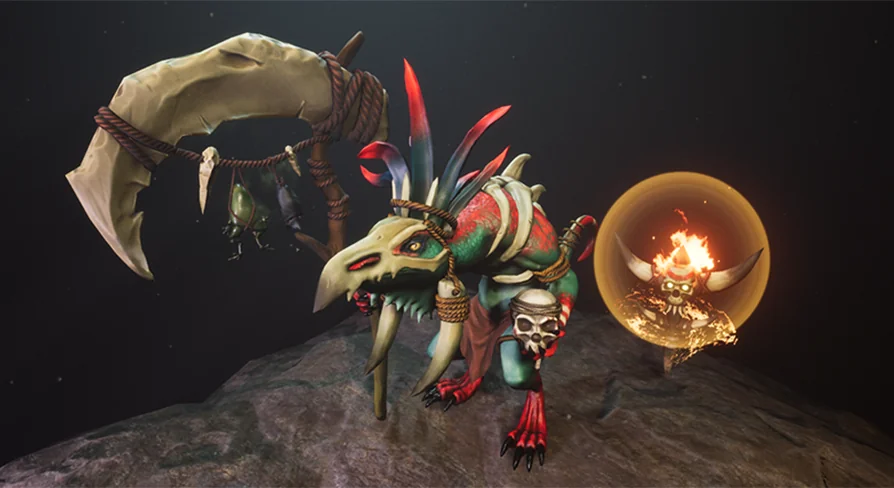
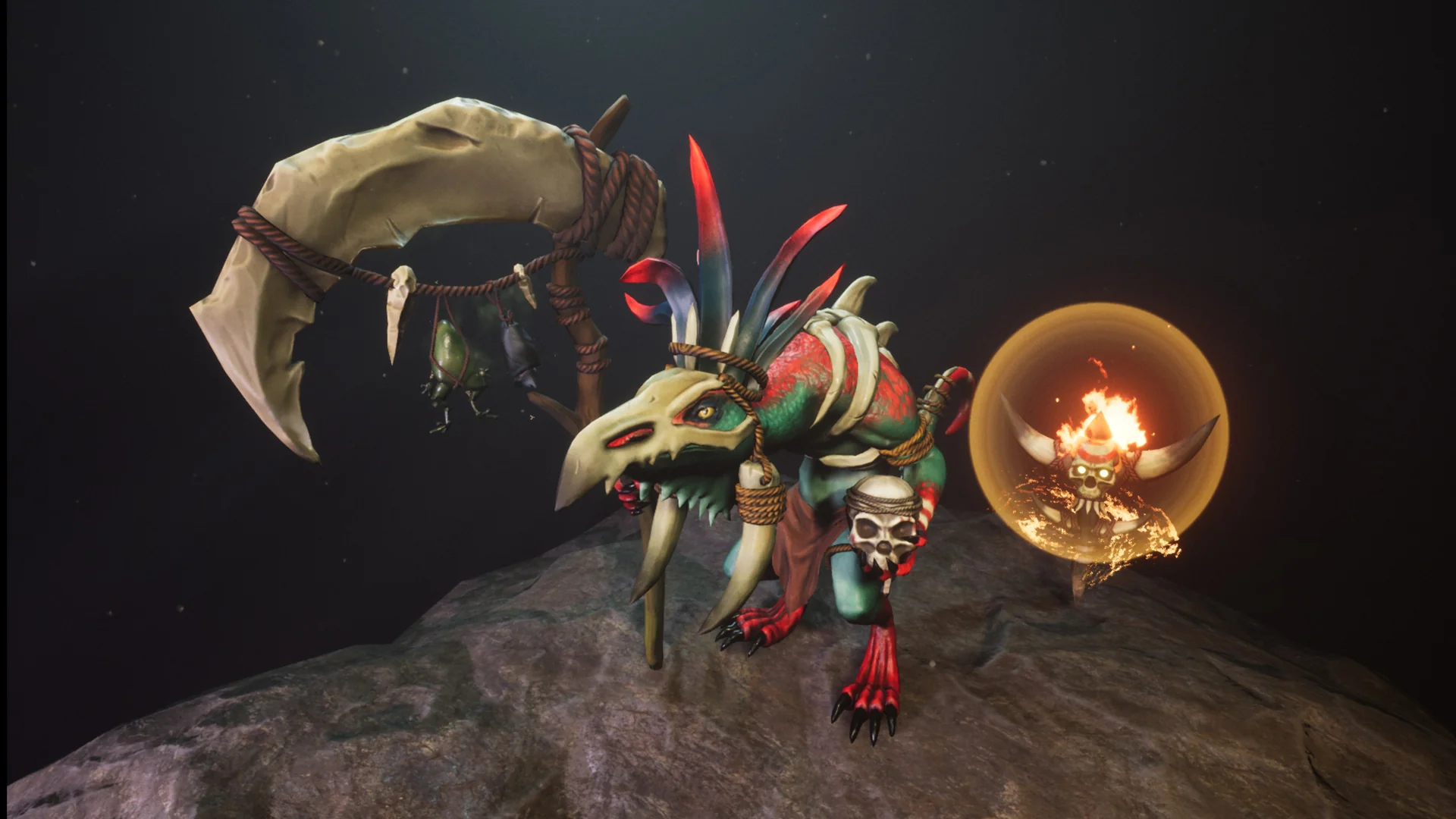
Lizardman (Shaman)
Explore the Lizardman (Shaman) asset, featuring 3ds Max CAT rigging, six core animations, totem and weapon props, bonus VFX, and Blueprint support.
Deploying the Lizardman Shaman in Fantasy Combat Encounters
Stylized fantasy projects often demand distinct enemy archetypes that communicate their combat role the moment they appear on screen. The Lizardman (Shaman) addresses this need directly by providing a dedicated reptilian spellcaster. With its distinct silhouette as a tribal wizard, the character works naturally in swamp environments, subterranean ruins, or wilderness encampments where animalistic or reptilian factions reside.
Because the character represents a specialized magic wielder rather than a standard frontline brute, its practical role centers on ranged pressure, area denial, and tactical summoning. Game scenarios featuring tribal encampments can station the shaman behind heavier melee units, using the provided props and movement sets to establish ritual zones or defensive barriers. The integration of specialized props allows level designers to populate a combat space with context-specific items that reinforce the magical identity of the encounter.
The Core Lizardman Mesh, Totem Props, and Rigging Structure
At the center of the package is the main character model, supported by secondary assets that define its role as a caster. Rather than functioning solely as an isolated mesh, the package bundles key environmental and combat props: a dedicated weapon, a ritual totem, and a skull. These props allow developers to construct clear visual hierarchies during gameplay.
The totem and skull props serve distinct practical roles in level construction and combat design. A totem can be placed statically in a level to signal a shamanic gathering ground or spawned dynamically through script logic to indicate an active buff, debuff, or healing radius. The skull functions similarly, either as an off-hand catalyst, an accessory, or a decorative component within an altar or ritual site. The main weapon gives the Lizardman physical presence in close-quarters skirmishes when magical attacks are on cooldown.
For technical artists working in production pipelines, the inclusion of 3ds Max source files equipped with the CAT (Character Animation Toolkit) bone system provides deep rigging flexibility. CAT rigs offer a parametric skeletal framework within 3ds Max, making it straightforward to edit proportions, adjust muscle flexes, retarget movement cycles, or generate entirely new custom motions without rebuilding the skeleton from scratch. Studios maintaining internal animation workflows can import the raw Max files directly into their authoring pipeline to modify base poses or tweak weight painting across the reptilian anatomy.
Locomotion and Action Sequencing with the Shaman Animation Set
Combat pacing in action games relies heavily on clean state transitions. The Lizardman (Shaman) package comes prepared with six primary animation states designed to form the bedrock of a real-time character controller:
Idle: A balanced baseline stance that keeps the spellcaster alert while holding its ground, also showcased in dedicated idle preview footage.
Walk: A steady forward movement cycle suitable for ambient patrols, non-combat roaming, or closing distance toward the player.
Run: A more aggressive forward locomotion cycle intended for evasive maneuvering, repositioning during firefights, or chasing targets across open arenas.
Attack: An offensive execution cycle accommodating spell releases, staff thrusts, or ranged projectile casting.
Hit: A responsive flinch animation giving players tactile visual feedback when their attacks connect with the creature.
Death: A definitive collapse sequence signaling the termination of the enemy unit and freeing up combat logic.
These motions interface cleanly with modern game engine architecture through an Animation Blueprint and script structure. By plugging these six actions into a state machine, developers can map blend spaces for smooth transitions between idle, walking, and running velocities. The hit reaction cleanly interrupts attack frames or locomotion, ensuring combat feels reactive, while the death state reliably triggers ragdoll, removes collision capsules, or spawns contextual loot.
Magic Integration and Visual Effect Compatibility
A fantasy shaman is incomplete without visible supernatural effects to communicate spells. The package includes bonus VFX specifically tailored to accent the character's casting capabilities. These visual elements provide immediate utility when prototyping magical bursts, projectile origins, or ritualistic glows emanating from the weapon or totem.
The visual framework aligns with broader particle libraries, maintaining verified compatibility with the Niagara Realistic Starter VFX Pack. This connection allows developers utilizing modern Niagara particle systems to seamlessly weave realistic particle bursts, arcane streams, and elemental hazards into the shaman's combat routines. By pairing Niagara emitters with the animation attack frames, you can time projectile spawns, floor glyphs, or weapon trails with absolute precision.
This synergy also extends across related assets in the creator's lineup. Productions incorporating elements from the LizardMan Pack, Destructible Props, or the wider Realistic Starter VFX series can maintain visual and mechanical cohesion. Destructible props allow the shaman's area-of-effect spells to shatter surrounding pottery or barricades, while extended VFX libraries provide extra elemental variations—such as poison, fire, or lightning—to expand the shaman's repertoire beyond base mechanics.
Pipeline Implementation for Stylized Animal Spellcasters
Indie studios, technical designers, and gameplay programmers looking to quickly stand up a functional humanoid adversary gain the most utility from this package. Because the resource delivers the 3D assets, CAT rigging data, the Animation Blueprint framework, core combat clips, and initial visual effects simultaneously, it drastically reduces time spent wiring disparate systems together.
The asset serves teams that need a distinct, stylized fantasy caster ready to integrate into combat systems without manual rigging or keyframing delays. By providing the structural foundation—from the skeletal CAT setup in 3ds Max to responsive runtime animation states—the Lizardman (Shaman) functions as an effective, self-contained enemy encounter straight out of the box.
 Characters
 Characters
 Characters
 Characters