"1f00f67f9253451b"{"id":"1001277","slug":"http-request","title":"Http Request","category":"Network \u0026 Multiplayer","engine":"4.27 - 5.8","assetVersion":"Asset Version: 1.1","engineVersion":"Engine Version: 4.27 - 5.8","tag":"Network","accent":"blue","visual":"mech","summary":"Implement HTTP request sending with GET, POST, PUT, and DELETE methods across JSON, XML, and form-urlencoded content types, compatible with Mqtt Client.","platform":"Unreal Engine","publishedAt":"2026-09-30T06:10:41.021Z","updatedAt":"2026-09-30T06:10:41.021Z","sourceNotes":[],"fileContents":[],"compatibility":["Unreal Engine","Asset Version: 1.1","Engine Version: 4.27 - 5.8"],"featuredImage":{"alt":"Http Request","src":"/wp-content/uploads/published/2026/09/45d2746b540e-4fbda408-4442-4c3f-8b23-18cb993992e5-cd6e3c4b58.webp"},"hasDownloadLink":true,"downloads":0,"terms":[{"taxonomy":"category","slug":"network-and-multiplayer-tools-and-plugins","name":"Network \u0026 Multiplayer"}],"galleryImages":[{"src":"/wp-content/uploads/published/2026/09/65415e501677-1e76499b-0d9f-4187-93e9-f86e1a0e3401-0b1203bf3b.webp","alt":"Http Request"},{"src":"/wp-content/uploads/published/2026/09/056639fec04d-bf0c33b4-ef8f-46bd-9baf-0fdd6b9024d4-5a585469b2.webp","alt":"Http Request"}],"accessPanel":{"kind":"resource","title":"Download this resource","eyebrow":"Free Download","message":"Log in or create a free account to start your download.","fileName":"Http Request.7z","safetyNote":"Resources are manually reviewed before listing to improve quality and reduce obvious risks.","actionLabel":"Download Free","resourceType":"Resource archive"},"contentHtml":"\u003cp\u003eNetwork-enabled interactive applications, online gameplay systems, and virtual simulations regularly require direct communication pathways with web backends and external services. Synchronizing account states, retrieving live cloud configuration files, communicating with external database layers, and pinging REST endpoints all depend on reliable web transaction infrastructure. Http Request provides native transmission tools built to deliver outbound network calls across industry-standard protocols, giving real-time projects direct access to remote server operations.\u003c/p\u003e \u003ch2\u003eMethod Handling Across GET, POST, PUT, and DELETE Operations\u003c/h2\u003e\n\u003cp\u003eInteraction with web servers relies heavily on standard HTTP verbs that define what action an outbound call is requesting. Http Request supports the four primary methods required to interact with modern RESTful web services: GET, POST, PUT, and DELETE.\u003c/p\u003e\n\u003cp\u003eGET operations handle straightforward data acquisition from target endpoints. These requests query a remote server and return the requested resources without altering the host server state, making them suitable for retrieving remote settings, player records, or static configuration documents. POST requests send structured bodies of data to an endpoint to create new entries, log player activity, or submit form payloads. When updates to existing remote records are necessary, PUT calls allow developers to supply replacement data targeting specific server entities. DELETE operations round out the standard REST architecture, enabling projects to issue removal commands to remote resources, purge session tokens, or clear cloud database records.\u003c/p\u003e\n\u003cp\u003eBy providing direct support across GET, POST, PUT, and DELETE, the package avoids common limitations where network extensions only facilitate basic data queries. Developers can build comprehensive CRUD (Create, Read, Update, Delete) transactional workflows directly within their interactive environments.\u003c/p\u003e \u003ch2\u003ePayload Formatting Across Content-Type Specifications\u003c/h2\u003e\n\u003cp\u003eA web request is only as effective as the format used to package its message body. Different web services expect distinct payload structures, and transmitting an incorrectly identified media type results in server rejections. Http Request supports a wide range of explicit Content-Type headers to ensure compatibility across disparate server environments:\u003c/p\u003e\n\u003cul\u003e \u003cli\u003e\u003cstrong\u003eApplication/json\u003c/strong\u003e: The universal standard for REST APIs, modern web microservices, and lightweight structured data interchange.\u003c/li\u003e \u003cli\u003e\u003cstrong\u003eApplication/x-www-form-urlencoded\u003c/strong\u003e: The standard format used for traditional web form submissions, encoding key-value pairs into a single string.\u003c/li\u003e \u003cli\u003e\u003cstrong\u003eApplication/xml\u003c/strong\u003e: Structured markup data handling, frequently required when interfacing with enterprise services, SOAP-adjacent structures, or legacy web frameworks.\u003c/li\u003e \u003cli\u003e\u003cstrong\u003eApplication/javascript\u003c/strong\u003e: Specialized script transmission and dynamic payload handling across specific runtime integrations.\u003c/li\u003e \u003cli\u003e\u003cstrong\u003eText/plain\u003c/strong\u003e: Unformatted raw text streams, ideal for simple string messaging, diagnostics, or lightweight tokens.\u003c/li\u003e \u003cli\u003e\u003cstrong\u003eText/html\u003c/strong\u003e: Raw markup payloads suitable for web scraping, diagnostic interface verification, or embedded page rendering workflows.\u003c/li\u003e\n\u003c/ul\u003e\n\u003cp\u003eHaving dedicated support for these varied headers means outbound calls can adhere strictly to external API documentation without requiring external text-encoding workarounds. Whether an API endpoint demands a clean JSON object or an encoded form sequence, the appropriate Content-Type can be explicitly assigned.\u003c/p\u003e \u003ch2\u003eExecution Architecture: Http Request and Http Request (Event)\u003c/h2\u003e\n\u003cp\u003eTransmitting network traffic inside an interactive visual engine requires careful handling of execution threads to prevent frame drops or unresponsive viewports. Http Request structures this workflow using two distinct call models: the standard Http Request implementation and the Http Request (Event) architecture.\u003c/p\u003e\n\u003cp\u003eThe standard Http Request node handles direct call generation, allowing quick execution inline with sequential logic. This approach works well for linear sequences where an operation triggers a fire-and-forget payload or where responses do not require complex branching. The Http Request (Event) variation is structured around asynchronous, callback-driven logic. Network responses do not arrive instantaneously; web latency, server response times, and packet routing introduce variable delays. Http Request (Event) lets developers bind specific logic to response triggers, cleanly separating outbound transmission from response handling. Downstream nodes can wait for successful status codes, parse returned payloads, or handle timeout conditions without blocking the primary visual thread.\u003c/p\u003e \u003ch2\u003ePipeline Integration Alongside Mqtt Client Workflows\u003c/h2\u003e\n\u003cp\u003eModern networked software rarely relies on a single protocol to manage all data flow. High-frequency updates such as telemetry or device commands often lean on publish-subscribe networks, whereas transactional records lean on HTTP. Http Request features verified compatibility with Mqtt Client, opening practical integration paths for mixed-protocol systems.\u003c/p\u003e\n\u003cp\u003eIn an environment running both tools, developers can separate network tasks based on performance characteristics. Fast, lightweight messaging, telemetry streams, and device-level synchronization can pass through the MQTT protocol, while administrative tasks, initial authentication handshakes, heavy payload transfers, and database mutations are handled by Http Request. Because both tools can operate within the same project ecosystem, developers can establish a complete communication architecture that bridges both modern cloud API standards and lightweight broker-driven telemetry.\u003c/p\u003e \u003ch2\u003eBilingual English and Chinese Documentation Reference\u003c/h2\u003e\n\u003cp\u003eComplex network integrations require clear technical documentation to ensure correct implementation of headers, verbs, and event hooks. Http Request includes full documentation provided in both English and Chinese. This bilingual technical material allows developers working across international teams or referencing diverse development documentation to quickly look up parameter structures, syntax requirements, and node configurations.\u003c/p\u003e\n\u003cp\u003eTechnical teams integrating real-time software with remote backends benefit most from this package. Developers building cloud-connected tools, data dashboard displays, web authentication layers, or projects that need to bridge RESTful web services with Mqtt Client setups will find the combination of methods, content types, and dual execution modes cleanly suited for their production pipelines.\u003c/p\u003e\n\n\u003ch2\u003eContinue Browsing Similar Packs\u003c/h2\u003e\n\u003cul\u003e\n\u003cli\u003e\u003ca href=\"https://3dcghub.com/http-requests-for-blueprints/\" title=\"HTTP Requests for Blueprints\"\u003eHTTP Requests for Blueprints\u003c/a\u003e\u003c/li\u003e\n\u003cli\u003e\u003ca href=\"https://3dcghub.com/blueprint-web-communication-helper-http-websocket/\" title=\"[Blueprint] Web Communication Helper (Http / Websocket)\"\u003e[Blueprint] Web Communication Helper (Http / Websocket)\u003c/a\u003e\u003c/li\u003e\n\u003cli\u003e\u003ca href=\"https://3dcghub.com/le-http-request/\" title=\"LE Http Request\"\u003eLE Http Request\u003c/a\u003e\u003c/li\u003e\n\u003cli\u003e\u003ca href=\"https://3dcghub.com/universal-mp-indicator/\" title=\"Universal MP Indicator\"\u003eUniversal MP Indicator\u003c/a\u003e\u003c/li\u003e\n\u003cli\u003e\u003ca href=\"https://3dcghub.com/quest-editor-plugin/\" title=\"Quest Editor Plugin\"\u003eQuest Editor Plugin\u003c/a\u003e\u003c/li\u003e\n\u003c/ul\u003e","contentTextLength":6705,"navigation":{"current":4,"total":3222,"previous":{"id":"1001278","slug":"netobject","title":"NetObject","category":"Network \u0026 Multiplayer","platform":"Unreal Engine","updatedAt":"2026-09-30T06:13:08.529Z"},"next":{"id":"1001276","slug":"http-requests-for-blueprints","title":"HTTP Requests for Blueprints","category":"Network \u0026 Multiplayer","platform":"Unreal Engine","updatedAt":"2026-09-30T06:08:29.849Z"}},"relatedResources":[{"id":"1001276","slug":"http-requests-for-blueprints","title":"HTTP Requests for Blueprints","category":"Network \u0026 Multiplayer","engine":"4.27 - 5.7","assetVersion":"Asset Version: 4.0 - 5.0","engineVersion":"Engine Version: 4.27 - 5.7","tag":"Network","accent":"blue","visual":"mech","summary":"A single-node solution for HTTP requests in Blueprints, supporting REST operations like Post, Patch, Update, and Firebase Blueprint Plugin Library workflows.","platform":"Unreal Engine","publishedAt":"2026-09-30T06:08:29.849Z","updatedAt":"2026-09-30T06:08:29.849Z","sourceNotes":[],"fileContents":[],"compatibility":["Unreal Engine","Asset Version: 4.0 - 5.0","Engine Version: 4.27 - 5.7"],"featuredImage":{"alt":"HTTP Requests for Blueprints","src":"/wp-content/uploads/published/2026/09/478970c6959b-1b247fe7-cecd-4a38-9746-ea940704ae37-4d097fc191.webp"},"hasDownloadLink":true,"downloads":0},{"id":"15174","slug":"blueprint-web-communication-helper-http-websocket","title":"[Blueprint] Web Communication Helper (Http / Websocket)","category":"Network \u0026 Multiplayer","engine":"4.26 - 4.27,5.0 - 5.4","assetVersion":"Engine version: 4.26 - 4.27,5.0 - 5.4","engineVersion":"Asset Version:2.0.4 - 2.1.4","tag":"Network","accent":"blue","visual":"animation","summary":"Enhance your project's networking capabilities with the [Blueprint] Web Communication Helper (Http / Websocket). This plugin offers easy-to-use functions for HTTP requests, secure websockets, and real-time data tracking.","platform":"Unreal Engine","publishedAt":"2026-03-12T08:10:27.000Z","updatedAt":"2026-04-19T15:44:53.000Z","sourceNotes":[],"fileContents":[],"compatibility":["Unreal Engine","Engine version: 4.26 - 4.27,5.0 - 5.4","Asset Version: 2.0.4 - 2.1.4"],"featuredImage":{"alt":"[Blueprint] Web Communication Helper (Http / Websocket)","src":"https://3dcghub.com/wp-content/uploads/2026/03/29dcf012-1c98-414b-8994-1d16b2f0978c.webp"},"hasDownloadLink":true,"downloads":0},{"id":"14100","slug":"le-http-request","title":"LE Http Request","category":"Engine Tools","engine":"4.9 - 5.8","assetVersion":"Asset Version: 1.0 - 5.8.0 r0","engineVersion":"Engine version: 4.9 - 5.8","tag":"Engine Tools","accent":"blue","visual":"animation","summary":"LE Http Request offers a dedicated solution for developers looking to handle web communication through Blueprints. This tool simplifies the process of making HTTP requests and managing data conversion.","platform":"Unreal Engine","publishedAt":"2026-03-11T15:48:06.000Z","updatedAt":"2026-09-29T09:21:47.996Z","sourceNotes":[],"fileContents":[],"compatibility":["Unreal Engine","Asset Version: 1.0 - 5.8.0 r0","Engine version: 4.9 - 5.8"],"featuredImage":{"alt":"LE Http Request","src":"https://3dcghub.com/wp-content/uploads/2026/03/a6caa89e-79d6-45ee-ba89-12b99dac3021.webp"},"hasDownloadLink":true,"downloads":0}]}
Network
Http Request
Implement HTTP request sending with GET, POST, PUT, and DELETE methods across JSON, XML, and form-urlencoded content types, compatible with Mqtt Client.
Network-enabled interactive applications, online gameplay systems, and virtual simulations regularly require direct communication pathways with web backends and external services. Synchronizing account states, retrieving live cloud configuration files, communicating with external database layers, and pinging REST endpoints all depend on reliable web transaction infrastructure. Http Request provides native transmission tools built to deliver outbound network calls across industry-standard protocols, giving real-time projects direct access to remote server operations.
Method Handling Across GET, POST, PUT, and DELETE Operations
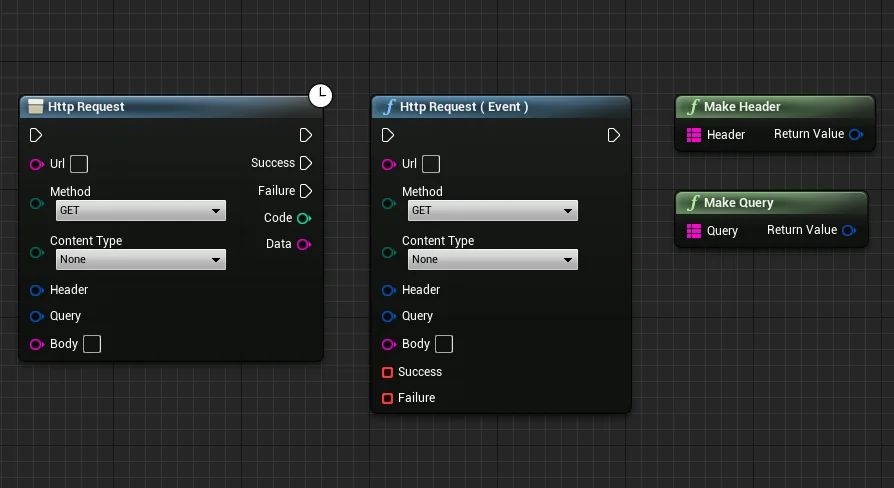
Interaction with web servers relies heavily on standard HTTP verbs that define what action an outbound call is requesting. Http Request supports the four primary methods required to interact with modern RESTful web services: GET, POST, PUT, and DELETE.
GET operations handle straightforward data acquisition from target endpoints. These requests query a remote server and return the requested resources without altering the host server state, making them suitable for retrieving remote settings, player records, or static configuration documents. POST requests send structured bodies of data to an endpoint to create new entries, log player activity, or submit form payloads. When updates to existing remote records are necessary, PUT calls allow developers to supply replacement data targeting specific server entities. DELETE operations round out the standard REST architecture, enabling projects to issue removal commands to remote resources, purge session tokens, or clear cloud database records.
By providing direct support across GET, POST, PUT, and DELETE, the package avoids common limitations where network extensions only facilitate basic data queries. Developers can build comprehensive CRUD (Create, Read, Update, Delete) transactional workflows directly within their interactive environments.
Payload Formatting Across Content-Type Specifications
A web request is only as effective as the format used to package its message body. Different web services expect distinct payload structures, and transmitting an incorrectly identified media type results in server rejections. Http Request supports a wide range of explicit Content-Type headers to ensure compatibility across disparate server environments:
Application/json: The universal standard for REST APIs, modern web microservices, and lightweight structured data interchange.
Application/x-www-form-urlencoded: The standard format used for traditional web form submissions, encoding key-value pairs into a single string.
Application/xml: Structured markup data handling, frequently required when interfacing with enterprise services, SOAP-adjacent structures, or legacy web frameworks.
Application/javascript: Specialized script transmission and dynamic payload handling across specific runtime integrations.
Text/plain: Unformatted raw text streams, ideal for simple string messaging, diagnostics, or lightweight tokens.
Text/html: Raw markup payloads suitable for web scraping, diagnostic interface verification, or embedded page rendering workflows.
Having dedicated support for these varied headers means outbound calls can adhere strictly to external API documentation without requiring external text-encoding workarounds. Whether an API endpoint demands a clean JSON object or an encoded form sequence, the appropriate Content-Type can be explicitly assigned.
Execution Architecture: Http Request and Http Request (Event)
Transmitting network traffic inside an interactive visual engine requires careful handling of execution threads to prevent frame drops or unresponsive viewports. Http Request structures this workflow using two distinct call models: the standard Http Request implementation and the Http Request (Event) architecture.
The standard Http Request node handles direct call generation, allowing quick execution inline with sequential logic. This approach works well for linear sequences where an operation triggers a fire-and-forget payload or where responses do not require complex branching. The Http Request (Event) variation is structured around asynchronous, callback-driven logic. Network responses do not arrive instantaneously; web latency, server response times, and packet routing introduce variable delays. Http Request (Event) lets developers bind specific logic to response triggers, cleanly separating outbound transmission from response handling. Downstream nodes can wait for successful status codes, parse returned payloads, or handle timeout conditions without blocking the primary visual thread.
Modern networked software rarely relies on a single protocol to manage all data flow. High-frequency updates such as telemetry or device commands often lean on publish-subscribe networks, whereas transactional records lean on HTTP. Http Request features verified compatibility with Mqtt Client, opening practical integration paths for mixed-protocol systems.
In an environment running both tools, developers can separate network tasks based on performance characteristics. Fast, lightweight messaging, telemetry streams, and device-level synchronization can pass through the MQTT protocol, while administrative tasks, initial authentication handshakes, heavy payload transfers, and database mutations are handled by Http Request. Because both tools can operate within the same project ecosystem, developers can establish a complete communication architecture that bridges both modern cloud API standards and lightweight broker-driven telemetry.
Bilingual English and Chinese Documentation Reference
Complex network integrations require clear technical documentation to ensure correct implementation of headers, verbs, and event hooks. Http Request includes full documentation provided in both English and Chinese. This bilingual technical material allows developers working across international teams or referencing diverse development documentation to quickly look up parameter structures, syntax requirements, and node configurations.
Technical teams integrating real-time software with remote backends benefit most from this package. Developers building cloud-connected tools, data dashboard displays, web authentication layers, or projects that need to bridge RESTful web services with Mqtt Client setups will find the combination of methods, content types, and dual execution modes cleanly suited for their production pipelines.
 Network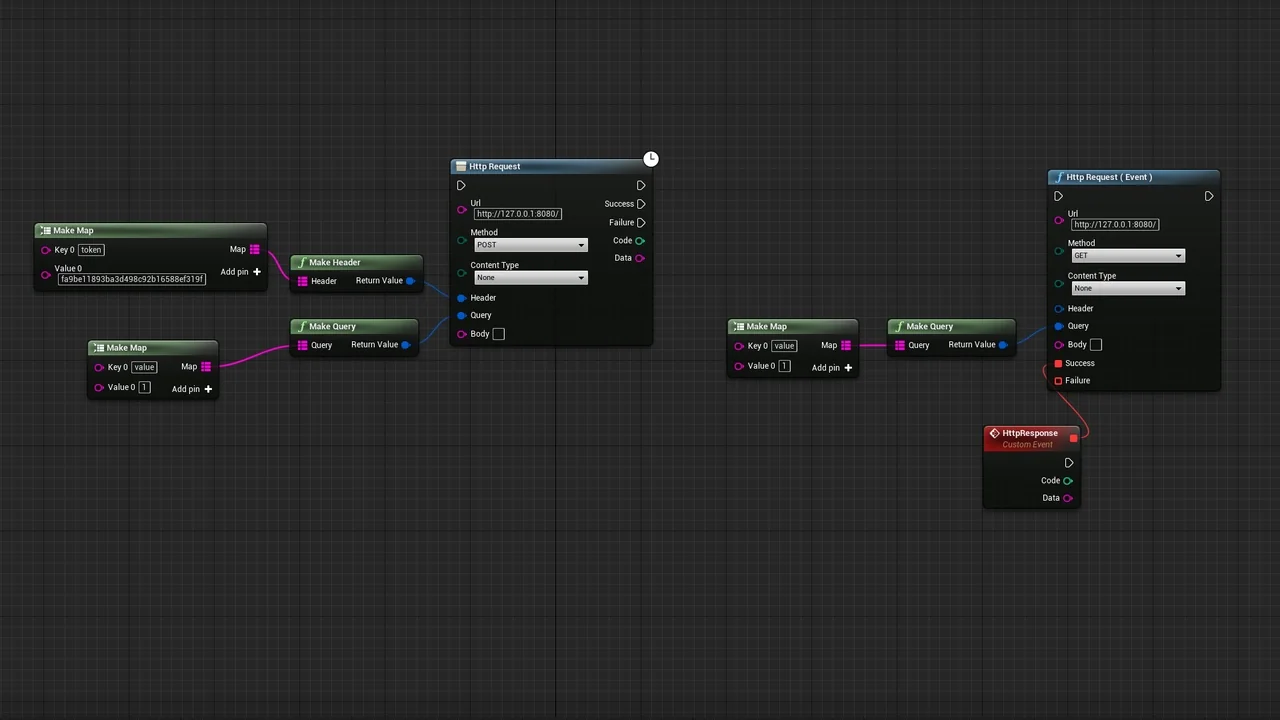
 Network
![[Blueprint] Web Communication Helper (Http / Websocket)](/_img/360/wp-content/uploads/2026/03/29dcf012-1c98-414b-8994-1d16b2f0978c.webp) Network
Network Engine Tools