"a19e0535960bd083"{"id":"1002048","slug":"hatchback-car-driveable-animated-realistic-hatchback-car-driveable-vehicle","title":"HatchBack Car Driveable / Animated / Realistic (HatchBack Car Driveable Vehicle)","category":"Cars \u0026 Trucks","engine":"5.0+","assetVersion":"","engineVersion":"Engine Version: 5.0+","tag":"Cars \u0026 Trucks","accent":"blue","visual":"mech","summary":"Driveable and customizable hatchback vehicle package featuring separated meshes, interactive door controls, customizable material parameters, and ULAT support.","platform":"Unreal Engine","publishedAt":"2026-10-26T15:04:27.811Z","updatedAt":"2026-10-26T15:04:27.811Z","sourceNotes":[],"fileContents":[],"compatibility":["Unreal Engine","Engine Version: 5.0+"],"featuredImage":{"alt":"HatchBack Car Driveable / Animated / Realistic (HatchBack Car Driveable Vehicle)","src":"/wp-content/uploads/published/2026/10/03471613c350-d50f04e7-569f-4720-8475-e7eee2d8e2e6-a82e58e275.webp"},"hasDownloadLink":true,"downloads":0,"terms":[{"taxonomy":"category","slug":"cars-and-trucks","name":"Cars \u0026 Trucks"}],"galleryImages":[{"src":"/wp-content/uploads/published/2026/10/9cb8931a3126-44f42666-9e6a-4f98-9614-2d9100e472be-8ee4ef9b38.webp","alt":"HatchBack Car Driveable / Animated / Realistic (HatchBack Car Driveable Vehicle)"},{"src":"/wp-content/uploads/published/2026/10/1e36fe76d70a-e2c026d6-1ab5-4cd4-833b-ec5c97e05f6f-f8572cd74f.webp","alt":"HatchBack Car Driveable / Animated / Realistic (HatchBack Car Driveable Vehicle)"},{"src":"/wp-content/uploads/published/2026/10/4500affcd0a6-ed7f0b65-c1c0-4828-a3c4-261b4eb15a8f-009e465ef1.webp","alt":"HatchBack Car Driveable / Animated / Realistic (HatchBack Car Driveable Vehicle)"},{"src":"/wp-content/uploads/published/2026/10/9c6c3c3bb19a-b2117815-3eb7-459b-aa96-91c07334c5ee-3e1c6daa3e.webp","alt":"HatchBack Car Driveable / Animated / Realistic (HatchBack Car Driveable Vehicle)"},{"src":"/wp-content/uploads/published/2026/10/a41c83d928f7-a15c4fb7-6b03-45de-84bb-3767c65f684f-6bf371ccb8.webp","alt":"HatchBack Car Driveable / Animated / Realistic (HatchBack Car Driveable Vehicle)"},{"src":"/wp-content/uploads/published/2026/10/fba053bf87b1-11d73093-986b-443c-bbdf-6c14642e4d66-c244f05b41.webp","alt":"HatchBack Car Driveable / Animated / Realistic (HatchBack Car Driveable Vehicle)"},{"src":"/wp-content/uploads/published/2026/10/3319c34c5f7c-c60c608e-f426-4793-b3b1-2d3546853d94-a9bc031e2f.webp","alt":"HatchBack Car Driveable / Animated / Realistic (HatchBack Car Driveable Vehicle)"},{"src":"/wp-content/uploads/published/2026/10/96d1673b1f29-b1aab5da-b9da-4c8f-901d-67c071f000f1-c7adac36b6.webp","alt":"HatchBack Car Driveable / Animated / Realistic (HatchBack Car Driveable Vehicle)"},{"src":"/wp-content/uploads/published/2026/10/d0cf8ce3a3ce-cf4c2ea3-1549-4f11-ad46-c77df7ce44f9-3860a62b09.webp","alt":"HatchBack Car Driveable / Animated / Realistic (HatchBack Car Driveable Vehicle)"}],"accessPanel":{"kind":"resource","title":"Download this resource","eyebrow":"Free Download","message":"Log in or create a free account to start your download.","fileName":"HatchBack Car Driveable Animated Realistic (HatchBack Car Driveable Vehicle).7z","safetyNote":"Resources are manually reviewed before listing to improve quality and reduce obvious risks.","actionLabel":"Download Free","resourceType":"Resource archive"},"contentHtml":"\u003cp\u003eA functional vehicle asset needs to balance clean geometry, dependable drive logic, and flexible visual controls. The HatchBack Car Driveable / Animated / Realistic package supplies a modern hatchback configured both as an active, drivable blueprint and as a collection of modular meshes ready for scene population. Combining real-time movement, interactive exterior mechanics, and extensive material parameter controls, the setup serves interactive titles as cleanly as high-fidelity visualization environments.\u003c/p\u003e \u003ch2\u003eBlueprint Setup and Six Separated Meshes\u003c/h2\u003e\n\u003cp\u003eThe vehicle is delivered through two distinct structural approaches: a unified master blueprint and an arrangement of six separated meshes. The master blueprint brings all underlying systems together into a plug-and-play asset. Developers looking to drop a drivable hatchback into a level can deploy the vehicle blueprint directly without manually binding physical wheels, chassis frames, or motion logic. The preconfigured structure handles driving behaviors out of the box, reducing initial setup overhead.\u003c/p\u003e\n\u003cp\u003eThe alternative presentation splits the car into six independent meshes. This separation allows artists to disassemble the vehicle or treat specific components as standalone scene props. Instead of being locked into a rigid, non-editable skeletal structure, scenes requiring damaged vehicles, garage repair environments, scrap yards, or partial car assemblies can make direct use of the individual meshes. Automotive presentations that require isolated looks at body panels or specific vehicle sections benefit from this modular component breakdown.\u003c/p\u003e \u003ch2\u003eHatchBack Car Driveable Mechanics and Interactive Controls\u003c/h2\u003e\n\u003cp\u003eInteractive vehicle handling forms the functional core of the package. When in the driver's seat, users have full active control over navigation and perspective. The driving system includes real-time camera view switching, allowing drivers to alternate between perspectives while maintaining steady control of the car. This flexibility suits open-world driving, precision parking, and cinematic sequences where fixed angles fail to capture the required vantage point.\u003c/p\u003e\n\u003cp\u003eInteractive body elements extend beyond wheel rotation and steering. The doors are animated and linked to dedicated keyboard controls. Rather than tying all doors to a single toggle, the blueprint maps four distinct keys across the vehicle: Q, E, R, and F activate the individual doors for open and close cycles. This granular binding lets players enter, exit, or inspect specific quadrants of the car independently, adding tangible physical feedback for game mechanics and interactive automotive walkthroughs.\u003c/p\u003e \u003ch2\u003eMaterial Instances: Dirt, Roughness, and Color Adjustments\u003c/h2\u003e\n\u003cp\u003eVisual adaptability is managed through comprehensive material instances. Surface properties are not baked into immutable textures; instead, they expose distinct parameters that can be tuned to reflect showroom cleanliness, standard daily commuter wear, or severe road weathering. The material parameters explicitly provided within the instances cover:\u003c/p\u003e\n\u003cul\u003e\n\u003cli\u003e\u003cstrong\u003eDirt:\u003c/strong\u003e Controls surface grime, dust buildup, and road spray along the exterior bodywork.\u003c/li\u003e\n\u003cli\u003e\u003cstrong\u003eRoughness:\u003c/strong\u003e Modulates surface glossiness, shifting the vehicle from a polished high-gloss clear coat to a dull, weathered matte finish.\u003c/li\u003e\n\u003cli\u003e\u003cstrong\u003eMetallic:\u003c/strong\u003e Regulates the metallic response across body panels, trims, and structural accents.\u003c/li\u003e\n\u003cli\u003e\u003cstrong\u003eEmissive:\u003c/strong\u003e Governs glow and luminescence across lighting elements, indicators, and interior instrumentation.\u003c/li\u003e\n\u003cli\u003e\u003cstrong\u003eColor:\u003c/strong\u003e Allows direct repainting of the chassis and specific vehicle trim surfaces to match varying color palettes.\u003c/li\u003e\n\u003c/ul\u003e\n\u003cp\u003eBy adjusting these values directly within the material editor, project teams can spawn multiple instances of the hatchback with distinct identities across a single map. One vehicle can display a pristine, high-gloss factory paint finish, while another parked down the street features heavy dirt accumulation, high roughness, and muted base tones, preventing visual repetition across urban environments.\u003c/p\u003e \u003ch2\u003eDeployment Across Games, ArchViz, and Automotive Presentations\u003c/h2\u003e\n\u003cp\u003eBecause the asset maintains AAA-quality modeling and flexible setup options, it fits into several production pipelines. In video game development, the ready-to-drive blueprint operates as a player-controlled vehicle, a mission getaway car, or an interactive world prop that players can enter and operate. The separated door functionality and shifting camera perspectives support gameplay conventions found in action, adventure, and role-playing titles.\u003c/p\u003e\n\u003cp\u003eFor architectural visualization, the package operates both as an environmental accent and as an active presentation element. Populating suburban driveways, multi-story parking structures, and city streets with realistic modern hatchbacks gives architectural renders an immediate sense of scale and human habitation. If an ArchViz presentation calls for a walkthrough or fly-through, the drivable vehicle can traverse planned roadways in real time, demonstrating traffic flow and site accessibility.\u003c/p\u003e\n\u003cp\u003eAutomotive presentations gain direct advantages from the material instance controls and independent meshes. Visualizers can strip away parts, change exterior colors on the fly, modulate metallic and roughness attributes under dynamic studio lighting, and toggle individual doors open to display interior clearances. The modern styling matches contemporary passenger car design, making it suitable for clean commercial renders, safety simulation spaces, and technical demonstrations.\u003c/p\u003e \u003ch2\u003eCompatibility with the Ultimate Level Art Tool\u003c/h2\u003e\n\u003cp\u003eThe hatchback environment package includes direct compatibility with the Ultimate Level Art Tool, widely referred to as ULAT. Originally titled as a modular design development tool for mobile and web-based systems, ULAT is engineered to streamline the creation of custom modular buildings and accelerate scene population workflows. Compatible assets integrate into ULAT layouts cleanly, allowing environment artists to populate spaces naturally without struggling against non-standard pivot points or incompatible mesh logic.\u003c/p\u003e\n\u003cp\u003eWorking alongside ULAT, the hatchback can be incorporated into automated or rapid manual environment dressing routines. Whether placing static vehicle hulls along modular city blocks or staging roadside parking configurations across extensive urban areas, the integration helps level designers assemble complete settings rapidly while retaining full access to the car's separated meshes and dynamic material variants.\u003c/p\u003e\n\n\u003ch2\u003eContinue Browsing Similar Packs\u003c/h2\u003e\n\u003cul\u003e\n\u003cli\u003e\u003ca href=\"https://3dcghub.com/vehicles-vol-9-future-cars-low-poly/\" title=\"Vehicles VOL.9- Future Cars (Low Poly)\"\u003eVehicles VOL.9- Future Cars (Low Poly)\u003c/a\u003e\u003c/li\u003e\n\u003cli\u003e\u003ca href=\"https://3dcghub.com/1980s-cars-pack/\" title=\"1980s Cars Pack\"\u003e1980s Cars Pack\u003c/a\u003e\u003c/li\u003e\n\u003cli\u003e\u003ca href=\"https://3dcghub.com/classic-limousine-driveable-functional-classic-limousine-car-drivable/\" title=\"Classic Limousine / Driveable / Functional ( Classic Limousine Car Drivable )\"\u003eClassic Limousine / Driveable / Functional ( Classic Limousine Car Drivable )\u003c/a\u003e\u003c/li\u003e\n\u003cli\u003e\u003ca href=\"https://3dcghub.com/classic-sport-car-01-classic-sport-car-cars-vintage-vehicle-vehicles/\" title=\"Classic Sport Car 01 ( Classic Sport Car Cars Vintage Vehicle Vehicles )\"\u003eClassic Sport Car 01 ( Classic Sport Car Cars Vintage Vehicle Vehicles )\u003c/a\u003e\u003c/li\u003e\n\u003cli\u003e\u003ca href=\"https://3dcghub.com/driveable-animated-construction-truck-construction-truck-heavy-duty-3d-model/\" title=\"Driveable / Animated Construction Truck (Construction Truck Heavy Duty 3D Model)\"\u003eDriveable / Animated Construction Truck (Construction Truck Heavy Duty 3D Model)\u003c/a\u003e\u003c/li\u003e\n\u003c/ul\u003e","contentTextLength":6811,"navigation":{"current":43,"total":4026,"previous":{"id":"1002049","slug":"hb-computers-pack","title":"HB Computers Pack","category":"Consumer","platform":"Unreal Engine","updatedAt":"2026-10-26T15:05:42.062Z"},"next":{"id":"1002047","slug":"handy-quest-system","title":"Handy Quest System","category":"Dialog Systems","platform":"Unreal Engine","updatedAt":"2026-10-26T14:58:36.941Z"}},"relatedResources":[{"id":"1000709","slug":"vehicles-vol-9-future-cars-low-poly","title":"Vehicles VOL.9- Future Cars (Low Poly)","category":"Cars \u0026 Trucks","engine":"5.3+","assetVersion":"","engineVersion":"Engine Version: 5.3+","tag":"Cars \u0026 Trucks","accent":"blue","visual":"mech","summary":"Seven futuristic low-poly car props with 4K textures, channel-packed maps, tintable paint, and Lumen support for Unreal Engine 5.0+.","platform":"Unreal Engine","publishedAt":"2026-07-24T02:11:02.648Z","updatedAt":"2026-10-21T04:23:37.954Z","sourceNotes":[],"fileContents":[],"compatibility":["Unreal Engine","Engine Version: 5.3+"],"featuredImage":{"alt":"Vehicles VOL.9- Future Cars (Low Poly)","src":"/wp-content/uploads/published/2026/07/1299c7959656-ce73ca95-e379-4b7d-9098-f38abd0ef20e-72885a4f92.webp"},"hasDownloadLink":true,"downloads":2},{"id":"1001498","slug":"1980s-cars-pack","title":"1980s Cars Pack","category":"Cars \u0026 Trucks","engine":"5.0+","assetVersion":"","engineVersion":"Engine Version: 5.0+","tag":"Cars \u0026 Trucks","accent":"blue","visual":"mech","summary":"Examine the 1980s Cars Pack for Unreal Engine, featuring five driveable and static vehicle types, material controls, functional interiors, and lighting systems.","platform":"Unreal Engine","publishedAt":"2026-10-09T07:25:48.062Z","updatedAt":"2026-10-09T07:25:48.062Z","sourceNotes":[],"fileContents":[],"compatibility":["Unreal Engine","Engine Version: 5.0+"],"featuredImage":{"alt":"1980s Cars Pack","src":"/wp-content/uploads/published/2026/10/2b1634bd47f8-70e84585-9033-4f61-80b8-98e0a106b682-9257865be1.webp"},"hasDownloadLink":true,"downloads":0},{"id":"4970","slug":"classic-limousine-driveable-functional-classic-limousine-car-drivable","title":"Classic Limousine / Driveable / Functional ( Classic Limousine Car Drivable )","category":"Cars \u0026 Trucks","engine":"5.0+","assetVersion":"Engine version: 5.0+","engineVersion":"4.22","tag":"Cars \u0026 Trucks","accent":"blue","visual":"character","summary":"Enhance your project with a realistic, driveable classic limousine. Features interactive doors, a radio system, and fully customizable materials for Unreal Engi","platform":"Unreal Engine","publishedAt":"2026-02-14T17:13:04.000Z","updatedAt":"2026-04-19T15:57:02.000Z","sourceNotes":[],"fileContents":[],"compatibility":["Unreal Engine","Engine version: 5.0+"],"featuredImage":{"alt":"Classic Limousine / Driveable / Functional ( Classic Limousine Car Drivable )","src":"https://3dcghub.com/wp-content/uploads/2026/02/8ea3ba45-7619-4fc2-878e-c971c5834b84.webp"},"hasDownloadLink":true,"downloads":1}]}
Cars & Trucks
HatchBack Car Driveable / Animated / Realistic (HatchBack Car Driveable Vehicle)
Driveable and customizable hatchback vehicle package featuring separated meshes, interactive door controls, customizable material parameters, and ULAT support.
A functional vehicle asset needs to balance clean geometry, dependable drive logic, and flexible visual controls. The HatchBack Car Driveable / Animated / Realistic package supplies a modern hatchback configured both as an active, drivable blueprint and as a collection of modular meshes ready for scene population. Combining real-time movement, interactive exterior mechanics, and extensive material parameter controls, the setup serves interactive titles as cleanly as high-fidelity visualization environments.
Blueprint Setup and Six Separated Meshes
The vehicle is delivered through two distinct structural approaches: a unified master blueprint and an arrangement of six separated meshes. The master blueprint brings all underlying systems together into a plug-and-play asset. Developers looking to drop a drivable hatchback into a level can deploy the vehicle blueprint directly without manually binding physical wheels, chassis frames, or motion logic. The preconfigured structure handles driving behaviors out of the box, reducing initial setup overhead.
The alternative presentation splits the car into six independent meshes. This separation allows artists to disassemble the vehicle or treat specific components as standalone scene props. Instead of being locked into a rigid, non-editable skeletal structure, scenes requiring damaged vehicles, garage repair environments, scrap yards, or partial car assemblies can make direct use of the individual meshes. Automotive presentations that require isolated looks at body panels or specific vehicle sections benefit from this modular component breakdown.
HatchBack Car Driveable Mechanics and Interactive Controls
Interactive vehicle handling forms the functional core of the package. When in the driver's seat, users have full active control over navigation and perspective. The driving system includes real-time camera view switching, allowing drivers to alternate between perspectives while maintaining steady control of the car. This flexibility suits open-world driving, precision parking, and cinematic sequences where fixed angles fail to capture the required vantage point.
Interactive body elements extend beyond wheel rotation and steering. The doors are animated and linked to dedicated keyboard controls. Rather than tying all doors to a single toggle, the blueprint maps four distinct keys across the vehicle: Q, E, R, and F activate the individual doors for open and close cycles. This granular binding lets players enter, exit, or inspect specific quadrants of the car independently, adding tangible physical feedback for game mechanics and interactive automotive walkthroughs.
Material Instances: Dirt, Roughness, and Color Adjustments
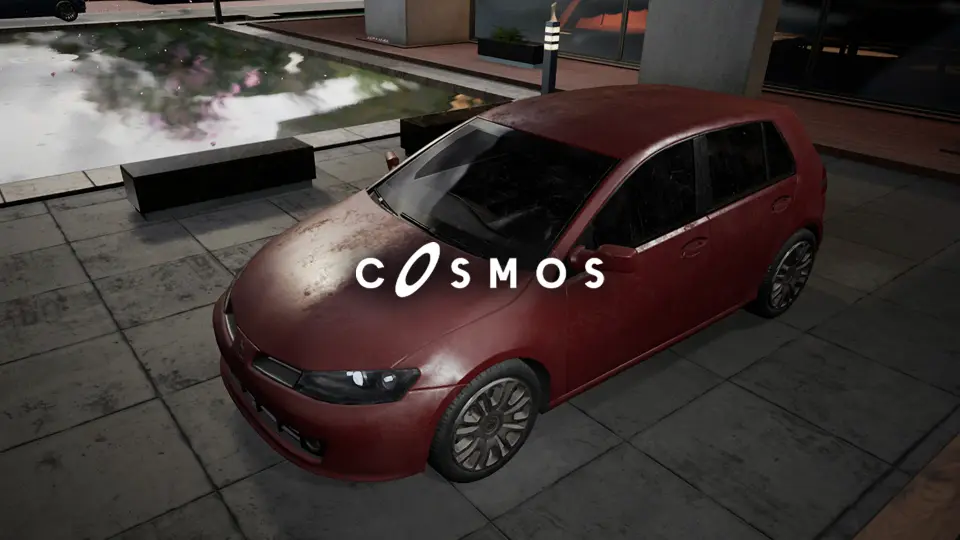
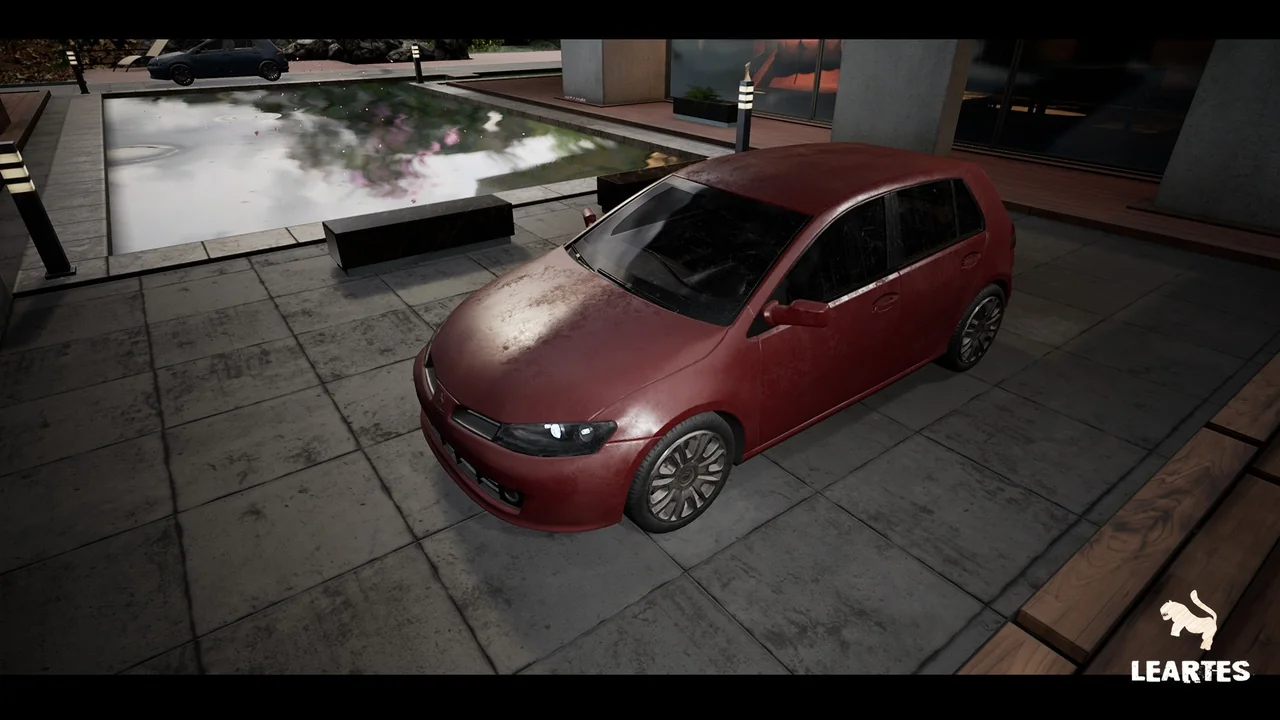
Visual adaptability is managed through comprehensive material instances. Surface properties are not baked into immutable textures; instead, they expose distinct parameters that can be tuned to reflect showroom cleanliness, standard daily commuter wear, or severe road weathering. The material parameters explicitly provided within the instances cover:
Dirt: Controls surface grime, dust buildup, and road spray along the exterior bodywork.
Roughness: Modulates surface glossiness, shifting the vehicle from a polished high-gloss clear coat to a dull, weathered matte finish.
Metallic: Regulates the metallic response across body panels, trims, and structural accents.
Emissive: Governs glow and luminescence across lighting elements, indicators, and interior instrumentation.
Color: Allows direct repainting of the chassis and specific vehicle trim surfaces to match varying color palettes.
By adjusting these values directly within the material editor, project teams can spawn multiple instances of the hatchback with distinct identities across a single map. One vehicle can display a pristine, high-gloss factory paint finish, while another parked down the street features heavy dirt accumulation, high roughness, and muted base tones, preventing visual repetition across urban environments.
Deployment Across Games, ArchViz, and Automotive Presentations
Because the asset maintains AAA-quality modeling and flexible setup options, it fits into several production pipelines. In video game development, the ready-to-drive blueprint operates as a player-controlled vehicle, a mission getaway car, or an interactive world prop that players can enter and operate. The separated door functionality and shifting camera perspectives support gameplay conventions found in action, adventure, and role-playing titles.
For architectural visualization, the package operates both as an environmental accent and as an active presentation element. Populating suburban driveways, multi-story parking structures, and city streets with realistic modern hatchbacks gives architectural renders an immediate sense of scale and human habitation. If an ArchViz presentation calls for a walkthrough or fly-through, the drivable vehicle can traverse planned roadways in real time, demonstrating traffic flow and site accessibility.
Automotive presentations gain direct advantages from the material instance controls and independent meshes. Visualizers can strip away parts, change exterior colors on the fly, modulate metallic and roughness attributes under dynamic studio lighting, and toggle individual doors open to display interior clearances. The modern styling matches contemporary passenger car design, making it suitable for clean commercial renders, safety simulation spaces, and technical demonstrations.
Compatibility with the Ultimate Level Art Tool
The hatchback environment package includes direct compatibility with the Ultimate Level Art Tool, widely referred to as ULAT. Originally titled as a modular design development tool for mobile and web-based systems, ULAT is engineered to streamline the creation of custom modular buildings and accelerate scene population workflows. Compatible assets integrate into ULAT layouts cleanly, allowing environment artists to populate spaces naturally without struggling against non-standard pivot points or incompatible mesh logic.
Working alongside ULAT, the hatchback can be incorporated into automated or rapid manual environment dressing routines. Whether placing static vehicle hulls along modular city blocks or staging roadside parking configurations across extensive urban areas, the integration helps level designers assemble complete settings rapidly while retaining full access to the car's separated meshes and dynamic material variants.
 Cars & Trucks
 Cars & Trucks
 Cars & Trucks
 Cars & Trucks