"1a0e4ac4dc71d030"{"id":"1000161","slug":"handy-hands-pack-vr-hands-megapack","title":"Handy Hands Pack - VR Hands Megapack","category":"Tools, Objects \u0026 Decor","engine":"4.26+,5.0+","assetVersion":"","engineVersion":"Engine Version: 4.26+,5.0+","tag":"Tools","accent":"blue","visual":"mech","summary":"A VR hand collection for Unreal projects with 8 original hand types, 42 variation examples, pose animations, and a ghost-style fresnel effect.","platform":"Unreal Engine","publishedAt":"2026-06-18T22:50:11.623Z","updatedAt":"2026-06-18T22:50:11.623Z","sourceNotes":[],"fileContents":[],"compatibility":["Unreal Engine","Engine Version: 4.26+,5.0+"],"featuredImage":{"alt":"Handy Hands Pack - VR Hands Megapack","src":"/wp-content/uploads/published/2026/06/10e89b08a7ce-8d85ad00-174d-4f16-b62a-a35b6de37888-a338db2b0c.webp"},"hasDownloadLink":true,"downloads":0,"terms":[{"taxonomy":"category","slug":"tools-objects-and-decor","name":"Tools, Objects \u0026 Decor"}],"galleryImages":[{"src":"/wp-content/uploads/published/2026/06/8b04fc80dcec-f25d85d6-f2c6-46b5-8591-a94b4aaec327-c97a7b7844.webp","alt":"Handy Hands Pack - VR Hands Megapack"},{"src":"/wp-content/uploads/published/2026/06/00624194fde0-a553d5a6-5dbe-4edc-87a7-d0b1c1dd8b08-91d82963f7.webp","alt":"Handy Hands Pack - VR Hands Megapack"},{"src":"/wp-content/uploads/published/2026/06/e52e810ef95f-82b63a92-4041-47f6-a37a-7e64560c1dd3-149ed65fa3.webp","alt":"Handy Hands Pack - VR Hands Megapack"},{"src":"/wp-content/uploads/published/2026/06/7e5a1676b8e2-16cd9b2a-bdfd-4572-98cc-f2d823c90a69-c142dd11ca.webp","alt":"Handy Hands Pack - VR Hands Megapack"},{"src":"/wp-content/uploads/published/2026/06/73511e634b9f-abf16410-7ca9-4b04-98b9-6fe08477ca72-45f56810d3.webp","alt":"Handy Hands Pack - VR Hands Megapack"},{"src":"/wp-content/uploads/published/2026/06/c0dd2204fd1d-1dcc5a79-d042-4533-b02e-03aefd15a879-64146e8b93.webp","alt":"Handy Hands Pack - VR Hands Megapack"},{"src":"/wp-content/uploads/published/2026/06/4c40a5866427-03a1cf64-fa51-445a-90ae-178c1856fdd8-69527aa170.webp","alt":"Handy Hands Pack - VR Hands Megapack"},{"src":"/wp-content/uploads/published/2026/06/a9794ea35621-4691c590-305b-4427-b362-608b7f4084b2-fc7faa7c4b.webp","alt":"Handy Hands Pack - VR Hands Megapack"},{"src":"/wp-content/uploads/published/2026/06/71f220836423-a8affed8-73ce-41a6-86b3-cd73ad2f1619-1e4e0b31c2.webp","alt":"Handy Hands Pack - VR Hands Megapack"}],"accessPanel":{"kind":"resource","title":"Download this resource","eyebrow":"Free Download","message":"Log in or create a free account to start your download.","fileName":"Content.7z","safetyNote":"Resources are manually reviewed before listing to improve quality and reduce obvious risks.","actionLabel":"Download Free","resourceType":"Resource archive"},"contentHtml":"\u003cp\u003eThe setup path is one of the first practical details to note here. If you are working in 4.27 or UE5, the intended approach is to follow the 4.26 tutorial workflow and then upgrade that setup into the newer version. There is also a video walkthrough for getting everything in place, which makes this pack read less like a loose collection of meshes and more like something meant to be implemented into a working VR project without guesswork.\u003c/p\u003e \u003cp\u003eThat implementation-first angle suits the pack well. Handy Hands Pack - VR Hands Megapack is positioned as one of the bigger VR hand collections on the Unreal marketplace, and the core promise is straightforward: a broad range of fully original AAA quality hands that can be dropped into VR production. Instead of centering on one visual direction only, it mixes realistic, stylized, and more specialized glove or robotic options, which gives it room to serve both prototypes and more established projects that need variation without rebuilding a hand library from scratch.\u003c/p\u003e \u003ch2\u003eSetting up Handy Hands in 4.27 and UE5\u003c/h2\u003e\n\u003cp\u003eThe compatibility note is specific and useful. Users on 4.27 or UE5 are not being pointed to a separate custom setup method. The recommendation is to use the 4.26 tutorial process and then upgrade the result into the newer engine version. In production terms, this helps because it establishes a clear implementation route instead of leaving later-version users to interpret the pack on their own.\u003c/p\u003e \u003cp\u003eThe pack is rigged using the Unreal skeleton from the VR template project. That makes its place in a workflow very clear. These are not presented as generic hand assets that need a separate rigging pass before they can be tested. They are already set up around a familiar VR template structure, which means they are intended to be dropped into a project whether that project is still in prototype form or already well underway.\u003c/p\u003e \u003cp\u003eThat rigging choice also helps explain the broad claim that the hands can fit into any VR project. The pack is not only about visual selection. It is also about reducing the amount of setup friction that usually slows down character interaction work in VR. If a team needs to test hand presence quickly, or replace placeholder hands in an existing build, the pack is meant to support that step directly.\u003c/p\u003e \u003ch2\u003eThe eight original hands in the VR Hands Megapack\u003c/h2\u003e\n\u003cp\u003eThe main collection includes eight fully original hands. Those eight are:\u003c/p\u003e\n\u003cul\u003e\n\u003cli\u003eA boxing glove\u003c/li\u003e\n\u003cli\u003eA robot hand\u003c/li\u003e\n\u003cli\u003eA male hand\u003c/li\u003e\n\u003cli\u003eA combat glove\u003c/li\u003e\n\u003cli\u003eA stylized hand\u003c/li\u003e\n\u003cli\u003eA winter glove\u003c/li\u003e\n\u003cli\u003eA gardening glove\u003c/li\u003e\n\u003cli\u003eA leather glove\u003c/li\u003e\n\u003c/ul\u003e \u003cp\u003eThis mix covers a wider range than a standard single-style hand pack. A robot hand and a stylized hand immediately open the door to non-realistic or genre-driven projects, while the male hand and leather glove lean toward more grounded use. The boxing glove, combat glove, winter glove, and gardening glove each suggest distinct interaction contexts and visual identities without requiring a separate hand solution for every scenario.\u003c/p\u003e \u003cp\u003eWhat stands out is not just the number of included hand types, but how differently they can read in a scene. A combat glove can push a project toward a more tactical tone. A gardening glove suggests a more domestic or task-based interaction space. A winter glove can fit cold-weather settings or more bulky, layered character presentation. Because the pack spans these kinds of visual roles, it fits well in workflows where hand presentation needs to match different game modes, avatars, or environment themes.\u003c/p\u003e \u003cp\u003eThe attached tags also reinforce that range. The pack sits across lowpoly, realistic, stylized, reality, and virtual. Those labels point to a collection that is not locked to a single artistic lane, which is consistent with the actual hand types included.\u003c/p\u003e \u003ch2\u003e42 variations and the ghost-hand fresnel shader\u003c/h2\u003e\n\u003cp\u003eBeyond the eight primary hands, the pack includes 42 other variation examples. These are there to use as they are or to customize further. That gives the package a second layer of practical value in a production workflow. The main hand set provides the immediate visual categories, while the variation examples offer a larger base for iteration, project-specific adjustments, or hand swaps across different characters and scenarios.\u003c/p\u003e \u003cp\u003eVariation examples matter most when a team is trying to avoid repetitive first-person presentation. In VR, hands are always close to the player and remain one of the most visible elements in the entire experience. Even small changes can affect how a project feels. A set with multiple examples gives developers room to test visual identity without rebuilding their core setup every time they want a different look.\u003c/p\u003e \u003cp\u003eThe pack also includes a fresnel shader for a ghost hand effect. That is a focused but useful rendering detail. Rather than limiting the collection to ordinary physical hand presentation, it adds a ready-made option for a more spectral or effect-driven visual treatment. A ghost hand effect can change the tone of interactions immediately, and because it is supplied as part of the pack, it extends the use of the included hands beyond conventional surface appearance.\u003c/p\u003e \u003cp\u003eIn workflow terms, the shader broadens the pack from character presentation into scene feedback and visual state changes. It is easy to imagine that kind of effect being useful when a project needs a non-solid hand look, a stylized interaction layer, or simply an alternate presentation mode. The important point is that the pack does not stop at mesh variety; it also includes a rendering-oriented extra that affects how those hands can be perceived in play.\u003c/p\u003e \u003ch2\u003eAnimation poses for counting, weapons, and gestures\u003c/h2\u003e\n\u003cp\u003eThe pack adds several animation poses as a bonus, and these are strongly tied to common VR interaction needs. Counting from 1 to 5 is included, along with a sword holding pose, a trigger gun pose, bullhorns, thumbs up, and a fist.\u003c/p\u003e \u003cp\u003eThose poses help place the pack in actual production rather than only visual assembly. Counting poses can support instructional moments, communication beats, or gesture-based interactions. A sword holding pose and trigger gun pose speak directly to common gameplay contexts where hand readability matters as much as the object being held. Thumbs up and bullhorns push into expressive gestures, while a fist remains one of the most basic and reusable hand states in interactive scenes.\u003c/p\u003e \u003cp\u003eBecause these poses are already part of the package, the hand set is not limited to neutral display. It gives developers a starting point for interaction, expression, and object handling. That is especially useful in VR, where the hand is both a visual asset and an interaction tool. Even a small pose library can save time during early implementation and can help teams test whether a specific hand style still reads clearly once it enters gameplay.\u003c/p\u003e \u003ch2\u003eWhere Handy Hands fits once a project is already moving\u003c/h2\u003e\n\u003cp\u003eSome packs are easiest to justify at the prototype stage only. This one is framed more broadly. It can supply hands for a prototype, but it is also presented as a way to add a large number of new hands to an existing project. That distinction matters. It means the pack is not limited to placeholder work. It is also relevant when a project has already established core systems and needs to expand visual variety or swap hand styles without replacing its overall VR structure.\u003c/p\u003e \u003cp\u003eThe use of the Unreal VR template skeleton is what keeps that promise practical. Teams further along in development are often less interested in variety by itself and more interested in whether new assets will slot into established setups. The rigging decision supports that handoff. Instead of asking a team to rebuild basic integration, the pack is positioned to enter the project as an implementation-ready asset group.\u003c/p\u003e \u003cp\u003eInside a project, the strongest use case here is straightforward: a VR project that needs immediate hand variety, recognizable gesture poses, and an extra ghost-style rendering option, all within a setup that aligns with Unreal’s VR template skeleton. The final takeaway is simple. This is a production-facing hand library with a clear setup path, enough variation to support different scene identities, and enough rigging and pose support to move from test phase into active project use without a separate hand pipeline.\u003c/p\u003e\n\n\u003ch2\u003eRelated Resources Worth Checking\u003c/h2\u003e\n\u003cul\u003e\n\u003cli\u003e\u003ca href=\"https://3dcghub.com/japanese-school-collection-5-asset-packs-over-200-assets/\" title=\"Japanese School Collection - 5 Asset Packs, Over 200 Assets\"\u003eJapanese School Collection - 5 Asset Packs, Over 200 Assets\u003c/a\u003e\u003c/li\u003e\n\u003cli\u003e\u003ca href=\"https://3dcghub.com/interior-props/\" title=\"Interior Props\"\u003eInterior Props\u003c/a\u003e\u003c/li\u003e\n\u003cli\u003e\u003ca href=\"https://3dcghub.com/urban-interior-props-pack/\" title=\"Urban Interior Props Pack\"\u003eUrban Interior Props Pack\u003c/a\u003e\u003c/li\u003e\n\u003cli\u003e\u003ca href=\"https://3dcghub.com/flag-props-package-250-flags/\" title=\"Flag Props Package / 250+ Flags\"\u003eFlag Props Package / 250+ Flags\u003c/a\u003e\u003c/li\u003e\n\u003cli\u003e\u003ca href=\"https://3dcghub.com/first-aid-set/\" title=\"First Aid Set\"\u003eFirst Aid Set\u003c/a\u003e\u003c/li\u003e\n\u003c/ul\u003e","contentTextLength":8432,"navigation":{"current":1142,"total":3200,"previous":{"id":"1000162","slug":"framecapture-screen-capture-and-video-recorder","title":"FrameCapture - Screen Capture and Video Recorder","category":"Automations","platform":"Unreal Engine","updatedAt":"2026-06-18T22:53:44.835Z"},"next":{"id":"1000160","slug":"military-battlefield-kit-and-middle-east-set","title":"Military Battlefield Kit and Middle East Set","category":"Cities","platform":"Unreal Engine","updatedAt":"2026-06-18T22:43:35.139Z"}},"relatedResources":[{"id":"1000969","slug":"ultimate-torches-package-50-variations","title":"Ultimate Torches package / 50 Variations","category":"Tools, Objects \u0026 Decor","engine":"4.26+,5.0+","assetVersion":"","engineVersion":"Engine Version: 4.26+,5.0+","tag":"Tools","accent":"blue","visual":"mech","summary":"PBR torch prop package with 50 variations, switchable open/closed/off states, built for AAA and optimized projects. Compatible with Atlantis Ruins.","platform":"Unreal Engine","publishedAt":"2026-08-15T14:19:51.805Z","updatedAt":"2026-08-15T14:19:51.805Z","sourceNotes":[],"fileContents":[],"compatibility":["Unreal Engine","Engine Version: 4.26+,5.0+"],"featuredImage":{"alt":"Ultimate Torches package / 50 Variations","src":"/wp-content/uploads/published/2026/08/267a1fd90e90-dec31134-7c83-45d2-9bdf-545cc898e64d-885060fadd.webp"},"hasDownloadLink":true,"downloads":0},{"id":"1000953","slug":"medieval-vol-6-food-and-feast","title":"Medieval - VOL 6 - Food and Feast","category":"Tools, Objects \u0026 Decor","engine":"4.26+,5.0+","assetVersion":"","engineVersion":"Engine Version: 4.26+,5.0+","tag":"Tools","accent":"blue","visual":"mech","summary":"46 Unreal Engine meshes with 2k PBR textures, master materials, and a dynamic lighting scene for building medieval dining scenes. AAA quality, game-ready.","platform":"Unreal Engine","publishedAt":"2026-08-14T05:33:17.779Z","updatedAt":"2026-08-14T05:33:17.779Z","sourceNotes":[],"fileContents":[],"compatibility":["Unreal Engine","Engine Version: 4.26+,5.0+"],"featuredImage":{"alt":"Medieval - VOL 6 - Food and Feast","src":"/wp-content/uploads/published/2026/08/fed9f0a5b8fc-c53e33a2-08f8-4641-8dc7-8ee1f59daeee-ce6811f998.webp"},"hasDownloadLink":true,"downloads":0},{"id":"1000644","slug":"medieval-props-vol-3-farm-2","title":"Medieval Props Vol 3 Farm","category":"Tools, Objects \u0026 Decor","engine":"4.26+,5.0+","assetVersion":"","engineVersion":"Engine Version: 4.26+,5.0+","tag":"Tools","accent":"blue","visual":"mech","summary":"A medieval farm props pack with a 12-parameter Master Material, texture atlas workflow, and two overview levels for games, archviz, and cinematics.","platform":"Unreal Engine","publishedAt":"2026-07-21T17:39:05.852Z","updatedAt":"2026-07-21T17:39:05.852Z","sourceNotes":[],"fileContents":[],"compatibility":["Unreal Engine","Engine Version: 4.26+,5.0+"],"featuredImage":{"alt":"Medieval Props Vol 3 Farm","src":"/wp-content/uploads/published/2026/07/c61c175b90c8-5869fb85-99dd-496b-aabd-a9aef69fde58-3752e86692.webp"},"hasDownloadLink":true,"downloads":0}]}
Tools
Handy Hands Pack - VR Hands Megapack
A VR hand collection for Unreal projects with 8 original hand types, 42 variation examples, pose animations, and a ghost-style fresnel effect.
The setup path is one of the first practical details to note here. If you are working in 4.27 or UE5, the intended approach is to follow the 4.26 tutorial workflow and then upgrade that setup into the newer version. There is also a video walkthrough for getting everything in place, which makes this pack read less like a loose collection of meshes and more like something meant to be implemented into a working VR project without guesswork.
That implementation-first angle suits the pack well. Handy Hands Pack - VR Hands Megapack is positioned as one of the bigger VR hand collections on the Unreal marketplace, and the core promise is straightforward: a broad range of fully original AAA quality hands that can be dropped into VR production. Instead of centering on one visual direction only, it mixes realistic, stylized, and more specialized glove or robotic options, which gives it room to serve both prototypes and more established projects that need variation without rebuilding a hand library from scratch.
Setting up Handy Hands in 4.27 and UE5
The compatibility note is specific and useful. Users on 4.27 or UE5 are not being pointed to a separate custom setup method. The recommendation is to use the 4.26 tutorial process and then upgrade the result into the newer engine version. In production terms, this helps because it establishes a clear implementation route instead of leaving later-version users to interpret the pack on their own.
The pack is rigged using the Unreal skeleton from the VR template project. That makes its place in a workflow very clear. These are not presented as generic hand assets that need a separate rigging pass before they can be tested. They are already set up around a familiar VR template structure, which means they are intended to be dropped into a project whether that project is still in prototype form or already well underway.
That rigging choice also helps explain the broad claim that the hands can fit into any VR project. The pack is not only about visual selection. It is also about reducing the amount of setup friction that usually slows down character interaction work in VR. If a team needs to test hand presence quickly, or replace placeholder hands in an existing build, the pack is meant to support that step directly.
The eight original hands in the VR Hands Megapack
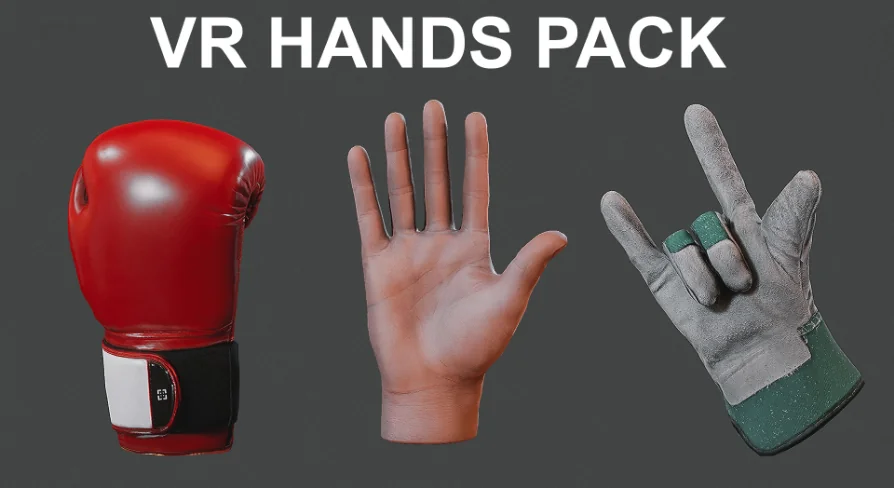
The main collection includes eight fully original hands. Those eight are:
A boxing glove
A robot hand
A male hand
A combat glove
A stylized hand
A winter glove
A gardening glove
A leather glove
This mix covers a wider range than a standard single-style hand pack. A robot hand and a stylized hand immediately open the door to non-realistic or genre-driven projects, while the male hand and leather glove lean toward more grounded use. The boxing glove, combat glove, winter glove, and gardening glove each suggest distinct interaction contexts and visual identities without requiring a separate hand solution for every scenario.
What stands out is not just the number of included hand types, but how differently they can read in a scene. A combat glove can push a project toward a more tactical tone. A gardening glove suggests a more domestic or task-based interaction space. A winter glove can fit cold-weather settings or more bulky, layered character presentation. Because the pack spans these kinds of visual roles, it fits well in workflows where hand presentation needs to match different game modes, avatars, or environment themes.
The attached tags also reinforce that range. The pack sits across lowpoly, realistic, stylized, reality, and virtual. Those labels point to a collection that is not locked to a single artistic lane, which is consistent with the actual hand types included.
42 variations and the ghost-hand fresnel shader
Beyond the eight primary hands, the pack includes 42 other variation examples. These are there to use as they are or to customize further. That gives the package a second layer of practical value in a production workflow. The main hand set provides the immediate visual categories, while the variation examples offer a larger base for iteration, project-specific adjustments, or hand swaps across different characters and scenarios.
Variation examples matter most when a team is trying to avoid repetitive first-person presentation. In VR, hands are always close to the player and remain one of the most visible elements in the entire experience. Even small changes can affect how a project feels. A set with multiple examples gives developers room to test visual identity without rebuilding their core setup every time they want a different look.
The pack also includes a fresnel shader for a ghost hand effect. That is a focused but useful rendering detail. Rather than limiting the collection to ordinary physical hand presentation, it adds a ready-made option for a more spectral or effect-driven visual treatment. A ghost hand effect can change the tone of interactions immediately, and because it is supplied as part of the pack, it extends the use of the included hands beyond conventional surface appearance.
In workflow terms, the shader broadens the pack from character presentation into scene feedback and visual state changes. It is easy to imagine that kind of effect being useful when a project needs a non-solid hand look, a stylized interaction layer, or simply an alternate presentation mode. The important point is that the pack does not stop at mesh variety; it also includes a rendering-oriented extra that affects how those hands can be perceived in play.
Animation poses for counting, weapons, and gestures
The pack adds several animation poses as a bonus, and these are strongly tied to common VR interaction needs. Counting from 1 to 5 is included, along with a sword holding pose, a trigger gun pose, bullhorns, thumbs up, and a fist.
Those poses help place the pack in actual production rather than only visual assembly. Counting poses can support instructional moments, communication beats, or gesture-based interactions. A sword holding pose and trigger gun pose speak directly to common gameplay contexts where hand readability matters as much as the object being held. Thumbs up and bullhorns push into expressive gestures, while a fist remains one of the most basic and reusable hand states in interactive scenes.
Because these poses are already part of the package, the hand set is not limited to neutral display. It gives developers a starting point for interaction, expression, and object handling. That is especially useful in VR, where the hand is both a visual asset and an interaction tool. Even a small pose library can save time during early implementation and can help teams test whether a specific hand style still reads clearly once it enters gameplay.
Where Handy Hands fits once a project is already moving
Some packs are easiest to justify at the prototype stage only. This one is framed more broadly. It can supply hands for a prototype, but it is also presented as a way to add a large number of new hands to an existing project. That distinction matters. It means the pack is not limited to placeholder work. It is also relevant when a project has already established core systems and needs to expand visual variety or swap hand styles without replacing its overall VR structure.
The use of the Unreal VR template skeleton is what keeps that promise practical. Teams further along in development are often less interested in variety by itself and more interested in whether new assets will slot into established setups. The rigging decision supports that handoff. Instead of asking a team to rebuild basic integration, the pack is positioned to enter the project as an implementation-ready asset group.
Inside a project, the strongest use case here is straightforward: a VR project that needs immediate hand variety, recognizable gesture poses, and an extra ghost-style rendering option, all within a setup that aligns with Unreal’s VR template skeleton. The final takeaway is simple. This is a production-facing hand library with a clear setup path, enough variation to support different scene identities, and enough rigging and pose support to move from test phase into active project use without a separate hand pipeline.
 Tools
Tools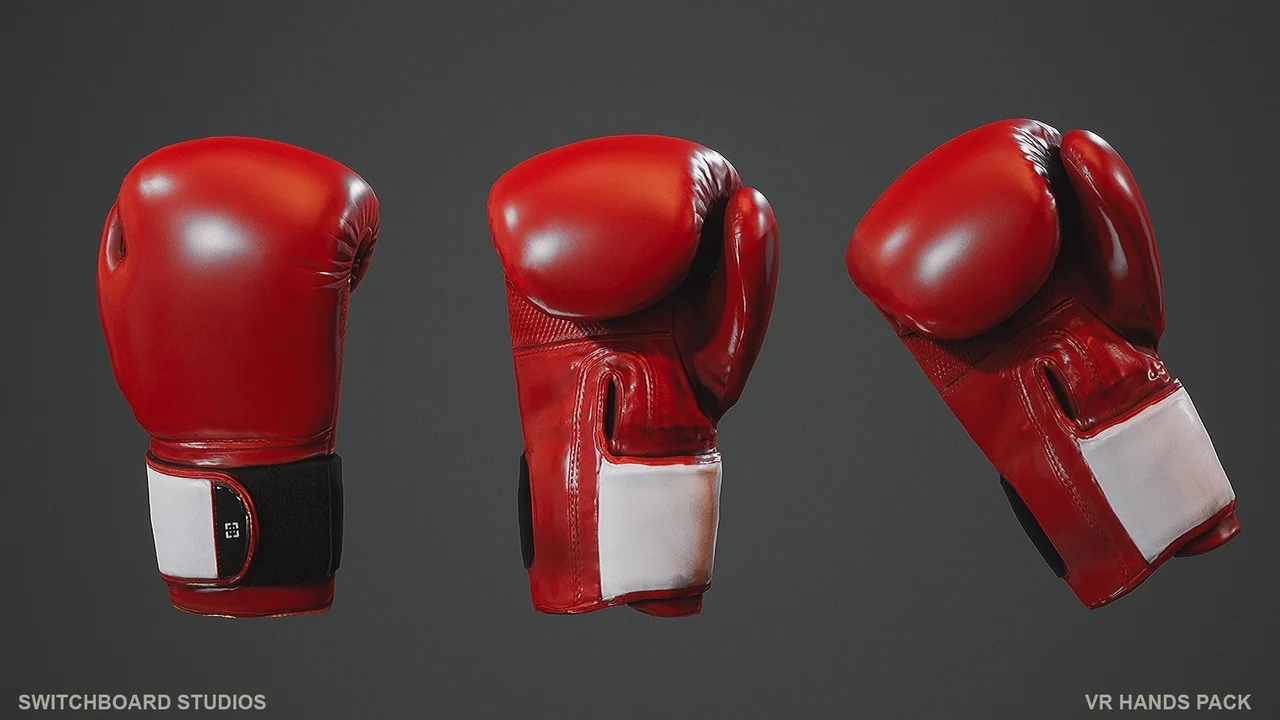
 Tools
Tools Tools
Tools Tools
Tools