"1a0e4ac4dc71d030"{"id":"1000160","slug":"military-battlefield-kit-and-middle-east-set","title":"Military Battlefield Kit and Middle East Set","category":"Cities","engine":"4.26+,5.0+","assetVersion":"","engineVersion":"Engine Version: 4.26+,5.0+","tag":"Cities","accent":"blue","visual":"mech","summary":"A realistic Middle East environment set with architecture modules, props, materials, color variations, ornaments, and mud and dirt decals for game, VR, and cine","platform":"Unreal Engine","publishedAt":"2026-06-18T22:43:35.139Z","updatedAt":"2026-06-18T22:43:35.139Z","sourceNotes":[],"fileContents":[],"compatibility":["Unreal Engine","Engine Version: 4.26+,5.0+"],"featuredImage":{"alt":"Military Battlefield Kit and Middle East Set","src":"/wp-content/uploads/published/2026/06/d86f66f05553-01a6867c-41b2-4acc-ad81-4d155333e735-7e75759466.webp"},"hasDownloadLink":true,"downloads":0,"terms":[{"taxonomy":"category","slug":"cities","name":"Cities"}],"galleryImages":[{"src":"/wp-content/uploads/published/2026/06/9ef8f532d578-6a1ba2da-2c3f-424c-a5e9-01b778738c53-c7ae44d3f8.webp","alt":"Military Battlefield Kit and Middle East Set"},{"src":"/wp-content/uploads/published/2026/06/d39812331d5d-9c3ec1dd-377e-4bc7-98d0-39b4f1a34040-2da1a7b679.webp","alt":"Military Battlefield Kit and Middle East Set"},{"src":"/wp-content/uploads/published/2026/06/8989ac88638c-0c2b8549-aa17-4f5f-abc2-09d5d1a3b231-3211a4d6ec.webp","alt":"Military Battlefield Kit and Middle East Set"},{"src":"/wp-content/uploads/published/2026/06/3e1696490679-6a035913-b331-4389-9af4-4c48fecb196e-5320c3b895.webp","alt":"Military Battlefield Kit and Middle East Set"},{"src":"/wp-content/uploads/published/2026/06/f05330dc383f-a2c7f745-74ba-40d1-8487-2e105b4daa99-a5bffa45c1.webp","alt":"Military Battlefield Kit and Middle East Set"},{"src":"/wp-content/uploads/published/2026/06/64dc6f4ff9dc-cf6f2bff-f0ff-46aa-98b9-e0a3da53adf2-9a1d060b7b.webp","alt":"Military Battlefield Kit and Middle East Set"},{"src":"/wp-content/uploads/published/2026/06/9e7fcf7be7dc-8d96d8d4-0db3-4dd2-a41b-00814b61a8ce-a72d334dbd.webp","alt":"Military Battlefield Kit and Middle East Set"},{"src":"/wp-content/uploads/published/2026/06/5233a50952be-df803ba4-ab51-42bf-918b-c53fdec9bc3f-74811e3ffd.webp","alt":"Military Battlefield Kit and Middle East Set"},{"src":"/wp-content/uploads/published/2026/06/2a5a45f5f1a9-f377f317-d3e2-4946-a641-5880804802e2-b0fa859c44.webp","alt":"Military Battlefield Kit and Middle East Set"},{"src":"/wp-content/uploads/published/2026/06/6e8f66afd255-152af152-d454-4161-b5c1-8bd0e523e945-6e1fe90704.webp","alt":"Military Battlefield Kit and Middle East Set"}],"accessPanel":{"kind":"resource","title":"Download this resource","eyebrow":"Free Download","message":"Log in or create a free account to start your download.","fileName":"Content.7z","safetyNote":"Resources are manually reviewed before listing to improve quality and reduce obvious risks.","actionLabel":"Download Free","resourceType":"Resource archive"},"contentHtml":"\u003cp\u003eWhen a project needs a believable urban battlefield, a dense street scene, or a cinematic space with a clear regional identity, \u003cstrong\u003eMilitary Battlefield Kit and Middle East Set\u003c/strong\u003e Is aimed squarely at that job. The collection centers on a realistic Middle East environment and is positioned for AAA quality game levels as well as VR and cinematic scenes. That immediately places it in a part of production where environment art has to carry mood, spatial clarity, and a strong sense of place at the same time.\u003c/p\u003e \u003cp\u003eThe set is not framed as a single hero location. It is a broader environment toolkit that brings together architecture modules, props, realistic materials, material instances for color variations, ornaments, and mud and dirt decal sets. That combination matters because it supports scene construction at more than one scale. Large structures can establish the silhouette of a district or compound, while smaller decorative and surface details help break repetition and push the scene toward a more lived-in, weathered, and conflict-shaped look.\u003c/p\u003e \u003ch2\u003eMiddle East streets, interiors, and battlefield spaces\u003c/h2\u003e\n\u003cp\u003eThe strongest use for this set lies in projects that need realistic Middle East streets and cityscape spaces with a military or battlefield character. The tags point toward urban, street, cityscape, interior, military, and battlefield themes, so the environment can be approached from several angles without leaving its core identity. One team might focus on exterior streets lined with modular architecture, while another might build interior spaces that connect directly to urban combat routes or narrative set pieces.\u003c/p\u003e \u003cp\u003eThere is also range inside the visual language. Tags such as Arabia, Persian, Afghanistan, and Middle suggest a specific regional atmosphere, while modern and historical open up different scene directions inside that framework. That does not turn the set into a catch-all world kit; instead, it suggests flexibility within a recognizable environment style. A scene can lean toward a present-day military setting, a more historic architectural mood, or a blend where modern battlefield dressing sits inside older urban forms.\u003c/p\u003e \u003cp\u003eFantasy also appears among the tags, which is useful in a narrower way. The set’s realistic base does not lock it into documentary realism alone. The combination of modular structures, ornaments, and color-driven surface variation can support stylized or fictional settings that still retain a grounded Middle Eastern visual anchor. For creators working on story-driven scenes, that opens room for dramatic reinterpretation without severing the environment from its regional cues.\u003c/p\u003e \u003ch2\u003eHow the architecture modules shape level building\u003c/h2\u003e\n\u003cp\u003eArchitecture modules are one of the most practical parts of the package because they define how quickly a scene can expand from a single corner into a full route or district. In a game level, modular architecture helps establish streets, courtyards, connected facades, and layered pathways. In a VR scene, the same modular approach can support spaces that hold up under close viewing and repeated traversal. In cinematic work, modules make it easier to stage multiple camera angles inside a coherent architectural language.\u003c/p\u003e \u003cp\u003eThis modular structure is especially useful for battlefield layouts. A military environment rarely depends on one pristine landmark. It usually works through connected sightlines, cover, narrow passages, open street segments, and transitions between exterior and interior spaces. Because the set includes architecture modules alongside props and decals, the environment can move beyond a clean blockout look and into something more resolved. The spatial framework comes first, then the visual evidence of use, age, and conflict can be layered in.\u003c/p\u003e \u003cp\u003eThe tags also suggest both urban and organic qualities. In practice, that creates room for environments that are not overly rigid or uniform. A city street can feel denser and more natural when architectural repetition is interrupted by props, ornament, color shifts, and surface wear. For artists trying to avoid a synthetic or copied appearance, that mix of modular order and environmental variation is often what gives a level its credibility.\u003c/p\u003e \u003ch2\u003eProps, ornaments, and color variations in Military Battlefield Kit and Middle East Set\u003c/h2\u003e\n\u003cp\u003eProps and ornaments are where the environment gains its local texture. Architecture alone can define a location, but it is the smaller pieces that help a street read as inhabited, specific, and visually layered. The set includes props as a core part of the toolset, and those props can work across gameplay spaces, cinematic backgrounds, and environmental storytelling setups. They help turn a modular shell into a scene that feels assembled rather than merely repeated.\u003c/p\u003e \u003cp\u003eOrnaments push that further. In a Middle East environment, ornamental elements can contribute to pattern, cultural atmosphere, and architectural richness. They can also act as contrast points inside a military scene, where decorative identity and battlefield pressure exist in the same frame. That contrast is valuable in both games and cinematics because it adds visual tension: a place with character and history reads differently than a stripped-down generic combat zone.\u003c/p\u003e \u003cp\u003eThe inclusion of material instances for color variations gives the set another practical dimension. Color variation is not just a cosmetic extra. It is one of the simplest ways to keep modular assets from flattening into obvious repetition. In a street sequence, slight color differences can separate buildings and make neighborhoods feel assembled over time. In an interior, those shifts can help establish room identity or support lighting choices. In a cinematic context, color variation can also shape the emotional tone of a shot without changing the underlying structure.\u003c/p\u003e \u003cp\u003eBecause the materials are described as realistic, the set stays tied to a photoreal direction. That makes it a clear fit for artists chasing convincing surface response and a grounded environment style rather than an abstract or exaggerated one.\u003c/p\u003e \u003ch2\u003eMud and dirt decals for battlefield wear\u003c/h2\u003e\n\u003cp\u003eThe mud and dirt decal sets are a key part of what makes the environment useful for battlefield work rather than just urban dressing. Decals are often the layer that shifts a scene from newly assembled to visibly used. Mud, dirt, and similar surface buildup help connect structures and props to the ground plane, break up cleaner materials, and suggest regular traffic, environmental wear, or recent disruption.\u003c/p\u003e \u003cp\u003eIn a military setting, that wear is not background noise. It is part of the narrative language of the space. A battlefield environment often needs surfaces that show pressure and movement, and mud and dirt are among the most direct ways to create that impression. On streets, decals can make routes feel traveled and unsettled. Around interiors, they can support transitions from outdoor urban areas into enclosed spaces. In cinematic scenes, they help catch light and shadow in ways that flatter realism.\u003c/p\u003e \u003cp\u003eThese decals also reinforce the broader photoreal and PBR-oriented identity suggested by the tags. The goal is not ornamental cleanliness. It is a more believable environment where surfaces collect evidence of time, weather, and activity. For environment artists, that means the set supports both the big read of the location and the close read of the ground and walls.\u003c/p\u003e \u003ch2\u003eAAA quality for game, VR, and cinematic work\u003c/h2\u003e\n\u003cp\u003eThe set is explicitly aimed at AAA quality game and VR or cinematic levels, and that target says a lot about how it can be approached creatively. In a game project, it can support readable combat spaces, modular urban routes, and interiors tied to a larger district. In VR, realism and environmental detail become more important because the viewer experiences the space at close range and from flexible angles. In cinematic work, the same assets can be arranged for controlled composition, mood, and regional authenticity.\u003c/p\u003e \u003cp\u003eThat cross-use potential comes from the package being a toolkit rather than a narrow scene preset. Architecture modules handle structural assembly. Props and ornaments fill in the scene language. Realistic materials and color variations reduce sameness. Mud and dirt decals add use and wear. Each part serves a different production need, but together they support one consistent environment identity: a realistic Middle East setting with military, urban, and atmospheric flexibility.\u003c/p\u003e \u003cp\u003eArtists who need Middle East street scenes, battlefield city blocks, or interiors with a strong regional character will get the most from this set. It suits teams and solo creators who want one environment collection to cover structure, dressing, surface treatment, and color variation within a photoreal urban military theme.\u003c/p\u003e\n\n\u003ch2\u003eExplore Similar Assets\u003c/h2\u003e\n\u003cul\u003e\n\u003cli\u003e\u003ca href=\"https://3dcghub.com/street-creator-set/\" title=\"Street Creator Set\"\u003eStreet Creator Set\u003c/a\u003e\u003c/li\u003e\n\u003cli\u003e\u003ca href=\"https://3dcghub.com/battlefield-kit-desert-environment-military-warzone-village/\" title=\"Battlefield Kit - Desert Environment (Military, Warzone Village)\"\u003eBattlefield Kit - Desert Environment (Military, Warzone Village)\u003c/a\u003e\u003c/li\u003e\n\u003cli\u003e\u003ca href=\"https://3dcghub.com/qa-modular-parking/\" title=\"QA Modular Parking\"\u003eQA Modular Parking\u003c/a\u003e\u003c/li\u003e\n\u003cli\u003e\u003ca href=\"https://3dcghub.com/future-slums-2/\" title=\"Future Slums 2\"\u003eFuture Slums 2\u003c/a\u003e\u003c/li\u003e\n\u003cli\u003e\u003ca href=\"https://3dcghub.com/oriental-ancient-picturestemple-archway-mountain-gate/\" title=\"Oriental ancient pictures,temple/Archway/Mountain gate\"\u003eOriental ancient pictures,temple/Archway/Mountain gate\u003c/a\u003e\u003c/li\u003e\n\u003c/ul\u003e","contentTextLength":8958,"navigation":{"current":1143,"total":3200,"previous":{"id":"1000161","slug":"handy-hands-pack-vr-hands-megapack","title":"Handy Hands Pack - VR Hands Megapack","category":"Tools, Objects \u0026 Decor","platform":"Unreal Engine","updatedAt":"2026-06-18T22:50:11.623Z"},"next":{"id":"1000159","slug":"multiplayer-zombie-survival-template","title":"Multiplayer Zombie Survival Template","category":"Shooter","platform":"Unreal Engine","updatedAt":"2026-06-18T22:34:44.428Z"}},"relatedResources":[{"id":"4375","slug":"street-creator-set","title":"Street Creator Set","category":"Cities","engine":"4.26+,5.0+","assetVersion":"Engine version: 4.26+,5.0+","engineVersion":"4.10","tag":"Cities","accent":"blue","visual":"audio","summary":"Create realistic low-poly urban environments with the Modular Street Creator Set. Features tileable roads, sidewalks, and various color options for 3D projects.","platform":"Unreal Engine","publishedAt":"2026-02-13T07:37:58.000Z","updatedAt":"2026-04-19T15:57:09.000Z","sourceNotes":[],"fileContents":[],"compatibility":["Unreal Engine","Engine version: 4.26+,5.0+"],"featuredImage":{"alt":"Street Creator Set","src":"https://3dcghub.com/wp-content/uploads/2026/02/1f09545f-41a9-4178-9b54-ca0c52c9871b.webp"},"hasDownloadLink":true,"downloads":1},{"id":"1000380","slug":"middle-east","title":"Middle East","category":"Military / Warzone","engine":"4.26+,5.0+","assetVersion":"","engineVersion":"Engine Version: 4.26+,5.0+","tag":"Military / Warzone","accent":"blue","visual":"mech","summary":"A detailed look at building Middle Eastern urban environments using modular architecture, spline-based electricity grids, and grayscale-driven wall textures.","platform":"Unreal Engine","publishedAt":"2026-07-07T07:30:18.989Z","updatedAt":"2026-07-07T07:30:18.989Z","sourceNotes":[],"fileContents":[],"compatibility":["Unreal Engine","Engine Version: 4.26+,5.0+"],"featuredImage":{"alt":"Middle East","src":"/wp-content/uploads/published/2026/07/3bb3ed1db432-c1407341-268b-4d19-81d9-87d0bdb3985b-3d1f2c0696.webp"},"hasDownloadLink":true,"downloads":0},{"id":"9270","slug":"battlefield-kit-desert-environment-military-warzone-village","title":"Battlefield Kit - Desert Environment (Military, Warzone Village)","category":"Military / Warzone","engine":"4.26+,5.0+","assetVersion":"Engine version: 4.26+,5.0+","engineVersion":"4.22","tag":"Military / Warzone","accent":"blue","visual":"city","summary":"Create immersive desert warzones with the Battlefield Kit. This pack features modular mud-brick huts, landscape auto-materials, and a blend of military and domestic props.","platform":"Unreal Engine","publishedAt":"2026-03-01T16:19:14.000Z","updatedAt":"2026-04-19T15:51:16.000Z","sourceNotes":[],"fileContents":[],"compatibility":["Unreal Engine","Engine version: 4.26+,5.0+"],"featuredImage":{"alt":"Battlefield Kit - Desert Environment (Military, Warzone Village)","src":"https://3dcghub.com/wp-content/uploads/2026/03/f5746b9c-705c-4cc3-b07a-0855e2c6794f.webp"},"hasDownloadLink":true,"downloads":0}]}
Cities
Military Battlefield Kit and Middle East Set
A realistic Middle East environment set with architecture modules, props, materials, color variations, ornaments, and mud and dirt decals for game, VR, and cine
Category:Unreal Engine, CitiesPlatform: Unreal EngineEngine Version: 4.26+,5.0+Published: Jun 18, 2026
Cities
Resource overview
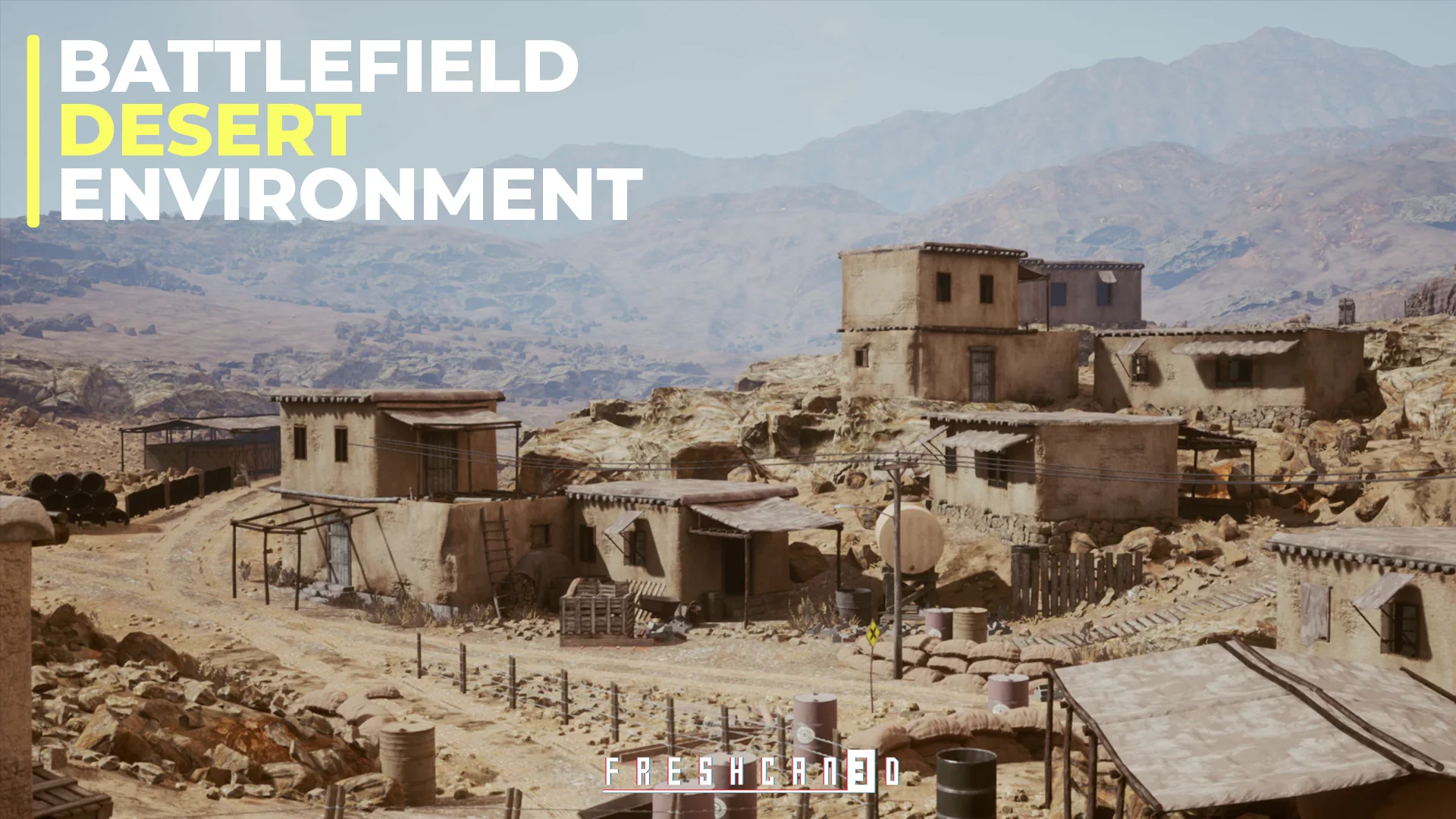
When a project needs a believable urban battlefield, a dense street scene, or a cinematic space with a clear regional identity, Military Battlefield Kit and Middle East Set Is aimed squarely at that job. The collection centers on a realistic Middle East environment and is positioned for AAA quality game levels as well as VR and cinematic scenes. That immediately places it in a part of production where environment art has to carry mood, spatial clarity, and a strong sense of place at the same time.
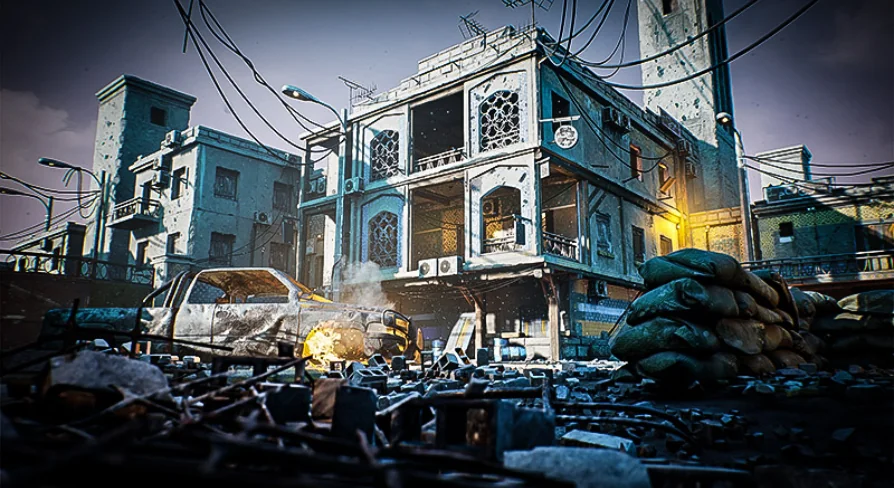
The set is not framed as a single hero location. It is a broader environment toolkit that brings together architecture modules, props, realistic materials, material instances for color variations, ornaments, and mud and dirt decal sets. That combination matters because it supports scene construction at more than one scale. Large structures can establish the silhouette of a district or compound, while smaller decorative and surface details help break repetition and push the scene toward a more lived-in, weathered, and conflict-shaped look.
Middle East streets, interiors, and battlefield spaces
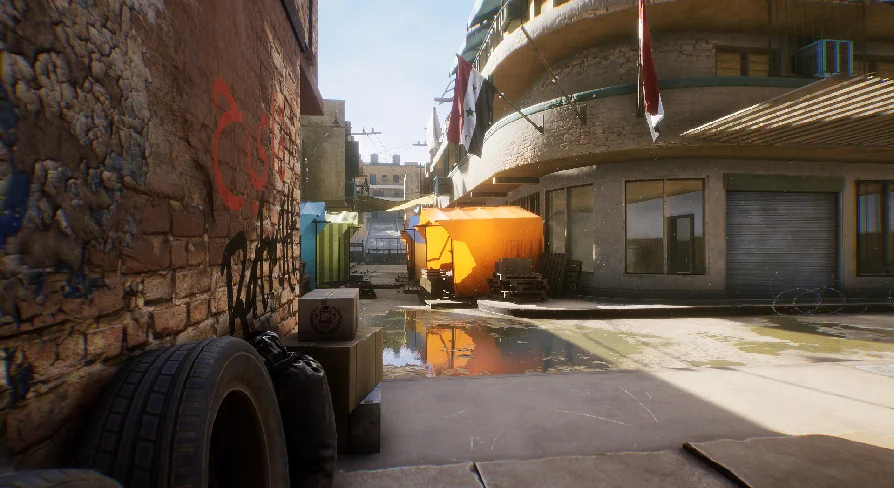
The strongest use for this set lies in projects that need realistic Middle East streets and cityscape spaces with a military or battlefield character. The tags point toward urban, street, cityscape, interior, military, and battlefield themes, so the environment can be approached from several angles without leaving its core identity. One team might focus on exterior streets lined with modular architecture, while another might build interior spaces that connect directly to urban combat routes or narrative set pieces.
There is also range inside the visual language. Tags such as Arabia, Persian, Afghanistan, and Middle suggest a specific regional atmosphere, while modern and historical open up different scene directions inside that framework. That does not turn the set into a catch-all world kit; instead, it suggests flexibility within a recognizable environment style. A scene can lean toward a present-day military setting, a more historic architectural mood, or a blend where modern battlefield dressing sits inside older urban forms.
Fantasy also appears among the tags, which is useful in a narrower way. The set’s realistic base does not lock it into documentary realism alone. The combination of modular structures, ornaments, and color-driven surface variation can support stylized or fictional settings that still retain a grounded Middle Eastern visual anchor. For creators working on story-driven scenes, that opens room for dramatic reinterpretation without severing the environment from its regional cues.
How the architecture modules shape level building
Architecture modules are one of the most practical parts of the package because they define how quickly a scene can expand from a single corner into a full route or district. In a game level, modular architecture helps establish streets, courtyards, connected facades, and layered pathways. In a VR scene, the same modular approach can support spaces that hold up under close viewing and repeated traversal. In cinematic work, modules make it easier to stage multiple camera angles inside a coherent architectural language.
This modular structure is especially useful for battlefield layouts. A military environment rarely depends on one pristine landmark. It usually works through connected sightlines, cover, narrow passages, open street segments, and transitions between exterior and interior spaces. Because the set includes architecture modules alongside props and decals, the environment can move beyond a clean blockout look and into something more resolved. The spatial framework comes first, then the visual evidence of use, age, and conflict can be layered in.
The tags also suggest both urban and organic qualities. In practice, that creates room for environments that are not overly rigid or uniform. A city street can feel denser and more natural when architectural repetition is interrupted by props, ornament, color shifts, and surface wear. For artists trying to avoid a synthetic or copied appearance, that mix of modular order and environmental variation is often what gives a level its credibility.
Props, ornaments, and color variations in Military Battlefield Kit and Middle East Set
Props and ornaments are where the environment gains its local texture. Architecture alone can define a location, but it is the smaller pieces that help a street read as inhabited, specific, and visually layered. The set includes props as a core part of the toolset, and those props can work across gameplay spaces, cinematic backgrounds, and environmental storytelling setups. They help turn a modular shell into a scene that feels assembled rather than merely repeated.
Ornaments push that further. In a Middle East environment, ornamental elements can contribute to pattern, cultural atmosphere, and architectural richness. They can also act as contrast points inside a military scene, where decorative identity and battlefield pressure exist in the same frame. That contrast is valuable in both games and cinematics because it adds visual tension: a place with character and history reads differently than a stripped-down generic combat zone.
The inclusion of material instances for color variations gives the set another practical dimension. Color variation is not just a cosmetic extra. It is one of the simplest ways to keep modular assets from flattening into obvious repetition. In a street sequence, slight color differences can separate buildings and make neighborhoods feel assembled over time. In an interior, those shifts can help establish room identity or support lighting choices. In a cinematic context, color variation can also shape the emotional tone of a shot without changing the underlying structure.
Because the materials are described as realistic, the set stays tied to a photoreal direction. That makes it a clear fit for artists chasing convincing surface response and a grounded environment style rather than an abstract or exaggerated one.
Mud and dirt decals for battlefield wear
The mud and dirt decal sets are a key part of what makes the environment useful for battlefield work rather than just urban dressing. Decals are often the layer that shifts a scene from newly assembled to visibly used. Mud, dirt, and similar surface buildup help connect structures and props to the ground plane, break up cleaner materials, and suggest regular traffic, environmental wear, or recent disruption.
In a military setting, that wear is not background noise. It is part of the narrative language of the space. A battlefield environment often needs surfaces that show pressure and movement, and mud and dirt are among the most direct ways to create that impression. On streets, decals can make routes feel traveled and unsettled. Around interiors, they can support transitions from outdoor urban areas into enclosed spaces. In cinematic scenes, they help catch light and shadow in ways that flatter realism.
These decals also reinforce the broader photoreal and PBR-oriented identity suggested by the tags. The goal is not ornamental cleanliness. It is a more believable environment where surfaces collect evidence of time, weather, and activity. For environment artists, that means the set supports both the big read of the location and the close read of the ground and walls.
AAA quality for game, VR, and cinematic work
The set is explicitly aimed at AAA quality game and VR or cinematic levels, and that target says a lot about how it can be approached creatively. In a game project, it can support readable combat spaces, modular urban routes, and interiors tied to a larger district. In VR, realism and environmental detail become more important because the viewer experiences the space at close range and from flexible angles. In cinematic work, the same assets can be arranged for controlled composition, mood, and regional authenticity.
That cross-use potential comes from the package being a toolkit rather than a narrow scene preset. Architecture modules handle structural assembly. Props and ornaments fill in the scene language. Realistic materials and color variations reduce sameness. Mud and dirt decals add use and wear. Each part serves a different production need, but together they support one consistent environment identity: a realistic Middle East setting with military, urban, and atmospheric flexibility.
Artists who need Middle East street scenes, battlefield city blocks, or interiors with a strong regional character will get the most from this set. It suits teams and solo creators who want one environment collection to cover structure, dressing, surface treatment, and color variation within a photoreal urban military theme.
 Cities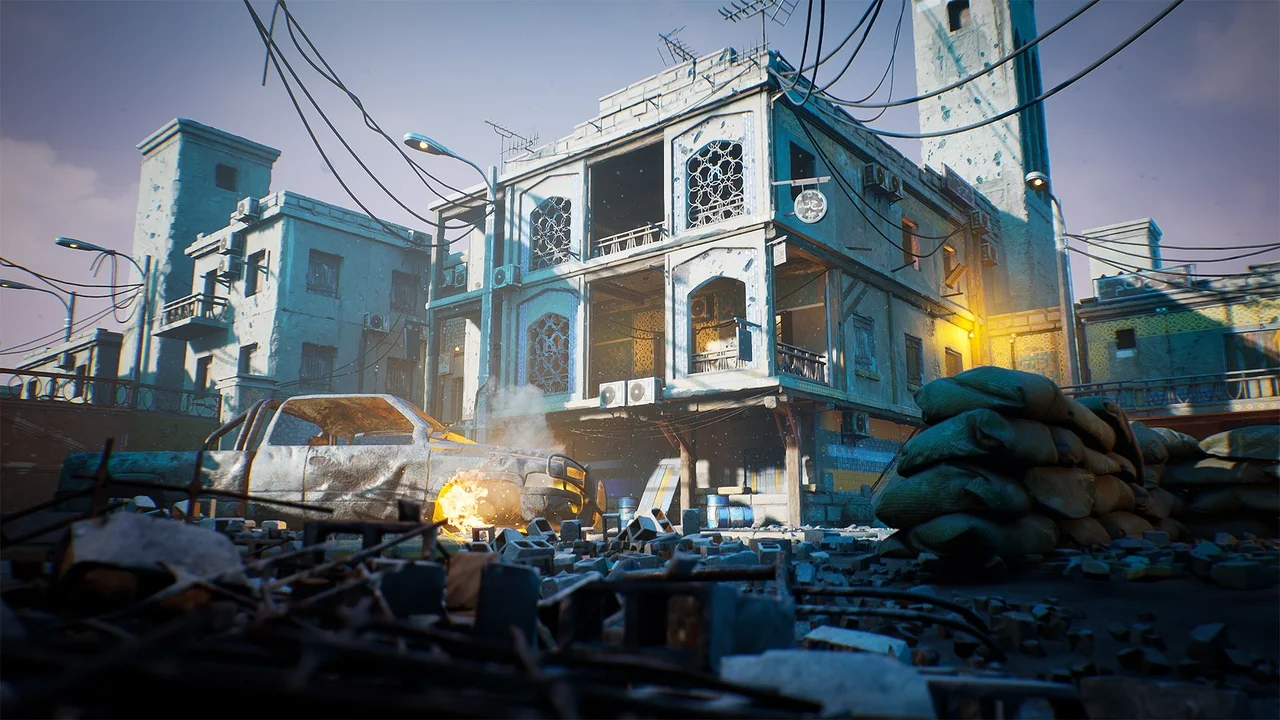
 Cities
 Military / Warzone
 Military / Warzone