"7b46a695175d8694"{"id":"1000380","slug":"middle-east","title":"Middle East","category":"Military / Warzone","engine":"4.26+,5.0+","assetVersion":"","engineVersion":"Engine Version: 4.26+,5.0+","tag":"Military / Warzone","accent":"blue","visual":"mech","summary":"A detailed look at building Middle Eastern urban environments using modular architecture, spline-based electricity grids, and grayscale-driven wall textures.","platform":"Unreal Engine","publishedAt":"2026-07-07T07:30:18.989Z","updatedAt":"2026-07-07T07:30:18.989Z","sourceNotes":[],"fileContents":[],"compatibility":["Unreal Engine","Engine Version: 4.26+,5.0+"],"featuredImage":{"alt":"Middle East","src":"/wp-content/uploads/published/2026/07/3bb3ed1db432-c1407341-268b-4d19-81d9-87d0bdb3985b-3d1f2c0696.webp"},"hasDownloadLink":true,"downloads":0,"terms":[{"taxonomy":"category","slug":"military-warzone","name":"Military / Warzone"}],"galleryImages":[{"src":"/wp-content/uploads/published/2026/07/37a4d94a0017-585ca01a-4cea-4992-93ed-bd971d526015-df00af8b9c.webp","alt":"Middle East"},{"src":"/wp-content/uploads/published/2026/07/4a81f5981854-cc1f7a08-cf82-4c6c-91b8-3028be431d42-2dc313ac49.webp","alt":"Middle East"},{"src":"/wp-content/uploads/published/2026/07/3fdb7c30c1fa-c4307355-d4b8-4080-94ad-ba6f636927bd-9b6a6be532.webp","alt":"Middle East"},{"src":"/wp-content/uploads/published/2026/07/b2203a448da4-0b7fdfae-a109-40da-a530-af5c37173918-026ea4bf92.webp","alt":"Middle East"},{"src":"/wp-content/uploads/published/2026/07/a78a3f0547fc-50f2b147-4d1d-4480-830d-4b8ffb809004-3bb9c7ac16.webp","alt":"Middle East"},{"src":"/wp-content/uploads/published/2026/07/c2f1d2dc45e3-7aedbdf3-7b08-415d-9f69-68f4d6948470-ae1432cfcd.webp","alt":"Middle East"},{"src":"/wp-content/uploads/published/2026/07/d295c096ef65-60e8d342-2c5b-4f73-b6ce-2b4266d8069e-bc612eef56.webp","alt":"Middle East"},{"src":"/wp-content/uploads/published/2026/07/d047cfc898d3-384e7f31-501f-4a9f-8ee0-347c214ba074-9033d7e9e5.webp","alt":"Middle East"},{"src":"/wp-content/uploads/published/2026/07/ccfb2e33837e-e5d3fd96-94e3-4028-9a57-9fc7bd0afd6c-ce8622327b.webp","alt":"Middle East"},{"src":"/wp-content/uploads/published/2026/07/149f91b7e905-8abfde38-2dcd-4567-9b13-7c35f8a760e7-70ecbf54c5.webp","alt":"Middle East"}],"accessPanel":{"kind":"resource","title":"Download this resource","eyebrow":"Free Download","message":"Log in or create a free account to start your download.","fileName":"MiddleEast.7z","safetyNote":"Resources are manually reviewed before listing to improve quality and reduce obvious risks.","actionLabel":"Download Free","resourceType":"Resource archive"},"contentHtml":"\u003ch2\u003eAssembling the Urban Architectural Foundation\u003c/h2\u003e\n\u003cp\u003eConstructing a regional cityscape begins with laying down the foundational infrastructure using the included roads and sidewalks. These base elements define the street-level flow of the district, creating pathways that guide players or cameras through the urban environment. Once the street grid is established, developers can build up the surrounding area using the pack's modular houses. These architectural pieces are specifically designed to reflect the structural styles found throughout the Middle East, ensuring the exterior silhouettes and building proportions match the targeted region.\u003c/p\u003e\n\u003cp\u003eThe modular houses also include interior design elements, allowing the environment to extend beyond mere exterior facades. These interiors are structural, meaning they do not come pre-populated with household items or furniture. Leaving the interiors empty of personal props provides level designers with a blank canvas. An empty building shell can easily be adapted into an abandoned hideout, a looted structure in a conflict zone, or a modern dwelling awaiting custom furnishing. This flexibility ensures the core architecture can serve multiple narrative purposes within the same cityscape.\u003c/p\u003e\n\u003cp\u003eTo populate the exterior streets and sidewalks, the environment relies on a vast variety of included props. These objects help break up the flat surfaces of the roads and add necessary ground-level clutter to ground the modular buildings in a lived-in setting. Proper placement of these props transforms a basic grid of modular houses into a believable urban district.\u003c/p\u003e\n\u003ch2\u003eDriving Wall Texture Variety Through Grayscale Painting\u003c/h2\u003e\n\u003cp\u003eA central technical workflow in this environment relies on a specific approach to material application. Out of the box, all of the modular houses utilize intentionally bland materials. This is not a limitation, but rather a foundational setup for a custom texturing technique designed to break up visual repetition across large cityscapes.\u003c/p\u003e\n\u003cp\u003eTo generate distinct visual identities for identical modular pieces, developers must paint the tops of the structures using a gradation of gray colors. This grayscale painting process directly influences the walls of the houses, allowing a variety of textures to emerge based on the painted values. By shifting the gradation of gray on the tops of the buildings, artists can alter the appearance of the walls below. This method ensures that an entire street built from the exact same modular mesh will not look completely uniform, as the varied gray inputs will yield different surface results across the architecture.\u003c/p\u003e\n\u003ch2\u003eRouting Intricate Electricity Grids with Splines\u003c/h2\u003e\n\u003cp\u003eOverhead detailing plays a major role in defining the atmosphere of densely packed urban environments, particularly in regions characterized by rapid growth or aging infrastructure. To facilitate this, the wiring in the environment relies on spline construction. Instead of placing static wire meshes that may not align perfectly with custom street layouts, developers can dynamically route wires from point to point.\u003c/p\u003e\n\u003cp\u003eThis spline-based system enables the rapid creation of intricate electricity grids. Level designers can drag spline points between modular houses, across streets, and over alleyways to form the tangled, complex webs of power lines often seen in older districts or slums. Because the wires follow a spline path, they easily adapt to changes in elevation, varying building heights, and the specific distances between structures, making it possible to string up a highly detailed power grid in virtually no time.\u003c/p\u003e\n\u003ch2\u003eSurface Detailing with Semantic-Free Decals\u003c/h2\u003e\n\u003cp\u003eAdding localized character to the environment involves applying text elements to the exterior and interior walls. However, using real-world languages in environmental assets can often lead to unintended cultural associations, translation errors, or inappropriate semantic meaning for the project's specific narrative.\u003c/p\u003e\n\u003cp\u003eTo bypass this issue, all text elements and decals included for surface detailing carry no semantic meaning. They consist entirely of autonomous random phrases and clusters of letters that mimic the visual rhythm and aesthetic of regional signage or graffiti without actually spelling out legible words. This allows developers to heavily detail their abandoned villages, ghettos, or modern streets with posters and painted text while ensuring the environment remains entirely neutral and devoid of specific real-world messaging.\u003c/p\u003e\n\u003ch2\u003eShaping Thematic Districts and Conflict Zones\u003c/h2\u003e\n\u003cp\u003eThe combination of modular architecture, spline grids, and semantic-free decals supports a wide range of thematic locations. The architectural style caters directly to environments inspired by Syria or Afghanistan, leaning into the distinct look of Middle Eastern cityscapes. Because the assets range from clean structural forms to elements suitable for heavy detailing, the tone of the level can shift dramatically based on how the pieces are arranged and textured.\u003c/p\u003e\n\u003cp\u003eDevelopers can construct modern, intact urban centers or pivot toward poverty-stricken slums and ghettos by increasing the density of the spline wires and utilizing the grayscale painting to create weathered, varied wall textures. The inclusion of sand and desert elements allows these districts to be placed in arid climates, while the structural interiors and empty houses provide the perfect framework for a war-torn conflict zone or an abandoned village. Whether building a busy road for an in-game concert event or a quiet, deserted street, the regional specificity of the assets maintains the visual identity.\u003c/p\u003e\n\u003ch2\u003eUtilizing the Sample Environment for Layout Reference\u003c/h2\u003e\n\u003cp\u003eFor developers looking to understand exactly how the modular houses, spline wires, and grayscale material techniques interact, a complete sample environment is included. This pre-built location demonstrates the intended use of the assets, showcasing how the roads and sidewalks connect with the exterior buildings to form a cohesive district.\u003c/p\u003e\n\u003cp\u003eThe sample environment serves as a practical reference point for technical implementation. By examining how the tops of the houses in the sample scene are painted to generate wall texture variety, or observing how the intricate electricity grids are routed using splines, artists can replicate these techniques when creating their own custom locations. The sample location provides a clear target for the visual fidelity that can be achieved when all the individual props, decals, and architectural systems are fully combined.\u003c/p\u003e\n\n\u003ch2\u003eContinue Browsing Similar Packs\u003c/h2\u003e\n\u003cul\u003e\n\u003cli\u003e\u003ca href=\"https://3dcghub.com/military-battlefield-kit-and-middle-east-set/\" title=\"Military Battlefield Kit and Middle East Set\"\u003eMilitary Battlefield Kit and Middle East Set\u003c/a\u003e\u003c/li\u003e\n\u003cli\u003e\u003ca href=\"https://3dcghub.com/battlefield-kit-desert-environment-military-warzone-village/\" title=\"Battlefield Kit - Desert Environment (Military, Warzone Village)\"\u003eBattlefield Kit - Desert Environment (Military, Warzone Village)\u003c/a\u003e\u003c/li\u003e\n\u003cli\u003e\u003ca href=\"https://3dcghub.com/military-airport-military-base-military-props-military/\" title=\"Military Airport (Military Base, Military Props, Military )\"\u003eMilitary Airport (Military Base, Military Props, Military )\u003c/a\u003e\u003c/li\u003e\n\u003cli\u003e\u003ca href=\"https://3dcghub.com/great-war-trenches/\" title=\"Great War Trenches\"\u003eGreat War Trenches\u003c/a\u003e\u003c/li\u003e\n\u003cli\u003e\u003ca href=\"https://3dcghub.com/ww2-warzone-environment-megapack-w-destructedbuildings-props-warzone-ww2/\" title=\"WW2 Warzone Environment Megapack ( w DestructedBuildings / Props, Warzone WW2 )\"\u003eWW2 Warzone Environment Megapack ( w DestructedBuildings / Props, Warzone WW2 )\u003c/a\u003e\u003c/li\u003e\n\u003c/ul\u003e","contentTextLength":6841,"navigation":{"current":1240,"total":3481,"previous":{"id":"1000381","slug":"military-base-megapack-military-base-base-megapack-military-war-3d-army-war","title":"Military Base Megapack ( Military Base Base Megapack Military War 3d Army War )","category":"Military / Warzone","platform":"Unreal Engine","updatedAt":"2026-07-07T08:01:01.724Z"},"next":{"id":"1000379","slug":"metro-15-environment-pack","title":"Metro 15 - Environment Pack","category":"Horror","platform":"Unreal Engine","updatedAt":"2026-07-07T06:49:53.161Z"}},"relatedResources":[{"id":"1000160","slug":"military-battlefield-kit-and-middle-east-set","title":"Military Battlefield Kit and Middle East Set","category":"Cities","engine":"4.26+,5.0+","assetVersion":"","engineVersion":"Engine Version: 4.26+,5.0+","tag":"Cities","accent":"blue","visual":"mech","summary":"A realistic Middle East environment set with architecture modules, props, materials, color variations, ornaments, and mud and dirt decals for game, VR, and cine","platform":"Unreal Engine","publishedAt":"2026-06-18T22:43:35.139Z","updatedAt":"2026-06-18T22:43:35.139Z","sourceNotes":[],"fileContents":[],"compatibility":["Unreal Engine","Engine Version: 4.26+,5.0+"],"featuredImage":{"alt":"Military Battlefield Kit and Middle East Set","src":"/wp-content/uploads/published/2026/06/d86f66f05553-01a6867c-41b2-4acc-ad81-4d155333e735-7e75759466.webp"},"hasDownloadLink":true,"downloads":0},{"id":"1001492","slug":"kitbash3d-warfare","title":"KitBash3D Warfare","category":"Military / Warzone","engine":"4.26+,5.0+","assetVersion":"","engineVersion":"Engine Version: 4.26+,5.0+","tag":"Military / Warzone","accent":"blue","visual":"mech","summary":"Construct detailed modern war zones with 314 tactical models, 105 PBR materials, heavy artillery, and fortified command structures.","platform":"Unreal Engine","publishedAt":"2026-10-08T12:49:54.024Z","updatedAt":"2026-10-08T12:49:54.024Z","sourceNotes":[],"fileContents":[],"compatibility":["Unreal Engine","Engine Version: 4.26+,5.0+"],"featuredImage":{"alt":"KitBash3D Warfare","src":"/wp-content/uploads/published/2026/10/68b1a2ff41b9-war-web-set-gallery-01-9482a9074f.webp"},"hasDownloadLink":true,"downloads":0},{"id":"9270","slug":"battlefield-kit-desert-environment-military-warzone-village","title":"Battlefield Kit - Desert Environment (Military, Warzone Village)","category":"Military / Warzone","engine":"4.26+,5.0+","assetVersion":"Engine version: 4.26+,5.0+","engineVersion":"4.22","tag":"Military / Warzone","accent":"blue","visual":"city","summary":"Create immersive desert warzones with the Battlefield Kit. This pack features modular mud-brick huts, landscape auto-materials, and a blend of military and domestic props.","platform":"Unreal Engine","publishedAt":"2026-03-01T16:19:14.000Z","updatedAt":"2026-04-19T15:51:16.000Z","sourceNotes":[],"fileContents":[],"compatibility":["Unreal Engine","Engine version: 4.26+,5.0+"],"featuredImage":{"alt":"Battlefield Kit - Desert Environment (Military, Warzone Village)","src":"https://3dcghub.com/wp-content/uploads/2026/03/f5746b9c-705c-4cc3-b07a-0855e2c6794f.webp"},"hasDownloadLink":true,"downloads":0}]}
Military / Warzone
Middle East
A detailed look at building Middle Eastern urban environments using modular architecture, spline-based electricity grids, and grayscale-driven wall textures.
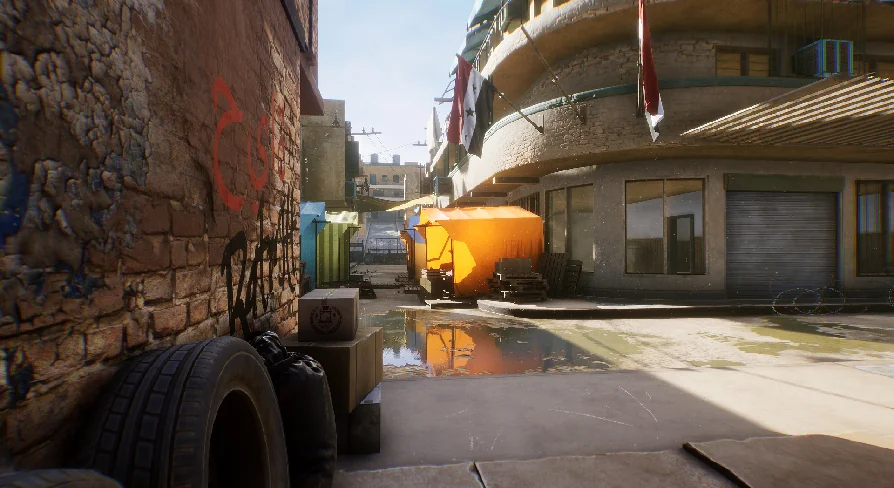
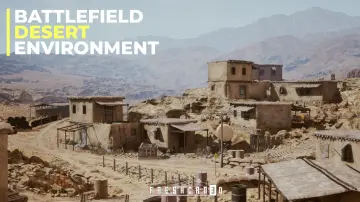
Constructing a regional cityscape begins with laying down the foundational infrastructure using the included roads and sidewalks. These base elements define the street-level flow of the district, creating pathways that guide players or cameras through the urban environment. Once the street grid is established, developers can build up the surrounding area using the pack's modular houses. These architectural pieces are specifically designed to reflect the structural styles found throughout the Middle East, ensuring the exterior silhouettes and building proportions match the targeted region.
The modular houses also include interior design elements, allowing the environment to extend beyond mere exterior facades. These interiors are structural, meaning they do not come pre-populated with household items or furniture. Leaving the interiors empty of personal props provides level designers with a blank canvas. An empty building shell can easily be adapted into an abandoned hideout, a looted structure in a conflict zone, or a modern dwelling awaiting custom furnishing. This flexibility ensures the core architecture can serve multiple narrative purposes within the same cityscape.
To populate the exterior streets and sidewalks, the environment relies on a vast variety of included props. These objects help break up the flat surfaces of the roads and add necessary ground-level clutter to ground the modular buildings in a lived-in setting. Proper placement of these props transforms a basic grid of modular houses into a believable urban district.
Driving Wall Texture Variety Through Grayscale Painting
A central technical workflow in this environment relies on a specific approach to material application. Out of the box, all of the modular houses utilize intentionally bland materials. This is not a limitation, but rather a foundational setup for a custom texturing technique designed to break up visual repetition across large cityscapes.
To generate distinct visual identities for identical modular pieces, developers must paint the tops of the structures using a gradation of gray colors. This grayscale painting process directly influences the walls of the houses, allowing a variety of textures to emerge based on the painted values. By shifting the gradation of gray on the tops of the buildings, artists can alter the appearance of the walls below. This method ensures that an entire street built from the exact same modular mesh will not look completely uniform, as the varied gray inputs will yield different surface results across the architecture.
Routing Intricate Electricity Grids with Splines
Overhead detailing plays a major role in defining the atmosphere of densely packed urban environments, particularly in regions characterized by rapid growth or aging infrastructure. To facilitate this, the wiring in the environment relies on spline construction. Instead of placing static wire meshes that may not align perfectly with custom street layouts, developers can dynamically route wires from point to point.
This spline-based system enables the rapid creation of intricate electricity grids. Level designers can drag spline points between modular houses, across streets, and over alleyways to form the tangled, complex webs of power lines often seen in older districts or slums. Because the wires follow a spline path, they easily adapt to changes in elevation, varying building heights, and the specific distances between structures, making it possible to string up a highly detailed power grid in virtually no time.
Surface Detailing with Semantic-Free Decals
Adding localized character to the environment involves applying text elements to the exterior and interior walls. However, using real-world languages in environmental assets can often lead to unintended cultural associations, translation errors, or inappropriate semantic meaning for the project's specific narrative.
To bypass this issue, all text elements and decals included for surface detailing carry no semantic meaning. They consist entirely of autonomous random phrases and clusters of letters that mimic the visual rhythm and aesthetic of regional signage or graffiti without actually spelling out legible words. This allows developers to heavily detail their abandoned villages, ghettos, or modern streets with posters and painted text while ensuring the environment remains entirely neutral and devoid of specific real-world messaging.
Shaping Thematic Districts and Conflict Zones
The combination of modular architecture, spline grids, and semantic-free decals supports a wide range of thematic locations. The architectural style caters directly to environments inspired by Syria or Afghanistan, leaning into the distinct look of Middle Eastern cityscapes. Because the assets range from clean structural forms to elements suitable for heavy detailing, the tone of the level can shift dramatically based on how the pieces are arranged and textured.
Developers can construct modern, intact urban centers or pivot toward poverty-stricken slums and ghettos by increasing the density of the spline wires and utilizing the grayscale painting to create weathered, varied wall textures. The inclusion of sand and desert elements allows these districts to be placed in arid climates, while the structural interiors and empty houses provide the perfect framework for a war-torn conflict zone or an abandoned village. Whether building a busy road for an in-game concert event or a quiet, deserted street, the regional specificity of the assets maintains the visual identity.
Utilizing the Sample Environment for Layout Reference
For developers looking to understand exactly how the modular houses, spline wires, and grayscale material techniques interact, a complete sample environment is included. This pre-built location demonstrates the intended use of the assets, showcasing how the roads and sidewalks connect with the exterior buildings to form a cohesive district.
The sample environment serves as a practical reference point for technical implementation. By examining how the tops of the houses in the sample scene are painted to generate wall texture variety, or observing how the intricate electricity grids are routed using splines, artists can replicate these techniques when creating their own custom locations. The sample location provides a clear target for the visual fidelity that can be achieved when all the individual props, decals, and architectural systems are fully combined.
 Military / Warzone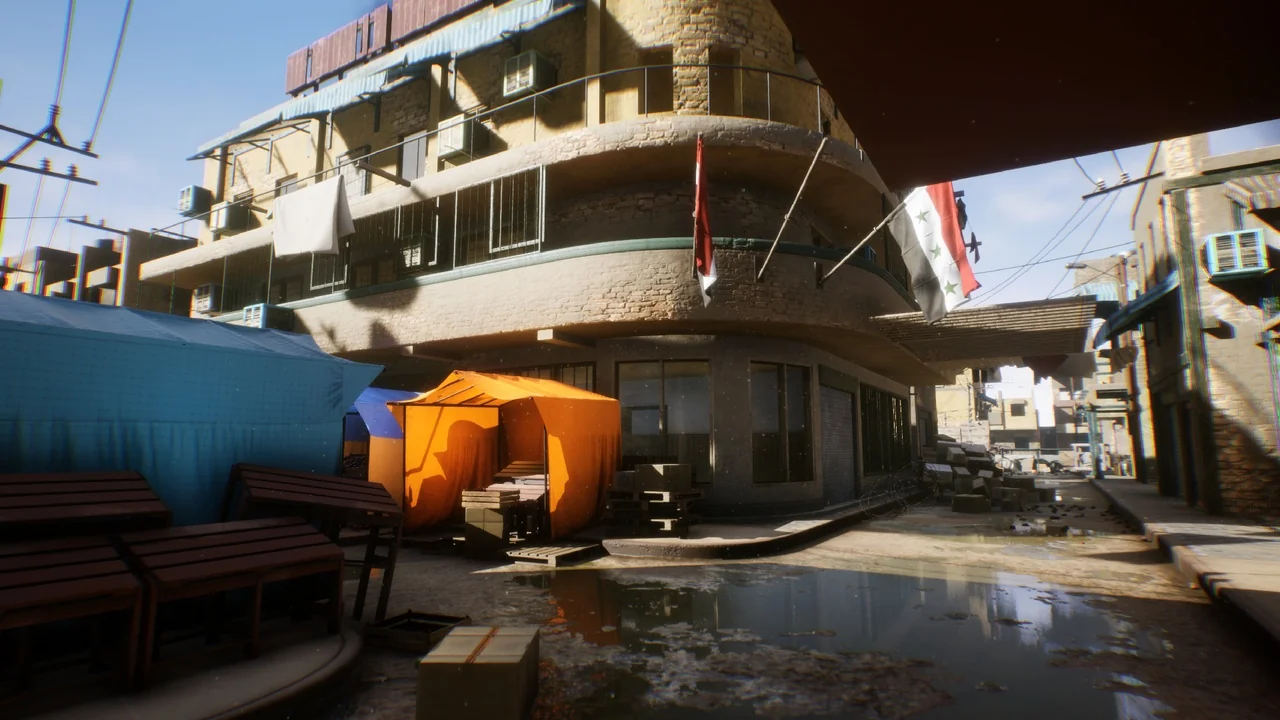
 Cities
 Military / Warzone
 Military / Warzone