"6ac84fdb0bd06614"{"id":"1000180","slug":"ww2-warzone-environment-megapack-w-destructedbuildings-props-warzone-ww2","title":"WW2 Warzone Environment Megapack ( w DestructedBuildings / Props, Warzone WW2 )","category":"Military / Warzone","engine":"5.1+","assetVersion":"","engineVersion":"Engine Version: 5.1+","tag":"Military / Warzone","accent":"blue","visual":"city","summary":"A large Unreal Engine WW2 environment pack with 800+ Nanite meshes, destroyed building variants, vehicles, VFX, decals, ULAT, and a showcase map.","platform":"Unreal Engine","publishedAt":"2026-06-20T09:17:09.390Z","updatedAt":"2026-06-20T09:17:09.390Z","sourceNotes":[],"fileContents":[],"compatibility":["Unreal Engine","Engine Version: 5.1+"],"featuredImage":{"alt":"WW2 Warzone Environment Megapack ( w DestructedBuildings / Props, Warzone WW2 )","src":"/wp-content/uploads/published/2026/06/4ac4b02f1dd0-cd09fcd6-1975-40be-838c-69fa674454e3-26af197a18.webp"},"hasDownloadLink":true,"downloads":1,"terms":[{"taxonomy":"category","slug":"military-warzone","name":"Military / Warzone"}],"galleryImages":[{"src":"/wp-content/uploads/published/2026/06/845859cbf393-a81e2131-5be7-472d-b664-23015a6691f7-816b295eee.webp","alt":"WW2 Warzone Environment Megapack ( w DestructedBuildings / Props, Warzone WW2 )"},{"src":"/wp-content/uploads/published/2026/06/7129e92af4f4-55c80c4f-6e4f-4852-b43f-f91f5ea995ea-864cdd7b53.webp","alt":"WW2 Warzone Environment Megapack ( w DestructedBuildings / Props, Warzone WW2 )"},{"src":"/wp-content/uploads/published/2026/06/2c6a5f775eb9-c2b041e4-3864-417c-95b0-ede61ef754d7-0e7da3a33b.webp","alt":"WW2 Warzone Environment Megapack ( w DestructedBuildings / Props, Warzone WW2 )"},{"src":"/wp-content/uploads/published/2026/06/c2e0114ecd82-5eaa01e5-bd66-4238-8ae2-23046aba47d9-b924082788.webp","alt":"WW2 Warzone Environment Megapack ( w DestructedBuildings / Props, Warzone WW2 )"},{"src":"/wp-content/uploads/published/2026/06/551fc599ca72-a77884d6-db3f-4f61-8031-8d85a141a975-66b418b309.webp","alt":"WW2 Warzone Environment Megapack ( w DestructedBuildings / Props, Warzone WW2 )"},{"src":"/wp-content/uploads/published/2026/06/a84bc778febf-d9c7f624-b4e8-4ecc-a0a7-16c7985b176b-6d1769dece.webp","alt":"WW2 Warzone Environment Megapack ( w DestructedBuildings / Props, Warzone WW2 )"},{"src":"/wp-content/uploads/published/2026/06/6b2f29caca39-0c4b0f46-09be-4eae-a700-9a679e1ee08c-e529a10c28.webp","alt":"WW2 Warzone Environment Megapack ( w DestructedBuildings / Props, Warzone WW2 )"},{"src":"/wp-content/uploads/published/2026/06/d8bd5581bc3f-53df0de3-dd7f-44c7-8b36-84947550c26c-ed26ff389d.webp","alt":"WW2 Warzone Environment Megapack ( w DestructedBuildings / Props, Warzone WW2 )"},{"src":"/wp-content/uploads/published/2026/06/1125927cdc6d-314870db-d673-450f-b732-b660c1b4d253-a778e334d1.webp","alt":"WW2 Warzone Environment Megapack ( w DestructedBuildings / Props, Warzone WW2 )"},{"src":"/wp-content/uploads/published/2026/06/2516910fd1f7-3877802d-050e-43be-b005-3059b3e5eeb8-6a2cd46922.webp","alt":"WW2 Warzone Environment Megapack ( w DestructedBuildings / Props, Warzone WW2 )"}],"accessPanel":{"kind":"resource","title":"Download this resource","eyebrow":"Free Download","message":"Log in or create a free account to start your download.","fileName":"WW2 Warzone Environment Megapack.7z","safetyNote":"Resources are manually reviewed before listing to improve quality and reduce obvious risks.","actionLabel":"Download Free","resourceType":"Resource archive"},"contentHtml":"\u003cp\u003eThe scene begins in the aftermath rather than the attack itself: a village one week after a devastating mortar strike, with the bombing finally quieting down, houses left unusable, walls collapsed, and plaster torn apart. That framing gives this environment a clear visual identity. It is not just a collection of military props or generic ruined architecture. It leans into the haunted stillness of a battle-scarred place, where rubble, smoke, broken surfaces, and damaged structures carry as much weight as any active combat setup.\u003c/p\u003e\n\u003cp\u003eThat tone makes the pack useful for more than one style of Unreal Engine work. A game level can treat it as a frontline or recently abandoned warzone. A cinematic can push the human aftermath through environmental storytelling. A virtual production scene can use the same ruins, damaged streets, and destroyed structures to establish historical devastation quickly. The emotional cue in the pack’s setup is specific: destruction is everywhere, but the setting is still readable as a lived-in place rather than an abstract ruin field.\u003c/p\u003e\n\u003ch2\u003eWW2 Warzone aftermath with room for gameplay and cinematic framing\u003c/h2\u003e\n\u003cp\u003eThe pack is aimed at WW2-themed projects and focuses on bringing battle-scarred landscapes into Unreal Engine. It supports game work, virtual production, cinematics, and other Unreal Engine-based projects. That range matters because the environment is not described only in terms of visual mood. It is also positioned as a practical scene-population resource for teams that need high-quality visuals and assets optimized for game-ready projects.\u003c/p\u003e\n\u003cp\u003eIts strongest use case is the kind of level where destruction needs to appear layered rather than repeated. Collapsed residential spaces, broken roadsides, damaged vehicles, smoke effects, and wartime debris can all contribute to a setting that feels inhabited before it was ruined. The included showcase map reinforces that direction. It is realistic and immersive, adding depth and atmosphere to scenes, which suggests a ready-made reference for how the assets can be arranged into a convincing WW2 environment.\u003c/p\u003e\n\u003cp\u003eBecause the environment is framed around a bombed village and broader warzone imagery, artists can pull it toward several kinds of scenes without leaving its stated theme: abandoned streets, shelled neighborhoods, military staging zones, ruined urban edges, or post-attack traversal spaces. The pack’s identity stays rooted in destruction and atmosphere rather than clean reconstruction.\u003c/p\u003e\n\u003ch2\u003e800+ Unique Nanite Meshes and damaged asset variations\u003c/h2\u003e\n\u003cp\u003eScale is one of the headline traits here. The collection includes more than 800 unique Nanite meshes, covering all showcased assets. The pack is described as high quality, with a good level of detail and optimization for game-ready work. That combination makes it useful for teams that need broad environment coverage without giving up on visual density.\u003c/p\u003e\n\u003cp\u003eThe damage system is one of the more practical details. Each asset includes variation states: smoked Nanite and smoked standard LP, or broken Nanite and broken standard LP. Instead of relying on a single intact mesh with a few decals layered on top, the pack gives artists alternate conditions that can change the age, intensity, or spread of destruction across a scene. That is especially valuable when building a warzone that should feel uneven. Some streets can look freshly shelled and smoky, while others can read as structurally broken and long abandoned.\u003c/p\u003e\n\u003cp\u003eEach asset also comes with Nanite, Standard, and LP manually crafted LODs. For production work, that means the pack is not presented only as a high-detail art set. It also acknowledges different rendering and performance needs inside a project pipeline. If a team is building a close-up hero shot, a large navigable level, or a scene that mixes cinematic framing with interactive traversal, those asset states and LOD options make the pack easier to distribute across different parts of the same project.\u003c/p\u003e\n\u003ch3\u003eDestroyed modular buildings, broken vehicles, hero assets, and statues\u003c/h3\u003e\n\u003cp\u003eThe asset range extends beyond rubble pieces. Modular buildings with destroyed variations are part of the core offering, along with vehicles that have broken variations. Hero assets and statues are included as well. That mix helps the environment move beyond repetitive wall fragments and generic debris piles. Modular damaged architecture gives level artists the ability to form streets, courtyards, or partial facades. Broken vehicles introduce recognizable wartime silhouettes and can anchor compositions. Hero assets and statues help create focal points inside otherwise chaotic destruction.\u003c/p\u003e\n\u003cp\u003eFor gameplay spaces, this structure gives room for cover routes, sightline interruptions, and navigational landmarks. For cinematic blocking, it creates contrast between background destruction and selective points of detail. For virtual production, it offers large-scale set dressing plus a few stronger visual anchors that can keep a frame from flattening into uniform rubble.\u003c/p\u003e\n\u003ch2\u003eSFX, VFX, decals, and the showcase map in scene building\u003c/h2\u003e\n\u003cp\u003eThe pack does not stop at static meshes. It includes SFX, VFX, and decal sets, which is important for the kind of environment it is trying to create. A WW2 warzone rarely reads convincingly through geometry alone. Smoke residue, surface marking, damage overlays, and atmospheric effects are part of what sell the aftermath of shelling and bombardment. Decals can push cracked plaster, scorch marks, and worn surfaces further. VFX can reinforce the idea that the environment is still settling after violence rather than frozen in a clean static state.\u003c/p\u003e\n\u003cp\u003eThe included example map gives users a working scene that shows how these parts can come together. In practice, that can help artists study density, spacing, and atmosphere inside the pack’s own visual language. It also lowers the friction of getting a large warzone scene assembled, because the map already demonstrates a finished arrangement instead of leaving every scene-building decision to start from zero.\u003c/p\u003e\n\u003cp\u003eThere are also showcase, walkthrough, and demonstration videos associated with the environment, alongside a WW2 real-footage-like presentation. Even without relying on those materials directly, their existence points to a pack that is being presented as a full environment experience rather than a loose folder of unrelated props.\u003c/p\u003e\n\u003ch2\u003eUltimate Level Art Tool and fast custom modular buildings\u003c/h2\u003e\n\u003cp\u003eAn important workflow detail is the inclusion of ULAT, the Ultimate Level Art Tool. It is presented as part of the product and is also described as compatible with this environment pack. ULAT allows fast creation of custom modular buildings and offers a seamless way to populate scenes naturally.\u003c/p\u003e\n\u003cp\u003eThat matters most for teams that do not want to stop at the provided layouts or showcased arrangements. A WW2 environment often needs variation at street level: partial shell damage, different building footprints, uneven rows of structures, and interrupted facades. A tool focused on rapid modular building creation fits that need directly. Instead of treating the pack only as a set of finished set pieces, users can extend its architectural language and assemble new ruined layouts that still stay visually aligned with the rest of the collection.\u003c/p\u003e\n\u003cp\u003eBecause modular buildings are already part of the pack, ULAT expands the practical side of that modularity. It supports faster iteration for level artists who want to block out new war-torn spaces, adjust silhouette density, or reshape street composition without leaving the same environment ecosystem.\u003c/p\u003e\n\u003ch2\u003eLumen lighting, Unreal Engine use, and the WW2 Warzone roadmap\u003c/h2\u003e\n\u003cp\u003eThe environment uses real-time Lumen lighting. A clear note accompanies that choice: if Lumen causes FPS loss, it can be disabled. That is a useful production detail because it acknowledges the visual ambition of the pack while also signaling a straightforward performance adjustment path when needed.\u003c/p\u003e\n\u003cp\u003eThe environment is intended for use in games, virtual production, cinematics, and other work made with Unreal Engine. It was also noted as being ready for the UEFN FAB Alpha Store by 22 November 2023. For teams already working inside Unreal-based pipelines, that keeps the pack grounded in a familiar ecosystem rather than presenting it as a broad multi-engine resource.\u003c/p\u003e\n\u003cp\u003eThe project was created over roughly five months by the team, and it is positioned as an expanding environment. Its roadmap ties future additions to community review milestones, with named update targets that include a Light Update, Tank Update, Shelter Update, Tank Factory Exterior, and City Expansion. Those planned additions fit the current direction of the pack: broadening the warzone from ruined village atmosphere toward larger military and urban surroundings.\u003c/p\u003e\n\u003cp\u003eFor teams evaluating fit, the strongest takeaway is simple. This is a large Unreal Engine WW2 environment driven by destruction, aftermath, and modular scene building, backed by 800+ unique Nanite meshes, damaged asset variants, SFX, VFX, decals, a showcase map, and ULAT for building out custom ruined spaces more quickly.\u003c/p\u003e\n\n\u003ch2\u003eExplore Similar Assets\u003c/h2\u003e\n\u003cul\u003e\n\u003cli\u003e\u003ca href=\"https://3dcghub.com/battlefield-kit-desert-environment-military-warzone-village/\" title=\"Battlefield Kit - Desert Environment (Military, Warzone Village)\"\u003eBattlefield Kit - Desert Environment (Military, Warzone Village)\u003c/a\u003e\u003c/li\u003e\n\u003cli\u003e\u003ca href=\"https://3dcghub.com/military-airport-military-base-military-props-military/\" title=\"Military Airport (Military Base, Military Props, Military )\"\u003eMilitary Airport (Military Base, Military Props, Military )\u003c/a\u003e\u003c/li\u003e\n\u003cli\u003e\u003ca href=\"https://3dcghub.com/stylized-military-base/\" title=\"Stylized Military Base\"\u003eStylized Military Base\u003c/a\u003e\u003c/li\u003e\n\u003cli\u003e\u003ca href=\"https://3dcghub.com/the-bunker-package/\" title=\"The Bunker Package\"\u003eThe Bunker Package\u003c/a\u003e\u003c/li\u003e\n\u003cli\u003e\u003ca href=\"https://3dcghub.com/great-war-trenches/\" title=\"Great War Trenches\"\u003eGreat War Trenches\u003c/a\u003e\u003c/li\u003e\n\u003c/ul\u003e","contentTextLength":9302,"navigation":{"current":1102,"total":3181,"previous":{"id":"1000181","slug":"unreal-engine-5-blender-environment-design-for-beginners","title":"Unreal Engine 5 + Blender Environment Design For Beginners","category":"Unreal Engine","platform":"Unreal Engine","updatedAt":"2026-06-21T04:53:10.052Z"},"next":{"id":"1000179","slug":"whooshes-and-impacts-2","title":"Whooshes \u0026 Impacts 2","category":"Sound Effects","platform":"Unreal Engine","updatedAt":"2026-06-20T08:06:38.294Z"}},"relatedResources":[{"id":"1000381","slug":"military-base-megapack-military-base-base-megapack-military-war-3d-army-war","title":"Military Base Megapack ( Military Base Base Megapack Military War 3d Army War )","category":"Military / Warzone","engine":"4.26+,5.0+","assetVersion":"","engineVersion":"Engine Version: 4.26+,5.0+","tag":"Military / Warzone","accent":"blue","visual":"mech","summary":"A comprehensive modular 3D environment pack for creating optimized desert military bases, featuring driveable vehicles and the Ultimate Level Art Tool.","platform":"Unreal Engine","publishedAt":"2026-07-07T08:01:01.724Z","updatedAt":"2026-07-07T08:01:01.724Z","sourceNotes":[],"fileContents":[],"compatibility":["Unreal Engine","Engine Version: 4.26+,5.0+"],"featuredImage":{"alt":"Military Base Megapack ( Military Base Base Megapack Military War 3d Army War )","src":"/wp-content/uploads/published/2026/07/f29130297ad9-74007c54-5200-4893-adf1-1d92ff29c2c4-953d478a5a.webp"},"hasDownloadLink":true,"downloads":0},{"id":"9270","slug":"battlefield-kit-desert-environment-military-warzone-village","title":"Battlefield Kit - Desert Environment (Military, Warzone Village)","category":"Military / Warzone","engine":"4.26+,5.0+","assetVersion":"Engine version: 4.26+,5.0+","engineVersion":"4.22","tag":"Military / Warzone","accent":"blue","visual":"city","summary":"Create immersive desert warzones with the Battlefield Kit. This pack features modular mud-brick huts, landscape auto-materials, and a blend of military and domestic props.","platform":"Unreal Engine","publishedAt":"2026-03-01T16:19:14.000Z","updatedAt":"2026-04-19T15:51:16.000Z","sourceNotes":[],"fileContents":[],"compatibility":["Unreal Engine","Engine version: 4.26+,5.0+"],"featuredImage":{"alt":"Battlefield Kit - Desert Environment (Military, Warzone Village)","src":"https://3dcghub.com/wp-content/uploads/2026/03/f5746b9c-705c-4cc3-b07a-0855e2c6794f.webp"},"hasDownloadLink":true,"downloads":0},{"id":"9296","slug":"military-airport-military-base-military-props-military","title":"Military Airport (Military Base, Military Props, Military )","category":"Military / Warzone","engine":"4.26+,5.0+","assetVersion":"Engine version: 4.26+,5.0+","engineVersion":"4.26","tag":"Military / Warzone","accent":"blue","visual":"city","summary":"Create immersive military environments with the Military Airport pack. This collection includes high-quality assets, tileable materials, and pre-built assemblies for games and cinematics.","platform":"Unreal Engine","publishedAt":"2026-03-01T16:23:02.000Z","updatedAt":"2026-04-19T15:51:15.000Z","sourceNotes":[],"fileContents":[],"compatibility":["Unreal Engine","Engine version: 4.26+,5.0+"],"featuredImage":{"alt":"Military Airport (Military Base, Military Props, Military )","src":"https://3dcghub.com/wp-content/uploads/2026/03/249ef659-e8fb-4065-8032-a77ad2ae28a4.webp"},"hasDownloadLink":true,"downloads":0}]}
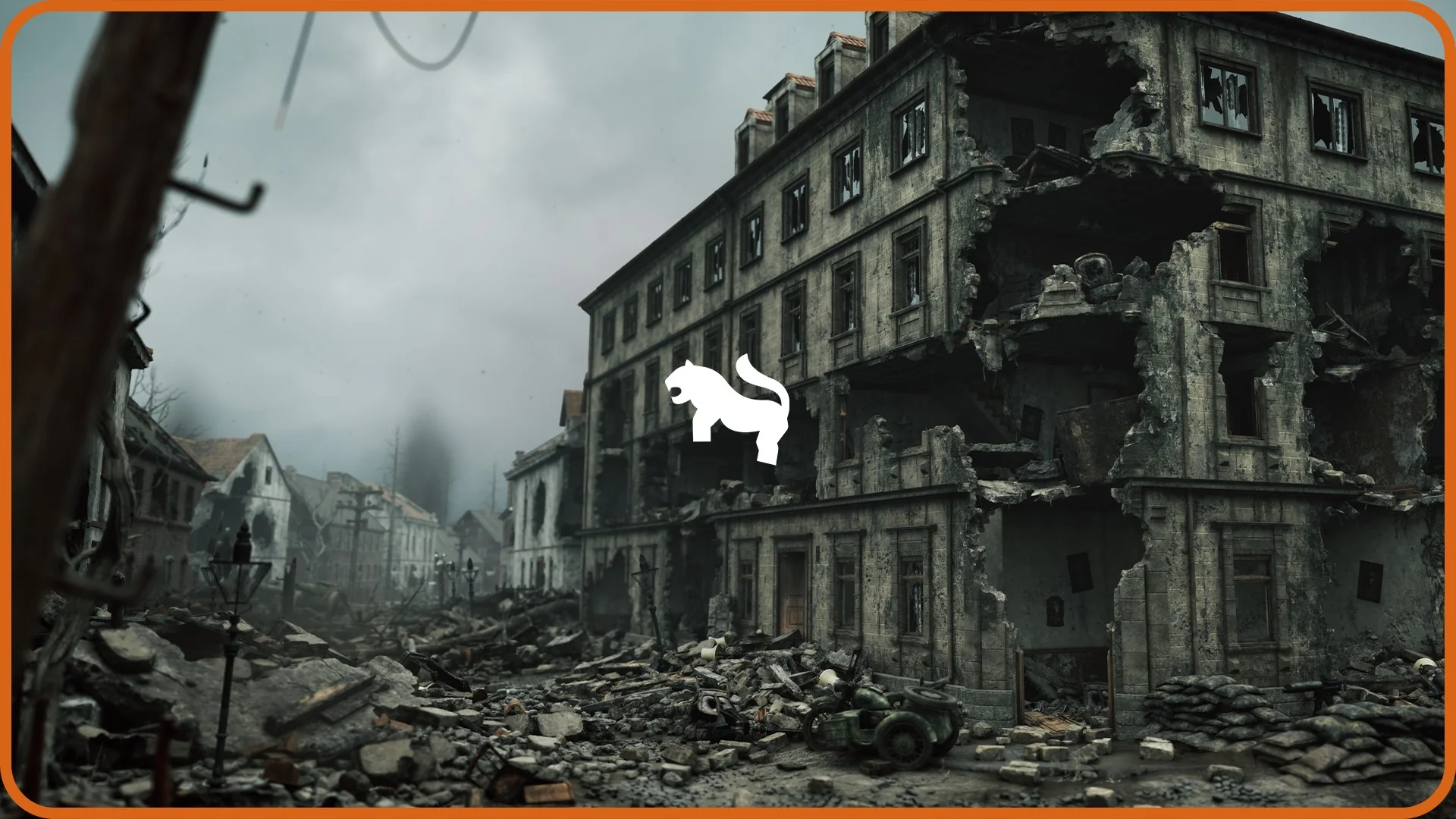
The scene begins in the aftermath rather than the attack itself: a village one week after a devastating mortar strike, with the bombing finally quieting down, houses left unusable, walls collapsed, and plaster torn apart. That framing gives this environment a clear visual identity. It is not just a collection of military props or generic ruined architecture. It leans into the haunted stillness of a battle-scarred place, where rubble, smoke, broken surfaces, and damaged structures carry as much weight as any active combat setup.
That tone makes the pack useful for more than one style of Unreal Engine work. A game level can treat it as a frontline or recently abandoned warzone. A cinematic can push the human aftermath through environmental storytelling. A virtual production scene can use the same ruins, damaged streets, and destroyed structures to establish historical devastation quickly. The emotional cue in the pack’s setup is specific: destruction is everywhere, but the setting is still readable as a lived-in place rather than an abstract ruin field.
WW2 Warzone aftermath with room for gameplay and cinematic framing
The pack is aimed at WW2-themed projects and focuses on bringing battle-scarred landscapes into Unreal Engine. It supports game work, virtual production, cinematics, and other Unreal Engine-based projects. That range matters because the environment is not described only in terms of visual mood. It is also positioned as a practical scene-population resource for teams that need high-quality visuals and assets optimized for game-ready projects.
Its strongest use case is the kind of level where destruction needs to appear layered rather than repeated. Collapsed residential spaces, broken roadsides, damaged vehicles, smoke effects, and wartime debris can all contribute to a setting that feels inhabited before it was ruined. The included showcase map reinforces that direction. It is realistic and immersive, adding depth and atmosphere to scenes, which suggests a ready-made reference for how the assets can be arranged into a convincing WW2 environment.
Because the environment is framed around a bombed village and broader warzone imagery, artists can pull it toward several kinds of scenes without leaving its stated theme: abandoned streets, shelled neighborhoods, military staging zones, ruined urban edges, or post-attack traversal spaces. The pack’s identity stays rooted in destruction and atmosphere rather than clean reconstruction.
800+ Unique Nanite Meshes and damaged asset variations
Scale is one of the headline traits here. The collection includes more than 800 unique Nanite meshes, covering all showcased assets. The pack is described as high quality, with a good level of detail and optimization for game-ready work. That combination makes it useful for teams that need broad environment coverage without giving up on visual density.
The damage system is one of the more practical details. Each asset includes variation states: smoked Nanite and smoked standard LP, or broken Nanite and broken standard LP. Instead of relying on a single intact mesh with a few decals layered on top, the pack gives artists alternate conditions that can change the age, intensity, or spread of destruction across a scene. That is especially valuable when building a warzone that should feel uneven. Some streets can look freshly shelled and smoky, while others can read as structurally broken and long abandoned.
Each asset also comes with Nanite, Standard, and LP manually crafted LODs. For production work, that means the pack is not presented only as a high-detail art set. It also acknowledges different rendering and performance needs inside a project pipeline. If a team is building a close-up hero shot, a large navigable level, or a scene that mixes cinematic framing with interactive traversal, those asset states and LOD options make the pack easier to distribute across different parts of the same project.
Destroyed modular buildings, broken vehicles, hero assets, and statues
The asset range extends beyond rubble pieces. Modular buildings with destroyed variations are part of the core offering, along with vehicles that have broken variations. Hero assets and statues are included as well. That mix helps the environment move beyond repetitive wall fragments and generic debris piles. Modular damaged architecture gives level artists the ability to form streets, courtyards, or partial facades. Broken vehicles introduce recognizable wartime silhouettes and can anchor compositions. Hero assets and statues help create focal points inside otherwise chaotic destruction.
For gameplay spaces, this structure gives room for cover routes, sightline interruptions, and navigational landmarks. For cinematic blocking, it creates contrast between background destruction and selective points of detail. For virtual production, it offers large-scale set dressing plus a few stronger visual anchors that can keep a frame from flattening into uniform rubble.
SFX, VFX, decals, and the showcase map in scene building
The pack does not stop at static meshes. It includes SFX, VFX, and decal sets, which is important for the kind of environment it is trying to create. A WW2 warzone rarely reads convincingly through geometry alone. Smoke residue, surface marking, damage overlays, and atmospheric effects are part of what sell the aftermath of shelling and bombardment. Decals can push cracked plaster, scorch marks, and worn surfaces further. VFX can reinforce the idea that the environment is still settling after violence rather than frozen in a clean static state.
The included example map gives users a working scene that shows how these parts can come together. In practice, that can help artists study density, spacing, and atmosphere inside the pack’s own visual language. It also lowers the friction of getting a large warzone scene assembled, because the map already demonstrates a finished arrangement instead of leaving every scene-building decision to start from zero.
There are also showcase, walkthrough, and demonstration videos associated with the environment, alongside a WW2 real-footage-like presentation. Even without relying on those materials directly, their existence points to a pack that is being presented as a full environment experience rather than a loose folder of unrelated props.
Ultimate Level Art Tool and fast custom modular buildings
An important workflow detail is the inclusion of ULAT, the Ultimate Level Art Tool. It is presented as part of the product and is also described as compatible with this environment pack. ULAT allows fast creation of custom modular buildings and offers a seamless way to populate scenes naturally.
That matters most for teams that do not want to stop at the provided layouts or showcased arrangements. A WW2 environment often needs variation at street level: partial shell damage, different building footprints, uneven rows of structures, and interrupted facades. A tool focused on rapid modular building creation fits that need directly. Instead of treating the pack only as a set of finished set pieces, users can extend its architectural language and assemble new ruined layouts that still stay visually aligned with the rest of the collection.
Because modular buildings are already part of the pack, ULAT expands the practical side of that modularity. It supports faster iteration for level artists who want to block out new war-torn spaces, adjust silhouette density, or reshape street composition without leaving the same environment ecosystem.
Lumen lighting, Unreal Engine use, and the WW2 Warzone roadmap
The environment uses real-time Lumen lighting. A clear note accompanies that choice: if Lumen causes FPS loss, it can be disabled. That is a useful production detail because it acknowledges the visual ambition of the pack while also signaling a straightforward performance adjustment path when needed.
The environment is intended for use in games, virtual production, cinematics, and other work made with Unreal Engine. It was also noted as being ready for the UEFN FAB Alpha Store by 22 November 2023. For teams already working inside Unreal-based pipelines, that keeps the pack grounded in a familiar ecosystem rather than presenting it as a broad multi-engine resource.
The project was created over roughly five months by the team, and it is positioned as an expanding environment. Its roadmap ties future additions to community review milestones, with named update targets that include a Light Update, Tank Update, Shelter Update, Tank Factory Exterior, and City Expansion. Those planned additions fit the current direction of the pack: broadening the warzone from ruined village atmosphere toward larger military and urban surroundings.
For teams evaluating fit, the strongest takeaway is simple. This is a large Unreal Engine WW2 environment driven by destruction, aftermath, and modular scene building, backed by 800+ unique Nanite meshes, damaged asset variants, SFX, VFX, decals, a showcase map, and ULAT for building out custom ruined spaces more quickly.
 Military / Warzone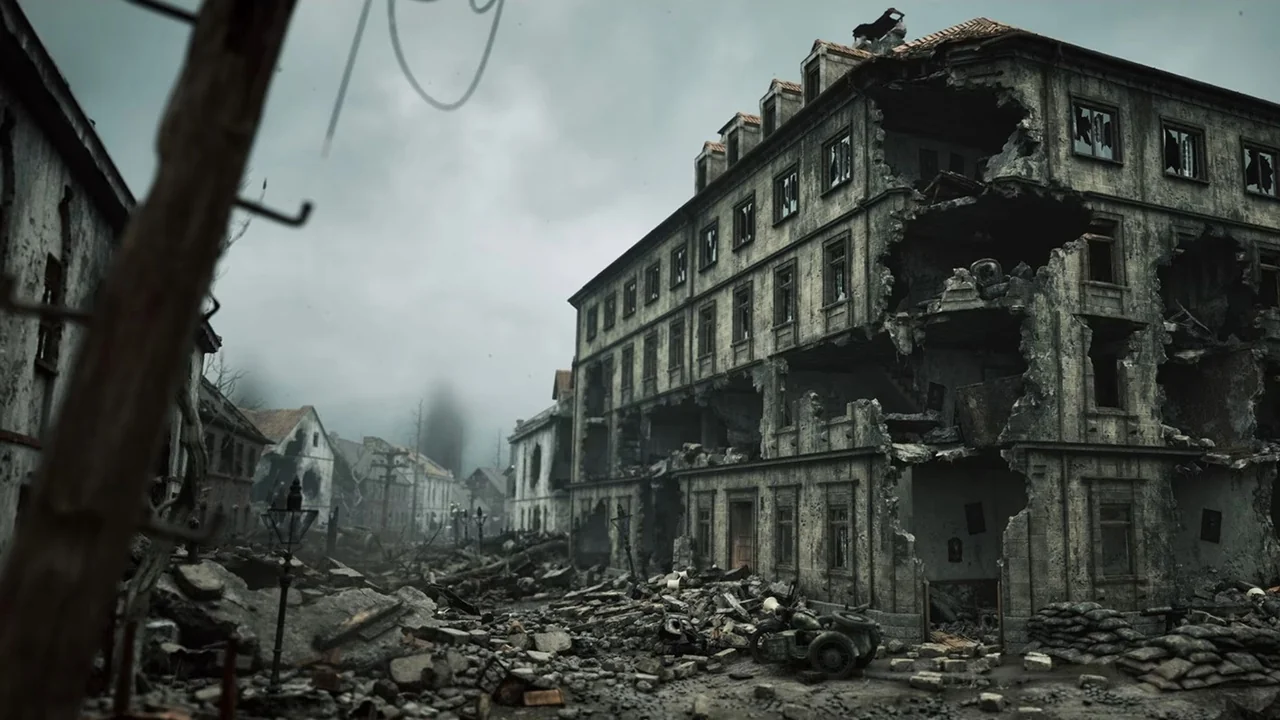
 Military / Warzone
 Military / Warzone
 Military / Warzone