"c14ff6bd758dadb1"{"id":"1000462","slug":"japanese-tea-set","title":"Japanese Tea Set","category":"Tools, Objects \u0026 Decor","engine":"4.26+,5.0+","assetVersion":"","engineVersion":"Engine Version: 4.26+,5.0+","tag":"Tools","accent":"blue","visual":"mech","summary":"A traditional Japanese tea set 3D model with ceramic accessory styling, supporting Unreal Engine 4.20 through 5.7 for Zen and historical scene work.","platform":"Unreal Engine","publishedAt":"2026-07-11T16:15:39.733Z","updatedAt":"2026-07-11T16:15:39.733Z","sourceNotes":[],"fileContents":[],"compatibility":["Unreal Engine","Engine Version: 4.26+,5.0+"],"featuredImage":{"alt":"Japanese Tea Set","src":"/wp-content/uploads/published/2026/07/744db2a0f137-dd7549b6-3914-4705-9abb-51f3b69daaf6-5f196cca7c.webp"},"hasDownloadLink":true,"downloads":0,"terms":[{"taxonomy":"category","slug":"tools-objects-and-decor","name":"Tools, Objects \u0026 Decor"}],"galleryImages":[{"src":"/wp-content/uploads/published/2026/07/440343eae54e-31545385-6772-43d1-8de0-cf430a55f11e-53831e7b85.webp","alt":"Japanese Tea Set"},{"src":"/wp-content/uploads/published/2026/07/75b5c2a1c98f-9831f932-3302-4efe-903c-b152df5c56a2-9000e4cb16.webp","alt":"Japanese Tea Set"},{"src":"/wp-content/uploads/published/2026/07/54d7486953e3-98d8896d-b7a1-4846-ba68-38e72842ee57-836b4bcdd6.webp","alt":"Japanese Tea Set"},{"src":"/wp-content/uploads/published/2026/07/48c556ea6179-d22acef4-1f4c-499a-b32c-532b9b1ae861-f99f1fdaaf.webp","alt":"Japanese Tea Set"},{"src":"/wp-content/uploads/published/2026/07/a82f5acb9f09-c992642d-af31-4bbd-b41d-3ac205fecb2f-338d6da9e2.webp","alt":"Japanese Tea Set"},{"src":"/wp-content/uploads/published/2026/07/05c4f33c1297-7d8eacc8-2e4b-4557-96d6-79bce2be1d8b-94b1ff4b33.webp","alt":"Japanese Tea Set"},{"src":"/wp-content/uploads/published/2026/07/56817271bd9f-b926abd7-3ebb-4902-a31d-1ae747f97166-d29f5eba7f.webp","alt":"Japanese Tea Set"},{"src":"/wp-content/uploads/published/2026/07/824f6c8943da-319e6714-f27d-486c-bb45-da163f87efbe-1678230eb3.webp","alt":"Japanese Tea Set"},{"src":"/wp-content/uploads/published/2026/07/9f828fdb5469-989adba5-6437-4379-ba25-76e319360c99-4c5b6a34ae.webp","alt":"Japanese Tea Set"},{"src":"/wp-content/uploads/published/2026/07/abff6bc38a4f-2f85fe37-e351-49d6-97ea-43aea403c9a3-67ed9c9f1e.webp","alt":"Japanese Tea Set"}],"accessPanel":{"kind":"resource","title":"Download this resource","eyebrow":"Free Download","message":"Log in or create a free account to start your download.","fileName":"Content.7z","safetyNote":"Resources are manually reviewed before listing to improve quality and reduce obvious risks.","actionLabel":"Download Free","resourceType":"Resource archive"},"contentHtml":"\u003cp\u003ePopulating a historical or culturally grounded scene often stalls when a key tabletop prop is missing. A tea set sitting at the center of a room does more than fill an empty surface — it tells the viewer what kind of space they are looking at, who might inhabit it, and what mood dominates the moment. The Japanese Tea Set addresses that gap directly, giving artists a prop collection rooted in traditional ceramic styling rather than a generic kitchenware approximation.\u003c/p\u003e\u003cp\u003eBuilt as an accessory set, it slots into environments where quiet ritual and craftsmanship define the atmosphere. The tag profile places it firmly within Japanese cultural territory, leaning toward Zen, samurai, and medieval-traditional associations rather than modern domestic settings.\u003c/p\u003e\u003ch2\u003eThe Japanese Tea Set as a Scene-Defining Prop\u003c/h2\u003e\u003cp\u003eThe set identifies itself first through cultural specificity. It is not a vague collection of teapots and cups; it is a Japanese tea set, carrying the visual language of a tea ceremony tradition that prioritizes restraint, irregular ceramic glazes, and deliberate placement. The tags attached to the asset — Accessory, Set, Zen, Japanese, Medieval, Traditional, Ceramic, Samurai — paint a clear picture of its intended use: a grounded, hand-crafted aesthetic suited to scenes where atmosphere matters more than ornamentation.\u003c/p\u003e\u003cp\u003eBecause it is tagged as both Japanese and Samurai, the prop set works across multiple historical layers. A samurai-era interior benefits from the same ceramic vocabulary as a broader medieval Japanese setting. The traditional tag widens the usable time frame, letting artists place the set in anything from an older period-piece room to a stylized zen garden tableau without feeling anachronistic.\u003c/p\u003e\u003ch3\u003eZen and Traditional Tableau Placement\u003c/h3\u003e\u003cp\u003eThe Zen tag signals where the asset shines most. A tea set placed on a low wooden table inside a sparse room immediately shifts the scene's tone toward stillness and contemplation. The ceramic material expectation aligns with that mood — tea ware in this context is not ornate porcelain but earthy, handmade pottery. Artists lighting the scene can lean into that quality, using soft directional light to catch the subtle surface variation typical of traditional ceramic glazes.\u003c/p\u003e\u003cp\u003eThe medieval and traditional tags also open up architectural variety. The set is not locked to a single building style. It can sit on a tatami-platformed floor inside a paper-walled room just as well as on a rougher wooden surface in a more fortified structure. That flexibility makes it a reusable dressing piece rather than a one-scene prop.\u003c/p\u003e\u003ch2\u003eBuilding Ceramic Accessory Detail in Engine\u003c/h2\u003e\u003cp\u003eAs an accessory set, the asset functions as a collection of individual ceramic pieces beyond one welded object. That distinction matters for scene construction. Artists can position individual items — likely a teapot and cups — to suggest a paused moment: a cup half-filled, a pot tilted, a setting arranged for one occupant or two. The grouping can be adjusted per scene, broken apart, or partially relocated without breaking the visual logic of the set.\u003c/p\u003e\u003cp\u003eUnreal Engine support runs from version 4.20 through 4.27, then continues across the 5.0 to 5.7 range. That span covers both last-generation and current-generation engine builds, making the set usable in projects that have not yet migrated to UE5 as well as those fully committed to the newer pipeline. The cross-version compatibility also means teams maintaining legacy projects alongside next-gen builds can drop the same accessory set into both without reworking the asset.\u003c/p\u003e\u003ch3\u003eIntegrating the Set Into Existing Environments\u003c/h3\u003e\u003cp\u003eThe included environment shown in the asset's presentation is explicitly for demonstration only. The tea set itself is the deliverable, and the surrounding scene exists to show how the props read in context. Artists should treat the set as a dressing pack meant to be placed into their own constructed spaces rather than expecting a ready-made room to accompany the ceramic pieces.\u003c/p\u003e\u003cp\u003eFor gameplay scenarios, the accessory nature of the set opens a few practical paths. A tea set on a table can mark a location a character recently occupied, serving as environmental storytelling without a single line of dialogue. In a samurai-themed level, it can delineate a peaceful interior zone before combat erupts elsewhere. The ceramic material association also invites interaction design — these are objects that read as fragile, which can inform breakable-prop logic or simple collision setup if the scene calls for it.\u003c/p\u003e\u003ch2\u003eWhere the Traditional Japanese Tea Set Fits in Production\u003c/h2\u003e\u003cp\u003eThis asset earns its place in projects that require authentic cultural shorthand. It provides a ready-made ceramic accessory set tagged across Zen, samurai, medieval, and traditional Japanese categories, with Unreal Engine compatibility stretching from 4.20 all the way to 5.7. For artists dressing historical interiors, zen-inspired spaces, or samurai-era environments, it delivers a focused prop collection that resolves the missing-tabletop-detail problem without forcing custom modeling work.\u003c/p\u003e\n\n\u003ch2\u003eRelated Resources Worth Checking\u003c/h2\u003e\n\u003cul\u003e\n\u003cli\u003e\u003ca href=\"https://3dcghub.com/japanese-school-collection-5-asset-packs-over-200-assets/\" title=\"Japanese School Collection - 5 Asset Packs, Over 200 Assets\"\u003eJapanese School Collection - 5 Asset Packs, Over 200 Assets\u003c/a\u003e\u003c/li\u003e\n\u003cli\u003e\u003ca href=\"https://3dcghub.com/interior-props/\" title=\"Interior Props\"\u003eInterior Props\u003c/a\u003e\u003c/li\u003e\n\u003cli\u003e\u003ca href=\"https://3dcghub.com/first-aid-set/\" title=\"First Aid Set\"\u003eFirst Aid Set\u003c/a\u003e\u003c/li\u003e\n\u003cli\u003e\u003ca href=\"https://3dcghub.com/cyberpunk-japan-holograms-neon-set-cyberpunk-japan-holograms-japans-hologram/\" title=\"Cyberpunk Japan Holograms / Neon Set (Cyberpunk Japan Holograms Japans Hologram)\"\u003eCyberpunk Japan Holograms / Neon Set (Cyberpunk Japan Holograms Japans Hologram)\u003c/a\u003e\u003c/li\u003e\n\u003cli\u003e\u003ca href=\"https://3dcghub.com/warehouse-equipment/\" title=\"Warehouse Equipment\"\u003eWarehouse Equipment\u003c/a\u003e\u003c/li\u003e\n\u003c/ul\u003e","contentTextLength":5302,"navigation":{"current":1401,"total":3719,"previous":{"id":"1000463","slug":"koi-japanese-carp","title":"Koi. Japanese carp","category":"Characters \u0026 Creatures","platform":"Unreal Engine","updatedAt":"2026-07-11T17:12:57.461Z"},"next":{"id":"1000461","slug":"historical-museum-historical-museum-history-museum-environment-3d-ancient","title":"Historical Museum ( Historical Museum History Museum Environment 3D Ancient )","category":"Historical","platform":"Unreal Engine","updatedAt":"2026-07-11T16:12:13.733Z"}},"relatedResources":[{"id":"1000121","slug":"interior-props","title":"Interior Props","category":"Tools, Objects \u0026 Decor","engine":"4.26+,5.0+","assetVersion":"","engineVersion":"Engine Version: 4.26+,5.0+","tag":"Tools","accent":"blue","visual":"mech","summary":"A realistic set-dressing collection featuring a pre-built scene of five modular shelf-sets, complete with vases, decor items, and different material options.","platform":"Unreal Engine","publishedAt":"2026-06-09T15:24:05.523Z","updatedAt":"2026-06-09T15:24:05.523Z","sourceNotes":[],"fileContents":[],"compatibility":["Unreal Engine","Engine Version: 4.26+,5.0+"],"featuredImage":{"alt":"Interior Props","src":"/wp-content/uploads/published/2026/06/b4e28cdc2d1e-2c5047dd-94c5-4f31-aeb4-85b0c79812d8-488dc32cca.webp"},"hasDownloadLink":true,"downloads":2},{"id":"1000001","slug":"first-aid-set","title":"First Aid Set","category":"Tools, Objects \u0026 Decor","engine":"4.26+,5.0+","assetVersion":"","engineVersion":"4.26+,5.0+","tag":"Tools","accent":"blue","visual":"mech","summary":"A first aid medical care set with 18 models, LODs, and PBR textures, covering items from painkiller pills to a doctor's bag.","platform":"Unreal Engine","publishedAt":"2026-05-19T08:33:29.410Z","updatedAt":"2026-05-19T14:42:25.560Z","sourceNotes":[],"fileContents":[],"compatibility":["Unreal Engine","Engine version: 4.26+,5.0+"],"featuredImage":{"alt":"First Aid Set","src":"/wp-content/uploads/published/2026/05/33b9f60d28f7-ab24af02-edca-48ae-b35a-a672ac8c3849-7b0d96ae77.webp"},"hasDownloadLink":true,"downloads":1},{"id":"4657","slug":"japanese-school-collection-5-asset-packs-over-200-assets","title":"Japanese School Collection - 5 Asset Packs, Over 200 Assets","category":"Tools, Objects \u0026 Decor","engine":"4.26+,5.0+","assetVersion":"Engine version: 4.26+,5.0+","engineVersion":"4.26","tag":"Tools","accent":"blue","visual":"luts","summary":"Build realistic Japanese school environments with over 200 PBR assets. Ideal for Unreal Engine developers creating anime-style or photorealistic games.","platform":"Unreal Engine","publishedAt":"2026-02-13T09:08:28.000Z","updatedAt":"2026-04-19T15:57:06.000Z","sourceNotes":[],"fileContents":[],"compatibility":["Unreal Engine","Engine version: 4.26+,5.0+"],"featuredImage":{"alt":"Japanese School Collection - 5 Asset Packs, Over 200 Assets","src":"https://3dcghub.com/wp-content/uploads/2026/02/8074064b-bd77-462d-bd81-b171b008136d.webp"},"hasDownloadLink":true,"downloads":2}]}
Tools
Japanese Tea Set
A traditional Japanese tea set 3D model with ceramic accessory styling, supporting Unreal Engine 4.20 through 5.7 for Zen and historical scene work.
Populating a historical or culturally grounded scene often stalls when a key tabletop prop is missing. A tea set sitting at the center of a room does more than fill an empty surface — it tells the viewer what kind of space they are looking at, who might inhabit it, and what mood dominates the moment. The Japanese Tea Set addresses that gap directly, giving artists a prop collection rooted in traditional ceramic styling rather than a generic kitchenware approximation.
Built as an accessory set, it slots into environments where quiet ritual and craftsmanship define the atmosphere. The tag profile places it firmly within Japanese cultural territory, leaning toward Zen, samurai, and medieval-traditional associations rather than modern domestic settings.
The Japanese Tea Set as a Scene-Defining Prop
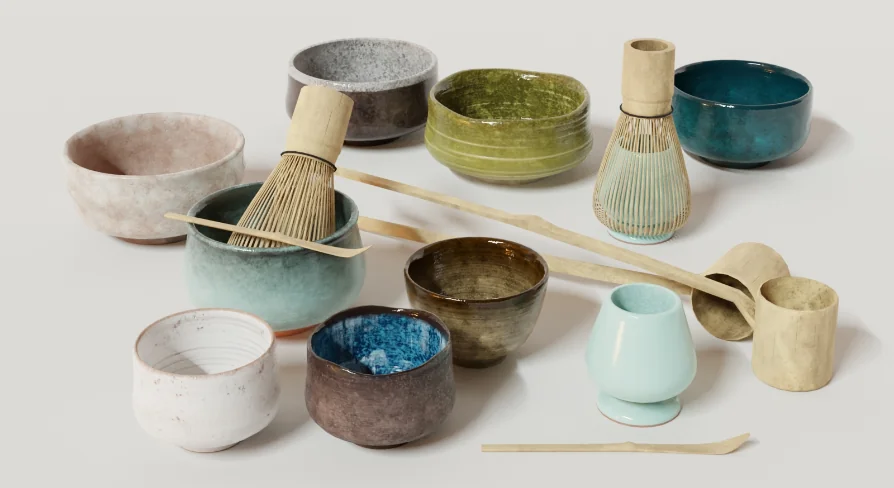
The set identifies itself first through cultural specificity. It is not a vague collection of teapots and cups; it is a Japanese tea set, carrying the visual language of a tea ceremony tradition that prioritizes restraint, irregular ceramic glazes, and deliberate placement. The tags attached to the asset — Accessory, Set, Zen, Japanese, Medieval, Traditional, Ceramic, Samurai — paint a clear picture of its intended use: a grounded, hand-crafted aesthetic suited to scenes where atmosphere matters more than ornamentation.
Because it is tagged as both Japanese and Samurai, the prop set works across multiple historical layers. A samurai-era interior benefits from the same ceramic vocabulary as a broader medieval Japanese setting. The traditional tag widens the usable time frame, letting artists place the set in anything from an older period-piece room to a stylized zen garden tableau without feeling anachronistic.
Zen and Traditional Tableau Placement
The Zen tag signals where the asset shines most. A tea set placed on a low wooden table inside a sparse room immediately shifts the scene's tone toward stillness and contemplation. The ceramic material expectation aligns with that mood — tea ware in this context is not ornate porcelain but earthy, handmade pottery. Artists lighting the scene can lean into that quality, using soft directional light to catch the subtle surface variation typical of traditional ceramic glazes.
The medieval and traditional tags also open up architectural variety. The set is not locked to a single building style. It can sit on a tatami-platformed floor inside a paper-walled room just as well as on a rougher wooden surface in a more fortified structure. That flexibility makes it a reusable dressing piece rather than a one-scene prop.
Building Ceramic Accessory Detail in Engine
As an accessory set, the asset functions as a collection of individual ceramic pieces beyond one welded object. That distinction matters for scene construction. Artists can position individual items — likely a teapot and cups — to suggest a paused moment: a cup half-filled, a pot tilted, a setting arranged for one occupant or two. The grouping can be adjusted per scene, broken apart, or partially relocated without breaking the visual logic of the set.
Unreal Engine support runs from version 4.20 through 4.27, then continues across the 5.0 to 5.7 range. That span covers both last-generation and current-generation engine builds, making the set usable in projects that have not yet migrated to UE5 as well as those fully committed to the newer pipeline. The cross-version compatibility also means teams maintaining legacy projects alongside next-gen builds can drop the same accessory set into both without reworking the asset.
Integrating the Set Into Existing Environments
The included environment shown in the asset's presentation is explicitly for demonstration only. The tea set itself is the deliverable, and the surrounding scene exists to show how the props read in context. Artists should treat the set as a dressing pack meant to be placed into their own constructed spaces rather than expecting a ready-made room to accompany the ceramic pieces.
For gameplay scenarios, the accessory nature of the set opens a few practical paths. A tea set on a table can mark a location a character recently occupied, serving as environmental storytelling without a single line of dialogue. In a samurai-themed level, it can delineate a peaceful interior zone before combat erupts elsewhere. The ceramic material association also invites interaction design — these are objects that read as fragile, which can inform breakable-prop logic or simple collision setup if the scene calls for it.
Where the Traditional Japanese Tea Set Fits in Production
This asset earns its place in projects that require authentic cultural shorthand. It provides a ready-made ceramic accessory set tagged across Zen, samurai, medieval, and traditional Japanese categories, with Unreal Engine compatibility stretching from 4.20 all the way to 5.7. For artists dressing historical interiors, zen-inspired spaces, or samurai-era environments, it delivers a focused prop collection that resolves the missing-tabletop-detail problem without forcing custom modeling work.
 Tools
Tools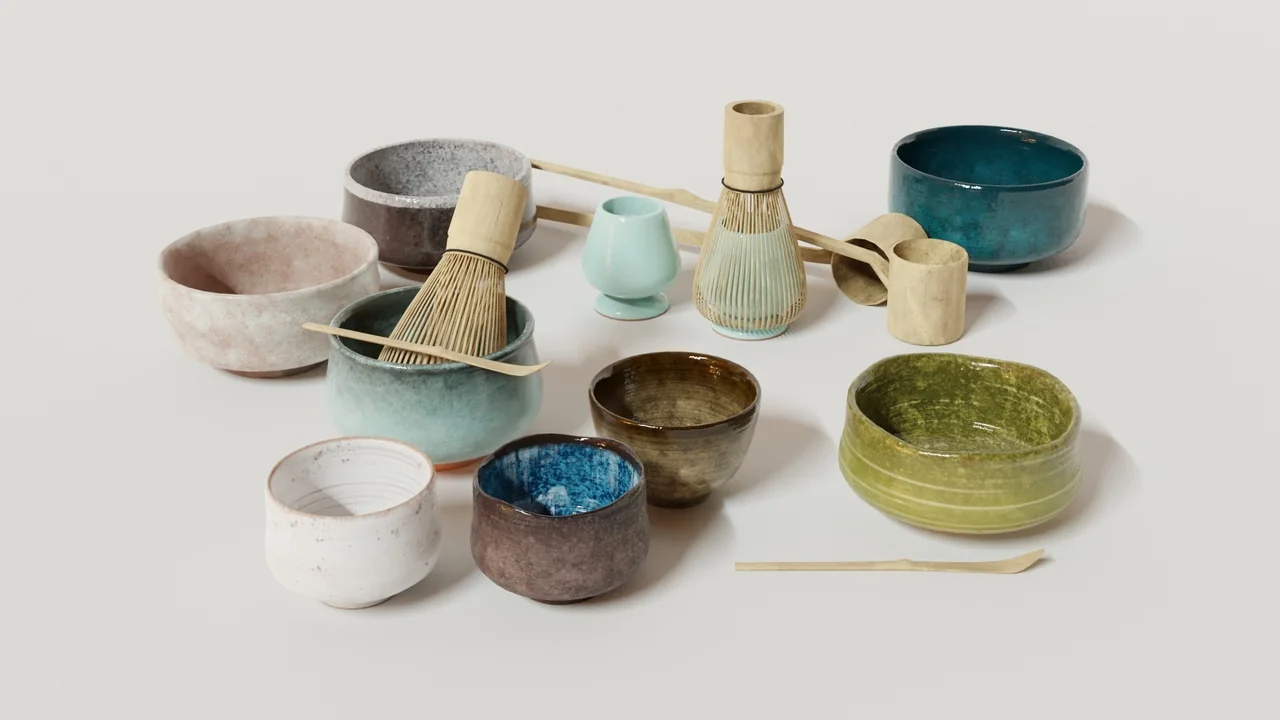
 Tools
Tools Tools
Tools Tools
Tools