"fa182e0cd0a6ea73"{"id":"1001095","slug":"grappling-hook-system-with-physics","title":"Grappling Hook System (with Physics)","category":"Gameplay Features","engine":"5.4+","assetVersion":"","engineVersion":"Engine Version: 5.4+","tag":"Gameplay Features","accent":"blue","visual":"mech","summary":"Physics-driven grappling hook system with real-time rope tension, momentum, and natural swinging. Designed for superhero, sci-fi, and parkour action.","platform":"Unreal Engine","publishedAt":"2026-09-06T01:52:41.055Z","updatedAt":"2026-09-06T01:52:41.055Z","sourceNotes":[],"fileContents":[],"compatibility":["Unreal Engine","Engine Version: 5.4+"],"featuredImage":{"alt":"Grappling Hook System (with Physics)","src":"/wp-content/uploads/published/2026/09/1ab657b886ce-a0ff8ce0-97c5-4815-a8c9-0a2e67e6be1f-74e36077e2.webp"},"hasDownloadLink":true,"downloads":0,"terms":[{"taxonomy":"category","slug":"gameplay-features","name":"Gameplay Features"}],"galleryImages":[{"src":"/wp-content/uploads/published/2026/09/dd25221c3905-a70f2c3a-1560-4650-b3f4-662fb908d303-f90892a49f.webp","alt":"Grappling Hook System (with Physics)"},{"src":"/wp-content/uploads/published/2026/09/8e9d26a5d455-d41c6203-9977-47d9-919f-37cee89e3d12-2a75d0bf3f.webp","alt":"Grappling Hook System (with Physics)"},{"src":"/wp-content/uploads/published/2026/09/4f9bd396c8e0-1e5e7de3-9a48-4d35-82ca-e83b97de87f4-f280ce6fd7.webp","alt":"Grappling Hook System (with Physics)"}],"accessPanel":{"kind":"resource","title":"Download this resource","eyebrow":"Free Download","message":"Log in or create a free account to start your download.","fileName":"Content.7z","safetyNote":"Resources are manually reviewed before listing to improve quality and reduce obvious risks.","actionLabel":"Download Free","resourceType":"Resource archive"},"contentHtml":"\u003cp\u003eFast-paced action games and parkour projects often stumble when a grappling hook feels more like a rigid tether than a physical object. A line that locks to a fixed point and drags a character in a straight line misses the drama of a real rope. This grappling hook system takes a different route: it treats the rope as a physical simulation.\u003c/p\u003e \u003cp\u003eThis gives movement that responds to angles, velocity, and player input rather than a pre-scripted animation. The available details calls it “fully physics-driven,” and that core idea shapes every interaction the system offers. Characters can hook onto surfaces and swing, pull, or launch themselves with behaviors that follow realistic physics rather than predetermined paths.\u003c/p\u003e \u003ch2\u003eHook, Swing, Pull, and Launch — All Driven by Real-Time Physics Calculations\u003c/h2\u003e \u003cp\u003eAt the heart of the system is real-time simulation of rope tension and momentum. These two physical properties are what make the movement feel natural instead of mechanical. When a character connects to a grapple point, the rope’s tension builds and relaxes based on how the character moves, producing the same kind of arc you would expect from a weight at the end of a line.\u003c/p\u003e \u003cp\u003eMomentum carries that arc forward. A player who swings into a turn carries speed through the curve, and the system uses physics to preserve that energy. This is not a simple “pull to point” mechanic. The swinging motion responds to force settings and movement input, so the same hook can lead to any number of outcomes depending on how the player handles it.\u003c/p\u003e \u003cp\u003eThe system also gives characters the ability to pull themselves toward a target impact point. After the hook finds a surface in the environment, the player can choose to reel in and be drawn toward that spot. That creates the kind of direct, aggressive mobility that suits superhero vaults, sci-fi scouts, or fast-paced action heroes.\u003c/p\u003e \u003ch2\u003eValid Surfaces and Impact Points: Where the Hook Can Actually Land\u003c/h2\u003e \u003cp\u003eLike any physics-driven movement tool, this system depends on the environment responding consistently. The source explains that players can hook onto “valid surfaces” — meaning the system does not blindly attach to every collider in the scene. Surface detection is part of the design, and that matters for gameplay clarity. A player needs to know which points in the level can support a grapple before committing to a swing.\u003c/p\u003e \u003cp\u003eWhen the hook does connect to a valid surface, the character can either swing or be pulled toward the impact point. The distinction gives the mechanic flexibility. A long horizontal swing reaches across gaps, while a quick pull-to-impact closes distance to an enemy or a ledge. Both actions rely on the same physics simulation, so the game can blend them seamlessly.\u003c/p\u003e \u003cp\u003eThe phrase “real-time physics calculations” in the material is not incidental. It is the reason the rope never feels like a fixed rod. The line bends, stretches, and transmits force according to the current state of the character, which makes each swing and pull feel connected to the action moment.\u003c/p\u003e \u003ch2\u003eMovement Input and Force Settings Shape the Swing\u003c/h2\u003e \u003cp\u003eThe system’s creator emphasizes that swinging changes depending on movement input and force settings. That is a crucial design detail because it gives designers and players a way to control the flow of motion. If the player moves forward through the bottom of a swing, the character can gain height or speed. If the player cuts the input early, the character can release into a shorter arc.\u003c/p\u003e \u003cp\u003eFor designers, force settings expose a tuning layer without touching simulation code. The swing can feel weighty and slow for a tank-like hero or light and fast for a parkour runner. Because the underlying physics engine handles rope tension and momentum, adjusting those force parameters shifts the entire feel of the movement system.\u003c/p\u003e \u003cp\u003eThis input-driven behavior is what separates a dynamic grappling system from a simple tether-and-hoist mechanic. The player is not locked into a single canned animation; their choices during flight dictate the path. This gives a tool that works equally well for precise platforming and for chaotic, high-speed chases.\u003c/p\u003e \u003ch2\u003eA Natural Match for Superheroes, Sci-Fi Characters, and Parkour\u003c/h2\u003e \u003cp\u003eThe creator lists specific use cases in the material, and they all point toward characters that need vertical and horizontal mobility without sacrificing momentum. Sci-fi characters often carry gadgets that fire grapples or cables; this system gives that gadget believable physics. Superhero games benefit from swings that can redirect mid-air or pull an armored hero toward a building wall. Parkour mechanics demand fast, repeatable traversal, and a physics-based hook can become the centerpiece of that movement loop.\u003c/p\u003e \u003cp\u003eFast-paced action gameplay gains the most because it relies on responsive, readable tools. A grappling hook that behaves consistently under physics gives players a language for movement: hook a surface, swing, let go, hook again. Each action carries a natural logic that players internalize quickly.\u003c/p\u003e \u003cul\u003e \u003cli\u003eSci-fi characters — useful for gadget-based mobility in futuristic spaces\u003c/li\u003e \u003cli\u003eSuperhero games — enables dramatic swinging and high-speed pulls\u003c/li\u003e \u003cli\u003eParkour mechanics — supports wall runs, gap swings, and vertical launches\u003c/li\u003e \u003cli\u003eFast-paced action gameplay — keeps the fighting or chasing momentum alive\u003c/li\u003e\n\u003c/ul\u003e \u003cp\u003eThe common thread is that all of these scenarios require movement that feels physically grounded even when the character is doing something impossible. A physics-driven system delivers that contradiction: the acts are spectacular, but the rope behavior obeys understandable rules.\u003c/p\u003e \u003ch2\u003ePlug-and-Play Setup with Room to Customize\u003c/h2\u003e \u003cp\u003eOn the practical side, the system is “plug and play, easy to customize, and built for performance.” For studios and solo developers, those three qualities reduce the barrier to entry. A plug-and-play setup means the core mechanics can be dropped into an existing character controller without replacing the entire movement ecosystem. Easy customization means the swing force, pull speed, and surface requirements are not buried in a mess of interlocking scripts.\u003c/p\u003e \u003cp\u003eThe performance focus is just as important. Physics simulations can become expensive when they involve many joints and collision checks. A grappling system that is mindful of performance allows developers to use it without locking out weaker hardware or requiring extensive optimization passes.\u003c/p\u003e \u003cp\u003eBecause the material is clear that the system is intended for superhero and action games, developers who are prototyping traversal abilities can treat this as a complete foundation rather than a technical experiment. The physics layer handles rope tension and momentum; the developer supplies the level design and character feel.\u003c/p\u003e \u003ch2\u003eA Movement Tool That Treats the Rope Like a Real Object\u003c/h2\u003e \u003cp\u003eThe strongest takeaway from this grappling hook system is that it refuses to fake the rope. Real-time physics calculations do the work of simulating tension, momentum, and pull, which means the character’s motion emerges from those forces. A superhero can swing with believable arc; a parkour runner can use the hook for a height boost; a sci-fi hunter can rip through a level with a series of short, aggressive pulls.\u003c/p\u003e \u003cp\u003eFor developers building fast action or movement-heavy gameplay, this system offers a useful starting point: a physics-based traversal kit that is responsive to player input, adjustable through force settings, and ready to be dropped into a project. The hook lands, the line goes taut, and the physics takes over.\u003c/p\u003e\n\n\u003ch2\u003eMore From The Same Workflow\u003c/h2\u003e\n\u003cul\u003e\n\u003cli\u003e\u003ca href=\"https://3dcghub.com/action-adventure-movement-system/\" title=\"Action-Adventure Movement System\"\u003eAction-Adventure Movement System\u003c/a\u003e\u003c/li\u003e\n\u003cli\u003e\u003ca href=\"https://3dcghub.com/physics-collision-sound/\" title=\"Physics Collision Sound\"\u003ePhysics Collision Sound\u003c/a\u003e\u003c/li\u003e\n\u003cli\u003e\u003ca href=\"https://3dcghub.com/advanced-fuel-system-multiplayer-vehicle-addon/\" title=\"Advanced Fuel System: Multiplayer Vehicle Addon\"\u003eAdvanced Fuel System: Multiplayer Vehicle Addon\u003c/a\u003e\u003c/li\u003e\n\u003cli\u003e\u003ca href=\"https://3dcghub.com/vehicles-gravity-template-vgt/\" title=\"Vehicles Gravity Template - VGT\"\u003eVehicles Gravity Template - VGT\u003c/a\u003e\u003c/li\u003e\n\u003cli\u003e\u003ca href=\"https://3dcghub.com/multiplayer-object-throwing-system/\" title=\"Multiplayer Object Throwing System\"\u003eMultiplayer Object Throwing System\u003c/a\u003e\u003c/li\u003e\n\u003c/ul\u003e","contentTextLength":7690,"navigation":{"current":809,"total":3789,"previous":{"id":"1001096","slug":"gravity-scatter-tool","title":"Gravity Scatter Tool","category":"Engine Tools","platform":"Unreal Engine","updatedAt":"2026-09-06T01:58:48.457Z"},"next":{"id":"1001094","slug":"goat-with-groom","title":"Goat with groom","category":"Mammals","platform":"Unreal Engine","updatedAt":"2026-09-06T01:50:06.593Z"}},"relatedResources":[{"id":"1001032","slug":"action-adventure-movement-system","title":"Action-Adventure Movement System","category":"Gameplay Features","engine":"5.3+","assetVersion":"Asset Version: 1.3.3","engineVersion":"Engine Version: 5.3+","tag":"Gameplay Features","accent":"blue","visual":"mech","summary":"A 100% Blueprint Unreal Engine framework with 475+ animations covering parkour, climbing, swimming, grappling, ropes, rail grinding, interactions, and multiplay","platform":"Unreal Engine","publishedAt":"2026-08-23T13:56:31.671Z","updatedAt":"2026-08-23T13:56:31.671Z","sourceNotes":[],"fileContents":[],"compatibility":["Unreal Engine","Asset Version: 1.3.3","Engine Version: 5.3+"],"featuredImage":{"alt":"Action-Adventure Movement System","src":"/wp-content/uploads/published/2026/08/f6ca4747d539-f55a9c3a-5939-4fc7-b9c9-20258a3197bf-86a0ba7a37.webp"},"hasDownloadLink":true,"downloads":12},{"id":"1001063","slug":"physics-collision-sound","title":"Physics Collision Sound","category":"Gameplay Features","engine":"5.3+","assetVersion":"","engineVersion":"Engine Version: 5.3+","tag":"Gameplay Features","accent":"blue","visual":"mech","summary":"Physics Collision Sound adds material-aware hit, slide, roll, and water audio to any Unreal mesh with a simple drag-and-drop Blueprint workflow.","platform":"Unreal Engine","publishedAt":"2026-09-03T13:17:54.533Z","updatedAt":"2026-09-03T13:17:54.533Z","sourceNotes":[],"fileContents":[],"compatibility":["Audio","Engine Version: 5.3+"],"featuredImage":{"alt":"Physics Collision Sound","src":"/wp-content/uploads/published/2026/09/05c916db7e98-eff97865-a529-4495-b2bb-27b0ce374707-e1e1376bbe.webp"},"hasDownloadLink":true,"downloads":1},{"id":"1000437","slug":"powerline-generator","title":"Powerline Generator","category":"Gameplay Features","engine":"5.1+","assetVersion":"","engineVersion":"Engine Version: 5.1+","tag":"Gameplay Features","accent":"blue","visual":"mech","summary":"Unreal Engine 5 blueprint tool for generating powerline networks with spline controls, dynamic pole materials, cable physics, wind effects, and electric box bra","platform":"Unreal Engine","publishedAt":"2026-07-10T22:27:14.786Z","updatedAt":"2026-07-10T22:27:14.786Z","sourceNotes":[],"fileContents":[],"compatibility":["Unreal Engine","Engine Version: 5.1+"],"featuredImage":{"alt":"Powerline Generator","src":"/wp-content/uploads/published/2026/07/e62e48e2d844-a38d6222-1e25-420d-ac8a-30e5a3852fed-e38e3054db.webp"},"hasDownloadLink":true,"downloads":0}]}
Gameplay Features
Grappling Hook System (with Physics)
Physics-driven grappling hook system with real-time rope tension, momentum, and natural swinging. Designed for superhero, sci-fi, and parkour action.
Fast-paced action games and parkour projects often stumble when a grappling hook feels more like a rigid tether than a physical object. A line that locks to a fixed point and drags a character in a straight line misses the drama of a real rope. This grappling hook system takes a different route: it treats the rope as a physical simulation.
This gives movement that responds to angles, velocity, and player input rather than a pre-scripted animation. The available details calls it “fully physics-driven,” and that core idea shapes every interaction the system offers. Characters can hook onto surfaces and swing, pull, or launch themselves with behaviors that follow realistic physics rather than predetermined paths.
Hook, Swing, Pull, and Launch — All Driven by Real-Time Physics Calculations
At the heart of the system is real-time simulation of rope tension and momentum. These two physical properties are what make the movement feel natural instead of mechanical. When a character connects to a grapple point, the rope’s tension builds and relaxes based on how the character moves, producing the same kind of arc you would expect from a weight at the end of a line.
Momentum carries that arc forward. A player who swings into a turn carries speed through the curve, and the system uses physics to preserve that energy. This is not a simple “pull to point” mechanic. The swinging motion responds to force settings and movement input, so the same hook can lead to any number of outcomes depending on how the player handles it.
The system also gives characters the ability to pull themselves toward a target impact point. After the hook finds a surface in the environment, the player can choose to reel in and be drawn toward that spot. That creates the kind of direct, aggressive mobility that suits superhero vaults, sci-fi scouts, or fast-paced action heroes.
Valid Surfaces and Impact Points: Where the Hook Can Actually Land
Like any physics-driven movement tool, this system depends on the environment responding consistently. The source explains that players can hook onto “valid surfaces” — meaning the system does not blindly attach to every collider in the scene. Surface detection is part of the design, and that matters for gameplay clarity. A player needs to know which points in the level can support a grapple before committing to a swing.
When the hook does connect to a valid surface, the character can either swing or be pulled toward the impact point. The distinction gives the mechanic flexibility. A long horizontal swing reaches across gaps, while a quick pull-to-impact closes distance to an enemy or a ledge. Both actions rely on the same physics simulation, so the game can blend them seamlessly.
The phrase “real-time physics calculations” in the material is not incidental. It is the reason the rope never feels like a fixed rod. The line bends, stretches, and transmits force according to the current state of the character, which makes each swing and pull feel connected to the action moment.
Movement Input and Force Settings Shape the Swing
The system’s creator emphasizes that swinging changes depending on movement input and force settings. That is a crucial design detail because it gives designers and players a way to control the flow of motion. If the player moves forward through the bottom of a swing, the character can gain height or speed. If the player cuts the input early, the character can release into a shorter arc.
For designers, force settings expose a tuning layer without touching simulation code. The swing can feel weighty and slow for a tank-like hero or light and fast for a parkour runner. Because the underlying physics engine handles rope tension and momentum, adjusting those force parameters shifts the entire feel of the movement system.
This input-driven behavior is what separates a dynamic grappling system from a simple tether-and-hoist mechanic. The player is not locked into a single canned animation; their choices during flight dictate the path. This gives a tool that works equally well for precise platforming and for chaotic, high-speed chases.
A Natural Match for Superheroes, Sci-Fi Characters, and Parkour
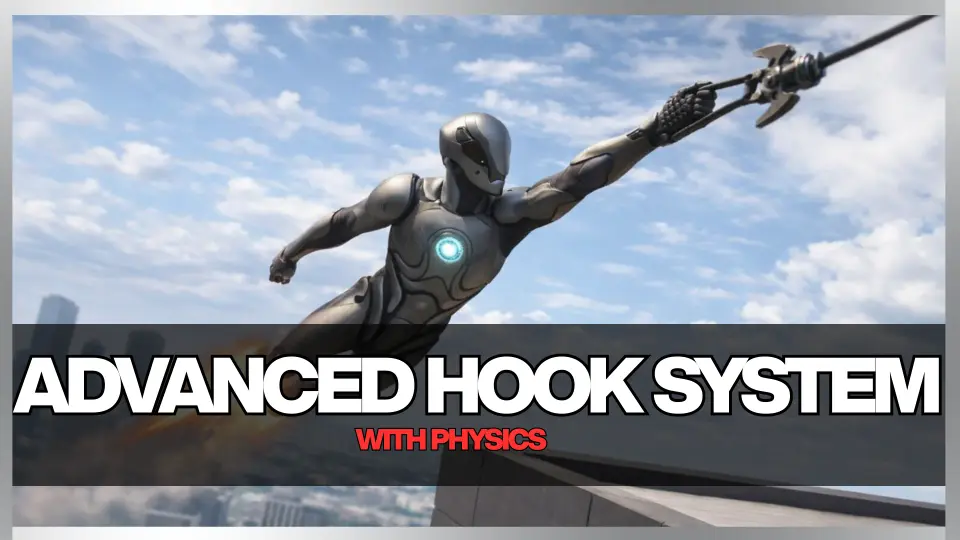
The creator lists specific use cases in the material, and they all point toward characters that need vertical and horizontal mobility without sacrificing momentum. Sci-fi characters often carry gadgets that fire grapples or cables; this system gives that gadget believable physics. Superhero games benefit from swings that can redirect mid-air or pull an armored hero toward a building wall. Parkour mechanics demand fast, repeatable traversal, and a physics-based hook can become the centerpiece of that movement loop.
Fast-paced action gameplay gains the most because it relies on responsive, readable tools. A grappling hook that behaves consistently under physics gives players a language for movement: hook a surface, swing, let go, hook again. Each action carries a natural logic that players internalize quickly.
Sci-fi characters — useful for gadget-based mobility in futuristic spaces
Superhero games — enables dramatic swinging and high-speed pulls
Parkour mechanics — supports wall runs, gap swings, and vertical launches
Fast-paced action gameplay — keeps the fighting or chasing momentum alive
The common thread is that all of these scenarios require movement that feels physically grounded even when the character is doing something impossible. A physics-driven system delivers that contradiction: the acts are spectacular, but the rope behavior obeys understandable rules.
Plug-and-Play Setup with Room to Customize
On the practical side, the system is “plug and play, easy to customize, and built for performance.” For studios and solo developers, those three qualities reduce the barrier to entry. A plug-and-play setup means the core mechanics can be dropped into an existing character controller without replacing the entire movement ecosystem. Easy customization means the swing force, pull speed, and surface requirements are not buried in a mess of interlocking scripts.
The performance focus is just as important. Physics simulations can become expensive when they involve many joints and collision checks. A grappling system that is mindful of performance allows developers to use it without locking out weaker hardware or requiring extensive optimization passes.
Because the material is clear that the system is intended for superhero and action games, developers who are prototyping traversal abilities can treat this as a complete foundation rather than a technical experiment. The physics layer handles rope tension and momentum; the developer supplies the level design and character feel.
A Movement Tool That Treats the Rope Like a Real Object
The strongest takeaway from this grappling hook system is that it refuses to fake the rope. Real-time physics calculations do the work of simulating tension, momentum, and pull, which means the character’s motion emerges from those forces. A superhero can swing with believable arc; a parkour runner can use the hook for a height boost; a sci-fi hunter can rip through a level with a series of short, aggressive pulls.
For developers building fast action or movement-heavy gameplay, this system offers a useful starting point: a physics-based traversal kit that is responsive to player input, adjustable through force settings, and ready to be dropped into a project. The hook lands, the line goes taut, and the physics takes over.
 Gameplay Features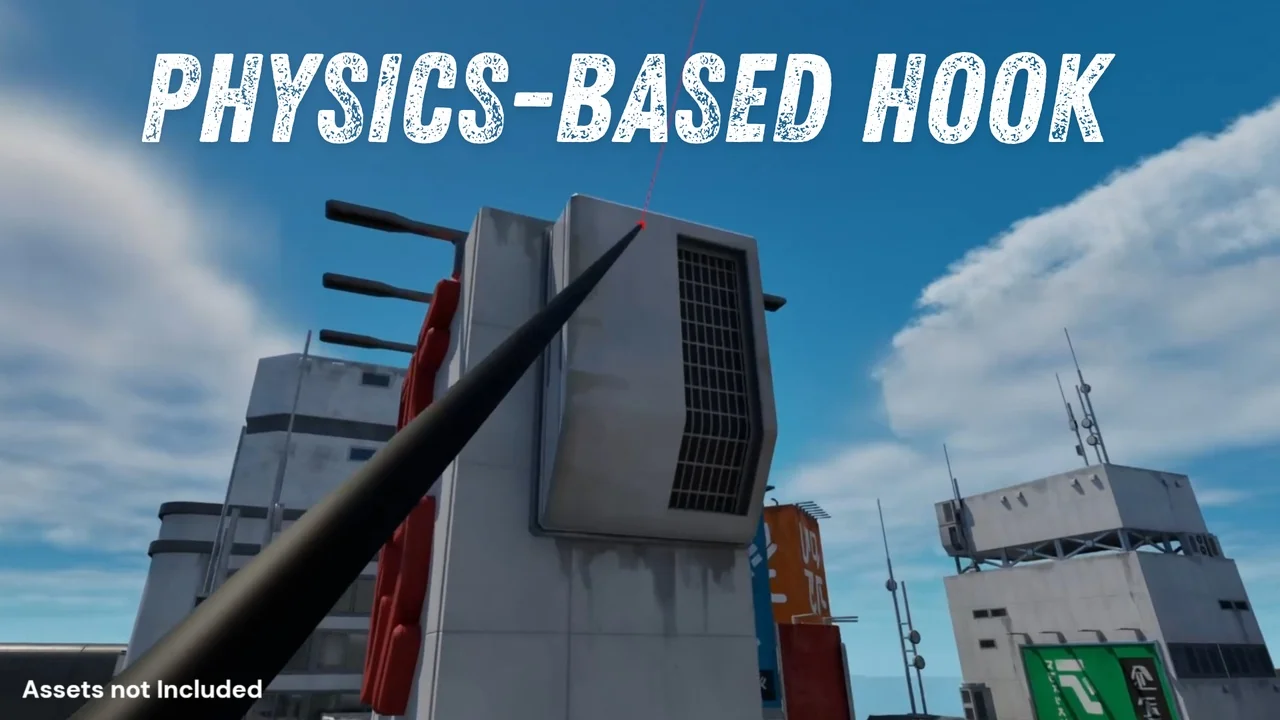
 Gameplay Features
 Gameplay Features
 Gameplay Features