"5da73d49ff33a5b1"{"id":"1002386","slug":"girl-monk-v001","title":"Girl Monk v001","category":"Characters \u0026 Creatures","engine":"5.0+","assetVersion":"","engineVersion":"Engine Version: 5.0+","tag":"Characters","accent":"blue","visual":"character","summary":"Explore the rigging, modular meshes, UE4 and UE5 skeletal setups, and weapon bone systems included in the Girl Monk v001 character asset.","platform":"Unreal Engine","indexPolicy":"index","publishedAt":"2026-11-10T04:03:38.882Z","updatedAt":"2026-11-10T04:03:38.882Z","sourceNotes":[],"fileContents":[],"compatibility":["Unreal Engine","Engine Version: 5.0+"],"featuredImage":{"alt":"Girl Monk v001","src":"/wp-content/uploads/published/2026/11/12bf379d7330-eac2888b-1d54-4cf0-90bb-f75f3596b06d-d15ea83a0d.webp"},"hasDownloadLink":true,"downloads":0,"terms":[{"taxonomy":"category","slug":"characters-and-creatures","name":"Characters \u0026 Creatures"}],"galleryImages":[{"src":"/wp-content/uploads/published/2026/11/123b205f2ea2-e5b66427-d08f-43bd-b724-976a5b27355f-7a837b3b26.webp","alt":"Girl Monk v001"},{"src":"/wp-content/uploads/published/2026/11/80da5018c5a9-a9b81ce2-2362-4bec-a0ee-3a43c8b70be3-1611ae0bf7.webp","alt":"Girl Monk v001"},{"src":"/wp-content/uploads/published/2026/11/3346dc3fdddc-4e17e672-feb5-461a-a1c9-3172baf488e1-ce75f99f55.webp","alt":"Girl Monk v001"},{"src":"/wp-content/uploads/published/2026/11/b11204b7b104-6f614810-8bfb-4483-9d89-899817ced9c1-2b80e16b15.webp","alt":"Girl Monk v001"},{"src":"/wp-content/uploads/published/2026/11/1a39a97da6c2-596fbc1f-2b0a-4e17-9aad-f23cacdc89c5-5961250f94.webp","alt":"Girl Monk v001"},{"src":"/wp-content/uploads/published/2026/11/0f201479faca-d9d02aaf-15de-46a2-b40b-645d8c1008b4-a0ed613a71.webp","alt":"Girl Monk v001"},{"src":"/wp-content/uploads/published/2026/11/edc97744dbf0-eb755d62-eedb-483f-860c-868933b94741-419d9e82c5.webp","alt":"Girl Monk v001"},{"src":"/wp-content/uploads/published/2026/11/36357f3940c3-68a16576-ee26-4ed9-88c3-1be2a150aecb-a2c6841c3d.webp","alt":"Girl Monk v001"}],"accessPanel":{"kind":"resource","title":"Get this resource","eyebrow":"Free resource","message":"Download this resource in your browser.","fileName":"Content.7z","safetyNote":"Resources are manually reviewed before listing to improve quality and reduce obvious risks.","actionLabel":"Get this resource","resourceType":"Resource archive","versions":[]},"contentHtml":"\u003ch2\u003eDeploying Girl Monk v001 Across Action and Fantasy Roles\u003c/h2\u003e\u003cp\u003eThird-person fantasy projects and action-oriented martial arts titles frequently demand character assets that shift seamlessly between high-priority hero roles and secondary encounters. When assembling a playable protagonist, developers require clean topology, flexible outfit customization, and precise combat rigging to manage complex attack chains. In contrast, populating a game world with non-player characters demands fast integration, predictable collision profiles, and assets that function immediately within standard locomotion trees without requiring structural overhauls.\u003c/p\u003e\u003cp\u003eGirl Monk v001 is structured to operate equally well on both sides of that production boundary. As a protagonist, the character provides a disciplined, staff-wielding martial artist with realistic visual proportions and physically based rendering surfaces. Her design allows her to carry narrative weight in close-up cinematic framing, while her combat-ready posture provides clear readability during fast-paced third-person gameplay. When applied to friendly training masters, temple guardians, or roving warrior non-player characters, the same asset can be deployed rapidly across environmental zones, giving designers a cohesive visual anchor for eastern-inspired or martial fantasy factions.\u003c/p\u003e\u003ch2\u003eMesh Architecture and Outfit Modularity in Girl Monk v001\u003c/h2\u003e\u003cp\u003eCharacter customization often introduces technical hurdles when clothing items conflict with underlying body meshes. Many assets resolve clipping by removing sections of the base torso and limbs beneath outer garments, which restricts developers from stripping away layers, exchanging robes, or designing alternative armor pieces later in production. Girl Monk v001 tackles this dilemma by providing two distinct mesh configurations directly out of the box.\u003c/p\u003e\u003cp\u003eThe first mesh option features the complete ensemble merged with all cloth elements applied directly to the character. This unified configuration serves productions where rapid deployment and optimized draw calls take priority. For background encounters, patrol routes, or scenarios where clothing remains static throughout the campaign, this single-mesh version minimizes scene overhead and bypasses modular assembly steps.\u003c/p\u003e\u003cp\u003eThe second option delivers all clothing and accessory pieces as separate components while leaving the underlying body mesh fully intact beneath the garments. Preserving the entire body geometry allows developers to construct custom outfits, swap distinct layers, or implement progressive equipment systems without exposing hollow cavities in the character torso during dynamic movement. Because the asset maintains a low-poly baseline alongside realistic PBR material setups, the separated components preserve high visual fidelity without creating unnecessary rendering strain during intense gameplay encounters.\u003c/p\u003e\u003ch2\u003eSkeletal Structure Across Unreal Engine 4 and 5 Frameworks\u003c/h2\u003e\u003cp\u003ePipeline compatibility remains a major friction point when migrating assets across engine generations. Projects still operating within older production branches often struggle with the native bone naming conventions and hierarchy standards introduced in modern systems, while newer pipelines depend heavily on updated mannequin structures for retargeting and procedural blending.\u003c/p\u003e\u003cp\u003eTo support different production pipelines, Girl Monk v001 includes meshes configured for both major Unreal Engine skeletal architectures. The primary release integrates a full Unreal Engine 5 skeleton, incorporating all base UE5 reference bones to guarantee compatibility with native control rigs, retargeting profiles, and procedural locomotion tools. For studios operating within Unreal Engine 4 or maintaining established animation libraries structured through the legacy mannequin, the package includes dedicated meshes configured directly for the UE4 skeleton. This dual-structure packaging removes the necessity of building manual bone remaps or rebuilding complex retargeting chains, allowing technical artists to integrate the character into their existing animation graphs regardless of which engine generation underpins their pipeline.\u003c/p\u003e\u003ch2\u003eDedicated Weapon Bones, Staff Handling, and Animation Blueprints\u003c/h2\u003e\u003cp\u003eWielding a staff requires precise socket alignment and stable pivot points across dynamic combat sequences. Two-handed weapons frequently suffer from wrist twist artifacts, grip slippage, or awkward attachment offsets if an asset relies purely on generic hand sockets. Girl Monk v001 addresses staff combat mechanics by integrating extra weapon bones directly into the skeletal hierarchy.\u003c/p\u003e\u003cp\u003eThese dedicated weapon bones are supplied with verified positions and rotations, enabling them to serve immediately as locked sockets or specialized attachment points for the included staff. Because these bones are aligned for upcoming animation requirements, developers can link custom attack anim sets, parry mechanics, or two-handed staff spins without manually recalibrating weapon transforms for each unique posture. The character includes its own standalone animations tailored for immediate integration into in-game Animation Blueprints. State machines can transition smoothly from idle stances into active attacks, making it straightforward to construct responsive combat controllers without drafting basic locomotion sets from scratch.\u003c/p\u003e\u003ch2\u003eProduction Roles Best Suited for the Asset\u003c/h2\u003e\u003cp\u003eIntegrating third-party characters into an active project depends heavily on how cleanly the asset cooperates with existing scripts and companion elements. Beyond standard humanoids, Girl Monk v001 carries confirmed compatibility with assets like the Simple Land Creature: Bug_v1_1a, offering a ready-made combat target or companion creature within the broader project ecosystem. The inclusion of script-ready setups and native Animation Blueprint assets ensures that developers spend less time connecting logic nodes and more time balancing gameplay pacing.\u003c/p\u003e\u003cp\u003eSolo developers and mid-sized teams crafting action RPGs, martial arts brawlers, or adventure games benefit the most from this package. By supplying both merged and modular mesh options, dual-generation skeletal files for UE4 and UE5, and specialized weapon bone handling for staff mechanics, the asset eliminates the common technical bottlenecks that typically delay melee combat implementation.\u003c/p\u003e\n\n\u003ch2\u003eExplore Similar Assets\u003c/h2\u003e\n\u003cul\u003e\n\u003cli\u003e\u003ca href=\"https://3dcghub.com/f3-warrior-girl-scarlett/\" rel=\"noopener noreferrer\"\u003eF3 Warrior Girl Scarlett\u003c/a\u003e\u003c/li\u003e\n\u003cli\u003e\u003ca href=\"https://3dcghub.com/modular-anime-character-girl/\" rel=\"noopener noreferrer\"\u003eModular Anime Character (girl)\u003c/a\u003e\u003c/li\u003e\n\u003cli\u003e\u003ca href=\"https://3dcghub.com/streamer-girl-sci-fi-stylized-toon-webcam-performer/\" rel=\"noopener noreferrer\"\u003eStreamer girl. Sci-fi stylized toon webcam performer\u003c/a\u003e\u003c/li\u003e\n\u003cli\u003e\u003ca href=\"https://3dcghub.com/stellar-girl-celeste/\" rel=\"noopener noreferrer\"\u003eStellar Girl Celeste\u003c/a\u003e\u003c/li\u003e\n\u003cli\u003e\u003ca href=\"https://3dcghub.com/elven-girl-belle/\" rel=\"noopener noreferrer\"\u003eElven Girl Belle\u003c/a\u003e\u003c/li\u003e\n\u003c/ul\u003e","contentTextLength":6543,"navigation":{"current":34,"total":4340,"previous":{"id":"1002387","slug":"gladiator-warrior","title":"Gladiator Warrior","category":"Characters \u0026 Creatures","platform":"Unreal Engine","updatedAt":"2026-11-10T04:05:01.420Z"},"next":{"id":"1002385","slug":"female-hero-action-adventure","title":"Female Hero: Action adventure","category":"Characters \u0026 Creatures","platform":"Unreal Engine","updatedAt":"2026-11-10T04:02:57.220Z"}},"relatedResources":[{"id":"1001804","slug":"f3-warrior-girl-scarlett","title":"F3 Warrior Girl Scarlett","category":"Characters \u0026 Creatures","engine":"5.1+","assetVersion":"","engineVersion":"Engine Version: 5.1+","tag":"Characters","accent":"blue","visual":"character","summary":"Explore F3 Warrior Girl Scarlett for UE5, featuring modular parts, Epic Skeleton rigging, ARkit blendshapes, and Xandra Character Creator support.","platform":"Unreal Engine","indexPolicy":"index","publishedAt":"2026-10-21T07:55:59.371Z","updatedAt":"2026-10-21T07:55:59.371Z","sourceNotes":[],"fileContents":[],"compatibility":["Unreal Engine","Engine Version: 5.1+"],"featuredImage":{"alt":"F3 Warrior Girl Scarlett","src":"/wp-content/uploads/published/2026/10/3ff4a3d9c180-93e6847a-6539-400c-b282-f7230a72232c-bc82cfec5c.webp"},"hasDownloadLink":true,"downloads":1},{"id":"2149","slug":"cyberpunk-girl","title":"Cyberpunk Girl","category":"Characters \u0026 Creatures","engine":"5.1+","assetVersion":"","engineVersion":"Engine Version: 5.1+","tag":"Characters","accent":"blue","visual":"character","summary":"Boost your sci-fi project with this realistic Cyberpunk Girl character. Features high-quality battle armor and a professional animation blueprint for games.","platform":"Unreal Engine","indexPolicy":"index","publishedAt":"2026-02-07T08:02:10.000Z","updatedAt":"2026-11-10T13:41:41.350Z","sourceNotes":[],"fileContents":[],"compatibility":["Unreal Engine","Engine Version: 5.1+"],"featuredImage":{"alt":"Cyberpunk Girl","src":"https://3dcghub.com/wp-content/uploads/2026/02/5d65630f-717f-480e-9b12-e4804c87c017.webp"},"hasDownloadLink":true,"downloads":0},{"id":"1002374","slug":"modular-anime-character-girl","title":"Modular Anime Character (girl)","category":"Characters \u0026 Creatures","engine":"5.3+","assetVersion":"","engineVersion":"Engine Version: 5.3+","tag":"Characters","accent":"blue","visual":"character","summary":"A modular anime girl assembled from roughly 60 recolorable parts, with expression morph targets, edited normals, and animation blueprint plus script wiring.","platform":"Unreal Engine","indexPolicy":"index","publishedAt":"2026-11-09T18:44:39.374Z","updatedAt":"2026-11-09T18:44:39.374Z","sourceNotes":[],"fileContents":[],"compatibility":["Unreal Engine","Engine Version: 5.3+"],"featuredImage":{"alt":"Modular Anime Character (girl)","src":"/wp-content/uploads/published/2026/11/c9cf5fd8b68a-ca6c0a54-e400-4d38-94a6-f1f0ac9d5246-d49586c5d7.webp"},"hasDownloadLink":true,"downloads":0}]}
Characters
Girl Monk v001
Explore the rigging, modular meshes, UE4 and UE5 skeletal setups, and weapon bone systems included in the Girl Monk v001 character asset.
Deploying Girl Monk v001 Across Action and Fantasy Roles
Third-person fantasy projects and action-oriented martial arts titles frequently demand character assets that shift seamlessly between high-priority hero roles and secondary encounters. When assembling a playable protagonist, developers require clean topology, flexible outfit customization, and precise combat rigging to manage complex attack chains. In contrast, populating a game world with non-player characters demands fast integration, predictable collision profiles, and assets that function immediately within standard locomotion trees without requiring structural overhauls.
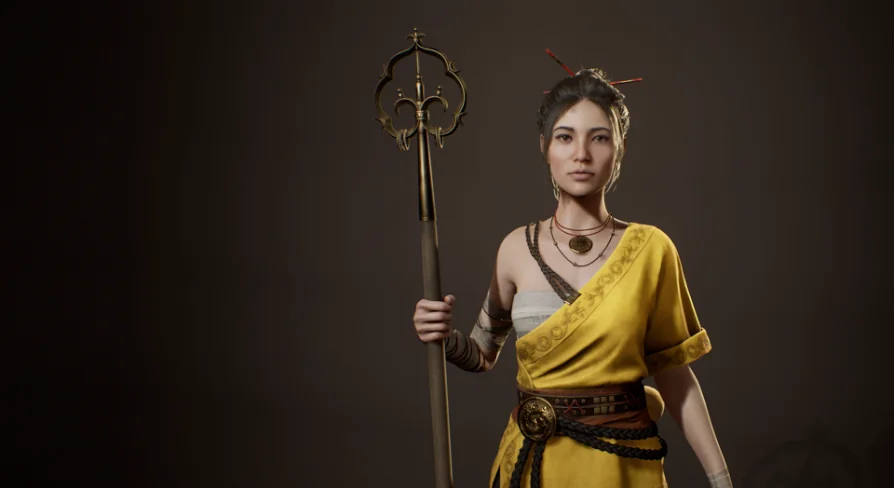
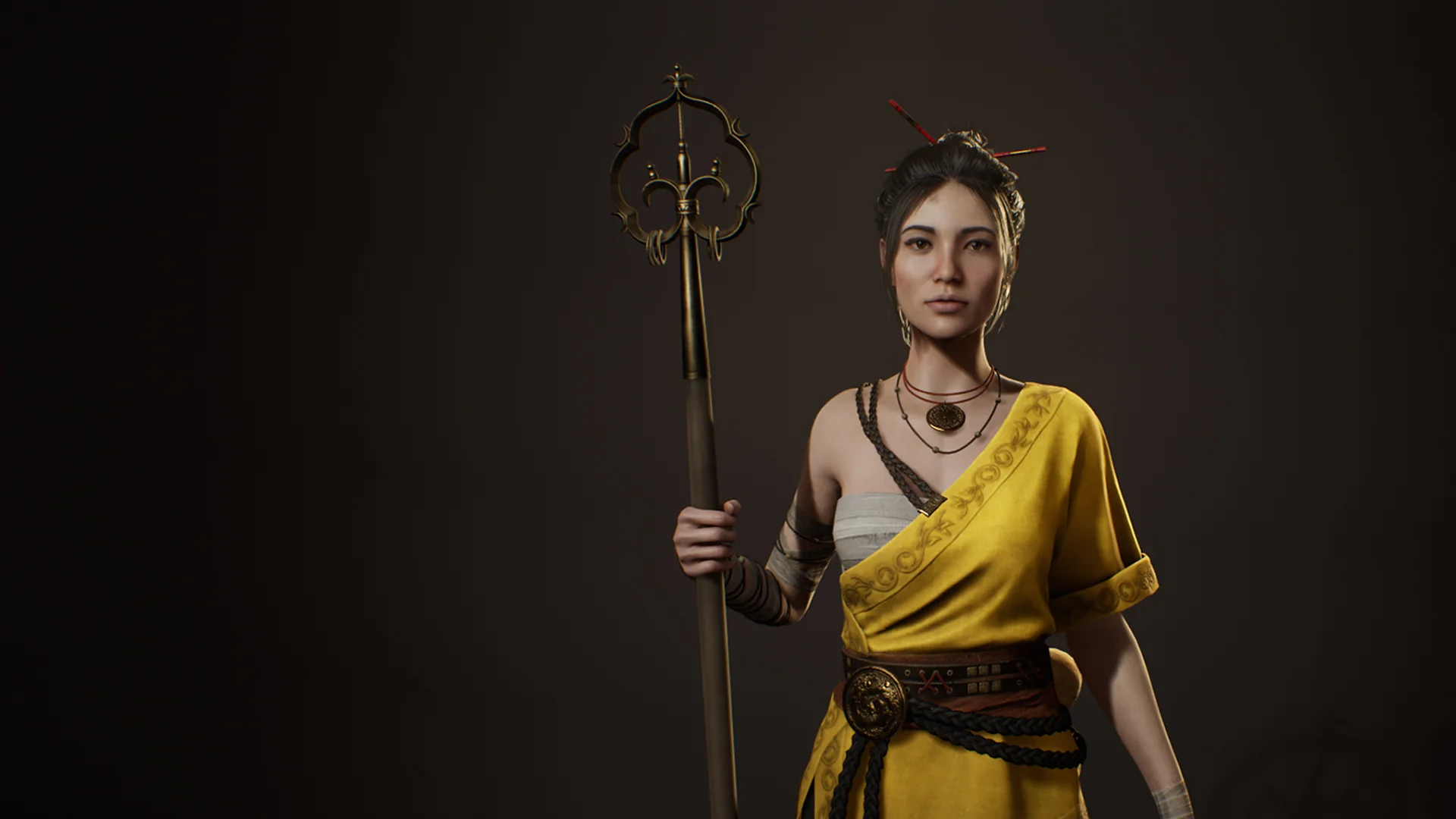
Girl Monk v001 is structured to operate equally well on both sides of that production boundary. As a protagonist, the character provides a disciplined, staff-wielding martial artist with realistic visual proportions and physically based rendering surfaces. Her design allows her to carry narrative weight in close-up cinematic framing, while her combat-ready posture provides clear readability during fast-paced third-person gameplay. When applied to friendly training masters, temple guardians, or roving warrior non-player characters, the same asset can be deployed rapidly across environmental zones, giving designers a cohesive visual anchor for eastern-inspired or martial fantasy factions.
Mesh Architecture and Outfit Modularity in Girl Monk v001
Character customization often introduces technical hurdles when clothing items conflict with underlying body meshes. Many assets resolve clipping by removing sections of the base torso and limbs beneath outer garments, which restricts developers from stripping away layers, exchanging robes, or designing alternative armor pieces later in production. Girl Monk v001 tackles this dilemma by providing two distinct mesh configurations directly out of the box.
The first mesh option features the complete ensemble merged with all cloth elements applied directly to the character. This unified configuration serves productions where rapid deployment and optimized draw calls take priority. For background encounters, patrol routes, or scenarios where clothing remains static throughout the campaign, this single-mesh version minimizes scene overhead and bypasses modular assembly steps.
The second option delivers all clothing and accessory pieces as separate components while leaving the underlying body mesh fully intact beneath the garments. Preserving the entire body geometry allows developers to construct custom outfits, swap distinct layers, or implement progressive equipment systems without exposing hollow cavities in the character torso during dynamic movement. Because the asset maintains a low-poly baseline alongside realistic PBR material setups, the separated components preserve high visual fidelity without creating unnecessary rendering strain during intense gameplay encounters.
Skeletal Structure Across Unreal Engine 4 and 5 Frameworks
Pipeline compatibility remains a major friction point when migrating assets across engine generations. Projects still operating within older production branches often struggle with the native bone naming conventions and hierarchy standards introduced in modern systems, while newer pipelines depend heavily on updated mannequin structures for retargeting and procedural blending.
To support different production pipelines, Girl Monk v001 includes meshes configured for both major Unreal Engine skeletal architectures. The primary release integrates a full Unreal Engine 5 skeleton, incorporating all base UE5 reference bones to guarantee compatibility with native control rigs, retargeting profiles, and procedural locomotion tools. For studios operating within Unreal Engine 4 or maintaining established animation libraries structured through the legacy mannequin, the package includes dedicated meshes configured directly for the UE4 skeleton. This dual-structure packaging removes the necessity of building manual bone remaps or rebuilding complex retargeting chains, allowing technical artists to integrate the character into their existing animation graphs regardless of which engine generation underpins their pipeline.
Dedicated Weapon Bones, Staff Handling, and Animation Blueprints
Wielding a staff requires precise socket alignment and stable pivot points across dynamic combat sequences. Two-handed weapons frequently suffer from wrist twist artifacts, grip slippage, or awkward attachment offsets if an asset relies purely on generic hand sockets. Girl Monk v001 addresses staff combat mechanics by integrating extra weapon bones directly into the skeletal hierarchy.
These dedicated weapon bones are supplied with verified positions and rotations, enabling them to serve immediately as locked sockets or specialized attachment points for the included staff. Because these bones are aligned for upcoming animation requirements, developers can link custom attack anim sets, parry mechanics, or two-handed staff spins without manually recalibrating weapon transforms for each unique posture. The character includes its own standalone animations tailored for immediate integration into in-game Animation Blueprints. State machines can transition smoothly from idle stances into active attacks, making it straightforward to construct responsive combat controllers without drafting basic locomotion sets from scratch.
Production Roles Best Suited for the Asset
Integrating third-party characters into an active project depends heavily on how cleanly the asset cooperates with existing scripts and companion elements. Beyond standard humanoids, Girl Monk v001 carries confirmed compatibility with assets like the Simple Land Creature: Bug_v1_1a, offering a ready-made combat target or companion creature within the broader project ecosystem. The inclusion of script-ready setups and native Animation Blueprint assets ensures that developers spend less time connecting logic nodes and more time balancing gameplay pacing.
Solo developers and mid-sized teams crafting action RPGs, martial arts brawlers, or adventure games benefit the most from this package. By supplying both merged and modular mesh options, dual-generation skeletal files for UE4 and UE5, and specialized weapon bone handling for staff mechanics, the asset eliminates the common technical bottlenecks that typically delay melee combat implementation.
 Characters
 Characters
 Characters
 Characters