"7066dd76da796369"{"id":"27635","slug":"elven-girl-belle","title":"Elven Girl Belle","category":"Characters \u0026 Creatures","engine":"5.0+","assetVersion":"Engine version: 5.0+","engineVersion":"","tag":"Characters","accent":"blue","visual":"character","summary":"Elven Girl Belle centers on a customizable character workflow rather than a fixed model. It includes blueprints for avatar setup, supports modular outfit and hairstyle swapping, and provides demo maps inside the project structure.","platform":"Unreal Engine","publishedAt":"2026-04-27T16:47:45.000Z","updatedAt":"2026-04-27T16:47:46.000Z","sourceNotes":[],"fileContents":[],"compatibility":["Unreal Engine","Engine version: 5.0+"],"featuredImage":{"alt":"Elven Girl Belle","src":"https://3dcghub.com/wp-content/uploads/2026/04/89b5c2d0bf62_c1394b42-793f-4e1d-9e80-07e1d01e8a79.webp"},"hasDownloadLink":true,"downloads":1,"terms":[{"taxonomy":"category","slug":"characters-and-creatures","name":"Characters \u0026 Creatures"},{"taxonomy":"post_tag","slug":"animation","name":"Animation"},{"taxonomy":"post_tag","slug":"characters","name":"Characters"},{"taxonomy":"post_tag","slug":"unreal-engine-5","name":"Unreal Engine 5"}],"galleryImages":[{"src":"https://3dcghub.com/wp-content/uploads/2026/04/45160ce9939b_7c13dc0b-2d81-4d65-b552-090ba8c75a53.webp","alt":"Elven Girl Belle"},{"src":"https://3dcghub.com/wp-content/uploads/2026/04/3721f3bfab6b_f47cdc55-072f-4e55-a362-84f2adf34c6a.webp","alt":"Elven Girl Belle"},{"src":"https://3dcghub.com/wp-content/uploads/2026/04/1d3e8514741e_573b6b65-2947-48fd-be09-fb3c33c04a08.webp","alt":"Elven Girl Belle"},{"src":"https://3dcghub.com/wp-content/uploads/2026/04/a5695838b011_2b92e06a-3d65-4cce-9692-dcafc9a35964.webp","alt":"Elven Girl Belle"},{"src":"https://3dcghub.com/wp-content/uploads/2026/04/7aab4d8476f5_f9660453-830a-42fb-975f-131795342c6d.webp","alt":"Elven Girl Belle"},{"src":"https://3dcghub.com/wp-content/uploads/2026/04/fc437f00faf8_13b3de6b-ed3f-4542-a672-785b339eab95.webp","alt":"Elven Girl Belle"},{"src":"https://3dcghub.com/wp-content/uploads/2026/04/2c6ee61231ea_b07c7099-be30-4618-8a17-19b3cd3f2e50.webp","alt":"Elven Girl Belle"},{"src":"https://3dcghub.com/wp-content/uploads/2026/04/3ecedc240d4e_47f3508a-10e5-4c7c-a005-6d10bcae6392.webp","alt":"Elven Girl Belle"}],"accessPanel":{"kind":"resource","title":"Access this resource","eyebrow":"Free Download","message":"Log in or create a free account to start your download.","fileName":"F2ElvenGirlBelle.7z","safetyNote":"All resources are 100% manually reviewed to eliminate all risks.","actionLabel":"Download Free","resourceType":"Resource archive"},"contentHtml":"\u003cp\u003eGetting started with Elven Girl Belle begins in the project’s included demo maps, located at \u003ccode\u003eContent/XANDRA/Characters/YourCharacter/Maps\u003c/code\u003e. The package also points users to documentation first, which makes the setup path clear: open the maps, review the character in context, and work from the included character framework rather than treating it as a single static figure.\u003c/p\u003e \u003cp\u003eThis release sits inside Xandra’s Customizable Character System, where modular compatibility is part of the core workflow. Product tags matter here, because compatibility is tied to those labels. The example given is that products marked \u003ccode\u003eF2\u003c/code\u003e Work with other \u003ccode\u003eF2\u003c/code\u003e Products, which makes the system easier to navigate when mixing parts across related character packs.\u003c/p\u003e \u003ch2\u003eSetting up Elven Girl Belle in the Xandra character workflow\u003c/h2\u003e\n\u003cp\u003eElven Girl Belle is presented as a fully customizable character with included blueprints. That detail shapes how the asset is meant to be used. Instead of stopping at a finished appearance, the package supports building your own avatar through the supplied setup. The emphasis is on control over the character’s look inside the existing system.\u003c/p\u003e \u003cp\u003eThe setup direction is practical and fairly specific. Documentation is part of the expected starting point, and the demo maps give a direct place to inspect the character and the broader implementation. For teams or individual users working inside a character pipeline, that means the asset is not only a visual model but also part of a repeatable character assembly process.\u003c/p\u003e \u003ch2\u003eElven Girl Belle customization: blueprints, outfits, and hairstyles\u003c/h2\u003e\n\u003cp\u003eThe most concrete feature here is full customization through included blueprints. That makes Elven Girl Belle less about one locked design and more about variation. Avatar creation is a named feature, and the package is built to support swapping visible character parts rather than keeping every element fixed.\u003c/p\u003e \u003cp\u003eOutfits and hairstyles can be exchanged with modular parts from the creator’s other asset packs. This is one of the strongest practical details in the package because it connects Belle to a broader library of matching character content. Users who are already building around modular character pieces can treat this character as one more compatible part of that workflow, as long as the product tags line up.\u003c/p\u003e \u003cp\u003eThe tags attached to the character also help frame the sort of presentation it fits. Those tags point toward a cute, fantasy-leaning elf girl character, with associations such as villager, princess, face-focused presentation, dress styling, and creator or vtuber-oriented use. These tags do not redefine the feature set, but they do indicate the kind of scenes and character roles Belle is suited to visually.\u003c/p\u003e \u003ch2\u003eEpic Skeleton rigging and marketplace animation compatibility\u003c/h2\u003e\n\u003cp\u003eRigging is one of the clearest production-facing details in the package. Elven Girl Belle is rigged to the Epic Skeleton, and that is paired with stated compatibility with marketplace animations. For Unreal users, that matters immediately at the animation stage: the character is prepared to work with an established animation setup rather than needing a bespoke rig before any movement can be tested.\u003c/p\u003e \u003cp\u003eThat compatibility also helps place the asset in projects where character iteration matters. A modular character becomes far more usable when animation integration is not isolated from the rest of the workflow. Here, rigging and animation support are not secondary notes; they are part of the central implementation path alongside customization.\u003c/p\u003e \u003ch2\u003eARKit blendshapes and Live-Link setup for Elven Girl Belle\u003c/h2\u003e\n\u003cp\u003eFacial workflow is another major part of the package. Elven Girl Belle includes Live-Link setup with ARKit blendshapes. That makes the asset relevant not only for standard in-engine character use, but also for facial performance scenarios where real-time expression work is part of the plan.\u003c/p\u003e \u003cp\u003eCombined with tags such as creator and vtuber, the facial setup points to a character that can serve more than one presentation style. It can function in game scenes, character showcases, or performance-driven character work where face animation and live expression are important. The package does not position facial features as an optional extra; they are directly named in the setup.\u003c/p\u003e \u003cp\u003eThere is also a useful connection between the facial side and the modular side. A character intended for customization often needs to hold together under different appearances, while face systems need consistency for animation and performance work. Belle is framed around both needs: visual swapping through modular parts and live facial setup through ARKit blendshapes.\u003c/p\u003e \u003ch2\u003eWhere Belle fits best in production\u003c/h2\u003e\n\u003cp\u003eElven Girl Belle makes the most sense for users who want a fantasy-styled elf girl character inside a modular Unreal character system, especially when avatar customization is part of the job. The package is aimed at hands-on character assembly rather than passive use. Blueprints are included, outfit and hairstyle swapping are part of the intended workflow, and compatibility tags help identify where the character can connect with other related products.\u003c/p\u003e \u003cp\u003eFor practical use, the strongest fit is a pipeline that benefits from three things at once: modular character variation, ready rigging to the Epic Skeleton, and facial setup through Live-Link with ARKit blendshapes. The included documentation path and demo map location round that out with a straightforward place to begin testing and integration.\u003c/p\u003e\n\n\u003ch2\u003eMore From The Same Workflow\u003c/h2\u003e\n\u003cul\u003e\n\u003cli\u003e\u003ca href=\"https://3dcghub.com/1950s-characters-bundle-1950s-characters-bundle-1950-character-gangster-3d/\" title=\"1950s Characters Bundle ( 1950s Characters Bundle 1950 Character Gangster 3D )\"\u003e1950s Characters Bundle ( 1950s Characters Bundle 1950 Character Gangster 3D )\u003c/a\u003e\u003c/li\u003e\n\u003cli\u003e\u003ca href=\"https://3dcghub.com/character-rigged-npc-character-rigged-npc-rig-characters-animated-3d/\" title=\"Character / Rigged / NPC ( Character Rigged NPC Rig Characters Animated 3D )\"\u003eCharacter / Rigged / NPC ( Character Rigged NPC Rig Characters Animated 3D )\u003c/a\u003e\u003c/li\u003e\n\u003cli\u003e\u003ca href=\"https://3dcghub.com/military-animation-pack-i-unarmed/\" title=\"Military Animation Pack I (Unarmed)\"\u003eMilitary Animation Pack I (Unarmed)\u003c/a\u003e\u003c/li\u003e\n\u003cli\u003e\u003ca href=\"https://3dcghub.com/mixamo-animation-retargeting-2/\" title=\"Mixamo Animation Retargeting 2\"\u003eMixamo Animation Retargeting 2\u003c/a\u003e\u003c/li\u003e\n\u003cli\u003e\u003ca href=\"https://3dcghub.com/r-tune-vehicle-physics-2-0-vehicle-system-for-games-animation/\" title=\"R-Tune Vehicle Physics 2.0 – Vehicle System for Games \u0026amp;amp; Animation\"\u003eR-Tune Vehicle Physics 2.0 – Vehicle System for Games \u0026amp; Animation\u003c/a\u003e\u003c/li\u003e\n\u003c/ul\u003e","contentTextLength":5831,"navigation":{"current":2244,"total":4016,"previous":{"id":"27648","slug":"fantasy-weapon-pack","title":"Fantasy Weapon Pack","category":"Weapons \u0026 Combat","platform":"Unreal Engine","updatedAt":"2026-04-27T17:02:23.000Z"},"next":{"id":"27618","slug":"elven-modular-architecture","title":"Elven Modular Architecture","category":"Buildings \u0026 Architecture","platform":"Unreal Engine","updatedAt":"2026-04-26T13:27:50.000Z"}},"relatedResources":[{"id":"28054","slug":"daemon-girl-deluxe-version-game-ready","title":"Daemon Girl Deluxe Version - Game Ready","category":"Characters \u0026 Creatures","engine":"4.26+,5.0+","assetVersion":"Engine version: 4.26+,5.0+","engineVersion":"","tag":"Characters","accent":"blue","visual":"character","summary":"Daemon Girl Deluxe Version - Game Ready presents a clearly defined character asset with a game-oriented label built into its name. A 2/4/2025 update changes it into a merged bundle, which matters when planning how the asset is grouped and used in production.","platform":"Unreal Engine","publishedAt":"2026-05-01T08:42:00.000Z","updatedAt":"2026-05-01T08:42:01.000Z","sourceNotes":[],"fileContents":[],"compatibility":["Unreal Engine","Engine version: 4.26+,5.0+"],"featuredImage":{"alt":"Daemon Girl Deluxe Version - Game Ready","src":"https://3dcghub.com/wp-content/uploads/2026/05/8154a561101e_file.webp"},"hasDownloadLink":true,"downloads":5},{"id":"1001804","slug":"f3-warrior-girl-scarlett","title":"F3 Warrior Girl Scarlett","category":"Characters \u0026 Creatures","engine":"5.1+","assetVersion":"","engineVersion":"Engine Version: 5.1+","tag":"Characters","accent":"blue","visual":"character","summary":"Explore F3 Warrior Girl Scarlett for UE5, featuring modular parts, Epic Skeleton rigging, ARkit blendshapes, and Xandra Character Creator support.","platform":"Unreal Engine","publishedAt":"2026-10-21T07:55:59.371Z","updatedAt":"2026-10-21T07:55:59.371Z","sourceNotes":[],"fileContents":[],"compatibility":["Unreal Engine","Engine Version: 5.1+"],"featuredImage":{"alt":"F3 Warrior Girl Scarlett","src":"/wp-content/uploads/published/2026/10/3ff4a3d9c180-93e6847a-6539-400c-b282-f7230a72232c-bc82cfec5c.webp"},"hasDownloadLink":true,"downloads":0},{"id":"1001368","slug":"streamer-girl-sci-fi-stylized-toon-webcam-performer","title":"Streamer girl. Sci-fi stylized toon webcam performer","category":"Characters \u0026 Creatures","engine":"5.0+","assetVersion":"","engineVersion":"Engine Version: 5.0+","tag":"Characters","accent":"blue","visual":"character","summary":"Explore the stylized Streamer Girl character for Unreal Engine, featuring 52 Apple ARKit blendshapes, modular clothing, UDIM texturing, and custom shaders.","platform":"Unreal Engine","publishedAt":"2026-10-04T10:36:06.426Z","updatedAt":"2026-10-04T10:36:06.426Z","sourceNotes":[],"fileContents":[],"compatibility":["Unreal Engine","Engine Version: 5.0+"],"featuredImage":{"alt":"Streamer girl. Sci-fi stylized toon webcam performer","src":"/wp-content/uploads/published/2026/10/909150773bfa-d823be5a-de7d-4656-8817-00e85f717de4-1bd2465383.webp"},"hasDownloadLink":true,"downloads":0}]}
Characters
Elven Girl Belle
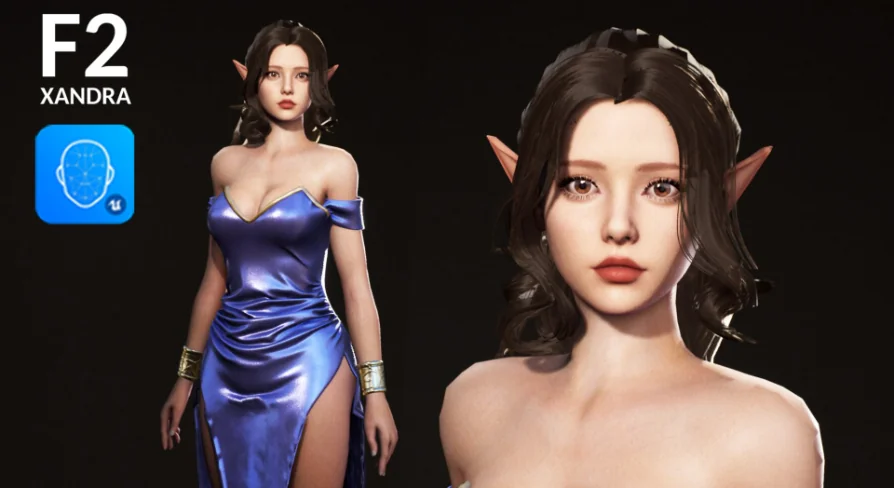
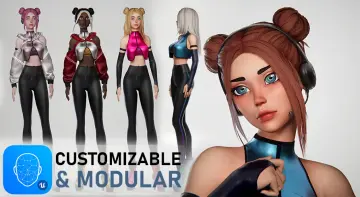
Elven Girl Belle centers on a customizable character workflow rather than a fixed model. It includes blueprints for avatar setup, supports modular outfit and hairstyle swapping, and provides demo maps inside the project structure.
Getting started with Elven Girl Belle begins in the project’s included demo maps, located at Content/XANDRA/Characters/YourCharacter/Maps. The package also points users to documentation first, which makes the setup path clear: open the maps, review the character in context, and work from the included character framework rather than treating it as a single static figure.
This release sits inside Xandra’s Customizable Character System, where modular compatibility is part of the core workflow. Product tags matter here, because compatibility is tied to those labels. The example given is that products marked F2 Work with other F2 Products, which makes the system easier to navigate when mixing parts across related character packs.
Setting up Elven Girl Belle in the Xandra character workflow
Elven Girl Belle is presented as a fully customizable character with included blueprints. That detail shapes how the asset is meant to be used. Instead of stopping at a finished appearance, the package supports building your own avatar through the supplied setup. The emphasis is on control over the character’s look inside the existing system.
The setup direction is practical and fairly specific. Documentation is part of the expected starting point, and the demo maps give a direct place to inspect the character and the broader implementation. For teams or individual users working inside a character pipeline, that means the asset is not only a visual model but also part of a repeatable character assembly process.
Elven Girl Belle customization: blueprints, outfits, and hairstyles
The most concrete feature here is full customization through included blueprints. That makes Elven Girl Belle less about one locked design and more about variation. Avatar creation is a named feature, and the package is built to support swapping visible character parts rather than keeping every element fixed.
Outfits and hairstyles can be exchanged with modular parts from the creator’s other asset packs. This is one of the strongest practical details in the package because it connects Belle to a broader library of matching character content. Users who are already building around modular character pieces can treat this character as one more compatible part of that workflow, as long as the product tags line up.
The tags attached to the character also help frame the sort of presentation it fits. Those tags point toward a cute, fantasy-leaning elf girl character, with associations such as villager, princess, face-focused presentation, dress styling, and creator or vtuber-oriented use. These tags do not redefine the feature set, but they do indicate the kind of scenes and character roles Belle is suited to visually.
Epic Skeleton rigging and marketplace animation compatibility
Rigging is one of the clearest production-facing details in the package. Elven Girl Belle is rigged to the Epic Skeleton, and that is paired with stated compatibility with marketplace animations. For Unreal users, that matters immediately at the animation stage: the character is prepared to work with an established animation setup rather than needing a bespoke rig before any movement can be tested.
That compatibility also helps place the asset in projects where character iteration matters. A modular character becomes far more usable when animation integration is not isolated from the rest of the workflow. Here, rigging and animation support are not secondary notes; they are part of the central implementation path alongside customization.
ARKit blendshapes and Live-Link setup for Elven Girl Belle
Facial workflow is another major part of the package. Elven Girl Belle includes Live-Link setup with ARKit blendshapes. That makes the asset relevant not only for standard in-engine character use, but also for facial performance scenarios where real-time expression work is part of the plan.
Combined with tags such as creator and vtuber, the facial setup points to a character that can serve more than one presentation style. It can function in game scenes, character showcases, or performance-driven character work where face animation and live expression are important. The package does not position facial features as an optional extra; they are directly named in the setup.
There is also a useful connection between the facial side and the modular side. A character intended for customization often needs to hold together under different appearances, while face systems need consistency for animation and performance work. Belle is framed around both needs: visual swapping through modular parts and live facial setup through ARKit blendshapes.
Where Belle fits best in production
Elven Girl Belle makes the most sense for users who want a fantasy-styled elf girl character inside a modular Unreal character system, especially when avatar customization is part of the job. The package is aimed at hands-on character assembly rather than passive use. Blueprints are included, outfit and hairstyle swapping are part of the intended workflow, and compatibility tags help identify where the character can connect with other related products.
For practical use, the strongest fit is a pipeline that benefits from three things at once: modular character variation, ready rigging to the Epic Skeleton, and facial setup through Live-Link with ARKit blendshapes. The included documentation path and demo map location round that out with a straightforward place to begin testing and integration.
 Characters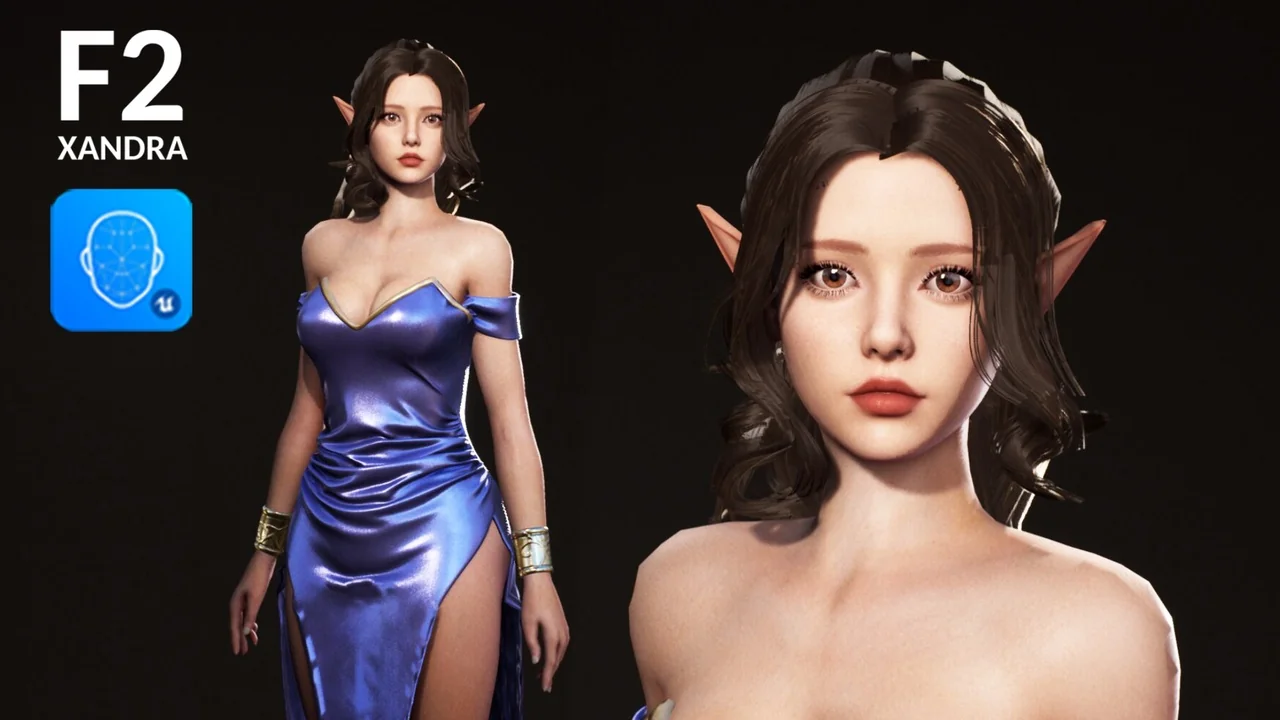
 Characters
 Characters
 Characters