"07a32e720bd988c8"{"id":"1002479","slug":"girl-anastasia","title":"Girl Anastasia","category":"Characters \u0026 Creatures","engine":"4.21+,5.0+","assetVersion":"","engineVersion":"Engine Version: 4.21+,5.0+","tag":"Characters","accent":"blue","visual":"character","summary":"Explore the low-poly, realistic PBR female character Girl Anastasia, built with Animation Blueprint support for RPG, strategy, and shooter projects.","platform":"Unreal Engine","indexPolicy":"index","publishedAt":"2026-11-12T03:34:23.461Z","updatedAt":"2026-11-12T03:34:23.461Z","sourceNotes":[],"fileContents":[],"compatibility":["Unreal Engine","Engine Version: 4.21+,5.0+"],"featuredImage":{"alt":"Girl Anastasia","src":"/wp-content/uploads/published/2026/11/6846003e441c-1926a9e7-cc79-4ab1-9481-3828a6331ff3-5c0dbe4328.webp"},"hasDownloadLink":true,"downloads":0,"terms":[{"taxonomy":"category","slug":"characters-and-creatures","name":"Characters \u0026 Creatures"}],"galleryImages":[{"src":"/wp-content/uploads/published/2026/11/9235a34f4795-48072137-8c21-4efa-9078-b60e6dda177d-cb7e666448.webp","alt":"Girl Anastasia"},{"src":"/wp-content/uploads/published/2026/11/94e6f7a5b123-9c5cc1d6-f583-4f13-86fa-ee98ffb3ee29-014095e23d.webp","alt":"Girl Anastasia"},{"src":"/wp-content/uploads/published/2026/11/14fcddf613e5-5d959018-364c-46d7-be9f-911d9cb60e0d-0612167d52.webp","alt":"Girl Anastasia"},{"src":"/wp-content/uploads/published/2026/11/baa44514cd0d-8cdfca22-5cc4-4eb8-851c-b9492b3f6e23-ba86482292.webp","alt":"Girl Anastasia"},{"src":"/wp-content/uploads/published/2026/11/8faebda16a30-7c40b501-c6bd-44f4-a348-310e4e87eb8c-437addc831.webp","alt":"Girl Anastasia"}],"accessPanel":{"kind":"resource","title":"Get this resource","eyebrow":"Free resource","message":"Download this resource in your browser.","fileName":"Content.7z","safetyNote":"Resources are manually reviewed before listing to improve quality and reduce obvious risks.","actionLabel":"Get this resource","resourceType":"Resource archive","versions":[]},"contentHtml":"\u003cp\u003eFast-paced first-person shooters, sprawling fantasy role-playing titles, and wide-perspective strategy games share a common requirement: lightweight character assets that preserve visual clarity across diverse rendering conditions. When a single character model must function under heavy performance constraints while maintaining believable surface responses, balancing mesh topology and surface shading becomes essential. Girl Anastasia meets this demand as a low-poly female character model tailored for broad interactive deployment, bringing together realistic physical rendering, gameplay-ready scripting, and dedicated animation graph infrastructure.\u003c/p\u003e \u003ch2\u003eDeploying Anastasia Across Action, Fantasy, and Strategy Frameworks\u003c/h2\u003e\n\u003cp\u003eGameplay scenarios impose distinctly different camera perspectives and technical demands on character art. In first-person shooter setups, models must integrate smoothly into squad mechanics, competitive team rosters, or AI combatant routines. The physical geometry needs to yield predictable hitboxes and responsive performance during high-intensity firefights where tick rates and frame stability take precedence over micro-dense polygonal surfaces. In an FPS context, Anastasia offers the lean footprint necessary to keep rendering overhead low, allowing hardware to prioritize fast camera movement, post-processing, and physics calculations.\u003c/p\u003e \u003cp\u003eTransporting that same mesh into a role-playing environment changes the production focus from raw frame economy to thematic cohesion and narrative presence. Fantasy RPG settings rely heavily on expressive player avatars, recruitable party members, and non-player townspeople. Anastasia carries a realistic design language that fits fantasy worlds grounded in believable costuming and human proportions rather than extreme exaggeration. Whether cast as an agile rogue, an expedition companion, or a storyline quest contact, the character integrates directly into fantasy role-playing frameworks without demanding custom mesh redesigns.\u003c/p\u003e \u003cp\u003eStrategy titles present a completely different set of spatial challenges. Top-down, isometric, and tactical command views require dozens or hundreds of individual actors rendered simultaneously on screen. High-density meshes quickly choke real-time draw calls and geometry pipelines in massive unit skirmishes. Because Anastasia is authored around a low-poly base, strategy developers can deploy the asset as an individualized squad leader, hero unit, or specialist soldier without running into the memory ceilings and batching bottlenecks that accompany heavier cinematic models.\u003c/p\u003e \u003ch2\u003eGirl Anastasia in Gameplay Logic and Animation Blueprints\u003c/h2\u003e\n\u003cp\u003eVisual assets inside real-time engines remain static statues until linked to logic components and motion trees. The inclusion of an Animation Blueprint alongside script elements gives Girl Anastasia an operational framework directly out of the box. Rather than starting from an unassigned skeletal mesh that requires complete retargeting logic and state variable construction from scratch, developers can hook directly into pre-configured animation pipelines.\u003c/p\u003e \u003cp\u003eAnimation Blueprints serve as the critical bridge between raw skeletal motion and player input. They interpret state parameters—such as forward velocity, direction angles, crouching states, falling checks, and aim offsets—and translate them into fluid blend spaces and transition graphs. Having this blueprint architecture intact accelerates the implementation cycle for core locomotion, enabling Anastasia to switch between idling, running, jumping, and context-sensitive interactions smoothly.\u003c/p\u003e \u003cp\u003eThe companion scripting components extend this integration by governing how the character interacts with environmental triggers, character controllers, and player cameras. Setting up camera attachment points, input mapping, and basic actor logic often consumes significant setup time when importing bare meshes. With dedicated script elements ready for attachment, configuring Anastasia as a playable pawn or a script-driven AI companion requires minimal foundational rigging in project code.\u003c/p\u003e \u003ch2\u003ePBR Realism Within a Low-Poly Profile\u003c/h2\u003e\n\u003cp\u003eLow-poly construction does not imply dated visual fidelity. Modern game rendering engines rely on physically based rendering (PBR) workflows to supply visual depth, surface accuracy, and realistic lighting responses without inflating geometry. Anastasia combines low-poly topology with a realistic PBR material setup, ensuring that environmental lighting dictates how light scatters, reflects, and absorbs across surfaces.\u003c/p\u003e \u003cp\u003eThe PBR workflow separates surface color, roughness, metalness, and normal data into standardized mathematical maps. When Anastasia moves from a dimly lit fantasy dungeon into harsh outdoor sunlight, the realistic material shaders react correctly to ambient light, direct sun angles, and local point sources. Fabrics retain their matte, non-reflective qualities, while metallic gear, leather accessories, and skin tones behave with physical authenticity. This realistic texture response compensates for reduced polygon counts, yielding clean silhouettes that hold up under direct scrutiny without overwhelming GPU budgets.\u003c/p\u003e \u003ch2\u003ePipeline Interoperability with Survivor Men V01\u003c/h2\u003e\n\u003cp\u003eAsset production pipelines suffer when newly introduced models break compatibility with an established character roster. Anastasia shares explicit compatibility with the Survivor men V01 set, a feature that significantly expands its utility across collaborative development projects. In shared survival, apocalyptic, or military environments, having character models that match existing asset conventions minimizes asset fragmentation.\u003c/p\u003e \u003cp\u003eCompatibility with Survivor men V01 implies alignment across proportions, skeletal hierarchy, or runtime configurations. This alignment allows technical artists to reuse compatible animation libraries, exchange contextual prop attachments, and design dual-character sequences without building separate mechanical rules for male and female cast members. Teams working on survival or squad-based shooters can populate balanced factions using Anastasia alongside Survivor men V01 assets, maintaining a cohesive aesthetic and mechanical unity across all playable and non-playable personnel.\u003c/p\u003e \u003ch2\u003eTarget Productions and Implementation Scenarios\u003c/h2\u003e\n\u003cp\u003eSolo creators and agile indie development teams gain the most leverage from Girl Anastasia. Independent studios rarely have dedicated character modelers, riggers, and technical animators working on separate tracks. An asset that pairs low-poly optimization with PBR visual fidelity, Animation Blueprint capability, and direct ecosystem compatibility solves several production challenges at once.\u003c/p\u003e \u003cp\u003eFor early prototyping stages, the asset provides immediate gameplay responsiveness, letting game designers test mechanics in shooters, fantasy RPGs, or strategy games using functional movement logic rather than placeholder primitive geometry. For finished indie titles aiming for cross-platform scalability, the lightweight polygonal profile ensures wide compatibility across diverse player hardware configurations while maintaining a realistic aesthetic footprint.\u003c/p\u003e\n\n\u003ch2\u003eContinue Browsing Similar Packs\u003c/h2\u003e\n\u003cul\u003e\n\u003cli\u003e\u003ca href=\"https://3dcghub.com/defender-girl/\" rel=\"noopener noreferrer\"\u003eDefender Girl\u003c/a\u003e\u003c/li\u003e\n\u003cli\u003e\u003ca href=\"https://3dcghub.com/vampire-girl-remaster/\" rel=\"noopener noreferrer\"\u003eVampire Girl Remaster\u003c/a\u003e\u003c/li\u003e\n\u003cli\u003e\u003ca href=\"https://3dcghub.com/novice-girl/\" rel=\"noopener noreferrer\"\u003eNovice Girl\u003c/a\u003e\u003c/li\u003e\n\u003cli\u003e\u003ca href=\"https://3dcghub.com/cyberpunk-sniper-girl/\" rel=\"noopener noreferrer\"\u003eCyberpunk Sniper Girl\u003c/a\u003e\u003c/li\u003e\n\u003cli\u003e\u003ca href=\"https://3dcghub.com/samantha-cyberpunk-girl/\" rel=\"noopener noreferrer\"\u003eSamantha - Cyberpunk girl\u003c/a\u003e\u003c/li\u003e\n\u003c/ul\u003e","contentTextLength":7285,"navigation":{"current":20,"total":4421,"previous":{"id":"1002480","slug":"goth-girl","title":"Goth girl","category":"Humans","platform":"Unreal Engine","updatedAt":"2026-11-12T03:38:12.469Z"},"next":{"id":"1002478","slug":"gang-character","title":"Gang Character","category":"Characters \u0026 Creatures","platform":"Unreal Engine","updatedAt":"2026-11-12T03:32:57.228Z"}},"relatedResources":[{"id":"1002496","slug":"subculture-girl","title":"Subculture Girl","category":"Characters \u0026 Creatures","engine":"4.21+,5.0+","assetVersion":"","engineVersion":"Engine Version: 4.21+,5.0+","tag":"Characters","accent":"blue","visual":"character","summary":"Explore Subculture Girl for Unreal Engine, featuring modular clothing, 40 Blueprint combinations, NvCloth skirt physics, and deep material masking.","platform":"Unreal Engine","indexPolicy":"index","publishedAt":"2026-11-12T04:04:56.009Z","updatedAt":"2026-11-12T04:04:56.009Z","sourceNotes":[],"fileContents":[],"compatibility":["Unreal Engine","Engine Version: 4.21+,5.0+"],"featuredImage":{"alt":"Subculture Girl","src":"/wp-content/uploads/published/2026/11/68cbf763cdde-b8b88f11-ae6e-4044-828a-d9ec94b9c819-9cdc7bfc70.webp"},"hasDownloadLink":true,"downloads":0},{"id":"1002473","slug":"defender-girl","title":"Defender Girl","category":"Characters \u0026 Creatures","engine":"4.18+,5.0+","assetVersion":"","engineVersion":"Engine Version: 4.18+,5.0+","tag":"Characters","accent":"blue","visual":"character","summary":"Technical breakdown of the Defender Girl low-poly character model, covering its UE4 skeleton in UE5, PBR textures, tissue physics, and mesh metrics.","platform":"Unreal Engine","indexPolicy":"index","publishedAt":"2026-11-12T03:21:41.247Z","updatedAt":"2026-11-12T03:21:41.247Z","sourceNotes":[],"fileContents":[],"compatibility":["Unreal Engine","Engine Version: 4.18+,5.0+"],"featuredImage":{"alt":"Defender Girl","src":"/wp-content/uploads/published/2026/11/34ebf783c1cb-7e1bc220-ffb4-405c-a452-f998b5628309-21cc64a9cc.webp"},"hasDownloadLink":true,"downloads":0},{"id":"1002400","slug":"vampire-girl-remaster","title":"Vampire Girl Remaster","category":"Characters \u0026 Creatures","engine":"4.20+,5.0+","assetVersion":"","engineVersion":"Engine Version: 4.20+,5.0+","tag":"Characters","accent":"blue","visual":"character","summary":"Technical analysis of the Vampire Girl Remaster character model, covering its 380-bone skeleton, 57 combat animations, dual head meshes, and engine setups.","platform":"Unreal Engine","indexPolicy":"index","publishedAt":"2026-11-10T04:29:40.350Z","updatedAt":"2026-11-10T04:29:40.350Z","sourceNotes":[],"fileContents":[],"compatibility":["Unreal Engine","Engine Version: 4.20+,5.0+"],"featuredImage":{"alt":"Vampire Girl Remaster","src":"/wp-content/uploads/published/2026/11/4ca8215a22f7-0fb979ce-b7f1-4748-9cd5-5109b05f2405-af7a569b29.webp"},"hasDownloadLink":true,"downloads":0}]}
Characters
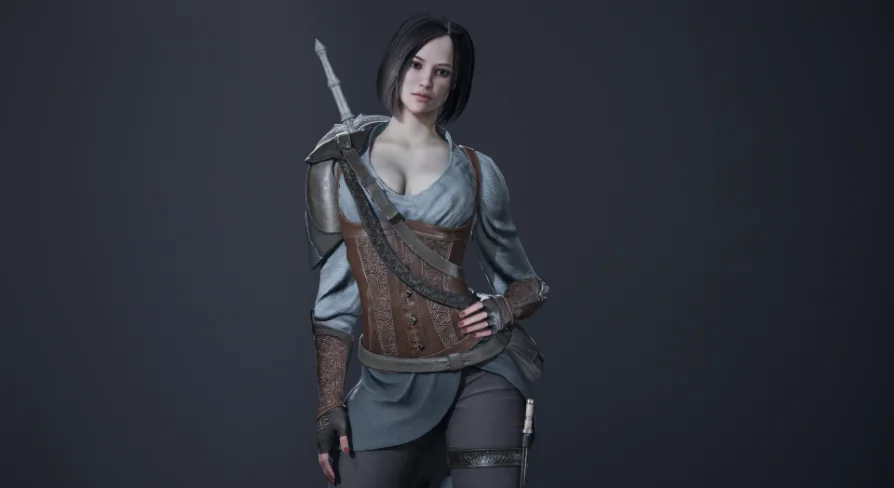
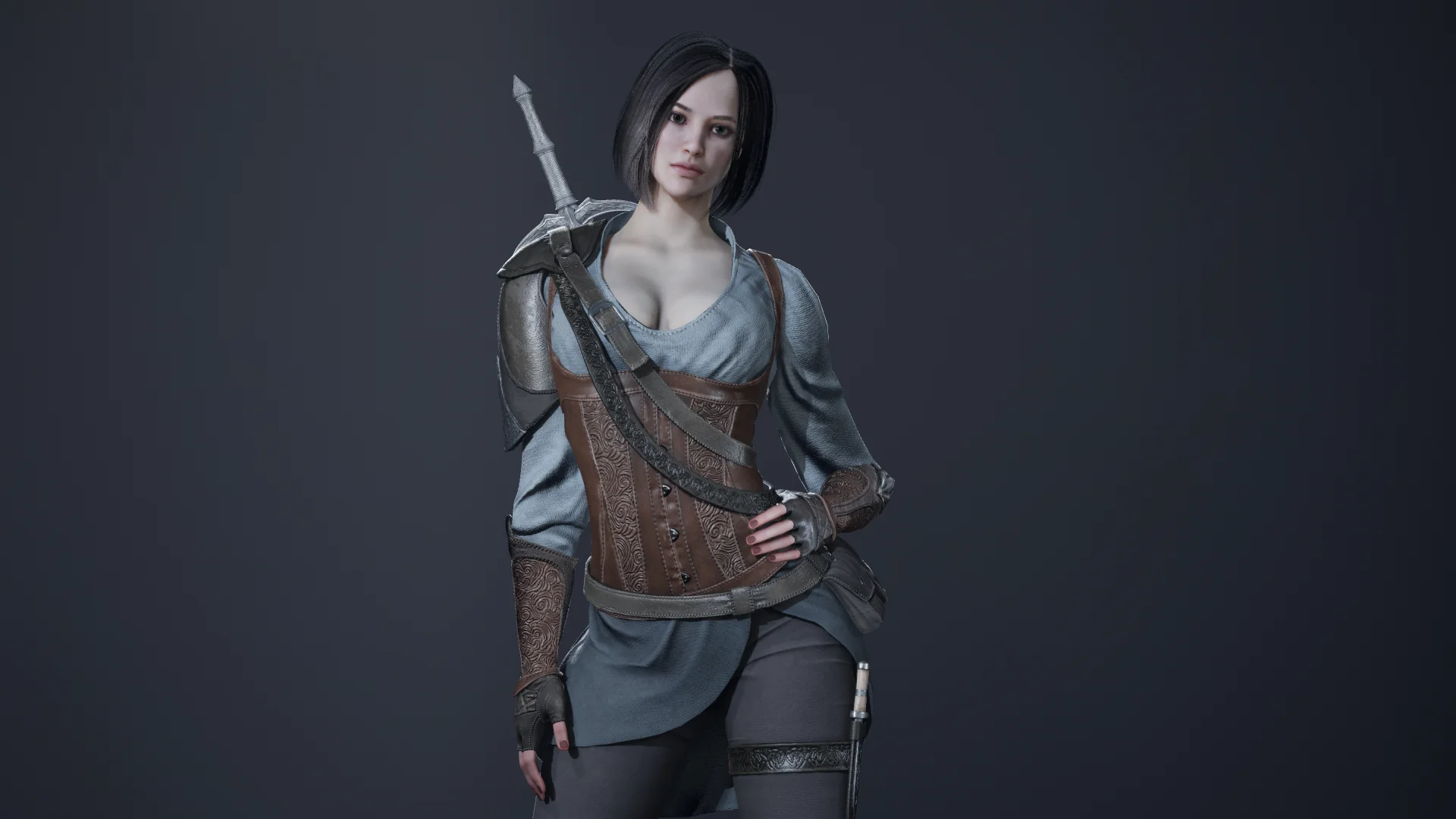
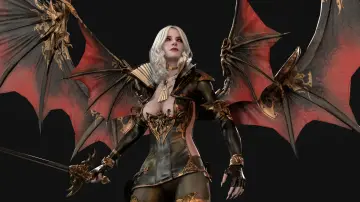
Girl Anastasia
Explore the low-poly, realistic PBR female character Girl Anastasia, built with Animation Blueprint support for RPG, strategy, and shooter projects.
Fast-paced first-person shooters, sprawling fantasy role-playing titles, and wide-perspective strategy games share a common requirement: lightweight character assets that preserve visual clarity across diverse rendering conditions. When a single character model must function under heavy performance constraints while maintaining believable surface responses, balancing mesh topology and surface shading becomes essential. Girl Anastasia meets this demand as a low-poly female character model tailored for broad interactive deployment, bringing together realistic physical rendering, gameplay-ready scripting, and dedicated animation graph infrastructure.
Deploying Anastasia Across Action, Fantasy, and Strategy Frameworks
Gameplay scenarios impose distinctly different camera perspectives and technical demands on character art. In first-person shooter setups, models must integrate smoothly into squad mechanics, competitive team rosters, or AI combatant routines. The physical geometry needs to yield predictable hitboxes and responsive performance during high-intensity firefights where tick rates and frame stability take precedence over micro-dense polygonal surfaces. In an FPS context, Anastasia offers the lean footprint necessary to keep rendering overhead low, allowing hardware to prioritize fast camera movement, post-processing, and physics calculations.
Transporting that same mesh into a role-playing environment changes the production focus from raw frame economy to thematic cohesion and narrative presence. Fantasy RPG settings rely heavily on expressive player avatars, recruitable party members, and non-player townspeople. Anastasia carries a realistic design language that fits fantasy worlds grounded in believable costuming and human proportions rather than extreme exaggeration. Whether cast as an agile rogue, an expedition companion, or a storyline quest contact, the character integrates directly into fantasy role-playing frameworks without demanding custom mesh redesigns.
Strategy titles present a completely different set of spatial challenges. Top-down, isometric, and tactical command views require dozens or hundreds of individual actors rendered simultaneously on screen. High-density meshes quickly choke real-time draw calls and geometry pipelines in massive unit skirmishes. Because Anastasia is authored around a low-poly base, strategy developers can deploy the asset as an individualized squad leader, hero unit, or specialist soldier without running into the memory ceilings and batching bottlenecks that accompany heavier cinematic models.
Girl Anastasia in Gameplay Logic and Animation Blueprints
Visual assets inside real-time engines remain static statues until linked to logic components and motion trees. The inclusion of an Animation Blueprint alongside script elements gives Girl Anastasia an operational framework directly out of the box. Rather than starting from an unassigned skeletal mesh that requires complete retargeting logic and state variable construction from scratch, developers can hook directly into pre-configured animation pipelines.
Animation Blueprints serve as the critical bridge between raw skeletal motion and player input. They interpret state parameters—such as forward velocity, direction angles, crouching states, falling checks, and aim offsets—and translate them into fluid blend spaces and transition graphs. Having this blueprint architecture intact accelerates the implementation cycle for core locomotion, enabling Anastasia to switch between idling, running, jumping, and context-sensitive interactions smoothly.
The companion scripting components extend this integration by governing how the character interacts with environmental triggers, character controllers, and player cameras. Setting up camera attachment points, input mapping, and basic actor logic often consumes significant setup time when importing bare meshes. With dedicated script elements ready for attachment, configuring Anastasia as a playable pawn or a script-driven AI companion requires minimal foundational rigging in project code.
PBR Realism Within a Low-Poly Profile
Low-poly construction does not imply dated visual fidelity. Modern game rendering engines rely on physically based rendering (PBR) workflows to supply visual depth, surface accuracy, and realistic lighting responses without inflating geometry. Anastasia combines low-poly topology with a realistic PBR material setup, ensuring that environmental lighting dictates how light scatters, reflects, and absorbs across surfaces.
The PBR workflow separates surface color, roughness, metalness, and normal data into standardized mathematical maps. When Anastasia moves from a dimly lit fantasy dungeon into harsh outdoor sunlight, the realistic material shaders react correctly to ambient light, direct sun angles, and local point sources. Fabrics retain their matte, non-reflective qualities, while metallic gear, leather accessories, and skin tones behave with physical authenticity. This realistic texture response compensates for reduced polygon counts, yielding clean silhouettes that hold up under direct scrutiny without overwhelming GPU budgets.
Pipeline Interoperability with Survivor Men V01
Asset production pipelines suffer when newly introduced models break compatibility with an established character roster. Anastasia shares explicit compatibility with the Survivor men V01 set, a feature that significantly expands its utility across collaborative development projects. In shared survival, apocalyptic, or military environments, having character models that match existing asset conventions minimizes asset fragmentation.
Compatibility with Survivor men V01 implies alignment across proportions, skeletal hierarchy, or runtime configurations. This alignment allows technical artists to reuse compatible animation libraries, exchange contextual prop attachments, and design dual-character sequences without building separate mechanical rules for male and female cast members. Teams working on survival or squad-based shooters can populate balanced factions using Anastasia alongside Survivor men V01 assets, maintaining a cohesive aesthetic and mechanical unity across all playable and non-playable personnel.
Target Productions and Implementation Scenarios
Solo creators and agile indie development teams gain the most leverage from Girl Anastasia. Independent studios rarely have dedicated character modelers, riggers, and technical animators working on separate tracks. An asset that pairs low-poly optimization with PBR visual fidelity, Animation Blueprint capability, and direct ecosystem compatibility solves several production challenges at once.
For early prototyping stages, the asset provides immediate gameplay responsiveness, letting game designers test mechanics in shooters, fantasy RPGs, or strategy games using functional movement logic rather than placeholder primitive geometry. For finished indie titles aiming for cross-platform scalability, the lightweight polygonal profile ensures wide compatibility across diverse player hardware configurations while maintaining a realistic aesthetic footprint.
 Characters
 Characters
 Characters
 Characters