"f813c18d2170b1f6"{"id":"1000061","slug":"fullstag-quest-system","title":"Fullstag Quest System","category":"Dialog Systems","engine":"5.3","assetVersion":"1.2.3","engineVersion":"5.3","tag":"Dialog Systems","accent":"blue","visual":"mech","summary":"A modular quest framework with a custom editor, non-linear node trees, blueprint extensions, replication, and per-player or shared quests.","platform":"Unreal Engine","publishedAt":"2026-05-28T12:09:46.608Z","updatedAt":"2026-05-28T12:09:46.608Z","sourceNotes":[],"fileContents":[],"compatibility":["Unreal Engine","Asset Version: 1.2.3","Engine version: 5.3"],"featuredImage":{"alt":"Fullstag Quest System","src":"/wp-content/uploads/published/2026/05/271d9fe27242-096bd766-88a0-4b18-9cd7-1ae950a9118f-fdca615055.webp"},"hasDownloadLink":true,"downloads":0,"terms":[{"taxonomy":"category","slug":"dialog-systems-tools-and-plugins","name":"Dialog Systems"}],"galleryImages":[{"src":"/wp-content/uploads/published/2026/05/bd92b7ca084f-8514a8a1-47f6-4d17-a36d-6cfc610ec0b5-fc40503b43.webp","alt":"Fullstag Quest System"},{"src":"/wp-content/uploads/published/2026/05/2582c306414d-39a5f6a7-78aa-4b6a-b2bc-fd731ca4c821-0c06671196.webp","alt":"Fullstag Quest System"},{"src":"/wp-content/uploads/published/2026/05/c2a9f40bba68-1557aef3-3529-4101-96dd-b0aa13ea0ac9-e1f554bbb3.webp","alt":"Fullstag Quest System"},{"src":"/wp-content/uploads/published/2026/05/d4179d3592b4-d7f5a627-a81c-45e4-8860-4cd1d1f9316f-161216a4b6.webp","alt":"Fullstag Quest System"},{"src":"/wp-content/uploads/published/2026/05/ff9e63f120f2-883f6504-9e16-4474-a099-49fc38d10a9c-6e1fc73f16.webp","alt":"Fullstag Quest System"},{"src":"/wp-content/uploads/published/2026/05/67ef782a5530-524c26c7-4d1b-4d3e-a9b1-59998ad35ea0-b903da525f.webp","alt":"Fullstag Quest System"},{"src":"/wp-content/uploads/published/2026/05/918d59dd2342-144560da-ceeb-4609-87ae-5170ebf29570-069b6fa083.webp","alt":"Fullstag Quest System"},{"src":"/wp-content/uploads/published/2026/05/38b99e29fd83-7620c83d-6037-4769-8789-343c6d04a92f-b7fee00318.webp","alt":"Fullstag Quest System"},{"src":"/wp-content/uploads/published/2026/05/515cfc66dd99-b5cc3099-52a1-4433-af8e-a5febac39d92-ea4d21b12f.webp","alt":"Fullstag Quest System"},{"src":"/wp-content/uploads/published/2026/05/4ccd0a49208b-4ef5b1bd-0c99-4f0e-a84e-2f28779b0bf6-f877125460.webp","alt":"Fullstag Quest System"}],"accessPanel":{"kind":"resource","title":"Access this resource","eyebrow":"Free Download","message":"Log in or create a free account to start your download.","fileName":"5.3,v1.2.3.7z","safetyNote":"Resources are manually reviewed before listing to improve quality and reduce obvious risks.","actionLabel":"Download Free","resourceType":"Resource archive"},"contentHtml":"\u003cp\u003eQuest-heavy projects often run into the same problem: the logic needs to branch, react, and scale without turning every new objective into a rewrite. Fullstag Quest System addresses that problem as a framework for implementing a quest system in a game, with a non-linear node tree driving quest logic and a custom editor used to create quests, control flow, and set up objectives.\u003c/p\u003e\u003cp\u003eIts identity is less about delivering a fixed set of quest templates and more about giving developers room to shape their own structure. The framework is highly customizable, and that flexibility runs through both the editor-facing workflow and the way the system can be extended.\u003c/p\u003e\u003ch2\u003eBuilding quests in a non-linear node tree\u003c/h2\u003e\u003cp\u003eThe core of the framework is a library for driving quest logic through a non-linear node tree. That immediately changes how quests can be assembled, especially for games that do not follow a simple start-to-finish objective chain.\u003c/p\u003e\u003cp\u003eInstead of treating quests as a narrow sequence, the system gives developers a way to control quest flow inside a custom editor. Objectives are set up there as part of the same workflow, which keeps progression logic and quest structure close together. For teams or solo creators shaping branching missions, shared progression states, or quests with multiple paths, that editor-centered approach gives the quest itself a visible form rather than burying everything in scattered logic.\u003c/p\u003e\u003cp\u003eThis also has a creative upside for gameplay design. A non-linear node tree supports the idea that a quest can change direction, open different routes, or respond to conditions without forcing the entire structure into a rigid line. The framework is still about implementing quest logic, but it leaves room for more expressive quest flow.\u003c/p\u003e\u003ch2\u003eFullstag Quest System and blueprint extension\u003c/h2\u003e\u003cp\u003eOne of the clearest practical strengths here is modularity. The system is designed so it can be customized to fit project-specific needs without modifying the plugin itself.\u003c/p\u003e\u003cp\u003eThat matters in production because it shifts customization away from altering the base framework and toward extending it. New services, events, and conditions are created as blueprints, which gives developers a direct route for adapting the system to their own game logic. Rather than being limited to a locked set of pre-made features, the framework opens its behavior through those blueprint-based additions.\u003c/p\u003e\u003cp\u003eFor creative teams, this makes the quest system easier to bend toward a particular game structure. A project can define its own kinds of quest checks, event responses, or service behavior while leaving the core plugin intact. That separation is useful when a quest system needs to match the tone and mechanics of the game instead of pushing the game toward a preset quest model.\u003c/p\u003e\u003ch2\u003ePer-player quest lists and shared quests\u003c/h2\u003e\u003cp\u003eQuest progression often becomes more complicated once multiple players are involved. Fullstag Quest System is fully replicated, and it supports two important quest ownership models at the same time: quest lists for each individual player and quests that are shared with players.\u003c/p\u003e\u003cp\u003eThat combination broadens how the framework can be used. A game can keep personal progression attached to each player while also supporting quest content that belongs to a group experience. The fact that both approaches are supported inside the same system means the framework is not tied to a single multiplayer quest pattern. It can serve projects where individual tracking matters, projects where collective progress matters, or games that need both operating together.\u003c/p\u003e\u003cp\u003eFrom a gameplay perspective, that opens different kinds of quest design without leaving the same framework. Personal task chains, collaborative objectives, and mixed progression setups all fit within the described feature set because replication and quest ownership are already part of the system’s structure.\u003c/p\u003e\u003ch2\u003eThe quest editor workflow and support material\u003c/h2\u003e\u003cp\u003eThe custom editor is central to how quests are authored. It is where quest flow is controlled and where objectives are set up, making it the practical hub of day-to-day work with the framework.\u003c/p\u003e\u003cp\u003eThat workflow is backed by documentation and a sequence of tutorial videos that map the system into distinct stages. The tutorial series covers setup, the quest editor and UI, gameplay actors, quest implementation, and customization. Those topics show that the framework is not limited to a single editing screen or one-off setup step. It reaches from initial configuration into interface work, gameplay-side interaction, the implementation of quests themselves, and the process of extending the system further.\u003c/p\u003e\u003cp\u003eThere is also a Quest Framework PDF documentation resource. Alongside the tutorial structure, that gives the framework a support layer that matches its modular design. Since the system allows extension through services, events, and conditions, having guidance that spans setup through customization is especially relevant to developers who want to move beyond default behavior and shape the framework around a specific production.\u003c/p\u003e\u003ch2\u003eVersion 1.1 changes: context services and variable control\u003c/h2\u003e\u003cp\u003eThe version 1.1 update added several features that deepen how quests can be managed in practice.\u003c/p\u003e\u003cp\u003eContext services were introduced so quest services can be active context wide while the quest is in progress. For developers building quests that need ongoing service behavior during active progression, that expands how the framework can sustain logic beyond a single isolated trigger.\u003c/p\u003e\u003cp\u003eThe editor also gained a variable panel that provides a better overview of variables in a single list. That is a workflow-focused addition rather than a headline feature, but it directly affects usability inside the editor. When a quest includes multiple variables, having them gathered into one place can make authoring and review more manageable.\u003c/p\u003e\u003cp\u003eDefault variables were also added to quest assets. These variables can be given initial values, have replication turned on or off, and include an editor description. Taken together, those details make variable setup more intentional at the asset level. Initial values help define starting state, replication settings allow control over network behavior for those variables, and editor descriptions make the variable list easier to read and maintain.\u003c/p\u003e\u003cp\u003eThe update also included additional functionality and bug fixes, reinforcing that the framework has seen active refinement around both editing workflow and quest behavior.\u003c/p\u003e\u003ch2\u003eVersion 1.2 and where it fits in production\u003c/h2\u003e\u003cp\u003eThe version 1.2 update deprecated Quest Game Instance, with the quest manager now handled automatically by subsystem. It also included bug fixes.\u003c/p\u003e\u003cp\u003eThat change points to a cleaner management path inside the framework itself. Automatic handling of the quest manager by subsystem reduces reliance on the older Quest Game Instance approach and shifts management into a more integrated flow. In practical use, that fits the broader character of Fullstag Quest System: a framework that emphasizes customization and authoring flexibility while continuing to streamline the pieces that hold the quest structure together.\u003c/p\u003e\u003cp\u003eFor productions that need a quest toolset rather than a fixed quest template, this framework fits best where non-linear flow, blueprint extension, and replicated player support are part of the plan. Its strongest role is as a quest-making foundation that can be shaped to the game instead of forcing the game to conform to a narrow quest model.\u003c/p\u003e\n\n\u003ch2\u003eExplore Similar Assets\u003c/h2\u003e\n\u003cul\u003e\n\u003cli\u003e\u003ca href=\"https://3dcghub.com/ogs-dialogue-quest-master/\" title=\"OGS - Dialogue \u0026amp; Quest Master\"\u003eOGS - Dialogue \u0026amp; Quest Master\u003c/a\u003e\u003c/li\u003e\n\u003cli\u003e\u003ca href=\"https://3dcghub.com/dialogue-plugin/\" title=\"Dialogue Plugin\"\u003eDialogue Plugin\u003c/a\u003e\u003c/li\u003e\n\u003cli\u003e\u003ca href=\"https://3dcghub.com/narrative-tales-node-based-quests-and-dialogue/\" title=\"Narrative Tales - Node Based Quests and Dialogue\"\u003eNarrative Tales - Node Based Quests and Dialogue\u003c/a\u003e\u003c/li\u003e\n\u003cli\u003e\u003ca href=\"https://3dcghub.com/project-sunrise-interaction-dialogue-quest-system/\" title=\"Project Sunrise - Interaction, Dialogue \u0026amp; Quest System\"\u003eProject Sunrise - Interaction, Dialogue \u0026amp; Quest System\u003c/a\u003e\u003c/li\u003e\n\u003cli\u003e\u003ca href=\"https://3dcghub.com/quest-editor-plugin/\" title=\"Quest Editor Plugin\"\u003eQuest Editor Plugin\u003c/a\u003e\u003c/li\u003e\n\u003c/ul\u003e","contentTextLength":7670,"navigation":{"current":1734,"total":3651,"previous":{"id":"1000062","slug":"fun-obstacle-course-vol-1","title":"Fun Obstacle Course Vol 1","category":"Abandoned","platform":"Unreal Engine","updatedAt":"2026-05-28T12:16:28.094Z"},"next":{"id":"1000059","slug":"florence-cathedral-pack-cathedral-environment-cathedral-cathedral-church-old","title":"Florence Cathedral Pack ( Cathedral Environment Cathedral Cathedral Church Old )","category":"Historical","platform":"Unreal Engine","updatedAt":"2026-05-26T17:01:35.352Z"}},"relatedResources":[{"id":"27100","slug":"ogs-dialogue-quest-master","title":"OGS - Dialogue \u0026 Quest Master","category":"Dialog Systems","engine":"5.5 - 5.6","assetVersion":"Engine version: 5.5 - 5.6","engineVersion":"Asset Version:2.1.3","tag":"Dialog Systems","accent":"blue","visual":"mech","summary":"Dialogue \u0026 Quest Master turns Unreal Engine 5 into a structured workspace for interactive stories, quests, and cinematic conversations. It brings dialogue editing, quest logic, statistics, and save handling into one extensible framework built with C++ and B...","platform":"Unreal Engine","publishedAt":"2026-04-21T10:12:23.000Z","updatedAt":"2026-04-21T10:12:25.000Z","sourceNotes":[],"fileContents":[],"compatibility":["Unreal Engine","Engine version: 5.5 - 5.6","Asset Version: 2.1.3"],"featuredImage":{"alt":"OGS - Dialogue \u0026 Quest Master","src":"https://3dcghub.com/wp-content/uploads/2026/04/48a41fb58a32_582b3097-a5c8-4066-8891-d6d8924e4ecc-4.webp"},"hasDownloadLink":true,"downloads":1},{"id":"1001261","slug":"upfiledialog","title":"UPFileDialog","category":"Dialog Systems","engine":"5.0 - 5.7","assetVersion":"Asset Version: 1.0","engineVersion":"Engine Version: 5.0 - 5.7","tag":"Dialog Systems","accent":"blue","visual":"mech","summary":"UPFileDialog enables file selection box functionality after packaging, supporting folder navigation, save routines, progress, and CryptoppPluginLibrary.","platform":"Unreal Engine","publishedAt":"2026-09-30T05:30:56.686Z","updatedAt":"2026-09-30T05:30:56.686Z","sourceNotes":[],"fileContents":[],"compatibility":["Unreal Engine","Asset Version: 1.0","Engine Version: 5.0 - 5.7"],"featuredImage":{"alt":"UPFileDialog","src":"/wp-content/uploads/published/2026/09/41274ddf3675-a9df7cf6-e276-4587-86f2-1d41e5b1d306-c1647a0bc3.webp"},"hasDownloadLink":true,"downloads":0},{"id":"13636","slug":"dialogue-plugin","title":"Dialogue Plugin","category":"Dialog Systems","engine":"1.5","assetVersion":"Engine version: 5.2 - 5.3,5.6","engineVersion":"Asset Version:1.5","tag":"Dialog Systems","accent":"blue","visual":"mech","summary":"The Dialogue Plugin is a robust tool for Unreal Engine 5 that simplifies the creation of branching conversations. With a custom node-based editor and optional AI integration, it provides a professional solution for narrative-driven games.","platform":"Unreal Engine","publishedAt":"2026-03-11T09:23:26.000Z","updatedAt":"2026-06-18T22:58:59.169Z","sourceNotes":[],"fileContents":[],"compatibility":["Unreal Engine","Engine version: 5.2 - 5.3,5.6","Asset Version:1.5"],"featuredImage":{"alt":"Dialogue Plugin","src":"https://3dcghub.com/wp-content/uploads/2026/03/936120c3-4bdc-4cff-88bf-810e4facaedd.webp"},"hasDownloadLink":true,"downloads":0}]}
Dialog Systems
Fullstag Quest System
A modular quest framework with a custom editor, non-linear node trees, blueprint extensions, replication, and per-player or shared quests.
Quest-heavy projects often run into the same problem: the logic needs to branch, react, and scale without turning every new objective into a rewrite. Fullstag Quest System addresses that problem as a framework for implementing a quest system in a game, with a non-linear node tree driving quest logic and a custom editor used to create quests, control flow, and set up objectives.
Its identity is less about delivering a fixed set of quest templates and more about giving developers room to shape their own structure. The framework is highly customizable, and that flexibility runs through both the editor-facing workflow and the way the system can be extended.
Building quests in a non-linear node tree
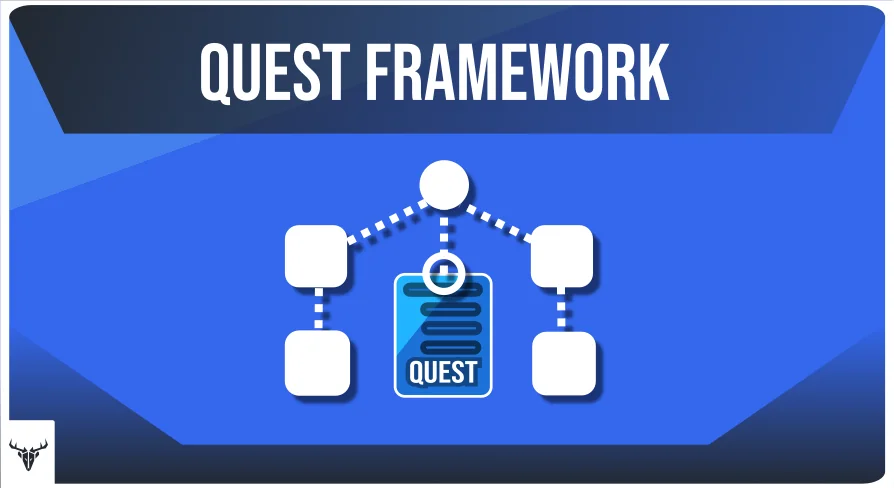
The core of the framework is a library for driving quest logic through a non-linear node tree. That immediately changes how quests can be assembled, especially for games that do not follow a simple start-to-finish objective chain.
Instead of treating quests as a narrow sequence, the system gives developers a way to control quest flow inside a custom editor. Objectives are set up there as part of the same workflow, which keeps progression logic and quest structure close together. For teams or solo creators shaping branching missions, shared progression states, or quests with multiple paths, that editor-centered approach gives the quest itself a visible form rather than burying everything in scattered logic.
This also has a creative upside for gameplay design. A non-linear node tree supports the idea that a quest can change direction, open different routes, or respond to conditions without forcing the entire structure into a rigid line. The framework is still about implementing quest logic, but it leaves room for more expressive quest flow.
Fullstag Quest System and blueprint extension
One of the clearest practical strengths here is modularity. The system is designed so it can be customized to fit project-specific needs without modifying the plugin itself.
That matters in production because it shifts customization away from altering the base framework and toward extending it. New services, events, and conditions are created as blueprints, which gives developers a direct route for adapting the system to their own game logic. Rather than being limited to a locked set of pre-made features, the framework opens its behavior through those blueprint-based additions.
For creative teams, this makes the quest system easier to bend toward a particular game structure. A project can define its own kinds of quest checks, event responses, or service behavior while leaving the core plugin intact. That separation is useful when a quest system needs to match the tone and mechanics of the game instead of pushing the game toward a preset quest model.
Per-player quest lists and shared quests
Quest progression often becomes more complicated once multiple players are involved. Fullstag Quest System is fully replicated, and it supports two important quest ownership models at the same time: quest lists for each individual player and quests that are shared with players.
That combination broadens how the framework can be used. A game can keep personal progression attached to each player while also supporting quest content that belongs to a group experience. The fact that both approaches are supported inside the same system means the framework is not tied to a single multiplayer quest pattern. It can serve projects where individual tracking matters, projects where collective progress matters, or games that need both operating together.
From a gameplay perspective, that opens different kinds of quest design without leaving the same framework. Personal task chains, collaborative objectives, and mixed progression setups all fit within the described feature set because replication and quest ownership are already part of the system’s structure.
The quest editor workflow and support material
The custom editor is central to how quests are authored. It is where quest flow is controlled and where objectives are set up, making it the practical hub of day-to-day work with the framework.
That workflow is backed by documentation and a sequence of tutorial videos that map the system into distinct stages. The tutorial series covers setup, the quest editor and UI, gameplay actors, quest implementation, and customization. Those topics show that the framework is not limited to a single editing screen or one-off setup step. It reaches from initial configuration into interface work, gameplay-side interaction, the implementation of quests themselves, and the process of extending the system further.
There is also a Quest Framework PDF documentation resource. Alongside the tutorial structure, that gives the framework a support layer that matches its modular design. Since the system allows extension through services, events, and conditions, having guidance that spans setup through customization is especially relevant to developers who want to move beyond default behavior and shape the framework around a specific production.
Version 1.1 changes: context services and variable control
The version 1.1 update added several features that deepen how quests can be managed in practice.
Context services were introduced so quest services can be active context wide while the quest is in progress. For developers building quests that need ongoing service behavior during active progression, that expands how the framework can sustain logic beyond a single isolated trigger.
The editor also gained a variable panel that provides a better overview of variables in a single list. That is a workflow-focused addition rather than a headline feature, but it directly affects usability inside the editor. When a quest includes multiple variables, having them gathered into one place can make authoring and review more manageable.
Default variables were also added to quest assets. These variables can be given initial values, have replication turned on or off, and include an editor description. Taken together, those details make variable setup more intentional at the asset level. Initial values help define starting state, replication settings allow control over network behavior for those variables, and editor descriptions make the variable list easier to read and maintain.
The update also included additional functionality and bug fixes, reinforcing that the framework has seen active refinement around both editing workflow and quest behavior.
Version 1.2 and where it fits in production
The version 1.2 update deprecated Quest Game Instance, with the quest manager now handled automatically by subsystem. It also included bug fixes.
That change points to a cleaner management path inside the framework itself. Automatic handling of the quest manager by subsystem reduces reliance on the older Quest Game Instance approach and shifts management into a more integrated flow. In practical use, that fits the broader character of Fullstag Quest System: a framework that emphasizes customization and authoring flexibility while continuing to streamline the pieces that hold the quest structure together.
For productions that need a quest toolset rather than a fixed quest template, this framework fits best where non-linear flow, blueprint extension, and replicated player support are part of the plan. Its strongest role is as a quest-making foundation that can be shaped to the game instead of forcing the game to conform to a narrow quest model.
 Dialog Systems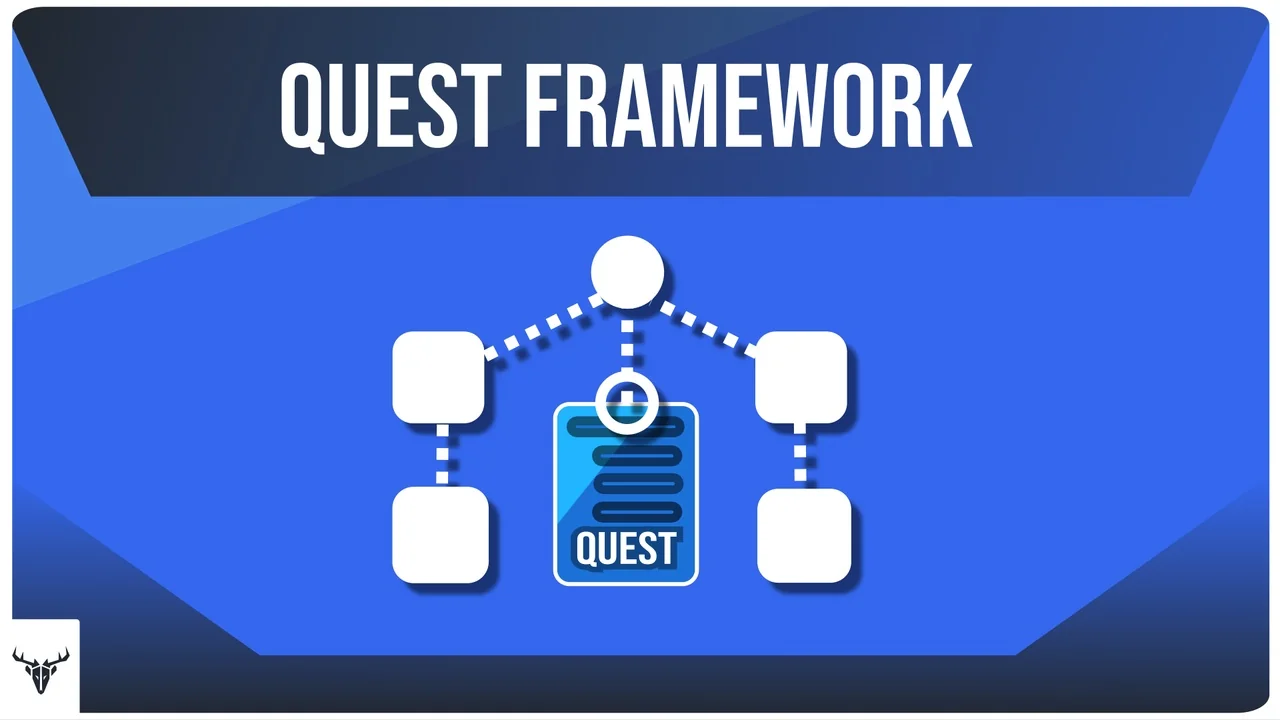
 Dialog Systems
 Dialog Systems
 Dialog Systems