Overview
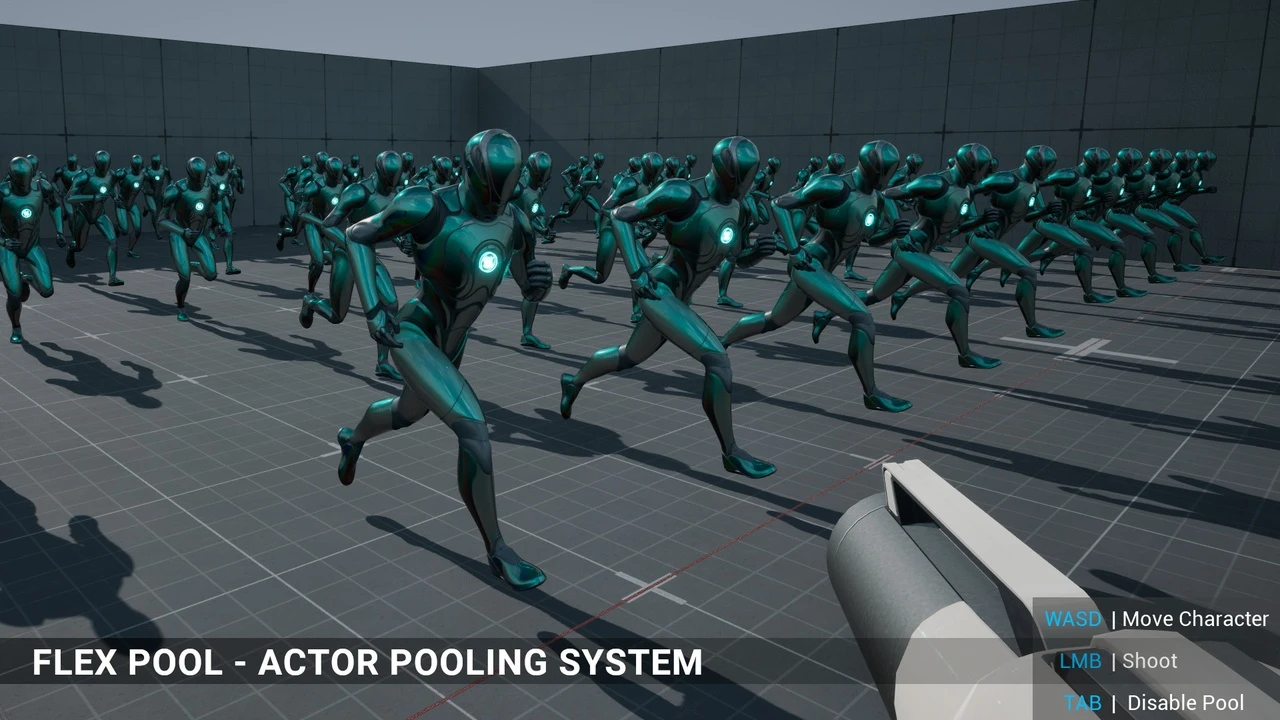
Flex Pool is a revolutionary tool designed to enhance the performance of Unreal Engine games. By reusing actors instead of spawning and destroying them repeatedly, Flex Pool ensures smooth gameplay and scalability.
Key Features
- On-Demand Actor Pooling: Spawn actors only when necessary and reuse them efficiently to reduce performance overhead.
- Optimized Performance: Minimize memory allocations and CPU usage for improved frame rate stability.
- Asynchronous Pool Management: Preload pools in the background to prevent frame drops.
- Full Support for All Actor Types: Compatible with projectiles, NPCs, AI pawns, and more.
- Blueprint Friendly: Fully accessible through Blueprints for easy integration without coding.
- Advanced Pool Processors: Customize actor pooling logic with specialized processors.
- Global Pool Controls: Manage, reset, and track actor pools with runtime commands.
Technical Details
- Included Formats: FlexPool (Type: Runtime), FlexPoolEditor (Type: Editor)
- Number of C++ Classes: 16
- Network Replicated: N/A
- Supported Development Platforms: Windows (Mac not tested)
- Supported Target Build Platforms: Windows, (not tested but should be fine with all other platforms)
- Documentation Link: Documentation
- Example Project: Example Project
Click here to view the full details of the resource.:URL
Related Articles:
Flex Partition – Spatial-Based Optimization System
Advanced Fade Objects PRO – Multicolor
Click the button below to download.
Download: