"b00678cacce53329"{"id":"1002791","slug":"fire-energy-vfx-pack","title":"Fire Energy VFX Pack","category":"Variety","engine":"4.19+,5.0+","assetVersion":"","engineVersion":"Engine Version: 4.19+,5.0+","tag":"Variety","accent":"blue","visual":"mech","summary":"A guide to implementing the Fire Energy VFX Pack, focusing on evil-themed fire, smoke, ribbon trails, tornados, and portals for stylized fantasy games.","platform":"Unreal Engine","indexPolicy":"index","publishedAt":"2026-11-20T07:14:26.958Z","updatedAt":"2026-11-20T07:14:26.958Z","sourceNotes":[],"fileContents":[],"compatibility":["Unreal Engine","Engine Version: 4.19+,5.0+"],"featuredImage":{"alt":"Fire Energy VFX Pack","src":"/wp-content/uploads/published/2026/11/cfadee91cf37-0e8b39e0-8ddc-4a2f-bc2d-20d1ddb58f7c-ad56341fc0.webp"},"fileSizeBytes":78056913,"hasDownloadLink":true,"downloads":0,"terms":[{"taxonomy":"category","slug":"variety-vfx","name":"Variety"}],"galleryImages":[{"src":"/wp-content/uploads/published/2026/11/48c12226a4f8-0d7a0771-7eb0-4c8d-bdc1-ee8f01e3d209-e3c3328983.webp","alt":"Fire Energy VFX Pack"},{"src":"/wp-content/uploads/published/2026/11/9102852006dc-ab4ab5f7-fa9d-4044-b276-e4dd1b7308e4-dbaad840b5.webp","alt":"Fire Energy VFX Pack"},{"src":"/wp-content/uploads/published/2026/11/6f3734e9a98d-8734e498-1717-4352-82da-b77ed2caf518-890ff98a59.webp","alt":"Fire Energy VFX Pack"},{"src":"/wp-content/uploads/published/2026/11/11f56e7a7493-ba6e019a-2d81-43ef-86f0-33f6e1f96057-5b37562958.webp","alt":"Fire Energy VFX Pack"},{"src":"/wp-content/uploads/published/2026/11/eb690047f6b7-ce0cbffc-6ab7-4ac1-89e7-9a8824aba152-6babfe8ee0.webp","alt":"Fire Energy VFX Pack"},{"src":"/wp-content/uploads/published/2026/11/6c2056e8484a-1d07e22e-0e96-4de6-b64f-fa79a0431bad-48af0efe9c.webp","alt":"Fire Energy VFX Pack"},{"src":"/wp-content/uploads/published/2026/11/a8587524efd1-8b52abc9-d614-47d4-9f6d-f904df058651-deed031c15.webp","alt":"Fire Energy VFX Pack"},{"src":"/wp-content/uploads/published/2026/11/5feaa78b6480-dd7f6f54-b20d-45fc-abc1-f29639497db1-e1d76fe297.webp","alt":"Fire Energy VFX Pack"}],"accessPanel":{"kind":"resource","title":"Get this resource","safetyNote":"Resources are manually reviewed before listing to improve quality and reduce obvious risks.","fileName":"Content.7z","resourceType":"Resource archive","versions":[]},"contentHtml":"\u003ch2\u003eDeploying Fire Energy in Cast Sequences\u003c/h2\u003e\u003cp\u003eIntegrating stylized combat magic into gameplay involves matching character animation milestones with distinct visual stages. In fantasy games, spellcasting relies on clear visual cues that signal preparation, execution, and impact. When working with evil-themed fire and smoke effects, the initial cast phase demands careful placement to communicate rising danger without visually overwhelming the character model.\u003c/p\u003e\u003cp\u003eA typical casting sequence starts by tethering localized fire energy to specific animation sockets, such as a caster's hands, staff tip, or an anchoring ground circle. Stylized flame shapes, defined by bold silhouettes rather than noisy realism, help players read the windup animation instantly from a distance. As the cast reaches its apex, introducing rapid smoke bursts offsets the brightness of the fire core, providing high-contrast cues that an offensive spell has been unleashed.\u003c/p\u003e\u003cp\u003eTo maintain clarity during intense combat encounters, spawn points for cast effects must be aligned accurately with skeletal meshes. Anchoring flame bursts to weapon vectors or character joints ensures that high-velocity casting animations feel mechanically connected to the visual outcome, preventing disconnect between character motion and particle release.\u003c/p\u003e\u003ch2\u003eStructuring Ribbon and Tornado VFX Motions\u003c/h2\u003e\u003cp\u003eLinear and rotational motion paths provide structural coherence to chaotic fire elements. In stylized production, ribbons give shape to moving energy by translating rapid velocity into readable visual arcs, while tornados provide structured vertical presence for area-of-effect hazards.\u003c/p\u003e\u003cp\u003eRibbon components serve as the connective tissue for projectiles, blade sweeps, and channeled spells. By following strict spline paths or projectile vectors, ribbons draw vivid trajectories across the game screen. With evil fire themes, these ribbon trails often present sharp, curling silhouettes that suggest aggressive propulsion. Pairing thin ribbon cores with expanding, dissipating smoke trails along the trajectory gives projectiles a lingering sense of heat and displacement.\u003c/p\u003e\u003cp\u003eTornado formations apply rotational force to fire and smoke elements, functioning effectively as stationary spell hazards, vortex pulls, or ultimate combat abilities. Implementing a fire tornado requires balancing the inner flame column against the outer smoke funnel. The outer smoke elements must establish the perimeter boundary of the spell hazard, warning players of the damage radius, while the inner fire energy conveys concentrated damage at the center. Layering the rotational speed of stylized smoke plumes slightly slower than the central fire core creates depth and visual dynamism across the entire vortex.\u003c/p\u003e\u003ch2\u003eConfiguring Portal Thresholds with Evil Fire and Smoke\u003c/h2\u003e\u003cp\u003ePortals act as both environmental transition points and focal nodes for dark fantasy summoning rituals. Constructing an ominous gateway requires establishing a readable boundary that distinguishes safe terrain from hostile ground.\u003c/p\u003e\u003cp\u003eWhen staging an evil-themed portal, stylized fire elements should outline the frame or perimeter, defining the physical boundary through which entities emerge. Ribbon-like fire tendrils can wrap around stone archways or hover over summoning circles to emphasize the supernatural containment holding the portal open. The smoke components within the portal structure provide depth and occlusion, obscuring the space behind the threshold until characters or summoned creatures emerge through the fire curtain.\u003c/p\u003e\u003cp\u003eSpatial alignment is critical when situating portals within stylized level geometry. Flame emitters must be oriented to prevent clipping through uneven surfaces or adjacent props. By orienting smoke dissipation outward away from the center of the gateway, the portal maintains a clear inner focal point where spawning animations or incoming hazards remain visible to the player.\u003c/p\u003e\u003ch2\u003eStylized Fire Aesthetics and Visual Balance\u003c/h2\u003e\u003cp\u003eStylized visual effects depend on intentional shape language, distinct silhouettes, and clear color contrast to convey gameplay information. Unlike realistic simulations that rely on fine particle density and photographic transparency, stylized fire magic communicates through sharp edge definitions and exaggerated volumes.\u003c/p\u003e\u003cp\u003eThe distinction between aggressive fire energy and surrounding smoke plays a vital role in game readability. In evil magic sets, smoke carries as much expressive weight as the fire itself. Deep, voluminous smoke shapes ground the effect in the game world, creating negative space that allows bright, saturated flames to stand out sharply against varying environment backdrops. In fast-moving encounters, this high visual contrast prevents combat areas from turning into visually muddy zones of indiscriminate brightness.\u003c/p\u003e\u003cp\u003eBalancing effect lifetimes ensures that spells leave an impression without cluttering the screen. Swift spell casts require snappy dissipation to keep animation windows crisp, whereas persistent tornados and active portals demand stable looping profiles. Coordinating the alpha fade and scale curves of stylized smoke elements allows residual spell clouds to disperse naturally, clearing the play space in time for the next tactical action.\u003c/p\u003e\u003ch2\u003eIntegrating Spell Sequences into Fantasy Combat\u003c/h2\u003e\u003cp\u003eChaining individual effects into a cohesive spell pipeline transforms standalone visuals into responsive gameplay mechanics. A complete fantasy spell often progresses through three distinct states: an initial cast gather, a projectile or ribbon-driven transition phase, and an impact or lingering zone such as a fire tornado or gateway portal.\u003c/p\u003e\u003cp\u003eBecause stylized games place high demands on telegraphing hostile actions, matching effect intensity to spell potency helps players anticipate threat levels. A minor fire cast might utilize brief ribbon trails and minimal smoke, whereas a high-tier summoning spell commands full portal rings accompanied by towering smoke columns. Maintaining consistent shape logic across casts, tornados, ribbons, and portals unifies the visual identity of evil spellcasters, grounding their abilities naturally within the rules of the fantasy game world.\u003c/p\u003e\n\n\u003ch2\u003eMore From The Same Workflow\u003c/h2\u003e\n\u003cul\u003e\n\u003cli\u003e\u003ca href=\"https://3dcghub.com/2d-anime-vfx-pack/\" rel=\"noopener noreferrer\"\u003e2D Anime VFX Pack\u003c/a\u003e\u003c/li\u003e\n\u003cli\u003e\u003ca href=\"https://3dcghub.com/fire-builder/\" rel=\"noopener noreferrer\"\u003eFire Builder\u003c/a\u003e\u003c/li\u003e\n\u003cli\u003e\u003ca href=\"https://3dcghub.com/forest-fire/\" rel=\"noopener noreferrer\"\u003eForest Fire\u003c/a\u003e\u003c/li\u003e\n\u003cli\u003e\u003ca href=\"https://3dcghub.com/energy-weapon-vfx-pack/\" rel=\"noopener noreferrer\"\u003eEnergy weapon VFX Pack\u003c/a\u003e\u003c/li\u003e\n\u003cli\u003e\u003ca href=\"https://3dcghub.com/muzzle-flashes/\" rel=\"noopener noreferrer\"\u003eMuzzle Flashes\u003c/a\u003e\u003c/li\u003e\n\u003c/ul\u003e","contentTextLength":6281,"navigation":{"current":89,"total":4797,"previous":{"id":"1002792","slug":"fx-blood-100-effects","title":"FX: Blood [100+ Effects]","category":"Liquid","platform":"Unreal Engine","updatedAt":"2026-11-20T07:16:00.212Z"},"next":{"id":"1002790","slug":"fire-builder","title":"Fire Builder","category":"Variety","platform":"Unreal Engine","updatedAt":"2026-11-20T07:13:10.323Z"}},"relatedResources":[{"id":"1001925","slug":"2d-anime-vfx-pack","title":"2D Anime VFX Pack","category":"Variety","engine":"4.26+,5.0+","assetVersion":"","engineVersion":"Engine Version: 4.26+,5.0+","tag":"Variety","accent":"blue","visual":"mech","summary":"Hand-painted 2D anime VFX featuring explosions, muzzleflashes, warp, fire, smoke, and trail effects with instanced material color control for stylized games.","platform":"Unreal Engine","indexPolicy":"index","publishedAt":"2026-10-24T11:04:02.324Z","updatedAt":"2026-10-24T11:04:02.324Z","sourceNotes":[],"fileContents":[],"compatibility":["Unreal Engine","Engine Version: 4.26+,5.0+"],"featuredImage":{"alt":"2D Anime VFX Pack","src":"/wp-content/uploads/published/2026/10/57ac03a27daf-4d6ea1ad-6522-47a1-9f93-a3d7d0b6648d-757b4018a8.webp"},"fileSizeBytes":11043115,"hasDownloadLink":true,"downloads":2},{"id":"1002790","slug":"fire-builder","title":"Fire Builder","category":"Variety","engine":"4.16+,5.0+","assetVersion":"","engineVersion":"Engine Version: 4.16+,5.0+","tag":"Variety","accent":"blue","visual":"mech","summary":"A deep dive into Fire Builder, covering its modular 2048x2048 HDR effects, flame customization, training resources, and real-time visual implementation.","platform":"Unreal Engine","indexPolicy":"index","publishedAt":"2026-11-20T07:13:10.323Z","updatedAt":"2026-11-20T07:13:10.323Z","sourceNotes":[],"fileContents":[],"compatibility":["Unreal Engine","Engine Version: 4.16+,5.0+"],"featuredImage":{"alt":"Fire Builder","src":"/wp-content/uploads/published/2026/11/8b351af02a6e-2548e8a9-e8fd-46ec-bef8-fcdaadb35f4b-0cc178c77a.webp"},"fileSizeBytes":416207830,"hasDownloadLink":true,"downloads":0},{"id":"1001515","slug":"forest-fire","title":"Forest Fire","category":"Variety","engine":"4.26+,5.0+","assetVersion":"","engineVersion":"Engine Version: 4.26+,5.0+","tag":"Variety","accent":"blue","visual":"mech","summary":"Forest Fire provides 16 particle systems, 21 foliage meshes with vertex painted embers, a 5-material blend ground shader, and educational map breakdowns.","platform":"Unreal Engine","indexPolicy":"index","publishedAt":"2026-10-09T13:15:00.623Z","updatedAt":"2026-10-09T13:15:00.623Z","sourceNotes":[],"fileContents":[],"compatibility":["Unreal Engine","Engine Version: 4.26+,5.0+"],"featuredImage":{"alt":"Forest Fire","src":"/wp-content/uploads/published/2026/10/0a939fa1a2f2-bc6978c6-5d71-4002-ac23-6f894ff41b6e-32b8e01bc7.webp"},"fileSizeBytes":335113063,"hasDownloadLink":true,"downloads":1}]}
Resource screenshots
1 / 8
Join our channel
Follow 3DCGHUB on Telegram for new resource drops, migration updates, and community notices.
Resources are manually reviewed before listing to improve quality and reduce obvious risks.
No account required
Variety
Fire Energy VFX Pack
A guide to implementing the Fire Energy VFX Pack, focusing on evil-themed fire, smoke, ribbon trails, tornados, and portals for stylized fantasy games.
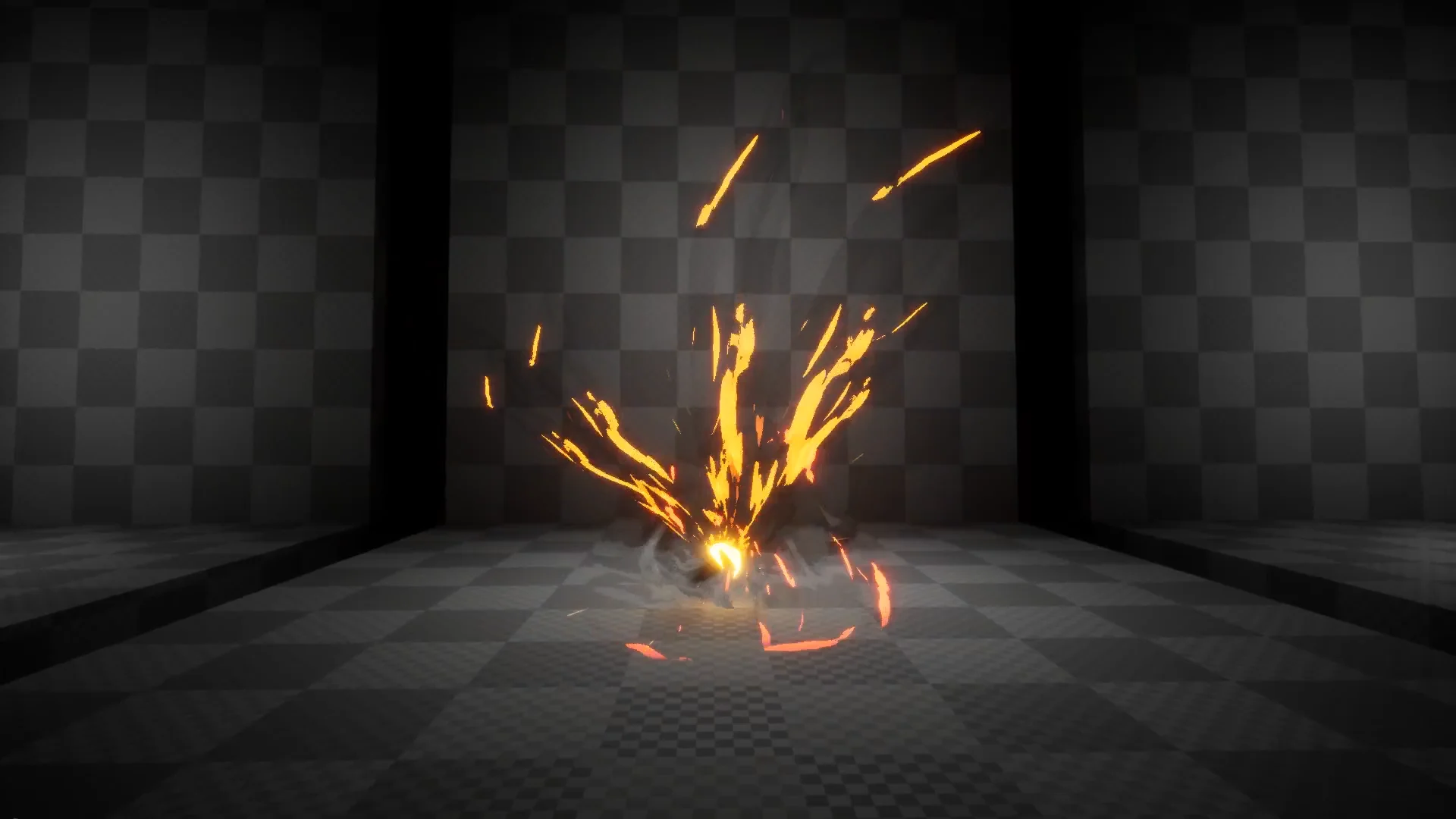
Integrating stylized combat magic into gameplay involves matching character animation milestones with distinct visual stages. In fantasy games, spellcasting relies on clear visual cues that signal preparation, execution, and impact. When working with evil-themed fire and smoke effects, the initial cast phase demands careful placement to communicate rising danger without visually overwhelming the character model.
A typical casting sequence starts by tethering localized fire energy to specific animation sockets, such as a caster's hands, staff tip, or an anchoring ground circle. Stylized flame shapes, defined by bold silhouettes rather than noisy realism, help players read the windup animation instantly from a distance. As the cast reaches its apex, introducing rapid smoke bursts offsets the brightness of the fire core, providing high-contrast cues that an offensive spell has been unleashed.
To maintain clarity during intense combat encounters, spawn points for cast effects must be aligned accurately with skeletal meshes. Anchoring flame bursts to weapon vectors or character joints ensures that high-velocity casting animations feel mechanically connected to the visual outcome, preventing disconnect between character motion and particle release.
Structuring Ribbon and Tornado VFX Motions
Linear and rotational motion paths provide structural coherence to chaotic fire elements. In stylized production, ribbons give shape to moving energy by translating rapid velocity into readable visual arcs, while tornados provide structured vertical presence for area-of-effect hazards.
Ribbon components serve as the connective tissue for projectiles, blade sweeps, and channeled spells. By following strict spline paths or projectile vectors, ribbons draw vivid trajectories across the game screen. With evil fire themes, these ribbon trails often present sharp, curling silhouettes that suggest aggressive propulsion. Pairing thin ribbon cores with expanding, dissipating smoke trails along the trajectory gives projectiles a lingering sense of heat and displacement.
Tornado formations apply rotational force to fire and smoke elements, functioning effectively as stationary spell hazards, vortex pulls, or ultimate combat abilities. Implementing a fire tornado requires balancing the inner flame column against the outer smoke funnel. The outer smoke elements must establish the perimeter boundary of the spell hazard, warning players of the damage radius, while the inner fire energy conveys concentrated damage at the center. Layering the rotational speed of stylized smoke plumes slightly slower than the central fire core creates depth and visual dynamism across the entire vortex.
Configuring Portal Thresholds with Evil Fire and Smoke
Portals act as both environmental transition points and focal nodes for dark fantasy summoning rituals. Constructing an ominous gateway requires establishing a readable boundary that distinguishes safe terrain from hostile ground.
When staging an evil-themed portal, stylized fire elements should outline the frame or perimeter, defining the physical boundary through which entities emerge. Ribbon-like fire tendrils can wrap around stone archways or hover over summoning circles to emphasize the supernatural containment holding the portal open. The smoke components within the portal structure provide depth and occlusion, obscuring the space behind the threshold until characters or summoned creatures emerge through the fire curtain.
Spatial alignment is critical when situating portals within stylized level geometry. Flame emitters must be oriented to prevent clipping through uneven surfaces or adjacent props. By orienting smoke dissipation outward away from the center of the gateway, the portal maintains a clear inner focal point where spawning animations or incoming hazards remain visible to the player.
Stylized Fire Aesthetics and Visual Balance
Stylized visual effects depend on intentional shape language, distinct silhouettes, and clear color contrast to convey gameplay information. Unlike realistic simulations that rely on fine particle density and photographic transparency, stylized fire magic communicates through sharp edge definitions and exaggerated volumes.
The distinction between aggressive fire energy and surrounding smoke plays a vital role in game readability. In evil magic sets, smoke carries as much expressive weight as the fire itself. Deep, voluminous smoke shapes ground the effect in the game world, creating negative space that allows bright, saturated flames to stand out sharply against varying environment backdrops. In fast-moving encounters, this high visual contrast prevents combat areas from turning into visually muddy zones of indiscriminate brightness.
Balancing effect lifetimes ensures that spells leave an impression without cluttering the screen. Swift spell casts require snappy dissipation to keep animation windows crisp, whereas persistent tornados and active portals demand stable looping profiles. Coordinating the alpha fade and scale curves of stylized smoke elements allows residual spell clouds to disperse naturally, clearing the play space in time for the next tactical action.
Integrating Spell Sequences into Fantasy Combat
Chaining individual effects into a cohesive spell pipeline transforms standalone visuals into responsive gameplay mechanics. A complete fantasy spell often progresses through three distinct states: an initial cast gather, a projectile or ribbon-driven transition phase, and an impact or lingering zone such as a fire tornado or gateway portal.
Because stylized games place high demands on telegraphing hostile actions, matching effect intensity to spell potency helps players anticipate threat levels. A minor fire cast might utilize brief ribbon trails and minimal smoke, whereas a high-tier summoning spell commands full portal rings accompanied by towering smoke columns. Maintaining consistent shape logic across casts, tornados, ribbons, and portals unifies the visual identity of evil spellcasters, grounding their abilities naturally within the rules of the fantasy game world.
 Variety
 Variety
 Variety