"6c6413bef81af556"{"id":"1000826","slug":"fighter-template","title":"Fighter Template","category":"Fighting","engine":"5.0+","assetVersion":"","engineVersion":"Engine Version: 5.0+","tag":"Fighting","accent":"blue","visual":"mech","summary":"A Blueprint-driven foundation for local multiplayer fighting games, featuring data table integration for rapid character setup and map selection flows.","platform":"Unreal Engine","publishedAt":"2026-08-01T14:23:21.048Z","updatedAt":"2026-08-01T14:23:21.048Z","sourceNotes":[],"fileContents":[],"compatibility":["Unreal Engine","Engine Version: 5.0+"],"featuredImage":{"alt":"Fighter Template","src":"/wp-content/uploads/published/2026/08/6b82304d435a-67202852-1042-404e-83cc-de1060b77428-4b9400cc3f.webp"},"hasDownloadLink":true,"downloads":0,"terms":[{"taxonomy":"category","slug":"fighting","name":"Fighting"}],"galleryImages":[{"src":"/wp-content/uploads/published/2026/08/de813961646b-a8143677-3e2d-46bb-b41b-749f63ace877-5044fe1f0f.webp","alt":"Fighter Template"},{"src":"/wp-content/uploads/published/2026/08/91320751fa3e-ae795878-137b-418a-b3e8-94eba1cda261-bfe3a56cec.webp","alt":"Fighter Template"},{"src":"/wp-content/uploads/published/2026/08/309e2ebc5284-ae9603bf-342e-45cf-a6ca-980232bd6e93-a3be21a845.webp","alt":"Fighter Template"},{"src":"/wp-content/uploads/published/2026/08/bcd3da5cd406-9cdf9d28-6d72-4bfa-a976-d6c732368efe-47ff5c7f3c.webp","alt":"Fighter Template"},{"src":"/wp-content/uploads/published/2026/08/feb6757e72b2-03c139da-b006-4baf-944f-085e7620825f-11dba2c296.webp","alt":"Fighter Template"},{"src":"/wp-content/uploads/published/2026/08/7505101ed38b-d14b3ae1-7488-451e-a1d4-dc17adc50247-8e3910ad21.webp","alt":"Fighter Template"},{"src":"/wp-content/uploads/published/2026/08/312ce17cc901-8c15d3ea-9afd-4fda-86e2-343467416c6c-d617d6398a.webp","alt":"Fighter Template"}],"accessPanel":{"kind":"resource","title":"Download this resource","eyebrow":"Free Download","message":"Log in or create a free account to start your download.","fileName":"FighterTemplate.7z","safetyNote":"Resources are manually reviewed before listing to improve quality and reduce obvious risks.","actionLabel":"Download Free","resourceType":"Resource archive"},"contentHtml":"\u003ch2\u003eEstablishing Local Multiplayer Input Constraints\u003c/h2\u003e\n\u003cp\u003eSetting up local multiplayer inputs for fighting games often presents immediate technical roadblocks, particularly when handling mixed input devices on a single machine. The \u003cem\u003eFighter Template\u003c/em\u003e directly addresses this friction by establishing a pre-configured local multiplayer environment right out of the box. Developers looking to test mechanics or build couch-competitive experiences can bypass the initial headache of assigning Player Controllers and immediately focus on gameplay.\u003c/p\u003e\n\n\u003cp\u003eThe system strictly governs how these inputs are assigned to prevent overlap and ensure smooth gameplay on a local machine. To play a match, an extra gamepad is a strict requirement for the setup. The framework is deliberately designed so that it does not support mapping both Player 1 and Player 2 to a single keyboard, eliminating the input ghosting and crowding issues common to shared-keyboard setups. Instead, local matches can be played using 1 keyboard alongside 1 gamepad, or by utilizing 2 separate gamepads for a traditional console-style setup. Because the system currently only works on a local machine, understanding and adhering to these hardware input requirements is the fundamental first step in utilizing the framework.\u003c/p\u003e\n\n\u003ch2\u003eStructuring the Roster with Data Tables\u003c/h2\u003e\n\u003cp\u003eManaging fighting game rosters requires a scalable approach to handle diverse character identities, attributes, and their associated data. This template organizes that critical information through the use of Data Tables, establishing a workflow that prioritizes rapid iteration over manual configuration.\u003c/p\u003e\n\n\u003cp\u003eBy centralizing character data into tables, developers can rapidly organize their roster without digging into individual visual logic for every single adjustment. This data-driven approach means that setting up custom characters can be accomplished in a matter of seconds. Creators can populate the selection screens by simply updating the relevant rows within the Data Table itself. It shifts the workflow away from tedious, manual node editing and into a streamlined pipeline, which is highly beneficial when building out a large roster of fighters. The reliance on Data Tables ensures that the underlying system remains clean and easily accessible for developers implementing their own expanding cast of combatants.\u003c/p\u003e\n\n\u003ch2\u003eDriving Character and Map Selection Flows\u003c/h2\u003e\n\u003cp\u003eBefore a local match begins, players need a structured way to define the parameters of the bout. The asset provides the fundamental transition phases expected in the genre, specifically providing the groundwork for Character Selection and Map Selection.\u003c/p\u003e\n\n\u003cp\u003eThese pre-game phases are essential for establishing the flow of a typical fighter. The template handles the logic required to move players from picking their respective fighters to choosing the arena where the combat will take place. Because these selection screens are tied directly to the overarching Data Table system, any new character or map added to the project can be seamlessly integrated into the pre-match selection process. This ensures that the foundational loop—from the character select screen to the map select screen and finally loading into the local match—remains intact as the project scales. It provides the basics of a fighting game so developers do not have to build the pre-match progression and variable passing from scratch.\u003c/p\u003e\n\n\u003ch2\u003eCustomizing the Underlying Blueprint Architecture\u003c/h2\u003e\n\u003cp\u003eWhile the baseline features cover the essential loop of a local fighting game, production requirements will inevitably demand bespoke mechanics and customized rule sets. The overarching goal of the asset is to give developers the opportunity to create their own unique fighter game on top of this foundation.\u003c/p\u003e\n\n\u003cp\u003eThe asset is constructed on a proper game framework, providing a stable foundation for further development and iteration. Because it relies entirely on Blueprints, developers equipped with basic Blueprint knowledge can dive into the logic to change system behavior or implement entirely new features. Whether a developer wants to alter how map selection functions, adjust the flow of character selection, or introduce new pre-match variables, the architecture is designed to be modified. This structural approach ensures that the template serves as a highly adaptable starting point for a proprietary fighting game rather than a rigid, unchangeable product.\u003c/p\u003e\n\n\u003ch2\u003eIntegrating with the Ultimate Menu System\u003c/h2\u003e\n\u003cp\u003eA standalone fighting template handles the match logic and pre-match selections, but larger projects often require comprehensive frontend management to tie everything together into a cohesive player experience.\u003c/p\u003e\n\n\u003cp\u003eFor developers building out a full title, the \u003cem\u003eFighter Template\u003c/em\u003e is verified to be compatible with the \u003cem\u003eUltimate Menu System\u003c/em\u003e. This compatibility allows creators to connect the core local multiplayer logic and character selection screens into a broader, more robust user interface framework. It fits naturally into a production environment where the core fighting mechanics and pre-match selections need to sit securely behind an established main menu, settings configuration, and overarching game flow structure.\u003c/p\u003e\n\n\u003ch2\u003eMore From The Same Workflow\u003c/h2\u003e\n\u003cul\u003e\n\u003cli\u003e\u003ca href=\"https://3dcghub.com/true-fighting-game-engine/\" title=\"TRUE Fighting Game Engine\"\u003eTRUE Fighting Game Engine\u003c/a\u003e\u003c/li\u003e\n\u003cli\u003e\u003ca href=\"https://3dcghub.com/fighter-drone/\" title=\"Fighter Drone\"\u003eFighter Drone\u003c/a\u003e\u003c/li\u003e\n\u003cli\u003e\u003ca href=\"https://3dcghub.com/close-combat-fighter/\" title=\"Close Combat: Fighter\"\u003eClose Combat: Fighter\u003c/a\u003e\u003c/li\u003e\n\u003cli\u003e\u003ca href=\"https://3dcghub.com/robot-wars-template/\" title=\"Robot Wars Template\"\u003eRobot Wars Template\u003c/a\u003e\u003c/li\u003e\n\u003cli\u003e\u003ca href=\"https://3dcghub.com/martial-arts-fight-game/\" title=\"Martial Arts Fight Game\"\u003eMartial Arts Fight Game\u003c/a\u003e\u003c/li\u003e\n\u003c/ul\u003e","contentTextLength":5296,"navigation":{"current":398,"total":3140,"previous":{"id":"1000827","slug":"first-person-bow-and-arrow-animation-set","title":"First Person Bow \u0026 Arrow Animation Set","category":"Combat","platform":"Unreal Engine","updatedAt":"2026-08-02T16:25:31.100Z"},"next":{"id":"1000825","slug":"fences-vol-4-old-fences-modular-nanite-and-low-poly","title":"Fences VOL.4 - Old Fences Modular (Nanite and Low Poly)","category":"Railings \u0026 Fences","platform":"Unreal Engine","updatedAt":"2026-08-01T13:32:42.101Z"}},"relatedResources":[{"id":"27803","slug":"true-fighting-game-engine","title":"TRUE Fighting Game Engine","category":"Gameplay Features","engine":"5.5+","assetVersion":"Engine version: 5.5+","engineVersion":"Asset Version:1.6.2","tag":"Gameplay Features","accent":"blue","visual":"animation","summary":"TRUE Fighting Game Engine focuses on getting a fighting game scene moving quickly, from character selection to attacks, hit reactions, and multiplayer play. Its feature set covers both setup work and the moment-to-moment feel of combat, with support for 2.5...","platform":"Unreal Engine","publishedAt":"2026-04-29T06:07:36.000Z","updatedAt":"2026-04-29T06:07:37.000Z","sourceNotes":[],"fileContents":[],"compatibility":["Unreal Engine","Engine version: 5.5+","Asset Version: 1.6.2"],"featuredImage":{"alt":"TRUE Fighting Game Engine","src":"https://3dcghub.com/wp-content/uploads/2026/04/bd8f97d07537_6587df2c-727a-45b1-892a-3f3ed68e341b.webp"},"hasDownloadLink":true,"downloads":0},{"id":"1000459","slug":"fighter-drone","title":"Fighter Drone","category":"Characters \u0026 Creatures","engine":"4.26+,5.0+","assetVersion":"","engineVersion":"Engine Version: 4.26+,5.0+","tag":"Characters","accent":"blue","visual":"character","summary":"A sci-fi Fighter Drone rigged with 8 bones, 10 animations, 6 PBR textures, and an Unreal animation blueprint with adjustable eye emissive and arm rotation contr","platform":"Unreal Engine","publishedAt":"2026-07-11T04:47:57.511Z","updatedAt":"2026-07-11T04:47:57.511Z","sourceNotes":[],"fileContents":[],"compatibility":["Unreal Engine","Engine Version: 4.26+,5.0+"],"featuredImage":{"alt":"Fighter Drone","src":"https://media.fab.com/image_previews/gallery_images/e475dcdf-7b02-48f4-ae3b-046a18e33f20/12988c09-627d-4315-96ce-2b3f3eb407a0.png"},"hasDownloadLink":true,"downloads":0},{"id":"10677","slug":"close-combat-fighter","title":"Close Combat: Fighter","category":"Gameplay Features","engine":"4.26+,5.0+","assetVersion":"Engine version: 4.26+,5.0+","engineVersion":"4.18","tag":"Gameplay Features","accent":"blue","visual":"animation","summary":"Close Combat: Fighter provides a versatile foundation for developers building action-packed titles. This template includes essential systems for movement, skills, and character progression.","platform":"Unreal Engine","publishedAt":"2026-03-03T15:58:31.000Z","updatedAt":"2026-04-19T15:49:57.000Z","sourceNotes":[],"fileContents":[],"compatibility":["Unreal Engine","Engine version: 4.26+,5.0+"],"featuredImage":{"alt":"Close Combat: Fighter","src":"https://3dcghub.com/wp-content/uploads/2026/03/4de6eeb7-9df9-4c76-9a99-8058524224ee.webp"},"hasDownloadLink":true,"downloads":1}]}
Fighting
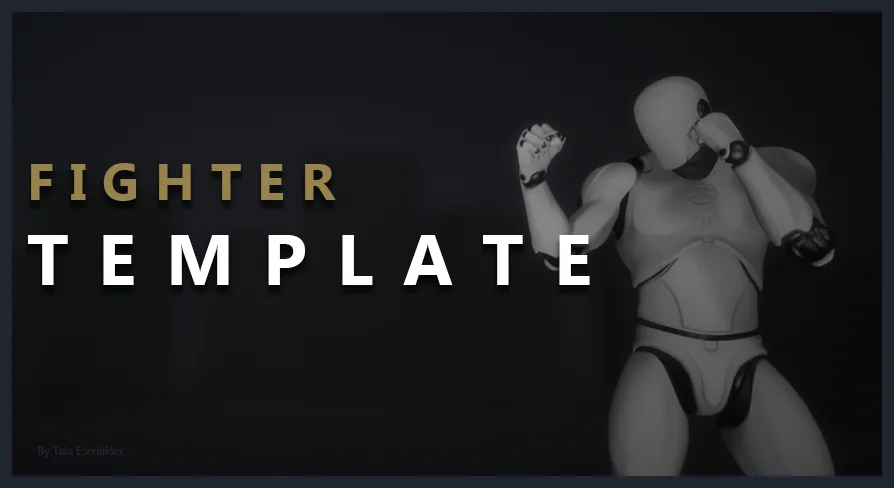
Fighter Template
A Blueprint-driven foundation for local multiplayer fighting games, featuring data table integration for rapid character setup and map selection flows.
Category:Unreal Engine, FightingPlatform: Unreal EngineEngine Version: 5.0+Published: Aug 1, 2026
Fighting
Resource overview
Establishing Local Multiplayer Input Constraints
Setting up local multiplayer inputs for fighting games often presents immediate technical roadblocks, particularly when handling mixed input devices on a single machine. The Fighter Template directly addresses this friction by establishing a pre-configured local multiplayer environment right out of the box. Developers looking to test mechanics or build couch-competitive experiences can bypass the initial headache of assigning Player Controllers and immediately focus on gameplay.
The system strictly governs how these inputs are assigned to prevent overlap and ensure smooth gameplay on a local machine. To play a match, an extra gamepad is a strict requirement for the setup. The framework is deliberately designed so that it does not support mapping both Player 1 and Player 2 to a single keyboard, eliminating the input ghosting and crowding issues common to shared-keyboard setups. Instead, local matches can be played using 1 keyboard alongside 1 gamepad, or by utilizing 2 separate gamepads for a traditional console-style setup. Because the system currently only works on a local machine, understanding and adhering to these hardware input requirements is the fundamental first step in utilizing the framework.
Structuring the Roster with Data Tables
Managing fighting game rosters requires a scalable approach to handle diverse character identities, attributes, and their associated data. This template organizes that critical information through the use of Data Tables, establishing a workflow that prioritizes rapid iteration over manual configuration.
By centralizing character data into tables, developers can rapidly organize their roster without digging into individual visual logic for every single adjustment. This data-driven approach means that setting up custom characters can be accomplished in a matter of seconds. Creators can populate the selection screens by simply updating the relevant rows within the Data Table itself. It shifts the workflow away from tedious, manual node editing and into a streamlined pipeline, which is highly beneficial when building out a large roster of fighters. The reliance on Data Tables ensures that the underlying system remains clean and easily accessible for developers implementing their own expanding cast of combatants.
Driving Character and Map Selection Flows
Before a local match begins, players need a structured way to define the parameters of the bout. The asset provides the fundamental transition phases expected in the genre, specifically providing the groundwork for Character Selection and Map Selection.
These pre-game phases are essential for establishing the flow of a typical fighter. The template handles the logic required to move players from picking their respective fighters to choosing the arena where the combat will take place. Because these selection screens are tied directly to the overarching Data Table system, any new character or map added to the project can be seamlessly integrated into the pre-match selection process. This ensures that the foundational loop—from the character select screen to the map select screen and finally loading into the local match—remains intact as the project scales. It provides the basics of a fighting game so developers do not have to build the pre-match progression and variable passing from scratch.
Customizing the Underlying Blueprint Architecture
While the baseline features cover the essential loop of a local fighting game, production requirements will inevitably demand bespoke mechanics and customized rule sets. The overarching goal of the asset is to give developers the opportunity to create their own unique fighter game on top of this foundation.
The asset is constructed on a proper game framework, providing a stable foundation for further development and iteration. Because it relies entirely on Blueprints, developers equipped with basic Blueprint knowledge can dive into the logic to change system behavior or implement entirely new features. Whether a developer wants to alter how map selection functions, adjust the flow of character selection, or introduce new pre-match variables, the architecture is designed to be modified. This structural approach ensures that the template serves as a highly adaptable starting point for a proprietary fighting game rather than a rigid, unchangeable product.
Integrating with the Ultimate Menu System
A standalone fighting template handles the match logic and pre-match selections, but larger projects often require comprehensive frontend management to tie everything together into a cohesive player experience.
For developers building out a full title, the Fighter Template is verified to be compatible with the Ultimate Menu System. This compatibility allows creators to connect the core local multiplayer logic and character selection screens into a broader, more robust user interface framework. It fits naturally into a production environment where the core fighting mechanics and pre-match selections need to sit securely behind an established main menu, settings configuration, and overarching game flow structure.
 Fighting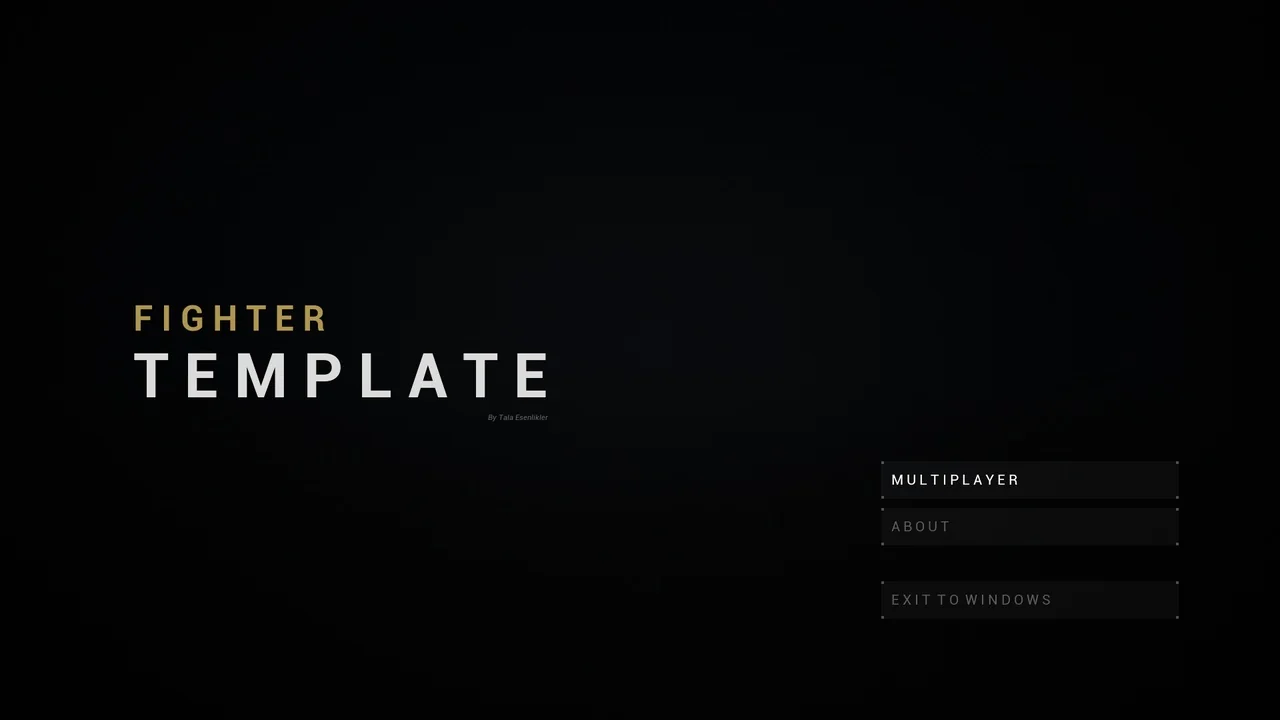
 Gameplay Features
 Characters
 Gameplay Features