"c14ff6bd758dadb1"{"id":"1000602","slug":"fast-ai-plugin-multiplayer","title":"Fast AI Plugin (Multiplayer)","category":"Artificial Intelligence","engine":"5.3,5.5 - 5.6","assetVersion":"Asset Version: 2.1.3 - 2.2.6","engineVersion":"Engine Version: 5.3,5.5 - 5.6","tag":"Artificial Intelli","accent":"blue","visual":"mech","summary":"C++ AI system for Unreal Engine supporting single-player and multiplayer with melee, ranged, zombie, animal, and civilian NPCs, plus pooling and optimization to","platform":"Unreal Engine","publishedAt":"2026-07-20T15:37:11.434Z","updatedAt":"2026-07-20T15:37:11.434Z","sourceNotes":[],"fileContents":[],"compatibility":["Unreal Engine","Asset Version: 2.1.3 - 2.2.6","Engine Version: 5.3,5.5 - 5.6"],"featuredImage":{"alt":"Fast AI Plugin (Multiplayer)","src":"/wp-content/uploads/published/2026/07/02f169ae5179-f5295a1f-228e-4784-8203-b58dd35d6870-7131490d73.webp"},"hasDownloadLink":true,"downloads":0,"terms":[{"taxonomy":"category","slug":"artificial-intelligence-tools-and-plugins","name":"Artificial Intelligence"}],"galleryImages":[{"src":"/wp-content/uploads/published/2026/07/ff74fbdf6de2-87b9644f-4906-4481-b68f-91ce5d5edf30-92d3bb4d04.webp","alt":"Fast AI Plugin (Multiplayer)"},{"src":"/wp-content/uploads/published/2026/07/ce4827cfd55d-e3dc6541-cc60-46cb-ba8e-4191b9ea4eac-cf1ad95382.webp","alt":"Fast AI Plugin (Multiplayer)"},{"src":"/wp-content/uploads/published/2026/07/df344952cc0b-6446edfe-0aee-4810-9ec1-643c14842032-756e144465.webp","alt":"Fast AI Plugin (Multiplayer)"},{"src":"/wp-content/uploads/published/2026/07/b17bfe0681e9-b3199afe-e1e6-48c7-9851-67fec120e693-cf106a9a7f.webp","alt":"Fast AI Plugin (Multiplayer)"},{"src":"/wp-content/uploads/published/2026/07/70e8e998050f-ac40cebb-ae4b-4d66-bf4f-bac4c38d4302-c8f9245cb3.webp","alt":"Fast AI Plugin (Multiplayer)"},{"src":"/wp-content/uploads/published/2026/07/8491fcfa5c29-fc8d5dbf-dfab-4f80-b8c9-9ab981a5e843-0831ba3c13.webp","alt":"Fast AI Plugin (Multiplayer)"},{"src":"/wp-content/uploads/published/2026/07/1801c3c6bc75-8b3e29a6-08e2-448d-947d-88b4c96597c2-50d5561d2c.webp","alt":"Fast AI Plugin (Multiplayer)"},{"src":"/wp-content/uploads/published/2026/07/5c9372274df1-d7a5d5b0-4e0e-47df-a82f-ae89ea2871aa-38e9dc7480.webp","alt":"Fast AI Plugin (Multiplayer)"},{"src":"/wp-content/uploads/published/2026/07/63a33fca67fa-b2098d9c-3b95-45b0-a9c4-4cf9b0cc92f7-202d15c9df.webp","alt":"Fast AI Plugin (Multiplayer)"},{"src":"/wp-content/uploads/published/2026/07/cfc7ca71ab3b-a7e46087-2401-46f8-b912-3b7ffb5bfb52-3418818d1f.webp","alt":"Fast AI Plugin (Multiplayer)"}],"accessPanel":{"kind":"resource","title":"Download this resource","eyebrow":"Free Download","message":"Log in or create a free account to start your download.","fileName":"Fast AI Plugin (Multiplayer).7z","safetyNote":"Resources are manually reviewed before listing to improve quality and reduce obvious risks.","actionLabel":"Download Free","resourceType":"Resource archive"},"contentHtml":"\u003cp\u003ePopulating an Unreal Engine world with believable non-player characters often means juggling behavior logic, replication, spawn management, and performance budgets at the same time. Fast AI Plugin (Multiplayer) approaches that workload from a C++ foundation, giving developers a system structured through both single-player and multiplayer needs. Its scope stretches from open-world roaming to linear encounters, covering archetypes such as melee fighters, ranged attackers, animals, zombies, civilians, guards, and roaming water vehicles.\u003c/p\u003e \u003ch2\u003eArchitecture and Replication Foundations\u003c/h2\u003e \u003cp\u003eThe plugin is written in C++ for performance, with network replication enabled. Players and NPC AI are based on the Unreal Engine Character class, which keeps the system familiar to anyone working within standard engine workflows. The architecture includes 38 C++ classes and over 50 blueprints, providing a mix of low-level logic and ready-to-use components. Supported development and target build platforms are both Windows, making it a PC-centric toolset in its current state.\u003c/p\u003e \u003cp\u003eIntegration is described as quick and easy, with an example project included alongside the plugin. This gives developers a working reference for how the systems interconnect rather than leaving them to piece things together from scratch. The current version, 2.2.9, includes documentation to support implementation.\u003c/p\u003e \u003ch2\u003eSpawning Behavior and Population Management\u003c/h2\u003e \u003cp\u003eOne of the central problems in NPC-heavy games is the cost of constant spawning and de-spawning. The plugin addresses this with a Pool System that eliminates those repeated operations and removes associated performance hiccups. Instead of continuously creating and destroying actors, the system reuses active instances, which is especially useful in open-world scenarios where characters enter and leave the player's vicinity frequently.\u003c/p\u003e \u003cp\u003eThe AI Spawners Blueprint is designed to work for both linear and open world maps. Beyond basic placement, the plugin includes a Multi-layer spawn system that allows spawning inside buildings with multiple floors. This spatial awareness means NPCs can appear on specific levels of a structure rather than clustering at ground height.\u003c/p\u003e \u003cp\u003eA Raid System provides another layer of population control by spawning random characters around specified actors. This could support ambush encounters, dynamic events, or scripted responses tied to a focal point in the world.\u003c/p\u003e \u003ch2\u003eNPC Archetypes and Behavioral Tuning\u003c/h2\u003e \u003cp\u003eThe plugin ships with examples for melee, ranged, animal, zombie, civilian, and guard AI. These categories cover combatant and non-combatant roles, letting developers populate worlds with both hostile threats and ambient characters. Each example provides a starting point that can be adjusted to fit a project's tone.\u003c/p\u003e \u003cp\u003eIndividual settings exist for Idle, Roam, Melee, Flee, Ranged, Investigate, and Follow behaviors. This granular control means a civilian might prioritize fleeing while a guard leans toward investigation, all from the same framework. AI can also send and receive messages to communicate with other AI, opening the door to group coordination without requiring every decision to route through the player.\u003c/p\u003e \u003cp\u003eFor combat-focused AI, the system uses trace-based melee hit detection, giving precise control over when and how melee strikes register. Hit reaction animation inputs include cooldown functionality, preventing reaction loops from firing too rapidly. Ranged characters benefit from aim offset support, and a strafing system is included for Unreal Engine 5.8 and above.\u003c/p\u003e \u003ch3\u003eLifecycle Schedules and Day/Night Routines\u003c/h3\u003e \u003cp\u003eThe Lifecycle feature, available for Unreal Engine 5.2 and above, lets NPCs follow day/night schedules. This moves AI beyond reactive combat behavior into simulated daily routines, where characters can shift activities based on the time of day. For open-world games aiming for immersion, this kind of schedule-driven behavior adds a layer of world-building that static spawn points cannot achieve.\u003c/p\u003e \u003ch2\u003eSensory Systems and Player Interaction\u003c/h2\u003e \u003cp\u003eAI in the plugin responds to player presence through Sight and Hearing senses that are player-activated. This sensory model lets NPCs become aware of the player through line-of-sight checks and noise-based detection, supporting stealth gameplay and emergent encounters where player movement directly influences AI awareness.\u003c/p\u003e \u003cp\u003eOnce alerted, NPCs can Investigate or Follow based on the individual behavior settings, creating a chain of responses that feels reactive rather than scripted. The ability to tune these senses per character means a guard might have sharper detection thresholds than a civilian.\u003c/p\u003e \u003ch2\u003ePerformance Optimization and Large-Scale Populations\u003c/h2\u003e \u003cp\u003ePerformance remains a concern when dealing with large NPC counts. The plugin includes a Character Optimizer for single-player with options such as hiding meshes, disabling AI components, and managing animation budget allocation. These tools give developers control over how much processor time each NPC consumes based on its relevance to the current scene.\u003c/p\u003e \u003cp\u003eFor large populations, additional blueprints utilize the Animation Sharing plugin to create over 300 basic roaming AI with a significant FPS improvement. This approach allows background characters to share animation logic rather than each one running independent updates, making dense crowds viable without overwhelming the engine.\u003c/p\u003e \u003cp\u003eA Foot Step Component supports unlimited foot types, useful for projects that need varied surface interactions across different character Species or creature types. Basic flying actors are also supported, with a raven example provided to demonstrate airborne movement.\u003c/p\u003e \u003ch2\u003eVehicles and Specialized Movement\u003c/h2\u003e \u003cp\u003eRoaming water vehicles use the Unreal Engine Water plugin to navigate aquatic environments. This extends the plugin's coverage beyond ground-based characters, supporting boats or similar craft that move through water rather than across terrain.\u003c/p\u003e \u003ch2\u003eCompatibility and Project Fit\u003c/h2\u003e \u003cp\u003eThe plugin is compatible with Unreal Engine versions 5.2 through 5.8, covering a span that includes the Lifecycle feature (5.2+) and the strafing system (5.8+). Developers working within this range can access the full feature set, though specific features are gated by engine version as noted.\u003c/p\u003e \u003cp\u003eWith its C++ core, replicated networking, and broad behavioral coverage, Fast AI Plugin (Multiplayer) fits projects that need dense NPC populations without sacrificing performance. The pool system, optimization tools, and animation sharing support make it particularly relevant for open-world games, while the individual behavior settings and spawner blueprints keep it flexible enough for linear experiences.\u003c/p\u003e\n\n\u003ch2\u003eRelated Resources Worth Checking\u003c/h2\u003e\n\u003cul\u003e\n\u003cli\u003e\u003ca href=\"https://3dcghub.com/hierarchical-task-network-planning-ai/\" title=\"Hierarchical Task Network Planning AI\"\u003eHierarchical Task Network Planning AI\u003c/a\u003e\u003c/li\u003e\n\u003cli\u003e\u003ca href=\"https://3dcghub.com/monster-ai-kit/\" title=\"Monster Ai Kit\"\u003eMonster Ai Kit\u003c/a\u003e\u003c/li\u003e\n\u003cli\u003e\u003ca href=\"https://3dcghub.com/advanced-multiplayer-survival-templatev2/\" title=\"Advanced Multiplayer Survival TemplateV2\"\u003eAdvanced Multiplayer Survival TemplateV2\u003c/a\u003e\u003c/li\u003e\n\u003cli\u003e\u003ca href=\"https://3dcghub.com/multiplayer-zombie-survival-template/\" title=\"Multiplayer Zombie Survival Template\"\u003eMultiplayer Zombie Survival Template\u003c/a\u003e\u003c/li\u003e\n\u003cli\u003e\u003ca href=\"https://3dcghub.com/smart-ai/\" title=\"Smart AI\"\u003eSmart AI\u003c/a\u003e\u003c/li\u003e\n\u003c/ul\u003e","contentTextLength":6823,"navigation":{"current":1259,"total":3719,"previous":{"id":"1000603","slug":"fluid-portal-vfx-pack","title":"Fluid Portal VFX Pack","category":"Shaders","platform":"Unreal Engine","updatedAt":"2026-07-20T16:20:21.021Z"},"next":{"id":"1000601","slug":"fantasy-armour-caster-mage-sorcerer-wizard-metahuman","title":"Fantasy Armour - Caster / Mage / Sorcerer / Wizard - Metahuman","category":"Characters \u0026 Creatures","platform":"Unreal Engine","updatedAt":"2026-07-20T07:27:01.397Z"}},"relatedResources":[{"id":"1001260","slug":"world-director-npc-pro-massive-npc-simulation-with-multiplayer-and-optimization","title":"World Director NPC PRO – Massive NPC Simulation with Multiplayer \u0026 Optimization","category":"Artificial Intelligence","engine":"4.26 - 5.8","assetVersion":"Asset Version: 1.1.6 - 2.2.4","engineVersion":"Engine Version: 4.26 - 5.8","tag":"Artificial Intelli","accent":"blue","visual":"mech","summary":"Simulate thousands of persistent NPCs in Unreal Engine with World Director NPC PRO, featuring four optimization tiers, multithreaded AI, and multiplayer support","platform":"Unreal Engine","publishedAt":"2026-09-30T05:29:11.329Z","updatedAt":"2026-09-30T05:29:11.329Z","sourceNotes":[],"fileContents":[],"compatibility":["Unreal Engine","Asset Version: 1.1.6 - 2.2.4","Engine Version: 4.26 - 5.8"],"featuredImage":{"alt":"World Director NPC PRO – Massive NPC Simulation with Multiplayer \u0026 Optimization","src":"/wp-content/uploads/published/2026/09/d7eb47e30036-c6858b58-c55b-4e92-8af4-f18c94ce9c23-0fcfe248e5.webp"},"hasDownloadLink":true,"downloads":0},{"id":"13566","slug":"hierarchical-task-network-planning-ai","title":"Hierarchical Task Network Planning AI","category":"Artificial Intelligence","engine":"5.1 - 5.4","assetVersion":"Engine version: 5.1 - 5.4","engineVersion":"4.24","tag":"Artificial Intelli","accent":"blue","visual":"mech","summary":"Empower your characters with the Hierarchical Task Network Planning AI plugin. This tool features a visual graph editor and predictive logic to create sophisticated, tactical AI behaviors.","platform":"Unreal Engine","publishedAt":"2026-03-11T03:45:14.000Z","updatedAt":"2026-04-19T15:46:26.000Z","sourceNotes":[],"fileContents":[],"compatibility":["Unreal Engine","Engine version: 5.1 - 5.4"],"featuredImage":{"alt":"Hierarchical Task Network Planning AI","src":"https://3dcghub.com/wp-content/uploads/2026/03/a61cd7ac-52d7-428a-a6ac-280c9d5d8bfb.webp"},"hasDownloadLink":true,"downloads":0},{"id":"1001143","slug":"multiplayer-shooter-template-with-ai","title":"Multiplayer Shooter Template With AI","category":"Weapons \u0026 Combat","engine":"5.0+","assetVersion":"","engineVersion":"Engine Version: 5.0+","tag":"Weapons \u0026 Combat","accent":"blue","visual":"mech","summary":"Multiplayer Shooter Template With AI delivers full network replication, custom sensory AI, dynamic radar capture, and direct MetaHuman skeleton compatibility.","platform":"Unreal Engine","publishedAt":"2026-09-09T05:42:58.481Z","updatedAt":"2026-09-09T05:42:58.481Z","sourceNotes":[],"fileContents":[],"compatibility":["Unreal Engine","Engine Version: 5.0+"],"featuredImage":{"alt":"Multiplayer Shooter Template With AI","src":"/wp-content/uploads/published/2026/09/f9ce64bcb73f-d891bb99-f96d-4bc3-b423-edb9bcc0bf46-4cce92b723.webp"},"hasDownloadLink":true,"downloads":0}]}
Artificial Intelli
Fast AI Plugin (Multiplayer)
C++ AI system for Unreal Engine supporting single-player and multiplayer with melee, ranged, zombie, animal, and civilian NPCs, plus pooling and optimization to
Populating an Unreal Engine world with believable non-player characters often means juggling behavior logic, replication, spawn management, and performance budgets at the same time. Fast AI Plugin (Multiplayer) approaches that workload from a C++ foundation, giving developers a system structured through both single-player and multiplayer needs. Its scope stretches from open-world roaming to linear encounters, covering archetypes such as melee fighters, ranged attackers, animals, zombies, civilians, guards, and roaming water vehicles.
Architecture and Replication Foundations
The plugin is written in C++ for performance, with network replication enabled. Players and NPC AI are based on the Unreal Engine Character class, which keeps the system familiar to anyone working within standard engine workflows. The architecture includes 38 C++ classes and over 50 blueprints, providing a mix of low-level logic and ready-to-use components. Supported development and target build platforms are both Windows, making it a PC-centric toolset in its current state.
Integration is described as quick and easy, with an example project included alongside the plugin. This gives developers a working reference for how the systems interconnect rather than leaving them to piece things together from scratch. The current version, 2.2.9, includes documentation to support implementation.
Spawning Behavior and Population Management
One of the central problems in NPC-heavy games is the cost of constant spawning and de-spawning. The plugin addresses this with a Pool System that eliminates those repeated operations and removes associated performance hiccups. Instead of continuously creating and destroying actors, the system reuses active instances, which is especially useful in open-world scenarios where characters enter and leave the player's vicinity frequently.
The AI Spawners Blueprint is designed to work for both linear and open world maps. Beyond basic placement, the plugin includes a Multi-layer spawn system that allows spawning inside buildings with multiple floors. This spatial awareness means NPCs can appear on specific levels of a structure rather than clustering at ground height.
A Raid System provides another layer of population control by spawning random characters around specified actors. This could support ambush encounters, dynamic events, or scripted responses tied to a focal point in the world.
NPC Archetypes and Behavioral Tuning
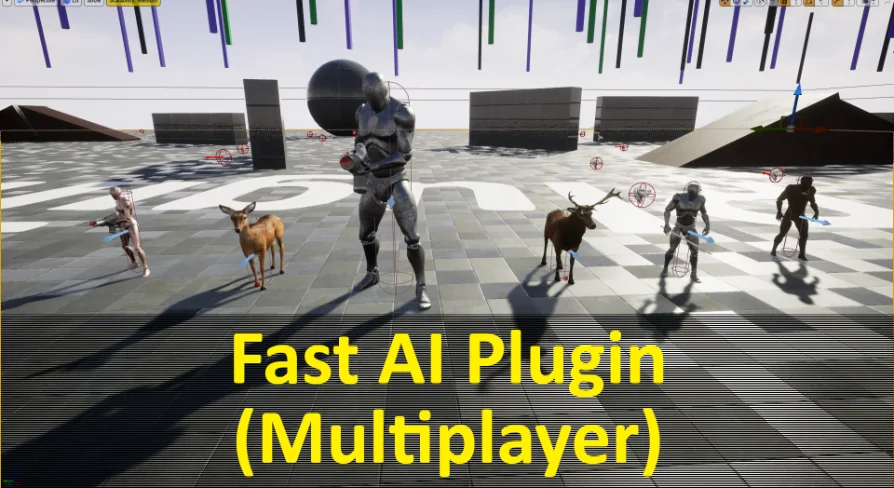
The plugin ships with examples for melee, ranged, animal, zombie, civilian, and guard AI. These categories cover combatant and non-combatant roles, letting developers populate worlds with both hostile threats and ambient characters. Each example provides a starting point that can be adjusted to fit a project's tone.
Individual settings exist for Idle, Roam, Melee, Flee, Ranged, Investigate, and Follow behaviors. This granular control means a civilian might prioritize fleeing while a guard leans toward investigation, all from the same framework. AI can also send and receive messages to communicate with other AI, opening the door to group coordination without requiring every decision to route through the player.
For combat-focused AI, the system uses trace-based melee hit detection, giving precise control over when and how melee strikes register. Hit reaction animation inputs include cooldown functionality, preventing reaction loops from firing too rapidly. Ranged characters benefit from aim offset support, and a strafing system is included for Unreal Engine 5.8 and above.
Lifecycle Schedules and Day/Night Routines
The Lifecycle feature, available for Unreal Engine 5.2 and above, lets NPCs follow day/night schedules. This moves AI beyond reactive combat behavior into simulated daily routines, where characters can shift activities based on the time of day. For open-world games aiming for immersion, this kind of schedule-driven behavior adds a layer of world-building that static spawn points cannot achieve.
Sensory Systems and Player Interaction
AI in the plugin responds to player presence through Sight and Hearing senses that are player-activated. This sensory model lets NPCs become aware of the player through line-of-sight checks and noise-based detection, supporting stealth gameplay and emergent encounters where player movement directly influences AI awareness.
Once alerted, NPCs can Investigate or Follow based on the individual behavior settings, creating a chain of responses that feels reactive rather than scripted. The ability to tune these senses per character means a guard might have sharper detection thresholds than a civilian.
Performance Optimization and Large-Scale Populations
Performance remains a concern when dealing with large NPC counts. The plugin includes a Character Optimizer for single-player with options such as hiding meshes, disabling AI components, and managing animation budget allocation. These tools give developers control over how much processor time each NPC consumes based on its relevance to the current scene.
For large populations, additional blueprints utilize the Animation Sharing plugin to create over 300 basic roaming AI with a significant FPS improvement. This approach allows background characters to share animation logic rather than each one running independent updates, making dense crowds viable without overwhelming the engine.
A Foot Step Component supports unlimited foot types, useful for projects that need varied surface interactions across different character Species or creature types. Basic flying actors are also supported, with a raven example provided to demonstrate airborne movement.
Vehicles and Specialized Movement
Roaming water vehicles use the Unreal Engine Water plugin to navigate aquatic environments. This extends the plugin's coverage beyond ground-based characters, supporting boats or similar craft that move through water rather than across terrain.
Compatibility and Project Fit
The plugin is compatible with Unreal Engine versions 5.2 through 5.8, covering a span that includes the Lifecycle feature (5.2+) and the strafing system (5.8+). Developers working within this range can access the full feature set, though specific features are gated by engine version as noted.
With its C++ core, replicated networking, and broad behavioral coverage, Fast AI Plugin (Multiplayer) fits projects that need dense NPC populations without sacrificing performance. The pool system, optimization tools, and animation sharing support make it particularly relevant for open-world games, while the individual behavior settings and spawner blueprints keep it flexible enough for linear experiences.
 Artificial Intelli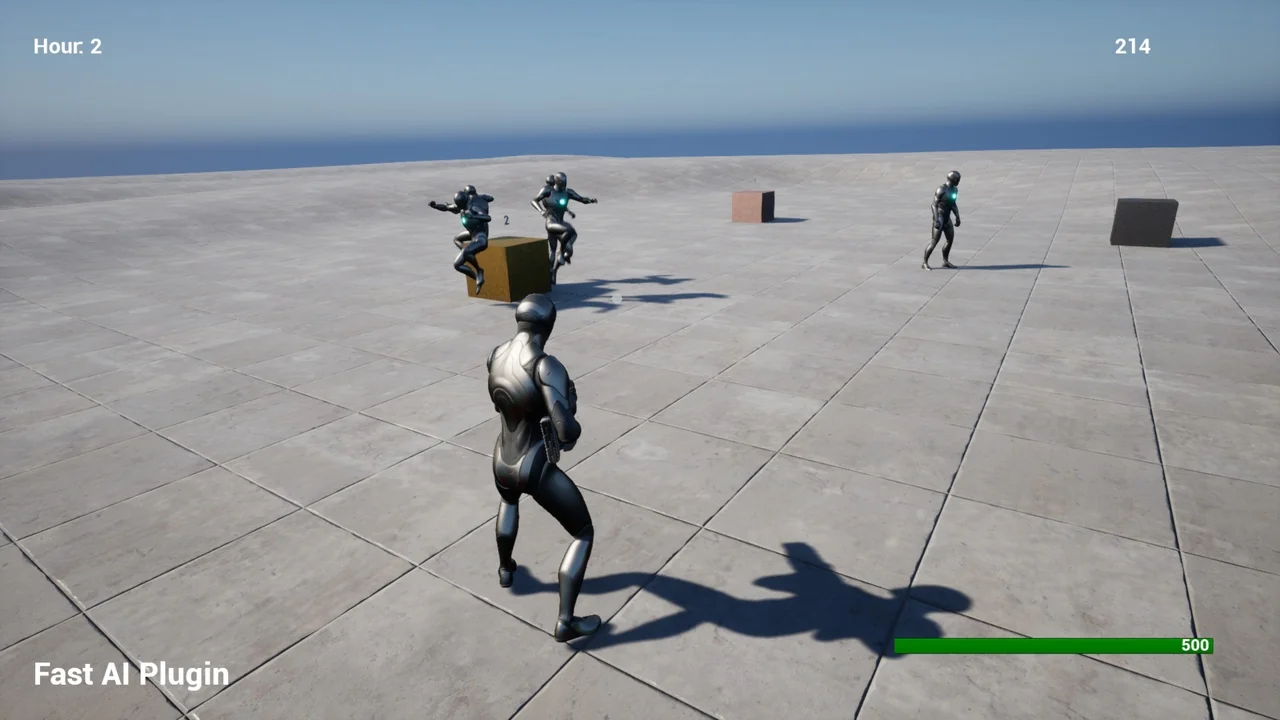
 Artificial Intelli
 Artificial Intelli
 Weapons & Combat