"b00678cacce53329"{"id":"1002785","slug":"explosion-pack-1-nature-elements","title":"Explosion Pack #1 - Nature Elements","category":"Variety","engine":"4.16+,5.0+","assetVersion":"","engineVersion":"Engine Version: 4.16+,5.0+","tag":"Variety","accent":"blue","visual":"mech","summary":"Explore Explosion Pack #1 - Nature Elements, featuring modular semi-realistic fire, ice, electric, and poison impacts for Unreal VR, AR, and VFX projects.","platform":"Unreal Engine","indexPolicy":"index","publishedAt":"2026-11-20T07:08:23.380Z","updatedAt":"2026-11-20T07:08:23.380Z","sourceNotes":[],"fileContents":[],"compatibility":["Unreal Engine","Engine Version: 4.16+,5.0+"],"featuredImage":{"alt":"Explosion Pack #1 - Nature Elements","src":"/wp-content/uploads/published/2026/11/63772c01f1c6-cfe5d090-a2e8-4d15-8089-866bc097ea14-6c59f3dcfd.webp"},"fileSizeBytes":17728972,"hasDownloadLink":true,"downloads":0,"terms":[{"taxonomy":"category","slug":"variety-vfx","name":"Variety"}],"galleryImages":[{"src":"/wp-content/uploads/published/2026/11/b0176183a5a7-2f1d084a-5288-4302-a158-a409e7d6fd80-32f87a4b7f.webp","alt":"Explosion Pack #1 - Nature Elements"},{"src":"/wp-content/uploads/published/2026/11/a4932d5bcbcb-2580b488-d64e-4527-9c03-539326f6af11-5c8c11735d.webp","alt":"Explosion Pack #1 - Nature Elements"},{"src":"/wp-content/uploads/published/2026/11/f64e668e61c0-1b67e96d-e10b-4026-a44e-e0addfd6ea06-1d81e791ab.webp","alt":"Explosion Pack #1 - Nature Elements"},{"src":"/wp-content/uploads/published/2026/11/1fc513f3b9ef-154dd1f5-3b79-4409-9fa2-f0397608404c-27cdf2e1c4.webp","alt":"Explosion Pack #1 - Nature Elements"},{"src":"/wp-content/uploads/published/2026/11/a6a630739f12-506e4434-ec22-4a95-b148-a15d38a3fd81-11a9cf5ab0.webp","alt":"Explosion Pack #1 - Nature Elements"},{"src":"/wp-content/uploads/published/2026/11/37a32e4716be-4cd1b8a7-1c6b-4534-a336-804568ef3ed1-cacb30df4e.webp","alt":"Explosion Pack #1 - Nature Elements"},{"src":"/wp-content/uploads/published/2026/11/8657aaa03e32-024ff740-6747-4983-878b-9db1fe0a639b-c98bfe718b.webp","alt":"Explosion Pack #1 - Nature Elements"},{"src":"/wp-content/uploads/published/2026/11/a8d8e5c33a66-5b702c69-6e20-4305-8641-88dbd8d346b8-63cbaa1660.webp","alt":"Explosion Pack #1 - Nature Elements"}],"accessPanel":{"kind":"resource","title":"Get this resource","safetyNote":"Resources are manually reviewed before listing to improve quality and reduce obvious risks.","fileName":"Content.7z","resourceType":"Resource archive","versions":[]},"contentHtml":"\u003ch2\u003eIntegrating Modular Nature Elements in Unreal Engine Blueprints\u003c/h2\u003e\n\u003cp\u003eImplementing particle bursts inside Unreal Engine demands an architecture that separates visual assets from gameplay logic. Because this system is built with modularity and Blueprint integration at its core, developers can hook the visual assets directly into gameplay triggers, collision volumes, or combat hit events without rewriting the visual hierarchy. Instead of treating every detonation as a single, immutable particle instance, the modular structure allows individual explosion components to be triggered, timed, or layered depending on the context of an interaction.\u003c/p\u003e\n\u003cp\u003eSpawning these effects through Blueprint actors provides direct command over how nature-themed detonations interact with scene geometry. An environmental impact can call upon the specific elemental state required by game logic, instantly aligning the visual outcome with the actor that initiated the blast. Because the pack operates within Unreal's particle and Blueprint framework, setting up trace-based surface detonations or projectile collisions follows standard engine conventions. You hook the event hit or overlap trigger to spawn the emitter at the impact transform, letting the modular components handle the visual delivery cleanly.\u003c/p\u003e \u003ch2\u003eVisual Profiling of the Four Explosion Impacts\u003c/h2\u003e\n\u003cp\u003eThe collection focuses on four distinct physical and elemental manifestations: fire, ice, electricity, and green poison. Each variation alters the silhouette, dispersal behavior, and narrative context of the blast while maintaining a cohesive semi-realistic visual weight. Rather than merely recoloring a single base explosion, each element delivers a distinctive visual profile tailored to its thematic properties.\u003c/p\u003e \u003ch3\u003eFire and Electricity Impact Dynamics\u003c/h3\u003e\n\u003cp\u003eThe fire explosion delivers the classic thermodynamic expansion expected of combustible force. It balances dense flash lighting with expanding outward displacement, suitable for conventional munitions, fiery magical spells, or flammable environmental traps. In practical combat staging, the fire effect functions as an unambiguous signal of high kinetic and thermal damage, providing the player with immediate visual feedback through bright luminescence followed by darker dispersal.\u003c/p\u003e\n\u003cp\u003eIn contrast, the electricity impact changes the kinetic profile from standard volumetric expansion to erratic, directional energy discharge. Arc-like discharge patterns and rapid localized illumination establish an instantaneous energy spike. When deployed during mechanical overloads, lightning strikes, or magical shocks, the electric variant conveys piercing, rapid-fire disruption rather than the slower, convective lingering associated with thermal detonations.\u003c/p\u003e \u003ch3\u003eIce and Green Poison Reaction Effects\u003c/h3\u003e\n\u003cp\u003eThe ice explosion shifts the visual temperature entirely, replacing incandescent heat with sharp, crystallizing force and freezing particulate matter. The dissipation phase mimics frost, shattered shards, or rapidly condensing cold vapor. Mechanically, this profile provides immediate clarity in combat encounters where freezing, slowing, or defensive shielding must look distinct from concussive, fiery blasts.\u003c/p\u003e\n\u003cp\u003eGreen poison introduces an organic, hazardous footprint characterized by toxic plumes and lingering chemical volatility. The bright, hazardous green hue serves as a persistent visual warning, making it an effective choice for area-denial mechanics, acidic detonations, biochemical traps, or monstrous fantasy abilities. The noxious silhouette spreads across the impact zone to communicate lingering danger long after the initial blast wave has crested.\u003c/p\u003e \u003ch2\u003eDeploying Explosion Elements Across VR, AR, and Heavy VFX Pipelines\u003c/h2\u003e\n\u003cp\u003eReal-time visual effects in virtual reality and augmented reality operate under tight artistic and technical constraints. In immersive VR setups, explosions cannot rely on flat, screen-oriented billboard trickery that collapses when viewed stereoscopically. The semi-realistic construction used in these assets maintains volumetric coherence across multiple viewing angles, ensuring that players inspecting an impact up close perceive believable depth and expansion.\u003c/p\u003e\n\u003cp\u003eAugmented reality scenes introduce a different set of visual demands: synthetic effects must read clearly against unpredictable physical backdrops. The distinct coloration and high-contrast nature of these elemental impacts—from the incandescent flash of electricity to the sharp toxicity of green poison—help them cut through varying background lighting conditions without losing structural readability.\u003c/p\u003e\n\u003cp\u003eFor standard VFX-heavy Unreal productions outside immersive headsets, these effects provide high-density visual staging for cinematic action beats and heavy combat sequences. Layering the electricity and fire variants allows artists to create complex hybrid detonations, such as an arcane explosion or a multi-stage technological failure, directly inside sequence tracks or gameplay blueprints.\u003c/p\u003e \u003ch2\u003eAesthetic Calibration Between Fantasy FX and Semi-Realistic Simulation\u003c/h2\u003e\n\u003cp\u003eFinding the right middle ground between raw physical simulation and expressive fantasy styling is a common production hurdle. Purely physical simulations can sometimes lack readability during fast-paced play, while overly stylized or cartoony visual effects may fail to fit worlds built on grounded material pipelines. This asset set strikes a semi-realistic balance, retaining the physical credibility of expanding force, smoke, and energy while emphasizing the vibrant, readable identities of its four elemental themes.\u003c/p\u003e\n\u003cp\u003eThis hybrid approach fits naturally into dark fantasy adventures, stylized sci-fi battlefields, and modern supernatural thrillers. Because the pack stems from a development background that includes purely cartoony impact systems and dedicated impact simulation particles, its artistic direction bridges the gap between readable game art and grounded visual simulation.\u003c/p\u003e \u003ch2\u003eProduction Alignment and Scene Implementation\u003c/h2\u003e\n\u003cp\u003eIntegrating the package into an active project pipeline provides a ready-made palette of elemental responses for characters, hazards, and environments. When building an expansive encounter, developers can assign each elemental detonation to corresponding surface materials or damage types: water and wet stone trigger electrical arcing, sub-zero structures release ice blasts, combustible vegetation yields fire impacts, and swamp environments burst with toxic green clouds.\u003c/p\u003e\n\u003cp\u003eBecause the implementation relies on modularity and standard Blueprint coordination, tailoring the timing, distribution, and gameplay events linked to each explosion remains flexible throughout iterative playtesting, keeping technical friction low across the entire Unreal Engine development cycle.\u003c/p\u003e\n\n\u003ch2\u003eExplore Similar Assets\u003c/h2\u003e\n\u003cul\u003e\n\u003cli\u003e\u003ca href=\"https://3dcghub.com/falling-leaves-vfx-pack/\" rel=\"noopener noreferrer\"\u003eFalling Leaves VFX Pack\u003c/a\u003e\u003c/li\u003e\n\u003cli\u003e\u003ca href=\"https://3dcghub.com/explosion-blueprints/\" rel=\"noopener noreferrer\"\u003eExplosion Blueprints\u003c/a\u003e\u003c/li\u003e\n\u003cli\u003e\u003ca href=\"https://3dcghub.com/cartoony-impact-fx-second-edition/\" rel=\"noopener noreferrer\"\u003eCartoony Impact FX - Second Edition\u003c/a\u003e\u003c/li\u003e\n\u003cli\u003e\u003ca href=\"https://3dcghub.com/stylized-vfx-fire/\" rel=\"noopener noreferrer\"\u003eStylized VFX - Fire\u003c/a\u003e\u003c/li\u003e\n\u003cli\u003e\u003ca href=\"https://3dcghub.com/2d-anime-vfx-pack/\" rel=\"noopener noreferrer\"\u003e2D Anime VFX Pack\u003c/a\u003e\u003c/li\u003e\n\u003c/ul\u003e","contentTextLength":6897,"navigation":{"current":95,"total":4797,"previous":{"id":"1002786","slug":"fantasy-fx-starter-pack","title":"Fantasy FX Starter Pack","category":"Game Development Resource","platform":"Unreal Engine","updatedAt":"2026-11-20T07:09:12.751Z"},"next":{"id":"1002784","slug":"explosion-blueprints","title":"Explosion Blueprints","category":"Variety","platform":"Unreal Engine","updatedAt":"2026-11-20T07:07:26.441Z"}},"relatedResources":[{"id":"17090","slug":"falling-leaves-vfx-pack","title":"Falling Leaves VFX Pack","category":"Variety","engine":"4.26+,5.0+","assetVersion":"Engine version: 4.26+,5.0+","engineVersion":"4.26","tag":"Variety","accent":"blue","visual":"audio","summary":"The Falling Leaves VFX Pack provides a comprehensive set of nature-based particle effects. With 11 leaf types and multiple wind variations, it offers realistic movement for any project.","platform":"Unreal Engine","indexPolicy":"noindex","publishedAt":"2026-03-13T13:40:59.000Z","updatedAt":"2026-04-19T15:43:37.000Z","sourceNotes":[],"fileContents":[],"compatibility":["Unreal Engine","Engine version: 4.26+,5.0+"],"featuredImage":{"alt":"Falling Leaves VFX Pack","src":"https://3dcghub.com/wp-content/uploads/2026/03/7d254056-511c-401f-9eae-471f1182db0c.webp"},"fileSizeBytes":259962713,"hasDownloadLink":true,"downloads":3},{"id":"1002806","slug":"magic-explosions","title":"Magic Explosions","category":"Variety","engine":"4.19+,5.0+","assetVersion":"","engineVersion":"Engine Version: 4.19+,5.0+","tag":"Variety","accent":"blue","visual":"mech","summary":"Examine how the 16 particle effects in Magic Explosions support stylized game projects, fantasy combat, and time-based visual detonation dynamics.","platform":"Unreal Engine","indexPolicy":"index","publishedAt":"2026-11-20T07:36:38.300Z","updatedAt":"2026-11-20T07:36:38.300Z","sourceNotes":[],"fileContents":[],"compatibility":["Unreal Engine","Engine Version: 4.19+,5.0+"],"featuredImage":{"alt":"Magic Explosions","src":"/wp-content/uploads/published/2026/11/4bf6a8b76a51-7e4144aa-09e9-4479-abdc-375180eadbf4-7f28af9fe2.webp"},"fileSizeBytes":25075629,"hasDownloadLink":true,"downloads":0},{"id":"1002784","slug":"explosion-blueprints","title":"Explosion Blueprints","category":"Variety","engine":"4.15+,5.0+","assetVersion":"","engineVersion":"Engine Version: 4.15+,5.0+","tag":"Variety","accent":"blue","visual":"mech","summary":"Create scalable, physics-driven explosions using HDR flipbooks, modular particle emitters, and configurable Blueprints without external simulation tools.","platform":"Unreal Engine","indexPolicy":"index","publishedAt":"2026-11-20T07:07:26.441Z","updatedAt":"2026-11-20T07:07:26.441Z","sourceNotes":[],"fileContents":[],"compatibility":["Unreal Engine","Engine Version: 4.15+,5.0+"],"featuredImage":{"alt":"Explosion Blueprints","src":"/wp-content/uploads/published/2026/11/315e4b7979a2-5bdba137-7df8-460a-823e-bb2548ec514c-4f2df51f2c.webp"},"fileSizeBytes":1147617613,"hasDownloadLink":true,"downloads":0}]}
Resource screenshots
1 / 8
Join our channel
Follow 3DCGHUB on Telegram for new resource drops, migration updates, and community notices.
Integrating Modular Nature Elements in Unreal Engine Blueprints
Implementing particle bursts inside Unreal Engine demands an architecture that separates visual assets from gameplay logic. Because this system is built with modularity and Blueprint integration at its core, developers can hook the visual assets directly into gameplay triggers, collision volumes, or combat hit events without rewriting the visual hierarchy. Instead of treating every detonation as a single, immutable particle instance, the modular structure allows individual explosion components to be triggered, timed, or layered depending on the context of an interaction.
Spawning these effects through Blueprint actors provides direct command over how nature-themed detonations interact with scene geometry. An environmental impact can call upon the specific elemental state required by game logic, instantly aligning the visual outcome with the actor that initiated the blast. Because the pack operates within Unreal's particle and Blueprint framework, setting up trace-based surface detonations or projectile collisions follows standard engine conventions. You hook the event hit or overlap trigger to spawn the emitter at the impact transform, letting the modular components handle the visual delivery cleanly.
Visual Profiling of the Four Explosion Impacts
The collection focuses on four distinct physical and elemental manifestations: fire, ice, electricity, and green poison. Each variation alters the silhouette, dispersal behavior, and narrative context of the blast while maintaining a cohesive semi-realistic visual weight. Rather than merely recoloring a single base explosion, each element delivers a distinctive visual profile tailored to its thematic properties.
Fire and Electricity Impact Dynamics
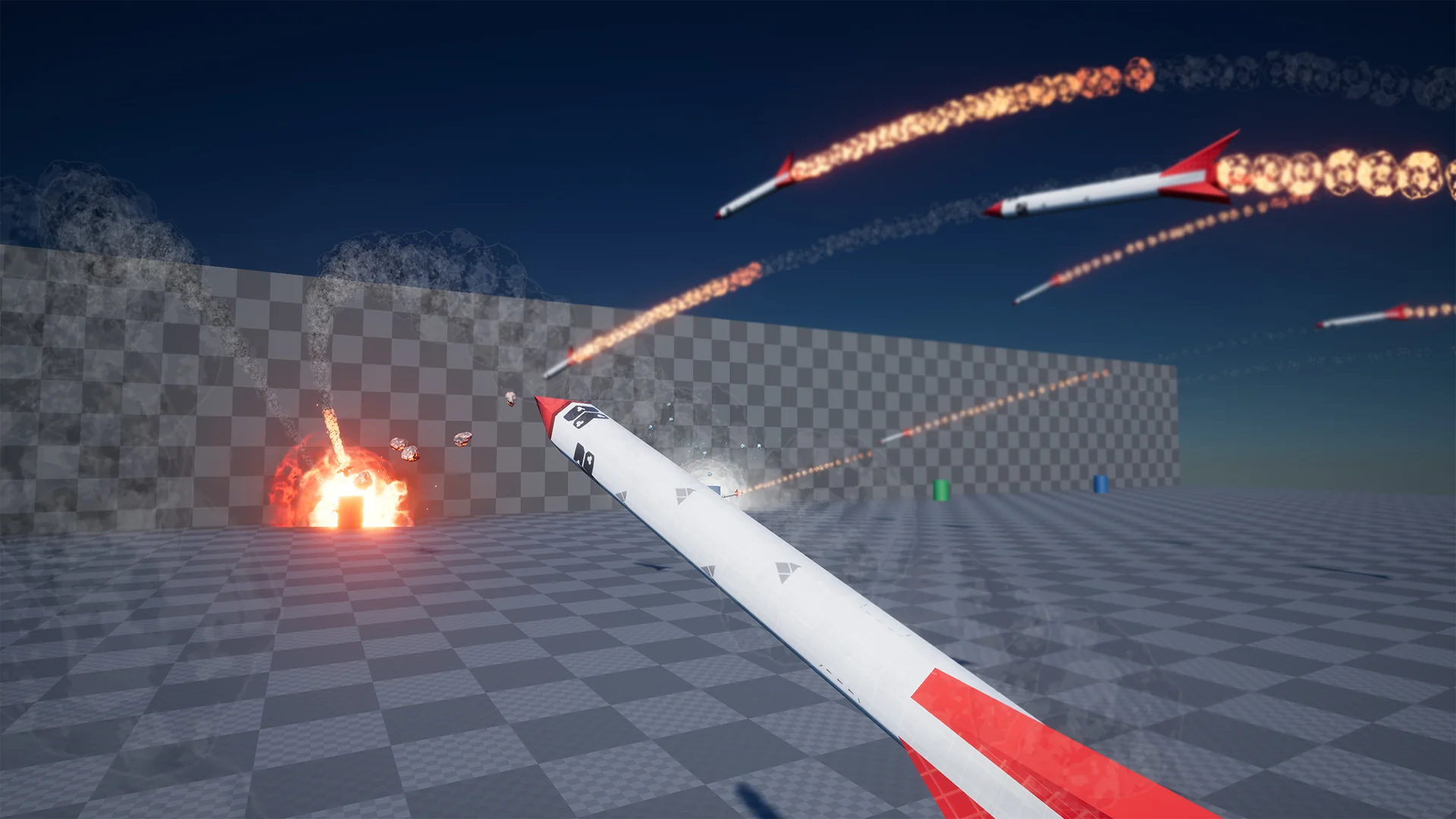
The fire explosion delivers the classic thermodynamic expansion expected of combustible force. It balances dense flash lighting with expanding outward displacement, suitable for conventional munitions, fiery magical spells, or flammable environmental traps. In practical combat staging, the fire effect functions as an unambiguous signal of high kinetic and thermal damage, providing the player with immediate visual feedback through bright luminescence followed by darker dispersal.
In contrast, the electricity impact changes the kinetic profile from standard volumetric expansion to erratic, directional energy discharge. Arc-like discharge patterns and rapid localized illumination establish an instantaneous energy spike. When deployed during mechanical overloads, lightning strikes, or magical shocks, the electric variant conveys piercing, rapid-fire disruption rather than the slower, convective lingering associated with thermal detonations.
Ice and Green Poison Reaction Effects
The ice explosion shifts the visual temperature entirely, replacing incandescent heat with sharp, crystallizing force and freezing particulate matter. The dissipation phase mimics frost, shattered shards, or rapidly condensing cold vapor. Mechanically, this profile provides immediate clarity in combat encounters where freezing, slowing, or defensive shielding must look distinct from concussive, fiery blasts.
Green poison introduces an organic, hazardous footprint characterized by toxic plumes and lingering chemical volatility. The bright, hazardous green hue serves as a persistent visual warning, making it an effective choice for area-denial mechanics, acidic detonations, biochemical traps, or monstrous fantasy abilities. The noxious silhouette spreads across the impact zone to communicate lingering danger long after the initial blast wave has crested.
Deploying Explosion Elements Across VR, AR, and Heavy VFX Pipelines
Real-time visual effects in virtual reality and augmented reality operate under tight artistic and technical constraints. In immersive VR setups, explosions cannot rely on flat, screen-oriented billboard trickery that collapses when viewed stereoscopically. The semi-realistic construction used in these assets maintains volumetric coherence across multiple viewing angles, ensuring that players inspecting an impact up close perceive believable depth and expansion.
Augmented reality scenes introduce a different set of visual demands: synthetic effects must read clearly against unpredictable physical backdrops. The distinct coloration and high-contrast nature of these elemental impacts—from the incandescent flash of electricity to the sharp toxicity of green poison—help them cut through varying background lighting conditions without losing structural readability.
For standard VFX-heavy Unreal productions outside immersive headsets, these effects provide high-density visual staging for cinematic action beats and heavy combat sequences. Layering the electricity and fire variants allows artists to create complex hybrid detonations, such as an arcane explosion or a multi-stage technological failure, directly inside sequence tracks or gameplay blueprints.
Aesthetic Calibration Between Fantasy FX and Semi-Realistic Simulation
Finding the right middle ground between raw physical simulation and expressive fantasy styling is a common production hurdle. Purely physical simulations can sometimes lack readability during fast-paced play, while overly stylized or cartoony visual effects may fail to fit worlds built on grounded material pipelines. This asset set strikes a semi-realistic balance, retaining the physical credibility of expanding force, smoke, and energy while emphasizing the vibrant, readable identities of its four elemental themes.
This hybrid approach fits naturally into dark fantasy adventures, stylized sci-fi battlefields, and modern supernatural thrillers. Because the pack stems from a development background that includes purely cartoony impact systems and dedicated impact simulation particles, its artistic direction bridges the gap between readable game art and grounded visual simulation.
Production Alignment and Scene Implementation
Integrating the package into an active project pipeline provides a ready-made palette of elemental responses for characters, hazards, and environments. When building an expansive encounter, developers can assign each elemental detonation to corresponding surface materials or damage types: water and wet stone trigger electrical arcing, sub-zero structures release ice blasts, combustible vegetation yields fire impacts, and swamp environments burst with toxic green clouds.
Because the implementation relies on modularity and standard Blueprint coordination, tailoring the timing, distribution, and gameplay events linked to each explosion remains flexible throughout iterative playtesting, keeping technical friction low across the entire Unreal Engine development cycle.
 Variety
 Variety
 Variety