"c83ee50a0da9d10a"{"id":"1000365","slug":"drone","title":"Drone","category":"Characters \u0026 Creatures","engine":"4.26+,5.0+","assetVersion":"","engineVersion":"Engine Version: 4.26+,5.0+","tag":"Characters","accent":"blue","visual":"character","summary":"A detailed look at the Smart Drone asset, featuring its fully playable 3rd person Pawn Blueprint, velocity-driven animations, and customizable color masks.","platform":"Unreal Engine","publishedAt":"2026-07-06T08:11:05.295Z","updatedAt":"2026-07-06T08:11:05.295Z","sourceNotes":[],"fileContents":[],"compatibility":["Unreal Engine","Engine Version: 4.26+,5.0+"],"featuredImage":{"alt":"Drone","src":"/wp-content/uploads/published/2026/07/7a3d1ec6a70a-eb121064-1bc6-464f-865b-af90274c4569-9250215e81.webp"},"hasDownloadLink":true,"downloads":0,"terms":[{"taxonomy":"category","slug":"characters-and-creatures","name":"Characters \u0026 Creatures"}],"galleryImages":[{"src":"/wp-content/uploads/published/2026/07/f51539727a9b-3947b1a0-6f9d-45c2-b933-ccc2a99a805f-c3d9c5dc8d.webp","alt":"Drone"},{"src":"/wp-content/uploads/published/2026/07/c4472af69614-1589e9d4-85d3-473f-bcc1-3d985effdfe7-2797cf38f5.webp","alt":"Drone"},{"src":"/wp-content/uploads/published/2026/07/b852b8578116-a87cd843-232b-45d4-84db-7331ca75320c-df8fe64b5c.webp","alt":"Drone"},{"src":"/wp-content/uploads/published/2026/07/b47b0d91446f-c90b324f-94ef-4cb6-af06-6c014e7330bd-8f21c929c3.webp","alt":"Drone"},{"src":"/wp-content/uploads/published/2026/07/19fbd9d7633f-465203c7-bebb-481c-92a6-43da94c40438-9eadbc5b2d.webp","alt":"Drone"},{"src":"/wp-content/uploads/published/2026/07/303ceefa4df2-344ec04b-e075-4013-96a8-a2e1e39e4df6-4c03a98e9f.webp","alt":"Drone"},{"src":"/wp-content/uploads/published/2026/07/334aa498ddb3-5e65cf0d-94bf-4711-b5d1-12b078a5256b-b0a2ac66cb.webp","alt":"Drone"},{"src":"/wp-content/uploads/published/2026/07/b4767ea53d05-68181894-b253-4147-a7ab-c5429bf67c57-f27f9d0e34.webp","alt":"Drone"},{"src":"/wp-content/uploads/published/2026/07/081a9f837b1d-c7e1f77e-9825-44d7-91c4-aa6e2927f2c3-241ad58c4c.webp","alt":"Drone"},{"src":"/wp-content/uploads/published/2026/07/000cce5402fa-5a090767-00fe-408a-b77c-823d4e4f6466-076c8155fa.webp","alt":"Drone"}],"accessPanel":{"kind":"resource","title":"Download this resource","eyebrow":"Free Download","message":"Log in or create a free account to start your download.","fileName":"SmartDrone.7z","safetyNote":"Resources are manually reviewed before listing to improve quality and reduce obvious risks.","actionLabel":"Download Free","resourceType":"Resource archive"},"contentHtml":"\u003ch2\u003eIntegrating the 3rd Person Pawn Blueprint\u003c/h2\u003e\n\u003cp\u003eThe asset functions as a fully playable Smart Drone, designed to operate natively as a controlled character right out of the box. Central to this implementation is the 3rd person Pawn Blueprint. By centralizing the logic and components within a single pawn structure, the asset eliminates the immediate need to script basic movement or weapon attachments from scratch. Developers looking to populate a sci-fi or space environment can drop the pawn directly into a scene as a playable character, or use the existing blueprint logic as a foundation to adapt the drone into an AI-driven enemy or companion.\u003c/p\u003e\n\u003cp\u003eWithin this blueprint, all the drone’s offensive capabilities are pre-configured. The dual-barrel machine gun, laser sights, and explosive missiles are physically and logically integrated into the pawn. This means the transition from basic movement to active combat is already mapped out within the character’s base setup. The drone conceptually shifts from a friendly robot state into a lethal machine, a duality that is supported by both the animation blueprint and the integrated weapon systems. Because the laser sights and explosive missiles are contained locally within the pawn, the logic for targeting and firing is cohesive, reducing the need for complex external weapon managers.\u003c/p\u003e\n\u003ch2\u003eVelocity and Rotation-Driven Animation Framework\u003c/h2\u003e\n\u003cp\u003eCharacter movement relies heavily on how animations blend during gameplay. For this asset, the movement system is dynamically animated based on pawn velocity and rotation rate. Instead of relying purely on rigid, linear inputs, the animation blueprint reads the speed and rotational shifts of the pawn to trigger smooth transitions across its navigational states. When a controller turns the character, the rotation rate feeds into the animation blueprint to trigger the specific rotate animation, preventing the mesh from simply sliding across the floor and maintaining a grounded, mechanical feel appropriate for a robot.\u003c/p\u003e\n\u003cp\u003eThis velocity-driven setup handles the core traversal mechanics. As the drone navigates the environment, the blueprint seamlessly blends between fundamental movement clips, including walking, reversing, strafing, and rotating in place. Aerial mobility is also accounted for, with specific animations dedicated to jumping and falling in the air. Because these transitions are tied directly to the pawn’s velocity and rotation rate, the resulting movement feels responsive to the physical inputs or AI pathfinding commands driving the character. The inclusion of directional movement like strafing ensures the drone can maintain a combat-ready facing angle while maneuvering around a target during an encounter.\u003c/p\u003e\n\u003ch2\u003eCombat Behaviors and Melee Animation States\u003c/h2\u003e\n\u003cp\u003eWhen the drone shifts into its combat phase, the animation set expands to cover a wide variety of offensive actions. The ranged combat systems utilize specific poses for the gun and missile hatches, visually indicating that the weapon systems are primed and ready for deployment. From there, the system can trigger the standard machine gun firing animation or a distinct animation for a more powerful machine gun shot. The integrated laser sights and explosive missiles coordinate with these hatch poses to deliver a fully realized sci-fi turret or walker threat, complete with the mechanical shifting expected of a transforming mecha.\u003c/p\u003e\n\u003cp\u003eBeyond ranged ballistics, the drone includes a surprising array of physical melee attacks. Despite being a machine equipped with firearms, it can engage in close-quarters combat using a headbutt, a floor slam, and stabbing motions directed to both the left and right. This implies the drone possesses directional spatial awareness in its attack animations, reacting to where the target is located relative to its chassis. This mix of ranged and physical animations allows the unit to be utilized in multi-stage boss fights or dynamic AI encounters where the enemy rapidly closes the distance. When the combat concludes, the asset provides three separate death animations, adding necessary visual variety to how the unit is destroyed in-game.\u003c/p\u003e\n\u003ch2\u003eMaterial Color Masks and Baked Glow Textures\u003c/h2\u003e\n\u003cp\u003eVisual customization is handled through a specialized material setup intended for flexibility and scene optimization. The primary mechanism for altering the drone's appearance is a color mask integrated into the materials. This masking system isolates specific UV regions, allowing developers to independently adjust the base colors of different sections of the mesh without authoring entirely new texture maps. By utilizing the color mask, a single drone model can be repurposed across multiple factions, player teams, or enemy tiers simply by swapping the designated values in the material instance.\u003c/p\u003e\n\u003cp\u003eAlongside the color customization, the asset utilizes baked glow lighting textures. In many sci-fi environments, robots and mechs rely heavily on emissive lights to communicate status or add visual flair to their designs. Instead of relying entirely on expensive real-time dynamic lighting for these glowing elements, the drone bakes this glow directly into the textures. This approach enhances the realism and presence of the character's illuminated parts while strictly preserving performance, making it highly suitable for scenes populated by multiple drone units, complex AI squads, or environments where rendering budgets must be carefully managed.\u003c/p\u003e\n\u003ch2\u003eAdapting the Smart Drone for AI Roles\u003c/h2\u003e\n\u003cp\u003eWhile the drone is fully playable for human controllers, the blueprint and animation sets are explicitly structured to be easily adaptable to AI. The inclusion of subtle behavioral animations, such as a standard idle and an \"idle excited\" state, provides the necessary building blocks for creating a believable autonomous entity. A friendly robot companion might utilize the excited idle when the player approaches, only to deploy its gun and missile hatch poses and transition into a lethal killing machine when hostile forces enter its detection radius.\u003c/p\u003e\n\u003cp\u003eThe design encompasses multiple mechanical archetypes, functioning equally well as a stationary sci-fi turret defending a corridor or a roaming mecha patrol unit. Because the dual-barrel machine gun and missiles are already tied to the 3rd person pawn blueprint, setting up an AI controller primarily involves triggering the existing velocity thresholds and combat events. The integration of rotation-driven movement logic, directional melee combat animations, and highly optimized materials ensures the drone can scale to fit various operational requirements within any science fiction or robotics-focused project.\u003c/p\u003e\n\n\u003ch2\u003eExplore Similar Assets\u003c/h2\u003e\n\u003cul\u003e\n\u003cli\u003e\u003ca href=\"https://3dcghub.com/enforcer-rig/\" title=\"Enforcer Rig\"\u003eEnforcer Rig\u003c/a\u003e\u003c/li\u003e\n\u003cli\u003e\u003ca href=\"https://3dcghub.com/droid-outlander/\" title=\"Droid Outlander\"\u003eDroid Outlander\u003c/a\u003e\u003c/li\u003e\n\u003cli\u003e\u003ca href=\"https://3dcghub.com/sci-fi-survey-drones/\" title=\"Sci-fi Survey Drones\"\u003eSci-fi Survey Drones\u003c/a\u003e\u003c/li\u003e\n\u003cli\u003e\u003ca href=\"https://3dcghub.com/military-drones/\" title=\"Military Drones\"\u003eMilitary Drones\u003c/a\u003e\u003c/li\u003e\n\u003cli\u003e\u003ca href=\"https://3dcghub.com/modular-drone-system-replicated/\" title=\"Modular Drone System (Replicated)\"\u003eModular Drone System (Replicated)\u003c/a\u003e\u003c/li\u003e\n\u003c/ul\u003e","contentTextLength":6774,"navigation":{"current":1273,"total":3498,"previous":{"id":"1000366","slug":"experience-system","title":"Experience System","category":"Gameplay Features","platform":"Unreal Engine","updatedAt":"2026-07-06T08:20:00.610Z"},"next":{"id":"1000364","slug":"driveable-vehicle-seaplane","title":"Driveable Vehicle: Seaplane","category":"Vehicles \u0026 Transportation","platform":"Unreal Engine","updatedAt":"2026-07-06T08:06:17.339Z"}},"relatedResources":[{"id":"1000954","slug":"military-drone","title":"Military Drone","category":"Characters \u0026 Creatures","engine":"4.26+,5.0+","assetVersion":"","engineVersion":"Engine Version: 4.26+,5.0+","tag":"Characters","accent":"blue","visual":"character","summary":"A rigged military drone with 4096px PBR material and six basic animations for sci-fi and near-future scenes. Seen in Aliens: Dark Descent and more.","platform":"Unreal Engine","publishedAt":"2026-08-14T05:42:15.189Z","updatedAt":"2026-08-14T05:42:15.189Z","sourceNotes":[],"fileContents":[],"compatibility":["Unreal Engine","Engine Version: 4.26+,5.0+"],"featuredImage":{"alt":"Military Drone","src":"/wp-content/uploads/published/2026/08/977e0c2a89c8-f992d788-b6ce-4f82-bf59-1a8a840f75a9-1005abbefc.webp"},"hasDownloadLink":true,"downloads":0},{"id":"1000459","slug":"fighter-drone","title":"Fighter Drone","category":"Characters \u0026 Creatures","engine":"4.26+,5.0+","assetVersion":"","engineVersion":"Engine Version: 4.26+,5.0+","tag":"Characters","accent":"blue","visual":"character","summary":"A sci-fi Fighter Drone rigged with 8 bones, 10 animations, 6 PBR textures, and an Unreal animation blueprint with adjustable eye emissive and arm rotation contr","platform":"Unreal Engine","publishedAt":"2026-07-11T04:47:57.511Z","updatedAt":"2026-07-11T04:47:57.511Z","sourceNotes":[],"fileContents":[],"compatibility":["Unreal Engine","Engine Version: 4.26+,5.0+"],"featuredImage":{"alt":"Fighter Drone","src":"https://media.fab.com/image_previews/gallery_images/e475dcdf-7b02-48f4-ae3b-046a18e33f20/12988c09-627d-4315-96ce-2b3f3eb407a0.png"},"hasDownloadLink":true,"downloads":0},{"id":"2242","slug":"droid-outlander","title":"Droid Outlander","category":"Characters \u0026 Creatures","engine":"4.27,5.0+","assetVersion":"Engine version: 4.27,5.0+","engineVersion":"4.27","tag":"Characters","accent":"blue","visual":"character","summary":"Enhance your project with the Droid Outlander Unit 05. This game-ready PBR 3D model features custom rigging and optimized low-poly geometry for sci-fi games.","platform":"Unreal Engine","publishedAt":"2026-02-07T08:37:46.000Z","updatedAt":"2026-04-19T15:58:04.000Z","sourceNotes":[],"fileContents":[],"compatibility":["Unreal Engine","Engine version: 4.27,5.0+"],"featuredImage":{"alt":"Droid Outlander","src":"https://3dcghub.com/wp-content/uploads/2026/02/30a2fac3-1b41-4bff-af0d-434ca392e6df.webp"},"hasDownloadLink":true,"downloads":1}]}
Characters
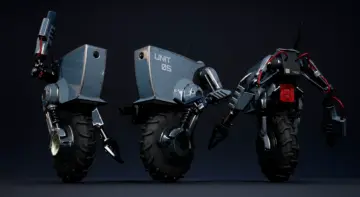
Drone
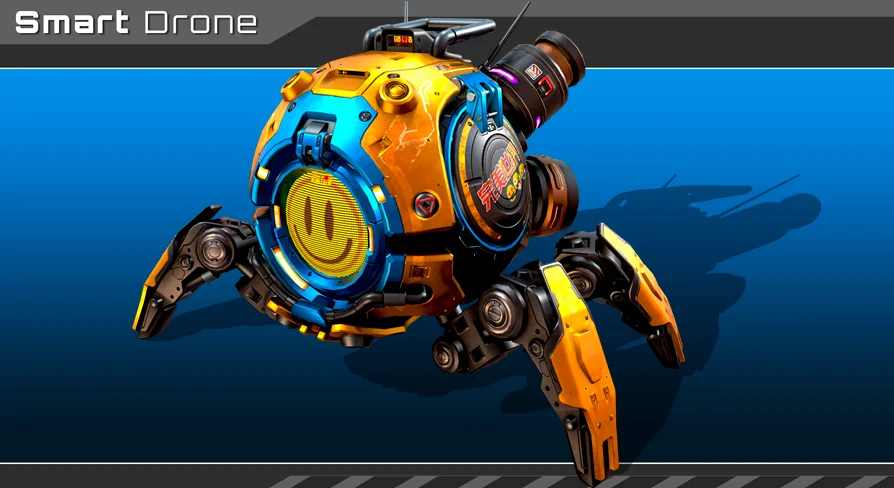
A detailed look at the Smart Drone asset, featuring its fully playable 3rd person Pawn Blueprint, velocity-driven animations, and customizable color masks.
The asset functions as a fully playable Smart Drone, designed to operate natively as a controlled character right out of the box. Central to this implementation is the 3rd person Pawn Blueprint. By centralizing the logic and components within a single pawn structure, the asset eliminates the immediate need to script basic movement or weapon attachments from scratch. Developers looking to populate a sci-fi or space environment can drop the pawn directly into a scene as a playable character, or use the existing blueprint logic as a foundation to adapt the drone into an AI-driven enemy or companion.
Within this blueprint, all the drone’s offensive capabilities are pre-configured. The dual-barrel machine gun, laser sights, and explosive missiles are physically and logically integrated into the pawn. This means the transition from basic movement to active combat is already mapped out within the character’s base setup. The drone conceptually shifts from a friendly robot state into a lethal machine, a duality that is supported by both the animation blueprint and the integrated weapon systems. Because the laser sights and explosive missiles are contained locally within the pawn, the logic for targeting and firing is cohesive, reducing the need for complex external weapon managers.
Velocity and Rotation-Driven Animation Framework
Character movement relies heavily on how animations blend during gameplay. For this asset, the movement system is dynamically animated based on pawn velocity and rotation rate. Instead of relying purely on rigid, linear inputs, the animation blueprint reads the speed and rotational shifts of the pawn to trigger smooth transitions across its navigational states. When a controller turns the character, the rotation rate feeds into the animation blueprint to trigger the specific rotate animation, preventing the mesh from simply sliding across the floor and maintaining a grounded, mechanical feel appropriate for a robot.
This velocity-driven setup handles the core traversal mechanics. As the drone navigates the environment, the blueprint seamlessly blends between fundamental movement clips, including walking, reversing, strafing, and rotating in place. Aerial mobility is also accounted for, with specific animations dedicated to jumping and falling in the air. Because these transitions are tied directly to the pawn’s velocity and rotation rate, the resulting movement feels responsive to the physical inputs or AI pathfinding commands driving the character. The inclusion of directional movement like strafing ensures the drone can maintain a combat-ready facing angle while maneuvering around a target during an encounter.
Combat Behaviors and Melee Animation States
When the drone shifts into its combat phase, the animation set expands to cover a wide variety of offensive actions. The ranged combat systems utilize specific poses for the gun and missile hatches, visually indicating that the weapon systems are primed and ready for deployment. From there, the system can trigger the standard machine gun firing animation or a distinct animation for a more powerful machine gun shot. The integrated laser sights and explosive missiles coordinate with these hatch poses to deliver a fully realized sci-fi turret or walker threat, complete with the mechanical shifting expected of a transforming mecha.
Beyond ranged ballistics, the drone includes a surprising array of physical melee attacks. Despite being a machine equipped with firearms, it can engage in close-quarters combat using a headbutt, a floor slam, and stabbing motions directed to both the left and right. This implies the drone possesses directional spatial awareness in its attack animations, reacting to where the target is located relative to its chassis. This mix of ranged and physical animations allows the unit to be utilized in multi-stage boss fights or dynamic AI encounters where the enemy rapidly closes the distance. When the combat concludes, the asset provides three separate death animations, adding necessary visual variety to how the unit is destroyed in-game.
Material Color Masks and Baked Glow Textures
Visual customization is handled through a specialized material setup intended for flexibility and scene optimization. The primary mechanism for altering the drone's appearance is a color mask integrated into the materials. This masking system isolates specific UV regions, allowing developers to independently adjust the base colors of different sections of the mesh without authoring entirely new texture maps. By utilizing the color mask, a single drone model can be repurposed across multiple factions, player teams, or enemy tiers simply by swapping the designated values in the material instance.
Alongside the color customization, the asset utilizes baked glow lighting textures. In many sci-fi environments, robots and mechs rely heavily on emissive lights to communicate status or add visual flair to their designs. Instead of relying entirely on expensive real-time dynamic lighting for these glowing elements, the drone bakes this glow directly into the textures. This approach enhances the realism and presence of the character's illuminated parts while strictly preserving performance, making it highly suitable for scenes populated by multiple drone units, complex AI squads, or environments where rendering budgets must be carefully managed.
Adapting the Smart Drone for AI Roles
While the drone is fully playable for human controllers, the blueprint and animation sets are explicitly structured to be easily adaptable to AI. The inclusion of subtle behavioral animations, such as a standard idle and an "idle excited" state, provides the necessary building blocks for creating a believable autonomous entity. A friendly robot companion might utilize the excited idle when the player approaches, only to deploy its gun and missile hatch poses and transition into a lethal killing machine when hostile forces enter its detection radius.
The design encompasses multiple mechanical archetypes, functioning equally well as a stationary sci-fi turret defending a corridor or a roaming mecha patrol unit. Because the dual-barrel machine gun and missiles are already tied to the 3rd person pawn blueprint, setting up an AI controller primarily involves triggering the existing velocity thresholds and combat events. The integration of rotation-driven movement logic, directional melee combat animations, and highly optimized materials ensures the drone can scale to fit various operational requirements within any science fiction or robotics-focused project.
 Characters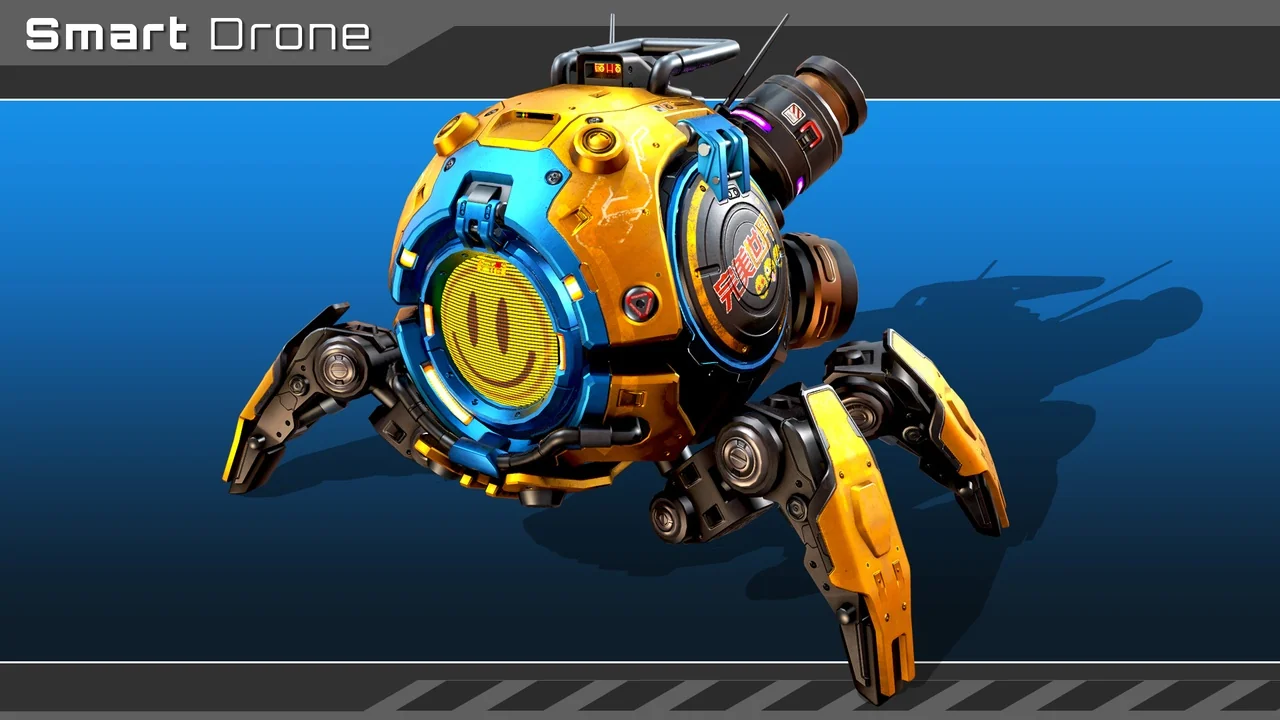
 Characters
 Characters
 Characters